Best Time to Visit Tanzania for Safari by Season and Month

Choose the Best Safari Season

We help you pick the right time, parks, and itinerary for your Tanzania safari.

Plan Your Trip Better

OUR CATEGORIES

Best Time to Visit Tanzania for Safari: Month-by-Month Guide

Tanzania is one of the best safari destinations in Africa, but there is no single “perfect” month for every traveler. The best time to visit depends on what you want from the experience. Some people want dry-season game viewing with easy wildlife sightings. Others want to see the wildebeest calving season in the southern Serengeti, enjoy greener landscapes, or travel when prices and crowds are lower.
 
That is why choosing the right time for your safari matters. Season affects wildlife visibility, road conditions, scenery, migration activity, and even how busy the parks feel. Before choosing your travel dates, it also helps to understand your Tanzania safari cost, because season can affect accommodation rates and overall trip pricing.
 
In this guide, you will learn the best time to visit Tanzania for safari by season, month, park, and travel goal, so you can choose the right time based on wildlife, weather, crowds, and budget.

Is There a Best Time for Safari in Tanzania?

Yes, but it depends on what kind of safari you want.
 
Tanzania offers excellent safari opportunities throughout the year because its major parks support large resident wildlife populations. You can visit the Serengeti, Ngorongoro Crater, Tarangire, and Lake Manyara in different seasons and still have a rewarding experience. What changes is the style of safari you get.
 
During the dry season, wildlife is usually easier to spot because animals gather around rivers, waterholes, and permanent water sources. Vegetation is thinner, roads are generally easier to drive, and the weather is more predictable. This is why June to October is often considered the best overall safari period, especially for first-time visitors. If you are planning your first trip, our Tanzania safari tips for first-time visitors will help you understand what to expect before you go.
 
But the dry season is not the only good time to go. January and February are excellent for the wildebeest calving season in the southern Serengeti. March to May brings greener landscapes, fewer vehicles, and lower rates in some lodges. November and December can also be attractive for travelers who want a quieter safari with pleasant scenery and good birdlife.
 
So the real question is not just “When is the best time for safari in Tanzania?” It is: best for what?
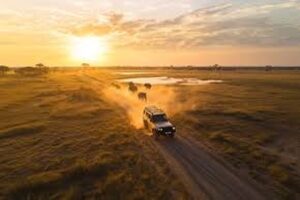
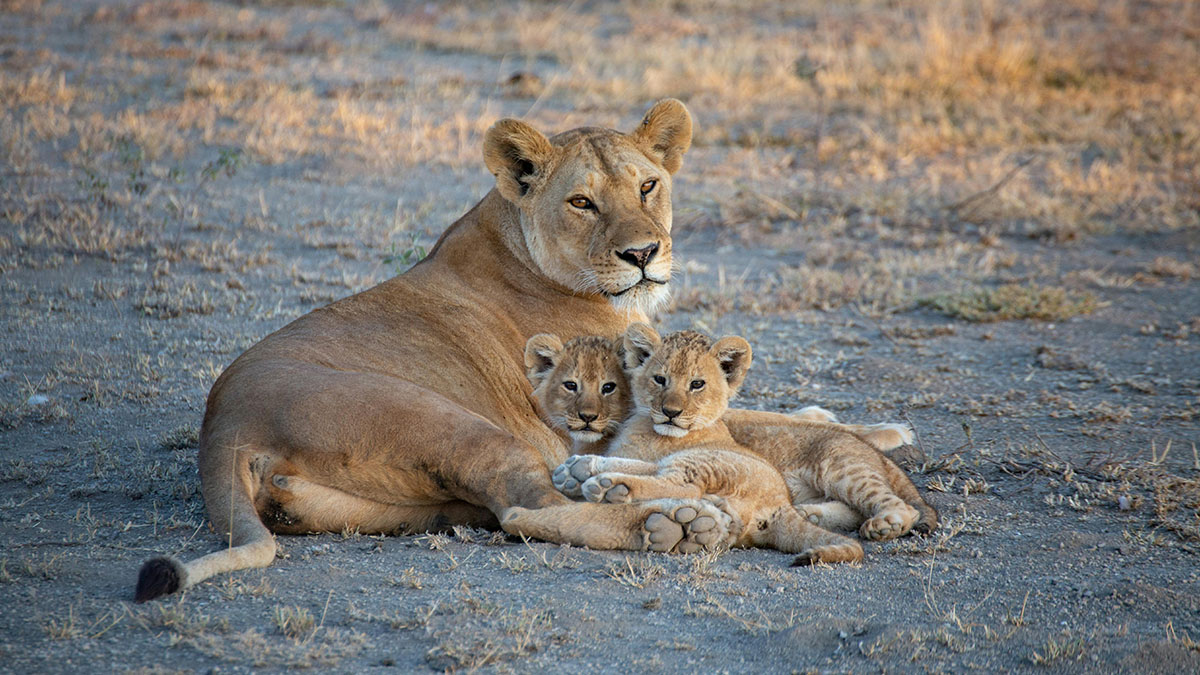
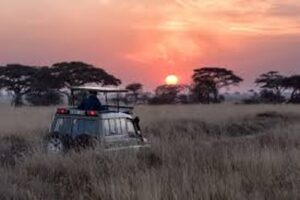
Safari vehicle on a Tanzania safari package with wildlife on the open savannah.
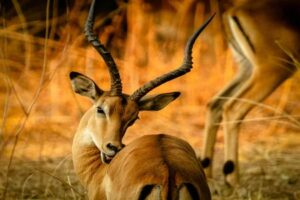
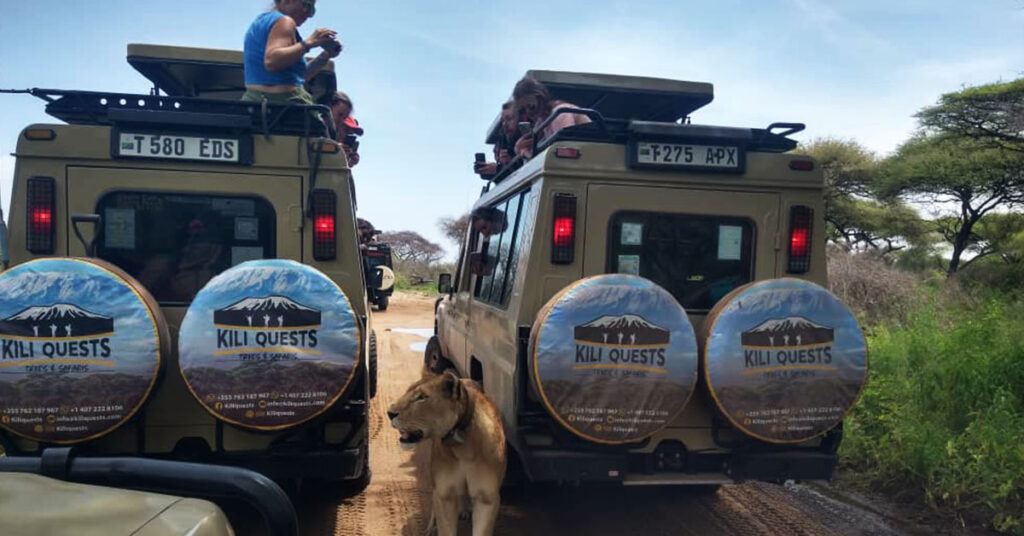
Guests witnessing a wild lion up close during a Kili Quests safari adventure.

Table of Contents

Tanzania Safari Seasons at a Glance

 Tanzania’s safari year can be broken into four useful periods:
Safari Season Period What to Expect Best For
Dry Season June to October The most popular safari period, with easier wildlife viewing and classic game drives in the northern parks. First-time safari travelers, big wildlife viewing, and reliable game drives.
Short Rains November to December Lighter rains, greener scenery, and fewer crowds than peak season. Travelers who want good safari conditions with fewer people.
Calving Season January to February Wildebeest give birth in the southern Serengeti and Ndutu area, with predators staying close behind. Great Migration calving, predator action, and dramatic wildlife scenes.
Green Season / Long Rains March to May The wettest part of the year in many safari areas, with greener landscapes and quieter parks. Birdwatching, lush scenery, fewer crowds, and lower-season travel.

June to October – Dry Season

This is the most popular time for safari in Tanzania. Wildlife viewing is generally at its easiest, and many travelers choose this period for classic game drives in the northern parks.

November to December – Short Rains

These months often bring lighter rains, greener scenery, and fewer crowds than peak season. Safari is still very good in many areas.

January to February – Calving Season

This is one of the most exciting safari periods in the southern Serengeti and Ndutu area, where wildebeest give birth and predators remain close behind.

March to May – Green Season / Long Rains

This is the wettest part of the year in many safari areas. It is quieter, greener, and often better for birdwatching, though some routes and camps may be affected by heavy rain.If you are still deciding how long your trip should be, read how many days you need for a Tanzania safari before locking in your dates, because trip length can affect which season works best for you.

Best Time for Safari in Tanzania by Season

Dry Season (June to October)

For many travelers, this is the best time to visit Tanzania for safari.
 
The dry season makes wildlife easier to find because water becomes more limited and animals tend to gather in predictable areas. Grass is shorter, bush cover is thinner, and visibility across the landscape is better than during wetter months. These conditions make game drives more productive, especially for first-time safari travelers who want strong chances of seeing large mammals in a short period.
 
The weather is another reason this season is so popular. Days are generally dry and sunny, roads are more reliable, and dust is usually more manageable than mud. In the northern circuit, parks such as Serengeti National Park, Tarangire National Park, and Ngorongoro Crater perform especially well during this period.
 
Tarangire is one of the biggest dry-season winners because its river attracts large numbers of animals, especially elephants. Serengeti remains excellent, with strong general wildlife viewing and migration activity shifting through different parts of the ecosystem. Ngorongoro Crater is productive year-round, but the dry months often make sightings feel easier and more consistent.
 
This is also the best time for travelers who want a classic safari experience with reliable wildlife viewing, easier road conditions, and lower chances of weather disruption.

Short Rains and Shoulder Season (November to December)

These months are often overlooked, but that is a mistake.
 
The short rains usually do not shut down safari in northern Tanzania. Instead, they often refresh the landscape, reduce dust, and create greener scenery without fully disrupting game viewing. Crowds are lighter than in peak dry season, which means a calmer experience in popular parks and lodges.
 
This period can be especially appealing for travelers who want a balance between good wildlife sightings and a less crowded atmosphere. Many parks still offer strong safari conditions, and the changing scenery can make the experience feel more dramatic and photogenic.
 
Birdwatching also improves during greener months, as migratory species become more active in many areas. For travelers who care about scenery as much as wildlife density, this can be a very rewarding time to go. Parks with varied habitats, such as Lake Manyara, can be especially attractive during this period.
 
If you do not need peak-season dryness, November and December can offer excellent value and a more relaxed safari pace.

Calving Season (January to February)

If your dream is to see one of the most dramatic wildlife events in East Africa, this is one of the best times to go.
 
During January and February, the southern Serengeti and Ndutu plains become the center of the wildebeest calving season. Huge herds gather on the short-grass plains, and thousands of calves are born within a relatively short period. This concentration of vulnerable young animals also attracts predators, creating intense wildlife activity and extraordinary photography opportunities.
 
This is not the same as the famous river-crossing scenes many people associate with the Great Migration, but it is one of the most exciting phases of the migration cycle. The open plains, large herds, and active predator-prey interactions make this period especially rewarding for experienced safari travelers, photographers, and repeat visitors who want something different from the standard dry-season trip. Great Migration in Tanzania guide 
 
The weather is often favorable too, with warm temperatures and generally pleasant conditions before the heavier long rains arrive.
 
For travelers focused on migration timing, calving season is one of the strongest safari windows in Tanzania.

Green Season / Long Rains (March to May)

This is the least popular safari period, but that does not mean it has no value.
 
From March to May, many safari areas receive heavier rainfall. The landscape becomes lush and green, skies can be dramatic, and visitor numbers are usually much lower than during dry-season months. For some travelers, that quieter atmosphere is a major advantage.
 
This period can be especially attractive for birdwatchers and photographers who enjoy richer scenery and softer, moodier light. Some lodges may offer lower rates, and game drives can feel more private because there are fewer vehicles in the parks.
The tradeoff is that wildlife is often less concentrated around water sources, which can make sightings less predictable. Some roads may become muddy, and access to certain camps or remote areas can be affected depending on conditions.
 
Ngorongoro Crater remains one of the more reliable safari options even during wetter months because of its dense resident wildlife population. Other parks can still be rewarding, but expectations should be different. This season is less about chasing the easiest sightings and more about enjoying greener landscapes, fewer crowds, strong birdlife, and potentially lower lodge rates. For travelers who value scenery and a quieter atmosphere, the green season can still be an excellent time to visit.
 

Best Time to Visit Tanzania’s Top Safari Parks

Different parks perform differently throughout the year, so choosing the best time also depends on where you plan to go.

Serengeti National Park

Serengeti is a year-round safari destination, but what you see depends heavily on where the migration is at that time. From January to February, the southern Serengeti and Ndutu area are best for calving season. In the dry season, wildlife viewing remains excellent across large parts of the park, and different regions of the ecosystem host migration movement at different times.
 
This is why it helps to think beyond the idea that the Serengeti has only one “best” month. It has different strong periods depending on whether you want calving season, general game viewing, or migration-related movement. For a deeper breakdown, read our Serengeti National Park safari guide.

Ngorongoro Crater

 Ngorongoro Crater is one of the most reliable safari destinations in Tanzania throughout the year. Because wildlife is resident inside the crater, you can have strong game viewing in both dry and greener months. This makes it a smart choice for travelers who want a park with consistent wildlife regardless of season.
 
It is especially useful during wetter months, when some other areas may feel more seasonal. For more details, read our Ngorongoro Crater safari guide.

Tarangire National Park

Tarangire is strongest during the dry season, when wildlife gathers around the Tarangire River and large elephant herds become easier to see. In peak dry months, this park can deliver some of the most impressive elephant viewing in northern Tanzania.
 
Outside the dry season, Tarangire can still be scenic, but the concentration of animals is usually less dramatic than it is when water sources are limited. For more details, read our Tarangire National Park safari guide.

Lake Manyara National Park

Lake Manyara is often appreciated for its scenery, birdlife, groundwater forest, and varied habitats. It can work well in both drier and greener periods, especially for travelers combining it with other northern circuit parks.
 
It may not always be the main wildlife highlight of a trip, but it adds variety and can be especially attractive when the landscape is green. For more details, read our Lake Manyara National Park safari guide.
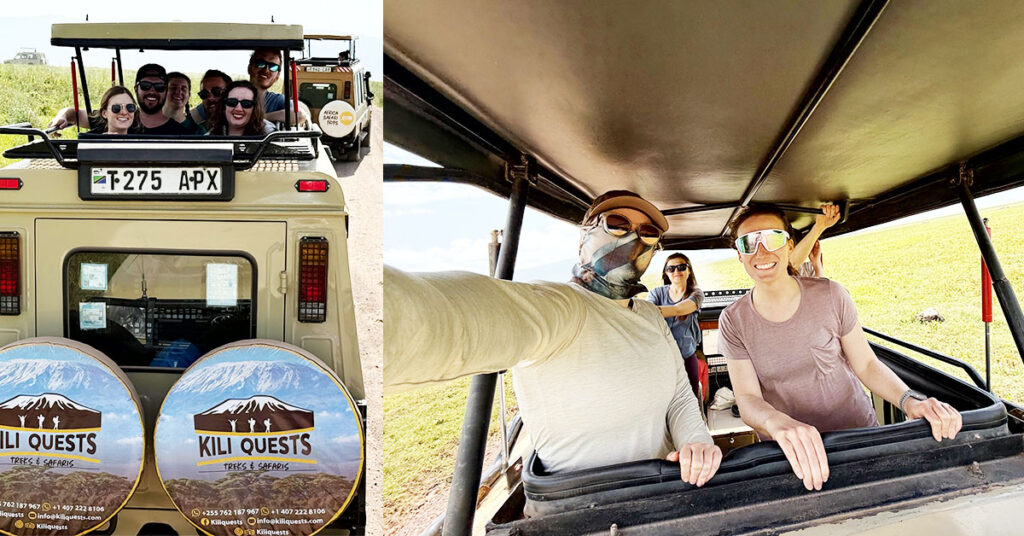
Inside the Kili Quests safari vehicle: every seat has a view, and every moment is worth a selfie.

Best Time for Safari in Tanzania by Travel Goal

Sometimes the easiest way to choose your safari timing is to start with your main goal.

Best Time for First-Time Safari Travelers

If this is your first safari, June to October is usually the safest choice. Wildlife is easier to see, the weather is drier, and game drives are more straightforward. This is the season that gives most first-time visitors the classic safari experience they usually imagine. Before booking, it also helps to understand what is included in a Tanzania safari package so you know exactly what services, park fees, and logistics are covered.

Best Time to See the Great Migration

The Great Migration moves through the Serengeti ecosystem across the year, so the best time depends on which phase you want to see. If you are focused on calving season, January and February are key. If you want to travel during the dry season when migration herds are active in other regions of the Serengeti, June to October is also important.
 
The mistake many travelers make is assuming the migration is a single event in one place. It is a moving wildlife cycle, not a one-time spectacle in a single month. For a fuller breakdown, read our guide to the best time to see the Great Migration in Tanzania.

Best Time for Calving Season

January to February is the prime period for wildebeest calving in the southern Serengeti and Ndutu plains. This is one of the most exciting wildlife periods of the year and a major reason many travelers choose these months. For more details, read our Ndutu calving season safari guide.

Best Time for Birdwatching

Birdwatching is often best from November through May, when migratory birds are present and landscapes are greener. This period can be especially rewarding for travelers who enjoy more than just big mammals.

Best Time for Fewer Crowds and Better Value

March to May, and sometimes November to December, can be appealing for travelers who want quieter parks and better rates in some lodges. The tradeoff is that weather and road conditions can be less predictable. If budget is a major factor, read our Tanzania safari cost guide.
 

So, When Should You Go on Safari in Tanzania?

If you want the easiest wildlife viewing and the most classic safari conditions, go in the dry season from June to October.If you want to witness the wildebeest calving season and dramatic predator action, January to February is one of the best safari windows in Tanzania.
 
If you prefer greener scenery, fewer crowds, birdwatching, and a more relaxed pace, consider November to December or even March to May, depending on your tolerance for rain and flexible road conditions.
 
The best time for safari in Tanzania is not the same for everyone. It depends on your priorities, your budget, the parks you want to visit, and whether you care more about dry-season visibility, migration timing, or a quieter travel experience.

Frequently Asked Questions About the Best Time to Visit Tanzania for Safari

What is the best time of year for a safari in Tanzania?

The best time for safari in Tanzania is generally from June to October during the dry season. Wildlife is easier to spot because animals gather around water sources and vegetation is thinner. This period is especially good for first-time safari travelers.

When can you see the Great Migration in Tanzania?

You can see parts of the Great Migration throughout the year in the Serengeti ecosystem, but the exact location of the herds changes by season. January and February are known for calving season in the southern Serengeti, while other migration phases happen in different regions at different times.

Is the rainy season a good time for safari in Tanzania?

Yes, it can be. The rainy season offers lush landscapes, fewer tourists, excellent birdwatching, and in some cases lower lodge rates. However, wildlife may be more scattered and some roads can be more difficult after heavy rain.

Which months are best for calving season in the Serengeti?

January and February are the best months for calving season in the southern Serengeti and Ndutu area. This is when wildebeest gather on the short-grass plains and thousands of calves are born.

Is Tanzania good for safari all year round?

Yes. Tanzania is a year-round safari destination. While dry-season months are usually best for easy wildlife viewing, other times of year can also be excellent depending on your goals, such as calving season, birdwatching, greener scenery, or fewer crowds.

Ready to Plan Your Tanzania Safari?

The best time for safari in Tanzania depends on what you want to see, which parks you want to visit, and whether you prefer easier wildlife viewing, migration timing, greener scenery, or fewer crowds.Whether you want dry-season game viewing, calving season in the southern Serengeti, or a quieter green-season safari, Kili Quests can help you choose the right itinerary.
 
Before contacting your safari operator, it also helps to read Tanzania safari tips for first-time visitors and compare your options in what is included in a Tanzania safari package so you can plan with more confidence.
 
Contact us today to plan your custom Tanzania safari.

Related Articles
How to Stay Clean on Kilimanjaro: Showers, Toilets & Hygiene

Stay Clean & Comfortable on Kilimanjaro

 A well-supported climb makes all the difference — from hygiene to overall comfort on the mountain.

Plan Your Kilimanjaro Climb the Right Way

Hygiene is just one part of the journey , your route, acclimatization, and preparation matter even more.

OUR CATEGORIES

How to Stay Clean on Kilimanjaro: Showers, Toilets & Hygiene

Staying clean on Kilimanjaro is not about luxury. It is about comfort, health, and keeping your body in good condition during several days of trekking. Sweat, dust, cold temperatures, changing clothes, and limited washing facilities can all affect how you feel on the mountain.

Most standard Kilimanjaro climbs do not include full showers, so trekkers rely on simple routines such as wet wipes, warm water bowls, clean clothing, foot care, and careful toilet hygiene. With the right preparation, you can stay fresh and comfortable even without normal bathroom facilities.

This guide explains how hygiene works on Kilimanjaro, what to expect with showers and toilets, what to pack in your hygiene kit, and how to stay clean from day one to summit night.

Quick Answer: How Do You Stay Clean on Kilimanjaro?

Most trekkers stay clean on Kilimanjaro by using wet wipes, warm water bowls, quick-dry towels, clean base layers, fresh socks, and good foot care. Standard Kilimanjaro climbs usually do not include full showers because camps are temporary and water must be carried or collected from mountain streams.
 
Some premium climb packages may include private shower tents at selected camps, but most climbers manage hygiene with simple daily routines. The most important habits are washing your hands, keeping your feet dry, changing out of sweaty clothes, using toilet facilities properly, and packing a small hygiene kit.
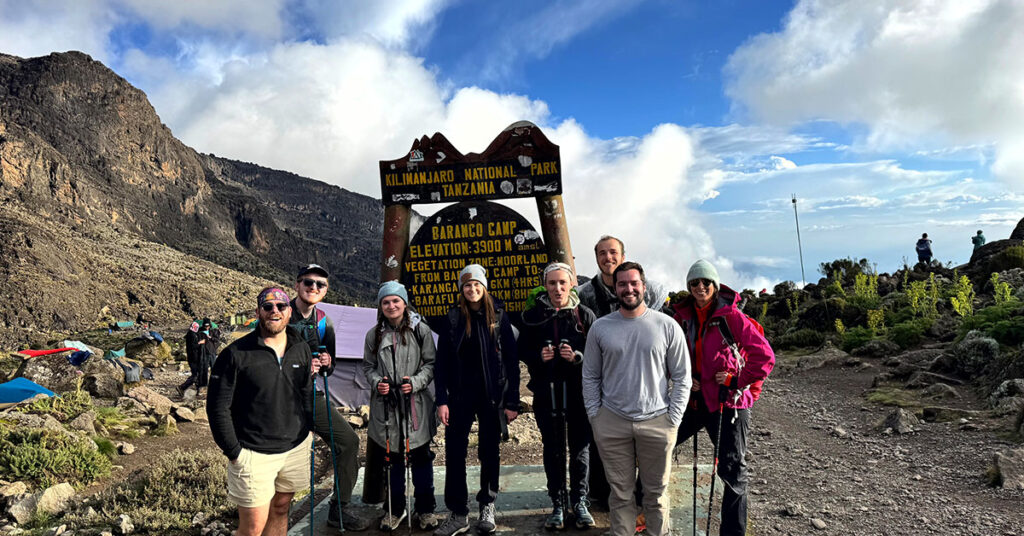
Smiles and strength at Barranco Camp during the Kilimanjaro climb.

Table of Contents

Showers on Kilimanjaro: What You Can Expect

Most standard Kilimanjaro climbs do not include showers, and you should expect to go several days without a full wash. This is part of trekking in a remote mountain environment where camps are temporary and most supplies must be carried by the support crew.

However, your experience depends on the level of service you choose.

Premier Package Showers (Luxury Option)

With Kili Quests’ Premier Package, climbers may have access to private shower tents at selected camps. The support team prepares warm water and sets up a clean, private space where you can rinse off after a long day on the trail.

This option is especially useful on longer climbs, where several days without proper washing can become uncomfortable. It is not essential for every climber, but it can make the mountain experience feel cleaner and more comfortable.

Why Showers Are Limited on Kilimanjaro

There are no permanent shower facilities on the mountain because camps are temporary, water must be sourced from streams, and environmental regulations limit infrastructure development.
Because of this, most trekkers rely on simple and effective daily cleaning routines rather than expecting traditional showers.

How to Stay Clean Without Showers

Going without showers may seem challenging at first, but once you understand the routine, it becomes part of the Kilimanjaro experience.

Daily Cleaning Routine (What Actually Works)

At camp, your guides and porters will provide a bowl of warm water in the morning and evening. This is used for washing your face, hands, neck, and underarms , the areas where sweat and bacteria build up most.
 
These small routines are enough to keep you clean and prevent discomfort over multiple days of trekking.

Handwashing and Sanitizing on Kilimanjaro

Hand hygiene is one of the most important habits on Kilimanjaro. Always clean your hands before eating, after using the toilet, and after handling dusty or wet gear around camp.

Use the warm water provided at camp when available, and keep hand sanitizer in your daypack for the trail. This small habit helps reduce stomach problems and keeps you more comfortable during the climb.

Hygiene Essentials That Make a Big Difference

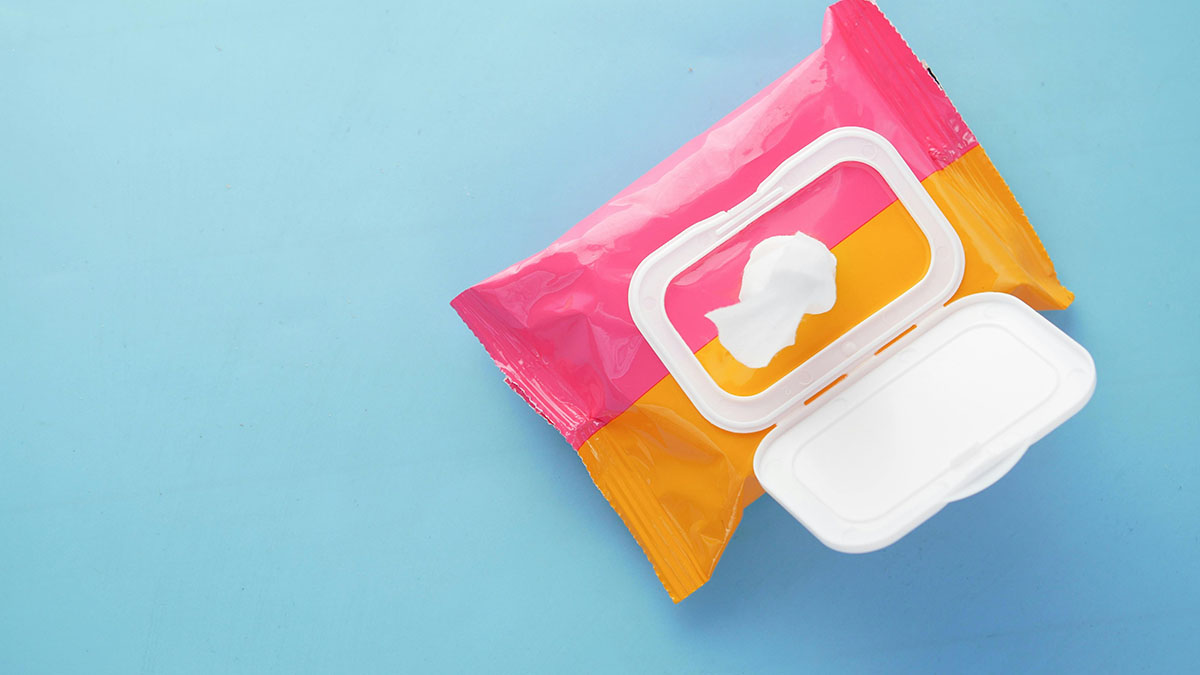
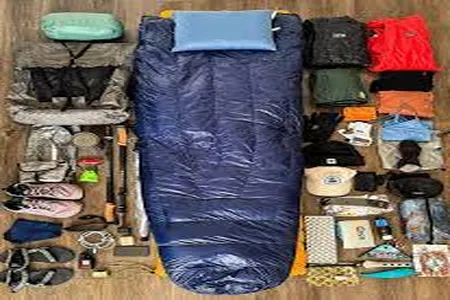
Your hygiene kit plays a critical role in your comfort. Wet wipes are the most important item, allowing you to clean your body after long hiking days. A small quick-dry towel, biodegradable soap, and dry shampoo or body powder also help maintain freshness.
 
Preparing your gear properly before the climb is essential, and using a complete Kilimanjaro packing list ensures you don’t forget key hygiene items that you will rely on every day of the trek.
 

What Hygiene Items Should You Pack for Kilimanjaro?

A small hygiene kit makes a big difference on Kilimanjaro. You do not need to overpack, but you should bring items that help you clean your body, protect your skin, and stay comfortable between camps.
 
Useful hygiene items include:
  1. wet wipes
  2. biodegradable soap
  3. hand sanitizer
  4. toothbrush and toothpaste
  5. quick-dry towel
  6. deodorant
  7. foot powder
  8. lip balm
  9. sunscreen
  10. small nail clippers
  11. extra socks
  12. toilet paper or tissues
  13. sealable bags for used wipes or personal waste
For the full gear list beyond hygiene items, use our Kilimanjaro packing list before preparing your duffel bag.

Water on Kilimanjaro: Hydration and Hygiene

You should aim to drink around 3–4 liters of water per day during the climb. Proper hydration supports your body at altitude and helps reduce problems caused by dehydration, such as headaches, fatigue, and weakness.

Some dehydration symptoms can feel similar to altitude-related discomfort, so it helps to understand altitude sickness on Kilimanjaro before your climb.

Where Water Comes From

Your team collects water from mountain streams and treats it using boiling, filtration, or purification tablets. This ensures the water is safe for drinking and basic cleaning, even at higher altitudes.

How Much Water You Should Drink

You should aim to drink at least 3–4 liters of water per day. Proper hydration helps your body adjust to altitude and reduces the risk of sickness.Many symptoms of dehydration are closely linked to altitude-related issues, which is why understanding altitude sickness on Kilimanjaro is an important part of your preparation before the climb.

Water for Hygiene (Use Wisely)

Water is limited, especially at higher camps, so it must be used carefully. Most climbers combine small amounts of water with wet wipes to stay clean without wasting resources.Managing water properly becomes more important as you go higher, where the environment becomes colder and more physically demanding.
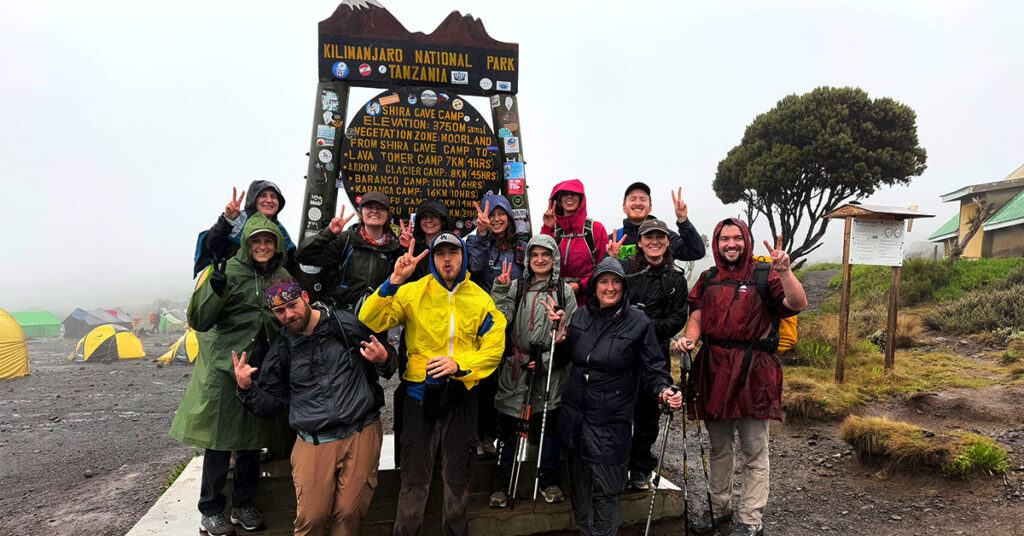
Light rain falls as one of our trekkers arrives at Shira Cave — embracing every part of the mountain’s mood.

Staying Fresh & Comfortable on the Trail

Hygiene on Kilimanjaro is built on small daily habits. What you do every day has a bigger impact than any single action.

Clothing Strategy

After a full day of hiking, your clothes will be damp with sweat. Changing into dry clothing at camp helps regulate your body temperature and prevents skin irritation.Moisture-wicking fabrics are highly recommended, and many climbers keep one clean set of clothes only for evenings and sleeping.

Foot Care on Kilimanjaro

Your feet carry you through every stage of the climb, so foot hygiene matters. Sweat, wet socks, dust, and repeated downhill walking can cause blisters, hot spots, irritation, or infections if you ignore them.
 
Change socks regularly, air your feet at camp, keep your toenails short, and use foot powder if your feet sweat heavily. If you feel a hot spot forming, treat it early before it becomes a painful blister.
 
Foot problems can make the climb feel much harder than it needs to be, especially on long trekking days and during the descent.

Simple Freshness Tips

Using deodorant, lip balm, wet wipes, mints, and a small daypack hygiene pouch can make the trek feel more comfortable. Keep the items you use often within easy reach so you do not need to open your duffel bag every time you arrive at camp.

Small habits like changing into dry clothes, cleaning your face and hands, and organizing your hygiene items each evening help maintain comfort and morale during long trekking days.

Toilets on Kilimanjaro

Toilet conditions are one of the most common concerns for climbers and something many people are not fully prepared for.

Public Toilets

Public toilets are available at most camps, but they are basic and their cleanliness varies depending on how many people are using them.For many climbers, this is one of the biggest adjustments during the trek.

Private Toilet Tents (Recommended)

For a more comfortable experience, many climbers choose a private portable toilet. Kili Quests provides clean, enclosed toilet tents that offer better hygiene and privacy.

Private toilet tents are especially valuable on longer treks, where maintaining cleanliness over several days becomes more difficult. They also reduce stress for climbers who are uncomfortable with basic public camp toilets.
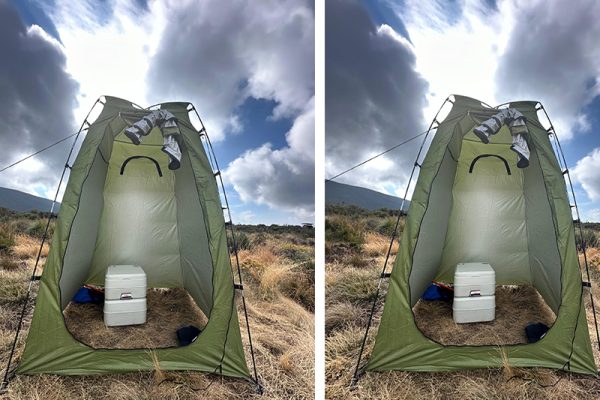
Portable toilet tent setup on Mount Kilimanjaro with private enclosure and toilet box for trekkers
Private Toilet Tent – Clean and discreet portable toilet setup used on Kilimanjaro treks.

Respecting the Environment: Clean Trekking Practices

Mount Kilimanjaro is a protected environment, so hygiene must be handled responsibly. Staying clean should never mean leaving wipes, tissues, soap residue, or personal waste on the mountain.
 
Use biodegradable products where possible, keep used wipes and tissues in sealable bags, and follow your guide’s instructions for waste disposal. Water sources should also be protected, so avoid washing directly in streams or leaving soap near natural water points.
 
Your support crew plays a major role in maintaining camp cleanliness and managing waste properly. Their work is essential to the comfort and safety of the climb, which is one reason our Kilimanjaro tipping guide is useful before your trek.

Frequently Asked Questions About Hygiene on Kilimanjaro

Are there showers on Mount Kilimanjaro?

Showers are generally not available on standard trekking routes on Mount Kilimanjaro. However, some premium trekking packages offer portable shower tents with warm water at selected camps. Most trekkers rely on hygiene wipes, sponge baths, and fresh clothing to stay clean during the climb.

How do trekkers stay clean while climbing Kilimanjaro?

Trekkers usually stay clean by using wet wipes, small wash basins, and quick-dry towels  . Changing into clean clothes each evening and maintaining good foot care are also important ways to stay comfortable during the multi-day trek.

Is the water on Kilimanjaro safe for washing and drinking?

Yes. Trekking crews collect water from mountain streams and purify it using filtration systems, boiling, or purification tablets. This treated water is safe for drinking and basic hygiene while trekking on Kilimanjaro.

Are there toilets on Mount Kilimanjaro?

Some trekking companies, including Kili Quests, also provide private portable toilet tents. These offer a cleaner, more private, and more comfortable option than public camp toilets during the trek.

What hygiene items should you pack for a Kilimanjaro climb?

Important hygiene items include wet wipes, biodegradable soap, a small quick-dry towel, toothbrush and toothpaste, deodorant, foot powder, and extra socks. These essentials help trekkers stay fresh and comfortable during the several days spent on the mountain.

Why is hygiene important when trekking Kilimanjaro?

Good hygiene helps prevent illness, skin irritation, and infections during a long trek at high altitude. Staying clean, washing hands regularly, and keeping gear dry can improve comfort and support overall health throughout the climb.

Plan a Kilimanjaro Climb With Better Comfort and Hygiene

Staying clean on Kilimanjaro is easier when your climb is properly organized. With Kili Quests, you can choose support options such as private toilet tents, warm water washing routines, and Premier Package shower support at selected camps.
 
Contact us today to plan your Kilimanjaro climb and choose the support level that fits your comfort, route, and budget.

Related Articles

Tanzania Safari Tours with Kili Quests | Private Custom Safaris

Plan Your Private Tanzania Safari

Your safari should not feel rushed or copied from a generic package. Let us help you build a private Tanzania safari based on your travel dates, budget, comfort level, and wildlife goals.

Safari Planning Guide

OUR CATEGORIES

Tanzania Safari Tours with Kili Quests

A Tanzania safari is not something you should book blindly. The parks are far apart, the seasons change wildlife movement, accommodation levels vary a lot, and the quality of your guide can completely change the experience. A good safari feels smooth, personal, and well planned. A bad one feels rushed, confusing, and overpriced.
 
At Kili Quests, we design private Tanzania safari tours for travelers who want more than a basic package. Whether you want to see lions in the Serengeti, elephants in Tarangire, black rhinos in Ngorongoro Crater, or combine wildlife with cultural experiences, we help you build a safari that fits your dates, budget, comfort level, and travel style.
 
Our safaris are planned by a local Tanzanian team that understands the parks, road distances, seasons, wildlife behavior, and real guest expectations. We do not believe in selling the same itinerary to every traveler. Your safari should match what you actually want to experience.
 
If you are still deciding when to travel, start with Best Time for Tanzania Safari before choosing your dates.
Safari vehicle on a Tanzania safari package with wildlife on the open savannah.
Guests witnessing a wild lion up close during a Kili Quests safari adventure.

Table of Contents

Why Book Your Tanzania Safari with Kili Quests?

Choosing the right safari company matters. Tanzania has many operators, but not every safari is planned with the same care. Some itineraries look attractive online but are too rushed in real life. Some packages hide important exclusions. Others use weak routing that wastes time on the road instead of giving you better wildlife viewing.
 
Kili Quests focuses on clear planning, honest advice, experienced local guiding, and private safari experiences built around your goals.

Private Safari Planning

Most of our safari tours are private, which means the vehicle, guide, and itinerary are arranged for you and your group. This gives you more freedom than a shared group safari.
With a private safari, you can:
  • Travel at your own pace
  • Stop longer at wildlife sightings
  • Adjust game drive timing when possible
  • Choose accommodation based on your comfort level
  • Build the route around your interests
  • Travel comfortably as a couple, family, or small group
If you are still comparing options, read Private vs Group Safari Tanzania before choosing your safari style.

Custom Itineraries Based on Your Travel Goals

Every traveler comes to Tanzania for a different reason. Some want the Great Migration. Some want a short safari after climbing Kilimanjaro. Some want a family-friendly trip with comfortable lodges. Others want a luxury honeymoon safari or a mid-range wildlife adventure.
We help you choose the right route based on:
  • Your travel dates
  • Number of safari days
  • Budget
  • Preferred accommodation level
  • Wildlife interests
  • Park priorities
  • Group size
  • Comfort expectations
  • Cultural add-ons
A 3-day safari, 5-day safari, and 7-day safari are not the same experience. The right length depends on how much you want to see and how far you are willing to travel. For help choosing the right trip length, read How Many Days for Tanzania Safari?

Local Safari Guides Who Understand the Parks

A safari guide does more than drive the vehicle. A good guide reads the land, tracks wildlife, understands animal behavior, explains ecosystems, manages timing, and helps you enjoy the safari without feeling rushed.
 
Our local guides know Tanzania’s northern circuit parks and understand how to create a better game drive experience. They help you notice the small details many travelers miss: fresh tracks, bird calls, predator movement, animal behavior, and changing weather patterns.
 
That local knowledge matters. Safari is not only about reaching the park gate. It is about what happens once you are inside.

Tanzania Safari Packages We Offer

Kili Quests creates private Tanzania safari packages for different travel styles. Your package can be simple and comfortable, mid-range and well balanced, or luxury with premium lodges and tented camps.
 
The best package is not always the most expensive one. The best package is the one that fits your expectations clearly.

Mid-Range Tanzania Safari Packages

A mid-range safari is a strong choice for many travelers. It gives you comfortable accommodation, private transport, professional guiding, and good value without going into luxury pricing.
 
Mid-range safaris often include lodges or tented camps with private rooms, proper meals, comfortable beds, and good locations near or inside key safari areas.This is usually the smartest option for travelers who want comfort and value at the same time.

Luxury Tanzania Safari Packages

A luxury Tanzania safari is built around premium accommodation, excellent service, strong locations, and a more refined experience. This may include high-end lodges, luxury tented camps, better room views, private dining options, and fly-in safari options depending on the itinerary.
 
Luxury does not guarantee better wildlife. That is important to understand. Wildlife depends on season, location, guiding, and timing. But luxury does improve comfort, service, atmosphere, and exclusivity.

Budget-Friendly Safari Options

Budget safaris can work, but they must be planned carefully. Cheap safari packages often cut costs somewhere, and travelers need to understand what is included and what is not.A lower-cost safari may use simpler accommodation, camping, shared arrangements, or shorter routes. That can be fine if your expectations are realistic.
 
Before comparing prices, read Tanzania Safari Cost so you understand what affects the final safari price.
Kili Quests with tourists visiting the Hazabe tribe — a journey into Tanzania's living history

What Is Included in a Kili Quests Safari Package?

A good safari package should be clear before you book. You should know what is included, what is excluded, and where your money is going.
A typical Tanzania safari package may include:
  • Private safari vehicle
  • Professional safari guide
  • Park entry fees
  • Accommodation during safari
  • Meals during safari
  • Drinking water during game drives
  • Airport or hotel transfers depending on the package
  • Government taxes and conservation fees
  • Safari planning support before arrival
Some items may not be included, such as international flights, visas, travel insurance, tips, personal expenses, optional activities, and some drinks depending on accommodation.
 
For a full breakdown, read What’s Included in a Tanzania Safari Package?

No Hidden Confusion

We believe safari pricing should be explained clearly. Travelers should not discover important costs after arrival. Before you confirm your safari, we help you understand what your package covers and what you may need to budget separately.
 
This is especially important for park fees, accommodation levels, optional cultural visits, balloon safaris, and private upgrades.

Accommodation Matched to Your Budget

Your accommodation can shape the feel of the safari. Some travelers want simple, clean lodges. Others want luxury tented camps inside or near the parks. Families may need larger rooms or child-friendly properties. Honeymooners may prefer privacy and better views.
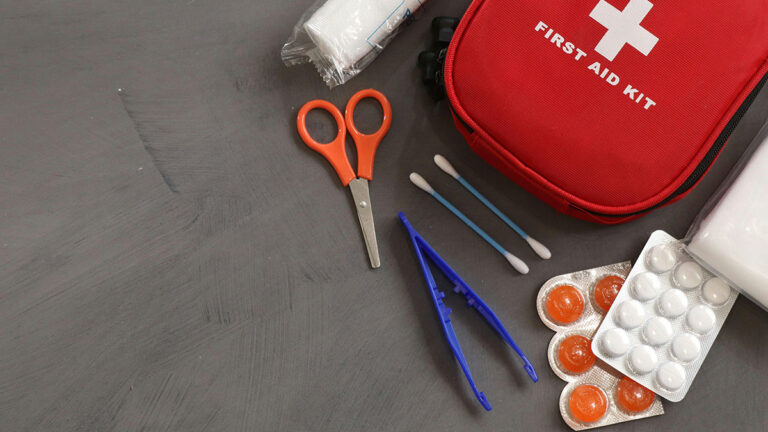
 
We help match accommodation to your budget and travel style instead of pushing one fixed option.

Best Tanzania Safari Destinations with Kili Quests

Tanzania has many safari destinations, but most first-time travelers focus on the northern circuit because it includes Serengeti, Ngorongoro Crater, Tarangire, and Lake Manyara. This route gives excellent wildlife, strong park variety, and practical travel flow from Arusha.

Serengeti National Park

Serengeti National Park is Tanzania’s most famous safari destination and one of the best wildlife areas in Africa. It is known for open plains, big cats, large herbivore herds, and the Great Migration.
 
The Serengeti is not a park you should rush. If your safari includes only one short night in Serengeti, the experience may feel too limited. Two or more nights are usually better, especially if Serengeti is your main priority.
Wildlife highlights may include:
  • Lions
  • Cheetahs
  • Leopards
  • Elephants
  • Giraffes
  • Zebras
  • Wildebeest
  • Hyenas
  • Buffalo
  • Hippos
For a deeper park guide, read Serengeti National Park Safari Guide.

Ngorongoro Crater

Ngorongoro Crater is one of the most dramatic safari destinations in Tanzania. The crater floor supports a high concentration of wildlife within a compact area, making it one of the strongest places for game viewing in northern Tanzania.
 
Ngorongoro is often included near the end of a northern circuit safari after Serengeti. It works well because travelers can descend into the crater for a game drive before returning toward Karatu or Arusha.
Wildlife highlights may include:
  • Lions
  • Elephants
  • Buffalo
  • Zebras
  • Wildebeest
  • Hippos
  • Hyenas
  • Flamingos
  • Black rhinos, if conditions and luck allow

For more details, read Ngorongoro Crater Safari Guide.

Tarangire National Park

Tarangire National Park is one of the best places in northern Tanzania for elephants. It is also known for giant baobab trees, seasonal swamps, and strong dry-season wildlife viewing.
 
Many travelers underestimate Tarangire because Serengeti and Ngorongoro get more attention. That is a mistake. During the dry season, Tarangire can be one of the most rewarding parks in the northern circuit.
Wildlife highlights may include:
  • Large elephant herds
  • Giraffes
  • Zebras
  • Wildebeest
  • Buffalo
  • Lions
  • Leopards
  • Warthogs
  • Many bird species
For a full breakdown, read Tarangire National Park Safari Guide.

Lake Manyara National Park

Lake Manyara National Park is smaller than Serengeti or Tarangire, but it adds variety to a safari itinerary. The park includes groundwater forest, lake views, birdlife, monkeys, baboons, hippos, and scenic landscapes below the Great Rift Valley escarpment.
 
Lake Manyara is not always the strongest big-cat park, so it should not be oversold. Its value is scenery, birdlife, forest habitat, and route convenience.
Wildlife highlights may include:
  • Elephants
  • Baboons
  • Monkeys
  • Hippos
  • Giraffes
  • Zebras
  • Buffalo
  • Flamingos depending on season and water levels
  • Tree-climbing lions, if you are lucky
For more information, read Lake Manyara Safari Guide.

Best Time to Book a Tanzania Safari

Tanzania safaris are possible year-round, but the best time depends on your wildlife goals. There is no single perfect month for every traveler.
 
The dry season from June to October is excellent for general wildlife viewing. Animals are easier to spot because vegetation is thinner and many gather near water sources. This is a strong time for Tarangire, Serengeti, Ngorongoro, and other parks.
 
The green season from November to May brings fresh landscapes, fewer crowds in some periods, birdlife, and excellent photographic conditions. From around January to March, the southern Serengeti and Ndutu area are especially important for calving season.

Dry Season Safaris

Dry season safaris are popular because wildlife viewing is usually easier. Roads are generally better, skies are often clearer, and animals gather around water sources.
This season is especially strong for travelers who want reliable general wildlife viewing.

Green Season Safaris

The green season can be beautiful. Landscapes are fresh, birdlife is strong, and some areas feel less crowded. It can also be a good time for travelers who want a softer, greener look in their safari photos.
 
However, rain is possible, especially during the long rains. Your itinerary should be planned with realistic expectations.
Migration and Calving Season

If your goal is the Great Migration, timing and location matter. The migration moves through different parts of the Serengeti ecosystem during the year. You cannot simply book any Serengeti safari and expect to see the same migration activity.
 
This is why route planning matters. For seasonal planning, read Best Time for Tanzania Safari.

How Many Days Do You Need for a Tanzania Safari?

The right safari length depends on your budget, travel dates, and the parks you want to visit.
 
A short safari can work if you only have limited time, but a rushed itinerary can reduce the quality of the experience. Longer safaris allow more time for Serengeti, better pacing, and stronger wildlife opportunities.

3-Day Tanzania Safari

A 3-day safari is best for travelers with limited time. It usually focuses on nearby parks such as Tarangire, Ngorongoro Crater, or Lake Manyara. It can be rewarding, but it is not enough for a deep Serengeti experience unless the route is very compressed.

5-Day Tanzania Safari

A 5-day safari gives better balance. It may include Tarangire, Serengeti, and Ngorongoro, depending on the route. This is a stronger option than a very short safari, but pacing still matters.

7-Day Tanzania Safari

A 7-day safari is one of the best choices for first-time travelers who want the northern circuit without rushing too much. It gives more time in Serengeti and a better chance to enjoy multiple parks properly.
 
To choose the best length, read How Many Days for Tanzania Safari?

Private Safari or Group Safari?

One of the biggest decisions is whether to book a private safari or a group safari.
A private safari gives you more comfort, control, and flexibility. A group safari can reduce costs, but you follow a shared schedule with other travelers.

Why Private Safaris Work Well

Private safaris are especially useful for:
  • Families
  • Couples
  • Honeymooners
  • Photographers
  • Small groups
  • Travelers with specific wildlife goals
  • Travelers who want more comfort and control
With a private safari, you are not forced to follow the pace of strangers. Your guide can focus on your interests and adjust the day where possible.
When a Group Safari May Make Sense

A group safari may be better if your main priority is lowering cost. It can work for solo travelers or budget-conscious guests who are comfortable sharing a vehicle and schedule.
 
The trade-off is less flexibility.
For a clear comparison, read Private vs Group Safari Tanzania.

Luxury, Mid-Range, or Budget Safari?

Your safari comfort level affects accommodation, service, privacy, and sometimes location. It also affects the price.

Budget Safari

Budget safaris are best for travelers who want to reduce costs and are comfortable with simpler accommodation. This can work, but you need to check inclusions carefully.
 
The cheapest safari is not always the best value. If the vehicle, guide, accommodation, or route is weak, the experience suffers.

Mid-Range Safari

Mid-range safaris are often the best balance for most travelers. You get comfort, good planning, private guiding options, and better accommodation without luxury-level costs.
 
This is a strong choice for first-time safari visitors.

Luxury Safari

Luxury safaris are designed for travelers who want premium comfort, high-end camps or lodges, better service, and a more exclusive feel.Luxury is not only about the room. It is also about location, atmosphere, food, service, and smooth logistics.
 
For help choosing your comfort level, read Luxury vs Mid-Range vs Budget Safari Tanzania.

What to Expect on Safari with Kili Quests

When you book a safari with Kili Quests, we guide you from the planning stage to the actual experience on the ground.Our goal is to make the process simple, clear, and organized.

Before the Safari

Before your safari begins, we help you plan the route, choose the right parks, select accommodation, understand inclusions, and prepare for your trip.
You can ask questions about:
  • Best travel dates
  • Safari length
  • Accommodation options
  • Park choices
  • Vehicle setup
  • Packing
  • Airport transfers
  • Safari cost
  • Family travel
  • Cultural experiences

During the Safari

During the safari, your guide takes care of the daily flow. This includes game drives, park entry coordination, route timing, wildlife tracking, and communication with accommodation where needed.
 
You can expect early mornings, scenic drives, wildlife viewing, picnic lunches on some days, and time to rest depending on the itinerary.

After the Safari

After your safari, we can help with onward travel planning where applicable, such as airport transfers, Zanzibar extensions, or a Kilimanjaro climb if you are combining trips.
 
Many travelers combine safari with Mount Kilimanjaro or Zanzibar, but the route should be planned carefully so the trip does not become exhausting.

Cultural Experiences and Safari Add-Ons

A Tanzania safari can include more than wildlife. Depending on your interests and route, you can add cultural experiences or special activities.
Possible add-ons include:
  • Maasai cultural visits
  • Local village experiences
  • Hadzabe cultural experience near Lake Eyasi
  • Walking safari where available
  • Hot air balloon safari in Serengeti
  • Coffee tour near Arusha or Karatu
  • Zanzibar beach extension
  • Kilimanjaro climb before or after safari
These experiences should be added carefully. Do not overload the itinerary. A safari with too many add-ons can become tiring and lose focus.
 
If wildlife is your main goal, protect enough time for game drives.

How to Book a Tanzania Safari with Kili Quests

Booking your safari should be simple and clear. We help you move from idea to confirmed itinerary step by step.

Step 1: Tell Us Your Travel Plans

Start by sharing your travel dates, number of travelers, budget range, preferred comfort level, and safari goals.
Tell us whether you are interested in:
  • Serengeti
  • Ngorongoro Crater
  • Tarangire
  • Lake Manyara
  • Great Migration
  • Calving season
  • Family safari
  • Luxury safari
  • Budget-friendly safari
  • Cultural experiences
  • Zanzibar extension
  • Kilimanjaro and safari combination

Step 2: We Recommend the Best Route

After understanding your goals, we suggest a route that fits your time and budget. If your idea is too rushed, we will tell you. A bad itinerary is not worth selling just because it sounds exciting.
 
Good safari planning means choosing the right parks in the right order.

Step 3: Choose Accommodation and Package Style

Once the route is clear, we help you choose accommodation. You can compare budget, mid-range, and luxury options depending on availability and price.
 
This is where your safari starts becoming real, because accommodation affects both comfort and final cost.

Step 4: Confirm and Prepare

After confirming the package, we guide you on preparation. This may include packing advice, arrival details, transfer timing, payment information, and final safari notes.

Step 5: Start Your Safari

When you arrive, your local safari team welcomes you and handles the ground experience so you can focus on enjoying the parks, wildlife, landscapes, and people of Tanzania.

Why Local Planning Matters

Tanzania safari planning is not only about choosing famous park names. The real quality comes from routing, timing, guiding, accommodation location, and honest advice.
 
For example, Serengeti is excellent, but you need enough time there. Tarangire is especially strong in the dry season. Ngorongoro works well in many itineraries, but crater timing matters. Lake Manyara is scenic and useful, but it should not be oversold as the strongest big-cat destination.
 
That is the difference between brochure planning and real local planning.At Kili Quests, we help you build a safari that makes sense on the ground, not just on paper.

Who Our Tanzania Safari Tours Are Best For

Kili Quests safari tours are a good fit for travelers who want personal planning and local support instead of a generic package.
Our safaris are especially suitable for:
  • First-time safari travelers
  • Couples
  • Families
  • Small private groups
  • Honeymooners
  • Wildlife lovers
  • Travelers combining Kilimanjaro and safari
  • Travelers who want mid-range or luxury comfort
  • Travelers who want honest local advice before booking
If you want the cheapest possible safari with no concern for comfort, routing, or service, we may not be the right fit. Cheap can work, but only when expectations are realistic. We prefer to build safaris that are clear, safe, organized, and worth your money.

Frequently Asked Questions About Tanzania Safari Tours with Kili Quests

How do I book a Tanzania safari with Kili Quests?

You can contact us with your travel dates, number of travelers, budget range, and preferred safari style. We will help you choose the best parks, route, accommodation level, and itinerary length before confirming your safari package.

Can Kili Quests arrange a private Tanzania safari?

Yes. Kili Quests arranges private Tanzania safaris for couples, families, solo travelers, and small groups. A private safari gives you more flexibility, comfort, and control over the itinerary compared with a shared group safari.

Which national parks can I visit with Kili Quests?

Popular parks include Serengeti National Park, Ngorongoro Crater, Tarangire National Park, and Lake Manyara National Park. Depending on your time and budget, your safari can also include other destinations or cultural experiences.

How many days should I plan for a Tanzania safari?

Most travelers choose between 3 and 7 days for a northern Tanzania safari. A 3-day safari works for limited time, while a 5-day or 7-day safari gives better pacing and more time in Serengeti. The best length depends on your goals and budget.

What is included in a Tanzania safari package?

A safari package usually includes a safari vehicle, professional guide, park fees, accommodation, meals during safari, drinking water, and planning support. Exact inclusions depend on the package, so it is important to review details before booking.

Is Tanzania good for first-time safari travelers?

Yes. Tanzania is one of the best safari destinations for first-time visitors because it offers world-famous national parks, excellent wildlife diversity, experienced local guides, and a wide range of safari routes and accommodation styles.

Plan Your Tanzania Safari with Kili Quests

Your Tanzania safari should not feel rushed, confusing, or copied from a generic template. It should match your travel dates, budget, comfort level, wildlife goals, and the season you are visiting.
 
At Kili Quests, we help you plan a private Tanzania safari with clear guidance, local knowledge, and a route that makes sense from start to finish.Whether you want Serengeti, Ngorongoro Crater, Tarangire, Lake Manyara, the Great Migration, a family safari, or a private custom safari, our team can help you build the right plan.
 
 Contact us today tell us your travel dates, group size, preferred comfort level, and safari goals, and we will help you create a Tanzania safari package that fits your trip
 

Related Articles

Climb Mount Kilimanjaro with Local Trekking Experts

Plan Your Kilimanjaro Climb

Turn your goal into a successful summit experience.

Start Planning Your Climb

The right route, timing, and preparation make all the difference.

OUR CATEGORIES

Ready for the Challenge? Book Your Kilimanjaro Climb with Kili Quests Today and Choose Your Ideal Route

Mount Kilimanjaro, Africa’s highest peak at 5,895 meters, offers one of the most incredible trekking experiences on Earth. But reaching the summit takes preparation, expert support, and the right route.At Kili Quests, we help you choose the perfect Kilimanjaro route, tailor your trek to your goals, and guide you to the summit with experienced staff, safe practices, and unforgettable service.
 
Before booking, it’s important to understand how much it costs to climb Kilimanjaro so you can plan your trip with confidence
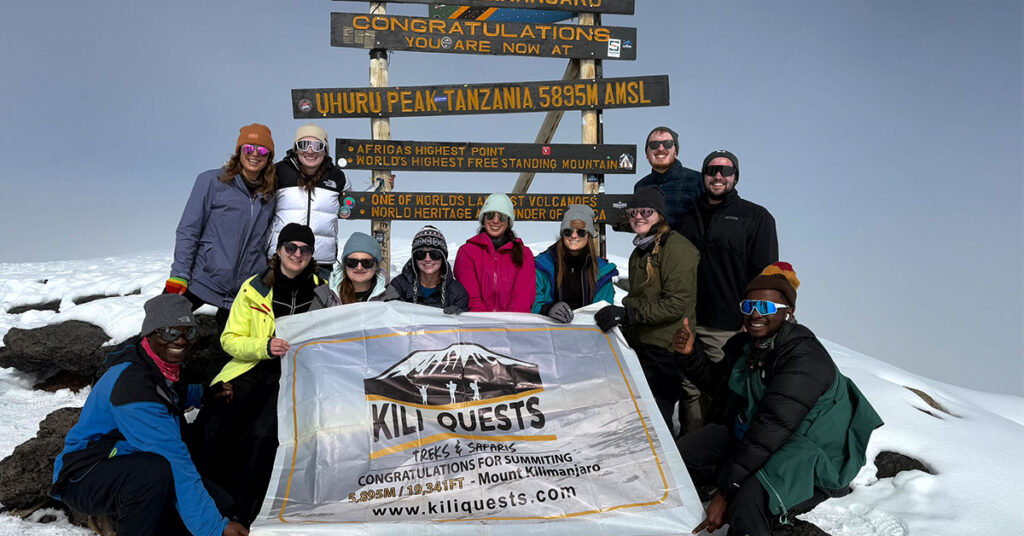
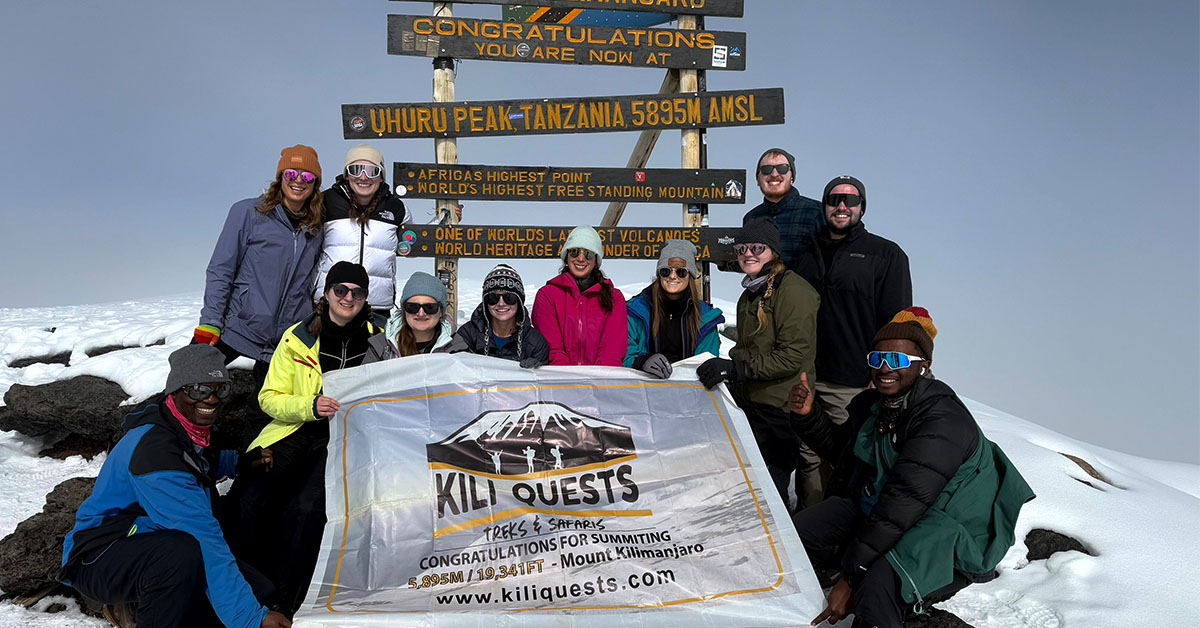
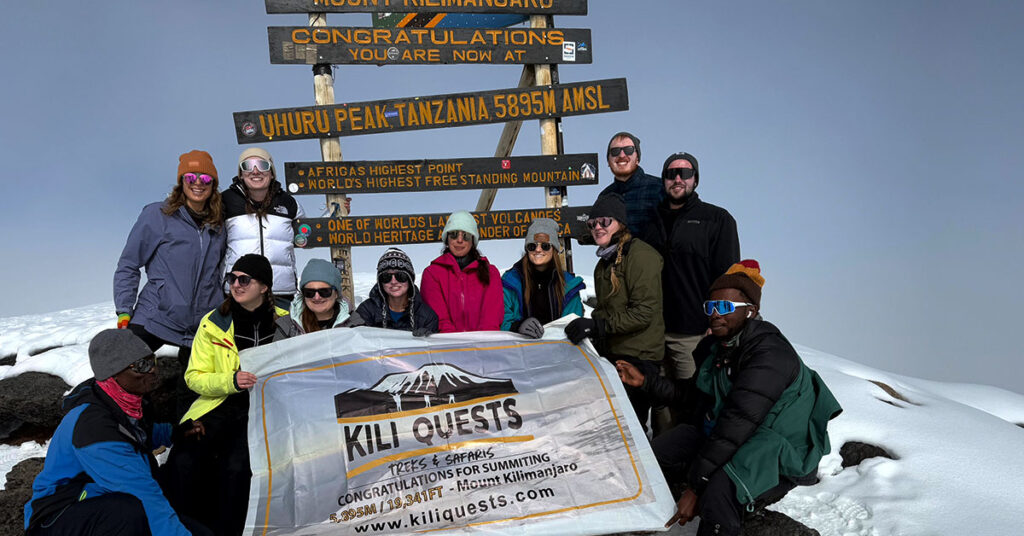
Group of trekkers celebrating together at Uhuru Peak, the summit of Mount Kilimanjaro
A dream fulfilled at 5,895m — our climber reaches the highest point in Africa

Table of Contents

Why Climb with Kili Quests?

Expert Guidance

Our guides have decades of experience on Kilimanjaro and are WFR-certified, offering personal attention, motivation, and altitude safety expertise throughout the climb.
 
Your safety depends on proper altitude management , learn how to acclimatize on Kilimanjaro to increase your summit success

Custom Packages

We tailor every trek to your:
  • Preferred route and pace
  • Gear needs (rentals available)
  • Accommodation and timing preference

Safety First

 
We provide:
  • Emergency oxygen and health checks
  • Direct access to evacuation services
  • High-quality gear and daily support

 A True Tanzanian Welcome

Beyond the summit, we offer a genuine cultural experience, combining the spirit of Chagga hospitality with international trekking standards.
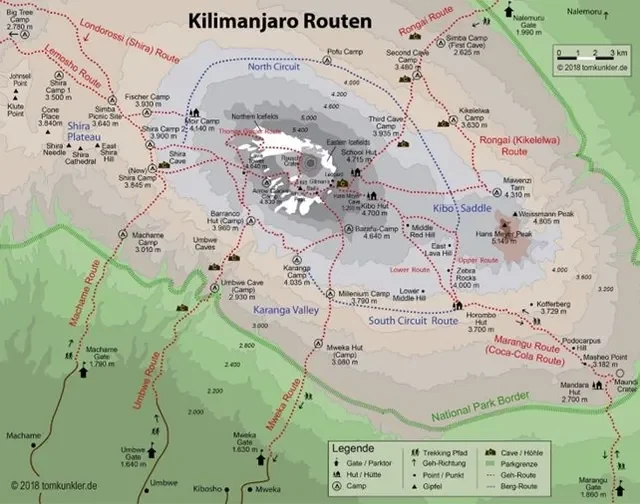
Topographic map showing all major climbing routes on Mount Kilimanjaro, including Machame, Lemosho, Marangu, Rongai, Umbwe, Shira, and Northern Circuit.
This detailed map shows all main Kilimanjaro climbing routes, including Machame, Marangu, Lemosho, Rongai, Umbwe, Shira, and the Northern Circuit, with campsites, elevation points, and park boundaries.

Choosing the Right Kilimanjaro Route

Here’s a quick overview of the top routes we offer , each with its own character and challenge:

Lemosho Route (8 Days)

 Difficulty: Moderate to Challenging
Why Choose It:
  • Most scenic route on the mountain
  • Excellent acclimatization and success rate
  • Fewer crowds = more solitude
Ideal for photographers and first-timers who want the best balance of challenge and success.
 

Machame Route (7 Days)

Difficulty: Challenging
Why Choose It:
  • Diverse terrain including the famous Barranco Wall
  • High success rate with a steady ascent
  • Great for trekkers seeking adventure and views

One of the most popular routes for good reason.


Marangu Route (6 Days)

Difficulty: Moderate
Why Choose It:
  • Only route with hut accommodations
  • Straightforward trail and shorter duration
  • Great for beginners or travelers with limited time
Also called the “Coca-Cola Route” for its comfort and accessibility.
 

Rongai Route (7 Days)

Difficulty: Moderate
Why Choose It:
  • Northern approach = fewer climbers
  • Drier climate and remote trail
  • Offers unique views of Mawenzi Peak
A peaceful option with beautiful scenery and low crowds.
 
Discover why Rongai is ideal during certain seasons.

Umbwe Route (6 Days)

Difficulty: Very Challenging
Why Choose It:
  • Steep, direct, and fast-paced
  • For fit and experienced climbers only
  • More rugged and isolated than other routes
If you want intensity and minimal traffic, this is your route.

Understand why Umbwe is considered one of the toughest routes on Kilimanjaro.

Selfie at Stella Point — 5,756 meters above sea level, just steps from the summit.

How to Book Your Kilimanjaro Climb with Kili Quests

Step 1: Contact Us

Send us a message with:
  • Your preferred route
  • Group size and travel dates
  • Any special requirements

Our team will walk you through every detail.

Step 2: Choose Your Dates

Best time to climb Kilimanjaro:
  • June to October (dry season)
  • December to February (warmer but clear)

Book early — especially during peak months.

Weather plays a major role in your experience , learn the best time to climb Kilimanjaro before choosing your dates.

Step 3: Prepare for the Trek

We’ll send you:
  • A complete packing list
  • Rental gear options
  • Training tips and acclimatization advice
Beginner’s Guide to Climbing Kilimanjaro
 

Step 4: Arrive and Begin the Journey

We’ll greet you at the airport, help you settle in Moshi or Arusha, inspect your gear, and ensure you’re 100% ready before your trek begins.

Why Kili Quests?

  •  Trusted by climbers from around the world
  •  Experienced, licensed, and locally owned
  •  Committed to fair porter treatment and sustainability
  •  Proven high success rates on every route
From the first step to Uhuru Peak, we’re with you every step of the way

Frequently Asked Questions About Booking a Kilimanjaro Climb

How do I book a Mount Kilimanjaro climb?

Most travelers book their trek through a licensed tour operator that arranges permits, guides, porters, and accommodation. Because independent climbing is not allowed, visitors must organize their expedition through an authorized company operating in Mount Kilimanjaro.

Which Kilimanjaro route is best for beginners?

The Lemosho Route is often recommended for beginners because it offers gradual acclimatization, beautiful scenery, and a high summit success rate. The Marangu Route is another beginner-friendly option because it provides hut accommodations instead of camping.

How long does it take to climb Mount Kilimanjaro?

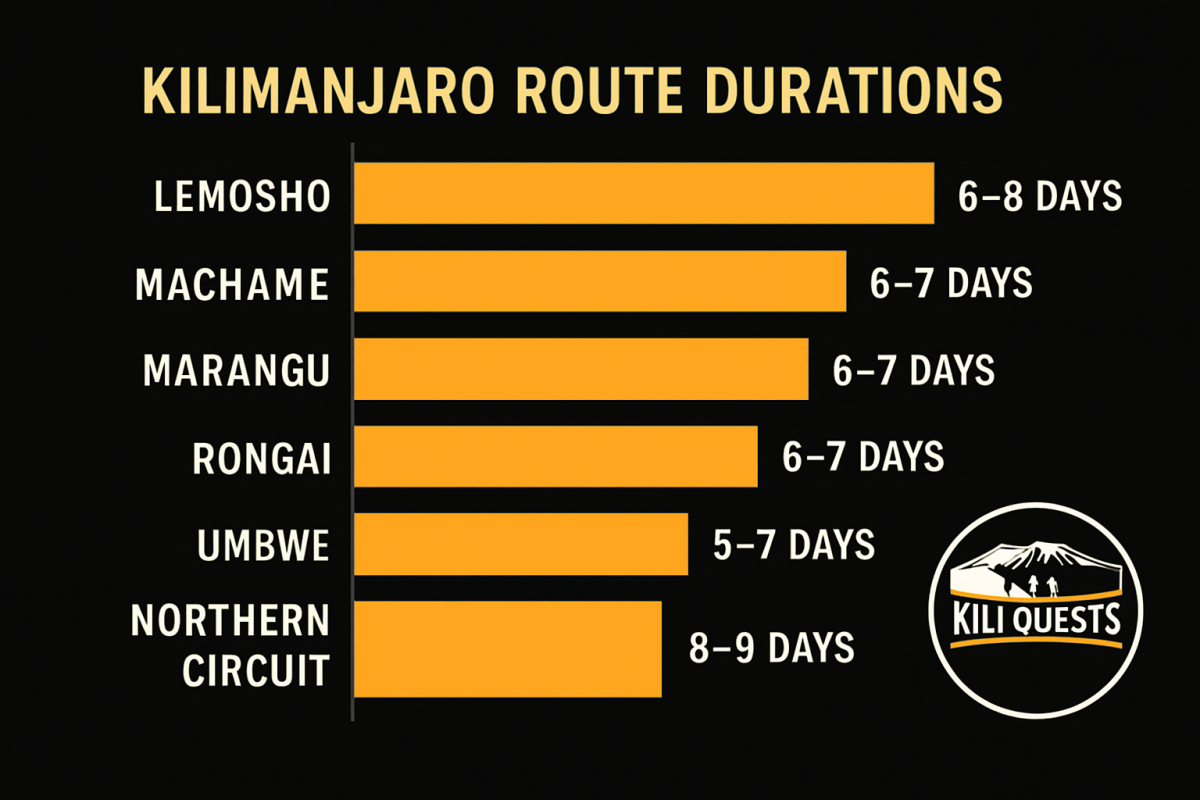
Most Kilimanjaro climbs take 6 to 9 days, depending on the chosen route and acclimatization schedule. Longer itineraries allow trekkers to adjust to the altitude more gradually, which improves the chances of successfully reaching the summit.

What is the best time of year to climb Kilimanjaro?

The best times to climb Kilimanjaro are during the dry seasons from June to October and December to February. These months usually offer clearer skies, better trail conditions, and more stable weather for trekking.

Do I need climbing experience to climb Kilimanjaro?

No technical climbing experience is required. Kilimanjaro is a trekking peak, meaning climbers walk to the summit without ropes or mountaineering equipment. However, good physical fitness and proper altitude preparation are important for a successful climb.

What support team is included on a Kilimanjaro trek?

A typical Kilimanjaro expedition includes a professional mountain guide, assistant guides, cooks, and porters who carry equipment and set up camps. These team members help ensure safety, provide meals, and support trekkers throughout the journey to the summit.

Start Your Kilimanjaro Adventure Today

Are you ready to conquer the Roof of Africa?
Book your Kilimanjaro trek with Kili Quests and let our expert team guide you to the top , safely, successfully, and with memories to last a lifetime.
 
Contact us now to reserve your climb and choose the ideal route for your Kilimanjaro challenge.

Related Articles

Kilimanjaro Night Temperature: Camp & Summit Cold

Prepare for Cold Nights

Kilimanjaro nights get colder as you climb higher. We help you prepare for camp temperatures, summit-night cold, and the right layering system.

Plan Your Climb

Good preparation starts with understanding the key parts of your trek:

OUR CATEGORIES

Kilimanjaro Night Temperature: How Cold Does It Get?

Climbing Kilimanjaro is not cold all the time, but the nights can surprise many trekkers. Lower camps may feel cool and comfortable, while higher camps can drop below freezing. Summit night is the coldest part of the entire climb.

The biggest mistake is thinking Kilimanjaro is warm because it is in Tanzania. During the day, some sections can feel sunny and mild, but after sunset the temperature drops quickly, especially as you gain altitude.

Night temperatures affect your sleep, recovery, energy, and summit performance. If you are cold at camp, you may sleep poorly. If you are underprepared on summit night, the final push to Uhuru Peak can feel much harder than expected.

This guide explains Kilimanjaro night temperatures by camp and elevation, what to expect on summit night, and how to stay warm with the right layers, sleeping bag, and cold-weather preparation.

Quick Answer: How Cold Are Nights on Kilimanjaro?

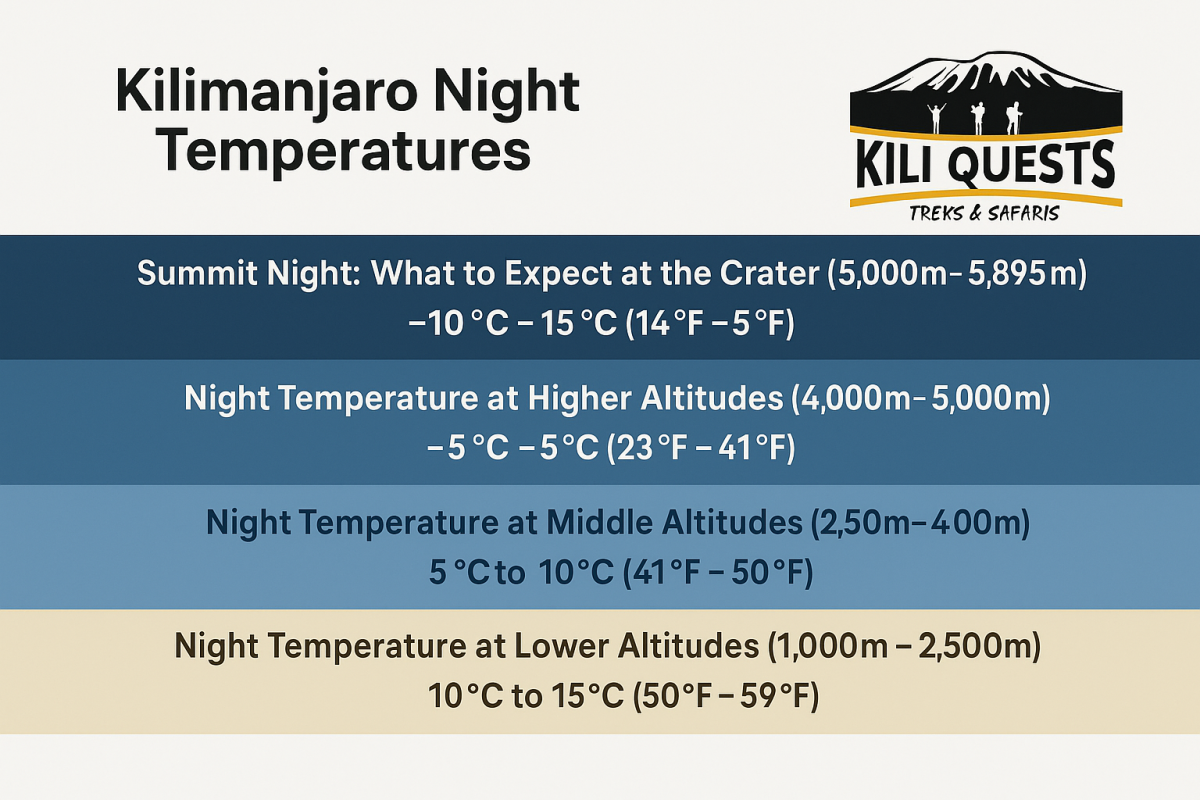
Kilimanjaro nights get colder as you climb higher. Lower camps may stay around 10°C to 15°C, middle camps can drop to around 5°C to 10°C, and higher camps may fall near or below freezing.
Summit night is the coldest stage. Temperatures near the upper mountain and summit can drop to around -10°C to -15°C, and wind can make it feel even colder.
 
To stay warm, climbers need thermal base layers, fleece or insulated mid-layers, a down jacket, warm gloves, a hat, thick socks, and a cold-rated sleeping bag. The goal is not just comfort. Staying warm helps you sleep better, recover properly, and keep enough energy for summit night.
Infographic showing Kilimanjaro night temperatures at different altitudes, from 15°C at 1,000m to -15°C at the summit.
Kilimanjaro Night Temperatures by Altitude – From mild lower camps to extreme summit cold, here’s what to expect during your climb

Table of Contents

Kilimanjaro Night Temperatures by Camp and Elevation

Kilimanjaro does not have one night temperature. The cold depends on your elevation, campsite, wind exposure, and the stage of the climb. Lower camps can feel cool and manageable, while higher camps and summit night can feel freezing.
Camp / Elevation Stage Typical Night Temperature What It Feels Like What to Prepare
Lower Camps / Forest Start
1,000–2,500 m
Around 10°C to 15°C Cool but usually manageable. Humidity and rain can make evenings feel damp. Light fleece, dry base layer, rain protection, and warm socks for camp.
Middle Camps
2,500–4,000 m
Around 5°C to 10°C Noticeably colder after sunset. Many climbers start wearing thermal layers at camp. Thermal base layer, fleece, warm hat, gloves, and insulated jacket for evenings.
High Camps
4,000–5,000 m
Around -5°C to 5°C Cold and exposed. Sleep can become harder because of altitude and freezing conditions. Down jacket, thermal layers, warm socks, gloves, hat, and cold-rated sleeping bag.
Summit Night
5,000–5,895 m
Around -10°C to -15°C or colder with wind The coldest and hardest stage. Wind, darkness, fatigue, and altitude make it feel more severe. Heavy down jacket, thermal layers, windproof shell, warm gloves, face covering, thick socks, and insulated boots.

What Kilimanjaro Nights Feel Like at Different Camps

The temperature number is only part of the story. What matters most is how the cold feels after a full trekking day, when your body is tired, your clothes may be damp, and altitude is already affecting your sleep.

Lower Camps: Cool, Damp, and Usually Manageable

At lower elevations, nights are usually cool rather than freezing. The bigger issue is often moisture. Forest areas can feel damp, and rain or mist can make clothing and boots uncomfortable if they are not protected.
 
At this stage, most climbers are comfortable with a light fleece, dry base layer, warm socks, and a good sleeping bag. Still, do not ignore the lower camps. If your gear gets wet early in the climb, it can create problems later when temperatures drop higher on the mountain.
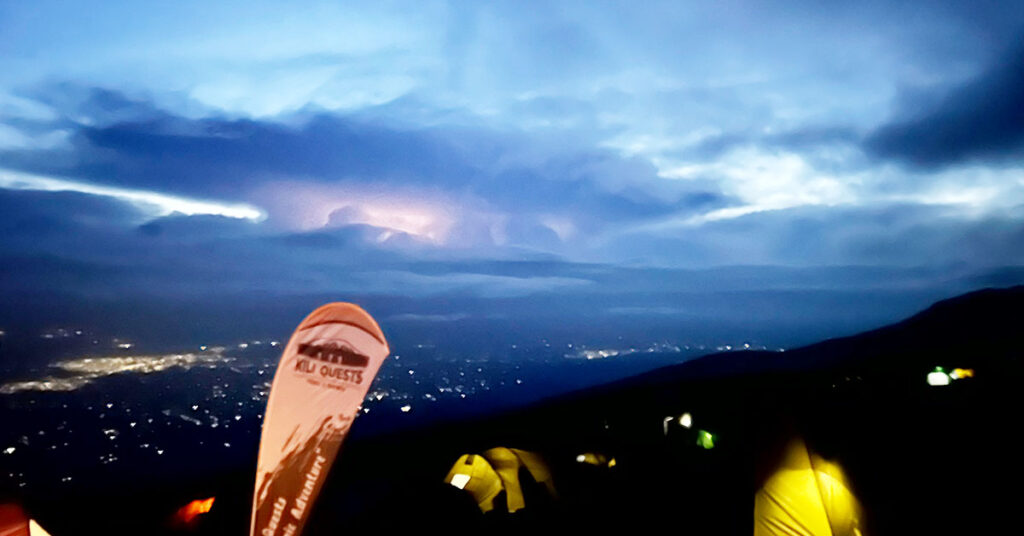
The Kili Quests flag waves under the stars ,with Moshi city glowing far below.

Middle Camps: Where the Cold Becomes Noticeable

Middle camps are where many climbers first realize Kilimanjaro is not just a warm African trek. After sunset, temperatures drop quickly, and sitting around camp can feel much colder than walking during the day.
 
This is when evening layers become important. A fleece, warm hat, gloves, and insulated jacket help you stay comfortable while eating dinner, preparing your gear, or waking up early for the next trekking day.

High Camps: Cold, Exposed, and Harder to Sleep

High camps such as Barafu Camp or Kibo Hut can feel cold, dry, and exposed. At this altitude, sleep often becomes lighter because of both cold and elevation.
 
This is where weak cold-weather preparation becomes obvious. If your sleeping bag is not warm enough, your socks are damp, or your jacket is too light, you may struggle to rest before summit night.
 
At high camps, your focus should be simple: stay dry, stay warm, eat well, drink enough water, and organize your summit gear before sleeping.
The journey tests you, the view rewards you. Stella Point, with Mawenzi Peak looking on.

Kilimanjaro Summit Night Temperature

Summit night is the coldest part of the Kilimanjaro climb. Most summit attempts begin around midnight from high camps such as Barafu Camp or Kibo Hut, when temperatures are at their lowest and the body is already tired from several days of trekking.

How Cold Is Summit Night on Kilimanjaro?

Summit night temperatures can drop to around -10°C to -15°C, and wind can make it feel even colder. The cold feels stronger because climbers are moving slowly, breathing thinner air, and trekking for many hours in darkness before sunrise.
This is not normal camp cold. Summit night cold affects your hands, feet, face, energy, and mental focus. If your layers are weak, the final push can feel much harder than expected.

Why Summit Night Feels So Difficult

The cold is only one part of the challenge. Summit night combines several difficult conditions at once:
  • Freezing temperatures
  • Strong wind exposure
  • Darkness
  • Low oxygen
  • Slow walking pace
  • Physical fatigue
  • Long hours before sunrise
Because the pace is slow, your body may not generate as much heat as it does during normal trekking days. This is why proper layering is critical.

What to Wear on Kilimanjaro Summit Night

For summit night, climbers should prepare with a full cold-weather layering system.
Bring:
  • Thermal base layers
  • Fleece or insulated mid-layer
  • Heavy down jacket
  • Waterproof and windproof shell
  • Warm hat
  • Neck gaiter or face covering
  • Warm gloves and liner gloves
  • Thick socks
  • Insulated hiking boots
  • Optional hand and toe warmers
Do not test your summit-night gear for the first time on the mountain. Make sure your boots, gloves, jacket, and layering system are comfortable before the climb.
 
For a complete summit gear breakdown, read our Kilimanjaro Summit Day Gear Checklist.

Why Kilimanjaro Nights Feel Colder Than the Temperature

Kilimanjaro nights often feel colder than the number on the thermometer. A night that looks manageable on paper can feel much harsher when you add altitude, wind, tiredness, and several days of trekking.
 
This is why climbers should not prepare only for the listed temperature range. You need to prepare for how the cold actually feels on the mountain.

Wind Makes the Cold Feel Stronger

Wind removes body heat quickly, especially at high camps and during summit night. Even if the temperature is around freezing, wind can make your hands, face, and body feel much colder.
 
This is why a windproof outer shell, warm gloves, hat, and neck gaiter are important. Warm layers are not enough if wind cuts through them.

Altitude Makes Recovery Harder

At higher elevation, your body is already working harder because of lower oxygen. This can affect sleep, energy, circulation, and how well you recover overnight.
 
When altitude and cold combine, the night can feel more difficult. You may wake up more often, feel colder than expected, or struggle to get comfortable inside your sleeping bag.

Fatigue Makes You Feel Colder

After several days of trekking, your body is tired. Fatigue can make cold feel worse because you have less energy to generate warmth.
 
This is especially important before summit night. If you arrive at high camp cold, tired, and underprepared, the midnight summit push becomes much harder.
 
Cold nights can make fatigue feel worse, especially at higher camps. Review our Altitude Sickness on Kilimanjaro guide so you understand how altitude affects sleep, energy, and recovery.

Damp Clothing Makes Cold More Dangerous

Wet or damp clothing loses warmth quickly. Sweat, rain, or moisture inside your boots and socks can make you cold later, especially when temperatures drop at camp.
 
This is why dry base layers, spare socks, waterproof storage bags, and proper rain protection matter. Staying dry is one of the easiest ways to stay warm on Kilimanjaro.

How to Stay Warm at Night on Kilimanjaro

Staying warm at night is not only about comfort. It affects sleep, recovery, energy, and your ability to handle the next trekking day. Cold nights become harder as you climb higher, so your routine at camp matters.

Change Into Dry Layers at Camp

Do not sleep in damp trekking clothes. Even if your shirt feels only slightly wet from sweat, it can make you cold once the temperature drops.
 
When you arrive at camp, change into dry base layers, dry socks, and warmer evening clothing. Keep your sleeping clothes protected in a dry bag so they stay dry throughout the climb.

Use the Right Sleeping Bag

A warm sleeping bag is essential on Kilimanjaro, especially at higher camps. For most climbers, a sleeping bag rated around -10°C to -15°C is a safer choice than a lightweight bag.
 
A sleeping bag liner can add extra warmth, and it also helps keep the inside of your bag cleaner during the trek.

Keep Your Hands, Feet, and Head Warm

You lose comfort quickly when your hands, feet, or head get cold. Warm socks, gloves, a hat, and a neck gaiter make a big difference at camp and during summit night.
 
Before sleeping, make sure your socks are dry. If your feet are cold inside the sleeping bag, warming up becomes much harder.

Eat Well and Drink Enough Water

Your body needs energy to stay warm. Eat your meals even if altitude reduces your appetite. Warm drinks, soup, and high-energy food can help your body maintain heat during cold evenings.
 
Hydration also matters. Dehydration can make fatigue and cold feel worse, especially at higher elevation.

Organize Your Morning Gear Before Sleeping

Cold mornings are harder when your gear is scattered. Before you sleep, prepare your headlamp, gloves, hat, jacket, water bottle, and trekking clothes for the next day.
 
This is especially important before summit night. You do not want to search for gloves or batteries in the cold and dark.

Kilimanjaro Cold-Night Packing Checklist

Cold-night preparation on Kilimanjaro is not something to guess. If you pack too light, the higher camps and summit night can become miserable. If you pack smart, you sleep better, recover better, and start each trekking day with more energy.

Essential Clothing for Cold Nights

Bring clothing that keeps you warm without trapping sweat or moisture.
  1. Thermal base layers
  2. Fleece or insulated mid-layer
  3. Down jacket
  4. Warm trekking socks
  5. Dry sleeping socks
  6. Warm hat
  7. Neck gaiter or buff
  8. Liner gloves
  9. Warm outer gloves
Your cold-night clothing should stay dry. Keep important layers inside dry bags or waterproof packing cubes.

Sleeping Gear for Kilimanjaro Nights

Your sleeping setup matters as much as your clothing. Higher camps can become very cold, and poor sleep will affect your recovery.
Bring:
  1. Sleeping bag rated around -10°C to -15°C
  2. Sleeping bag liner for extra warmth
  3. Inflatable or foam sleeping mat if not provided
  4. Dry sleepwear
  5. Small pillow or stuff sack with soft clothing
Do not rely on a light travel sleeping bag. Kilimanjaro is not a normal camping trip.

Small Items That Make Cold Nights Easier

Small items can make a big difference when temperatures drop.
  • Hand warmers
  • Toe warmers
  • Lip balm
  • Headlamp with spare batteries
  • Dry bag for sleeping clothes
  • Extra socks
  • Hot water bottle if your crew provides one
These items are not luxury. On cold nights, they help protect comfort, sleep, and morale.

What Not to Do Before Sleeping

Avoid mistakes that make cold nights worse.
  • Do not sleep in damp trekking clothes
  • Do not leave socks or gloves wet inside your tent
  • Do not wait until you are freezing before adding layers
  • Do not keep your sleeping bag open too long
  • Do not forget to prepare summit-night gear before resting

The goal is simple: stay dry, trap warmth early, and protect your energy for the next trekking day.

For the full gear list, use our Kilimanjaro Packing List before your climb.

Frequently Asked Questions About Kilimanjaro Night Temperatures

How cold does it get at night on Mount Kilimanjaro?

Night temperatures on Mount Kilimanjaro depend on elevation. Lower camps may feel cool, while higher camps can drop near or below freezing. Summit night is the coldest stage, often around -10°C to -15°C, and wind can make it feel even colder.
 
This is why climbers need proper layers, warm gloves, a hat, thick socks, and a cold-rated sleeping bag.

What is the coldest night on Kilimanjaro?

The coldest night is usually summit night. Climbers often begin the summit push around midnight from high camps such as Barafu Camp or Kibo Hut, when temperatures are very low and the body is already tired.
 
The cold feels stronger because summit night combines darkness, wind, slow movement, fatigue, and high altitude.

What sleeping bag rating do I need for Kilimanjaro?

For Kilimanjaro, most climbers should use a sleeping bag rated around -10°C to -15°C. A lighter sleeping bag may not be warm enough for higher camps or cold nights before summit day.
 
A sleeping bag liner can add extra warmth, but it should not replace a proper cold-rated sleeping bag.

Are Kilimanjaro nights cold even in the dry season?

Yes. Dry season does not mean warm nights. Even during popular climbing months, temperatures can drop sharply after sunset, especially at higher camps.
 
The dry season may reduce rain and mud, but cold nights and summit-night freezing conditions are still part of the climb.

Why does Kilimanjaro feel colder than expected?

Kilimanjaro can feel colder than expected because of altitude, wind, fatigue, and damp clothing. At higher elevations, your body is already working harder with less oxygen, and wind can remove heat quickly.
 
This is why staying dry and layering properly matters. A temperature that looks manageable can feel much colder after several days of trekking.

What should I wear at night on Kilimanjaro?

At night, wear dry thermal base layers, warm socks, a fleece or insulated layer, and a warm hat. At higher camps, you may also need a down jacket, gloves, and extra insulation before sleeping.
 
Do not sleep in damp trekking clothes. Change into dry layers at camp so your body can warm up properly inside the sleeping bag.

How do I keep my feet warm at night on Kilimanjaro?

Keep your feet warm by changing into dry socks before sleeping, using a warm sleeping bag, and avoiding damp boots or socks inside the tent. Thick sleeping socks are helpful, but they should not be too tight because tight socks can reduce circulation.
 
On very cold nights, toe warmers can also help, especially before summit night.

Prepare for Cold Kilimanjaro Nights With Kili Quests

Cold nights are part of every Kilimanjaro climb, especially as you move higher toward Barafu Camp, Kibo Hut, Stella Point, and Uhuru Peak. The climbers who handle the cold best are not always the strongest. They are the ones who prepare properly before the trek begins.
 
At Kili Quests, we help you understand what to expect at each stage of the mountain, what layers to bring, how to prepare for summit night, and how to avoid common cold-weather mistakes.
Our local mountain team can help you plan:
  • What to wear at lower, middle, and high camps
  • What sleeping bag rating you need
  • How to layer properly for summit night
  • What cold-weather gear to keep accessible
  • How to stay warm without overpacking

Contact Kili Quests today and tell us your route, travel month, and climbing experience. We will help you prepare for Kilimanjaro’s cold nights and summit conditions with confidence.

Related Articles

How to Choose a Kilimanjaro Tour Company

Plan a Safer Kilimanjaro Climb

Choose your route, pace, and support team with help from experienced local guides.

Helpful Kilimanjaro Planning Guides

OUR CATEGORIES

How to Choose the Best Kilimanjaro Tour Company

Choosing the right Kilimanjaro tour company is one of the most important decisions you will make before your climb. Your operator affects your safety, acclimatization, comfort, crew support, emergency response, and overall summit experience.
 
Kilimanjaro is a non-technical trek, but it is still a serious high-altitude mountain. Weather changes quickly, altitude sickness can develop, and poor planning can turn a dream climb into a dangerous experience. That is why the cheapest company is not always the best choice.
 
A good Kilimanjaro company should provide experienced guides, proper safety equipment, fair porter treatment, transparent pricing, realistic route advice, and strong support before and during the climb.

Quick Answer: What Makes a Good Kilimanjaro Tour Company?

A good Kilimanjaro tour company should be licensed, experienced, safety-focused, transparent about pricing, and serious about porter welfare. The best operators use trained guides, carry oxygen and first-aid equipment, monitor climbers for altitude sickness, recommend routes with enough acclimatization time, and clearly explain what is included in the climb package.
 
Avoid companies that offer very cheap prices without explaining guide experience, park fees, safety equipment, crew treatment, or emergency procedures.
Carrying the spirit of Kili Quests to the top of Africa — a moment to remember at Uhuru Peak.

Expert Knowledge of Kilimanjaro Routes and Terrain

Not every Kilimanjaro route is right for every climber. A good tour company should not simply sell you the route that is easiest to market or cheapest to operate. It should help you choose a route based on your fitness, available time, budget, previous hiking experience, and how well your body may adjust to altitude.
 
Experienced Kilimanjaro guides understand the real differences between routes. For example, Lemosho and Northern Circuit usually give climbers more time to acclimatize, while Marangu is shorter and more direct. Machame is scenic and popular, but it still requires strong pacing and good preparation. Rongai is quieter and drier, but it approaches from the northern side and has a different trail experience.
 
A professional Kilimanjaro operator should help you understand:
  • Which route gives you the best acclimatization profile
  • Which route fits your fitness level and travel schedule
  • How many days you should spend on the mountain
  • What terrain and camp conditions to expect
  • Which routes are better during certain seasons
  • Why the cheapest or shortest route is not always the safest choice
This is where local experience matters. A strong company will explain the advantages and risks of each route honestly, instead of pushing every climber into the same itinerary.
 
For a full breakdown of route difficulty, scenery, acclimatization, and climbing style, read our Kilimanjaro Routes Comparison guide.

Understand What Is Included in the Price

A good Kilimanjaro tour company should clearly explain what is included and excluded before you book. Cheap prices can look attractive, but they may leave out important services such as proper meals, quality tents, experienced guides, private toilets, fair porter wages, airport transfers, or emergency support.

Before comparing prices, check whether the package includes park fees, guides, porters, cooks, meals, camping equipment, safety equipment, accommodation before or after the climb, and transfers.
 
For a deeper breakdown, read our full guide to Kilimanjaro Climb Cost.
Kilimanjaro weather infographic showing climate conditions by altitude (rainforest, moorland, alpine desert, arctic summit) and season (dry season, long rains, short rains) with temperature and weather icons.
Kilimanjaro Weather by Altitude & Season – Understand the climate zones and seasonal changes as you prepare for your climb with Kili Quests.

Navigating Kilimanjaro Weather and Altitude Zones

Kilimanjaro weather changes quickly because the mountain rises through several ecological zones. A climb can begin in warm, humid rainforest and end in freezing summit conditions above 5,000 meters. This is why a good Kilimanjaro tour company should prepare you for more than just walking distance , it should prepare you for changing temperature, wind, rain, and altitude.
 
Experienced guides understand how weather affects the climb. Rain can make lower trails muddy, wind can make higher camps colder, and summit night can feel extremely harsh even during the dry season. Your team should help you pack correctly, pace yourself through each zone, and adjust the plan when conditions require it.
 
At Kili Quests, our guides help climbers prepare for Kilimanjaro’s changing conditions by:
  • Explaining the different climate zones before the climb
  • Advising what clothing and layers to bring
  • Monitoring trail and weather conditions during the trek
  • Adjusting pace when cold, wind, rain, or altitude affects the group
  • Helping climbers stay warm, dry, hydrated, and alert at higher elevations
This kind of experience matters because Kilimanjaro is not one single environment. It is a climb through rainforest, moorland, alpine desert, and arctic summit conditions, often within the same week.
 
For a deeper breakdown, read Kilimanjaro Weather by Altitude and Season to understand what conditions to expect and how to pack properly.

Acclimatization and Altitude Sickness Prevention

Altitude sickness is one of the biggest reasons climbers fail to reach Uhuru Peak. Kilimanjaro is not a technical climb, but the altitude makes it serious. Even strong and fit trekkers can struggle if they climb too fast, choose a short route, or ignore early symptoms.
 
A good Kilimanjaro tour company should build the climb around safe acclimatization, not just speed or price. This means choosing routes with enough days on the mountain, keeping a slow pace, including acclimatization hikes where needed, and monitoring each climber carefully throughout the trek.
 
At Kili Quests, our guides help reduce altitude risk by:
  • Following a slow, steady pace from the first day
  • Using the “climb high, sleep low” principle where the route allows it
  • Recommending longer routes such as Lemosho and Northern Circuit for better acclimatization
  • Watching for symptoms such as headache, nausea, dizziness, unusual fatigue, or loss of appetite
  • Making safety-first decisions if a climber’s condition gets worse
  • Carrying emergency oxygen and first-aid support on the mountain
No company can guarantee that altitude sickness will not happen. But an experienced team knows how to reduce the risk, recognize warning signs early, and respond before a small problem becomes dangerous.
 
For a deeper guide, read Altitude Sickness on Kilimanjaro to understand symptoms, prevention, and why acclimatization matters.

Proper Equipment and Trekking Support

The quality of your equipment and mountain support can affect your comfort, safety, and energy throughout the climb. Kilimanjaro is not a luxury trip, but your tour company should still provide reliable camping gear, safe food preparation, clean toilet arrangements, and proper emergency support.
 
A serious Kilimanjaro company should not leave climbers guessing about what is provided. Before booking, you should know whether the package includes tents, sleeping mats, meals, drinking water, safety equipment, toilets, and crew support.
 
At Kili Quests, our Kilimanjaro climbs include:
  • Four-season mountain tents suitable for changing weather
  • Sleeping support and camp setup by the mountain crew
  • Private portable toilets for better hygiene on the mountain
  • Hot, nutritious meals prepared daily by our cook team
  • Drinking water support throughout the trek
  • First-aid kits, emergency oxygen, and communication equipment
  • Guidance on what personal gear to bring or rent locally
Good equipment does not make Kilimanjaro easy, but poor equipment can make the climb harder than it needs to be. Reliable tents, warm layers, good meals, hygiene support, and safety equipment all help climbers stay stronger and more comfortable during the trek.
 
For personal items such as jackets, sleeping bags, poles, and duffel bags, read our Kilimanjaro Trek Rental Guide to understand what you can bring yourself and what you can rent locally.

How the Company Treats Porters

Porters are the backbone of every Kilimanjaro climb. A responsible tour company should treat them fairly, pay them properly, provide suitable food and gear, and follow safe load limits.
 
Avoid companies that offer extremely cheap climbs without explaining how their crew is paid and supported. If the price is too low, someone is usually paying the real cost , often the porters.
 
A good Kilimanjaro company should care about both the climber’s safety and the mountain crew’s welfare.

Emergency Procedures and Safety Protocols

Emergency preparation is one of the clearest signs of a serious Kilimanjaro tour company. No operator can promise that every climb will be problem-free, but a professional team should know exactly what to do if a climber develops altitude sickness, becomes injured, or needs to descend quickly.
 
A good Kilimanjaro company should have clear evacuation procedures, trained guides, communication equipment, and a safety-first attitude. The most dangerous companies are the ones that ignore symptoms, push climbers too hard, or treat summit success as more important than health.
 
At Kili Quests, our mountain team is prepared to respond quickly if a climber’s condition changes. Our safety support includes:
  • Daily health monitoring during the climb
  • First-aid kits and emergency oxygen on the mountain
  • Communication support between guides and the base team
  • Clear descent procedures if altitude symptoms become serious
  • Access to rescue coordination when needed
  • Helicopter evacuation support where available, with proper travel insurance
  • Guide decisions based on climber safety, not pressure to summit
If a climber’s health declines, the right decision may be to slow down, rest, descend, or end the climb. That is not failure , that is responsible mountain guiding.
 
Before booking, always ask your Kilimanjaro company what happens in an emergency, who makes the decision to descend, what equipment is carried, and whether your travel insurance covers high-altitude trekking and helicopter evacuation.
 
For more details, read Best Medical Insurance for Kilimanjaro Treks to understand why emergency evacuation coverage is important before your climb.
From dense forest to open moorland — Day 2 of the Machame Route brings changing landscapes and rising altitude.

Better Route Planning and Stronger Summit Support

A successful Kilimanjaro climb is not only about fitness. It depends heavily on route choice, pacing, acclimatization, guide decisions, food, hydration, rest, and mental support during the hardest parts of the trek.
 
At Kili Quests, we focus on longer, better-paced routes because they give climbers more time to adjust to altitude. Routes such as Lemosho and Northern Circuit are often preferred for climbers who want a stronger acclimatization profile, quieter trail sections, and a more gradual approach to the summit.
 
We do not believe in pushing every climber onto the shortest or cheapest itinerary. Instead, we help you choose a route that matches your fitness, travel dates, comfort level, and summit goals.
 
Our team supports climbers by:
  • Setting a slow, steady pace from the beginning
  • Encouraging proper hydration and eating at altitude
  • Monitoring energy levels and altitude symptoms
  • Keeping morale strong during long trekking days
  • Preparing climbers mentally for summit night
  • Making safety-first decisions when conditions change
The right tour company should be honest about Kilimanjaro. No company can guarantee the summit. But a well-planned route, experienced guides, proper acclimatization, and strong mountain support can give you a much better chance of reaching Uhuru Peak safely.
 
For a full route breakdown, read our Lemosho Route 8-Day Itinerary or compare it with the Northern Circuit Route before choosing your climb.
Infographic comparing Kilimanjaro summit success rates by route including Lemosho, Machame, Marangu, Rongai, and others, showing Lemosho and Northern Circuit as the most successful.
Kilimanjaro Summit Success Rates – Choose your route wisely: Longer routes like Northern Circuit and Lemosho offer the best acclimatization and summit success

Motivation & Morale

The mountain is both a physical and mental challenge. Our experienced team:
  • Offers encouragement and emotional support
  • Builds camaraderie among climbers
  • Helps you push through summit night , when it counts most

Why Choose Kili Quests for Your Kilimanjaro Climb?

At Kili Quests, we focus on safe, well-supported Kilimanjaro climbs led by experienced local mountain teams. Our goal is not just to get you to the summit, but to help you climb with proper pacing, good acclimatization, reliable camp support, and clear communication from start to finish.
 
We help climbers choose routes based on fitness, time, budget, comfort level, and acclimatization needs. We also explain what is included in the climb package so you understand exactly what you are paying for before you book.
 
Our Kilimanjaro climbs include experienced guides, mountain crew support, daily meals, camping equipment, safety planning, and route guidance designed around your pace and goals.
 
For a full breakdown, see What’s Included in Our Kilimanjaro Climb Package.

Red Flags to Avoid When Choosing a Kilimanjaro Company

Be careful if a Kilimanjaro company cannot clearly explain its safety procedures, guide experience, porter treatment, or what is included in the price. A low price may look attractive, but it can sometimes mean poor equipment, underpaid crew, weak food support, rushed itineraries, or limited emergency preparation.
 
Avoid operators that:
  • Push you toward the cheapest or shortest route without explaining altitude risks
  • Do not clearly mention oxygen, first-aid kits, or emergency procedures
  • Cannot explain porter welfare or crew treatment
  • Give vague answers about park fees, meals, tents, toilets, or transfers
  • Have poor communication before booking
  • Promise guaranteed summit success
  • Offer prices that seem too low compared with proper Kilimanjaro operating costs
A serious Kilimanjaro company should be honest about the challenge, not just eager to take your deposit.

Questions to Ask Before Booking a Kilimanjaro Tour Company

Before booking your climb, ask:
  1. Is the company licensed to operate Kilimanjaro climbs?
  2. How experienced are the guides?
  3. What safety equipment is carried on the mountain?
  4. How does the company handle altitude sickness?
  5. Which route do they recommend for your fitness and schedule?
  6. What is included and excluded in the price?
  7. How are porters treated and supported?
  8. What happens if a climber needs to descend?
  9. Are airport transfers and hotel stays included?
  10. Can they explain the full climb plan clearly before payment?
If a company avoids these questions, that is a warning sign.

Frequently Asked Questions About Choosing a Kilimanjaro Tour Company

Why is choosing the right Kilimanjaro tour company important?

Choosing the right Kilimanjaro tour company affects your safety, acclimatization, comfort, and summit chances. A professional company provides experienced guides, proper route planning, safety equipment, emergency support, good meals, reliable camp setup, and trained crew members who understand high-altitude trekking.

Can I climb Kilimanjaro without a tour company?

No. Independent climbing is not allowed on Mount Kilimanjaro. Climbers must use a licensed Kilimanjaro tour operator and enter through official park gates with registered guides and crew.

What safety equipment should a Kilimanjaro company provide?

A serious Kilimanjaro company should carry first-aid kits, emergency oxygen, communication equipment, and proper camping gear. Guides should also monitor climbers for altitude sickness symptoms and be prepared to slow the pace, adjust the plan, or descend when necessary.

Should I choose the cheapest Kilimanjaro company?

Not always. Very cheap Kilimanjaro climbs can mean rushed itineraries, poor equipment, weak food support, underpaid crew, or limited safety preparation. Price matters, but safety, guide experience, porter welfare, and clear inclusions matter more.

What should I ask before booking a Kilimanjaro climb?

Ask about guide experience, route recommendations, acclimatization days, safety equipment, emergency procedures, porter treatment, meals, tents, toilets, park fees, transfers, and what is included or excluded in the price. A reliable company should answer clearly before you pay.

Plan Your Kilimanjaro Climb with Confidence

Choosing the right Kilimanjaro company is not just about price. It is about safety, experience, honest advice, strong mountain support, and a team that knows how to guide climbers responsibly at altitude.
 
If you want help choosing the right route, understanding the cost, or planning a safe Kilimanjaro climb, Kili Quests can help you build a climb plan based on your fitness, schedule, and goals.
 
Contact us today to start planning your Kilimanjaro climb with a trusted local team.

Related Articles

Kilimanjaro Travel Insurance: High-Altitude Emergency Guide

Plan a Safe Kilimanjaro Climb

The right preparation and support can make all the difference when it comes to safety on the mountain.

Prepare for Kilimanjaro the Right Way

Insurance is just one part of staying safe , your route, acclimatization, and preparation matter just as much.

OUR CATEGORIES

The Best Medical Insurance for Kilimanjaro Treks: What You Need to Know for Emergencies | Kili Quests

Climbing Mount Kilimanjaro is one of the most rewarding adventures in the world , but it also comes with real risks, especially at high altitude where medical support is limited and evacuation can take time.Many climbers focus on training and gear, but one of the most important parts of preparation is often overlooked: proper travel insurance with emergency evacuation coverage.

On Kilimanjaro, the biggest danger is not technical climbing , it’s how your body reacts to altitude. Conditions can change quickly, and in serious situations, immediate evacuation may be required.That’s why choosing the right insurance policy is not optional. It’s a critical safety decision that protects both your health and your finances.

In this guide, we explain why evacuation insurance matters, what to look for in a policy, recommended providers, and how to prepare for emergencies before your climb.
Rocky trails, steady pace — our client pushes upward on Kilimanjaro’s challenging slopes.

Table of Contents

Why Emergency Evacuation Insurance Is Essential

Altitude Sickness Can Affect Anyone

Altitude sickness can begin above 3,000 meters and becomes more serious as you gain elevation. Even strong, experienced climbers can develop symptoms.In severe cases, immediate descent is the only treatment. Evacuation insurance ensures you can:
  • Be transported quickly to a lower altitude
  • Access proper medical care
  • Avoid delays caused by financial or logistical issues
Understanding how altitude affects your body is essential before your climb, which is why every trekker should read about altitude sickness on Kilimanjaro and how to recognize early warning signs.

Remote Terrain and Limited Access

Mount Kilimanjaro is a remote mountain with no road access to most camps. If a serious issue occurs, evacuation may involve:
  • Helicopter rescue
  • Stretcher evacuation
  • Ground transfer to a hospital
These services can cost thousands of dollars without insurance, especially helicopter evacuations coordinated through park rescue systems.

Peace of Mind During Your Climb

With the right insurance, you can focus on your experience instead of worrying about “what if” situations.
You’ll know that:
  • Emergency help is available
  • You are financially protected
  • Decisions can be made quickly based on safety , not cost
This is especially important on longer routes, where exposure to altitude increases over multiple days, which is why choosing the right itinerary by comparing Kilimanjaro routes also plays a key role in reducing risk.

 What to Look for in Kilimanjaro Evacuation Insurance

Not all travel insurance policies are suitable for Kilimanjaro. You need coverage that specifically includes high-altitude trekking and emergency evacuation.
 

Must-Have Coverage

Your policy should include:
  • Helicopter evacuation from Kilimanjaro
  • Ambulance transport to the nearest hospital
  • Emergency descent due to altitude sickness
  • Medical treatment coverage

High-Altitude Coverage Clause

 Many standard insurance policies only cover activities up to 3,000 meters, which is far below Kilimanjaro’s summit at 5,895 meters. Make sure your policy clearly states coverage for trekking up to at least 6,000 meters.

24/7 Emergency Assistance

Choose a provider that offers:
  • A 24/7 global emergency support line
  • Coordination of rescue and treatment
  • Experience working with providers in Tanzania

  Recommended Kilimanjaro Insurance Providers

We’ve received these trusted providers directly from evacuation operators in Tanzania. If your insurance is not listed, we can help confirm whether it is accepted.
Some commonly used providers include:
Provider Country / Region
Allianz Travel International
AXA Travel Insurance International
AIG Travel Insurance International
World Nomads International
Global Rescue USA / International
Redpoint Travel Protection USA
On Call International USA
Europ Assistance Europe / International
Passport Card Israel / International
Protrip / Dr. Walter Germany
Magen Search & Rescue / Clal Insurance Israel
Magnus International Search & Rescue Israel / International
Blue Insurance Ireland
Sports Cover Direct United Kingdom
Lloyd’s of London Insurance United Kingdom
LV Insurance United Kingdom
NIB Travel Insurance Australia / New Zealand
ASC360 Insurance India / International
GeoBlue USA
Discovery Insurance South Africa
Gouda Insurance Denmark / Nordic region
Tryg Forsikring Denmark / Norway
Campbell Irvine United Kingdom
Harel Insurance Company Israel
International Medical Group USA / International
SOS International Nordic region / International
AMREF East Africa
Malayan Insurance Philippines
JS Travel Insurance United Kingdom
Faye Travel Insurance USA
Travelex Insurance USA
Fast Cover Australia
Big Cat Insurance United Kingdom
True Traveller United Kingdom
True Cover United Kingdom

The most important factor is not the brand , it’s whether your policy includes high-altitude coverage and helicopter evacuation.

A chilling welcome at Stella Point — icy silence, breathtaking views, and summit dreams alive.

How to Choose the Right Insurance Policy

Book Your Insurance Early

Purchase your policy as soon as you confirm your trip. This ensures full coverage before departure and avoids last-minute issues.

Compare Coverage Carefully

Focus on:
  • Evacuation limits
  • Altitude coverage
  • Exclusions
Always read the fine print or contact the provider if anything is unclear.

Confirm Key Inclusions

Before finalizing your policy, double-check that it includes:
  • Helicopter evacuation
  • Trekking up to 6,000 meters
  • Emergency treatment and transport

Health and Safety Tips for Kilimanjaro Trekkers

Insurance is essential  but prevention is just as important.

Train Before Your Climb

Improving your fitness reduces fatigue and lowers your risk of injury. A structured plan that includes hiking, cardio, and strength training can make a major difference, especially if you’re preparing for how difficult Kilimanjaro really is.

Understand Altitude Symptoms

Common symptoms include:
  • Headache
  • Nausea
  • Dizziness
  • Fatigue
Recognizing these early and informing your guide is critical for your safety.

Follow Proper Acclimatization

Climb slowly, drink plenty of water, and allow your body time to adjust.
Choosing longer routes with better acclimatization profiles is one of the most effective ways to reduce risk, which is why many climbers compare routes carefully before booking.

Be Prepared Before You Arrive

Travel insurance is not something to arrange at the last minute. It should be part of your overall preparation, just like choosing the right gear and organizing your essentials using a complete Kilimanjaro packing list.
 
Being fully prepared allows you to focus on the experience instead of worrying about unexpected situations.

Be Prepared with the Right Insurance

Evacuation insurance is not optional , it’s your lifeline on the mountain. It protects you from massive bills and gives you fast access to rescue services when needed most.
 
At Kili Quests, we advise every client to secure insurance before arrival and ensure it includes helicopter evacuation and high-altitude coverage.

Frequently Asked Questions About Kilimanjaro Travel Insurance

Do you need travel insurance to climb Mount Kilimanjaro?

Yes. While not always legally required, travel insurance with emergency evacuation coverage is strongly recommended for anyone climbing Mount Kilimanjaro. The mountain’s high altitude and remote terrain mean that medical emergencies may require rapid evacuation and specialized care.

Does Kilimanjaro insurance need to cover high-altitude trekking?

Yes. Many standard travel insurance policies only cover activities up to 3,000 meters. Because Kilimanjaro reaches 5,895 meters, your policy should specifically include high-altitude trekking coverage up to at least 6,000 meters.

Does travel insurance for Kilimanjaro include helicopter evacuation?

Many specialized adventure travel insurance policies include helicopter evacuation from the mountain in case of serious illness or injury. Rescue operations are typically coordinated through park authorities and emergency services working within Kilimanjaro National Park.

What medical emergencies are most common on Kilimanjaro?

The most common medical issue climbers face is altitude sickness, which can occur when ascending too quickly. Other potential concerns include dehydration, exhaustion, injuries from slips or falls, and cold-related conditions during summit night.

How much does Kilimanjaro evacuation cost without insurance?

Emergency evacuations from Kilimanjaro can cost several thousand dollars, especially if helicopter rescue is required. Travel insurance helps cover these expenses and ensures climbers receive rapid medical assistance if needed.

When should you buy travel insurance for a Kilimanjaro trek?

Travel insurance should be purchased soon after booking your trip. Buying early ensures coverage for unexpected issues before departure and guarantees that your policy is active throughout the entire trekking period.

 Let Us Help You Prepare for a Safe Adventure

 Contact Kili Quests today to:

  • Get help choosing the right policy
  • Confirm if your insurance is accepted
  • Ask questions about coverage, altitude, or emergencies

Related Articles

Kilimanjaro Medicines List: What to Bring for Altitude

Stay Safe on Kilimanjaro

Your health is key to reaching the summit safely.

Plan Your Kilimanjaro Climb

Good preparation makes your climb safer and easier.

OUR CATEGORIES

Kilimanjaro Medicine Kit: What to Bring

Climbing Mount Kilimanjaro is a high-altitude trek, so your health preparation matters as much as your fitness. Cold temperatures, long hiking days, lower oxygen levels, dehydration, and poor sleep can all affect how your body performs on the mountain.
 
A good Kilimanjaro medicine kit should help you manage common trail problems such as mild headaches, stomach issues, blisters, allergies, and personal health needs. But medicine should never be used to hide serious altitude symptoms or push through danger signs.
 
Before your climb, speak with a doctor or travel clinic about altitude medication, malaria prevention, personal prescriptions, and any health condition that could affect your trek. You should also understand how altitude affects your body on Kilimanjaro and why proper acclimatization is one of the most important parts of a safe climb.

Quick Answer: What Medicines Should You Bring for Kilimanjaro?

For Kilimanjaro, most climbers prepare a small personal medicine kit with items for altitude concerns, mild pain, nausea, stomach problems, diarrhea, blisters, allergies, hydration support, and personal prescriptions.
 
Altitude medication such as acetazolamide is commonly discussed for high-altitude travel, but it should only be used after advice from a doctor or travel clinic. Medicine does not replace proper acclimatization, slow pacing, hydration, guide monitoring, or descent when symptoms become serious.
 
 The CDC describes acetazolamide as a medicine that can help speed acclimatization in some altitude-risk situations, but prevention still depends heavily on proper ascent planning.
Painkiller carried for use during the climb

Table of Contents

Important Medical Note Before Your Kilimanjaro Climb

This guide is for general planning only. It does not replace advice from a qualified doctor, pharmacist, or travel clinic.
 
Every climber has different health needs, allergies, medication history, and altitude risk. Before traveling to Tanzania, ask a medical professional about altitude sickness prevention, malaria prevention, vaccines, personal prescriptions, and any condition that could affect your climb.
 
Never use medicine to hide worsening altitude symptoms and continue climbing. Headache, nausea, tiredness, dizziness, appetite loss, and sleep problems can be signs of altitude sickness, and symptoms can become serious if ignored.

Kilimanjaro Medicine Kit Overview

Item Why It May Help Important Note
Altitude medication May help some climbers with altitude acclimatization. Discuss with a doctor before your climb.
Pain relief May help with mild headaches, muscle aches, or general discomfort. Do not use painkillers to ignore worsening altitude symptoms.
Anti-nausea medicine May help with nausea or dizziness. Ask a doctor what is safe for you.
Diarrhea treatment Useful for travel-related stomach problems. Severe diarrhea can cause dehydration and should be treated seriously.
Electrolytes Help replace salts lost through sweating, diarrhea, or low appetite. Useful support, but not a cure for altitude sickness.
Blister care Helps protect feet during long trekking days. Pack blister plasters, tape, and basic wound care items.
Allergy medicine May help with mild allergies, dust, or irritation. Bring your usual allergy medicine if you normally use it.
Personal prescriptions Essential for existing medical conditions. Carry enough for the whole trip, plus extra days if possible.

Altitude Medication for Kilimanjaro

Altitude sickness is one of the main health concerns on Kilimanjaro. The best protection is a good route choice, slow pacing, proper acclimatization, hydration, rest, and honest communication with your guide.
 
Some climbers discuss altitude medication such as acetazolamide with a doctor before the climb. This medicine may help the body adjust to altitude, but it is not suitable for everyone and should not be taken without medical advice.
 
Medication should never be treated as permission to rush the mountain. If symptoms become worse, the safest response may be rest, monitoring, or descent.

Pain Relief, Nausea, and Stomach Medicine

Many climbers carry basic medicine for mild headaches, muscle aches, nausea, or stomach discomfort. These items can be helpful, but they must be used carefully.
 
A headache can be a normal discomfort, but it can also be an early altitude symptom. Nausea, vomiting, dizziness, loss of appetite, unusual fatigue, and poor sleep should not be ignored. Tell your guide early if symptoms appear.
 
Do not test new medicine for the first time on the mountain unless your doctor has advised it.

Personal Medication and Prescriptions

 If you use regular medication, bring enough for the full trip plus extra in case of travel delays. This may include asthma inhalers, allergy medicine, diabetes medication, blood pressure medicine, or any other prescribed treatment.
 
Keep important medication in your daypack, not only in your duffel bag. You should also carry a doctor’s note or prescription copy if you travel with controlled or important medication.

First Aid Items for Kilimanjaro

Your guides should carry a mountain first aid kit, but climbers should still bring a small personal kit for minor issues.
 
Useful personal items include blister pads, bandages, antiseptic wipes, medical tape, lip balm, sunscreen, hand sanitizer, and any personal items you normally use for small injuries or irritation.
 
For a full gear list, read our Kilimanjaro packing list.
Essential first aid supplies for mountain safety.

Hydration, Sun Protection, and Recovery

Health on Kilimanjaro is not only about medicine. Hydration, food, sleep, warmth, and sun protection all matter.
 
Drink regularly, eat even when your appetite drops, protect your skin and eyes from strong sun, and keep warm at night. Avoid alcohol before and during the climb because it can affect hydration, sleep, and recovery.
 
Electrolytes can help support hydration, especially if you are sweating heavily or have stomach problems, but they do not prevent altitude sickness by themselves.

Altitude Warning Signs

Tell your guide if you notice headache, nausea, vomiting, dizziness, unusual tiredness, loss of appetite, or difficulty sleeping. These are common altitude sickness symptoms and should be monitored carefully.
 
More serious warning signs include confusion, difficulty walking, severe breathlessness, chest pain, or worsening symptoms that do not improve. CDC adventure travel guidance notes that mental status changes and loss of coordination can be warning signs of high-altitude cerebral edema, while breathlessness at rest can be a sign of life-threatening high-altitude pulmonary edema.

Malaria Medication and Travel Health

Kilimanjaro’s higher elevations are not the same as Tanzania’s lower-elevation regions. Many travelers spend time in Moshi, Arusha, safari parks, Zanzibar, or Dar es Salaam before or after the climb.
 
The CDC recommends that travelers going to certain areas of Tanzania take prescription medicine to prevent malaria, and it lists malaria transmission in areas below 1,800 meters / 5,900 feet. Speak with a doctor or travel clinic before your trip so you know what is right for your itinerary.

When to Seek Medical Help on the Mountain

Tell your guide immediately if symptoms become stronger or do not improve with rest. Do not wait until symptoms are severe.

Important warning signs include:
  1. worsening headache
  2. repeated vomiting
  3. confusion or unusual behavior
  4. difficulty walking straight
  5. severe weakness
  6. chest pain
  7. breathlessness at rest
  8. blue lips or fingers

On Kilimanjaro, your guide’s decision matters. If your symptoms suggest serious altitude illness, the safest option may be to stop climbing, rest, or descend. Medicine should never be used to push through dangerous symptoms.

What Not to Do With Medicine on Kilimanjaro

Medicine can support your climb, but it should never be used to ignore serious symptoms or force your body higher when it is struggling with altitude.
 
Avoid these mistakes:
  1. Do not take unfamiliar medicine for the first time on the mountain.
  2. Do not use painkillers to hide a worsening altitude headache.
  3. Do not continue climbing if symptoms become stronger.
  4. Do not mix medications without medical advice.
  5. Do not rely on medicine instead of proper acclimatization.
  6. Do not ignore your guide’s recommendation to rest or descend.
The safest Kilimanjaro climb depends on preparation, slow pacing, honest symptom reporting, and good guide decisions. Medicine is only one part of the safety plan.

Frequently Asked Questions About Kilimanjaro Medicines

What medicines should I bring for Kilimanjaro?

Most climbers prepare a small personal medicine kit with items for altitude concerns, mild pain, nausea, stomach problems, diarrhea, blisters, allergies, hydration support, and personal prescriptions. Speak with a doctor before taking altitude medication, malaria medication, antibiotics, or unfamiliar medicine.

Do I need Diamox for Kilimanjaro?

Not every climber uses Diamox, which is a brand name for acetazolamide. Some climbers discuss it with a doctor because it may help with altitude acclimatization, but it is not suitable for everyone and should not replace a good route choice, slow pacing, and proper acclimatization.

Should I bring painkillers for Kilimanjaro?

Many climbers bring basic pain relief for mild headaches or muscle aches. However, painkillers should not be used to hide worsening altitude symptoms. If a headache becomes stronger or comes with nausea, dizziness, vomiting, weakness, or confusion, tell your guide immediately.

Should I bring painkillers for Kilimanjaro?

Many climbers bring basic pain relief for mild headaches or muscle aches. However, painkillers should not be used to hide worsening altitude symptoms. If a headache becomes stronger or comes with nausea, dizziness, vomiting, weakness, or confusion, tell your guide immediately.

Do I need malaria tablets for Kilimanjaro?

You may need malaria prevention medicine for Tanzania, especially if your trip includes lower-elevation areas before or after the climb. Speak with a doctor or travel clinic before traveling so your malaria plan matches your full itinerary.

What medicine should I avoid on Kilimanjaro?

Avoid taking unfamiliar medicine for the first time on the mountain unless your doctor has approved it. Also avoid using medication to push through serious symptoms such as worsening headache, repeated vomiting, confusion, difficulty walking, severe weakness, or breathlessness at rest.

Climb Kilimanjaro with Better Health Preparation

Your medicine kit is only one part of a safe Kilimanjaro climb. Route choice, acclimatization, guide support, hydration, nutrition, warm gear, and honest symptom reporting all matter.
 
At Kili Quests, we help climbers prepare with realistic route advice, experienced local guides, daily health monitoring, and clear safety support on the mountain.
 
Contact us today to plan your Kilimanjaro climb with a team that takes health and safety seriously.

Related Articles

How to Acclimatize on Kilimanjaro: Routes, Pace & Tips

Plan Your Kilimanjaro Climb Safely

Altitude is the biggest challenge on Kilimanjaro ,the right route and preparation can make the difference between turning back and reaching the summit.

Choose Your Route

Your acclimatization depends on your route choice. Explore the best Kilimanjaro routes for your goals.

OUR CATEGORIES

How to Acclimatize on Kilimanjaro: Routes, Pace & Tips

Climbing Mount Kilimanjaro is not only a test of fitness. It is a test of how well your body adapts to altitude. The summit rises to 5,895 meters / 19,341 feet, where oxygen levels are much lower than at sea level, so proper acclimatization is one of the most important parts of a safe and successful climb.

Acclimatization means giving your body enough time to adjust as you climb higher. On Kilimanjaro, this depends on your route, number of days, walking pace, rest, hydration, nutrition, and how honestly you report symptoms to your guide.

This guide explains how to acclimatize on Kilimanjaro using practical mountain strategies such as choosing the right route, walking slowly, following the climb-high-sleep-low principle, drinking enough water, eating properly, and listening to your guide. For symptoms, danger signs, oxygen, and descent decisions, read Altitude Sickness on Kilimanjaro.

Quick Answer: How Do You Acclimatize on Kilimanjaro?

The best way to acclimatize on Kilimanjaro is to choose a route with enough days, walk slowly from the beginning, follow the climb-high-sleep-low principle, drink water regularly, eat enough food, rest properly, and report symptoms early to your guide.
 
For most climbers, 7 to 9 days gives the body better time to adjust than a short 5 or 6-day climb. Longer routes such as Lemosho and Northern Circuit usually provide stronger acclimatization profiles because they allow a more gradual approach to higher altitude.
 
Strong acclimatization does not guarantee the summit, but it gives your body a better chance to adapt before summit night.
Acclimatization Strategy What It Means Why It Helps
Choose enough days Pick a route with more time on the mountain. More days give your body more time to adjust to altitude.
Walk slowly Follow a steady “pole pole” pace from the first day. A slower pace reduces stress on your body as elevation increases.
Climb high, sleep low Ascend higher during the day, then sleep lower when the route allows. This exposes your body to altitude while giving it recovery time overnight.
Hydrate and eat well Drink regularly and eat enough even when appetite drops. Good hydration and nutrition support energy, recovery, and adjustment.
Listen to your guide Report symptoms early and follow safety advice. Guides can adjust pace, monitor your condition, and respond early.
Arrival at Barafu Camp — the final base before the summit push

Understanding Acclimatization: What You Need to Know

Kilimanjaro acclimatization guide infographic showing altitude risks and tips for avoiding altitude sickness on the climb
Acclimatization on Kilimanjaro – Understanding altitude and adjusting gradually is the key to reaching Uhuru Peak safely.

Table of Contents

What Is Acclimatization on Kilimanjaro?

Acclimatization is the process your body goes through as it adjusts to lower oxygen levels at high altitude. As you climb Kilimanjaro, the air becomes thinner and your body has to work harder to deliver oxygen to your muscles and brain.
 
Good acclimatization does not happen by rushing. It happens gradually through slow walking, steady altitude gain, enough rest, proper hydration, and enough days on the mountain. This is why the route and itinerary you choose matter so much.
 
On Kilimanjaro, poor acclimatization can lead to headaches, nausea, dizziness, fatigue, poor sleep, and more serious altitude problems. For a full explanation of symptoms and safety response, read Altitude Sickness on Kilimanjaro.

What Happens to Your Body at High Altitude

At high altitude, oxygen levels drop and your body must adapt gradually. If it doesn’t, altitude sickness can occur and affect your ability to continue the climb.
To understand symptoms and risks in detail, read Altitude Sickness on Kilimanjaro.

Why Acclimatization Is Critical for Summit Success

Altitude sickness is the main reason climbers fail to reach the summit. It does not depend on fitness, age, or experience  anyone can be affected.Common symptoms include:
  • Persistent headache
  • Nausea or loss of appetite
  • Fatigue and dizziness
  • Difficulty sleeping
In more serious cases, conditions like High Altitude Pulmonary Edema (HAPE) or High Altitude Cerebral Edema (HACE) can occur, which require immediate descent.
 

Best Acclimatization Strategy for Kilimanjaro

The best acclimatization strategy on Kilimanjaro is simple: choose enough days, walk slowly, gain altitude gradually, rest properly, and let your guide control the pace. The mountain rewards patience, not speed.
A strong acclimatization plan usually includes:
  • Gradual altitude gain
  • A 7 to 9-day itinerary when possible
  • Slow and steady walking from day one
  • Climb-high-sleep-low opportunities
  • Enough food and water each day
  • Daily communication with your guide
  • Rest and recovery before summit night
The goal is not to arrive at camp quickly. The goal is to arrive with enough energy and oxygen adaptation for the next day. This matters most before summit night, when your body is tired and the altitude is highest.
 
If you are still choosing a route, compare the options in Kilimanjaro Routes Comparison: Which Route Is Best?

How to Avoid Altitude Sickness on Kilimanjaro

Strategy What It Means Why It Works
Climb High, Sleep Low Ascend higher during the day, sleep lower Helps your body adapt with less stress
Walk Slowly (Pole Pole) Maintain a slow, steady pace Allows gradual oxygen adaptation
Acclimatization Walks Short hikes above camp after arrival Speeds up adaptation
Hydration & Nutrition Drink 3–4L daily and eat properly Supports recovery and reduces stress

Climb High, Sleep Low

One of the most effective techniques used on Kilimanjaro is the “climb high, sleep low” strategy. During the day, you ascend to a higher elevation, then descend slightly to sleep at a lower altitude.This allows your body to adapt without excessive stress and significantly reduces the risk of altitude sickness. Routes that naturally include this profile tend to have much higher success rates.

Walk Slowly and Maintain a Steady Pace

Speed is not your friend on Kilimanjaro. Moving too quickly reduces your body’s ability to adapt.
  • Walk slowly and consistently
  • Focus on breathing rhythm
  • Avoid rushing to camp
Guides often use the phrase “pole pole” (slowly, slowly) ,and following this advice is one of the most important things you can do.If you’re preparing physically, following a structured Kilimanjaro training plan will help your body handle long trekking days more efficiently.
 
Proper physical preparation also plays a role, and following a structured Kilimanjaro training plan can make it easier for your body to adapt during the climb.

Use Acclimatization Walks at Camp

Short acclimatization hikes after reaching camp are extremely effective. These are usually 100–200 meters above camp and done at a relaxed pace.
These walks:
  • Encourage your body to adapt faster
  • Improve oxygen efficiency
  • Prepare you for the next day’s elevation gain
This strategy is commonly used on well-designed routes and plays a major role in improving summit success.

Stay Hydrated and Eat Properly

Hydration is essential at altitude. As you climb, your body loses fluids more quickly through breathing and exertion.
  • Drink 3–4 liters of water per day
  • Eat high-carbohydrate meals for energy
  • Maintain protein intake for recovery
Poor hydration and nutrition can significantly increase your risk of altitude sickness.

Common Acclimatization Mistakes to Avoid

Many climbers make acclimatization harder by rushing the mountain or choosing the wrong itinerary. These mistakes can increase fatigue and make altitude symptoms more likely.
Avoid these common mistakes:
  • Choosing the shortest route only to save money
  • Walking too fast during the first few days
  • Ignoring headaches, nausea, or dizziness
  • Skipping meals because appetite is low
  • Drinking too little water
  • Not reporting symptoms to your guide
  • Arriving undertrained for long trekking days
  • Choosing a route that does not match your altitude experience
The mountain should not be treated like a race. A slower, better-paced climb gives your body more time to adjust and gives you a stronger chance of reaching summit night in better condition.

Best Kilimanjaro Routes for Acclimatization

Not all Kilimanjaro routes give your body the same amount of time to adjust. Shorter routes may cost less and take fewer days, but they often make altitude harder because the body has less time to adapt.
 
Longer routes usually provide better acclimatization because they spread the altitude gain over more days. For most climbers, this makes the climb feel more manageable and gives better preparation before summit night.
 
The strongest acclimatization routes are usually Lemosho and Northern Circuit. Machame can also be a good option when done over 7 days. Shorter routes like 5-day Marangu or steep routes like Umbwe are usually harder from an altitude perspective.

Best Routes for Acclimatization

The following routes provide the best acclimatization profiles:
Route Recommended Duration Acclimatization Profile Best For
Lemosho Route 7–8 days Gradual western approach with strong altitude adjustment time. First-time climbers who want scenery and better acclimatization.
Northern Circuit Route 8–9+ days Longest route with the most time for gradual adjustment. Climbers who want the strongest acclimatization profile and fewer crowds.
Machame Route 7 days preferred Good climb-high-sleep-low profile when not rushed. Fit climbers who want a scenic, popular, and well-paced route.
Rongai Route 6–7 days More gradual than steep routes, but with fewer climb-high-sleep-low features. Climbers who want a quieter northern approach.
Marangu Route 6 days preferred Can be harder if done too quickly because acclimatization time is limited. Climbers who prefer hut accommodation but still want enough days.
Umbwe Route 6+ days Steep and fast altitude gain, making acclimatization more difficult. Experienced trekkers only.
If acclimatization is your main concern, avoid choosing a route only because it is cheaper or shorter. More days on the mountain often give your body a better chance to adjust. For most first-time climbers, Lemosho, Northern Circuit, or a properly paced 7-day Machame itinerary are stronger choices than short, rushed climbs.

Recognizing Altitude Symptoms Early

Even with good acclimatization, climbers can still feel the effects of altitude. Mild symptoms such as headache, tiredness, poor sleep, or reduced appetite can happen as your body adjusts.
 
Tell your guide immediately if symptoms appear. Do not hide discomfort because you want to continue climbing. Early communication helps your guide monitor your condition and make safer decisions.
 
If symptoms become severe, such as confusion, difficulty walking straight, shortness of breath at rest, or worsening weakness, descent may be necessary. For a full safety guide, read Altitude Sickness on Kilimanjaro.
Stella Point in ice — standing where time stands still and the summit is just within reach.

Why Experienced Guides Make a Difference

Climbing Kilimanjaro is not just about physical strength , it’s about making the right decisions at the right time.
Professional guides:

  • Monitor your oxygen levels and symptoms daily
  • Adjust pace and schedule when needed
  • Plan acclimatization walks strategically
  • Make critical decisions about ascent or descent

At Kili Quests, our team is trained to prioritize safety while maximizing your chances of reaching the summit.

Experienced guides play a major role in your success, especially when combined with a well-planned itinerary like those outlined in our Kilimanjaro climbing packages.

Infographic showing durations of Kilimanjaro routes: Lemosho (6–8 days), Machame (6–7), Marangu (6–7), Rongai (6–7), Umbwe (5–7), and Northern Circuit (8–9 days)
Kilimanjaro Route Durations – Compare how many days each route takes so you can choose the one that fits your schedule and acclimatization needs.

Acclimatization Is the Key to Reaching Uhuru Peak

Reaching the summit of Kilimanjaro is not about speed or strength  it’s about patience, preparation, and proper acclimatization.To give yourself the best chance of success:

  • Choose a longer route with gradual ascent
  • Follow “climb high, sleep low” principles
  • Walk slowly and stay hydrated
  • Listen to your body and your guide

When these factors come together, your chances of standing on Uhuru Peak increase dramatically.

Frequently Asked Questions About Acclimatization on Kilimanjaro

How do you acclimatize properly on Mount Kilimanjaro?

Proper acclimatization on Kilimanjaro involves gaining altitude gradually while allowing your body time to adjust to lower oxygen levels. This is achieved by choosing longer routes, maintaining a slow and steady pace, staying hydrated, and following the “climb high, sleep low” principle. Trekkers who follow these strategies give their bodies enough time to adapt, significantly improving their chances of reaching the summit.

How many days do you need to acclimatize on Kilimanjaro?

Most successful Kilimanjaro climbs take between 6 and 9 days, depending on the route. Longer itineraries such as the Lemosho Route or Northern Circuit Route provide more time for acclimatization and result in higher summit success rates. Shorter climbs may save time but increase the risk of altitude sickness.

What is the best route for acclimatization on Kilimanjaro?

Routes like the Lemosho Route and Northern Circuit Route are considered the best for acclimatization because they offer gradual elevation gain and extra trekking days. These routes allow your body to adjust naturally, reducing the risk of altitude sickness and increasing the likelihood of reaching Uhuru Peak.

How much water should you drink while acclimatizing?

Climbers are generally advised to drink between 3 and 4 liters of water per day while on the mountain. Proper hydration supports circulation, improves oxygen delivery, and helps reduce the effects of altitude. Dehydration can worsen symptoms of altitude sickness, making hydration a critical part of acclimatization.

Can you prevent altitude sickness completely?

Altitude sickness cannot be completely prevented, but it can be significantly reduced with proper acclimatization strategies. Choosing the right route, ascending slowly, staying hydrated, and listening to your guide all play a major role in minimizing risk.

Plan a Kilimanjaro Climb With Better Acclimatization

Acclimatization is one of the most important parts of a successful Kilimanjaro climb. The right route, number of days, pace, guide team, food, hydration, and safety checks all affect how your body handles altitude.
 
At Kili Quests, we help climbers choose realistic itineraries based on fitness, time, route preference, and altitude concerns. Our local guides focus on slow pacing, daily monitoring, proper acclimatization, strong mountain meals, and safe summit preparation.
 
If you are worried about altitude, we can help you choose a route that gives your body better time to adjust.
 
 If you’re planning your climb, explore Best Time to Climb Kilimanjaro and  Kilimanjaro Climbing Cost to prepare properly.
 
Contact Kili Quests today to plan a Kilimanjaro climb with proper acclimatization and experienced local guides.

Related Articles

Kilimanjaro Packing List 2026: What to Bring for Your Climb

Pack Smart for Kilimanjaro

Packing the wrong gear can make your climb harder than it needs to be  especially on summit night.
At Kili Quests, we help you:

Ready for Your Kilimanjaro Climb?

Packing is just one part  route, pace, and acclimatization matter too.At Kili Quests, we help you:

OUR CATEGORIES

Kilimanjaro Packing List: Essential Gear for Your Trek | Kili Quests

Why Packing Properly Matters on Kilimanjaro

Packing for Mount Kilimanjaro is not like packing for a normal trip. Over the course of a single climb, you will move through multiple climate zones  from humid rainforest at the base to freezing, high-altitude conditions near the summit.
This means your gear must handle:
  • Warm daytime temperatures
  • Sudden rain in lower zones
  • Cold nights at camp
  • Extreme wind and freezing temperatures on summit night
Many climbers underestimate how demanding this combination can be. The right equipment doesn’t just improve comfort  it directly affects your ability to reach the summit.
 
At Kili Quests, we’ve guided hundreds of climbers to Uhuru Peak, and one thing is clear: poor packing is one of the most common reasons people struggle on the mountain.Download your packing list here
 
Before your climb, make sure you also understand the risks of altitude in our Altitude Sickness Guide.
Entrance to Kilimanjaro via the Machame Route.

Table of Contents

Kilimanjaro Packing Strategy (Before You Start)

Before diving into the checklist, it’s important to understand how packing works on Kilimanjaro.
You will typically carry:
  • A duffel bag (70–90L) carried by porters
  • A daypack (30–35L) for your daily essentials
Your duffel should contain most of your clothing and gear, while your daypack should carry:
  • Snacks
  • Rain gear( other you carried in backpack)
  • Warm layers
  • Personal items
 Not sure how your route affects what you carry? See our Kilimanjaro Routes Comparison Guide.

Planning Your Kilimanjaro Climb?

Packing is only one part of your success. The right route, pace, and preparation matter just as much.
At Kili Quests, we help climbers:
  • Choose the right gear
  • Avoid common packing mistakes
  • Prepare for real mountain conditions
 Get your custom Kilimanjaro climb plan 

Essential Kilimanjaro Packing List

Clothing (Layering System)

Layering is the foundation of your clothing system on Kilimanjaro.
You will constantly adjust your layers depending on temperature, altitude, and activity level. Instead of one heavy outfit, you’ll wear multiple layers that can be added or removed.
Essential clothing:
  • Waterproof insulated jacket – Critical for summit night
  • Fleece or down jacket – Provides mid-layer warmth
  • Rain jacket and rain pants – Protect against sudden weather changes
  • Thermal base layers (top and bottom) – Essential for cold nights
  • Convertible hiking pants – Practical for changing conditions
  • Long and short-sleeved shirts – Moisture-wicking preferred
  • Fleece pants – Comfortable for camp
 Avoid cotton , it traps moisture and makes you colder.

Headwear & Gloves

Your head and hands are highly exposed, especially during summit night.
Headwear:
  • Sun hat or cap – Protects against strong UV
  • Warm hat (fleece or wool) – Essential for cold evenings
  • Buff or balaclava – Protects face from wind and cold
Gloves:
  • Insulated gloves – For freezing conditions
  • Lightweight gloves – For layering and milder weather

Footwear for Kilimanjaro

Footwear is one of the most important decisions you’ll make.Poor footwear leads to blisters, discomfort, and even failed summits.
You’ll need:
  • Waterproof hiking boots (well broken-in)
  • Camp shoes or sandals
  • Gaiters (for mud, snow, and rocks)
  • Hiking socks (5 pairs, moisture-wicking)
  • Sock liners (to prevent blisters)
 Many climbers fail due to foot problems  preparation here is critical.

Gear & Equipment

These items support your daily trekking and comfort.
  • Daypack (30–35L, waterproof)
  • Duffel bag (70–90L, carried by porters)
  • Sleeping bag (-10°C to -17°C rating)
  • Sleeping bag liner (extra warmth)
  • Trekking poles (reduce strain on knees)
 Longer routes improve acclimatization , learn more in our Kilimanjaro Duration Guide.

Hydration & Accessories

Staying hydrated at altitude is essential for performance and safety.
  • Water bladder (2–3L)
  • Water bottle (backup)
  • Sunglasses (UV protection)
  • Quick-dry towel

Personal Gear & Electronics

  • Headlamp (with extra batteries) – Required for summit night
  • Power bank – Charging is limited on the mountain
  • Camera or smartphone

Toiletries & Hygiene

Maintaining hygiene helps you stay comfortable over multiple days.

  • Sunscreen (SPF 30+)
  • Lip balm with SPF
  • Wet wipes
  • Hand sanitizer
  • Toilet paper
  • Small first aid kit
  • Blister treatment kit

Learn What to pack for hygiene and Cleaning tools for your climb trip 

Important Documents

Do not overlook this section  it’s critical for your trip.
  • Passport (valid for at least 6 months)
  • Tanzania visa
  • Travel and medical insurance
  • Any required health documents
 Planning your budget? See our Kilimanjaro Cost Guide.
Celebrating at Uhuru Peak with our amazing guide Fredy — a.k.a. Freedom!

Final Packing Tips from Kilimanjaro Guides

After guiding many climbs, these are the most important lessons:
  • Pack light — porter limits apply (15–20kg)
  • Use dry bags or zip locks to protect gear
  • Break in your boots before your trip
  • Test all equipment in advance

Frequently Asked Questions About Packing for Kilimanjaro

What should you pack for a Mount Kilimanjaro trek?

Packing for Kilimanjaro requires more than just bringing warm clothes. You need a complete system that works across different climate zones. This includes layered clothing, waterproof gear, proper footwear, and essential equipment like a sleeping bag and headlamp.The goal is not just comfort  it’s maintaining energy, staying dry, and adapting to changing conditions throughout the trek.

How many bags can you bring on Kilimanjaro?

Most climbers use two main bags: a duffel bag carried by porters and a daypack carried during the hike.Porter weight limits are strictly enforced, so packing efficiently is important. Your daypack should always contain items you may need during the day, such as water, rain gear, and warm layers.

What sleeping bag rating is recommended?

A sleeping bag rated between -10°C and -17°C is recommended for Kilimanjaro.
Even if temperatures feel manageable at lower camps, nights become significantly colder at higher altitude — especially before summit night.

Do you need special hiking boots?

Yes , proper hiking boots are essential.
They should be:
  • Waterproof
  • Provide ankle support
  • Already broken in
New boots can cause blisters quickly, which can seriously affect your ability to continue the trek.

Can you rent gear in Tanzania?

Yes, many climbers rent equipment locally.Items like sleeping bags, jackets, and trekking poles are commonly available in Moshi or Arusha. However, personal items like boots and base layers are best brought from home.

Why is layering important?

Layering allows you to adjust your clothing based on changing conditions.You may start your day in warm sunshine and end it in freezing temperatures. A proper layering system helps regulate body temperature, maintain comfort, and prevent overheating or chilling.

Plan Your Kilimanjaro Trek With Kili Quests

Packing is only one part of preparing for Kilimanjaro  the real success comes from combining the right gear with the right strategy.
At Kili Quests, we help you:
  • Prepare your full packing system
  • Choose the best route and schedule
  • Increase your chances of reaching the summit
 Start planning your Kilimanjaro climb today
 
If you’re new to high-altitude trekking, start with our Climbing Kilimanjaro for Beginners Guide to understand what to expect and how to prepare properly.

Related Articles