Start Your First Kilimanjaro Climb

Not sure if you’re ready to climb Kilimanjaro?
At Kili Quests, we help first-time trekkers:

Preparing for Your First Kilimanjaro Climb

Beginners can climb Kilimanjaro — route, timing, and acclimatization matter. Explore these guides:

OUR CATEGORIES

Climbing Kilimanjaro for Beginners: First-Time Trek Guide

Climbing Mount Kilimanjaro is a bucket-list adventure, but for many first-time trekkers, it also raises serious questions. How hard is it? Do you need climbing experience? Can beginners really reach the summit?
 
The good news is that Kilimanjaro is one of the most accessible high-altitude mountains in the world because the standard routes do not require ropes, ice axes, or technical mountaineering skills. But that does not mean the climb is easy.
 
Success depends on preparation, pacing, route choice, altitude awareness, and the support team guiding you up the mountain.
 
If you are new to trekking, this guide explains what beginners should expect before climbing Kilimanjaro, including difficulty, routes, training, packing, altitude, safety, and summit preparation.
 
For a full preparation plan, see our Kilimanjaro training guide.

Quick Answer: Can Beginners Climb Kilimanjaro?

Yes, beginners can climb Mount Kilimanjaro, and many first-time trekkers reach the summit every year. You do not need technical climbing experience, but you do need proper preparation, good fitness, a realistic route choice, and enough days on the mountain for acclimatization.
 
The biggest challenge for beginners is not climbing skill. It is altitude, endurance, cold weather, and summit night fatigue. Choosing a longer route, walking slowly, training before the trek, and climbing with experienced guides gives first-time climbers a much better chance of success.
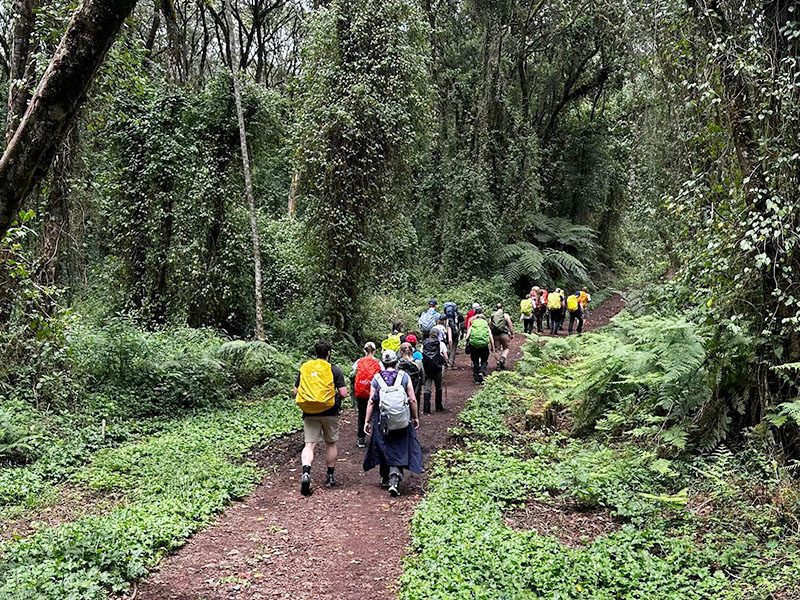
Climbers walking through Kilimanjaro’s rainforest trail with excitement | Kili Quests
First-time climbers begin their Kilimanjaro journey through the rainforest trail.

Table of Contents

Is Kilimanjaro Suitable for Beginners?

Yes, Kilimanjaro is suitable for beginners, but only if you respect the challenge. It is often called a “walkable mountain” because the standard trekking routes do not require ropes, technical climbing, or previous mountaineering experience.
 
However, Kilimanjaro is still a serious high-altitude trek. Beginners must be ready to walk for several hours a day, sleep at altitude, handle changing weather, and follow a slow pace for multiple days.
 
Many first-time climbers succeed because they choose the right route, train before the climb, listen to their guides, and give their bodies enough time to adjust to altitude.
 
For a deeper look at the challenge, read How Hard Is It to Climb Kilimanjaro?

What Makes Kilimanjaro Difficult for Beginners?

Kilimanjaro is not difficult because of technical climbing. It is difficult because of altitude, long walking days, cold conditions, and the mental challenge of summit night.
 
Most beginners struggle with:
  1. Walking for several days in a row
  2. Sleeping at higher elevations
  3. Cold temperatures near the summit
  4. Loss of appetite at altitude
  5. Headaches or fatigue from altitude
  6. The long overnight summit push
  7. Staying patient with the slow “pole pole” pace
This is why beginners should not choose the shortest route just because it is cheaper or faster. A longer itinerary gives your body more time to acclimatize and gives you a better overall summit profile.

How Long Does It Take to Climb Kilimanjaro?

Most Kilimanjaro routes take between 6 and 9 days. For beginners, the number of days matters because a longer route gives your body more time to adjust to altitude.

Shorter routes may look attractive because they cost less and take fewer days, but they can be harder on the body. Beginners usually do better with routes that allow gradual acclimatization.
 
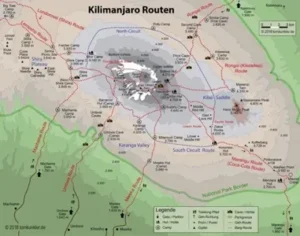
Route Typical Duration Beginner Notes
Marangu Route 5 to 6 days Hut accommodation, but the ascent can feel faster for beginners.
Machame Route 6 to 7 days Popular route with better acclimatization when done in 7 days.
Lemosho Route 7 to 8 days Scenic route with a strong acclimatization profile for first-time climbers.
Northern Circuit Route 8 to 9 days Longest route with the most gradual acclimatization profile.
For most beginners, we recommend choosing at least 7 days on the mountain when possible. The extra time helps with acclimatization, comfort, and confidence.

Which Kilimanjaro Route Is Best for First-Time Climbers?

The best Kilimanjaro routes for beginners are usually the routes that offer better acclimatization, steady pacing, and enough time on the mountain. The goal is not to choose the easiest-looking route. The goal is to choose the route that gives your body the best chance to adapt.
 
For many first-time climbers, the strongest options are:
  1. Lemosho Route: scenic, gradual, and excellent for acclimatization
  2. Machame Route: popular, scenic, and strong when done in 7 days
  3. Northern Circuit Route: longer, quieter, and very good for acclimatization
  4. Marangu Route: hut-based, but faster and less forgiving if rushed
Beginners should be careful with very short itineraries. Saving one day can increase the physical pressure and reduce acclimatization time.
 
For a full route-by-route breakdown, read Kilimanjaro Routes Comparison: Which Route Is Best?

Do Beginners Need Climbing Experience or Special Gear?

No technical climbing experience is required for the standard Kilimanjaro routes. You do not need ropes, ice axes, crampons, or mountaineering skills.
 
You do need proper trekking gear. Kilimanjaro has several climate zones, so beginners must be prepared for rainforest conditions, cold nights, wind, rain, and freezing summit temperatures.
 
Essential beginner gear includes:
  1. Waterproof hiking boots
  2. Warm base layers
  3. Insulating jacket
  4. Waterproof rain jacket and trousers
  5. Trekking poles
  6. Warm gloves and hat
  7. Sleeping bag rated for cold conditions
  8. Daypack for water, snacks, rain gear, and personal items
For the full list, use our Kilimanjaro packing list.

How Fit Do Beginners Need to Be for Kilimanjaro?

You do not need to be an athlete to climb Kilimanjaro, but you must be able to walk for several hours a day for multiple days in a row.
 
A good beginner fitness target is being comfortable with:
  1. Hiking for 5 to 7 hours in a day
  2. Walking uphill at a slow, steady pace
  3. Carrying a small daypack
  4. Recovering overnight and trekking again the next day
  5. Staying mentally patient when the pace feels slow
Many beginners worry too much about speed. Kilimanjaro is not a race. Endurance, consistency, and patience matter more than intensity.
 
For a full preparation plan, read our Kilimanjaro training guide.

What Should Beginners Know About Altitude Sickness?

Altitude sickness is one of the biggest reasons climbers turn back on Kilimanjaro. It can affect beginners and experienced hikers alike because fitness does not guarantee altitude adaptation.
 
Beginners can reduce altitude risk by:
  1. Choosing a longer route
  2. Walking slowly from the first day
  3. Drinking enough water
  4. Eating regularly, even when appetite drops
  5. Listening to guide instructions
  6. Reporting symptoms early
  7. Avoiding alcohol before the climb
  8. Considering altitude medication after medical advice
The safest mindset is simple: do not rush the mountain. Slow pacing gives your body a better chance to adjust.
 
For a deeper guide, read Altitude Sickness on Kilimanjaro: Symptoms & Prevention.
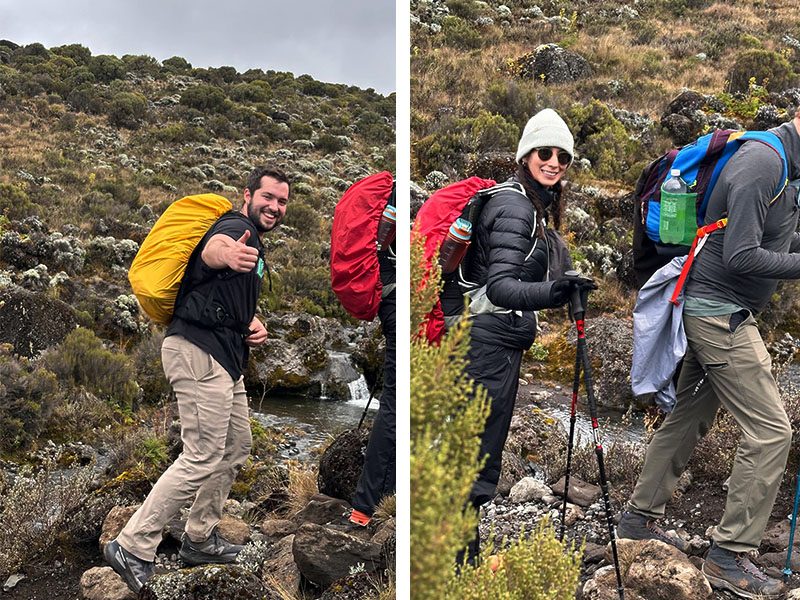
Kilimanjaro guide assisting climber with health check on trail | Kili Quests
Guides support climbers with pacing, health checks, and altitude awareness throughout the trek.

What Does a Typical Day on Kilimanjaro Look Like?

Most days on Kilimanjaro follow a steady rhythm. You wake up early, have breakfast, pack your daypack, and begin trekking with your guide. Porters move ahead to prepare the next camp while you walk at a slow, steady pace.
 
A normal trekking day usually includes:
  1. Morning tea and breakfast
  2. Health check and route briefing
  3. 4 to 7 hours of trekking
  4. Short breaks for snacks, water, and photos
  5. Arrival at camp in the afternoon
  6. Rest, dinner, and evening briefing
Summit day is different. It usually starts before midnight and can take 12 to 15 hours round-trip, depending on the route, pace, and conditions. This is often the hardest part of the climb for beginners because it combines altitude, cold, darkness, and fatigue.
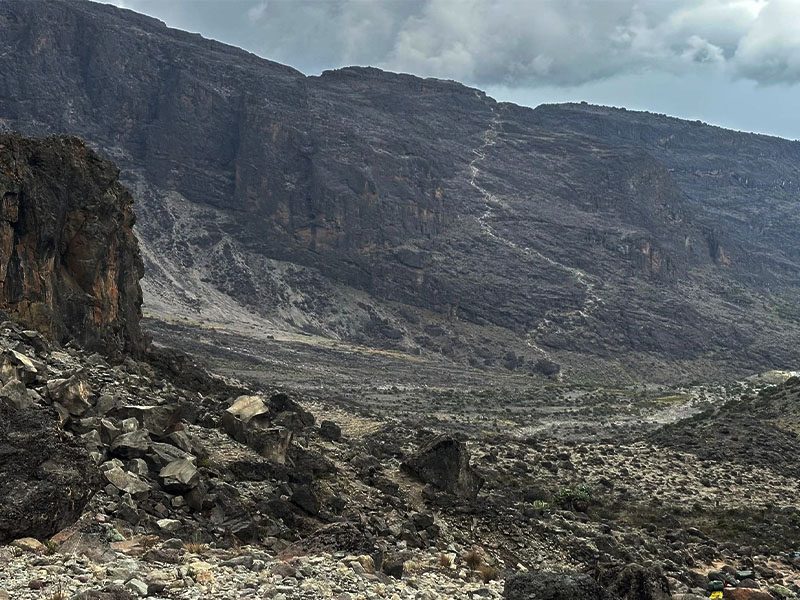
Trekker walking at high altitude toward Kilimanjaro’s summit | Kili Quests
Step by step, beginners gain confidence as they climb into Kilimanjaro’s higher zones.

Do Beginners Have to Carry Their Own Gear?

No. On a guided Kilimanjaro climb, porters carry your main duffel bag between camps. You only carry a daypack with the items you need during the day.
 
Your daypack should usually include:
  1. Water
  2. Snacks
  3. Rain jacket
  4. Warm layer
  5. Sunscreen
  6. Sunglasses
  7. Camera or phone
  8. Personal medication
  9. Small first aid items
Your main duffel should stay within the operator’s allowed weight limit. Pack carefully and avoid bringing unnecessary items.
 
For available equipment options, see our Kilimanjaro gear rental guide.

What Happens If a Beginner Cannot Reach the Summit?

Your safety is more important than the summit. If you cannot continue because of altitude sickness, exhaustion, injury, or another health concern, your guide will help you descend safely.

Turning around does not mean the climb was a failure. Many climbers who do not reach Uhuru Peak still complete a major personal challenge, experience Kilimanjaro’s landscapes, and learn what it takes to climb at high altitude.
 
A responsible guide team will never force a climber to continue when it is unsafe. The goal is always a safe climb, a safe descent, and a positive mountain experience.

How Should Beginners Prepare Before Booking Kilimanjaro?

Beginners should prepare before booking by choosing the right route, understanding the difficulty, checking the best season, and making sure they have enough time to train.
 
Before booking, think about:
  1. How many days you can spend on the mountain
  2. Whether you prefer a scenic route, quieter trail, or hut accommodation
  3. Your current fitness level
  4. How much time you have to train
  5. Your travel dates and weather conditions
  6. Your budget
  7. The experience and safety standards of the operator
A good Kilimanjaro operator should explain the route clearly, help you understand what is included, check your gear, brief you before the climb, and guide you at a safe pace on the mountain.
 
For planning costs, read Kilimanjaro Climb Cost. For weather and season advice, read Best Time to Climb Kilimanjaro.

Common Beginner Mistakes to Avoid on Kilimanjaro

Many first-time climbers struggle not because Kilimanjaro is technical, but because they make poor planning decisions before the climb begins.
 
Avoid these beginner mistakes:
  1. Choosing the shortest route only to save money or time
  2. Underestimating altitude sickness
  3. Training only for fitness but not hiking endurance
  4. Wearing new boots for the first time on the mountain
  5. Packing too much unnecessary gear
  6. Walking too fast during the first few days
  7. Ignoring early symptoms like headache, nausea, or unusual fatigue
  8. Choosing an operator without checking safety standards and crew support
The best beginner strategy is simple: choose enough days, train consistently, pack properly, walk slowly, and listen to your guides.
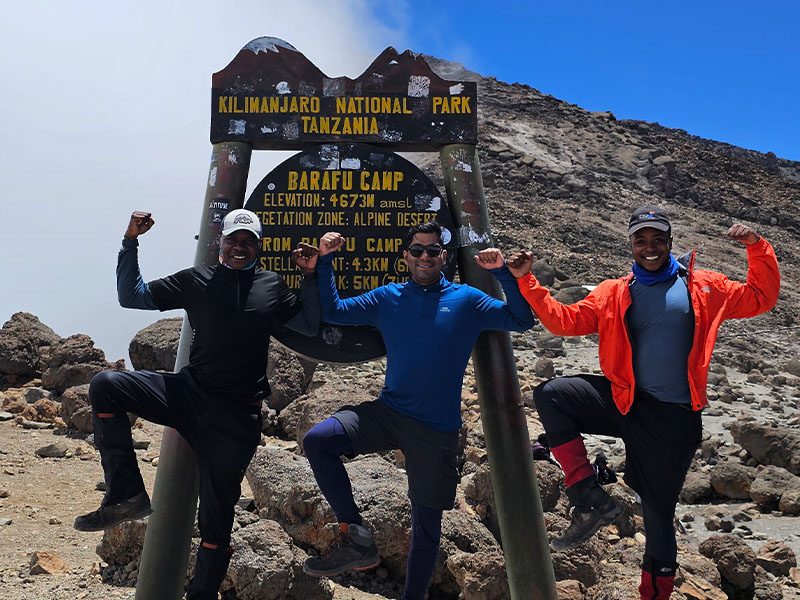
Three happy trekkers posing in front of the Barafu Camp sign on Kilimanjaro’s Northern Circuit Route, flexing muscles before summit day | Kili Quests
A light moment at Barafu Camp before the final summit push to Uhuru Peak.

Frequently Asked Questions About Climbing Kilimanjaro for Beginners

Can beginners really climb Mount Kilimanjaro?

Yes, beginners can climb Mount Kilimanjaro. The standard routes are trekking routes, not technical climbing routes, so you do not need ropes or mountaineering experience. However, beginners still need training, proper gear, a good route choice, and enough time for acclimatization.

Is Kilimanjaro hard for beginners?

Yes, Kilimanjaro is challenging for beginners because of altitude, long walking days, cold weather, and summit night fatigue. The climb is not technical, but it requires endurance, patience, and mental strength.

What is the best Kilimanjaro route for beginners?

Lemosho, Machame 7-day, and Northern Circuit are strong choices for beginners because they offer better acclimatization profiles. Marangu can suit climbers who prefer hut accommodation, but the ascent is faster and needs careful pacing.

How long should beginners take to climb Kilimanjaro?

Most beginners should choose at least 7 days if possible. Longer routes give the body more time to adapt to altitude and usually provide a better overall climb experience.

Do I need climbing experience for Kilimanjaro?

No technical climbing experience is required. You should, however, be comfortable hiking for several hours a day and walking uphill at a slow, steady pace.

What is the hardest part of Kilimanjaro for beginners?

For most beginners, the hardest part is summit night. It is long, cold, dark, and physically demanding because it happens at high altitude after several days of trekking.
How much does it cost to climb

Your First Kilimanjaro Climb Starts Here

Thousands of first-time climbers attempt Kilimanjaro every year. The ones who do best are not always the strongest or fastest. They are the ones who prepare properly, choose the right route, walk slowly, and climb with a team that understands altitude and safety.
 
At Kili Quests, we help beginners plan Kilimanjaro climbs with honest route advice, experienced local guides, proper safety support, and clear preparation guidance before the trek begins.
 
If this will be your first high-altitude climb, contact us today and we will help you choose the right route, number of days, and preparation plan for your Kilimanjaro adventure.

Related Articles