Plan Your Kilimanjaro Climb Budget

Climbing Kilimanjaro is a major investment choosing the right route and support team makes all the difference.
At Kili Quests, we help you:

Explore More Kilimanjaro Planning Guides

Cost is just one part of planning your climb. Explore these guides to choose the right route and prepare properly.

OUR CATEGORIES

How Much Does It Cost to Climb Kilimanjaro? Full Price Breakdown

Climbing Mount Kilimanjaro is not a cheap trip, and anyone planning this adventure should understand that from the start. The total cost of climbing Kilimanjaro usually starts from around $2,000 per person, with many standard climbs falling between $2,500 and $3,500, while higher-comfort and luxury climbs often start from $3,500 and go higher depending on the route, number of days, group size, and level of service.


That price range confuses many travelers at first. One company may advertise a lower price, while another charges much more for what seems like the same mountain. But Kilimanjaro pricing is not random. The final cost is shaped by a few major factors, including national park fees, guide and porter support, itinerary length, safety equipment, and the overall quality of service during the climb.


In this guide, we break down the real cost of climbing Kilimanjaro, explain what is usually included, show what extra expenses to plan for, and help you understand why some climbs cost more than others.
 
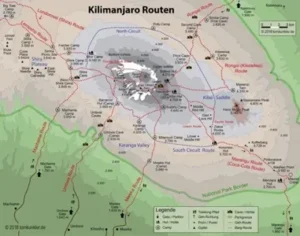
Choosing the right route has a major impact on both cost and success , see our Kilimanjaro Routes Comparison: Which Route Is Best? to find the best option for your budget and experience.
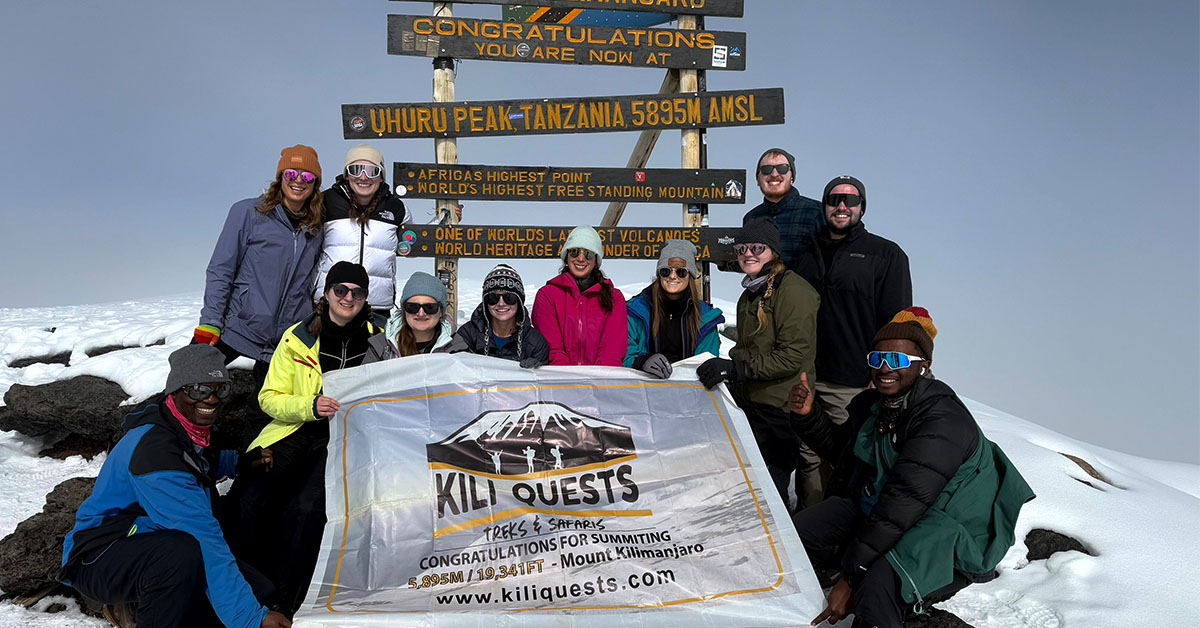
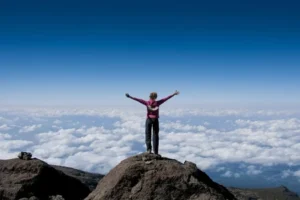
Group of trekkers celebrating together at Uhuru Peak, the summit of Mount Kilimanjaro
Kilimanjaro climbers at Uhuru Peak with their guide team after a successful summit.

Table of Contents

Average Cost to Climb Mount Kilimanjaro

For most climbers, the average cost of climbing Mount Kilimanjaro can be grouped into three main categories. Budget climbs usually range from $2,000 to $2,500 per person, standard climbs from $2,500 to $3,500, and luxury climbs typically start from $3,500 and above.
 
Budget climb……………….  $2,000 – $2,500
Standard climb……………  $2,500 – $3,500
Luxury climb……………….  $3,500 plus
 
These ranges usually cover the mountain portion of the trip, but not always every extra expense before and after the trek.A lower-cost climb may use a shorter itinerary, simpler equipment, fewer comfort features, or lower staffing standards. A more expensive climb usually includes better logistics, stronger safety systems, more support staff, better food, and often a longer route that gives you more time to acclimatize.That matters because on Kilimanjaro, the cheapest option is not always the smartest one. A lower price can save money upfront, but it may also reduce comfort, safety, and summit success.

What Affects the Cost of Climbing Kilimanjaro?

The cost of climbing Kilimanjaro depends on several major factors. Once you understand these, the price differences between operators start to make a lot more sense.

Route choice

Some routes are shorter and cheaper, while others are longer and more expensive. A route with more days on the mountain means higher park fees, more crew support, more food, and more logistics.For example, a shorter route like Marangu or a 6-day Machame itinerary may cost less than an 8-day Lemosho or 9-day Northern Circuit climb. But longer routes usually give your body more time to acclimatize, which can significantly improve your summit success.

Number of days on the mountain

Every extra day increases the cost. Kilimanjaro National Park fees are charged per person per day, and longer trips also require more crew time, more meals, and more operational support.This is one reason why longer climbs cost more. But it is also one reason why they often offer better value. Paying for extra acclimatization days may improve your chances of actually reaching Uhuru Peak.

Group climb vs private climb

Joining a group trek usually reduces the cost because transport, guides, and logistics are shared among more climbers. A private climb costs more because the support system is organized specifically for your party.Private climbs can be worth the extra cost for travelers who want more flexibility, a private schedule, or a more personalized experience.

Level of comfort and service

Not every Kilimanjaro climb offers the same level of comfort. Some operators provide basic camping equipment and simple food, while others include larger tents, thicker mattresses, private toilet tents, better meals, and more attentive support.
That difference shows up in the final price.

Safety standards

A reputable Kilimanjaro company invests in guide training, emergency procedures, medical checks, oxygen systems, communication tools, and proper crew support. Those things cost money, but they are exactly where you do not want an operator cutting corners.

Ethical porter treatment

Low-cost climbs sometimes look attractive because the price is lower. But in some cases, that lower price may reflect poor porter wages, overloaded staff, inadequate gear, or weak mountain support. A responsible company builds fair porter treatment and proper staffing into the cost of the trip.
 
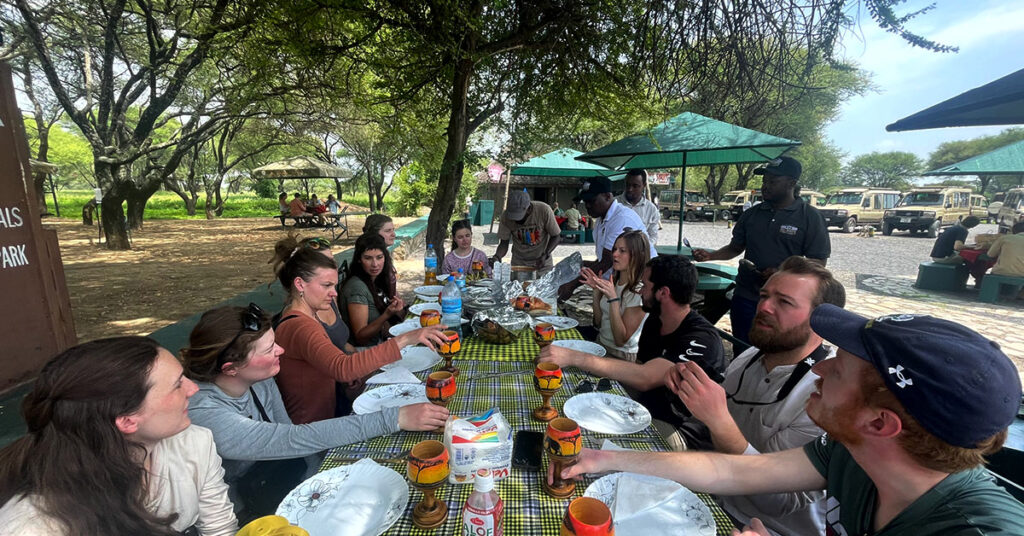
Tourists enjoying meals together at a Kilimanjaro camp after a day of trekking.

Kilimanjaro National Park Fees Explained

A large part of the price of climbing Kilimanjaro goes directly to mandatory park fees. These are not optional, and they apply to every climber.
The main park-related costs usually include:
  • conservation fees charged per person per day
  • camping fees or hut fees depending on the route
  • rescue fees
  • park entry and operational charges
  • VAT applied to park services
For many climbers, these park-related charges alone can total around $800 to $1,000+ per person, depending on the route and number of days on the mountain.This is one of the biggest reasons Kilimanjaro is expensive compared with many other trekking destinations. You are not just paying for a guide and a trail. You are also paying regulated mountain fees that increase with every additional day inside the national park.That is why longer routes such as Lemosho and Northern Circuit usually cost more than shorter itineraries. They include more acclimatization time, but they also increase daily park costs.

Guide, Porter, and Crew Costs

A Kilimanjaro climb is not a solo backpacking trip. It requires a full mountain support team.
Most climbs include:
  • a lead guide
  • assistant guides
  • porters
  • a cook
  • support staff depending on group size and service level
Porters carry tents, food supplies, cooking equipment, safety gear, and much of the expedition load so that climbers only carry a daypack. Guides monitor pace, health, and safety throughout the trek. Cooks prepare meals at camp each day.
 
This team is one of the biggest reasons Kilimanjaro can be climbed by people who are not technical mountaineers. But it is also one of the biggest components of the total price.
A company with experienced guides, fair staffing levels, strong safety support, and ethical porter treatment will naturally cost more than an operator cutting everything to the minimum.
 
You can learn more about mountain safety in our guide on Is Climbing Kilimanjaro Dangerous?

What Is Usually Included in a Kilimanjaro Climb Package?

Most reputable Kilimanjaro climbing packages include the core services needed for the trek itself.
Typical inclusions are:
  • licensed mountain guides
  • assistant guides
  • porters and cooks
  • all park fees and permits
  • tents and sleeping mattresses
  • meals on the mountain
  • drinking water during the trek
  • transport to and from the mountain gate
  • basic safety equipment such as oxygen and first aid supplies
Some packages also include hotel accommodation before and after the climb, airport transfers, and other logistical support. But these extras vary by operator, so you should always check exactly what is included before booking.
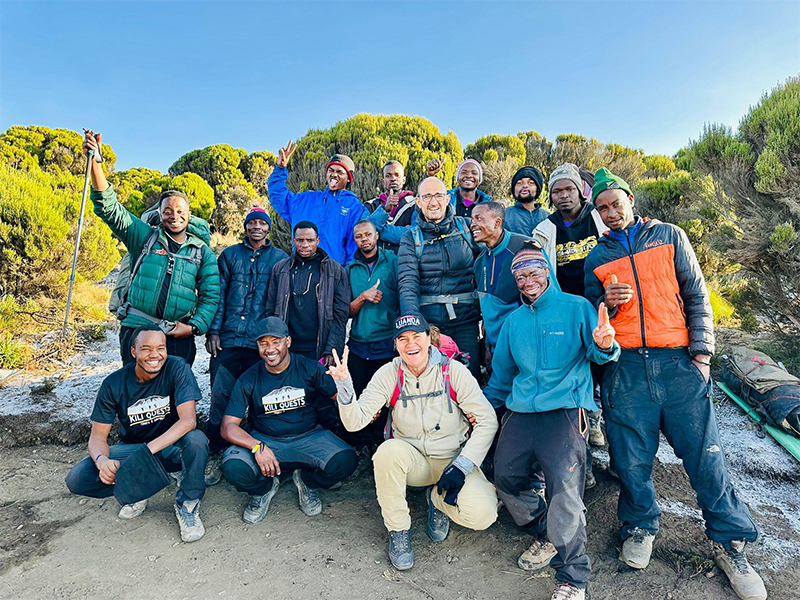
Kilimanjaro trekkers and porters smiling together at the end of a successful hike
Every Kilimanjaro climb is a team effort — guides, porters, and climbers sharing the journey to the summit.

What Is Usually Not Included?

This is where many climbers get caught off guard. Even when the main climbing package looks complete, there are still important extra costs you may need to cover yourself.
Common exclusions include:
  • international flights
  • Tanzania visa
  • travel insurance
  • tips for guides, porters, and cooks
  • personal trekking gear
  • gear rental
  • hotel upgrades
  • snacks, drinks, and personal items
  • optional activities before or after the climb
A climb that looks cheap at first can become much more expensive once these extras are added.

Extra Costs to Budget For

A smart Kilimanjaro budget includes more than just the package price. You should plan for the full trip, not only the days on the mountain.

Flights to Tanzania

International flights to Kilimanjaro International Airport usually range from around $600 to $1,500, depending on your departure country, season, and booking window.

Tanzania visa

Most foreign travelers need a visa to enter Tanzania. The exact cost depends on nationality, so check the current requirements before traveling.

Travel insurance

Good travel insurance is essential for Kilimanjaro. A proper policy should cover high-altitude trekking and emergency evacuation. This is not an area to be careless.

Tips for the mountain crew

Tipping is an expected part of climbing Kilimanjaro and should be planned in advance. Guides, porters, and cooks work extremely hard throughout the trek, and tips are an important part of their income.

Gear rental

If you do not already own everything required, you may need to rent items such as sleeping bags, trekking poles, insulated jackets, or summit gear in Tanzania.check our kilimanjaro packing list

Hotel stays before and after the climb

Many climbers stay at least one night before the trek and one night after the trek. Some operators include this in their packages, but not all do.

Budget vs Standard vs Luxury Kilimanjaro Climbs

Not all Kilimanjaro climbs offer the same level of service, comfort, and support. In most cases, the price reflects the route length, quality of logistics, safety standards, staffing, and overall climb experience.

Budget Climbs

Budget Kilimanjaro climbs usually cost around $2,000 to $2,500 per person. These climbs often include the basic services required for the trek, such as guides, porters, meals, camping equipment, and park fees. They are usually designed for travelers who want to keep costs lower, often by joining group departures or choosing shorter itineraries.While a budget climb can be a valid option, climbers should be careful not to choose based on price alone. A lower price may also mean less comfort, shorter acclimatization time, simpler equipment, or weaker safety support.

Standard Climbs

Standard Kilimanjaro climbs usually range from $2,500 to $3,500 per person. This is often the best balance between price, comfort, safety, and overall climb quality. Standard climbs commonly include better camping equipment, stronger logistics, more experienced guides, and itineraries that give climbers a better chance to acclimatize properly.For many trekkers, this is the smartest value category because it avoids the risks of going too cheap without pushing the trip into a premium price level.

Luxury Climbs

Luxury Kilimanjaro climbs usually start from $3,500 per person and above. These climbs often include extra comfort features such as larger tents, upgraded meals, private toilet tents, thicker sleeping mattresses, more personalized service, and longer itineraries with better acclimatization profiles.Luxury climbs cost more, but they may offer a more comfortable and better-supported experience, especially for travelers who want a higher service level on the mountain.

Why Are Some Kilimanjaro Operators Much Cheaper Than Others?

This is one of the most important questions a climber can ask.When you see a very cheap Kilimanjaro price, there is usually a reason. Sometimes it is because the climb is shorter or the group is larger. But in other cases, the low price reflects corners being cut.
Cheaper operators may reduce cost by:
  • using shorter itineraries with less acclimatization time
  • offering lower-quality camping equipment
  • providing simpler meals
  • running weaker guide-to-client support
  • excluding important services from the advertised price
  • paying staff poorly
  • offering limited safety equipment or medical monitoring
  • That does not mean every lower-cost operator is bad. But it does mean you should look past the headline price.
A Kilimanjaro climb is not the place to buy blindly based on the cheapest number.

What Should You Never Cut From Your Kilimanjaro Budget?

There are some parts of a Kilimanjaro climb where going cheap can hurt your experience or reduce your chances of success.
Try not to cut:

Saving money by choosing a shorter route or weak operator can become expensive in a different way if you fail to summit, get sick, or have a miserable climb.

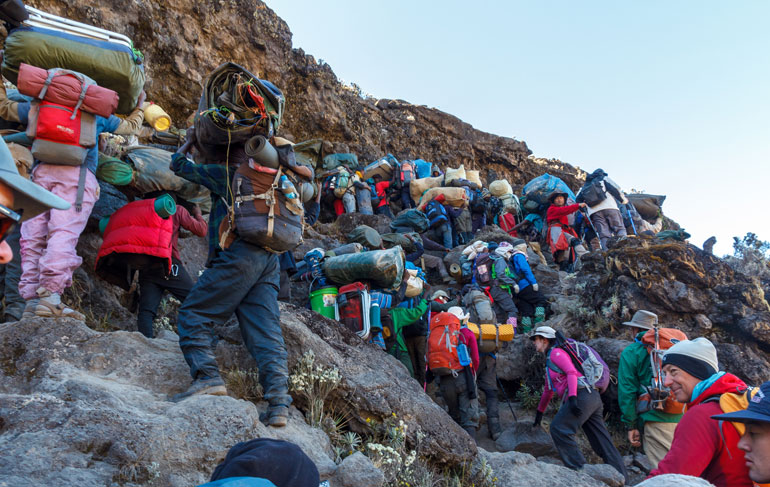
Kilimanjaro porter walking along the mountain trail with gear balanced on head
Porters guiding climbers up the Barranco Wall on Mount Kilimanjaro — a true display of strength, teamwork, and support on the mountain.

Example Kilimanjaro Price Scenarios

The exact price depends on the operator and itinerary, but these examples show how route choice and comfort level can change the final cost.

Lower-cost example

A 5- or 6-day group climb on a shorter itinerary may fall near the lower end of the price range. This usually appeals to budget travelers, but it also gives less time for acclimatization.

Mid-range example

A 7-day standard climb on a route such as Machame often sits in the middle range. This is a common choice for climbers who want a good balance between cost and summit chance.

Higher-value example

An 8-day Lemosho climb often costs more because it includes more days on the mountain and higher park fees, but many trekkers consider it better value because of the stronger acclimatization profile.

Premium example

A 9-day Northern Circuit climb with upgraded service is usually one of the more expensive options, but it offers the longest itinerary and one of the best acclimatization profiles on Kilimanjaro

Is Climbing Kilimanjaro Worth the Cost?

For many travelers, the answer is yes.
Climbing Kilimanjaro is not just a holiday expense. It is a major adventure that takes you across rainforest, moorland, alpine desert, and arctic summit conditions on the highest mountain in Africa.You are not only paying for the summit. You are paying for permits, logistics, safety systems, support staff, local expertise, and the chance to complete one of the world’s most iconic treks.For climbers who choose the right route and the right team, the cost often feels justified by the experience, the challenge, and the achievement of standing on Uhuru Peak.

Frequently Asked Questions About Kilimanjaro Costs

Why is climbing Kilimanjaro expensive?

Climbing Kilimanjaro is expensive because a large portion of the price goes to mandatory national park fees, and each climb also requires guides, porters, cooks, food, equipment, transport, and safety support. The mountain is logistically demanding, and responsible operators build those real costs into the trip.

What is the cheapest way to climb Kilimanjaro?

The cheapest way is usually to join a group climb with a lower-cost operator on a shorter itinerary. But the cheapest option is not always the best value. Very low prices can mean weaker equipment, less acclimatization time, lower safety standards, or poor porter treatment.

Do I need to tip Kilimanjaro guides and porters?

Yes. Tipping is standard on Kilimanjaro and should be included in your budget. Guides, porters, and cooks work hard throughout the trek, and tips are an important part of their income.

Are flights included in Kilimanjaro climb packages?

Usually not. Most Kilimanjaro packages cover the mountain trek itself, but international flights are generally booked separately by the traveler.

Does a longer route cost more?

Yes. Longer routes usually cost more because you spend more days inside the national park and require more crew time, more meals, and more logistics. However, they often provide better acclimatization and a higher chance of reaching the summit.

Ready to Climb Mount Kilimanjaro?

Climbing Mount Kilimanjaro is a once-in-a-lifetime adventure, and choosing the right trekking company plays a major role in your success.At Kili Quests, our experienced local guides organize safe and well-planned expeditions designed to give climbers the best chance of reaching the summit.With professional guides, reliable equipment, and strong support teams, we help trekkers from around the world achieve their dream of standing on the Roof of Africa.

Start Planning Your Kilimanjaro Adventure

Related Articles