Plan Your Ndutu Safari the Right Way

Ndutu calving season can be one of the best safari experiences in Tanzania, but only if your timing and itinerary are built properly.

Plan Your Trip Better

OUR CATEGORIES

Calving Season in Ndutu

Ndutu calving season is one of the most dramatic wildlife events in Tanzania. Every year, the southern Serengeti and Ndutu plains become the stage for one of nature’s most intense and beautiful cycles, as hundreds of thousands of wildebeest gather to give birth. For safari travelers, this is not just another game-viewing period. It is one of the best times to see the Great Migration in a completely different form: not river crossings, not endless movement, but concentration, new life, and the predators that follow it.
 
For many first-time safari travelers, the Great Migration is often imagined as a single event. That is a mistake. The migration changes character throughout the year, and Ndutu calving season shows one of its most important phases. This is when the herds spread across the short-grass plains to feed, rest, and deliver their young. The landscape fills with wildebeest, zebra, gazelles, and predators moving through the area in search of opportunity.
 
If you want a Tanzania safari that combines huge numbers of animals, baby wildebeest, excellent predator action, and open plains that make wildlife easy to spot, Ndutu during calving season deserves serious attention. It is one of the strongest safari experiences in the country and one of the best reasons to travel in the green season.
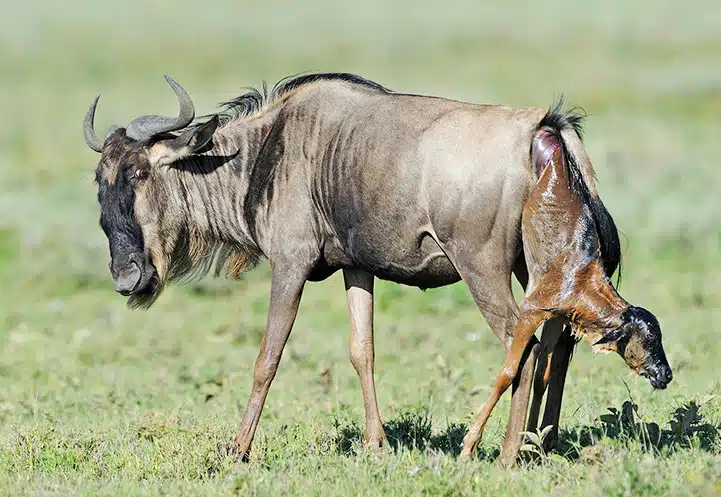
Wildebeest calf with its mother during calving season in Ndutu Tanzania
A wildebeest gives birth on the Ndutu plains during calving season, one of the most dramatic moments of the Great Migration in Tanzania.

Table of Contents

What Is Ndutu Calving Season?

Ndutu calving season is the period when wildebeest gather in the Ndutu area and southern Serengeti to give birth. This usually happens between late January and March, with February often being the peak month. During this period, the herds settle on the nutrient-rich short-grass plains, which provide the right conditions for feeding and for raising newborn calves during their first vulnerable weeks.
 
The scale of this event is what makes it so powerful. Hundreds of thousands of wildebeest arrive in the area, and over a relatively short period, thousands of calves are born every day. It is a survival strategy built on numbers. So many calves are born at once that predators cannot catch them all, even though lions, cheetahs, hyenas, and leopards are highly active in the region.
 
This is why Ndutu calving season is not just about cute baby animals. It is about the full wildlife system in motion. You are seeing birth, movement, feeding, hunting, and survival all happening in the same landscape.

Where Is Ndutu?

Ndutu lies in the Ngorongoro Conservation Area, close to the southern edge of Serengeti National Park. It is part of the wider migration ecosystem and is especially important during the calving months. The area includes open plains, seasonal lakes, scattered woodland, and excellent habitats for both grazing herds and predators.
 
One reason Ndutu stands out is that it gives travelers access to a migration experience outside the better-known river crossing scenes of the northern Serengeti. Instead of focusing on dramatic water crossings, Ndutu offers concentration. The animals are spread widely across the plains, but the density is still extraordinary, and the open terrain makes wildlife viewing rewarding.
 
For travelers planning a northern circuit safari, Ndutu can be combined well with Ngorongoro Crater Safari Guide, Serengeti National Park Safari Guide, and Tarangire National Park Safari Guide to build a more complete Tanzania itinerary.

Why Do Wildebeest Calve in Ndutu?

The answer is simple: grass and timing.
 
The southern plains around Ndutu receive seasonal rains that trigger the growth of short, nutrient-rich grasses. These grasses are ideal for wildebeest, especially pregnant females that need strong feeding grounds before giving birth and while nursing calves. The open plains also give the herds better visibility, which helps them detect predators earlier.
 
This area supports the migration at exactly the moment when food quality matters most. Calving is not random. It happens where survival chances are strongest. The herds follow rainfall and grass conditions, and Ndutu becomes the right place at the right time.
 
That is also why safari travelers who want to understand the migration properly should not treat it like one single spectacle. The Great Migration is a year-round movement shaped by rainfall, grazing, breeding, and predator pressure. Great Migration Guide is an important supporting page for travelers who want to understand how Ndutu fits into the full annual cycle.

When Is the Best Time to Visit Ndutu for Calving Season

The best time to visit Ndutu for calving season is usually from late January through March. February is often the strongest month if your main goal is to see newborn wildebeest and the herds at their highest concentration. That said, timing matters.

Late January

This is often when the herds are already well established in the area, and early calving activity may begin. Wildlife numbers are excellent, and the landscape is green after the rains.

February

This is usually the peak calving period. Massive numbers of wildebeest are present, and newborn calves can be seen across the plains. Predator activity is often intense because so many vulnerable animals are available.

March

Calving may still be happening, but by this time some herds begin preparing to move as conditions change. The safari is still excellent, and predator sightings can remain strong.Travelers trying to choose the right timing for their overall trip should also compare this with Best Time to Visit Tanzania for Safari because Ndutu is one seasonal safari experience, not the only safari window in Tanzania.

What Wildlife Can You See During Ndutu Calving Season?

Ndutu calving season is best known for wildebeest, but the area offers much more than that.

Wildebeest Herds

This is the main attraction. Huge numbers cover the plains, and the sight of newborn calves standing and running shortly after birth is unforgettable.

Zebras and Gazelles

The migration is not only wildebeest. Zebra and gazelles also move through the ecosystem and add to the scale of the wildlife viewing.

Lions

Lions are among the top reasons Ndutu is so rewarding during calving season. With so much prey in the area, lion sightings can be excellent.

Cheetahs

Ndutu is one of the best areas to see cheetahs in action, especially on the open plains where they use speed to hunt young or weak animals.

Hyenas

Hyenas are highly active during calving season and are often seen around the herds.

Leopards

Leopard sightings are less predictable than lions or cheetahs, but they are present in the area, especially around woodland and denser cover.

Birdlife

The Ndutu region also offers strong birdwatching, especially during the green season, when many species are active around lakes and open grassland.This mix of prey and predators is exactly what makes Ndutu so powerful. You are not only seeing animals. You are seeing ecological pressure, competition, and survival in real time.

Why Ndutu Calving Season Is

Different from River Crossing Season
 
A lot of travelers hear “Great Migration” and immediately think about dramatic crossings in the north. That phase is famous for a reason, but Ndutu is different and should not be judged by the same standard.
 
River crossing season is about movement, tension, and chance. Ndutu calving season is about concentration, reproduction, and predator response. The emotional experience is different too. In Ndutu, you may spend a game drive watching newborn calves take their first steps, then see predators nearby, then follow massive herds stretching across the plains.
 
This makes Ndutu one of the best safari choices for travelers who want full-day wildlife density rather than waiting for one crossing moment. It is especially strong for photographers, wildlife enthusiasts, and repeat safari travelers who want to see a different side of the migration.

Is Ndutu Good for First-Time Safari Travelers?

Yes, and in many cases it is an excellent choice.
 
First-time safari travelers often want three things: lots of animals, easy wildlife viewing, and a trip that feels memorable from the first game drive. Ndutu delivers all three during calving season. The open plains make it easier to spot wildlife, predator action can be strong, and the sheer number of animals creates immediate impact.
 
That said, Ndutu is best for travelers who care about seasonal timing. If your trip dates do not match the calving window, then another itinerary may be stronger. Safari planning should never be based on a famous name alone. It should be based on what happens in that place at that time.
That is why travelers comparing trip styles should also read Best Safari for First-Time Visitors and How Many Days for Tanzania Safari? before deciding how Ndutu fits into a wider itinerary.

How Many Days Do You Need for a Ndutu Safari?

Ndutu can be visited as part of a longer northern circuit safari, but if calving season is one of your main priorities, rushing it is a weak move. You need enough time to actually benefit from the wildlife concentration and changing activity.
 
For most travelers, 2 to 3 nights in the Ndutu area works well. This allows enough time for multiple game drives, different predator opportunities, and a better chance of seeing both herd movement and calving activity. A longer itinerary that combines Ndutu with central Serengeti or Ngorongoro can be even stronger.
 
A short itinerary may still work, but if you only give Ndutu one rushed day, you are reducing one of Tanzania’s best safari experiences into a checklist stop. That is poor planning.

What Are the Road and Weather Conditions Like?

Ndutu calving season usually falls during the green season, which means the landscape is lush and beautiful, but conditions can be mixed. Roads may be dusty in some stretches and muddy in others, depending on the rains. This does not ruin the safari, but it does mean travelers should prepare properly.
 
The green season has real advantages. The scenery is fresh, photography can be excellent, and the sense of life in the ecosystem is stronger than during drier months. The tradeoff is that rain is possible, and flexible expectations matter.
 
This is where proper preparation becomes important. Travelers should review Tanzania Safari Packing List so they bring the right clothing for game drives, layered temperatures, dust, and occasional rain.
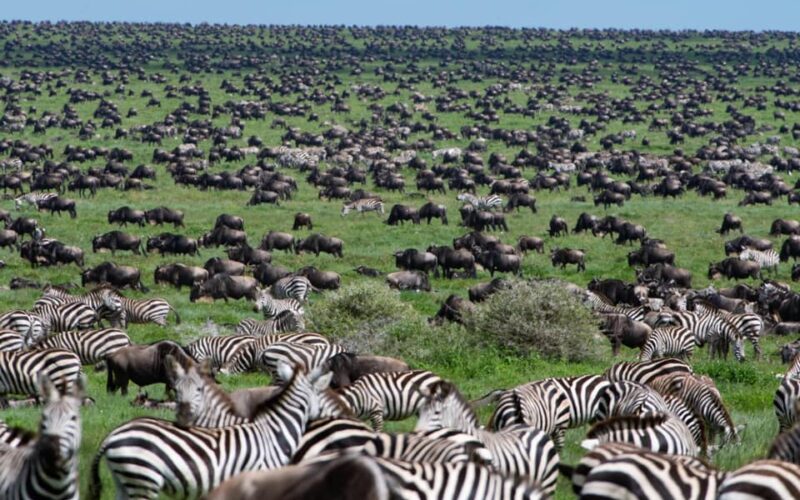
Wildebeest and zebras gather in the open Ndutu plains during calving season, when fresh grass attracts large herds across the southern Serengeti ecosystem.

Where Do You Stay in Ndutu During Calving Season?

Accommodation in Ndutu ranges from tented camps to more comfortable safari lodges, depending on the area and travel style. During calving season, many travelers choose camps that place them close to the herds and predator action. Staying near the action reduces driving time and improves your game-viewing opportunities.
 
The right camp depends on budget, comfort expectations, and how mobile you want your safari to feel. Some travelers want a classic tented safari atmosphere, while others prefer more comfort and lodge-style facilities. There is no single correct answer, but there is a wrong one: choosing based only on price without understanding location.
 
That is why it helps to compare your safari style through Luxury vs Mid-Range vs Budget Safari Tanzania and What’s Included in a Tanzania Safari Package before booking.

Is Ndutu Worth It?

Yes, if you travel at the right time and understand what you are going there for.
 
Ndutu is worth it for travelers who want to see one of the most important phases of the Great Migration, experience outstanding predator-prey interaction, and enjoy wildlife density that few safari destinations can match. It is not just about watching animals stand in a field. It is about seeing the migration at its most vulnerable and most alive.
 
It may not be the best fit for every traveler in every month. But during calving season, Ndutu becomes one of the most rewarding safari areas in Tanzania. If your dates line up with late January, February, or March, ignoring Ndutu would be a mistake.

How Ndutu Fits Into a Tanzania Safari Itinerary

Ndutu works best as part of a well-structured northern Tanzania safari. It pairs naturally with nearby destinations and adds a strong seasonal focus to the trip. A well-built itinerary might include Tarangire for elephants and baobabs, Ngorongoro for crater wildlife density, and Ndutu or Serengeti depending on the migration phase.
 
This is why safari planning should not be random. You do not build a strong safari by collecting famous names. You build it by matching destinations to season, wildlife patterns, trip length, and travel style.
 
For travelers who want help choosing the right safari structure, Private vs Group Safari Tanzania, What’s Included in a Tanzania Safari Package, and Tanzania Safari for Families can help narrow the right direction depending on budget and expectations.

Final Thoughts on Ndutu Calving Season

Ndutu calving season is one of the best wildlife experiences in Tanzania and one of the strongest reasons to travel during the green season. The combination of massive wildebeest herds, newborn calves, predator action, and open plains creates a safari that feels intense, alive, and unforgettable.
 
For travelers who want more than generic safari marketing, Ndutu offers something real. It shows the Great Migration at one of its most important stages and gives you a deeper understanding of how the ecosystem works. If your travel dates match the calving period, Ndutu should be near the top of your safari planning list.

Frequently Asked Questions About Ndutu

When is calving season in Ndutu?

Calving season in Ndutu usually happens between late January and March, with February often being the peak month. This is when large numbers of wildebeest gather on the southern plains and thousands of calves are born within a short period.

Why is Ndutu famous during calving season?

Ndutu is famous during calving season because it becomes one of the main areas where wildebeest give birth during the Great Migration. The combination of huge herds, newborn calves, and strong predator activity makes it one of the most exciting safari experiences in Tanzania.

Is February the best month to visit Ndutu?

February is often considered the best month to visit Ndutu for calving season because it usually has the highest concentration of newborn wildebeest. However, late January and March can also be excellent depending on rainfall and herd movement.

What animals can I see in Ndutu during calving season?

During calving season, visitors can see wildebeest, zebras, gazelles, lions, cheetahs, hyenas, and sometimes leopards. The area is especially rewarding because predator activity increases when so many young animals are present.

How many days should I spend in Ndutu?

Most travelers should spend 2 to 3 nights in Ndutu to enjoy the area properly. That gives enough time for multiple game drives, better predator sightings, and a stronger chance of seeing both calving activity and the wider migration herds.

Plan Your Safari

Plan your safari around the right migration season, not guesswork. Kili Quests helps you choose the best dates, parks, and itinerary based on what is actually happening on the ground in Tanzania. 
 
Contact us to build a safari plan that matches your travel goals, budget, and timing.

Related Articles