Plan Your Tanzania Safari the Smart Way

Packing the right gear makes your safari more comfortable, but choosing the right parks, trip length, and travel style matters even more.

Plan Your Trip Better

OUR CATEGORIES

Tanzania Safari Packing List: What to Bring for a Comfortable and Well-Prepared Trip

Packing for a Tanzania safari sounds simple until you start thinking about the details. Many travelers know they need clothes, shoes, and travel documents, but they are less sure about how much to bring, what kind of clothing works best, which items are truly essential, and which things will only waste space. A safari is not like a city break, a beach holiday, or a normal road trip. You will spend long hours in a vehicle, move between parks and lodges, wake up early for game drives, deal with dust, sun, changing temperatures, and limited luggage space, and rely on practical items more than fashionable ones.
 
That is why a proper Tanzania safari packing list matters. Packing well helps you stay comfortable during long game drives, protects you from the sun and dust, makes your mornings and evenings easier, and reduces the risk of arriving with the wrong clothes or missing something important. It also helps you avoid overpacking, which is one of the most common mistakes first-time safari travelers make.
 
A Tanzania safari usually includes warm afternoons, cooler early mornings, dusty roads, and a mix of casual lodge life and outdoor wildlife viewing. Depending on your itinerary, you may stay in tented camps, lodges, or a mix of both. You may combine major northern circuit parks such as Serengeti National Park Safari Guide, Ngorongoro Crater Safari Guide, Tarangire National Park Safari Guide, and Lake Manyara Safari Guide in one trip, which means your days can include everything from crater drives to open plains to forested park areas. Packing for this kind of trip requires balance: enough clothing and gear to stay comfortable, but not so much that your bag becomes a burden.
 
In this guide, we break down exactly what to pack for a Tanzania safari, including clothing, footwear, essential accessories, travel documents, health items, electronics, and what you should leave at home.
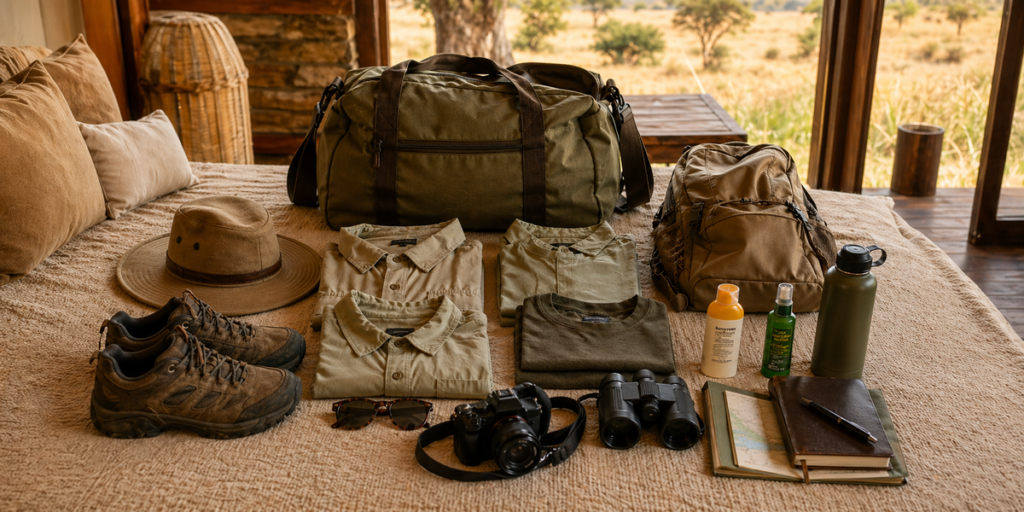
Tanzania safari packing list with clothes, binoculars, hat, camera, and travel essentials arranged for safari travel
Safari clothing and travel essentials laid out before a Tanzania safari adventure.

Why Packing Properly for a Tanzania Safari Matters

A safari is one of those trips where bad packing becomes obvious very quickly. If you bring heavy clothes that are too hot, bright colors that attract attention, shoes that are uncomfortable, or bags that are too bulky, you will feel it every day. On the other hand, if you pack lightweight layers, practical safari clothing, and a few key essentials, the experience becomes much smoother.
 
Safari days often start early, sometimes before sunrise, when the air can feel surprisingly cool. By midday, especially in open landscapes, the heat can rise sharply. During game drives, roads can be dusty, and during stops or lodge time, the sun can feel strong. This means your clothing needs to work across different conditions rather than for just one moment of the day.
 
Good safari packing is also about mobility and simplicity. Many safari travelers move between different camps or lodges during the trip. That is one reason luggage choice matters so much. Soft-sided bags are often easier to handle than large hard-shell suitcases, especially on trips with multiple stops or smaller transfer vehicles. If you are still comparing trip styles and comfort levels, Luxury vs Mid-Range vs Budget Safari Tanzania can help you understand how accommodation type may affect what you need to bring.

What Kind of Bag to Bring on Safari

Your main luggage should be practical, easy to carry, and not oversized. In most safari situations, a medium-sized soft duffel bag or a soft suitcase works better than a very large hard case. It is easier to load into safari vehicles and easier to manage when moving between properties.
You should also bring a small daypack or backpack for daily essentials. This is useful for carrying things such as your camera, sunscreen, sunglasses, water bottle, personal medication, tissues, and a light jacket during game drives.

Best luggage choices for safari

A good safari bag setup usually includes:
  • one medium soft travel bag or duffel
  • one small backpack or daypack
  • optional small pouch for travel documents, chargers, and valuables

Bags to avoid

Try to avoid:
  • very large suitcases
  • overly heavy luggage
  • bags with too many unnecessary items
  • anything difficult to move quickly between vehicle and lodge
If you are still in the planning stage, How Many Days for Tanzania Safari? is worth reviewing because trip length affects how much clothing you actually need.

Best Clothes to Pack for a Tanzania Safari

The best safari clothing is comfortable, breathable, lightweight, and easy to layer. Neutral colors usually work best because they blend naturally into the environment and handle dust better than very light fabrics. Shades like khaki, olive, beige, brown, and muted grey are common practical choices.You do not need specialized luxury safari fashion. That is unnecessary nonsense for most travelers. What you need is comfortable outdoor clothing that works in warm weather, cool mornings, and dusty conditions.

Essential safari clothing

A solid Tanzania safari packing list should include:
  • 3 to 5 lightweight T-shirts or breathable tops
  • 2 to 3 long-sleeved shirts for sun protection and cooler mornings
  • 2 to 3 pairs of comfortable trousers or safari pants
  • 1 to 2 pairs of shorts for lodge time or warmer afternoons
  • 1 fleece, sweater, or warm layer for early morning drives
  • 1 lightweight waterproof jacket or windbreaker
  • enough underwear and socks for the trip
  • sleepwear
  • casual evening clothes for lodge dining
  • hat with sun protection

Why layers matter

Layers are better than packing one thick jacket or only hot-weather clothing. On safari, mornings can start cool, especially when driving in open vehicles or descending into places like the crater. Later in the day, you may want lighter clothing again. A simple layering system is the most practical approach.

Clothes colors to choose

The safest choices are:
  • khaki
  • olive
  • tan
  • beige
  • muted brown
  • soft grey
These colors work well in safari settings and help your clothes stay cleaner-looking for longer in dusty conditions.

Clothes to avoid

Avoid packing too many:
  • bright neon colors
  • heavy denim
  • thick winter clothing
  • delicate fashion items
  • uncomfortable or tight clothes
You are going on safari, not a runway. Pack for function first.

Best Shoes for a Tanzania Safari

You do not need mountaineering boots for a normal safari. That would be overkill unless your trip also includes trekking. What you need are comfortable, practical shoes suitable for getting in and out of vehicles, short walks around lodges or camps, and general travel.

Recommended footwear

Bring:
  • one pair of comfortable walking shoes or lightweight hiking shoes
  • one pair of sandals or casual shoes for lodge use
  • good socks for full-day wear

When hiking boots make sense

Heavy hiking boots only make sense if your trip includes longer walking activities or if you are combining safari with trekking. For travelers combining wildlife and mountain travel, Kilimanjaro vs Safari Tanzania can be a useful comparison page to help set expectations for gear and trip style.

Essential Accessories for Safari

Small items make a big difference on safari. These are the things many travelers forget, then regret.

Must-have safari accessories

Pack:
  • sunglasses
  • sun hat or cap
  • sunscreen
  • lip balm
  • insect repellent
  • reusable water bottle
  • binoculars
  • tissues or wet wipes
  • hand sanitizer
  • camera or smartphone for photos
  • power bank
  • basic personal toiletries

Why binoculars matter

A lot of wildlife can be seen clearly from the vehicle, but binoculars make a major difference for birdlife, distant predators, and animals across open plains. They improve the experience far more than many people expect. This matters even more in wide landscapes such as Serengeti National Park Safari Guide, where animals may sometimes be spread out across long distances.

Why sun protection matters

Even when temperatures feel comfortable, the African sun can be strong, especially during long hours outdoors. A hat, sunscreen, and sunglasses are not optional extras. They are basic protection.

Travel Documents and Important Items

Your documents should be organized before the trip, not thrown together at the last minute. Keep them easy to access and protected in a travel wallet or document pouch.

Important documents to pack

Bring:
  • passport
  • visa documents if needed
  • travel insurance details
  • flight information
  • safari confirmation details
  • emergency contact information
  • payment cards
  • some cash in useful denominations

Why insurance matters

A safari is a major trip, and travel insurance is part of smart planning. Delays, cancellations, medical issues, or lost luggage can quickly become expensive problems without it. If you are still shaping your budget, Tanzania Safari Cost is an important supporting article because packing decisions also affect spending, shopping, and last-minute travel purchases.

Health and Personal Care Items to Bring

Your health kit does not need to be huge, but it does need to cover the basics. Some travelers make the mistake of packing nothing beyond a toothbrush and then scrambling for simple items during the trip.

Basic health kit

Pack:
  • prescription medication
  • pain relief tablets
  • motion sickness tablets if needed
  • antihistamines if useful for you
  • plasters or blister care
  • insect bite cream
  • hand sanitizer
  • tissues
  • personal hygiene items

Why this matters on safari

Game drives can be long, roads may be rough in places, and lodge shops do not always carry exactly what you use at home. Bring what you personally rely on rather than assuming you will buy it later.

Electronics to Pack for a Tanzania Safari

Most travelers want to capture their safari well, and that means thinking beyond just clothing. Electronics should be useful, protected, and not excessive.

Useful electronics

Bring:
  • phone
  • camera
  • charger cables
  • power bank
  • travel adapter
  • extra camera batteries
  • extra memory cards

Protect electronics from dust

Dust is common on safari roads, especially in dry conditions. Keep electronics in a bag, pouch, or protective case when they are not in use. This is one of those simple steps that prevents stupid damage.

What to Pack for Lodge Safari vs Camping Safari

Not every safari is the same. A lodge-based trip usually requires less specialized packing because accommodation provides more comfort and more facilities. A camping safari can require a more practical approach, especially around layers, torches, and personal organization.

For lodge safaris

You can usually keep things simpler:
  • casual but neat evening clothes
  • comfortable shoes
  • normal toiletries
  • light layers for mornings and evenings

For camping safaris

You may want:
  • extra warm layer for evenings
  • torch or headlamp
  • slightly more structured personal kit
  • stronger focus on practical clothing and comfort
If you are not sure which travel style suits you best, Private vs Group Safari Tanzania and Luxury vs Mid-Range vs Budget Safari Tanzania because comfort level, privacy, and accommodation type can change what you pack.
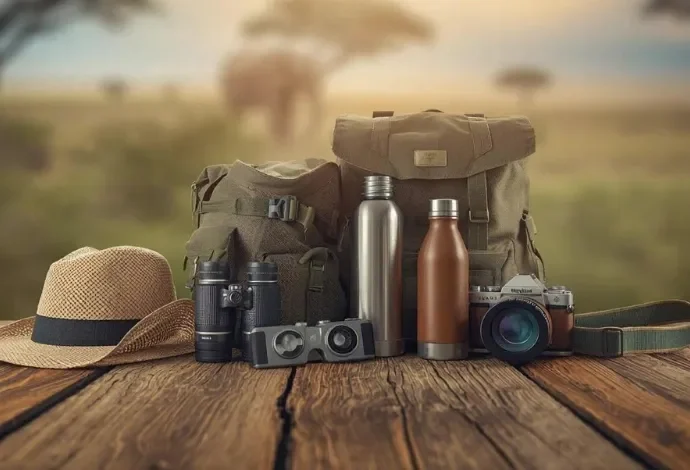
packing list for safari
Safari camera and binoculars ready for wildlife viewing in Tanzania.

What Not to Pack for a Tanzania Safari

A lot of safari packing mistakes come from bringing too much or bringing the wrong things.

Leave these at home

Avoid packing:
  • too many clothes
  • expensive jewelry
  • high heels or formal shoes
  • bulky hard luggage
  • heavy jackets not suited to the climate
  • bright fashion outfits you will never actually wear
  • unnecessary gadgets
Overpacking is dead weight. It makes moving around harder and usually adds no real value to the trip.

Sample Tanzania Safari Packing Checklist

Here is a practical safari checklist you can actually use.

Clothing

  • lightweight tops
  • long-sleeved shirts
  • safari trousers
  • shorts
  • fleece or sweater
  • light jacket
  • socks
  • underwear
  • sleepwear
  • hat

Footwear

  • walking shoes
  • sandals or camp shoes

Essentials

  • passport
  • travel documents
  • insurance details
  • cards and cash
  • phone
  • camera
  • chargers
  • power bank
  • adapter
  • binoculars
  • sunglasses
  • sunscreen
  • insect repellent
  • reusable water bottle
  • toiletries
  • medication
  • tissues or wipes

Final Thoughts on Packing for a Tanzania Safari

A good Tanzania safari packing list is not about packing more. It is about packing smarter. The best safari gear choices are simple, practical, comfortable, and suited to long days outdoors. Lightweight layers, comfortable shoes, sun protection, essential health items, and a few smart accessories will do far more for your trip than stuffing your bag with unnecessary extras.
 
The goal is to arrive ready for the real safari experience: early morning game drives, long wildlife days, changing temperatures, dusty roads, memorable lodge evenings, and the freedom to enjoy the journey without realizing you packed badly. Done properly, your safari packing list becomes part of the reason the trip feels easy instead of stressful.
 
If you are still planning the bigger picture of your trip, it is worth reading Best Time to Visit Tanzania for Safari, How Many Days for Tanzania Safari?, and What Is Included in a Tanzania Safari Package so your itinerary, budget, and packing choices all work together.

Frequently Asked Questions About a Tanzania Safari Packing List

What colors should I wear on safari in Tanzania?

Neutral colors such as khaki, olive, tan, beige, and muted grey are the safest and most practical choices. They are comfortable for safari settings and handle dust better than very light or bright colors.

Do I need hiking boots for a Tanzania safari?

Usually no. Comfortable walking shoes or lightweight hiking shoes are enough for most safari trips. Heavy boots are only necessary if your trip includes more demanding walking or trekking.

Should I bring a jacket on safari?

Yes. Early morning game drives can feel cool, especially in open vehicles or higher-altitude areas. A light jacket, fleece, or sweater is usually enough.

Are binoculars necessary for safari?

They are not absolutely required, but they are highly recommended. Binoculars improve wildlife viewing, especially for birds, distant animals, and open landscapes.

How much luggage should I bring on safari?

Keep it moderate and practical. A medium soft bag plus a small daypack is usually enough for most travelers. Oversized or rigid luggage is often less convenient on safari.

Planning a Tanzania safari

Planning a Tanzania safari and want help choosing the right parks, trip length, and travel style?
 
Contact us  for honest advice and a safari plan built around your budget, travel style,comfort level, and expectations.

Related Articles