Plan Your 7-Day Tanzania Safari

A 7-day safari gives you enough time to enjoy Tanzania’s best northern circuit parks without rushing every day.At Kili Quests, we help you choose the best route for your season,Spend enough time in Serengeti,Match your safari to your budget and comfort level

Plan Your Trip Better

OUR CATEGORIES

7-Day Tanzania Safari Itinerary: Best Northern Circuit Route

A 7-day Tanzania safari is one of the best itinerary lengths for travelers who want a serious wildlife experience without rushing from park to park every day. It gives you enough time to visit the main northern circuit destinations, enjoy proper game drives, and experience different landscapes instead of seeing Tanzania through the window of a moving vehicle.
 
This itinerary is ideal for first-time safari travelers because it covers the classic highlights: Tarangire National Park, Lake Manyara National Park, Serengeti National Park, and Ngorongoro Crater. Each place offers something different. Tarangire is famous for elephants and baobab trees. Lake Manyara gives you forests, birdlife, and a scenic introduction to safari. Serengeti offers wide plains, predators, and the chance to see the Great Migration depending on the season. Ngorongoro Crater gives you one of the best compact wildlife viewing experiences in Africa.
 
At Kili Quests, we recommend this 7-day route for travelers who want a well-balanced Tanzania safari with enough time in Serengeti, not just a quick one-night stop. If you are still comparing safari lengths, read our : How Many Days Do You Need for a Tanzania Safari? before choosing your final itinerary.
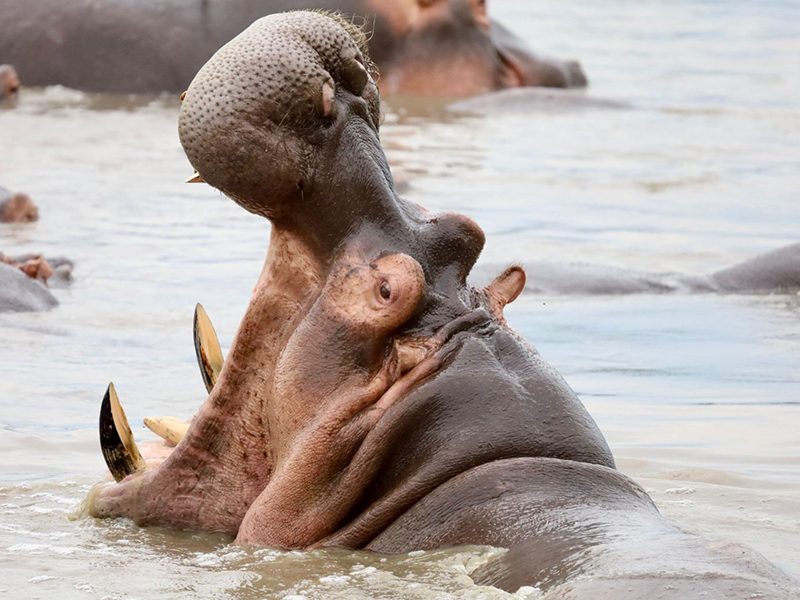
Hippos resting in water during a Tanzania safari
Hippos resting in the water during a Tanzania safari, one of the memorable wildlife sightings first-time visitors can enjoy in parks and wetlands.

Table of Contents

Why Choose a 7-Day Tanzania Safari?

A 7-day Tanzania safari gives you a stronger experience than a short 3-day or 5-day safari because it allows better pacing. The problem with many short itineraries is that they look good on paper but feel rushed in real life. You spend too much time transferring between parks and not enough time actually watching wildlife.With seven days, you can build a route that makes sense. You can start with Tarangire or Lake Manyara, continue into Serengeti, spend enough time inside the park, then finish with Ngorongoro Crater before returning to Arusha.
 
This is not just about adding more days. It is about improving the quality of the safari.

A 7-Day Safari Gives You More Time in Serengeti

Serengeti is the biggest reason many travelers come to Tanzania. A weak itinerary gives you only one night there, which is not enough. Serengeti is huge, and wildlife sightings depend on movement, timing, location, and patience.A good 7-day Tanzania safari gives you at least two nights in Serengeti, sometimes three depending on your travel style. That extra time matters because it increases your chances of seeing lions, cheetahs, leopards, elephants, hyenas, large herbivore herds, and, during certain months, Great Migration activity.
 
For a deeper park breakdown, read our : Serengeti National Park Safari Guide.

It Balances Wildlife, Scenery, and Comfort

A strong safari is not only about chasing animals. The best experience also includes changing landscapes, comfortable pacing, and enough rest between long game drives.
This 7-day itinerary gives you variety. You move from baobab country in Tarangire to groundwater forest near Lake Manyara, then to the endless plains of Serengeti and finally into the volcanic bowl of Ngorongoro Crater. That variety makes the safari feel complete instead of repetitive.

It Works Well for First-Time Safari Travelers

If this is your first safari, seven days is a smart choice. It gives you enough time to understand how safari works, settle into the rhythm of early mornings and game drives, and enjoy the parks without feeling like every day is a transfer day.If you are planning your first trip, also read our : Best Safari for First-Time Visitors to Tanzania.

Best 7-Day Tanzania Safari Itinerary Overview

This itinerary follows the northern circuit, which is the most popular safari route in Tanzania. It starts and ends in Arusha, the main safari hub for northern Tanzania.This route is strong because it builds naturally. You do not jump randomly between parks. Each day adds something useful to the safari experience.

Day 1: Arrival in Arusha

Your 7-day Tanzania safari usually begins in Arusha. Most travelers arrive through Kilimanjaro International Airport or Arusha Airport, depending on their flight route. After arrival, you are transferred to your hotel or lodge in Arusha for rest and a safari briefing.
 
This first day is simple but important. Do not underestimate it. Long international flights can be tiring, and starting a safari immediately after arrival is a bad idea unless your schedule gives you no other option.

What Happens on Arrival Day?

On arrival day, you settle in, meet your safari team or company representative, confirm your itinerary, and ask any final questions about packing, timing, park rules, accommodation, and daily schedules.
 
This is also the right time to check your camera batteries, safari clothing, travel documents, and any personal medication.
For packing help, read our : Tanzania Safari Packing List.

Where to Stay in Arusha

Arusha has many accommodation options, from budget guesthouses to mid-range hotels and luxury lodges. Your choice depends on your safari budget and comfort level.
 
For most travelers, a clean and comfortable mid-range hotel is enough for arrival night. You do not need to overspend on the first night unless you want a luxury start to the trip.

Day 2: Arusha to Tarangire National Park

After breakfast, you leave Arusha and drive to Tarangire National Park. The drive usually takes around two to three hours, depending on your hotel location, road conditions, and stops along the way.Tarangire is one of the best parks to begin a Tanzania safari because it gives you strong wildlife viewing without immediately jumping into the long journey to Serengeti.

Why Tarangire Is Worth Visiting

Tarangire is famous for large elephant herds, ancient baobab trees, seasonal swamps, and the Tarangire River. During the dry season, many animals gather near the river because water becomes limited in surrounding areas.
 
This makes Tarangire especially rewarding from June to October. You may see elephants, giraffes, zebras, wildebeest, buffalo, impalas, warthogs, lions, and many bird species.
 
For more detail, read our: Tarangire National Park Safari Guide.

What to Expect on the Game Drive

Your game drive begins after entering the park. The landscape is open in some areas and more wooded in others, so sightings can feel different from Serengeti or Ngorongoro.
 
Elephants are usually the main highlight. Tarangire is one of the best places in northern Tanzania to watch elephant families moving, feeding, bathing, and interacting.
 
This is also a good park for slower observation. Do not rush. A weak safari driver races from one sighting to another. A good guide reads animal behavior, tracks movement, and gives you time to enjoy the scene properly.

Overnight Near Tarangire or Karatu

Depending on your itinerary style, you may sleep near Tarangire, in the Lake Manyara area, or in Karatu. Karatu is a useful base between Lake Manyara, Ngorongoro, and the road toward Serengeti.
 
Your accommodation can be budget, mid-range, or luxury. The right choice depends on how much comfort you want and how much you want to spend.
 
For budget planning, read our : Tanzania Safari Cost: Full Price Breakdown.

Day 3: Lake Manyara National Park

On day three, you visit Lake Manyara National Park. This park is smaller than Serengeti and Tarangire, but it adds useful variety to a northern circuit itinerary.
 
Lake Manyara is known for its groundwater forest, lake views, birdlife, monkeys, baboons, hippos, and scenic escarpment backdrop. It is not usually the strongest park for big predator sightings, so do not sell it to yourself as another Serengeti. That would be dishonest. Its value is different.

Why Lake Manyara Fits This Itinerary

Lake Manyara works well in a 7-day Tanzania safari because it sits along the route between Tarangire, Karatu, and Ngorongoro. It gives you a different ecosystem before you continue toward Serengeti.
 
If you expect huge open plains, Lake Manyara will disappoint you. If you understand it as a scenic, forest-and-lake safari stop, it makes sense.
 
For a full park breakdown, read our : Lake Manyara National Park Safari Guide.

Wildlife in Lake Manyara

Lake Manyara can offer sightings of elephants, giraffes, zebras, wildebeest, buffalo, hippos, baboons, monkeys, and many bird species. Flamingos may be seen around the lake depending on water levels and season, but sightings are not guaranteed.
 
The park is also famous for tree-climbing lions, but you need to be careful with this expectation. Some travelers hear “tree-climbing lions” and think they are guaranteed to see them. They are not. Wildlife is wild, not staged for your camera.

Overnight in Karatu

After the game drive, you usually continue to Karatu for overnight. Karatu is a practical and comfortable base before driving toward Serengeti the next day.
 
It also gives you a better position for the next part of the itinerary instead of wasting time returning backward.

Day 4: Drive to Serengeti National Park

Day four is one of the biggest days of the safari. After breakfast, you leave Karatu and drive toward Serengeti National Park, usually passing through the Ngorongoro Conservation Area.
 
The journey is long, but it is also part of the experience. You move from cultivated highlands into more open landscapes, then toward the plains that make Serengeti famous.

Entering the Serengeti

Once you reach Serengeti, the safari feeling changes. The landscape opens, and the sense of space becomes much bigger. Depending on your route and timing, you may have a game drive on the way to your lodge or camp.
 
This is where patience becomes important. Serengeti wildlife viewing is not only about one dramatic sighting. It is about reading the plains: vultures circling, gazelles alert, hyenas moving, lions resting, and herds spreading across the grassland.

Afternoon Game Drive in Serengeti

If time allows, you enjoy an afternoon game drive before heading to your accommodation. Afternoon light can be beautiful for photography, and predators may become more active as temperatures cool.
 
Common sightings may include lions, elephants, giraffes, zebras, wildebeest, buffalo, hippos, hyenas, jackals, topis, hartebeest, and many birds. Cheetahs and leopards are possible, but never guaranteed.

Overnight in Serengeti

You spend the night inside or near Serengeti National Park. Staying inside the park gives you better access to early morning and late afternoon game drives. This can improve your safari experience because you avoid long access drives from outside the park.
 
Accommodation options include tented camps, lodges, mobile camps, and luxury safari properties.
 
For package details, read our: What Is Included in a Tanzania Safari Package?.

Day 5: Full-Day Game Drive in Serengeti

Day five is one of the most important days of the itinerary because it gives you a full day inside Serengeti. This is where a 7-day safari becomes much stronger than a short safari.
 
You are not rushing to enter and leave the park in one day. You have time to explore, wait, watch, and move with better strategy.

Why a Full Day in Serengeti Matters

Wildlife sightings change throughout the day. Early morning is often best for predator activity because temperatures are cooler. Midday can be slower, with many animals resting. Late afternoon often becomes active again.
 
A full day gives your guide more flexibility. If there is a strong lion sighting in one area, you can spend time there. If the plains are quiet, your guide can move to another zone. If you are traveling during migration season, your route may be adjusted based on herd location.
 
This flexibility is exactly why short, rushed itineraries are weaker.

Can You See the Great Migration on a 7-Day Safari?

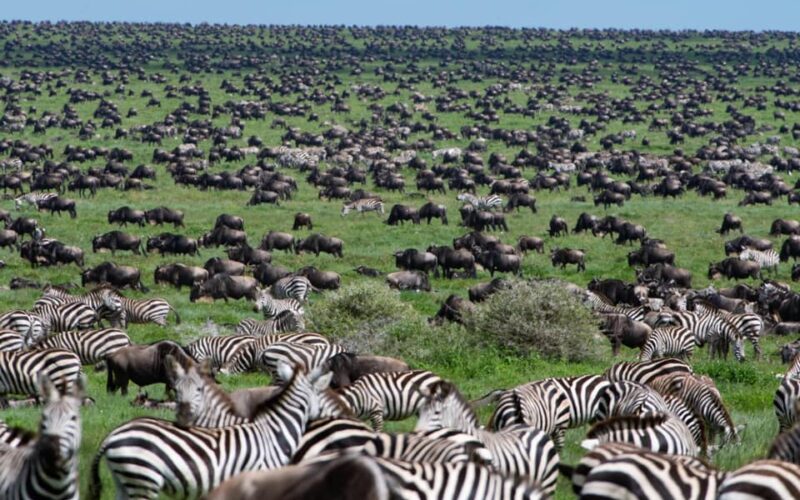
Yes, a 7-day Tanzania safari can include the Great Migration if the timing and routing are right. But here is the truth: the migration is seasonal and mobile. It does not stay in one place all year.
 
The best Serengeti area depends on the month. Southern Serengeti and Ndutu are important during calving season. Central Serengeti can be strong for resident wildlife year-round. Western and northern Serengeti are important during certain migration movements.
 
For a full explanation, read our : Great Migration Guide and : Calving Season in Ndutu.

Picnic Lunch or Return to Camp?

Depending on the plan, you may take a picnic lunch and spend the whole day exploring, or return to camp for lunch and rest before an afternoon game drive.
 
A picnic lunch gives more time in the park. Returning to camp gives more comfort. Neither is automatically better. The right choice depends on your energy, the weather, wildlife movement, and how far you are from camp.

Day 6: Serengeti to Ngorongoro Conservation Area

On day six, you usually enjoy a final morning game drive in Serengeti before driving toward the Ngorongoro Conservation Area. This day connects the open plains of Serengeti with the crater highlands.
 
It is another long travel day, but it still includes game viewing, especially in the morning before leaving Serengeti.

Morning Game Drive in Serengeti

Morning is a valuable time in Serengeti. Predators may still be active, and the light is usually better for photography. Your guide may search for lions, cheetahs, leopards, hyenas, and other wildlife before starting the drive toward Ngorongoro.
 
This is also your final chance to enjoy Serengeti before leaving the park.

Optional Olduvai Gorge Stop

Depending on your interests and timing, you may stop at Olduvai Gorge, one of the most important archaeological sites in East Africa. This can add cultural and historical depth to the safari.
 
However, do not overload the day. If the schedule is already tight, trying to add too many stops can make the itinerary tiring.

Overnight Near Ngorongoro Crater

You usually spend the night near the Ngorongoro Crater rim or in the Karatu area. Staying near the crater gives better access for an early descent the next morning, while Karatu can be more affordable and still practical.
 
For a deeper destination guide, read our : Ngorongoro Crater Safari Guide.

Day 7: Ngorongoro Crater Game Drive and Return to Arusha

Day seven begins early. After breakfast, you descend into Ngorongoro Crater for a game drive. This is one of the most unique safari experiences in Tanzania because the crater creates a natural wildlife-rich area within a dramatic volcanic landscape.
 
Ngorongoro is often one of the best places to see a high concentration of wildlife in a shorter period.

What Makes Ngorongoro Crater Special?

Ngorongoro Crater is not like Serengeti. Serengeti is vast and open. Ngorongoro is compact and enclosed. That makes the wildlife viewing feel different.
 
Inside the crater, you may see lions, elephants, buffalo, zebras, wildebeest, hippos, hyenas, jackals, flamingos, and many other animals. Black rhinos are also present, although sightings depend on distance, visibility, and luck.

Is Ngorongoro Good for Big Five Sightings?

Ngorongoro is one of the better places in northern Tanzania for Big Five possibilities, especially because of the presence of black rhino. But again, do not treat any safari as a guaranteed checklist. Wildlife does not work on command.
 
A good guide improves your chances by understanding the landscape, animal movement, and timing. But honesty matters: no serious operator should promise every animal sighting.

Return to Arusha

After the crater game drive, you ascend and drive back to Arusha. Depending on your schedule, you may stay overnight in Arusha or connect to an evening flight.
 
If your international flight leaves late at night, this can work, but you need to plan carefully. Rushing from Ngorongoro to the airport with no buffer is risky and stressful

Best Time for a 7-Day Tanzania Safari

A 7-day Tanzania safari can work year-round, but the best time depends on what you want to see.
 
The dry season from June to October is excellent for general wildlife viewing because animals gather around water sources and vegetation is thinner. This makes sightings easier in places like Tarangire, Serengeti, and Ngorongoro.
 
The green season from November to May brings beautiful scenery, fewer crowds in some periods, and excellent birdlife. From January to March, the Ndutu area can be especially strong for calving season and predator activity.
 
For a full seasonal breakdown, read our : Best Time to Visit Tanzania for Safari.

Dry Season: June to October

This is one of the most popular safari periods. Wildlife is easier to spot, especially in Tarangire, where animals gather near the river. The weather is generally dry, and road conditions are usually better.
The downside is that popular parks can be busier, and accommodation prices may be higher.

Green Season: November to May

The green season brings fresh landscapes, dramatic skies, and fewer vehicles in some areas. It can be a great time for photography and birding.
 
Rain is possible, especially during the long rains around March, April, and May. Some travelers avoid this period, but it can still work if planned properly.

Migration Season Depends on Location

The Great Migration does not happen in one place all year. That is where many travelers get confused. They ask, “When is the migration?” but the smarter question is, “Where is the migration during my travel month?”
 
Your itinerary should match the season. Otherwise, you may visit the wrong part of Serengeti and miss the experience you expected.

Is a 7-Day Tanzania Safari Enough?

Yes, a 7-day Tanzania safari is enough for a strong northern circuit safari if the itinerary is planned correctly. It gives you time to see several major parks without making the trip feel too rushed.
 
But let’s be honest: seven days is not enough to see everything in Tanzania. It is enough for the classic northern circuit, not the whole country.
 
If you want to add Zanzibar, southern Tanzania, western Tanzania, or a Kilimanjaro climb, you need more time.

7 Days vs 5 Days

A 5-day safari can work, but it usually forces tougher choices. You may have less time in Serengeti or skip one park. It is better than a rushed 3-day safari, but still more limited than seven days.
 
For comparison, read our : 5-Day Tanzania Safari Itinerary.

7 Days vs 10 Days

A 10-day safari gives more flexibility. You can add more time in Serengeti, include Ndutu during calving season, travel more slowly, or add cultural experiences.
 
But not every traveler needs 10 days. If your budget or schedule is limited, seven days is a strong and realistic choice.

Who Should Choose a 7-Day Safari?

A 7-day safari is best for travelers who want the main northern Tanzania highlights, at least two nights in Serengeti, a balanced pace, and a good chance of strong wildlife viewing.
 
It is especially good for first-time safari travelers, couples, families, photographers, and travelers who want a proper safari without making the trip too long.

7-Day Tanzania Safari Cost

The cost of a 7-day Tanzania safari depends on accommodation level, season, group size, vehicle type, park fees, and whether the safari is private or shared.
 
A private safari costs more than a group safari, but it gives you more control over timing, pace, stops, and accommodation choices. For many travelers, that flexibility is worth it.

Budget Safari

A budget 7-day safari usually uses basic lodges, campsites, or simpler accommodation. It can reduce costs, but you need to check carefully what is included. Cheap safaris often become expensive when important items are excluded.
 
Do not choose the cheapest option blindly. That is how travelers end up with weak vehicles, rushed routing, poor guiding, or surprise costs.

Mid-Range Safari

A mid-range safari is usually the best value for many travelers. You get comfortable lodges or tented camps, private transport, professional guiding, and a better balance between cost and experience.
 
For most first-time travelers, this is the smartest category.

Luxury Safari

A luxury 7-day safari includes higher-end lodges, premium tented camps, better locations, stronger comfort, and more refined service. It is ideal if you want the safari to feel more exclusive and comfortable.
 
Luxury does not automatically mean better wildlife, but it can improve comfort, location, food, service, and overall experience.
 
For a full cost guide, read our : Tanzania Safari Cost: Full Price Breakdown.

Private or Group Safari for 7 Days?

A 7-day Tanzania safari can be done as a private safari or a group safari. The better option depends on your budget, travel style, and expectations.

Private Safari

A private safari gives you your own vehicle and guide. This means more flexibility with timing, photography stops, lunch breaks, and pace.
 
For a 7-day itinerary, private safari is often the better choice because the route is long and the experience depends heavily on flexibility.
 
If you are traveling as a couple, family, or small group, private safari can be excellent value.

Group Safari

A group safari can reduce costs because you share the vehicle with other travelers. This can work well for solo travelers or budget-conscious visitors.
 
The downside is less control. You follow the group schedule, and different travelers may have different interests, energy levels, and expectations.
 
For a deeper comparison, read our : Private vs Group Safari in Tanzania.

What to Pack for a 7-Day Tanzania Safari

Packing well makes your safari more comfortable. You do not need to overpack, but you need the right items.
 
Bring neutral-colored clothing, comfortable shoes, sunglasses, sunscreen, insect repellent, a hat, camera gear, binoculars if available, personal medication, and a light jacket for cool mornings and evenings.
 
Avoid bright colors, heavy luggage, unnecessary formal clothing, and anything that makes daily movement harder.

Clothing

Choose lightweight, breathable clothes in neutral colors such as khaki, beige, olive, or brown. Mornings can be cold, afternoons can be warm, and evenings can cool down again.
Layering is better than packing one heavy item.

Camera and Binoculars

A good camera improves your safari memories, but binoculars are just as important. Many great sightings happen at a distance. Without binoculars, you may miss details like leopard movement, birds, or distant predators.

Documents and Essentials

Carry your passport, travel insurance details, visa documents if needed, flight details, emergency contacts, and any medication you use regularly.
 
For a full list, read our : Tanzania Safari Packing List.

7-Day Tanzania Safari with Family

A 7-day safari can work very well for families if the itinerary is planned carefully. The key is pacing. Children may enjoy wildlife, but long drives and early mornings can become tiring if the route is too aggressive.
 
Family safaris should include comfortable accommodation, reasonable driving times, flexible breaks, and a guide who understands how to work with children.

Is This Itinerary Good for Children?

Yes, but it depends on the child’s age, patience, and travel experience. Some children love game drives. Others get tired quickly. Parents need to be realistic.
 
A private safari is usually better for families because you can stop when needed and adjust the pace.

Best Parks for Families

Tarangire and Ngorongoro are often excellent for families because wildlife sightings can be strong without needing extremely long game drives. Serengeti is amazing, but the travel distances are longer, so the itinerary must be planned well.
 
For more detail, read our : Tanzania Safari for Families.

Where to Stay on a 7-Day Tanzania Safari

Accommodation can change the feel of your safari. The main choices are lodges, tented camps, campsites, and luxury safari camps.
 
Your accommodation should match your budget, comfort level, and route. Location matters. A cheaper lodge far outside the park may save money but cost you time.

Lodges

Lodges offer solid comfort, private rooms, bathrooms, meals, and reliable service. They are a good choice for travelers who want comfort without going full luxury.

Tented Camps

Tented camps are one of the best safari experiences. They allow you to feel closer to nature while still having comfort. Many tented camps include proper beds, bathrooms, dining areas, and excellent service.

Budget Camping

Budget camping can reduce costs, but it is not for everyone. You need to be comfortable with simpler facilities and less privacy.
 
Budget camping is not bad, but choosing it only because it is cheap can be a mistake if you expect lodge-level comfort.
A 7-day Tanzania safari gives travelers time to explore several northern circuit parks with excellent wildlife viewing and varied landscapes.

Common Mistakes to Avoid on a 7-Day Tanzania Safari

A 7-day safari is strong, but it can still be ruined by bad planning. The biggest mistakes usually come from trying to do too much, choosing the wrong season for your expectations, or booking based only on price.

Mistake 1: Spending Too Little Time in Serengeti

One night in Serengeti is weak for a 7-day safari. If your itinerary gives you only one night there, question it. Serengeti deserves more time.
 
A proper 7-day northern circuit safari should usually include at least two nights in Serengeti.

Mistake 2: Choosing the Cheapest  Safari Without Checking Inclusions

Cheap does not always mean good value. Some low-cost safaris exclude important services or cut corners on vehicle quality, accommodation, guiding, or park time.
 
Before booking, check what is included and excluded carefully. Read our : What Is Included in a Tanzania Safari Package?.

Mistake 3: Expecting Guaranteed Wildlife Sightings

This is wildlife, not a zoo. A good itinerary and guide improve your chances, but no honest company can guarantee every animal.
 
The right mindset makes the safari better. Enjoy the process, not only the checklist.

Mistake 4: Ignoring Travel Time

Distances in Tanzania can be long. A route may look simple on a map but feel different on the road. Bad itineraries hide this. Good itineraries plan around it.

Mistake 5: Packing Too Much

Overpacking makes travel harder. Safari vehicles have limited space, and moving between lodges is easier with soft, manageable luggage.

Sample 7-Day Tanzania Safari Route Summary

Here is a clean route summary for this itinerary:

Day 1: Arrival in Arusha

Arrive in Tanzania, transfer to your hotel, rest, and prepare for the safari.

Day 2: Tarangire National Park

Drive to Tarangire for elephants, baobabs, and a strong first game drive.

Day 3: Lake Manyara National Park

Explore Lake Manyara’s forest, lake scenery, birds, monkeys, and possible elephants.

Day 4: Serengeti National Park

Drive through the Ngorongoro Conservation Area toward Serengeti and enjoy an afternoon game drive.

Day 5: Full Day in Serengeti

Spend a full day searching for predators, plains wildlife, and possible migration activity depending on season.

Day 6: Serengeti to Ngorongoro

Enjoy a final Serengeti game drive before continuing toward Ngorongoro.

Day 7: Ngorongoro Crater and Return to Arusha

Descend into the crater for a final game drive, then return to Arusha.

Is This the Best 7-Day Tanzania Safari Itinerary?

For most first-time travelers, yes. This is one of the best 7-day Tanzania safari itineraries because it covers the strongest northern circuit parks without becoming completely rushed.
 
It includes Tarangire, Lake Manyara, Serengeti, and Ngorongoro Crater. That gives you elephants, baobabs, forests, lake scenery, open plains, predators, and one of Africa’s most famous crater landscapes.
The only adjustment depends on your travel month. If you are traveling during calving season, you may want to include Ndutu. If you are focused on the river crossings, you may need a northern Serengeti plan and possibly more days or flights. If you prefer fewer transfers, you may skip Lake Manyara and add more time in Serengeti.
 
That is why a safari should not be copied blindly. The best itinerary is the one that matches your season, budget, comfort level, and wildlife goals.

Final Thoughts on a 7-Day Tanzania Safari

A 7-day Tanzania safari is one of the strongest choices for travelers who want a complete northern circuit experience. It gives you enough time to visit Tarangire, Lake Manyara, Serengeti, and Ngorongoro Crater without reducing the trip to a rushed checklist.
 
The most important part is planning the route properly. Serengeti needs enough time. Ngorongoro should be done early and carefully. Tarangire should not be treated as a small extra because it can deliver some of the best elephant sightings of the trip. Lake Manyara should be understood for what it is: scenic, varied, and useful when placed correctly in the route.
 
At Kili Quests, we help travelers build Tanzania safari itineraries based on season, budget, comfort level, and wildlife priorities. If you want a safari that feels organized instead of rushed, a 7-day northern circuit route is a strong place to start.

Frequently Asked Questions About 7-Day Tanzania Safari Itinerary

Is 7 days enough for a Tanzania safari?

Yes, seven days is enough for a strong northern Tanzania safari. It allows you to visit Tarangire, Lake Manyara, Serengeti, and Ngorongoro Crater with better pacing than a short safari. It is especially good for first-time visitors who want a complete but realistic itinerary.

What parks can I visit on a 7-day Tanzania safari?

A classic 7-day Tanzania safari usually includes Tarangire National Park, Lake Manyara National Park, Serengeti National Park, and Ngorongoro Crater. Depending on the season, the route can also be adjusted to include Ndutu or more time in Serengeti.

How many nights should I spend in Serengeti on a 7-day safari?

You should spend at least two nights in Serengeti on a 7-day safari. One night is usually too rushed because Serengeti is very large and wildlife viewing depends on time, location, and movement.

What is the best time for a 7-day Tanzania safari?

The dry season from June to October is excellent for general wildlife viewing. The green season from November to May offers beautiful landscapes, birdlife, and calving season in the Ndutu area from around January to March. The best time depends on what you want to see.

Is a private 7-day Tanzania safari better than a group safari?

A private safari is usually better if you want flexibility, comfort, and control over the pace. A group safari can be cheaper, but you share the schedule with other travelers. For families, couples, and photographers, a private safari is often the stronger choice.

Plan Your Safari

A 7-day Tanzania safari gives you enough time to experience Tarangire, Lake Manyara, Serengeti, and Ngorongoro Crater without turning your trip into a rushed checklist.

Contact us , we help you plan a safari that matches your travel dates, budget, comfort level, and wildlife goals. Whether you want a private safari, a family-friendly itinerary, or the best route for migration season, our local team can help you build the right plan.

Related Articles