Stay Strong on the Mountain

Fuel and preparation play a key role in your success on Kilimanjaro.

Plan Your Kilimanjaro Climb

Good planning makes your climb easier and safer.

OUR CATEGORIES

What Food Can You Expect on Mount Kilimanjaro?

Food is an important part of every Kilimanjaro climb. You are trekking for several hours a day, sleeping at altitude, dealing with changing weather, and relying on your body to recover before the next stage of the route.
 
Many climbers worry about what food is served on Kilimanjaro, whether meals are enough, and what they should bring for extra energy. A well-organized climb should include warm meals, safe drinking water, trail snacks, and food that helps you stay fueled as the altitude increases.
 
At Kili Quests, meals are prepared by a trained mountain cook team using a practical menu built for trekking conditions. This guide explains what to expect for breakfast, lunch, dinner, snacks, drinking water, and summit-night food on Mount Kilimanjaro.
 
For a full breakdown of what is covered in your climb, see What’s Included in Our Climb Package.

Quick Answer: What Food Is Served on Kilimanjaro?

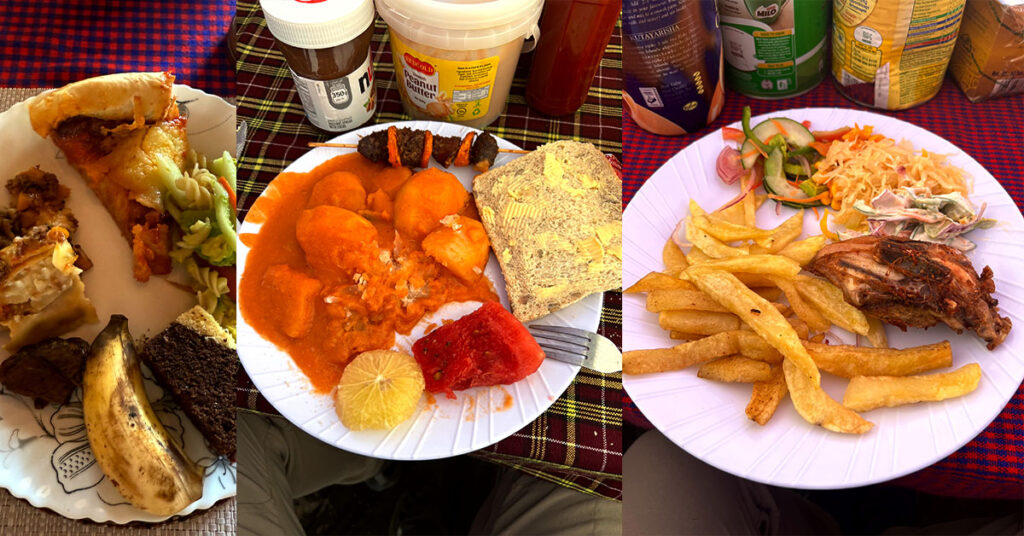
On Kilimanjaro, trekkers are served three main meals per day: breakfast, lunch, and dinner, plus trail snacks and hot drinks. Typical foods include porridge, eggs, pancakes, bread, soup, rice, pasta, potatoes, vegetables, chicken, beef, beans, lentils, fruit, tea, coffee, and hot chocolate.
 
Meals are prepared by the mountain cook team and designed to keep climbers fueled during long trekking days, cold evenings, and high-altitude conditions. Drinking water is also provided and purified on the mountain.
 
Climbers should still bring a few personal snacks, especially for summit night, when appetite can drop and easy-to-eat energy food becomes important.

Typical Meals Served on Kilimanjaro

Meal Type Typical Food Served Purpose
Breakfast Porridge, eggs, pancakes or French toast, sausages, bread with butter, jam or honey, fresh fruit, tea, coffee, or hot chocolate. Provides warm energy before the trekking day begins.
Lunch Sandwiches, rice or pasta with vegetables or protein, fruits, juice, nuts, or energy bars. Keeps energy stable during the day without feeling too heavy on the trail.
Dinner Soup, rice, pasta, potatoes, vegetables, chicken, beef, fish, beans, lentils, and hot drinks. Helps restore energy, support recovery, and keep the body warm overnight.
Trail Snacks Energy bars, biscuits, cookies, and fresh fruit. Helps maintain energy between meals during long trekking hours.

Table of Contents

What Food Is Served on Kilimanjaro Each Day?

Meals are prepared fresh by a trained cook team in portable kitchens. Here’s a breakdown:
 

Breakfast on Kilimanjaro

  •  Start your day with a warm, energy-boosting meal:
  • Porridge (oats, millet, or semolina)
  • Eggs (boiled, scrambled, or fried)
  • Pancakes or French toast
  • Sausages
  • Bread with butter, jam, or honey
  • Fresh fruit (bananas, apples, oranges)
  • Tea, coffee, or hot chocolate

Lunch on Kilimanjaro

  • Usually lighter, served mid-day on the trail:
  • Sandwiches (cheese, tuna, chicken, or peanut butter)
  • Rice or pasta with vegetables or protein
  • Fruits and juice
  • Trail snacks (nuts or bars)

Dinner on Kilimanjaro

Dinner is usually the most filling meal of the day and helps your body recover after long trekking hours:
  • Soup
  • Rice, pasta, or potatoes
  • Vegetables
  • Chicken, beef, fish, beans, or lentils
  • Chapati or bread
  • Fresh fruit when available
  • Tea, coffee, or hot chocolate

Snacks on Kilimanjaro

We provide trail snacks to keep your energy levels stable:
  • Energy bars
  • Biscuits and cookies
  • Fresh fruit
Summit night requires easy-to-eat snacks and careful preparation, so review our Summit Day Gear & Nutrition Guide before your climb.

What Snacks Should You Bring for Kilimanjaro?

Even when snacks are provided, it is smart to bring a few personal snacks you already enjoy. Appetite can change at altitude, so familiar foods are easier to eat when you feel tired or low on energy.
 
Good personal snacks for Kilimanjaro include energy bars, trail mix, dried fruit, chocolate, nuts, electrolyte tablets, and small sweets for summit night. Choose snacks that are easy to carry, easy to eat, and do not require preparation.

How We Prepare Food on the Mountain

 
Meals on Kilimanjaro are prepared in a mountain camp environment, so hygiene, storage, and clean water matter. A reliable crew should have a clear system for cooking, serving, and keeping ingredients safe.
  • Mess tent: Your dining area for warm meals and group discussions
  • Cook team: Includes a chef and assistant trained in high-altitude meal prep
  • Fuel source: Cooking is done using gas cylinders (not open fire)
  • Food storage: Ingredients stored in insulated cool bags for freshness
  • Clean water: All water is filtered or treated with purification tablets
Food preparation also depends on the support crew, so our guide to What Porters Do on Kilimanjaro explains how the mountain team helps keep the climb organized.
Kilimanjaro trekkers eating a warm meal at camp during the climb
A warm meal on Kilimanjaro helps trekkers recover, stay energized, and prepare for the next stage of the climb.

Is Drinking Water Provided on Kilimanjaro?

You’ll be provided with safe, clean drinking water throughout the trek:
  • Collected from mountain streams
  • Purified using filters or tablets
  • Available at all camps for refilling bottles
For bottles, snacks, clothing, and personal gear, use our Essential Kilimanjaro Packing List before preparing your duffel bag.

Eating at High Altitude on Kilimanjaro

At high elevation, appetite can drop, especially as the trek moves higher. This is normal, but it does not mean your body needs less energy. Eating regularly helps you maintain strength, warmth, and focus during the climb.
  1. provide high-calorie meals rich in carbohydrates and protein
  2. serve warm comfort food to support morale
  3. encourage trekkers to eat even when appetite is low
  4. recommend easy snacks for summit night
For more preparation around digestion, medication, and altitude-related comfort, read our Trek Health & Medication Tips before your climb.
 
Eating and drinking well support your body at altitude, but they do not replace proper pacing and route choice. For more preparation, read our Kilimanjaro acclimatization tips before your climb.

Can Special Dietary Requirements Be Handled on Kilimanjaro?

Yes, special dietary requirements can usually be handled on Kilimanjaro if they are shared before the climb. Vegetarian, vegan, gluten-free, and allergy-sensitive meals may be possible, but the mountain team needs advance notice so the right ingredients can be prepared and packed.
 
Do not wait until you arrive at the mountain gate to mention serious food allergies or dietary restrictions. Tell your operator early so the cook team can plan properly and avoid unnecessary problems during the trek.
 
Food quality is one reason very cheap climbs can become risky. Before choosing an operator based only on price, read our Kilimanjaro Climb Cost guide so you understand what should be included in a properly supported climb.

Frequently Asked Questions About Food on Kilimanjaro

What kind of food is served during a Kilimanjaro trek?

During a trek on Mount Kilimanjaro, meals are freshly prepared by mountain cooks and designed to provide energy at high altitude. Typical menus include porridge, eggs, pancakes, rice, pasta, vegetables, soups, chicken or beef dishes, and fresh fruit. Snacks such as energy bars, biscuits, and nuts are also provided during the day.

Is the food safe to eat on Mount Kilimanjaro?

Yes. Reputable trekking companies follow strict hygiene standards when preparing meals on Mount Kilimanjaro. Food is cooked fresh in portable kitchens, and water used for cooking or drinking is filtered or treated with purification tablets.

Can Kilimanjaro trekkers request special dietary meals?

Yes. Most operators can accommodate dietary requirements such as vegetarian, vegan, gluten-free, or allergy-friendly meals. It’s important to inform your trekking company before your trip so the kitchen team can prepare the appropriate ingredients.

How many meals do you eat per day on Kilimanjaro?

Trekkers usually receive three main meals per day — breakfast, lunch, and dinner — plus snacks. Breakfast provides energy for the hike, lunch is lighter during the trek, and dinner is a warm, hearty meal served at camp after a long day on the trail.

What do climbers eat before the Kilimanjaro summit attempt?

Before the midnight summit push toward Uhuru Peak, climbers usually eat a light meal such as porridge, biscuits, or toast with tea or coffee. Energy snacks like chocolate or trail mix are also carried for the ascent.

Plan a Kilimanjaro Climb With Proper Mountain Meals

Climbing Kilimanjaro takes energy, and proper meals help you stay fueled, warm, and ready for each stage of the route. With Kili Quests, your mountain food, drinking water, and camp meals are handled by a trained support team, so you can focus on the climb.
 
Contact us to start planning your Kilimanjaro trek, and we will help you choose the route, package, and preparation plan that fits your goals.

Related Articles