Prepare for Cold Nights

Kilimanjaro nights get colder as you climb higher. We help you prepare for camp temperatures, summit-night cold, and the right layering system.

Plan Your Climb

Good preparation starts with understanding the key parts of your trek:

OUR CATEGORIES

Kilimanjaro Night Temperature: How Cold Does It Get?

Climbing Kilimanjaro is not cold all the time, but the nights can surprise many trekkers. Lower camps may feel cool and comfortable, while higher camps can drop below freezing. Summit night is the coldest part of the entire climb.

The biggest mistake is thinking Kilimanjaro is warm because it is in Tanzania. During the day, some sections can feel sunny and mild, but after sunset the temperature drops quickly, especially as you gain altitude.

Night temperatures affect your sleep, recovery, energy, and summit performance. If you are cold at camp, you may sleep poorly. If you are underprepared on summit night, the final push to Uhuru Peak can feel much harder than expected.

This guide explains Kilimanjaro night temperatures by camp and elevation, what to expect on summit night, and how to stay warm with the right layers, sleeping bag, and cold-weather preparation.

Quick Answer: How Cold Are Nights on Kilimanjaro?

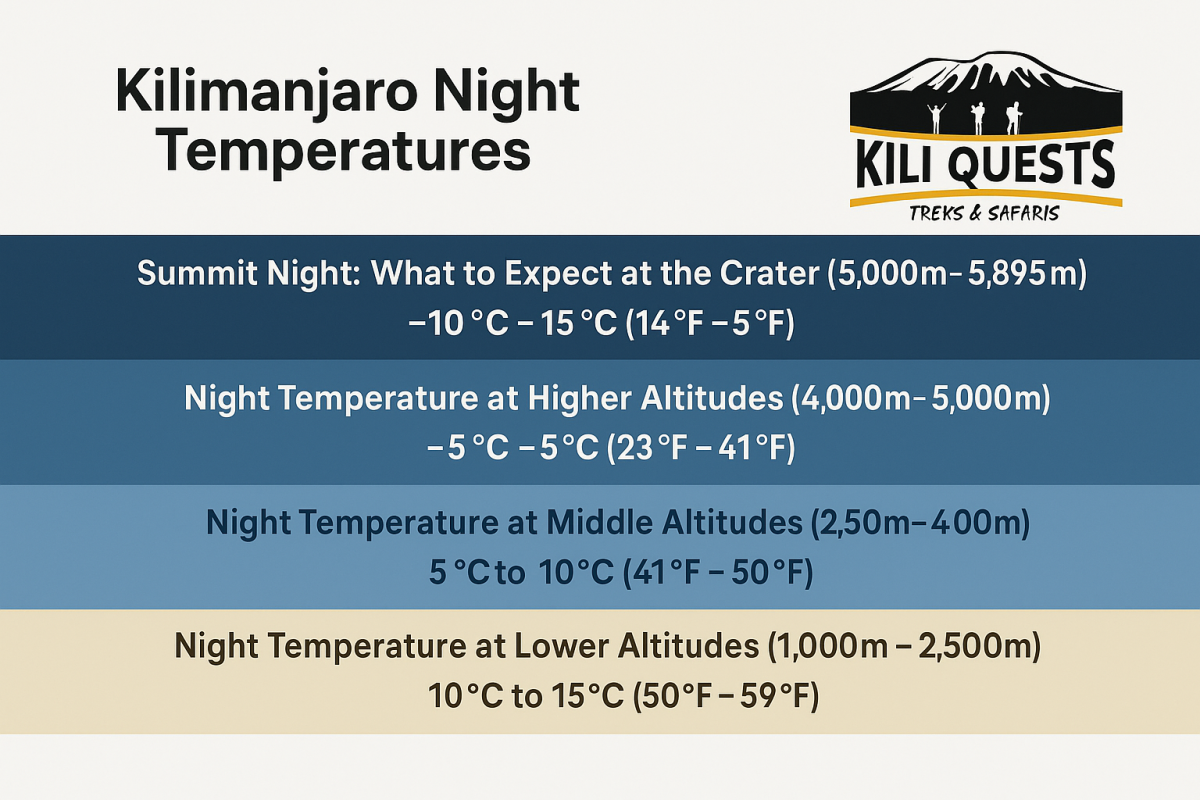
Kilimanjaro nights get colder as you climb higher. Lower camps may stay around 10°C to 15°C, middle camps can drop to around 5°C to 10°C, and higher camps may fall near or below freezing.
Summit night is the coldest stage. Temperatures near the upper mountain and summit can drop to around -10°C to -15°C, and wind can make it feel even colder.
 
To stay warm, climbers need thermal base layers, fleece or insulated mid-layers, a down jacket, warm gloves, a hat, thick socks, and a cold-rated sleeping bag. The goal is not just comfort. Staying warm helps you sleep better, recover properly, and keep enough energy for summit night.
Infographic showing Kilimanjaro night temperatures at different altitudes, from 15°C at 1,000m to -15°C at the summit.
Kilimanjaro Night Temperatures by Altitude – From mild lower camps to extreme summit cold, here’s what to expect during your climb

Table of Contents

Kilimanjaro Night Temperatures by Camp and Elevation

Kilimanjaro does not have one night temperature. The cold depends on your elevation, campsite, wind exposure, and the stage of the climb. Lower camps can feel cool and manageable, while higher camps and summit night can feel freezing.
Camp / Elevation Stage Typical Night Temperature What It Feels Like What to Prepare
Lower Camps / Forest Start
1,000–2,500 m
Around 10°C to 15°C Cool but usually manageable. Humidity and rain can make evenings feel damp. Light fleece, dry base layer, rain protection, and warm socks for camp.
Middle Camps
2,500–4,000 m
Around 5°C to 10°C Noticeably colder after sunset. Many climbers start wearing thermal layers at camp. Thermal base layer, fleece, warm hat, gloves, and insulated jacket for evenings.
High Camps
4,000–5,000 m
Around -5°C to 5°C Cold and exposed. Sleep can become harder because of altitude and freezing conditions. Down jacket, thermal layers, warm socks, gloves, hat, and cold-rated sleeping bag.
Summit Night
5,000–5,895 m
Around -10°C to -15°C or colder with wind The coldest and hardest stage. Wind, darkness, fatigue, and altitude make it feel more severe. Heavy down jacket, thermal layers, windproof shell, warm gloves, face covering, thick socks, and insulated boots.

What Kilimanjaro Nights Feel Like at Different Camps

The temperature number is only part of the story. What matters most is how the cold feels after a full trekking day, when your body is tired, your clothes may be damp, and altitude is already affecting your sleep.

Lower Camps: Cool, Damp, and Usually Manageable

At lower elevations, nights are usually cool rather than freezing. The bigger issue is often moisture. Forest areas can feel damp, and rain or mist can make clothing and boots uncomfortable if they are not protected.
 
At this stage, most climbers are comfortable with a light fleece, dry base layer, warm socks, and a good sleeping bag. Still, do not ignore the lower camps. If your gear gets wet early in the climb, it can create problems later when temperatures drop higher on the mountain.
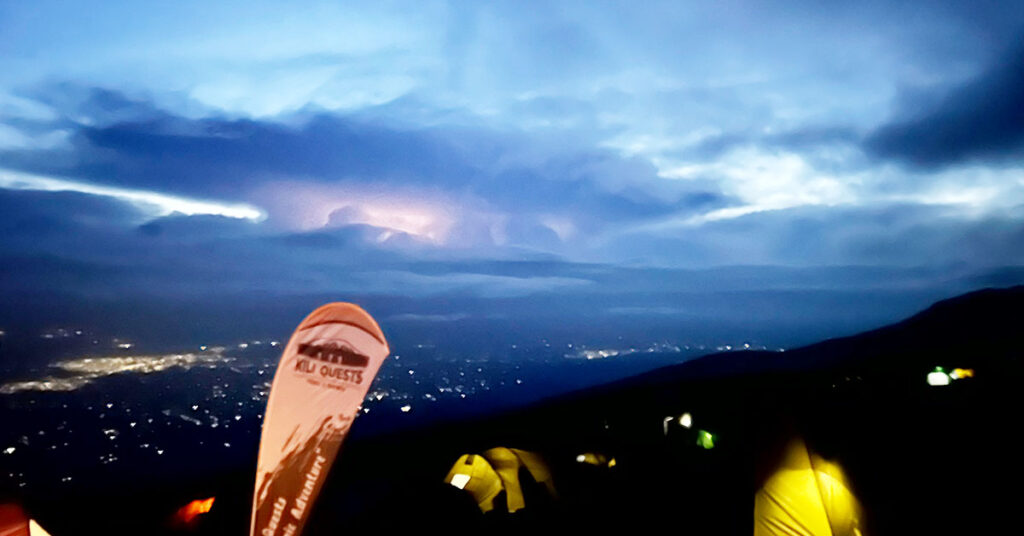
The Kili Quests flag waves under the stars ,with Moshi city glowing far below.

Middle Camps: Where the Cold Becomes Noticeable

Middle camps are where many climbers first realize Kilimanjaro is not just a warm African trek. After sunset, temperatures drop quickly, and sitting around camp can feel much colder than walking during the day.
 
This is when evening layers become important. A fleece, warm hat, gloves, and insulated jacket help you stay comfortable while eating dinner, preparing your gear, or waking up early for the next trekking day.

High Camps: Cold, Exposed, and Harder to Sleep

High camps such as Barafu Camp or Kibo Hut can feel cold, dry, and exposed. At this altitude, sleep often becomes lighter because of both cold and elevation.
 
This is where weak cold-weather preparation becomes obvious. If your sleeping bag is not warm enough, your socks are damp, or your jacket is too light, you may struggle to rest before summit night.
 
At high camps, your focus should be simple: stay dry, stay warm, eat well, drink enough water, and organize your summit gear before sleeping.
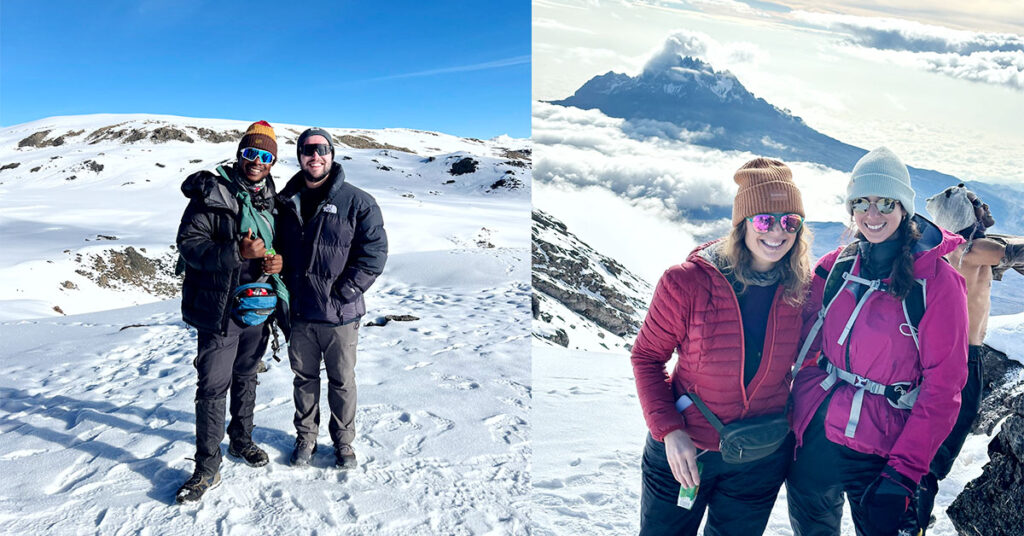
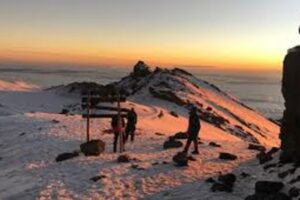
The journey tests you, the view rewards you. Stella Point, with Mawenzi Peak looking on.

Kilimanjaro Summit Night Temperature

Summit night is the coldest part of the Kilimanjaro climb. Most summit attempts begin around midnight from high camps such as Barafu Camp or Kibo Hut, when temperatures are at their lowest and the body is already tired from several days of trekking.

How Cold Is Summit Night on Kilimanjaro?

Summit night temperatures can drop to around -10°C to -15°C, and wind can make it feel even colder. The cold feels stronger because climbers are moving slowly, breathing thinner air, and trekking for many hours in darkness before sunrise.
This is not normal camp cold. Summit night cold affects your hands, feet, face, energy, and mental focus. If your layers are weak, the final push can feel much harder than expected.

Why Summit Night Feels So Difficult

The cold is only one part of the challenge. Summit night combines several difficult conditions at once:
  • Freezing temperatures
  • Strong wind exposure
  • Darkness
  • Low oxygen
  • Slow walking pace
  • Physical fatigue
  • Long hours before sunrise
Because the pace is slow, your body may not generate as much heat as it does during normal trekking days. This is why proper layering is critical.

What to Wear on Kilimanjaro Summit Night

For summit night, climbers should prepare with a full cold-weather layering system.
Bring:
  • Thermal base layers
  • Fleece or insulated mid-layer
  • Heavy down jacket
  • Waterproof and windproof shell
  • Warm hat
  • Neck gaiter or face covering
  • Warm gloves and liner gloves
  • Thick socks
  • Insulated hiking boots
  • Optional hand and toe warmers
Do not test your summit-night gear for the first time on the mountain. Make sure your boots, gloves, jacket, and layering system are comfortable before the climb.
 
For a complete summit gear breakdown, read our Kilimanjaro Summit Day Gear Checklist.

Why Kilimanjaro Nights Feel Colder Than the Temperature

Kilimanjaro nights often feel colder than the number on the thermometer. A night that looks manageable on paper can feel much harsher when you add altitude, wind, tiredness, and several days of trekking.
 
This is why climbers should not prepare only for the listed temperature range. You need to prepare for how the cold actually feels on the mountain.

Wind Makes the Cold Feel Stronger

Wind removes body heat quickly, especially at high camps and during summit night. Even if the temperature is around freezing, wind can make your hands, face, and body feel much colder.
 
This is why a windproof outer shell, warm gloves, hat, and neck gaiter are important. Warm layers are not enough if wind cuts through them.

Altitude Makes Recovery Harder

At higher elevation, your body is already working harder because of lower oxygen. This can affect sleep, energy, circulation, and how well you recover overnight.
 
When altitude and cold combine, the night can feel more difficult. You may wake up more often, feel colder than expected, or struggle to get comfortable inside your sleeping bag.

Fatigue Makes You Feel Colder

After several days of trekking, your body is tired. Fatigue can make cold feel worse because you have less energy to generate warmth.
 
This is especially important before summit night. If you arrive at high camp cold, tired, and underprepared, the midnight summit push becomes much harder.
 
Cold nights can make fatigue feel worse, especially at higher camps. Review our Altitude Sickness on Kilimanjaro guide so you understand how altitude affects sleep, energy, and recovery.

Damp Clothing Makes Cold More Dangerous

Wet or damp clothing loses warmth quickly. Sweat, rain, or moisture inside your boots and socks can make you cold later, especially when temperatures drop at camp.
 
This is why dry base layers, spare socks, waterproof storage bags, and proper rain protection matter. Staying dry is one of the easiest ways to stay warm on Kilimanjaro.

How to Stay Warm at Night on Kilimanjaro

Staying warm at night is not only about comfort. It affects sleep, recovery, energy, and your ability to handle the next trekking day. Cold nights become harder as you climb higher, so your routine at camp matters.

Change Into Dry Layers at Camp

Do not sleep in damp trekking clothes. Even if your shirt feels only slightly wet from sweat, it can make you cold once the temperature drops.
 
When you arrive at camp, change into dry base layers, dry socks, and warmer evening clothing. Keep your sleeping clothes protected in a dry bag so they stay dry throughout the climb.

Use the Right Sleeping Bag

A warm sleeping bag is essential on Kilimanjaro, especially at higher camps. For most climbers, a sleeping bag rated around -10°C to -15°C is a safer choice than a lightweight bag.
 
A sleeping bag liner can add extra warmth, and it also helps keep the inside of your bag cleaner during the trek.

Keep Your Hands, Feet, and Head Warm

You lose comfort quickly when your hands, feet, or head get cold. Warm socks, gloves, a hat, and a neck gaiter make a big difference at camp and during summit night.
 
Before sleeping, make sure your socks are dry. If your feet are cold inside the sleeping bag, warming up becomes much harder.

Eat Well and Drink Enough Water

Your body needs energy to stay warm. Eat your meals even if altitude reduces your appetite. Warm drinks, soup, and high-energy food can help your body maintain heat during cold evenings.
 
Hydration also matters. Dehydration can make fatigue and cold feel worse, especially at higher elevation.

Organize Your Morning Gear Before Sleeping

Cold mornings are harder when your gear is scattered. Before you sleep, prepare your headlamp, gloves, hat, jacket, water bottle, and trekking clothes for the next day.
 
This is especially important before summit night. You do not want to search for gloves or batteries in the cold and dark.

Kilimanjaro Cold-Night Packing Checklist

Cold-night preparation on Kilimanjaro is not something to guess. If you pack too light, the higher camps and summit night can become miserable. If you pack smart, you sleep better, recover better, and start each trekking day with more energy.

Essential Clothing for Cold Nights

Bring clothing that keeps you warm without trapping sweat or moisture.
  1. Thermal base layers
  2. Fleece or insulated mid-layer
  3. Down jacket
  4. Warm trekking socks
  5. Dry sleeping socks
  6. Warm hat
  7. Neck gaiter or buff
  8. Liner gloves
  9. Warm outer gloves
Your cold-night clothing should stay dry. Keep important layers inside dry bags or waterproof packing cubes.

Sleeping Gear for Kilimanjaro Nights

Your sleeping setup matters as much as your clothing. Higher camps can become very cold, and poor sleep will affect your recovery.
Bring:
  1. Sleeping bag rated around -10°C to -15°C
  2. Sleeping bag liner for extra warmth
  3. Inflatable or foam sleeping mat if not provided
  4. Dry sleepwear
  5. Small pillow or stuff sack with soft clothing
Do not rely on a light travel sleeping bag. Kilimanjaro is not a normal camping trip.

Small Items That Make Cold Nights Easier

Small items can make a big difference when temperatures drop.
  • Hand warmers
  • Toe warmers
  • Lip balm
  • Headlamp with spare batteries
  • Dry bag for sleeping clothes
  • Extra socks
  • Hot water bottle if your crew provides one
These items are not luxury. On cold nights, they help protect comfort, sleep, and morale.

What Not to Do Before Sleeping

Avoid mistakes that make cold nights worse.
  • Do not sleep in damp trekking clothes
  • Do not leave socks or gloves wet inside your tent
  • Do not wait until you are freezing before adding layers
  • Do not keep your sleeping bag open too long
  • Do not forget to prepare summit-night gear before resting

The goal is simple: stay dry, trap warmth early, and protect your energy for the next trekking day.

For the full gear list, use our Kilimanjaro Packing List before your climb.

Frequently Asked Questions About Kilimanjaro Night Temperatures

How cold does it get at night on Mount Kilimanjaro?

Night temperatures on Mount Kilimanjaro depend on elevation. Lower camps may feel cool, while higher camps can drop near or below freezing. Summit night is the coldest stage, often around -10°C to -15°C, and wind can make it feel even colder.
 
This is why climbers need proper layers, warm gloves, a hat, thick socks, and a cold-rated sleeping bag.

What is the coldest night on Kilimanjaro?

The coldest night is usually summit night. Climbers often begin the summit push around midnight from high camps such as Barafu Camp or Kibo Hut, when temperatures are very low and the body is already tired.
 
The cold feels stronger because summit night combines darkness, wind, slow movement, fatigue, and high altitude.

What sleeping bag rating do I need for Kilimanjaro?

For Kilimanjaro, most climbers should use a sleeping bag rated around -10°C to -15°C. A lighter sleeping bag may not be warm enough for higher camps or cold nights before summit day.
 
A sleeping bag liner can add extra warmth, but it should not replace a proper cold-rated sleeping bag.

Are Kilimanjaro nights cold even in the dry season?

Yes. Dry season does not mean warm nights. Even during popular climbing months, temperatures can drop sharply after sunset, especially at higher camps.
 
The dry season may reduce rain and mud, but cold nights and summit-night freezing conditions are still part of the climb.

Why does Kilimanjaro feel colder than expected?

Kilimanjaro can feel colder than expected because of altitude, wind, fatigue, and damp clothing. At higher elevations, your body is already working harder with less oxygen, and wind can remove heat quickly.
 
This is why staying dry and layering properly matters. A temperature that looks manageable can feel much colder after several days of trekking.

What should I wear at night on Kilimanjaro?

At night, wear dry thermal base layers, warm socks, a fleece or insulated layer, and a warm hat. At higher camps, you may also need a down jacket, gloves, and extra insulation before sleeping.
 
Do not sleep in damp trekking clothes. Change into dry layers at camp so your body can warm up properly inside the sleeping bag.

How do I keep my feet warm at night on Kilimanjaro?

Keep your feet warm by changing into dry socks before sleeping, using a warm sleeping bag, and avoiding damp boots or socks inside the tent. Thick sleeping socks are helpful, but they should not be too tight because tight socks can reduce circulation.
 
On very cold nights, toe warmers can also help, especially before summit night.

Prepare for Cold Kilimanjaro Nights With Kili Quests

Cold nights are part of every Kilimanjaro climb, especially as you move higher toward Barafu Camp, Kibo Hut, Stella Point, and Uhuru Peak. The climbers who handle the cold best are not always the strongest. They are the ones who prepare properly before the trek begins.
 
At Kili Quests, we help you understand what to expect at each stage of the mountain, what layers to bring, how to prepare for summit night, and how to avoid common cold-weather mistakes.
Our local mountain team can help you plan:
  • What to wear at lower, middle, and high camps
  • What sleeping bag rating you need
  • How to layer properly for summit night
  • What cold-weather gear to keep accessible
  • How to stay warm without overpacking

Contact Kili Quests today and tell us your route, travel month, and climbing experience. We will help you prepare for Kilimanjaro’s cold nights and summit conditions with confidence.

Related Articles