Kilimanjaro Altitude Sickness: Symptoms & Causes
Climb Kilimanjaro Safely Altitude is the biggest challenge on Kilimanjaro , but with the right preparation and expert guidance, you can reach the summit safely
| Acclimatization Strategy | What It Means | Why It Helps |
|---|---|---|
| Choose enough days | Pick a route with more time on the mountain. | More days give your body more time to adjust to altitude. |
| Walk slowly | Follow a steady “pole pole” pace from the first day. | A slower pace reduces stress on your body as elevation increases. |
| Climb high, sleep low | Ascend higher during the day, then sleep lower when the route allows. | This exposes your body to altitude while giving it recovery time overnight. |
| Hydrate and eat well | Drink regularly and eat enough even when appetite drops. | Good hydration and nutrition support energy, recovery, and adjustment. |
| Listen to your guide | Report symptoms early and follow safety advice. | Guides can adjust pace, monitor your condition, and respond early. |
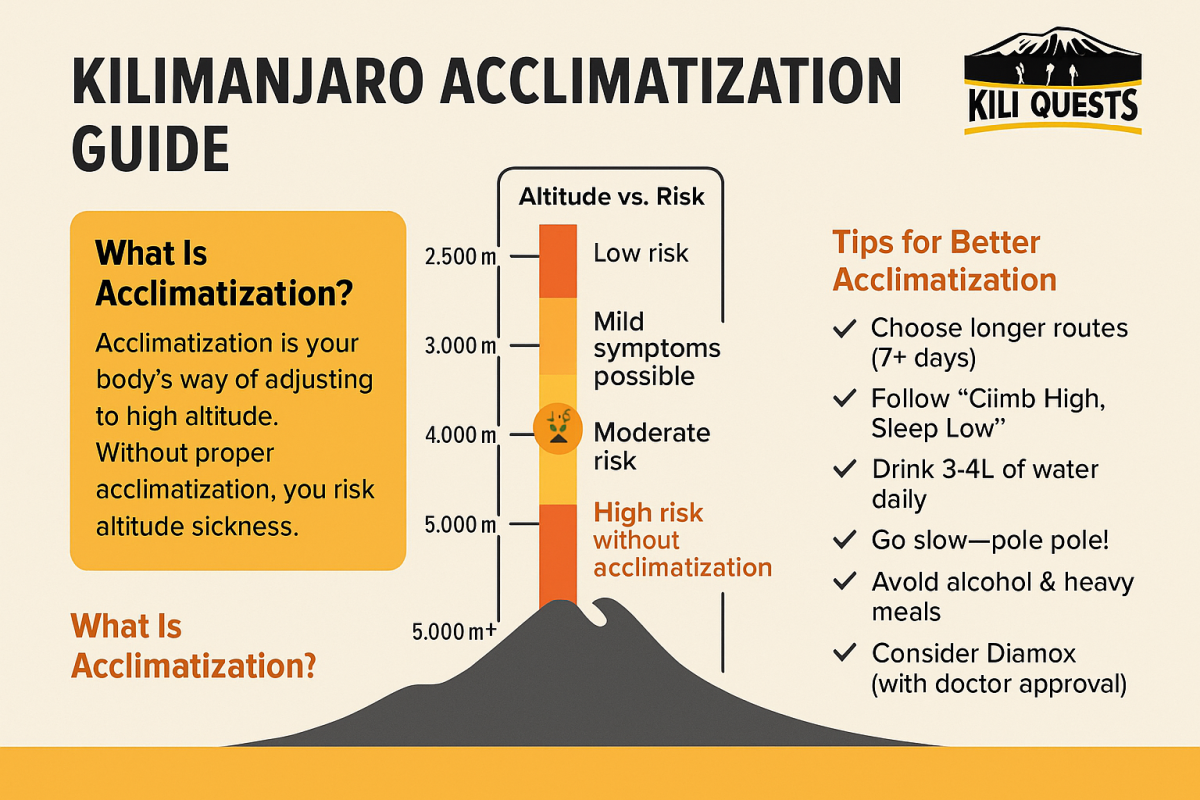
| Strategy | What It Means | Why It Works |
|---|---|---|
| Climb High, Sleep Low | Ascend higher during the day, sleep lower | Helps your body adapt with less stress |
| Walk Slowly (Pole Pole) | Maintain a slow, steady pace | Allows gradual oxygen adaptation |
| Acclimatization Walks | Short hikes above camp after arrival | Speeds up adaptation |
| Hydration & Nutrition | Drink 3–4L daily and eat properly | Supports recovery and reduces stress |
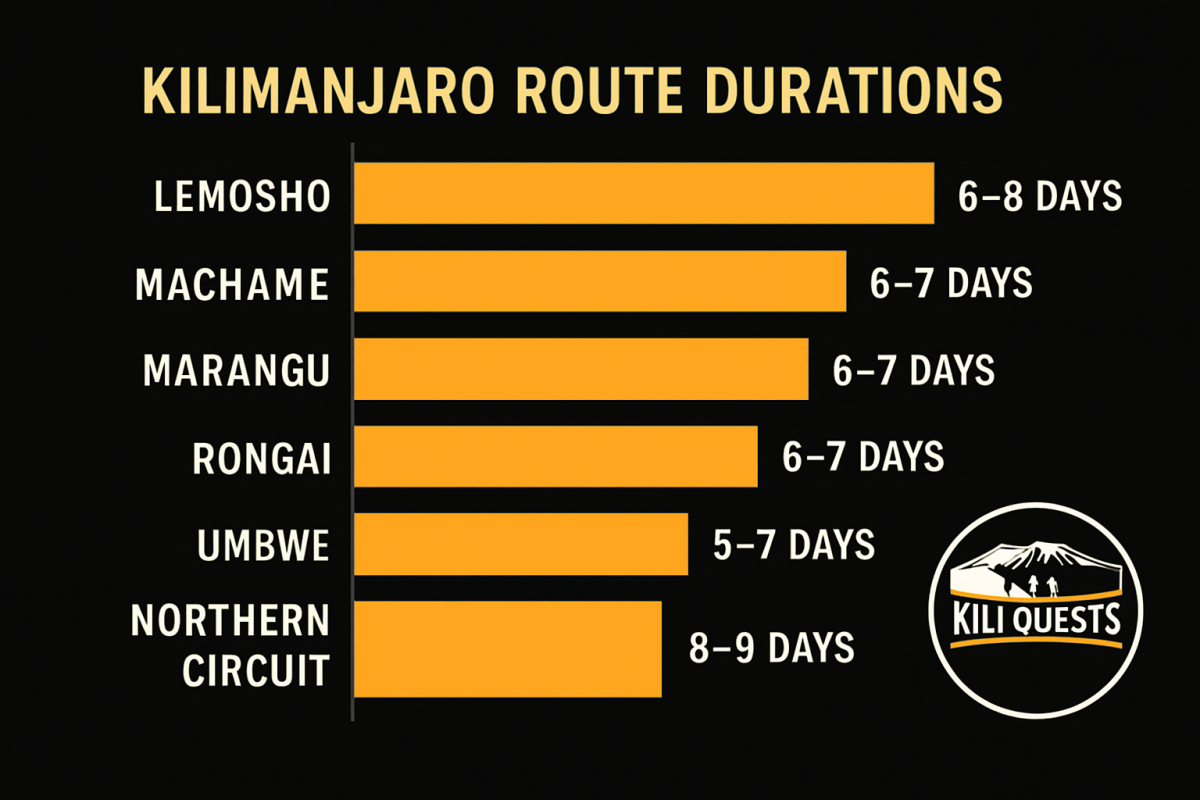
| Route | Recommended Duration | Acclimatization Profile | Best For |
|---|---|---|---|
| Lemosho Route | 7–8 days | Gradual western approach with strong altitude adjustment time. | First-time climbers who want scenery and better acclimatization. |
| Northern Circuit Route | 8–9+ days | Longest route with the most time for gradual adjustment. | Climbers who want the strongest acclimatization profile and fewer crowds. |
| Machame Route | 7 days preferred | Good climb-high-sleep-low profile when not rushed. | Fit climbers who want a scenic, popular, and well-paced route. |
| Rongai Route | 6–7 days | More gradual than steep routes, but with fewer climb-high-sleep-low features. | Climbers who want a quieter northern approach. |
| Marangu Route | 6 days preferred | Can be harder if done too quickly because acclimatization time is limited. | Climbers who prefer hut accommodation but still want enough days. |
| Umbwe Route | 6+ days | Steep and fast altitude gain, making acclimatization more difficult. | Experienced trekkers only. |
Climbing Kilimanjaro is not just about physical strength , it’s about making the right decisions at the right time.
Professional guides:
At Kili Quests, our team is trained to prioritize safety while maximizing your chances of reaching the summit.
Experienced guides play a major role in your success, especially when combined with a well-planned itinerary like those outlined in our Kilimanjaro climbing packages.
Reaching the summit of Kilimanjaro is not about speed or strength it’s about patience, preparation, and proper acclimatization.To give yourself the best chance of success:
When these factors come together, your chances of standing on Uhuru Peak increase dramatically.

Climb Kilimanjaro Safely Altitude is the biggest challenge on Kilimanjaro , but with the right preparation and expert guidance, you can reach the summit safely
Plan Your Kilimanjaro Climb Climb safely with the right preparation and expert support. Choose the safest route Prepare for altitude properly Climb with experienced local

Choose the Best Time to Climb Kilimanjaro The right season can make the difference between reaching the summit or turning back early.At Kili Quests, we