Climb with the Highest Success Rate

The Northern Circuit offers the best acclimatization — but pacing and guidance still matter.

Plan Your Climb the Right Way

Preparation and acclimatization make the difference.
Explore these guides:

OUR CATEGORIES

Northern Circuit Kilimanjaro: Longest Route With Best Acclimatization

The Northern Circuit Route is the longest Kilimanjaro route and one of the best choices for climbers who want strong acclimatization, quiet trails, and wide panoramic views around the mountain.

Starting from the western side of Kilimanjaro, the route follows the early section of the Lemosho trail before turning north and circling the quieter northern slopes. This gives climbers a longer, more gradual approach before summit night.

The standard 9-day Northern Circuit itinerary gives your body more time to adjust to altitude than shorter routes such as Marangu or 6-day Machame. That makes it one of the strongest Kilimanjaro routes for climbers who want a safer pace and a better summit profile when properly guided.

This guide covers the Northern Circuit itinerary, difficulty, acclimatization, cost, scenery, pros and cons, and who this route is best suited for.
 

Quick Answer: Is the Northern Circuit Route Good for Kilimanjaro?

Yes, the Northern Circuit is one of the best Kilimanjaro routes for acclimatization, scenery, and a quieter trekking experience. It is the longest main route on the mountain, usually completed in 9 days, which gives climbers more time to adapt to altitude.
 
The route starts from the western side, follows part of the Lemosho trail, then circles around the quieter northern slopes before heading to the summit. Because it takes more days and avoids the busiest trail sections for much of the climb, it is ideal for climbers who want a slower pace, fewer crowds, and strong acclimatization.
 
The main drawbacks are time and cost. The Northern Circuit takes longer and usually costs more than shorter routes, but for many climbers, the extra days are worth it.

Why Choose the Northern Circuit Route?

The Northern Circuit Route is best known for three things: excellent acclimatization, low crowds, and a long scenic journey around Kilimanjaro.
 
Unlike shorter routes that reach high altitude quickly, the Northern Circuit gives climbers more days on the mountain. This slower pace helps the body adjust better and reduces the pressure of rushing toward summit night.
 
The route also explores the quieter northern side of Kilimanjaro, where fewer climbers pass compared with the southern circuit, Machame, or Marangu routes. This makes the experience feel more remote and peaceful.
 
Choose the Northern Circuit if you want:


  • A longer 9-day Kilimanjaro itinerary
  • Strong acclimatization profile
  • Quieter trails with fewer crowds
  • Panoramic views around the mountain
  • A premium route with more time to adjust
  • A strong summit profile when properly paced
This is not usually the cheapest Kilimanjaro route, but it is one of the best for climbers who value safety, scenery, and acclimatization.
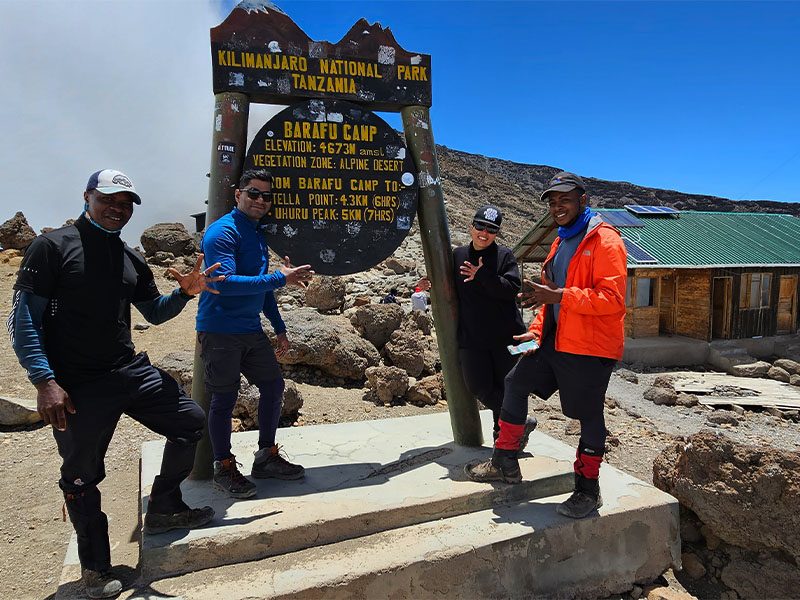
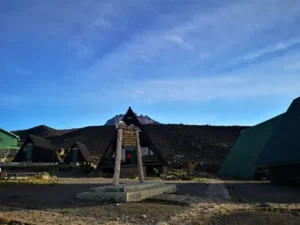
Climbers at Barafu Camp (4,673m) on Mount Kilimanjaro’s Northern Circuit Route, preparing for the final summit push to Uhuru Peak | Kili Quests
Barafu Camp is the final overnight base camp before summit day on the Northern Circuit. From here, climbers tackle the ascent to Uhuru Peak via Stella Point.

Table of Contents

What Is the Northern Circuit Route on Kilimanjaro?

The Northern Circuit Route is the longest main route on Mount Kilimanjaro. It begins from the western side at Londorossi Gate, follows the early part of the Lemosho Route, then turns north to circle around the quieter northern slopes.

This longer route gives climbers a more complete Kilimanjaro experience. Instead of heading quickly toward the southern circuit, the trail moves around the mountain, offering wide views, remote landscapes, and a quieter atmosphere before joining the final summit approach.

The Northern Circuit is usually completed in 9 days. Its biggest advantage is acclimatization. The extra days allow the body more time to adjust before reaching high camps and attempting Uhuru Peak.

Northern Circuit Route Overview

Feature Northern Circuit Route Details
Route duration Usually 9 days
Distance About 98 km / 61 miles
Starting point Londorossi Gate, western Kilimanjaro
Highest point Uhuru Peak, 5,895 m / 19,341 ft
Difficulty Moderate to challenging because of the length and summit night
Acclimatization One of the strongest profiles on Kilimanjaro due to the longer itinerary
Best for Climbers who want strong acclimatization, quieter trails, scenery, and enough time for a longer trek
Main drawback Takes more time and usually costs more than shorter routes
Because longer routes significantly improve summit success, it’s important to understand how itinerary length affects your chances of reaching the summit.
 
Read our article about, Kilimanjaro Success Rate

Northern Circuit Days and Elevation Profile

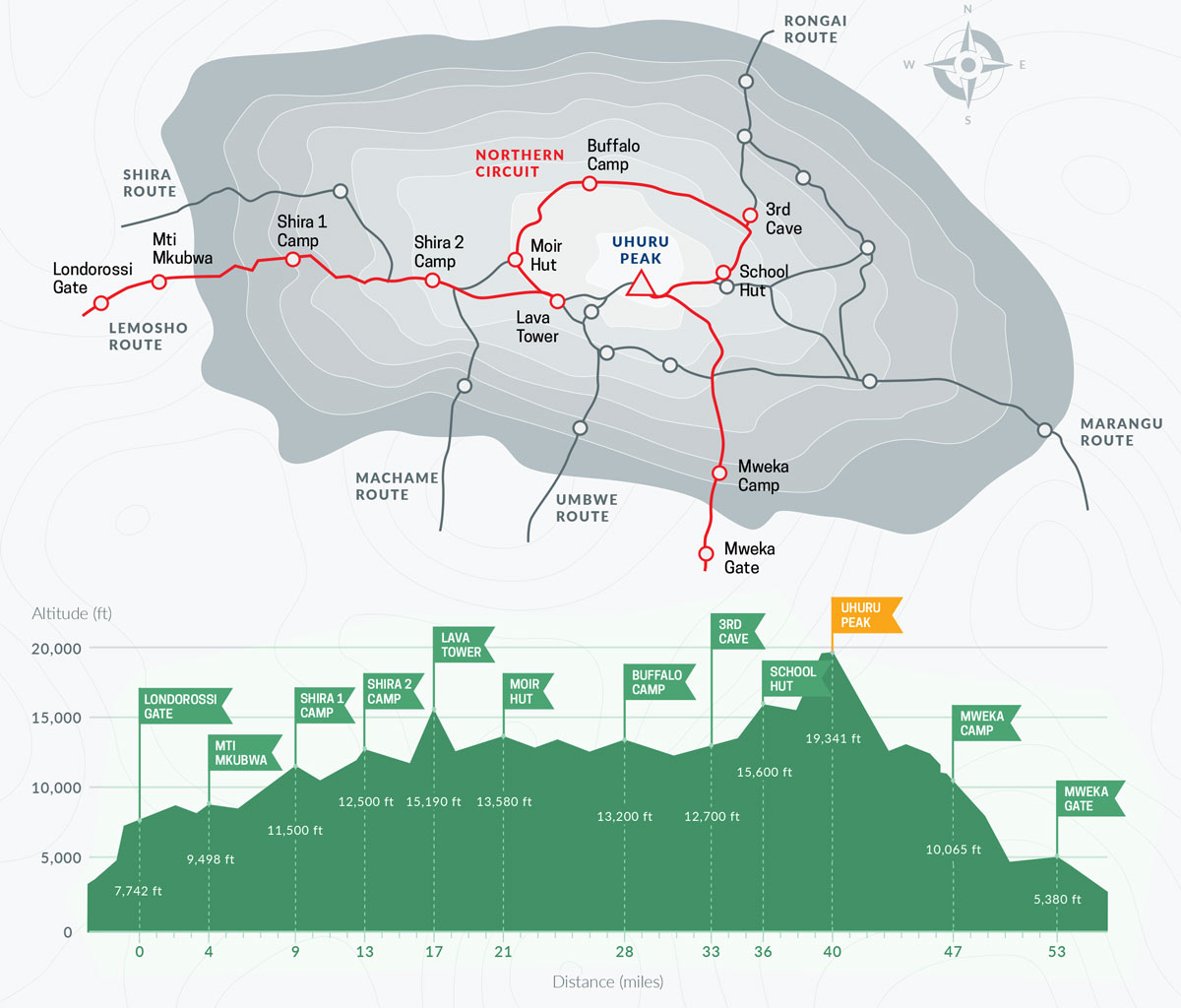
Northern Circuit Route map on Mount Kilimanjaro showing full circuit trail, elevation profile, and key camps to Uhuru Peak
The longest Kilimanjaro route, offering excellent acclimatization and 360° views around the mountain.

9-Day Northern Circuit Route Itinerary

Day 1: Londorossi Gate to Mti Mkubwa Camp

Altitude: 2,100 m → 2,650 m
Hiking time: 3–4 hours
 
The trek begins at Londorossi Gate on the western side of Kilimanjaro. After registration, you enter the rainforest zone and walk through a green, shaded trail toward Mti Mkubwa Camp. Wildlife sightings are possible in this lower forest section, especially monkeys and forest birds.

Day 2: Mti Mkubwa Camp to Shira 1 Camp

Altitude: 2,650 m → 3,610 m
Hiking time: 5–6 hours
 
The trail climbs out of the rainforest and into the moorland zone. As the vegetation opens, views across the Shira Plateau begin to appear. This is one of the first major altitude gains of the route, so a slow pace is important.

Day 3: Shira 1 Camp to Shira 2 Camp

Altitude: 3,610 m → 3,850 m
Hiking time: 4–5 hours
 
This day crosses the open Shira Plateau, one of Kilimanjaro’s most scenic high-altitude landscapes. The walking is steadier, with wide views of Kibo and the surrounding wilderness. The gradual profile helps climbers settle into the rhythm of the trek.

Day 4: Shira 2 Camp to Lava Tower to Moir Hut

Altitude: 3,850 m → 4,600 m → 4,200 m
Hiking time: 6–7 hours
 
This is an important acclimatization day. The trail climbs toward Lava Tower, a dramatic volcanic landmark at high altitude, before descending to Moir Hut for the night. This “climb high, sleep low” pattern helps the body adapt before the route moves around the northern slopes.

Day 5: Moir Hut to Buffalo Camp

Altitude: 4,200 m → 4,020 m
Hiking time: 5–6 hours
 
The route now moves into Kilimanjaro’s quieter northern side. This section feels more remote than the busier southern trails, with wide alpine landscapes and views stretching toward Kenya on clear days.
 

Day 6: Buffalo Camp to Third Cave Camp

Altitude: 4,020 m → 3,870 m
Hiking time: Around 5 hours
 
This is one of the quietest parts of the Northern Circuit. The trail crosses remote alpine desert terrain with fewer climbers and open views. The slightly lower sleeping altitude also supports acclimatization before the climb to base camp.

Day 7: Third Cave Camp to School Hut

Altitude: 3,870 m → 4,750 m
Hiking time: 4–5 hours
 
The trail climbs steadily toward School Hut, the base camp used for the summit attempt. This day is shorter but important, because you will rest, hydrate, eat early, and prepare for the midnight summit push.

Day 8: School Hut to Uhuru Peak to Mweka Camp

Altitude: 4,750 m → 5,895 m → 3,100 m
Hiking time: 12–14 hours
 
Summit day is the hardest part of the Northern Circuit Route. The climb usually begins around midnight in cold, dark conditions. You ascend slowly toward the crater rim, continue to Uhuru Peak, then descend to Mweka Camp after a short rest.
This is a long and demanding day, but the extended acclimatization profile of the Northern Circuit helps climbers arrive better prepared than on shorter routes.

Day 9: Mweka Camp to Mweka Gate

Altitude: 3,100 m → 1,640 m
Hiking time: 3–4 hours
 
The final day descends through the rainforest to Mweka Gate. After completing park checkout, successful climbers receive their summit certificate before returning to town.

Why the Northern Circuit Has a Strong Summit Profile

The Northern Circuit has one of the strongest summit profiles on Kilimanjaro because it gives climbers more time to acclimatize before summit night.
 
The 9-day itinerary allows a slower altitude gain, more recovery time, and better adjustment before reaching high camps. This is especially important because altitude is one of the main reasons climbers struggle on Kilimanjaro.

Longer Itinerary Means Better Acclimatization

More days on the mountain give your body more time to adapt to lower oxygen levels. This does not guarantee summit success, but it improves your chances when combined with proper pacing, hydration, nutrition, and guide support.

Lower Pressure Than Shorter Routes

Shorter routes can feel rushed because climbers gain altitude faster with less recovery time. The Northern Circuit spreads the climb over more days, making the experience more gradual.

Good Option for First-Time Climbers With Enough Time

The Northern Circuit can be a strong option for first-time climbers who want a slower pace and have enough time for a 9-day trek. It is still physically demanding, but the route gives the body more opportunity to adjust.
 
For climbers comparing route options, see our Kilimanjaro routes comparison guide

Northern Circuit Route Cost

The Northern Circuit usually costs more than shorter Kilimanjaro routes because it takes 9 days on the mountain. More days mean more park fees, crew wages, food, camping logistics, guide support, and mountain operations.
 
The final price depends on the number of climbers, whether the climb is private or group-based, the level of service, included transfers, hotel nights, equipment, safety support, and route arrangements.
 
The Northern Circuit is not the cheapest route, but it offers strong value for climbers who want better acclimatization, quieter trails, and a more complete Kilimanjaro experience.
 
If your main goal is to reduce cost, a shorter route may look cheaper. But on Kilimanjaro, choosing only by price can be a mistake. A longer route gives your body more time to adjust, which can make the climb safer and more enjoyable.
 
For a full breakdown of park fees, crew costs, inclusions, exclusions, and extra expenses, read our main guide to Kilimanjaro climb cost.

Northern Circuit Route Pros and Cons

Pros Cons
Excellent acclimatization profile due to the 9-day itinerary More expensive than shorter Kilimanjaro routes
Quieter northern slopes with fewer crowds Requires more time on the mountain
Beautiful 360-degree scenery around Kilimanjaro Longer distance can feel tiring for some climbers
Strong option for climbers who want a slower, safer pace Not ideal for travelers with limited vacation days

Best Time to Climb the Northern Circuit

The best time to climb the Northern Circuit is during Kilimanjaro’s drier trekking seasons, when visibility is better and trail conditions are more stable.
 
The best months are usually:
  • January to early March
  • June to October
January to early March can offer warmer conditions and fewer climbers. June to October is one of the most popular climbing seasons because of drier weather and clearer mountain views.
 
The Northern Circuit can be climbed outside these months, but rainier periods such as March to May and parts of November can make the trail wetter, colder, and less comfortable.
 
For a full seasonal breakdown, read our best time to climb Kilimanjaro guide.
 
Read our article about,Best Time to Climb Kilimanjaro 
Trekker climbing and hugging a rock on Kilimanjaro’s Barranco Wall, a fun and scenic segment encountered on the Northern Circuit via Lemosho | Kili Quests
The Barranco Wall, known as the “Breakfast Wall,” is a fun and challenging highlight of the Northern Circuit after it merges with Lemosho.

What Makes the Northern Circuit Unique?

The Northern Circuit is unique because it gives climbers one of the most complete journeys around Mount Kilimanjaro. Instead of following only the busier southern routes, it circles around the quieter northern slopes before heading toward the summit.

This gives the route a different feel from Machame, Marangu, or the standard Lemosho itinerary. You experience open plateau scenery, remote northern landscapes, views toward Kenya, and a longer approach that supports acclimatization.

Its biggest strength is the combination of time, scenery, and solitude. Its biggest drawback is that it requires more days and usually costs more.

Is the Northern Circuit Route Right for You?

The Northern Circuit Route is a strong choice if you want a longer, quieter, and better-acclimatized Kilimanjaro climb.


Choose the Northern Circuit if you:
  • Want one of the best acclimatization profiles on Kilimanjaro
  • Prefer fewer crowds and quieter trails
  • Have enough time for a 9-day climb
  • Want a scenic route with views around the mountain
  • Are willing to pay more for extra days and better pacing
  • Want a strong route option as a first-time climber
This route may not be ideal if you are short on time, looking for the cheapest climb, or prefer a faster itinerary. In that case, routes such as Machame or Marangu may be worth comparing, but they offer less time for acclimatization.

Northern Circuit vs Lemosho Route

The Northern Circuit and Lemosho Route both start from the western side of Kilimanjaro and share the early trail through Londorossi Gate, Mti Mkubwa, and the Shira Plateau.
 
The main difference is what happens after the early section. Lemosho usually continues toward the southern circuit and Barranco, while the Northern Circuit turns north and circles around the quieter side of the mountain.
 
Northern Circuit is usually better for climbers who want more acclimatization time, fewer crowds, and a longer trek. Lemosho is better for climbers who want excellent scenery and acclimatization but prefer a slightly shorter itinerary, usually 7 or 8 days.
 
Both are strong routes. The better choice depends on your time, budget, fitness, and comfort with a longer climb.
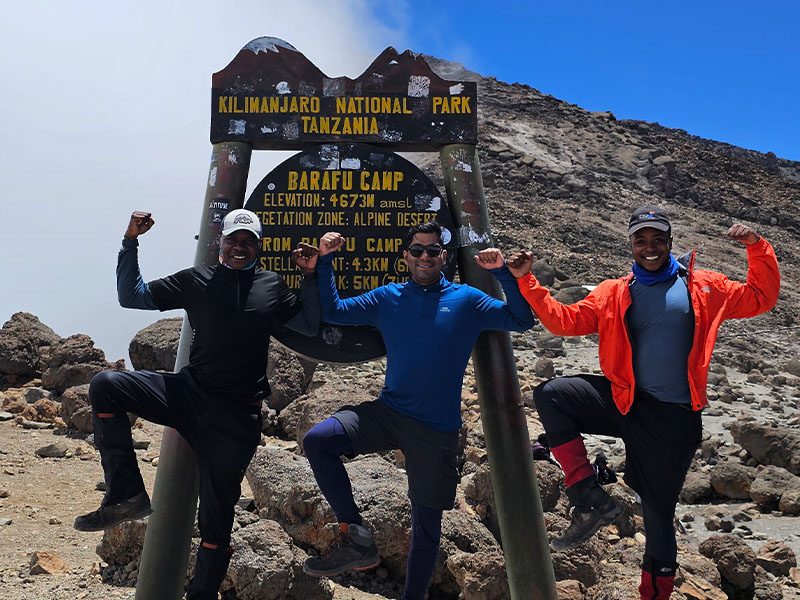
Three happy trekkers posing in front of the Barafu Camp sign on Kilimanjaro’s Northern Circuit Route, flexing muscles before summit day | Kili Quests
A light-hearted moment at Barafu Camp (4,673m) on the Northern Circuit Route — trekkers flex their energy and spirit before the final ascent to Uhuru Peak.

Frequently Asked Questions About the Northern Circuit Route

How long does the Northern Circuit Route take?

The Northern Circuit Route usually takes 9 days. This makes it the longest main Kilimanjaro route and gives climbers more time to acclimatize before summit night.

Is the Northern Circuit Route difficult?

The Northern Circuit is moderately challenging. The route is long, and summit night is still demanding, but the gradual 9-day itinerary helps many climbers adjust better than shorter routes.

The challenge is not technical climbing. It is the combination of distance, altitude, cold, and several days of trekking.

Why is the Northern Circuit good for acclimatization?

The Northern Circuit is good for acclimatization because it gives climbers more days on the mountain and follows a slower altitude profile. This allows the body more time to adjust before reaching high camps and attempting the summit.

Is the Northern Circuit good for beginners?

Yes, the Northern Circuit can be a good route for beginners who have enough time and budget for a longer climb. Its slower pace and strong acclimatization profile make it more forgiving than shorter routes.
However, beginners still need proper training, patience, and guide support.

Is the Northern Circuit better than Lemosho?

The Northern Circuit is usually better for acclimatization and solitude because it is longer and quieter. Lemosho is also scenic and well-acclimatized, but it is usually shorter.
 
Choose Northern Circuit if you want the longest, quietest, and most gradual route. Choose Lemosho if you want excellent scenery and acclimatization with fewer days.

Climb the Northern Circuit With Kili Quests

The Northern Circuit is one of the best Kilimanjaro routes for climbers who want more time, better acclimatization, fewer crowds, and a quieter mountain experience.
 
At Kili Quests, we plan Northern Circuit climbs with careful pacing, experienced local guides, proper safety checks, and full mountain support from start to summit. Our team helps you prepare, choose the right itinerary, and climb with a strategy that respects altitude instead of rushing it.
 
If you want a longer Kilimanjaro route with strong acclimatization and panoramic scenery, contact us to plan your Northern Circuit climb.

Related Articles