Machame vs Marangu: Which Kilimanjaro Route Is Better?
Choose the Right Route for Your Climb

Compare routes and get expert advice for your Kilimanjaro adventure.

Kilimanjaro Planning Guides

Explore key guides before your climb:

OUR CATEGORIES

Machame vs Marangu: Which Kilimanjaro Route Is Better?

Choosing between the Machame Route and the Marangu Route is one of the most important decisions when planning your Kilimanjaro climb. These two routes are among the most popular on the mountain, but they offer very different experiences in terms of comfort, acclimatization, scenery, and success rates.
Many climbers consider Marangu because of its hut accommodation and reputation as the “easier” route, while others choose Machame for its scenic landscapes and higher summit success rates.The best route depends on your priorities  comfort, experience, or maximizing your chances of reaching Uhuru Peak.
Still comparing routes? See our [Kilimanjaro routes comparison guide] or explore the full [Machame Route guide] and [Marangu Route guide] for detailed breakdowns.
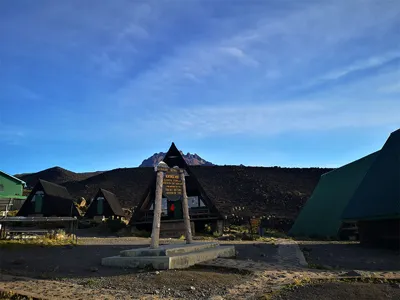
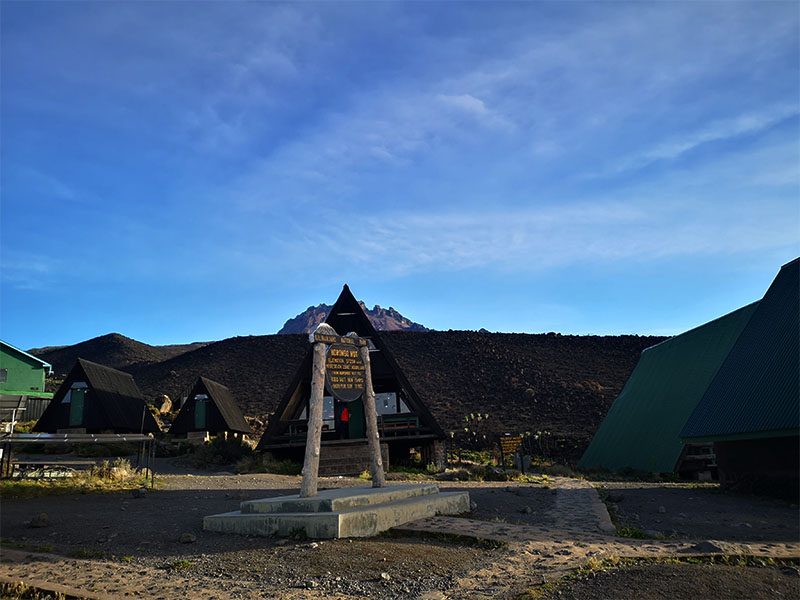
Horombo Huts on Mount Kilimanjaro’s Marangu Route with Mawenzi Peak in the background under a clear blue sky | Kili Quests
Machame uses mountain tents, while Marangu offers dormitory-style huts — a key difference in comfort and experience.

Table of Contents

Overview of Machame and Marangu Routes

What Is the Machame Route Like?

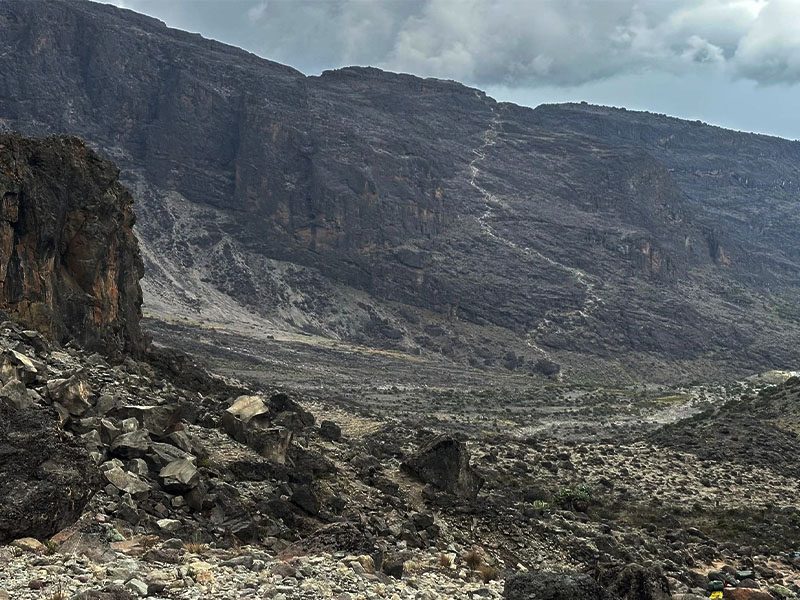
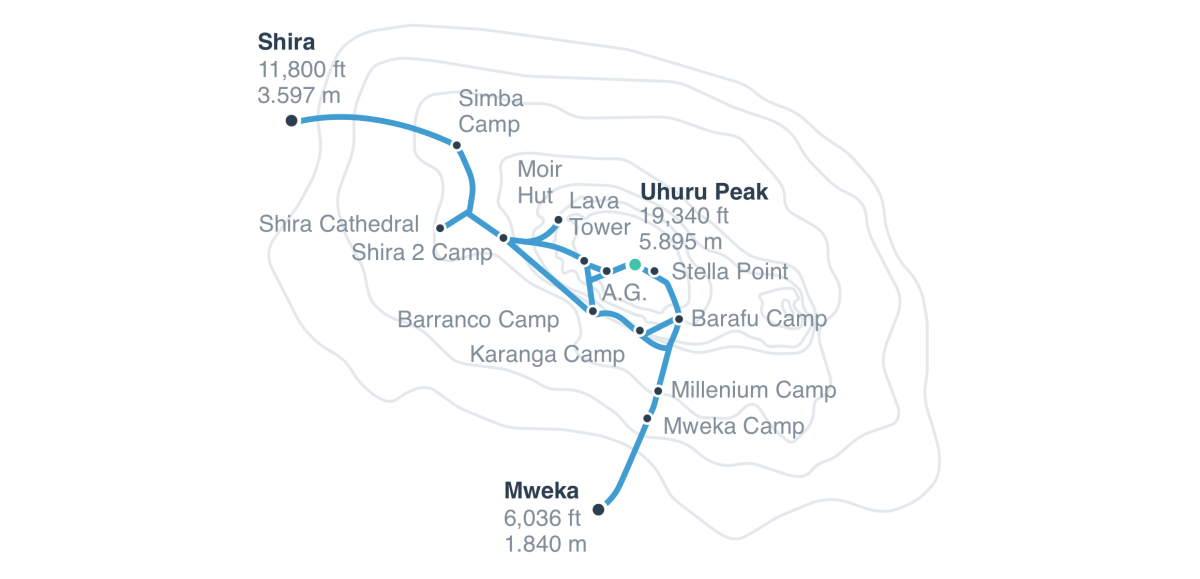
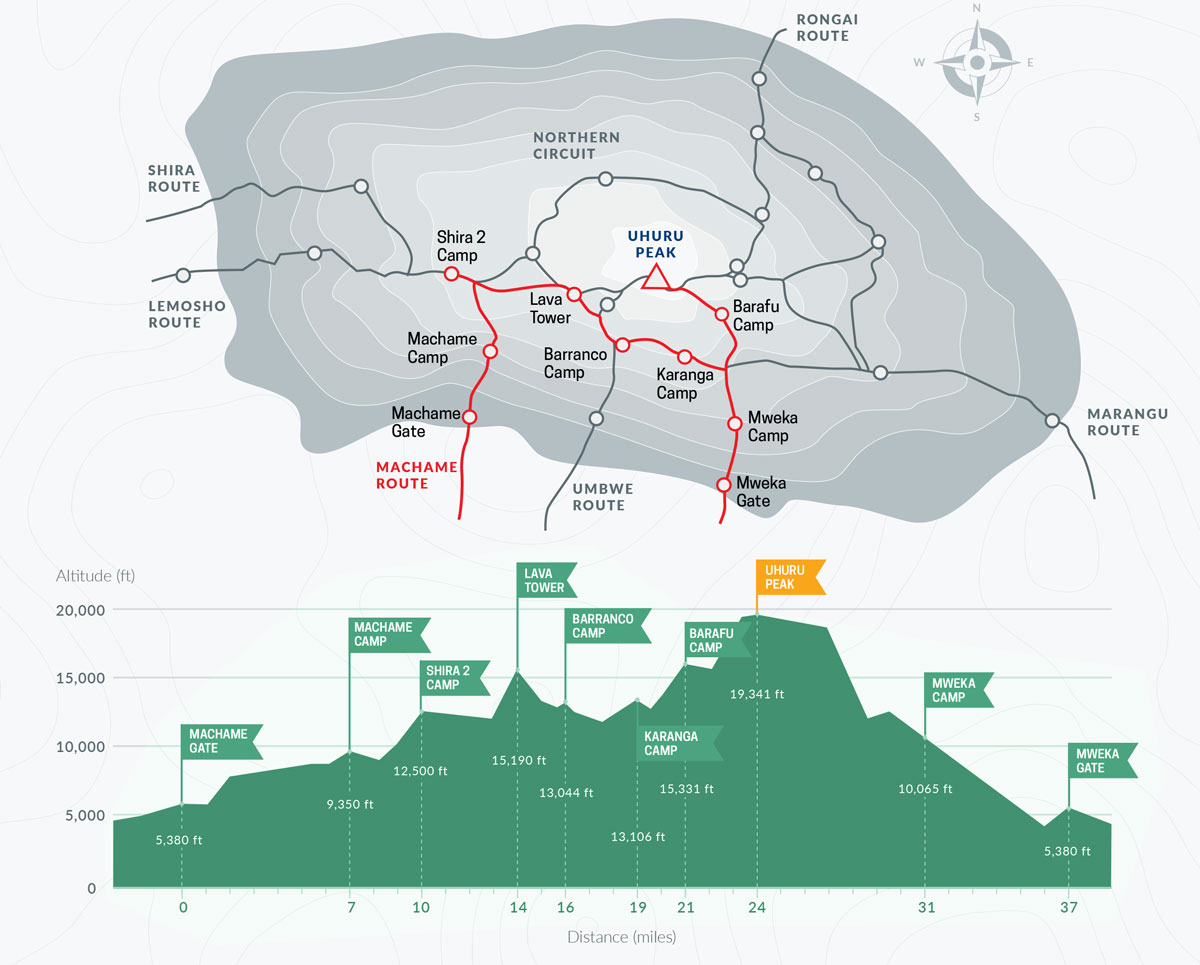
The Machame Route is the most popular route on Kilimanjaro and is often called the “Whiskey Route.” It is known for its scenic landscapes, varied terrain, and strong acclimatization profile when completed over 6 or 7 days.This route approaches the mountain from the south and takes you through rainforest, moorland, and alpine desert before reaching the summit. It also includes famous sections like the Barranco Wall, which adds both challenge and excitement to the climb.Machame is a camping route, meaning you sleep in tents throughout the trek. While this requires adjusting to outdoor conditions, it also allows for more flexibility and a closer connection to the mountain environment.
 
For a full breakdown, see our detailed [Machame Route Kilimanjaro guide].
 

What Is the Marangu Route Like?

The Marangu Route is the only route on Kilimanjaro that offers hut accommodation instead of camping. Because of this, it is often referred to as the “Coca-Cola Route” and is considered more comfortable by many climbers.The trail follows the same path for both ascent and descent, making it more direct compared to other routes. The terrain is generally gradual, and the huts provide shared sleeping areas, dining spaces, and basic facilities.Marangu is usually completed in 5 or 6 days, which makes it one of the shortest routes on the mountain.
 
Learn more in our complete [Marangu Route Kilimanjaro guide].

Key Differences Between Machame and Marangu

Accommodation — Tents vs Huts

The most obvious difference between these two routes is how you sleep.On Machame, you camp in tents that are set up by your support team. While this requires adjusting to outdoor conditions, it offers more space, privacy, and a more immersive mountain experience.On Marangu, you stay in huts with shared dormitory-style rooms. This can feel more comfortable, especially for climbers who are not used to camping. However, huts can be crowded, especially during peak seasons, and offer less flexibility.Your choice here depends on whether you prioritize comfort or experience.

Acclimatization and Success Rate

This is one of the most important differences between the two routes.Machame follows a “climb high, sleep low” profile, which allows your body to adjust more effectively to altitude. When done over 6 or 7 days, it offers a strong chance of reaching the summit.Marangu, on the other hand, is shorter and follows a more direct ascent. Because of this, it provides less time for acclimatization, which can reduce success rates.Many climbers are surprised to learn that the “easier” Marangu Route often has a lower success rate than Machame.
 
Learn more about [Kilimanjaro success rates] and why longer routes improve your chances of reaching the summit.

Difficulty Level

Marangu is often described as easier because of its gradual slopes and hut accommodation. However, the shorter duration can make it more challenging in terms of altitude adaptation.Machame includes steeper sections and more varied terrain, which can feel physically demanding. However, the longer itinerary helps balance this by giving your body more time to adjust.In reality, both routes are achievable, but Machame often provides a better overall balance between effort and acclimatization.
 
Not sure what to expect? Read our full guide on [how difficult Kilimanjaro really is].

Scenery and Experience

Machame is widely considered one of the most scenic routes on Kilimanjaro. It passes through diverse landscapes, including rainforest, moorland, and alpine desert, offering constantly changing views.Marangu is less varied in terms of scenery because it follows a more direct path up and down the mountain. While still beautiful, it does not offer the same diversity of landscapes as Machame.For climbers who value the journey as much as the summit, Machame provides a richer experience.

Crowd Levels

Both routes can be busy, but the experience is different.Marangu huts can become crowded, especially during peak seasons, as all climbers share the same facilities. This can reduce privacy and comfort.Machame is also popular, but camping spreads climbers out more, creating a less crowded feeling overall.

Cost and Value

Marangu is often slightly cheaper because it is shorter and uses existing hut infrastructure.Machame may cost more, especially when done over 7 days, but it often provides better value due to higher success rates and a more rewarding experience.When choosing between the two, it is important to consider not just the price, but what you are getting in return.
 
For a full breakdown, see our guide on [Kilimanjaro climb cost].
Trekker walking at high altitude toward Kilimanjaro’s summit | Kili Quests
Machame includes steeper, more adventurous sections, while Marangu provides a more gradual and direct path to the summit.

Machame vs Marangu — Which One Should You Choose?

Choose Machame If You Want a Higher Chance of Success

Machame’s longer itinerary and better acclimatization profile make it a strong choice for climbers who want to maximize their chances of reaching Uhuru Peak.

Choose Marangu If You Prefer Hut Accommodation

If you are not comfortable with camping and prefer sleeping in huts, Marangu is the only option that offers this experience.

Choose Machame If You Want Better Scenery

Machame offers more diverse landscapes and a more visually rewarding journey, making it ideal for those who value the overall trekking experience.

Choose Marangu If You Want a Simpler, Shorter Route

Marangu’s direct path and shorter duration make it appealing for those who want a more straightforward climb.

How to Choose the Right Route for Your Kilimanjaro Climb

Choosing between Machame and Marangu comes down to your priorities.If your main goal is maximizing your chances of reaching the summit with better acclimatization and scenery, Machame is usually the stronger choice.If you prefer hut accommodation and a shorter, more straightforward climb, Marangu may suit you better.

If you’re still unsure, compare all routes in our [Kilimanjaro routes comparison guide] to find the best fit for your experience level.

Machame vs Marangu Pros and Cons

Machame Pros

  • Better acclimatization profile
  • Higher success rate
  • More scenic and varied
  • Strong overall experience

Machame Cons

  • Requires camping
  • Slightly longer duration
  • Can be physically demanding

Marangu Pros

  • Hut accommodation
  • Simpler and more direct route
  • Shorter duration

Marangu Cons

  • Lower success rate
  • Limited acclimatization
  • Less scenic
  • Can feel crowded
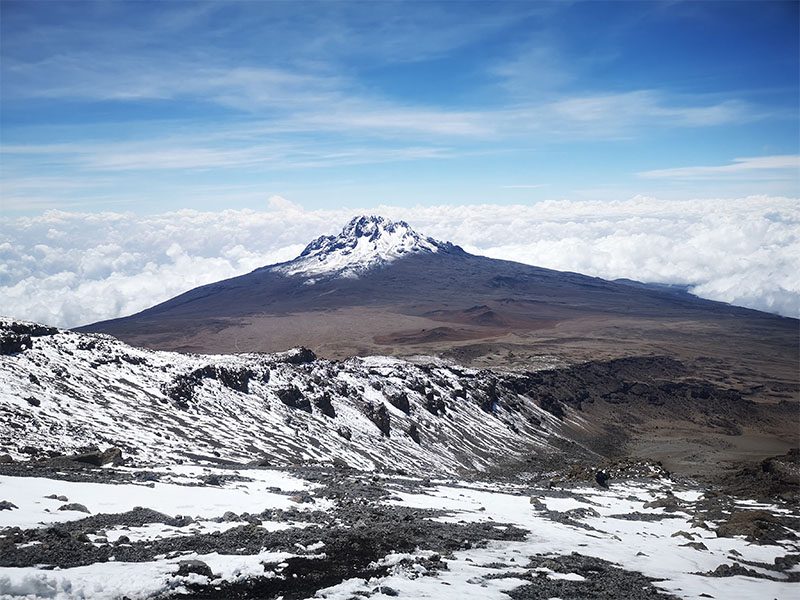
View of Mawenzi Peak from Stella Point on Mount Kilimanjaro, with snow-covered terrain and clouds below — typical scenery on the Rongai Route | Kili Quests
Machame vs Marangu: comparing Kilimanjaro’s scenic camping route with the hut-based Marangu trail.

Frequently Asked Questions About Machame vs Marangu

Is Machame better than Marangu for beginners?

For most beginners, the Machame Route is actually the better choice, even though it involves camping and slightly more varied terrain. The main reason is acclimatization. Machame is usually completed over 6 or 7 days and follows a “climb high, sleep low” profile, which helps the body adjust gradually to altitude.Marangu, on the other hand, is often completed in 5 or 6 days. While the trail itself is more gradual, the shorter duration means less time for acclimatization. This increases the likelihood of altitude sickness, which is the main reason many climbers fail to reach the summit.For first-time climbers, success is not about choosing the easiest-looking route — it’s about choosing the route that gives your body the best chance to adapt. In that sense, Machame is usually the stronger option for beginners who want to reach Uhuru Peak.

Why does the Marangu Route have a lower summit success rate?

The lower success rate on the Marangu Route is mainly due to its shorter itinerary and direct ascent profile. Climbers gain altitude relatively quickly without enough time for their bodies to properly adjust to the reduced oxygen levels.Unlike Machame, which includes strategic acclimatization days and elevation changes, Marangu follows a more straightforward path up the mountain. While this may seem simpler, it can actually make the climb more difficult from a physiological perspective.As altitude increases, the body needs time to adapt. Without this adjustment period, climbers are more likely to experience symptoms of altitude sickness such as headaches, nausea, and fatigue. In more serious cases, they may need to descend for safety reasons.This is why many experienced guides recommend longer routes like Machame, which prioritize acclimatization and improve overall success rates.

Are the huts on the Marangu Route comfortable enough?

The huts on the Marangu Route provide basic shelter and are often seen as a more comfortable alternative to camping. They include shared sleeping areas, dining spaces, and simple facilities that protect climbers from wind and cold.However, comfort on Marangu is relative. During busy seasons, huts can become crowded, with multiple climbers sharing the same room. This can reduce privacy and sometimes affect sleep quality.In contrast, camping routes like Machame offer more personal space, as tents are set up specifically for your group. While camping requires adjusting to outdoor conditions, many climbers find it more peaceful and less crowded.Ultimately, whether huts are “more comfortable” depends on your personal preference. Some climbers prefer the structure of huts, while others enjoy the flexibility and space of camping.
 

Which route offers a better overall experience, Machame or Marangu?

For most climbers, the Machame Route offers a more complete and rewarding Kilimanjaro experience. It provides a wider variety of landscapes, including rainforest, moorland, and alpine desert, and includes iconic sections like the Barranco Wall.The longer duration also allows for better acclimatization, which not only improves your chances of reaching the summit but also makes the journey feel more manageable and enjoyable.Marangu, while still a valid option, is more straightforward and less varied. The scenery is more limited, and the out-and-back trail means you experience the same path on both ascent and descent.If your goal is to fully experience the diversity of Kilimanjaro while maximizing your chances of success, Machame is generally the better choice.

Is Machame more difficult than Marangu in reality?

Machame is often perceived as more difficult because it includes steeper sections and requires camping. However, when you look at the overall climb, the difference is not as simple as it seems.While Machame may feel more physically demanding on certain days, its longer itinerary gives your body more time to adjust to altitude. This can actually make the climb feel more manageable overall, especially during summit night.Marangu, despite being less steep, can feel more challenging due to the faster altitude gain. Climbers may struggle more with fatigue and altitude-related symptoms because their bodies have not had enough time to adapt.In reality, Machame often provides a better balance between physical effort and acclimatization, making it a more reliable choice for many climbers.

Choose the Right Route with Expert Guidance

Climbing Kilimanjaro with Trusted Local Experts .Selecting the right route can make the difference between an average climb and a successful, unforgettable experience.At Kili Quests, we help you choose the route that fits your goals, comfort level, and timeline  giving you the best chance of reaching Uhuru Peak.

Contact our team for expert trip advice

Related Articles

Machame vs Lemosho: Which Kilimanjaro Route Is Better?

Choose the Right Route for Your Climb

Compare routes and get expert advice before your climb.

Kilimanjaro Planning Guides

Prepare for your climb:

OUR CATEGORIES

Machame vs Lemosho: Which Kilimanjaro Route Is Better?

Choosing between the Machame Route and the Lemosho Route is one of the most common decisions climbers face when planning a Kilimanjaro trek. Both routes are among the most popular on the mountain and offer high success rates, beautiful scenery, and a rewarding trekking experience.However, they are not the same. The differences between these routes can affect how well you acclimatize, how comfortable your climb feels, and ultimately whether you reach Uhuru Peak.Lemosho is known for its longer itinerary and higher success rates, while Machame is popular for its balance of scenery, challenge, and cost.
 
Still comparing routes? See our [Kilimanjaro routes comparison guide] or explore the full [Machame Route guide] and [Lemosho Route guide] for detailed breakdowns.
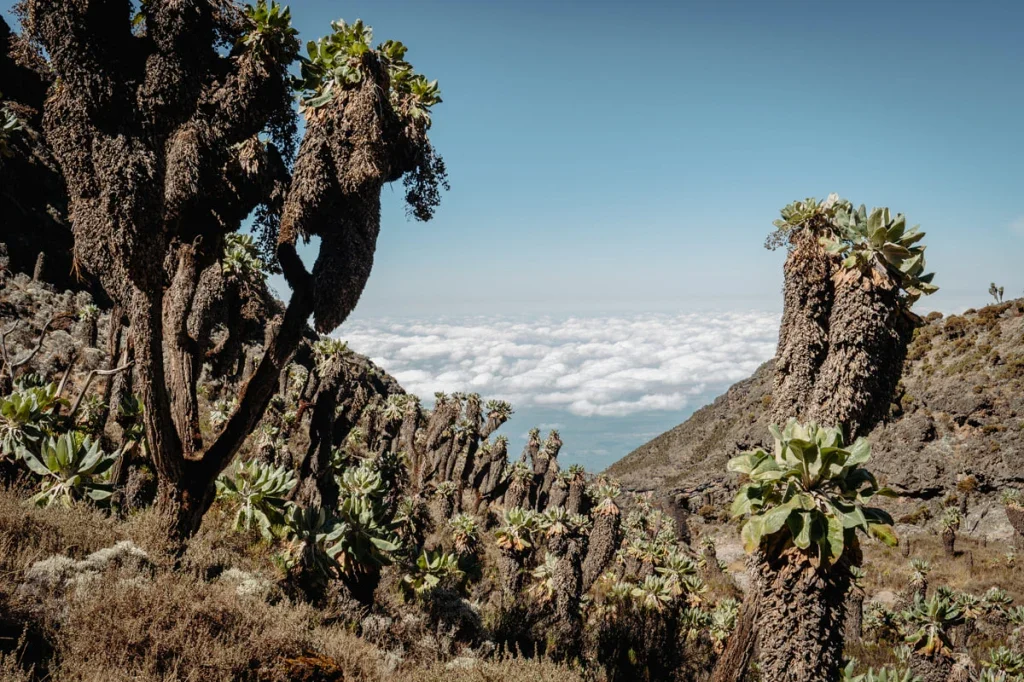
Giant groundsels in the alpine desert zone of Mount Kilimanjaro | Kili Quests
Machame vs Lemosho: comparing Kilimanjaro’s most scenic routes — a popular trail versus a quieter, more gradual approach.

Table of Contents

Overview of Machame and Lemosho Routes

What Is the Machame Route Like?

The Machame Route, often called the “Whiskey Route,” is the most popular route on Kilimanjaro. It is known for its scenic trails, varied landscapes, and relatively strong acclimatization profile when completed over 6 or 7 days.The route approaches the mountain from the south and follows a well-established path that passes through rainforest, moorland, and alpine desert before reaching the summit.Because of its popularity, Machame tends to be busier than other routes. However, it remains a favorite because it offers a balanced combination of challenge, beauty, and accessibility.
 
For a full breakdown, see our [Machame Route Kilimanjaro guide].

What Is the Lemosho Route Like?

The Lemosho Route starts on the western side of Kilimanjaro and is widely considered one of the most scenic and well-designed routes on the mountain.It begins in a remote area, offering a quieter start compared to Machame. Over the first few days, the route crosses the Shira Plateau before joining the Machame Route later in the climb.Lemosho is typically completed over 7 or 8 days, giving climbers more time to acclimatize. This longer duration is one of the main reasons why it has a higher overall success rate.
 
Learn more in our detailed [Lemosho Route Kilimanjaro guide].

Key Differences Between Machame and Lemosho

Acclimatization and Success Rate

One of the biggest differences between Machame and Lemosho is how they handle acclimatization.The Lemosho Route is longer and more gradual, which allows your body more time to adjust to altitude.This significantly improves your chances of reaching the summit, especially if you choose the 8-day version.Machame also offers good acclimatization, particularly on the 7-day itinerary. However, shorter versions of Machame (6 days) can increase the risk of altitude-related issues.If your priority is maximizing your success rate, Lemosho has a slight advantage.
 
Learn more about [Kilimanjaro success rates] and why longer routes improve your chances of reaching the summit.

Scenery and Overall Experience

Both routes are incredibly scenic, but Lemosho is often considered more diverse and visually impressive.The early days on Lemosho take you through quieter and more remote landscapes, including the wide-open Shira Plateau. This gives you a sense of isolation and connection with nature that many climbers value.Machame, while still beautiful, becomes busier quickly. However, it includes iconic sections such as the Barranco Wall and offers dramatic views throughout the climb.If scenery and a quieter experience matter to you, Lemosho stands out.

Difficulty Level

In terms of physical difficulty, both routes are similar.Neither route requires technical climbing skills, but both include steep sections and long trekking days. The Barranco Wall, which appears on both routes, is often seen as one of the most challenging but also most rewarding parts of the climb.The main difference is that Lemosho spreads the effort over more days, making it feel less intense. Machame, especially on shorter itineraries, can feel more demanding due to faster altitude gain.
 
Not sure what to expect? Read our full guide on [how difficult Kilimanjaro really is].

Crowd Levels

Machame is the most popular route on Kilimanjaro, which means it can feel crowded, especially during peak seasons.Lemosho, on the other hand, starts in a more remote area and is quieter during the early days. Although it eventually joins the Machame route, the overall experience tends to feel less crowded.If you prefer a more peaceful climb, Lemosho is the better option.

Cost and Value

Machame is generally more affordable because it is shorter and more commonly offered by operators.Lemosho tends to be slightly more expensive due to its longer duration and more remote starting point. However, the added cost often reflects better acclimatization and a higher chance of success.When considering value rather than just price, many climbers find that Lemosho offers a better overall experience.
 
For a detailed breakdown, see our [Kilimanjaro climb cost guide].
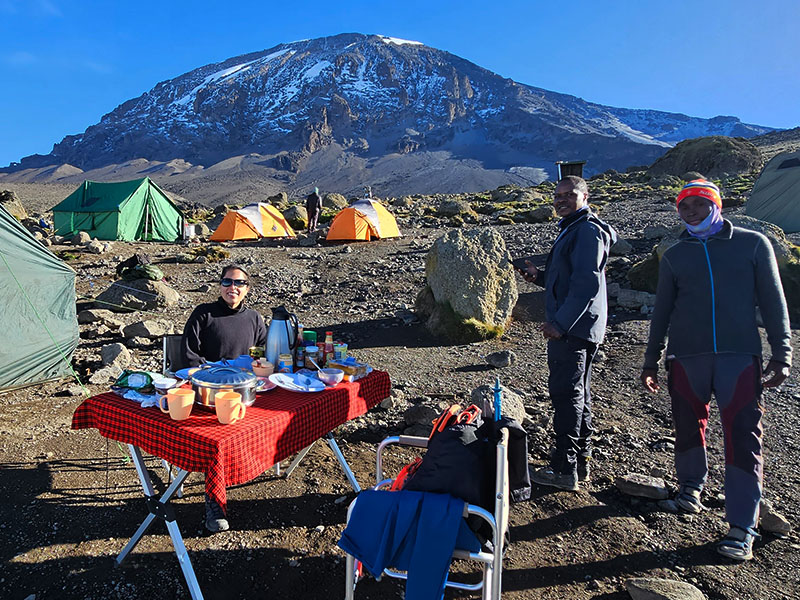
Trekkers enjoying breakfast at Karanga Camp on the Shira Route of Mount Kilimanjaro, with colorful tents and Kibo Peak in the background | Kili Quests
Lemosho offers a longer and more gradual ascent, while Machame can feel steeper depending on the itinerary.

Machame vs Lemosho — Which One Should You Choose?

Choose Lemosho If You Want Higher Success Rates

If your main goal is reaching Uhuru Peak, Lemosho is one of the best choices. The longer itinerary allows your body to adapt properly, increasing your chances of success.

Choose Machame If You Want a Shorter, Popular Route

Machame is ideal if you are looking for a slightly shorter climb with a well-established trail and strong overall experience.

Choose Lemosho If You Prefer a Quieter Experience

The remote start and lower crowd levels make Lemosho a better option for those who want a more peaceful and less crowded climb.

Choose Machame If You Are on a Budget

Machame is usually more budget-friendly, making it a popular choice for climbers who want a high-quality experience at a lower cost.

Machame vs Lemosho Pros and Cons

Machame Pros

  • Strong acclimatization profile
  • Popular and well-established route
  • More affordable
  • Scenic and varied

Machame Cons

  • Can be crowded
  • Shorter itineraries reduce success rate
  • Slightly more intense pacing

Lemosho Pros

  • Best acclimatization profile
  • Higher success rates
  • Quieter and more remote start
  • Highly scenic

Lemosho Cons

  • More expensive
  • Longer duration
  • Requires more time commitment

How to Choose the Right Route for Your Kilimanjaro Climb

Choosing between Machame and Lemosho depends on your priorities.If your main goal is maximizing your chances of reaching the summit with a more relaxed pace, Lemosho is often the better option.If you prefer a slightly shorter and more budget-friendly climb while still enjoying a great experience, Machame is a strong choice.


Still unsure? Compare all routes in our [Kilimanjaro routes comparison guide] to find the best fit for your climb.
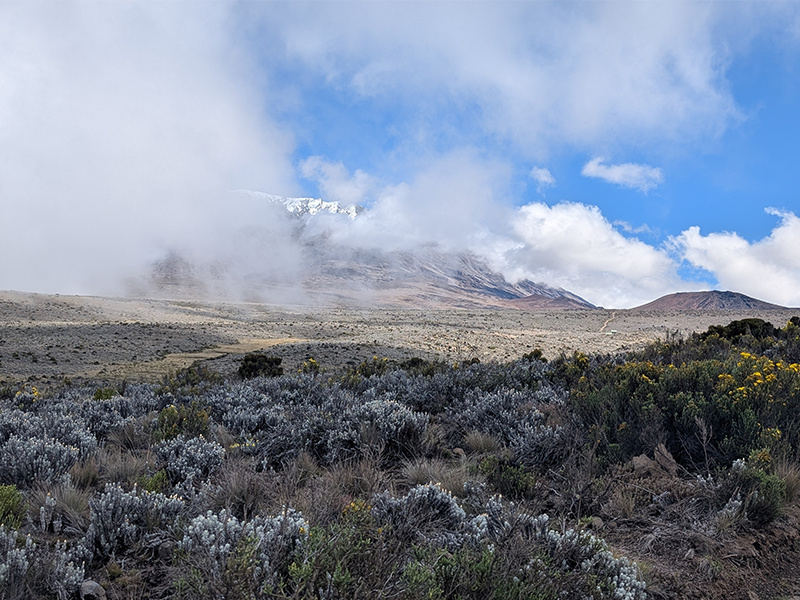
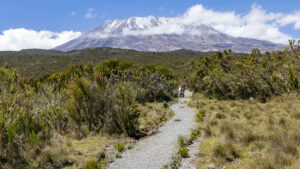
Moorland vegetation on Mount Kilimanjaro with cloud-covered summit and scattered alpine shrubs under a blue sky.
Lemosho features remote landscapes like the Shira Plateau, while Machame offers dramatic scenery across multiple zones.

Frequently Asked Questions About Machame vs Lemosho

Which route has a higher success rate, Machame or Lemosho?

Lemosho generally has a slightly higher success rate because it is longer and allows for better acclimatization. The extra days give your body more time to adjust to altitude, which is the most important factor in reaching the summit. Machame also has a high success rate, especially on the 7-day itinerary, but shorter versions may reduce your chances.

Is Machame or Lemosho better for beginners?

Both routes are suitable for beginners, but Lemosho is often the better choice because of its gradual ascent and longer duration. Beginners benefit from having more time to acclimatize and adjust to the physical demands of the climb. Machame can still be a good option if done over enough days.

Is the Lemosho Route worth the extra cost?

For many climbers, Lemosho is worth the extra cost because it offers better acclimatization, quieter trails, and a higher chance of reaching the summit. While it is slightly more expensive, the improved experience and increased success rate often make it a better overall investment.

Which route is more scenic?

Both routes are scenic, but Lemosho is often considered more diverse and less crowded, especially during the early days. The remote landscapes and panoramic views make it a favorite for climbers who value scenery.

Can I combine Machame and Lemosho routes?

Yes, in a way. The Lemosho Route eventually joins the Machame Route, which means climbers on Lemosho experience part of the Machame trail later in the climb. This combination gives you the benefits of both routes.

Choose the Right Route with Local Experts

Choosing the right route is one of the most important decisions for a successful Kilimanjaro climb.At Kili Quests, we help you select the route that matches your goals, fitness level, and timeline  giving you the best chance of reaching Uhuru Peak.

Related Articles

Kilimanjaro Climb Cost: Full Price Breakdown

Plan Your Kilimanjaro Climb Budget

Climbing Kilimanjaro is a major investment choosing the right route and support team makes all the difference.
At Kili Quests, we help you:

Explore More Kilimanjaro Planning Guides

Cost is just one part of planning your climb. Explore these guides to choose the right route and prepare properly.

OUR CATEGORIES

How Much Does It Cost to Climb Mount Kilimanjaro? Full Price Breakdown

Climbing Mount Kilimanjaro, the tallest mountain in Africa at 5,895 meters (19,341 feet), is one of the most exciting trekking adventures in the world. Every year thousands of travelers travel to Tanzania to attempt reaching Uhuru Peak, the summit of Kilimanjaro and the highest point on the African continent.One of the most common questions climbers ask while planning their expedition is: How much does it cost to climb Mount Kilimanjaro?
 
The cost of climbing Kilimanjaro can vary widely depending on the route you choose, the number of days on the mountain, and the quality of the trekking company. In general, climbers can expect to pay between $2,000 and $6,000 per person for a complete Kilimanjaro trekking experience.This guide explains the full breakdown of Kilimanjaro climbing costs, including national park fees, guide services, equipment, and travel expenses so you can plan your adventure with confidence.
 
Choosing the right route has a major impact on both cost and success — see our Kilimanjaro Routes Comparison: Which Route Is Best? to find the best option for your budget and experience.
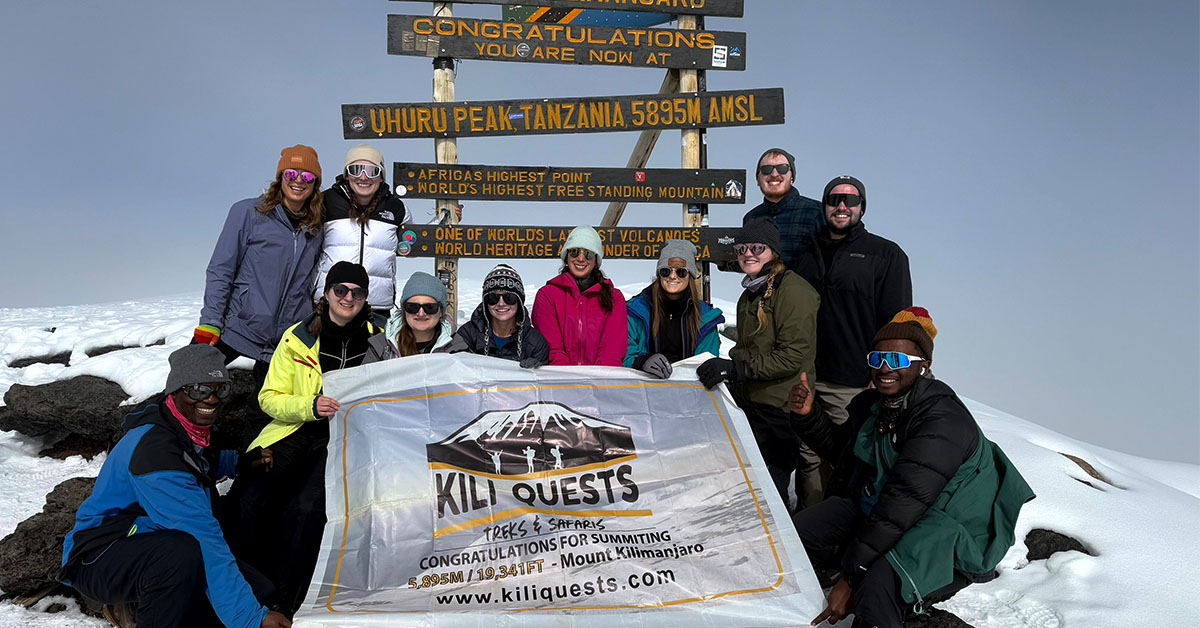
Group of trekkers celebrating together at Uhuru Peak, the summit of Mount Kilimanjaro
Kilimanjaro climbers at Uhuru Peak with their guide team after a successful summit.

Table of Contents

Average Cost to Climb Mount Kilimanjaro

The average cost of climbing Kilimanjaro usually falls between $2,000 and $6,000 per person.Different types of climbs come with different levels of service and comfort.
Type of Climb Average Cost
 
Budget climb……………….  $2,000 – $2,500
Standard climb……………  $2,500 – $4,000
Luxury climb……………….  $4,000 – $6,000
 
Most Kilimanjaro climbing packages include guides, porters, food, camping equipment, park permits, and transportation during the trek.However, international flights and some personal expenses are usually not included.

Kilimanjaro National Park Fees

A large portion of the cost of climbing Mount Kilimanjaro goes directly to Kilimanjaro National Park fees, which are mandatory for all climbers.These fees are set by the Tanzanian government and are used to support conservation efforts, park management, and maintenance of the mountain’s trails and facilities.The main park fees include:
  • Conservation fees (charged per day on the mountain)
  • Camping or hut fees depending on the route
  • Rescue fees
  • Park entry permits
For most climbers, these park fees typically range between $800 and $1,000 plus per person, depending on the number of days spent on the mountain.
It is also important to note that Kilimanjaro National Park fees are subject to an additional 18% Value Added Tax (VAT) required by the Tanzanian government. This tax is applied to park services and is included in most Kilimanjaro climbing packages offered by trekking companies.Because park fees are charged per person and per day, longer climbs with more acclimatization days naturally cost more. However, these longer itineraries usually provide a higher chance of reaching Uhuru Peak, the summit of Mount Kilimanjaro.
 
Longer routes like the Lemosho Route and Northern Circuit Route cost more, but they significantly improve acclimatization and summit success.

Guide, Porter, and Crew Costs

Climbing Kilimanjaro requires a full support team.Every trekking group normally includes:
  • a professional mountain guide
  • assistant guides
  • porters who carry equipment
  • a cook who prepares meals
Porters carry tents, cooking supplies, and camping equipment so climbers only need to carry a small daypack with water, snacks, and personal items.This support system is essential for safety and comfort during the multi-day climb.
 
This support system is essential for both comfort and safety — learn more about risks in our guide on Is Climbing Kilimanjaro Dangerous?
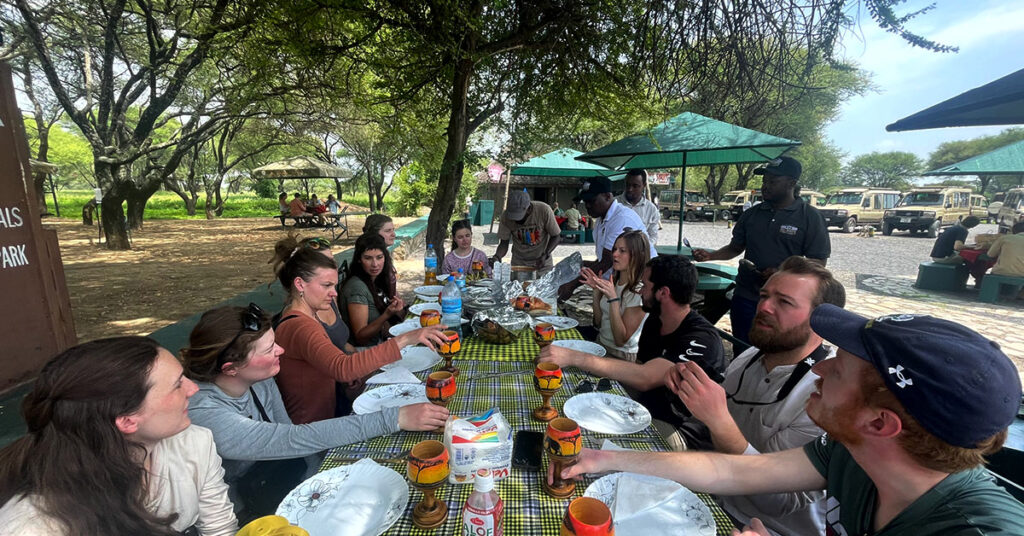
Tourists enjoying meals together at a Kilimanjaro camp after a day of trekking.

What Is Included in Most Kilimanjaro Climb Packages?

Most reputable Kilimanjaro trekking companies include a variety of services in their climbing packages.Typical inclusions are:
  • Professional licensed guides
  • Assistant guides and porters
  • All national park permits and fees
  • Camping equipment such as tents and mattresses
  • Meals during the trek
  • Transportation to and from the mountain
  • Safety equipment including oxygen and first aid kits
These services ensure climbers have the support they need to safely attempt the summit.

Equipment and Gear Costs

Proper gear is essential for a successful Kilimanjaro climb. Temperatures near the summit can drop below -10°C (14°F), so climbers must bring warm clothing and quality hiking equipment.Essential gear usually includes:
  • waterproof hiking boots
  • insulated jackets
  • thermal layers
  • trekking poles
  • sleeping bag
  • headlamp
Some climbers already own this equipment, while others choose to rent gear locally in Tanzania, which can reduce costs.
 
Not sure what to pack? See our full Kilimanjaro Packing List to make sure you’re fully prepared.

Travel Costs to Tanzania

In addition to the climbing package, travelers should consider the cost of traveling to Tanzania.Typical travel expenses include:
  • accommodation before and after the climb
  • Airport transfer both (drop off & pick up)
Kilimanjaro trekkers and porters smiling together at the end of a successful hike
Every Kilimanjaro climb is a team effort — guides, porters, and climbers sharing the journey to the summit.

Hidden Costs to Consider

While many Kilimanjaro packages include the main climbing costs, travelers should still plan for some additional expenses.
Common extra costs include:
  • tips for guides, porters, and cooks
  • gear rental if needed
  • personal snacks or drinks
  • travel insurance
  • Visa fee
  • International Flights

Flights to Kilimanjaro International Airport vary depending on departure location but usually range between $600 and $1,500.

Budget vs Luxury Kilimanjaro Climbs

The cost of climbing Mount Kilimanjaro can vary significantly depending on the type of expedition you choose. While budget climbs may appear cheaper, luxury climbs often provide additional comfort, safety features, and longer itineraries that improve summit success rates.


Understanding the difference between budget, standard, and luxury climbs can help travelers choose the right option for their experience and budget.
Many budget climbs use shorter routes like the Marangu Route, which reduces cost but also lowers acclimatization time.

Budget Climbs

Budget Kilimanjaro climbs usually cost around $2,000–$2,500 per person. These expeditions provide the basic services required to climb the mountain, including guides, porters, meals, and camping equipment.However, budget climbs often use shorter itineraries, typically lasting 5–6 days. While these trips reduce overall costs, they also allow less time for acclimatization, which can lower the chances of reaching the summit.Budget climbs may also include:
  • simpler camping equipment
  • basic food menus
  • fewer comfort features
When choosing a budget climb, it is important to ensure the operator follows ethical porter treatment and proper safety standards.

Standard Climbs

Standard Kilimanjaro climbs usually cost between $2,500 and $4,000 and are the most common type of expedition.These climbs often include 6–7 day itineraries, which provide better acclimatization and improved summit success rates compared to shorter climbs.Standard climbs typically offer:
  • experienced mountain guides
  • quality camping equipment
  • balanced and nutritious meals
  • proper safety monitoring
  • well-organized logistics
For many climbers, this option provides the best balance between price, comfort, and safety.
Longer routes such as the Lemosho Route or Northern Circuit Route increase cost but offer much higher success rates.

Luxury Climbs

Luxury Kilimanjaro climbs usually cost between $4,000 and $6,000 or more, depending on the operator and the route chosen.Luxury expeditions often include longer itineraries of 7–9 days, which provide better acclimatization and significantly increase the chances of reaching the summit.
However, longer climbs also increase the overall cost because climbers spend more days inside Kilimanjaro National Park, which means paying additional park fees, camping fees, and crew costs.Luxury climbs usually include additional services such as:
  • larger and more comfortable sleeping tents
  • upgraded meals with more variety
  • private toilet tents
  • thicker sleeping mattresses
  • larger support teams
  • more personalized service
  • Sleeping in Beds

Because these climbs spend more time on the mountain and require a larger support team, the overall cost is higher.For many climbers, luxury expeditions provide a more comfortable trekking experience and better summit success rates, especially when using longer routes like Lemosho or the Northern Circuit.

Kilimanjaro porter walking along the mountain trail with gear balanced on head
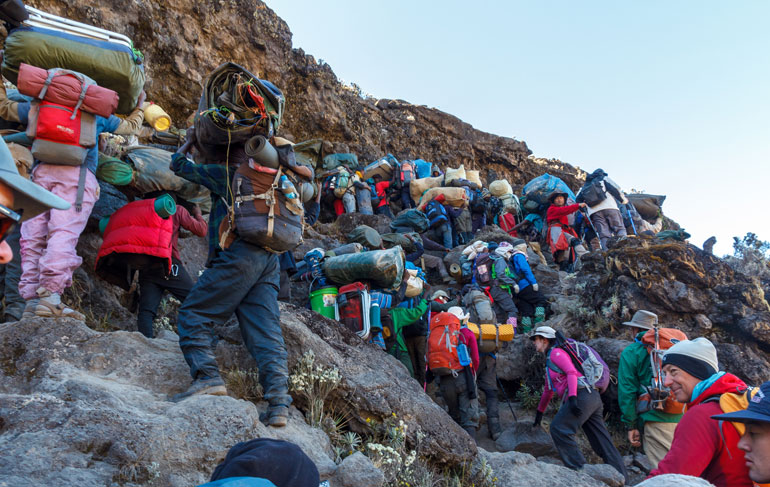
Porters guiding climbers up the Barranco Wall on Mount Kilimanjaro — a true display of strength, teamwork, and support on the mountain.

Frequently Asked Questions About Kilimanjaro Costs

Why is climbing Kilimanjaro expensive?

Climbing Mount Kilimanjaro may seem expensive at first, but the cost reflects the complexity and scale of organizing a safe multi-day expedition on Africa’s highest mountain.A large portion of the price comes from Kilimanjaro National Park fees, which are set by the Tanzanian government and are mandatory for every climber. These include conservation fees, camping or hut fees, rescue fees, and other regulatory charges.Beyond park fees, each climb requires a full support team, including licensed guides, porters, and cooks. These teams carry equipment, prepare meals, set up camps, and monitor your safety throughout the trek. Ethical operators also ensure fair wages, proper working conditions, and adequate gear for their staff.Additional costs include food supplies for several days, high-quality camping equipment, safety gear such as oxygen systems, and logistics like transportation and accommodation before and after the climb. When all these elements are combined, the cost reflects not just the climb itself, but the level of safety, support, and experience provided.

What is the cheapest way to climb Kilimanjaro?

The cheapest way to climb Kilimanjaro is usually by joining a group trek with a budget operator, where costs can start from around $2,000. Group climbs reduce expenses by sharing resources such as guides, transport, and equipment among several climbers.However, choosing the cheapest option requires careful consideration. Extremely low prices often mean compromises in areas such as food quality, staff wages, equipment standards, and safety measures. In some cases, very cheap operators may not follow proper safety protocols or ethical treatment of porters.While it is possible to climb Kilimanjaro on a budget, it is important to prioritize value over price. A slightly higher investment with a reputable company often results in better support, higher success rates, and a safer overall experience on the mountain.

Do I need to tip Kilimanjaro guides and porters?

Yes, tipping is an expected and important part of climbing Kilimanjaro. It is not just a gesture of appreciation, but a significant part of the income for guides, porters, and cooks who support your climb.A Kilimanjaro team works extremely hard behind the scenes , carrying heavy loads, setting up camp, preparing meals, and ensuring your safety in challenging conditions. Tipping recognizes their effort and dedication throughout the journey.Most operators provide recommended tipping guidelines, usually based on the size of your group and the number of staff supporting you. While the exact amount can vary, it is important to budget for tips in advance and present them respectfully at the end of the climb.

Are flights included in Kilimanjaro climb packages?

In most cases, international flights are not included in Kilimanjaro climbing packages. Standard packages typically cover the mountain portion of the trip, including park fees, guides, porters, meals, accommodation during the climb, and transfers within Tanzania.Climbers are usually responsible for booking their own international flights to Tanzania, often arriving at Kilimanjaro International Airport. Some operators may assist with airport transfers or offer optional add-ons such as hotel stays before and after the climb.It is always important to check exactly what is included in your package so you can plan and budget accordingly without unexpected costs.

Is climbing Kilimanjaro worth the cost?

For many travelers, climbing Kilimanjaro is more than just a trek , it is a once-in-a-lifetime experience. The journey takes you through multiple ecosystems, from rainforest to alpine desert, and challenges you both physically and mentally.Reaching Uhuru Peak, the highest point in Africa, brings a strong sense of achievement that few other experiences can match. Along the way, you also connect with local guides and porters, gaining insight into the culture and spirit of Tanzania.While the cost may seem high, most climbers consider it a worthwhile investment in a unique adventure that combines natural beauty, personal challenge, and unforgettable memories.

Ready to Climb Mount Kilimanjaro?

Climbing Mount Kilimanjaro is a once-in-a-lifetime adventure, and choosing the right trekking company plays a major role in your success.At Kili Quests, our experienced local guides organize safe and well-planned expeditions designed to give climbers the best chance of reaching the summit.With professional guides, reliable equipment, and strong support teams, we help trekkers from around the world achieve their dream of standing on the Roof of Africa.

Start Planning Your Kilimanjaro Adventure

Related Articles

Kilimanjaro First Ascent: Lauwo and the Chagga Guide

Who Was Lauwo? Tanzania’s First Kilimanjaro Guide | Kili Quests

When talking about the first successful ascent of Mount Kilimanjaro, most people mention the German explorer Hans Meyer. But behind that achievement was a local Chagga man named Lauwo  a name that deserves far more recognition.In this article, Kili Quests shares the story of Yohani Kinyala Lauwo, the first Tanzanian guide to summit Kilimanjaro. His contribution is a powerful reminder that the mountain’s history is not just written by explorers — but also by the people of the mountain.
 
Mount Kilimanjaro’s exploration began long before tourism — read how Hans Meyer and his Chagga guide Lauwo made the first successful climb
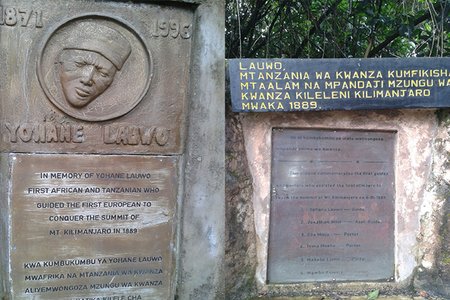
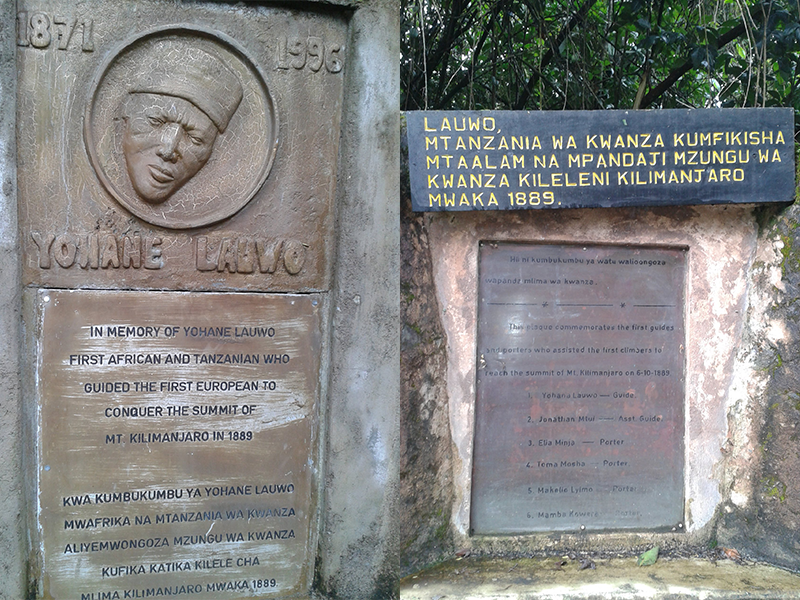
Memorial plaques honoring Yohane Lauwo, the first Tanzanian to guide a European to Kilimanjaro’s summit in 1889.
Yohane Lauwo is remembered as the first African and Tanzanian guide to summit Mount Kilimanjaro, assisting Hans Meyer in the historic 1889 expedition.

Table of Contents

Who Was Lauwo?

Yohani Kinyala Lauwo was a Chagga tribesman from Marangu, a village on the southeastern slopes of Mount Kilimanjaro.At just 18 years old, Lauwo was recruited to join Hans Meyer’s 1889 expedition — and successfully helped guide the team to the summit of Kibo, the highest of Kilimanjaro’s volcanic cones.He was not just a porter or helper. Lauwo’s local knowledge, strength, and courage were essential to the team’s success in navigating unknown terrain, severe weather, and dangerous altitude.
 
Your Kilimanjaro climb wouldn’t be possible without the help of porters — see what they really do behind the scenes
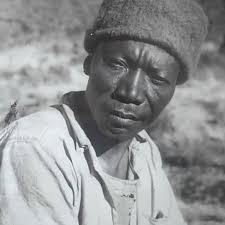
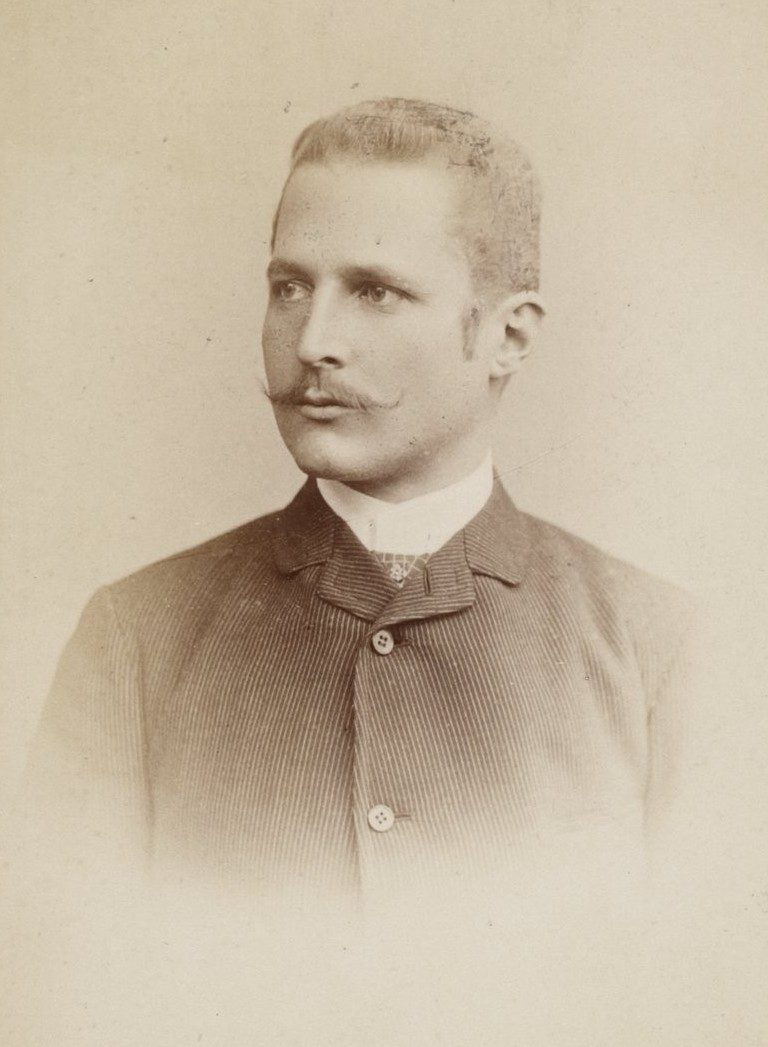
Portrait of Yohani Kinyala Lauwo, the first local Kilimanjaro guide and early Tanzanian mountain pioneer
Yohani Kinyala Lauwo – The legendary Chagga guide who led Hans Meyer to the summit of Kilimanjaro in 1889.
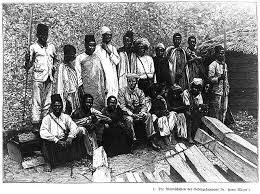
Historic 1889 Kilimanjaro expedition team with Hans Meyer and local guides including Yohani Kinyala Lauwo
1889 Kilimanjaro Expedition Team – Hans Meyer with Chagga porters and guides, including Yohani Lauwo, before the first summit of Uhuru Peak.
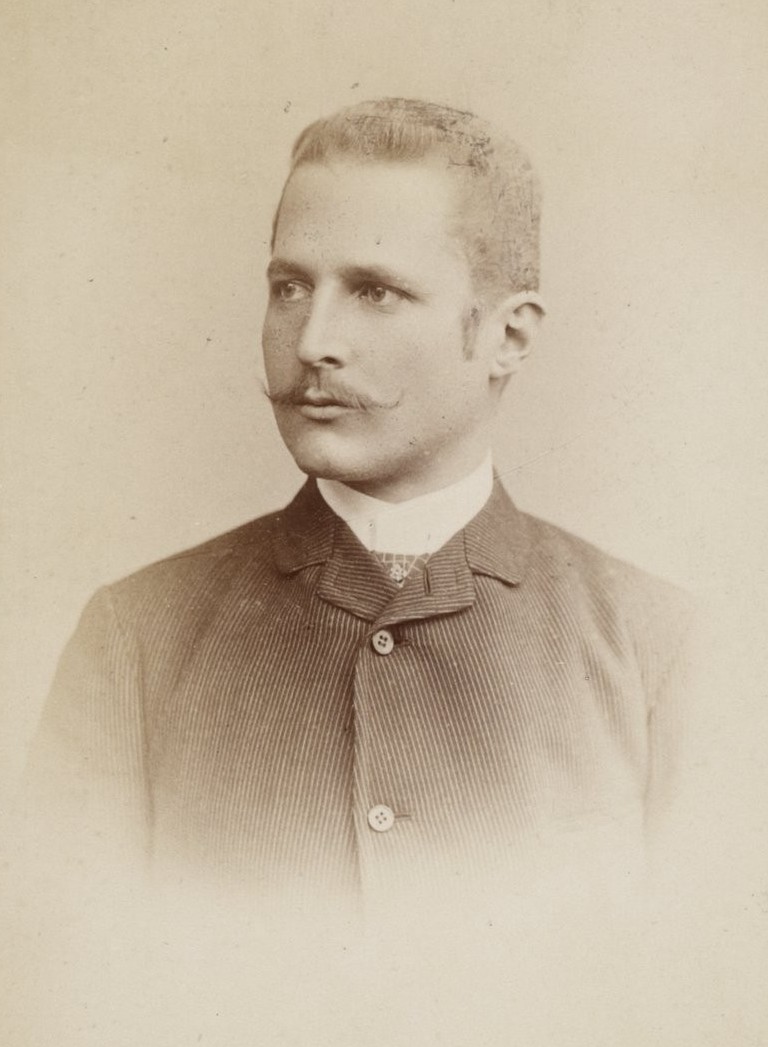
Portrait of Ludwig Purtscheller, Austrian climber who summited Mount Kilimanjaro in 1889 with Hans Meyer | Kili Quests
Ludwig Purtscheller, an experienced Austrian mountaineer, reached the summit of Kilimanjaro with Hans Meyer and local guide Lauwo in 1889.
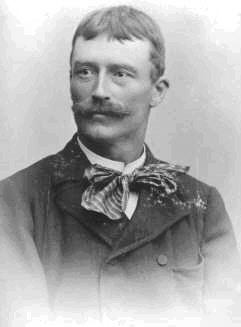
Portrait of Hans Meyer, German geographer and first European to summit Mount Kilimanjaro in 1889 | Kili Quests
Hans Meyer led the first successful recorded expedition to the summit of Mount Kilimanjaro in 1889, marking a historic moment in mountaineering.

What Role Did Lauwo Play?

Lauwo:
  • Helped scout and clear a viable route toward the summit Kilimanjaro.
  • Supported both Meyer and Austrian alpinist Ludwig Purtscheller during the climb.
  • Became the first known African to stand on Kilimanjaro’s summit.
His involvement was never just physical — his deep understanding of the mountain’s behavior, weather, and routes made him an invaluable guide.
 
Ever wondered why it’s called Gilmans Point? Here’s the real story.

Why Is Lauwo’s Story Often Overlooked?

For many decades, Lauwo’s role in the historic 1889 ascent was understated or ignored in international records. Hans Meyer and Purtscheller were widely credited as the “first to reach the summit,” while Lauwo remained unnamed.However, Tanzanian historians and local mountaineering communities have worked hard to reclaim his story — and today, Lauwo is increasingly recognized as the first Tanzanian and the first African to summit Mount Kilimanjaro(Uhuru peak).
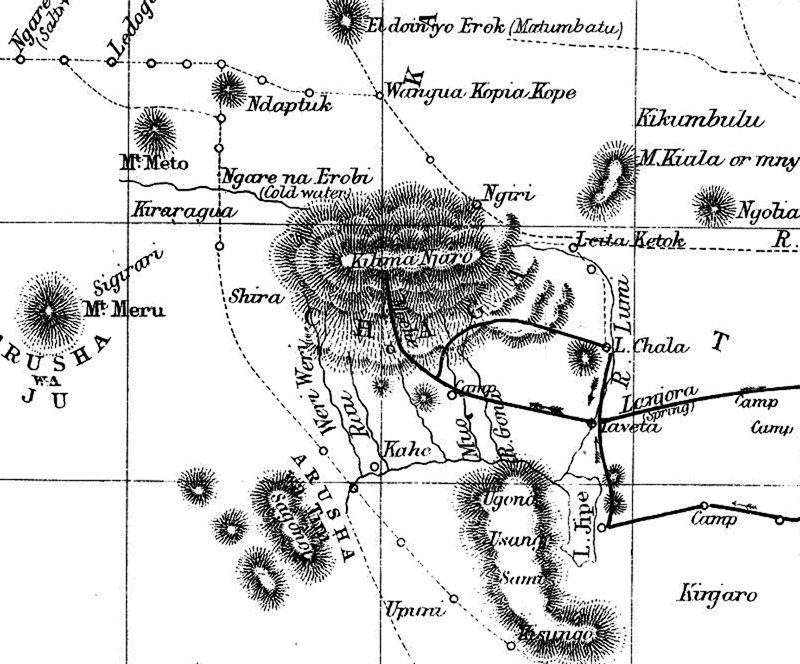
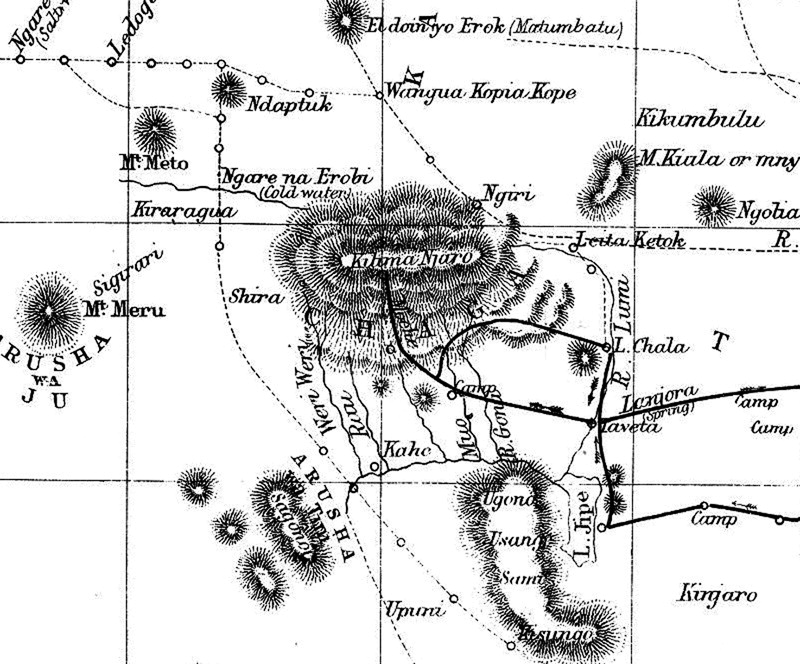
Vintage map of Mount Kilimanjaro showing routes, landmarks, and geography as seen in the 1990s | Kili Quests
A look back in time — this 1990s Kilimanjaro map reflects how the mountain was explored, traveled, and understood decades ago.

Lauwo’s Legacy

 He continued to guide climbs into his later years — even into his 70s
  • According to local records, he lived to be over 120 years old, passing away in the early 1990s
  • His descendants still live in Marangu, and the Lauwo family is a respected name in Tanzanian guiding history
  • Many guides today see him as the original role model for Tanzanian mountain professionals
Explore Chagga traditions that are deeply tied to the mountain.At Kili Quests, we believe that honoring pioneers like Lauwo is essential to preserving the true story of Kilimanjaro.
Final Thoughts

Lauwo was not just a footnote in Hans Meyer’s expedition — he was a hero in his own right. As the first Tanzanian to summit Kilimanjaro, he represents the strength, wisdom, and endurance of local mountain people who have supported climbers for over a century.When you climb Kilimanjaro today, you’re walking in the footsteps of Lauwo — the guide who led the way long before modern gear or recognition.

Frequently Asked Questions About Lauwo and Kilimanjaro’s First Guides

 Who was Yohani Kinyala Lauwo?

Yohani Kinyala Lauwo was a Chagga guide from Marangu who helped lead the first successful recorded ascent of Mount Kilimanjaro in 1889. At just 18 years old, he joined Hans Meyer’s expedition and played a key role in navigating the mountain.
 

Was Lauwo the first African to climb Mount Kilimanjaro?

Yes. Many historians recognize Yohani Kinyala Lauwo as the first African to reach the summit of Mount Kilimanjaro during the historic 1889 expedition.

Who climbed Mount Kilimanjaro with Lauwo?

During the 1889 expedition, Lauwo climbed alongside German explorer Hans Meyer and Austrian mountaineer Ludwig Purtscheller, along with several porters and support crew.
 

Why is Lauwo important in Kilimanjaro history?

Lauwo’s local knowledge of the mountain’s terrain, weather, and routes was essential for the success of the first recorded ascent of Mount Kilimanjaro. Today he is recognized as a pioneer of Tanzanian mountain guiding.

Where was Lauwo from?

Yohani Kinyala Lauwo was from Marangu, a village located on the southeastern slopes of Mount Kilimanjaro, which remains one of the main starting points for Kilimanjaro climbs today.

How old was Lauwo during the first Kilimanjaro ascent?

Historical accounts suggest that Lauwo was about 18 years old when he joined the 1889 expedition that successfully reached the summit of Mount Kilimanjaro.

Climb Kilimanjaro with Local Experts

Group of trekkers celebrating together at Uhuru Peak, the summit of Mount Kilimanjaro
Tourists celebrate their successful summit at Uhuru Peak alongside our expert KILI QUESTS guides, proudly raising the flag at Africa’s highest point.
At Kili Quests, our guides continue the legacy of Lauwo — born on the mountain, trained by experience, and driven by passion. Whether you climb the Marangu, Machame, or Lemosho Route, we’ll guide you with the same commitment that Lauwo showed more than a century ago.

Related Articles

First Ascent of Mount Kilimanjaro: Hans Meyer in 1889

Who Was Hans Meyer? The First Ascent of Kilimanjaro | Kili Quests

In 1889, a German geographer named Hans Meyer became the first recorded person to reach the summit of Mount Kilimanjaro, standing at 5,895 meters (19,341 feet). His expedition marked the beginning of modern exploration on Africa’s highest mountain — and left behind a legacy still visible in the names of Kilimanjaro’s summit points.
In this article, Kili Quests explores who Hans Meyerwas, the story of his historic climb, and how his journey shaped the way we understand Kilimanjaro today.
 
Ever wondered why it’s called Gilmans  Point? Here’s the real story
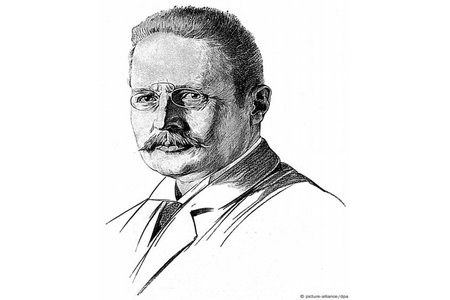
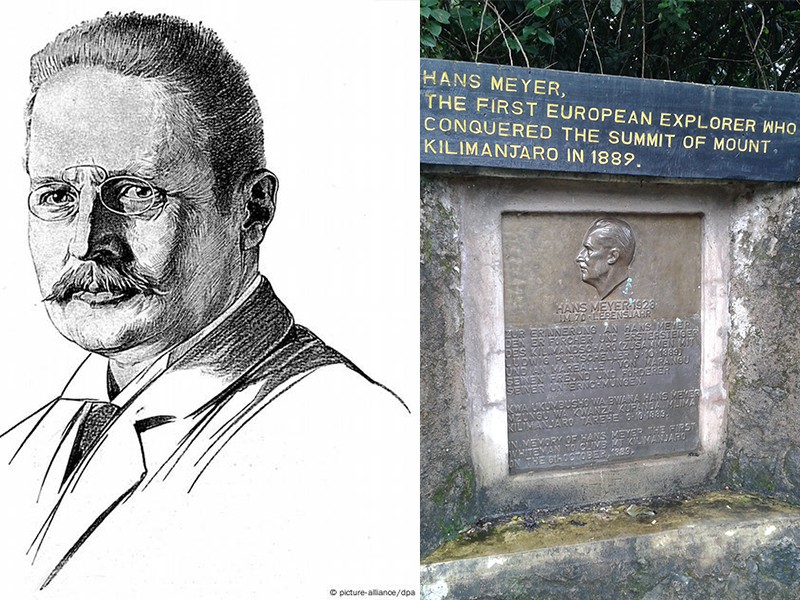
Portrait of Hans Meyer and the memorial plaque at Marangu Gate commemorating his 1889 first ascent of Mount Kilimanjaro.
Hans Meyer was the first European to reach the summit of Kilimanjaro in 1889. This historical plaque at the Marangu Gate Information Center honors his achievement and marks his contribution to the mountain’s climbing history.

Table of Contents

Who Was Hans Meyer?

Hans Meyer was a German geographer, mountaineer, and professor at the University of Leipzig. He had a passion for exploring uncharted mountains and became fascinated by Kilimanjaro — then one of the few unconquered peaks in the world.His ambition led him to organize several expeditions to climb the mountain, each one gaining more ground until he finally succeeded in October 1889.
 
Ever wondered what ‘Kilimanjaro’ actually means? Discover the theories and history behind the name in our Kilimanjaro origin article.
Portrait of Hans Meyer, German geographer and first European to summit Mount Kilimanjaro in 1889 | Kili Quests
Hans Meyer, a German geographer, became the first documented person to reach Uhuru Peak on Mount Kilimanjaro in 1889, accompanied by Austrian climber Ludwig Purtscheller and a Chagga guide named Lauwo.
Portrait of Ludwig Purtscheller, Austrian climber who summited Mount Kilimanjaro in 1889 with Hans Meyer | Kili Quests
Ludwig Purtscheller, an experienced Austrian mountaineer, reached the summit of Kilimanjaro with Hans Meyer and local guide Lauwo in 1889.

The First Successful Ascent

Meyer’s third expedition, which made it to the summit, included:
  • Ludwig Purtscheller, a skilled Austrian alpinist
  • Lauwo, a Chagga tribesman and local guide from Marangu
  • Several porters and support crew
  • On October 6, 1889, the team became the first recorded group to reach the summit of Kibo, the tallest of Kilimanjaro’s three volcanic cones.
  • This historic moment laid the foundation for Kilimanjaro’s future as one of the world’s most iconic trekking destinations.

Discover the untold story of Lauwo, the barefoot teenager who helped lead the first successful Kilimanjaro expedition.

Vintage map of Mount Kilimanjaro showing routes, landmarks, and geography as seen in the 1990s | Kili Quests
A look back in time — this 1990s Kilimanjaro map reflects how the mountain was explored, traveled, and understood decades ago.

What Made the Expedition Historic?

  •  Meyer’s team spent weeks acclimatizing and exploring different routes
  • They were the first to document the mountain’s crater rim
  • The ascent helped map Kilimanjaro’s geography for future climbers
  • They reached the summit long before modern gear or support systems existed
  • Meyer’s expedition was not just a physical feat — it was a scientific and cultural milestone in East African exploration.
Glacial snow and ice covering the crater rim of Mount Kilimanjaro during dry season ascent | Kili Quests
Kilimanjaro’s crater rim wrapped in snow and ancient ice — a glimpse into the mountain’s glacial past.
Dry, snowless crater rim of Mount Kilimanjaro showing volcanic rock and summit trail | Kili Quests
The exposed crater rim reveals Kilimanjaro’s raw volcanic structure — dramatic, vast, and wind-carved by time.

Naming the Summit Points

Many of Kilimanjaro’s key landmarks are named after people involved in or inspired by Meyer’s expeditions:
  • Gilman’s Point – named for Clement Gilman, a British cartographer
  • Stella Point – believed to be named after Meyer’s wife
  • Uhuru Peak – renamed in 1961 to honor Tanzania’s independence (originally called “Kaiser Wilhelm Spitze”)
While Meyer originally named the summit after the German emperor, it was later changed to reflect Tanzania’s national identity and independence.
 
Ever wondered why it’s called Stella Point? Here’s the real story

Meyer’s Legacy on Kilimanjaro

  • He published several books and maps about Kilimanjaro
  • His story is taught in East African geography and climbing history
  • His pioneering climb paved the way for over 35,000 people a year to attempt the summit today
  • The role of Lauwo, his Chagga guide, is now also celebrated as a symbol of Tanzanian contribution to the mountain’s history
1889 exploration map of Mount Kilimanjaro drawn by Hans Meyer, highlighting the early summit path and crater area | Kili Quests
A legacy etched in ink — Hans Meyer’s 1889 map captured Kilimanjaro’s summit long before modern routes existed.

Frequently Asked Questions About Hans Meyer and the First Kilimanjaro Ascent

Who was Hans Meyer?

 Hans Meyer was a German geographer and explorer who became the first recorded person to reach the summit of Mount Kilimanjaro in 1889. His expedition helped map the mountain and introduced Kilimanjaro to the world of modern mountaineering.
 

When was Mount Kilimanjaro first climbed?

The first successful recorded ascent of Mount Kilimanjaro took place on October 6, 1889, when Hans Meyer and his team reached the summit of Kibo, the highest volcanic cone of the mountain.

Who climbed Mount Kilimanjaro with Hans Meyer?

Hans Meyer was accompanied by Austrian mountaineer Ludwig Purtscheller and a local Chagga guide named Yohani Kinyala Lauwo, along with several porters and support crew.

What was the original name of Uhuru Peak?

Before Tanzania’s independence, the summit of Mount Kilimanjaro was named Kaiser Wilhelm Peak by Hans Meyer. In 1961, it was renamed Uhuru Peak to celebrate Tanzania’s independence.
 

Why is Hans Meyer important in Kilimanjaro history?

Hans Meyer played a major role in documenting the geography and climbing routes of Mount Kilimanjaro. His successful ascent in 1889 helped establish the mountain as one of the world’s most famous trekking destinations.

Who was the local guide in the first Kilimanjaro expedition?

The local guide who assisted Hans Meyer’s expedition was Yohani Kinyala Lauwo, a Chagga man from Marangu. His role in the climb is now widely recognized as an important part of Kilimanjaro’s history.

The Legacy of Kilimanjaro’s First Ascent

Hans Meyer’s first successful climb of Mount Kilimanjaro was more than just a mountaineering victory — it was the beginning of the mountain’s modern legacy. His journey combined science, endurance, and intercultural cooperation, with help from locals like Lauwo, whose name deserves equal recognition.
Every climber who follows in Meyer’s footsteps is walking a trail carved by history — one that continues to inspire adventurers from all over the world.
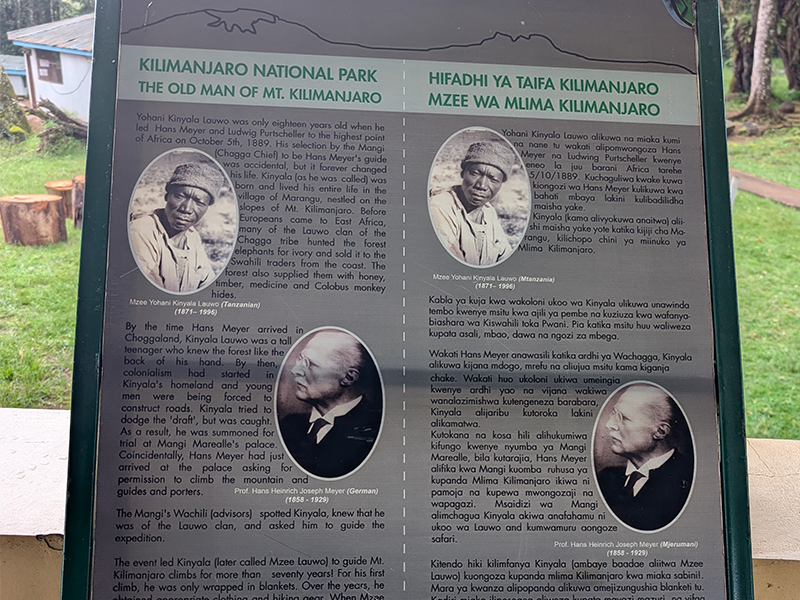
Interpretive sign at Kilimanjaro National Park showing historical profiles of Yohani Kinyala Lauwo, the first local guide of Mount Kilimanjaro, and Hans Meyer, the first recorded European to summit Kilimanjaro in 1889.
Informational sign at Kilimanjaro National Park honoring Yohani Kinyala Lauwo, the first local Kilimanjaro guide, and Hans Meyer, the first European summiteer in 1889. Their partnership marked the beginning of Kilimanjaro’s climbing history.

Plan Your Climb with Kili Quests

At Kili Quests, we honor Kilimanjaro’s history while helping trekkers write their own. Whether you choose the Marangu,Umbwe,Shira,Northern circuit, Machame, or Lemosho Route,Rongai route we guide you to the summit with expert care and deep respect for the mountain’s legacy.
 

Related Articles

Mount Kilimanjaro Guide: Facts, Location & Overview

Mount Kilimanjaro, Africa’s highest peak, stands tall at 5,895 meters (19,341 feet) above sea level. Located in northern Tanzania, this iconic free-standing volcano draws thousands of trekkers each year. Whether you’re planning your first summit or comparing routes, this comprehensive guide covers everything you need to know—from choosing the best route to preparing for altitude and understanding what to expect on the mountain.

Read More »

Uhuru Peak Meaning: Kilimanjaro Summit & Independence

From Kaiser Wilhelm Spitze to Uhuru Peak: Kilimanjaro and Tanzania’s Independence | Kili Quests

Mount Kilimanjaro’s summit is known today as Uhuru Peak — a symbol of freedom and pride for the people of Tanzania. But before independence, this same summit carried a very different name: Kaiser Wilhelm Spitze, a colonial-era label honoring the German emperor.
In this article, Kili Quests explores how Kilimanjaro’s highest point was renamed, what “Uhuru” truly means, and how the summit came to represent a new chapter in Tanzania’s history.
 
More than just a mountain name, Uhuru Peak reflects a national milestone. Learn how the summit became a symbol of freedom
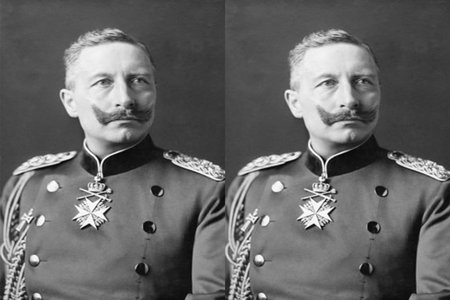
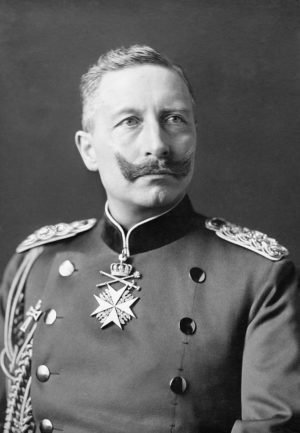
Portrait of Kaiser Wilhelm II, the German emperor after whom Kilimanjaro’s summit was named during colonial rule.
Kaiser Wilhelm II was the namesake of Kilimanjaro’s summit during the German colonial era — formerly called Kaiser Wilhelm Spitze until Tanzania gained independence.

Table of Contents

The Colonial Name: Kaiser Wilhelm Spitze

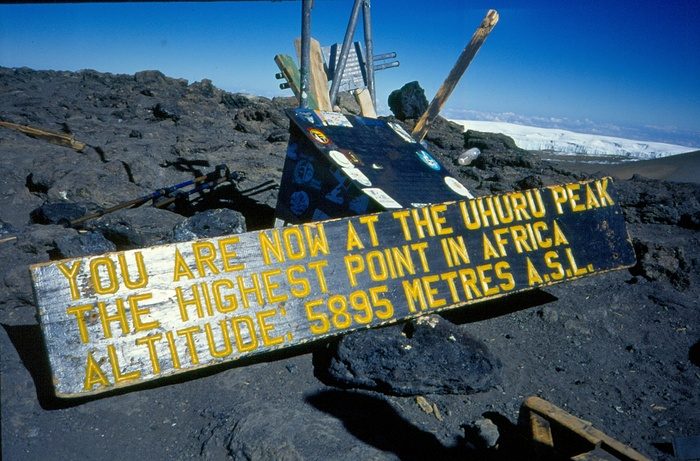
Historic wooden sign at Uhuru Peak on Mount Kilimanjaro displaying the highest point in Africa at 5,895 meters above sea level.
An early sign at Uhuru Peak, renamed in the 1960s after Tanzanian independence. Before this, Europeans knew the summit as Kaiser Wilhelm Spitze during the colonial era.
In 1889, German explorer Hans Meyer became the first recorded person to reach the summit of Mount Kilimanjaro. As part of his achievement, he named the peak Kaiser Wilhelm Spitze, or “Emperor William Peak,” in honor of Kaiser Wilhelm II, the ruler of the German Empire.
At the time, Tanzania (then German East Africa) was a colony under German control, and naming major geographical landmarks after European royalty was a common colonial practice.
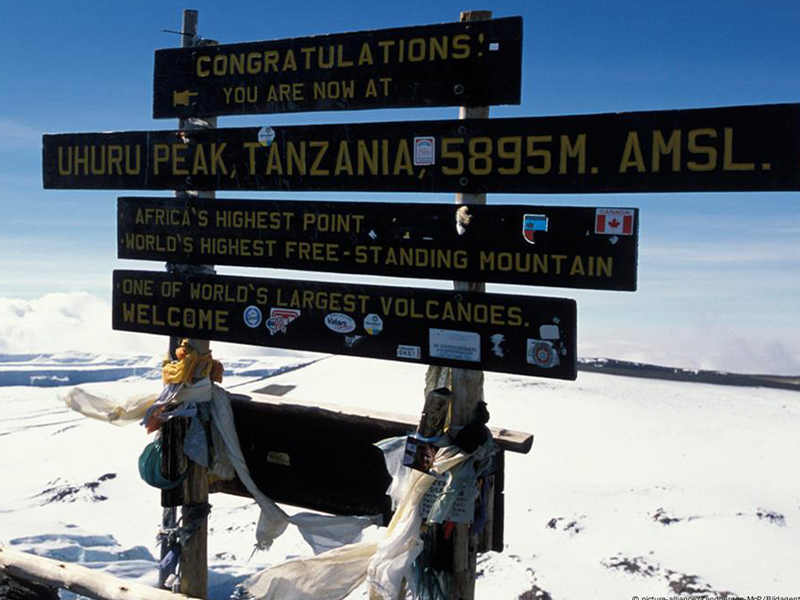
Uhuru Peak sign at the summit of Mount Kilimanjaro showing elevation and independence-related messages.
Since 1964, the summit of Kilimanjaro has been officially known as Uhuru Peak — a name symbolizing Tanzanian freedom. During colonial times, it was called Kaiser Wilhelm Spitze by Europeans.

A Mountain Under Many Flags

Throughout the early 20th century, Kilimanjaro — like much of East Africa — changed hands between colonial powers:
  • German control (late 1800s to WWI)
  • British control (after World War I, renamed Tanganyika Territory)
  • Independence movement grows in the 1950s
Despite these political changes, the mountain remained a cultural and geographic icon for local communities — especially the Chagga people, who lived on its slopes.

Tanzania Independence and the Renaming of the Summit

On December 9, 1961, Tanganyika gained independence from British colonial rule and became a sovereign nation.As part of celebrating this historic milestone, the government officially renamed Kilimanjaro’s summit from Kaiser Wilhelm Spitze to “Uhuru Peak.”
The word “Uhuru” means “freedom” in Swahili — Tanzania’s national language.
This change was more than symbolic. It marked:
  • A rejection of colonial naming and legacy.
  • A celebration of African identity and independence.
  • A reminder that Tanzania’s highest point belongs to its people.

Uhuru Peak Today

Trekkers posing at the Uhuru Peak summit sign on Mount Kilimanjaro, marking Africa’s highest point at 5,895 meters.
Ones of Kili Quests Member celebrate reaching Uhuru Peak, the highest point in Africa. The sign marks 5,895 meters above sea level — a powerful moment for every Kilimanjaro climber.
Uhuru Peak stands as:
The highest point in Africa (5,895 m / 19,341 ft)
A place where independence meets elevation
A globally recognized name that reflects Tanzania’s values
Today, climbers from all over the world take photos beneath the summit sign that proudly reads:
“Congratulations! You are now at Uhuru Peak, Tanzania, 5,895 m. Africa’s Highest Point. World’s Highest Free-Standing Mountain.”

Did You Know?

The renaming was part of a wider movement in post-colonial Africa to reclaim names, borders, and identities.Uhuru Peak was officially named within months of independence, showing how deeply the name was tied to national pride.Other peaks on Kilimanjaro — such as Stella Point and Gilman’s Point — still retain their explorer-era names
 
Ever wondered why it’s called Stella Point? Here’s the real story
Portrait of Hans Meyer, German geographer and first European to summit Mount Kilimanjaro in 1889 | Kili Quests
Hans Meyer led the first successful recorded expedition to the summit of Mount Kilimanjaro in 1889, marking a historic moment in mountaineering.
Portrait of Ludwig Purtscheller, Austrian climber who summited Mount Kilimanjaro in 1889 with Hans Meyer | Kili Quests
Ludwig Purtscheller, an experienced Austrian mountaineer, reached the summit of Kilimanjaro with Hans Meyer and local guide Lauwo in 1889.

Final Thoughts

Mountains carry meaning ,and for Tanzania, Uhuru Peak stands not only as a geographical high point but as a symbol of national freedom.From a colonial name tied to European empire, to a Swahili name that honors independence, the summit of Kilimanjaro tells a powerful story. Every climber who reaches it stands on more than volcanic rock — they stand on the spirit of Uhuru.
Vintage map of Mount Kilimanjaro showing routes, landmarks, and geography as seen in the 1990s | Kili Quests
A look back in time — this 1990s Kilimanjaro map reflects how the mountain was explored, traveled, and understood decades ago.

Frequently Asked Questions About Uhuru Peak and Kilimanjaro’s Name

What was the original name of Uhuru Peak?

Before Tanzania gained independence, the summit of Mount Kilimanjaro was called Kaiser Wilhelm Spitze. The name was given by German explorer Hans Meyer in 1889 to honor Kaiser Wilhelm II of Germany.

What was the original name of Uhuru Peak?

Before Tanzania gained independence, the summit of Mount Kilimanjaro was called Kaiser Wilhelm Spitze. The name was given by German explorer Hans Meyer in 1889 to honor Kaiser Wilhelm II of Germ
 

Why was Kilimanjaro’s summit renamed Uhuru Peak?

After Tanganyika gained independence in 1961, the summit was renamed Uhuru Peak to symbolize national freedom. The word “Uhuru” means freedom in Swahili, reflecting the country’s independence and cultural identity.

What does the word “Uhuru” mean?

The Swahili word “Uhuru” means freedom or independence. Naming the summit Uhuru Peak was meant to celebrate Tanzania’s liberation from colonial rule.

When was Uhuru Peak officially named?

The summit of Mount Kilimanjaro was renamed Uhuru Peak shortly after Tanganyika gained independence on December 9, 1961. The new name reflected the pride and identity of the newly independent nation.

Is Uhuru Peak the highest point in Africa?

Yes. Uhuru Peak stands at 5,895 meters (19,341 feet) above sea level and is the highest point in Africa and the summit of Mount Kilimanjaro.

How long does it take to reach Uhuru Peak from Stella Point?

From Stella Point, it usually takes about 45 minutes to one hour to reach Uhuru Peak, depending on altitude conditions and the climber’s pace.

Climb to Uhuru Peak with Kili Quests

At Kili Quests, we guide you to more than just a summit — we guide you through a journey of culture, history, and self-discovery.Whether it’s your first trek or your return to the mountain, we’ll help you reach Uhuru Peak with expert guidance, preparation, and respect for the land and its story.Explore Chagga traditions that are deeply tied to the mountain
 

Related Articles

Lemosho Route: Scenic Kilimanjaro Trail

Reach the Summit with Confidence

Your success depends on the right route, acclimatization, and expert guidance.
We plan every climb for a safe summit.

Plan Your Kilimanjaro Climb the Right Way

Kilimanjaro success depends on preparation and acclimatization.Explore these essential guides:

OUR CATEGORIES

Lemosho Route on Kilimanjaro: Scenic Views & High Success Rate

Why Choose the Lemosho Route?

The Lemosho Route is widely considered one of the best ways to climb Mount Kilimanjaro  not because it is the easiest, but because it gives you the highest chance of success while offering some of the most dramatic scenery on the mountain.


Starting from the remote western side, the route begins in dense rainforest before opening into the vast Shira Plateau, one of the most unique landscapes on Kilimanjaro. Over several days, the trail allows your body to gradually adjust to altitude, which is the single most important factor for reaching Uhuru Peak.Unlike shorter routes that rush the ascent, Lemosho is designed for acclimatization, making it a strong choice for both first-time climbers and experienced trekkers looking for a safer and more enjoyable climb.
 
Each route has its own advantages depending on your goals, experience, and timeline — see our Kilimanjaro Routes Comparison: Which Route Is Best? to understand how Lemosho compares to other options.
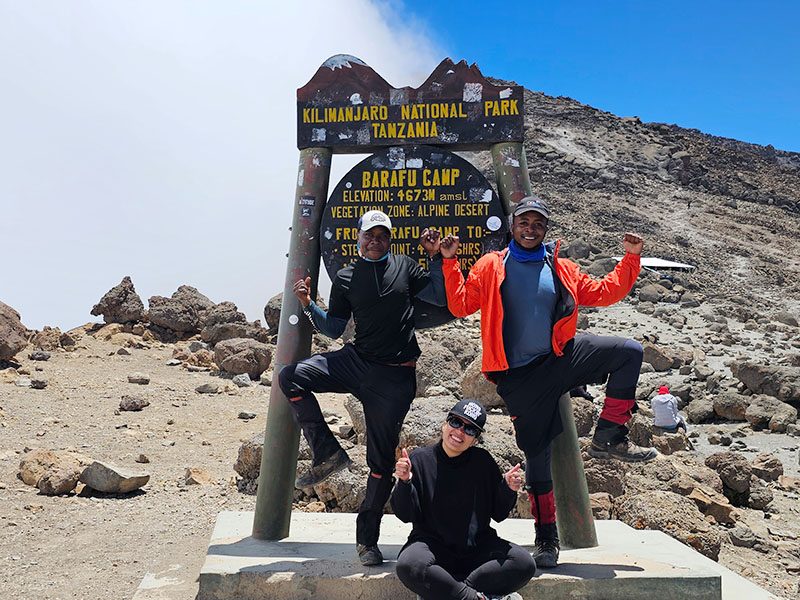
Smiling climbers posing at Barafu Camp (4,673m) on the Umbwe Route, striking fun poses before starting their summit ascent to Uhuru Peak | Kili Quests
A cheerful moment at Barafu Camp, the final staging point on the steep and scenic Lemosho Route before the summit climb begins.

Table of Contents

What Is the Lemosho Route on Kilimanjaro?

Where Does the Lemosho Route Start?

The route begins at Londorossi Gate, located on the western side of Kilimanjaro. The first day involves a drive followed by a short trek through dense rainforest, where wildlife sightings are sometimes possible.

How Long Is the Lemosho Route?

The route typically takes 7 to 8 days to complete, covering approximately 70 kilometers (43 miles). The 8-day version is strongly recommended because it allows better altitude adaptation and significantly increases summit success.

Lemosho Route Overview

Feature Details
Route Length        –       7 to 8 days
Distance                 –     ~70 km (43 miles)
Start Point             –   Londorossi Gate (Western Kilimanjaro)
Highest Point        –      Uhuru Peak (5,895 m / 19,341 ft)
Difficulty                – Moderate to challenging
Best For                  –  Scenic views,high success, fewer crowds
Success Rate        –   98% on the 8-day 

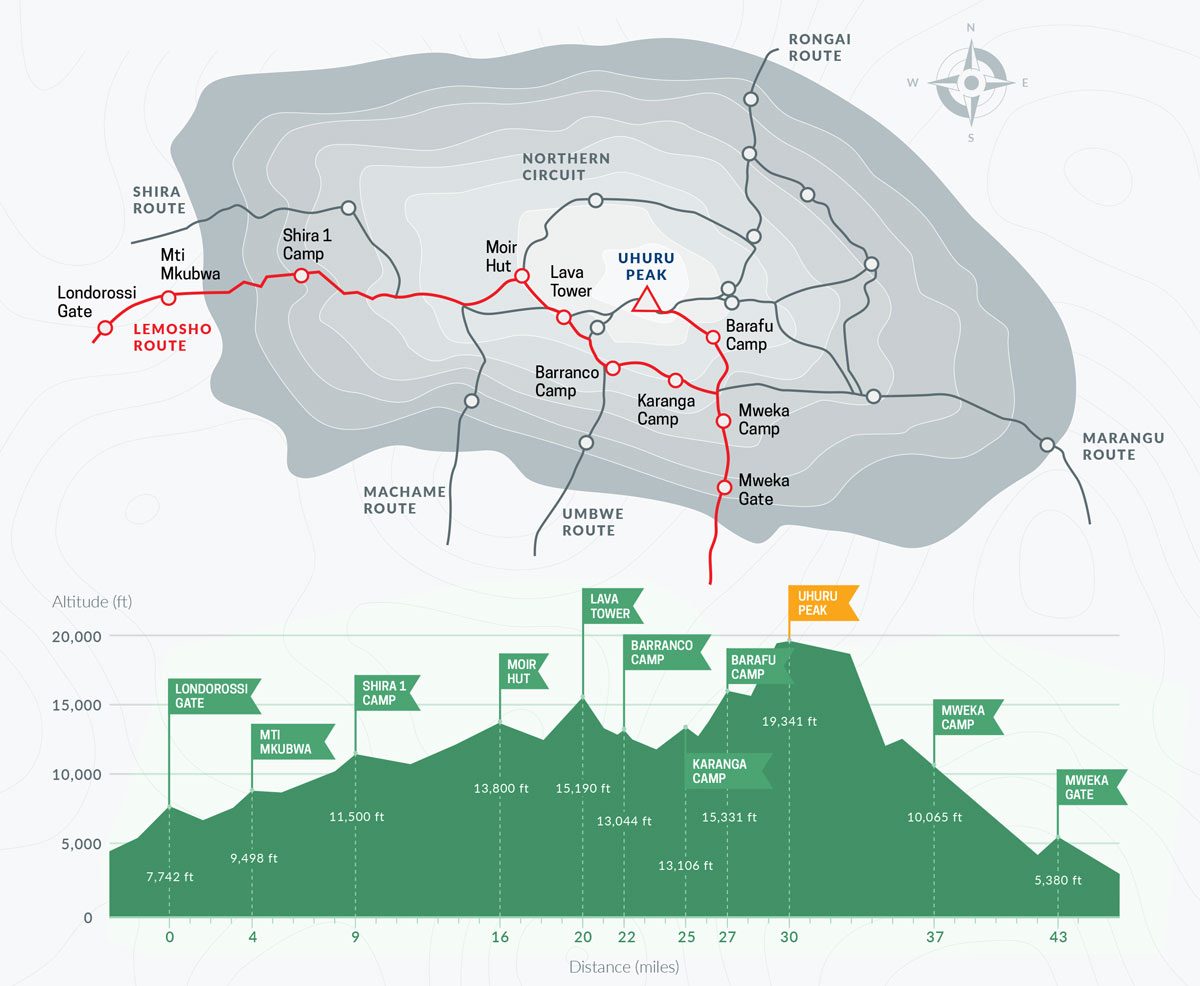
Lemosho Day Map and Elevation Profile

Lemosho Route map on Mount Kilimanjaro with full trail, elevation profile, and camp locations to Uhuru Peak
A scenic and well-acclimatized trail starting from Londorossi Gate and joining the Machame Route via Lava Tower.

Day-by-Day Itinerary (8-Day Version)

Day 1 – Londorossi Gate to Mti Mkubwa Camp

This first day is relatively short, allowing your body to begin adjusting gradually while trekking through lush rainforest.
  • Altitude: 2,100 m to 2,650 m
  • Hike Time: 3–4 hours
  • Forest zone with rich biodiversity

Day 2: Mti Mkubwa to Shira 1 Camp

Altitude: 2,650 m to 3,610 m
Hike Time: 5–6 hours
Enter the Shira Plateau with stunning open views

Day 3: Shira 1 to Shira 2 Camp

  • Altitude: 3,610 m to 3,850 m
  • Hike Time: 4–5 hours
  • Gentle trek with good acclimatization

Day 4: Shira 2 to Barranco Camp (via Lava Tower)

This is a key acclimatization day where you follow the “climb high, sleep low” principle, which is essential for reducing the risk of altitude sickness.
  • Altitude: 3,850 m to 4,640 m (up) → 3,960 m (down)
  • Hike Time: 6–7 hours
  • Acclimatization day with high-altitude exposure

Day 5: Barranco to Karanga Camp

  • Altitude: 3,960 m to 4,035 m
  • Hike Time: 4–5 hours
  • Climb the iconic Barranco Wall 257 meters (843 feet) tall

Day 6: Karanga to Barafu Camp

  • Altitude: 4,035 m to 4,673 m
  • Hike Time: 3–4 hours
  • Prepare for summit push

Day 7: Summit Day – Barafu to Uhuru Peak & down to Mweka Camp

Summit night is the most physically and mentally demanding part of the entire climb, as you trek in cold, thin air for several hours before reaching Uhuru Peak.
  • Altitude: 4,673 m to 5,895 m (summit), descend to 3,100 m
  • Hike Time: 12–14 hours total
  • Sunrise summit, then long descent

Read our article that explained ,How Hard Is Kilimanjaro?

Day 8: Mweka Camp to Mweka Gate

  • Altitude: 3,100 m to 1,640 m
  • Hike Time: 3–4 hours
  • Receive your summit certificate!

Lemosho Route Difficulty and Acclimatization

Is the Lemosho Route Difficult?

The Lemosho Route is considered moderately challenging, mainly due to its length and altitude rather than steep terrain. The longer itinerary spreads the physical effort over more days, making it more manageable than shorter routes.

Why Lemosho Has a High Success Rate

The extended itinerary allows your body more time to adapt to altitude, which is the biggest factor affecting summit success. Compared to shorter routes, climbers on Lemosho have significantly higher success rates.

Who Should Choose This Route?

  • First-time climbers
  • Trekkers with average fitness
  • Anyone prioritizing summit success over speed
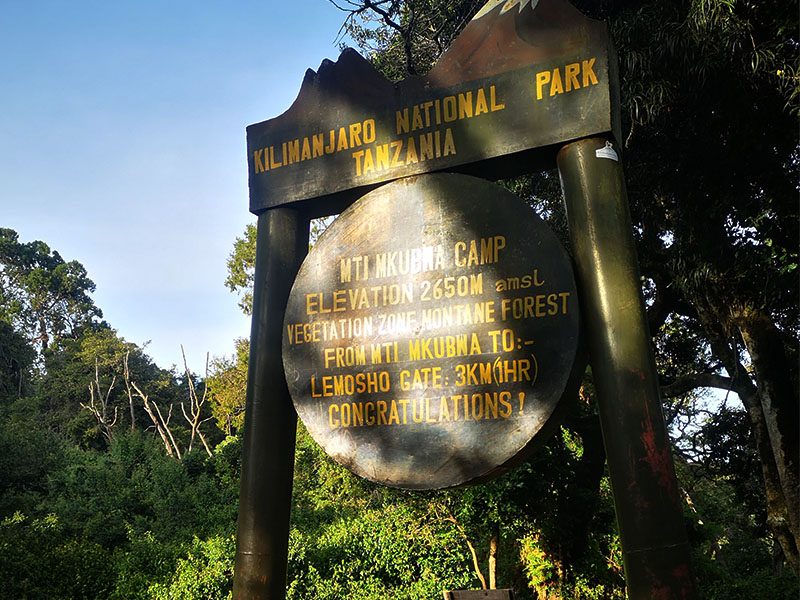
Mti Mkubwa Camp sign on Lemosho Route, Kilimanjaro National Park, showing elevation and distance to Lemosho Gate | Kili Quests
Mti Mkubwa Camp Sign (2,650m) – The first overnight stop on the Lemosho Route, located in the lush montane forest of Kilimanjaro.

Best Time to Climb the Lemosho Route

The best months are January to early March and June to October, when weather conditions are more stable and visibility is clear.
The best climbing windows are:
  • January to early March: Warm, with occasional clouds
  • June to October: Clear skies, cool and dry
Avoid April–May and November due to heavy and short rains

What Makes Lemosho Unique?

Starts on remote western side of the mountain

Crosses the dramatic Shira Plateau

Includes the acclimatization climb to Lava Tower

Barranco Wall is a thrilling highlight

Traverses all ecological zones, from rainforest to arctic summit

Acclimatization is the key to avoiding altitude sickness and successfully reaching the summit. Understanding how your body reacts at high altitude can make the difference between success and turning back early.

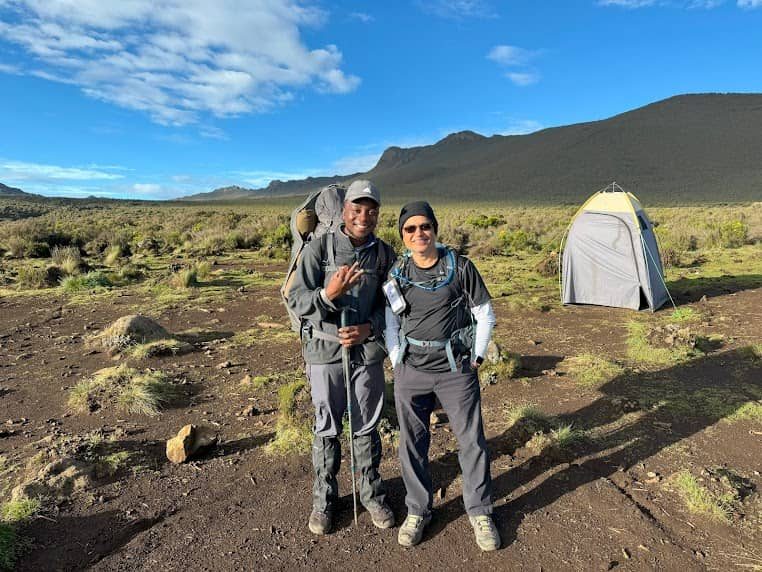
Two trekkers standing at Shira One Camp on the Lemosho Route, Kilimanjaro, with scenic moorland and tent in the background | Kili Quests
Shira One Camp (3,610m) – Trekkers enjoying a clear morning at Shira Plateau, the first high-altitude campsite on the Lemosho Route.

Is the Lemosho Route Right for You?

Choose Lemosho If You Want:

  • The best scenery on Kilimanjaro
  • A high summit success rate
  • A quieter start to your trek
  • More time to acclimatize

When Lemosho May Not Be Ideal

  • If you are short on time
  • If you are looking for the cheapest option
Trekkers and porters hiking through the forest into the moorland zone on the Lemosho Route, Mount Kilimanjaro | Kili Quests
Forest to Moorland Transition – Climbers and porters passing through the lush forest as they ascend toward the moorland zone on Day 2 of the Lemosho Route.

Frequently Asked Questions About the Lemosho Route

How difficult is the Lemosho Route on Mount Kilimanjaro?

The Lemosho Route is considered moderately challenging. While the trek covers a longer distance than some routes, the extended itinerary allows better acclimatization, making it suitable for climbers with average fitness levels.

How many days does the Lemosho Route take?

Most climbers complete the Lemosho Route in 7 or 8 days. The 8-day itinerary is recommended because it provides more time for acclimatization and increases the chances of reaching the summit.

What is the success rate of the Lemosho Route?

The Lemosho Route has one of the highest summit success rates on Mount Kilimanjaro, often exceeding 90%, especially on longer 8-day itineraries.

Where does the Lemosho Route start?

The route begins at Londorossi Gate on the western side of Mount Kilimanjaro. From there, trekkers hike through rainforest before reaching the Shira Plateau.

What makes the Lemosho Route special?

The Lemosho Route is known for its scenic landscapes, including rainforest trails, the Shira Plateau, Lava Tower, and the Barranco Wall. It also offers fewer crowds during the early days of the trek.

Is the Lemosho Route good for beginners?

Yes. Many first-time climbers choose the Lemosho Route because the longer itinerary helps with acclimatization, which increases the chances of reaching Uhuru Peak.

Climb Kilimanjaro via the Lemosho Route with Kili Quests

At Kili Quests, we focus on well-paced itineraries, experienced guides, and proper acclimatization to give you the best possible chance of reaching the summit safely.Our 8-day Lemosho climbs are designed to maximize success while allowing you to enjoy the journey across Kilimanjaro’s most scenic landscapes.
 
Contact us today to start planning your Lemosho adventure with our expert local team.

Related Articles

Kilimanjaro Routes Comparison: Which Route Is Best?

Plan Your Kilimanjaro Climb

Climbing Kilimanjaro is a once-in-a-lifetime adventure choosing the right route and preparation makes all the difference.

Kilimanjaro Guides

OUR CATEGORIES

Kilimanjaro Routes Comparison: Which Route Is Best?

Choosing the right route is one of the most important decisions you will make when planning to climb Mount Kilimanjaro. Every route leads to Uhuru Peak, but the journey to the summit can feel completely different depending on the trail you choose. Some routes are longer and give your body more time to adjust to altitude. Others are shorter, steeper, and more physically demanding. Some are known for dramatic scenery, while others are chosen for comfort, quiet trails, or the highest chance of summit success.
 
Because of this, there is no single route that is perfect for everyone. The best route depends on your fitness level, trekking experience, available time, comfort preference, and how important summit success is to you. A first-time climber with enough time will usually benefit from a longer route with better acclimatization, while an experienced trekker may be comfortable with a steeper and faster option.This guide compares all seven official Kilimanjaro routes in detail so you can understand how each one works and decide which route is the best fit for your climb.
 
Before choosing, it’s important to understand how to acclimatize on Kilimanjaro, compare the full cost to climb Kilimanjaro, and see how different routes affect your chances of success.
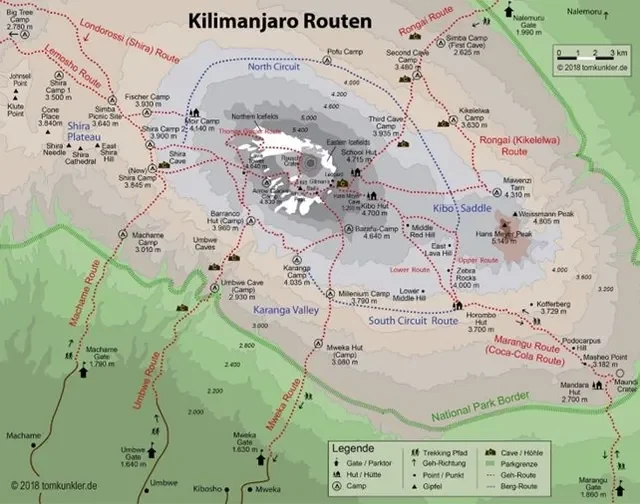
Topographic map showing all major climbing routes on Mount Kilimanjaro, including Machame, Lemosho, Marangu, Rongai, Umbwe, Shira, and Northern Circuit.
This detailed map shows all main Kilimanjaro climbing routes, including Machame, Marangu, Lemosho, Rongai, Umbwe, Shira, and the Northern Circuit, with campsites, elevation points, and park boundaries.

Table of Contents

Why Choosing the Right Kilimanjaro Route Matters

On Kilimanjaro, route choice is not just about scenery or duration. It directly affects how well your body adapts to altitude and how likely you are to reach the summit. The mountain is not technical, but altitude makes it serious. That means the route you choose can either support your success or make the climb much harder than it needs to be.
 
Longer routes usually give climbers a better chance of reaching Uhuru Peak because they allow more time for acclimatization. That extra time can make a major difference, especially for first-time climbers. Shorter routes may look attractive because they cost less and require fewer days, but they often come with a lower summit success rate because the body has less time to adapt.Route choice also shapes the overall experience. Some trails feel busy and social, while others feel remote and peaceful. Some begin in dense rainforest and open gradually into moorland and alpine desert, while others start high and immediately expose you to altitude. That is why comparing routes carefully before booking is one of the smartest things a climber can do.
 
Understanding altitude sickness on Kilimanjaro is key to improving your chances of reaching the summit.

How Many Routes Are There on Kilimanjaro?

There are seven official trekking routes on Mount Kilimanjaro: Lemosho, Machame, Marangu, Rongai, Northern Circuit, Umbwe, and Shira. Each has its own style, pace, scenery, and acclimatization profile.Some routes share sections of trail higher up on the mountain, but their starting points, first days, and overall experience are still different. For example, Lemosho and Shira eventually join parts of the same path, but their starts are not the same. Likewise, Machame and Lemosho share later sections, yet they attract climbers for different reasons.Understanding these differences makes it easier to match the route to the kind of experience you want rather than just choosing the most popular name.
 
Your budget also plays a role, so it’s important to understand the cost to climb Kilimanjaro before making a decision.

Lemosho Route – The Best All-Around Choice

The Lemosho Route is widely considered the best overall route on Kilimanjaro because it combines beautiful scenery, strong acclimatization, and a high summit success rate. It starts on the western side of the mountain and gives climbers a gradual approach, which is one of the main reasons it is so highly recommended.
 
Physical preparation matters, which is why many climbers follow a structured training plan for Kilimanjaro before their trip.

What the Lemosho Route Is Like

The route begins in rainforest and then opens into the wide scenery of the Shira Plateau. From there, climbers continue through moorland, alpine desert, and higher camps before making the final summit push. It is one of the most visually rewarding routes because it offers variety almost from the beginning to the end.Another advantage is that Lemosho starts with fewer crowds than some of the more popular routes. That gives the first few days a quieter and more remote feel, which many trekkers enjoy.

Who the Lemosho Route Is Best For

Lemosho is ideal for first-time climbers who want a strong chance of reaching the summit without choosing an overly aggressive itinerary. It is also excellent for trekkers who care a lot about scenery and want a route that feels more complete and less rushed.
Because it is usually done over 7 to 8 days, it gives the body more time to adjust to altitude. That makes it one of the safest and smartest choices for many climbers.
Lemosho Route map on Mount Kilimanjaro with full trail, elevation profile, and camp locations to Uhuru Peak
A scenic and well-acclimatized trail starting from Londorossi Gate and joining the Machame Route via Lava Tower.

Machame Route – The Most Popular Route

The Machame Route is often called the “Whiskey Route” and is the most popular climbing route on Kilimanjaro. It is known for its dramatic scenery, active trekking days, and strong acclimatization profile when done over enough days.

What the Machame Route Is Like

Machame takes climbers through rainforest, moorland, alpine desert, and the high summit zone, offering a varied and classic Kilimanjaro experience. It includes famous landmarks such as Lava Tower and the Barranco Wall, both of which are highlights for many trekkers.Compared with Marangu, Machame provides a better acclimatization profile because the route allows for more gradual altitude gain. The trail itself is a bit steeper and more physically active, but many climbers see that as part of its appeal.

Who the Machame Route Is Best For

Machame is best for climbers who want a balance between challenge, scenery, and summit success. It suits first-time trekkers who are reasonably fit and want a popular, proven route with strong overall value.
The main downside is that it can be busy, especially during peak climbing seasons. Still, for many people, the scenery and route design make it worth it.
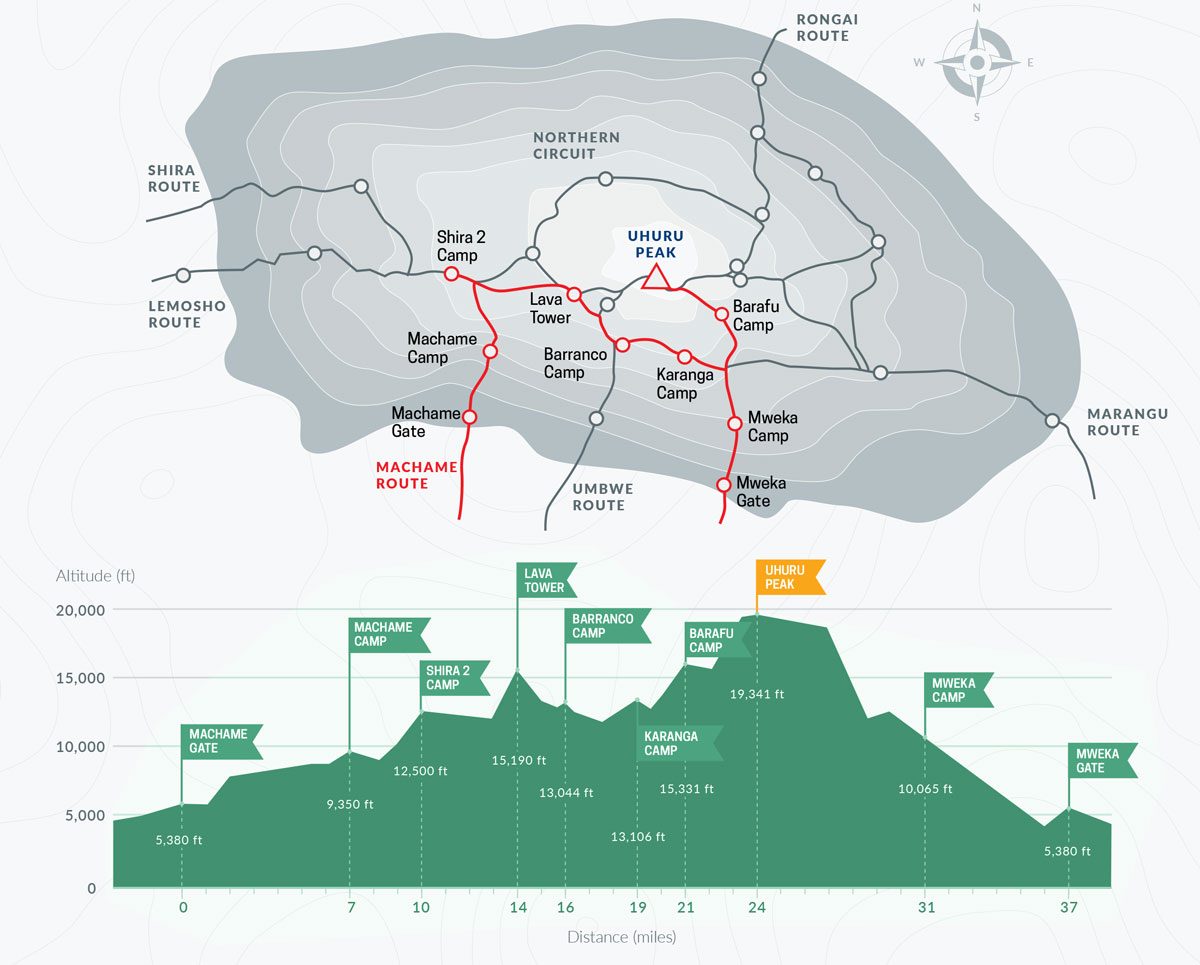
Machame Route map on Mount Kilimanjaro showing trail path, elevation profile, and major camps to Uhuru Peak
A scenic Kilimanjaro trail via Lava Tower and Barafu Camp, descending through Mweka Gate.

Marangu Route – The Hut Route

The Marangu Route is the only Kilimanjaro route with hut accommodation. For some climbers, that makes it immediately attractive, especially if they prefer not to sleep in tents for several nights.

What the Marangu Route Is Like

Marangu follows the same path up and down the mountain, which makes it different from most other routes. The huts provide a more sheltered sleeping arrangement, and the trail is often seen as more straightforward in terms of logistics.However, the shorter itinerary is its biggest weakness. Because many Marangu climbs are done in 5 to 6 days, climbers often do not get enough time to acclimatize properly. That is one reason why its summit success rate is usually lower than longer routes.

Who the Marangu Route Is Best For

Marangu is best for climbers who strongly prefer hut accommodation and want a simpler, shorter itinerary. It can work well for some trekkers, but it is not automatically the best route for beginners just because it has huts. In fact, the shorter profile can make it a harder climb from an altitude perspective.
For climbers who care most about summit success, longer routes are generally a better choice.
Marangu Route map on Mount Kilimanjaro showing elevation, trail path, and major camps to Uhuru Peak
Marangu Route Map – The only Kilimanjaro route with huts, following the same trail up and down via Horombo and Kibo Huts.

Rongai Route – The Quiet Northern Trail

The Rongai Route approaches Kilimanjaro from the north, near the Kenyan side of the mountain. This gives it a quieter and often drier character than the southern routes.

What the Rongai Route Is Like

Rongai is known for its peaceful feel. It usually has fewer climbers, which makes it a good option for people who want a less crowded experience. The northern side of Kilimanjaro also tends to be drier, so this route can be especially appealing during wetter months.The scenery is different from the western and southern routes. While some people find it less dramatic at the beginning, the route offers a unique perspective of the mountain and beautiful views near Mawenzi.

Who the Rongai Route Is Best For

Rongai is a good choice for climbers who want a quieter trail, a gradual ascent, and a different side of Kilimanjaro. It is also a smart option for people climbing during the rainy season when drier conditions can make a big difference.It may not have the same reputation for scenery as Lemosho, but it offers peace, space, and a solid acclimatization profile.
View of Mawenzi Peak from Stella Point on Mount Kilimanjaro, with snow-covered terrain and clouds below — typical scenery on the Rongai Route | Kili Quests
The Rongai Route’s final summit approach offers this dramatic view of Mawenzi Peak from Stella Point. A snowy, unforgettable moment near the crater rim.
Rongai Route map on Mount Kilimanjaro showing ascent path, camps, and elevation profile to Uhuru Peak
A remote trail from the north side of Kilimanjaro, passing Mawenzi Tarn and Kibo Hut before summiting.

Northern Circuit – The Best Route for Acclimatization

The Northern Circuit is the longest route on Kilimanjaro and is often considered the best route for acclimatization. It circles around the mountain’s northern slopes, creating a longer and more gradual approach to the summit.

What the Northern Circuit Is Like

This route offers one of the most complete mountain experiences because it covers more ground and gives trekkers long, scenic days with fewer crowds. It provides broad views from multiple angles and avoids the busier traffic found on some other routes.Its greatest strength is time. Because the route is usually done over 9 or more days, climbers have an excellent chance to adjust to altitude before summit night.

Who the Northern Circuit Is Best For

The Northern Circuit is best for climbers whose main goal is to maximize summit success. It is also ideal for those who want a quieter route and are willing to spend more time on the mountain.For travelers with enough days and budget, it is one of the strongest choices available. The extra time often turns into extra safety, better recovery, and a more enjoyable climb.
Northern Circuit Route map on Mount Kilimanjaro showing full circuit trail, elevation profile, and key camps to Uhuru Peak
The longest Kilimanjaro route, offering excellent acclimatization and 360° views around the mountain.

Umbwe Route – The Steepest and Toughest Option

Umbwe is known as the steepest and most direct route on Kilimanjaro. It is intense, demanding, and not usually recommended for beginners.

What the Umbwe Route Is Like

The route climbs quickly and gives the body less time to adapt to altitude. It is physically demanding from early on and is often chosen by trekkers who want a more aggressive and remote climb.Because it is less popular, Umbwe can feel quiet and wild. That gives it a certain appeal for experienced trekkers who do not mind a tougher route.

Who the Umbwe Route Is Best For

Umbwe is best for experienced climbers who are confident in their fitness and understand the challenge of rapid altitude gain. It is not a route chosen for comfort or ease. It is chosen for intensity.For most first-time Kilimanjaro trekkers, other routes are a safer and smarter choice.
Trekkers and porters carefully ascending the Kissing Rock section on Barranco Wall along the Machame Route, Kilimanjaro | Kili Quests
The Kissing Rock – Barranco Wall – Climbers squeeze through one of the most iconic and narrow points on the Umbwe Route: the "Kissing Rock" on Barranco Wall.
Umbwe Route map on Mount Kilimanjaro showing trail path, elevation chart, and key camps to Uhuru Peak
Kilimanjaro’s steepest and most direct route, ascending via Barranco and Karanga Camps.

Shira Route – A High-Altitude Start

The Shira Route begins at a higher elevation than most other routes, which makes it unique but also more demanding at the beginning.

What the Shira Route Is Like

Because the route starts high on the Shira Plateau, climbers skip much of the rainforest zone and enter a higher-altitude environment very early. That can make the first days harder for people who have not acclimatized already.After the opening section, Shira joins the Lemosho path, so much of the later scenery and route experience becomes similar. The landscapes are dramatic and open, with wide views that many climbers love.

Who the Shira Route Is Best For

Shira is best for trekkers who already have some altitude experience or have acclimatized before starting the climb. It is not usually the first recommendation for people completely new to high-altitude trekking.For the right climber, it offers striking scenery and a less typical start, but it requires more care than routes with a lower beginning.
Two trekkers standing at Shira One Camp on the Lemosho Route, Kilimanjaro, with scenic moorland and tent in the background | Kili Quests
Shira One Camp (3,610m) – Trekkers enjoying a clear morning at Shira Plateau, the first high-altitude campsite on the Lemosho Route.
Shira Route map on Mount Kilimanjaro showing trail path from Shira Plateau to Uhuru Peak via Barranco and Barafu Camps
Begins at high altitude on the Shira Plateau and joins the Lemosho-Machame trail to the summit.

Which Kilimanjaro Route Is Best for Beginners?

For most beginners, the best Kilimanjaro routes are Lemosho, Machame, and the Northern Circuit. These routes provide better acclimatization and a stronger balance between challenge and summit success.Lemosho is often the top recommendation because it combines scenery, lower early crowds, and a gradual profile that supports first-time climbers very well. Machame is also beginner-friendly when done over enough days, especially for people who are fit and want a classic Kilimanjaro experience. The Northern Circuit is excellent for beginners who have enough time and want the safest acclimatization profile possible.Routes like Umbwe and Shira are usually less suitable for beginners because of either their steepness or high-altitude start.

Which Kilimanjaro Route Has the Best Scenery?

If scenery is your top priority, Lemosho, Shira, and the Northern Circuit are often considered the most visually rewarding routes on Kilimanjaro. These routes offer wide views, varied landscapes, and a stronger sense of openness across the mountain.Lemosho is especially loved because it combines beautiful western approaches, the Shira Plateau, and a gradual transition through Kilimanjaro’s ecological zones. The Northern Circuit stands out for its panoramic views around the mountain and quiet, remote feel. Shira offers dramatic early scenery because of its high-altitude start.Machame is also scenic, but it is more crowded, which can slightly change the feel of the experience for some climbers.

Which Route Gives the Highest Chance of Reaching the Summit?

The routes with the highest chance of summit success are generally Lemosho and the Northern Circuit. The reason is simple: longer itineraries allow better acclimatization, and better acclimatization leads to stronger summit outcomes.That does not mean shorter routes cannot succeed, but they usually leave less margin for the body to adapt. On Kilimanjaro, altitude is the main obstacle, not technical climbing. That is why route length and ascent profile matter so much.A climber who chooses a longer route and prepares properly will almost always give themselves a better chance than someone who rushes the mountain on a shorter schedule.
 
A climber proudly holding a Mount Kilimanjaro summit certificate with their Kili Quests guide after completing the trek to Uhuru Peak | Kili Quests
Every route leads to this moment — celebrating your Kilimanjaro summit with a certificate in hand and memories for a lifetime.

How to Choose the Best Route for Your Goals

The best Kilimanjaro route depends on what matters most to you.If you want the strongest balance of scenery and success, Lemosho is usually the best choice. If you want a classic and popular climb, Machame is a strong option. If you want hut accommodation, Marangu is the clear route for that. If you want fewer crowds, Rongai and the Northern Circuit stand out. If your main goal is the highest chance of success, the Northern Circuit deserves serious consideration. If you are an experienced trekker seeking a more intense route, Umbwe may appeal to you.The smartest approach is to choose a route based on your real priorities, not just the shortest itinerary or the cheapest option. Kilimanjaro is a serious mountain, and a better route choice often leads to a safer, more successful, and more enjoyable climb.
 

Frequently Asked Questions About Kilimanjaro Routes

What is the best route to climb Kilimanjaro?

The best route for most climbers is the Lemosho Route because it offers excellent scenery, good acclimatization, and a high summit success rate. However, the best route still depends on your priorities. If you want maximum acclimatization time, the Northern Circuit may be an even better fit.

Which Kilimanjaro route is easiest?

The Northern Circuit is often considered the easiest in terms of altitude adaptation because it gives the body the most time to acclimatize. It is longer, but that extra time usually makes the climb feel more manageable than shorter and steeper routes.

Which route is best for first-time climbers?

Lemosho and Machame are usually the best choices for first-time climbers. Both offer strong acclimatization and a well-rounded mountain experience. The Northern Circuit is also excellent for beginners who have enough time for a longer trek.

Which route is the shortest?

Marangu and Umbwe are among the shortest routes on Kilimanjaro. While that may seem attractive, shorter routes often come with lower summit success because they do not leave enough time for proper acclimatization.

Which route has huts?

Marangu is the only Kilimanjaro route with hut accommodation. All other main routes involve camping in tents.

Which Kilimanjaro route has the best scenery?

Many climbers say the Lemosho Route, Shira Route, and Northern Circuit Route offer the most scenic landscapes on Mount Kilimanjaro.

Plan Your Climb with Kili Quests

At Kili Quests, we help climbers choose the right Kilimanjaro route based on fitness, time, comfort preferences, and summit goals. That matters because the best route is not always the same for every person. A good decision at the planning stage can improve your entire experience on the mountain.Our team guides climbers on all official Kilimanjaro routes and helps match each trekker with the route that gives them the best chance of success. Whether you are drawn to the scenic Lemosho Route, the classic Machame Route, or the longer Northern Circuit, we make sure your climb is properly planned, safely supported, and built around your goals.Climbing Kilimanjaro should feel challenging, exciting, and unforgettable. With the right route and the right support, it can be exactly that.
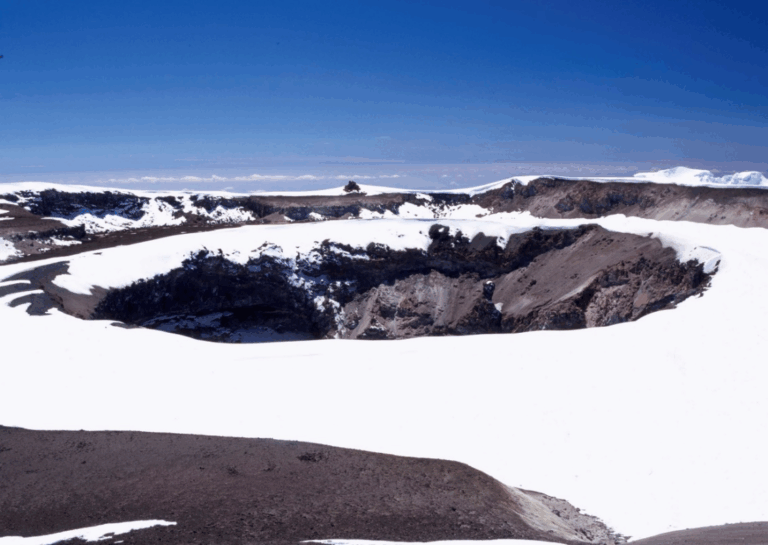
Contact us today and let our team guide you to the summit with confidence.

Related Articles

Machame Route Kilimanjaro: Most Popular Trek Guide

Reach the Summit with Confidence

Success on Kilimanjaro depends on the right route, acclimatization, and team.We plan every Machame climb for a safe summit.

Plan Your Machame Route the Right Way

The right route, acclimatization, and team make the difference.We plan your Machame climb for a safe summit

OUR CATEGORIES

Machame Route on Kilimanjaro: Most Popular Kilimanjaro Path

Why Choose the Machame Route?

The Machame Route is the most popular way to climb Mount Kilimanjaro, known for its scenic diversity, steeper trails, and strong summit success rate. Often called the “Whiskey Route,” it is more physically demanding than easier options like Marangu, but rewards climbers with some of the most varied landscapes on the mountain.


Unlike longer routes such as Lemosho, Machame follows a slightly faster ascent profile while still allowing for effective acclimatization. This makes it a great choice for trekkers who want a more active and challenging climb without sacrificing their chances of reaching Uhuru Peak.
 
Each route offers a different balance of difficulty, scenery, and acclimatization — see our Kilimanjaro Routes Comparison: Which Route Is Best? to understand how Machame compares to other options.
Trekkers and porters carefully ascending the Kissing Rock section on Barranco Wall along the Machame Route, Kilimanjaro | Kili Quests
The Kissing Rock – Barranco Wall – Climbers squeeze through one of the most iconic and narrow points on the Machame Route: the "Kissing Rock" on Barranco Wall.

Table of Contents

What Is the Machame Route on Kilimanjaro?

  Where Does the Machame Route Start?

The Machame Route begins at Machame Gate on the southwestern side of Mount Kilimanjaro. The trail quickly enters dense rainforest before climbing into moorland and alpine desert zones.

How Long Is the Machame Route?

The route is typically completed in 6 or 7 days, covering approximately 62 kilometers (37 miles). The 7-day version is recommended because it provides better acclimatization and improves summit success.

Machame Route Overview

Feature Details
Route Length            –      6 or 7 days
Distance                    –    ~62 km (37 miles)
Start Point                –     Machame Gate (southwest side)
Highest Point          –      Uhuru Peak (5,895 m / 19,341 ft)
Difficulty                  –      Moderate to challenging
Best                           –      For  Hikers wanting adventure & scenery
Success Rate          –       ~95% on the 7-day Itinerary

Machame Route Days and Elevation Profile

Machame Route map on Mount Kilimanjaro showing trail path, elevation profile, and major camps to Uhuru Peak
A scenic Kilimanjaro trail via Lava Tower and Barafu Camp, descending through Mweka Gate.

Machame Route Itinerary (7-Day Version)

Day 1 – Machame Gate to Machame Camp

This first day is a steady climb through rainforest, where humidity and muddy trails can make the hike feel more demanding than expected.
  • Altitude: 1,800 m to 2,835 m
  • Time: 5–6 hrs
  • Rainforest zone; trail can be muddy

Day 2: Machame Camp to Shira Cave Camp

  • Altitude: 2,835 m to 3,750 m
  • Time: 5 hrs
  • Enter moorland zone with stunning views

Day 3: Shira Camp to Barranco Camp (via Lava Tower)

This is a key acclimatization day following the “climb high, sleep low” principle, which helps your body adjust to altitude.
 
  • Altitude gain: up to 4,630 m, then sleep at 3,960 m
  • Time: 6–7 hrs
  • Acclimatization day with dramatic scenery

Day 4: Barranco to Karanga Camp

  • Altitude: 3,960 m to 4,035 m
  • Time: 4–5 hrs
  • Scramble the famous Barranco Wall

Day 5: Karanga to Barafu Camp

  • Altitude: 4,035 m to 4,673 m
  • Time: 3–4 hrs
  • Alpine desert zone, prepare for summit

Day 6: Summit Day – Barafu to Uhuru Peak & Mweka Camp

Summit night is the most challenging part of the climb, combining altitude, cold, and long trekking hours in low oxygen conditions.

  • Altitude: 4,673 m to 5,895 m, then descend to 3,100 m
  • Time: 12–14 hrs
  • Summit at sunrise, long descent
 Read Our Article about,How Hard Is Kilimanjaro?

Day 7: Mweka Camp to Mweka Gate

  • Altitude: 3,100 m to 1,640 m
  • Time: 3 hrs
  • Finish your trek with certificate ceremony

Machame Route Difficulty, Acclimatization & Fitness

Is the Machame Route Difficult?

The Machame Route is considered moderately challenging due to its steeper sections and faster elevation gain compared to longer routes like Lemosho.

How Acclimatization Works on Machame

Although shorter than Lemosho, Machame still includes important acclimatization days, especially around Lava Tower, helping improve summit success.
 
Read our article about, Kilimanjaro Success Rate

Who Should Choose This Route?

  • Trekkers in good physical condition
  • Climbers who prefer a more active pace
  • Those looking for a balance of challenge and scenery
Trekkers meditating on a rock during a peaceful break on the Machame Route, Mount Kilimanjaro | Kili Quests
Mindful Moment on the Machame Trail – Climbers pause for a short meditation break on the way to Shira Camp, embracing Kilimanjaro’s calm Moorland environment.

Best Time to Climb the Machame Route

Dry Seasons (Best Conditions)

The best time to climb is during January–March and June–October, when trails are drier and visibility is clearer.

  •  January–March: Clear skies, mild weather
  • June–October: Dry season, most popular
  • Avoid April–May and November due to rain
Read our article about, Best Time to Climb Kilimanjaro

What Makes Machame Special?

 Iconic Barranco Wall challenge

Excellent views of Kibo and Mount Meru

Shared trail with Lemosho Route  from Shira  Route onwards

Wide ecological diversity — rainforest to arctic zone

Is the Machame Route Right for You?

Choose Machame If You Want:

  • A more active and challenging climb
  • Excellent scenery in fewer days
  • A popular route with strong success rates
 

When Machame May Not Be Ideal

  • If you prefer a slower pace
  • If you want maximum acclimatization (Lemosho better)
Trekkers posing with hiking poles at the Shira Cave Camp sign on Day 2 of the Machame Route, Kilimanjaro | Kili Quests
Shira Cave Camp (3,750m) – Climbers celebrate their arrival at this scenic moorland campsite on Day 2 of the Machame Route, Kilimanjaro.

Frequently Asked Questions About the Machame Route

How difficult is the Machame Route on Mount Kilimanjaro?

The Machame Route is considered moderately challenging. It includes steep sections such as the Barranco Wall and long trekking days, but it does not require technical climbing skills. With proper acclimatization and preparation, many trekkers successfully reach the summit.

Why is the Machame Route called the “Whiskey Route”?

The Machame Route is nicknamed the “Whiskey Route” because it is more physically demanding than the Marangu Route, which is known as the “Coca-Cola Route.”

How many days does it take to climb the Machame Route?

Most climbers complete the Machame Route in 6 or 7 days. The 7-day itinerary is recommended because it provides better acclimatization and increases summit success rates.

What is the success rate of the Machame Route?

The Machame Route has a high summit success rate, often around 90–95% on the 7-day itinerary due to its gradual acclimatization profile.

What makes the Machame Route popular?

The Machame Route is popular because it offers diverse scenery, including rainforest, moorland, alpine desert, and the summit glaciers of Mount Kilimanjaro. It also provides good acclimatization compared to shorter routes.

Which routes connect with the Machame Route?

Several routes join the Machame Route, including the Lemosho Route and Shira Route near the Shira Plateau before continuing toward the summit

Climb Kilimanjaro via Machame with Kili Quests

At Kili Quests, we guide climbers on the Machame Route with a strong focus on pacing, acclimatization, and safety. This route offers the perfect balance between challenge and success when approached correctly.Our 7-day Machame climbs are designed to give you the best chance of reaching Uhuru Peak while enjoying one of Kilimanjaro’s most scenic trails.
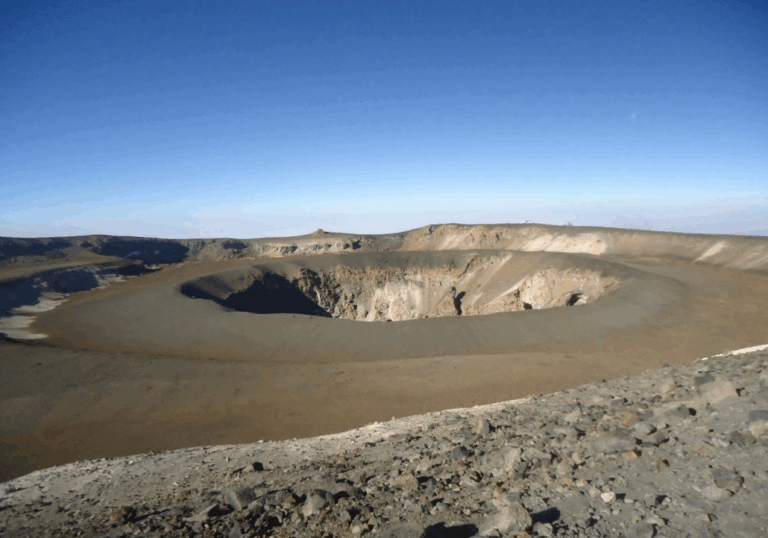
 
Kilimanjaro Packing List (Essential Gear Guide)
Contact us to plan your 7-day Machame Route trek.

Related Articles

Marangu Route Kilimanjaro: Hut-Based Trek Guide

Plan Your Marangu Route the Right Way

Preparation, acclimatization, and route choice make the difference.Explore these essential guides:

Climb Kilimanjaro with Comfort

Marangu offers hut comfort, but pacing and acclimatization still matter.
We plan every trek for a safe summit.

OUR CATEGORIES

Marangu Route on Kilimanjaro: Hut-Based Kilimanjaro Trek

Why Choose the Marangu Route?

The Marangu Route is one of the oldest and most established paths on Mount Kilimanjaro, known for its hut accommodation and straightforward trail. Often called the “Coca-Cola Route,” it is the only route where climbers sleep in permanent huts instead of tents.
 
While it is considered one of the more accessible routes in terms of terrain, the shorter itinerary means faster altitude gain. This makes proper acclimatization essential and is one of the reasons summit success rates are lower compared to longer routes.If you’re comparing routes, understanding how Marangu differs from Machame and Lemosho is key to choosing the right climb.
 
Start by comparing all options in our Kilimanjaro Routes Comparison: Which Route Is Best? to see how Marangu compares to other routes.
Alt Text: Gilman’s Point summit sign at 5,681 meters on Mount Kilimanjaro via the Marangu Route, with rocky terrain and blue sky | Kili Quests
Gilman’s Point (5,681m) marks the crater rim for trekkers ascending via the Marangu Route — a major achievement before reaching Uhuru Peak.

Table of Contents

What Is the Marangu Route on Kilimanjaro?

Where Does the Marangu Route Start?

The Marangu Route begins at Marangu Gate on the southeastern side of Mount Kilimanjaro. The trail passes through rainforest before opening into moorland and alpine desert zones.

How Long Is the Marangu Route?

The route typically takes 5 or 6 days to complete, covering approximately 72 kilometers (45 miles). The 6-day itinerary is strongly recommended to improve acclimatization and increase summit success.

Marangu Route Overview

Feature Details
Route Length                 –      5 or 6 days
Distance                          –      ~72 km (45 miles)
Start Point                      –       Marangu Gate (southeast Kilimanjaro)
Highest Point                 –       Uhuru Peak (5,895 m / 19,341 ft)
Accommodation            –       Huts with beds and dining areas
Difficulty                          –       Moderate, but fast elevation gain
Success Rate                    –      ~80% on the 6-day version
 
Because shorter routes allow less time for acclimatization, it’s important to understand how route choice affects summit success.

Read our article about, Kilimanjaro Success Rate

Marangu Route Days and Elevation Profile

Marangu Route map on Mount Kilimanjaro showing elevation, trail path, and major camps to Uhuru Peak
Marangu Route Map – The only Kilimanjaro route with huts, following the same trail up and down via Horombo and Kibo Huts.

 H2: Marangu Route Itinerary (6-Day Version)

Day 1: Marangu Gate to Mandara Hut

  • Altitude: 1,870 m to 2,700 m
  • Time: 4–5 hours
  • Lush rainforest with waterfalls and monkeys

Day 2: Mandara Hut to Horombo Hut

  • Altitude: 2,700 m to 3,720 m
  • Time: 6–7 hours
  • Enter moorland with clear views of Mawenzi Peak

Day 3 – Acclimatization Day at Horombo Hut

This extra day is critical for improving your chances of reaching the summit, as it allows your body to adjust before moving to higher altitude.
  • Optional hike to Zebra Rocks (4,000 m)
  • Essential for reducing altitude sickness
Read our article About, Altitude Sickness Guide

Day 4: Horombo Hut to Kibo Hut

  • Altitude: 3,720 m to 4,700 m
  • Time: 5–6 hours
  • Trek through alpine desert toward summit base camp

Day 5: Kibo Hut to Uhuru Peak, down to Horombo Hut

 Summit night is physically demanding due to altitude, cold temperatures, and long trekking hours in thin air.
  • Altitude: 4,700 m to 5,895 m (summit), descend to 3,720 m
  • Time: 12–14 hours
  • Summit at sunrise, then long descent

Read our article about,How Hard Is Kilimanjaro.

Day 6: Horombo Hut to Marangu Gate

  • Altitude: 3,720 m to 1,870 m
  • Time: 5–6 hours
  • Return to the gate through rainforest and celebrate your success!

Marangu Route Difficulty and Acclimatization

Is the Marangu Route Easy?

Although often described as easier due to its gradual trail, the Marangu Route is not necessarily easier overall. The shorter itinerary means faster altitude gain, which increases the risk of altitude sickness.

Why Success Rates Are Lower

Compared to routes like Lemosho and Machame, Marangu has lower summit success rates because climbers have less time to acclimatize.

Who Should Choose This Route?

  • Climbers who prefer hut accommodation
  • Budget-conscious trekkers
  • Those comfortable with a faster ascent

Best Time to Climb the Marangu Route

Dry Seasons (Best Conditions)

January–March and June–October offer the best weather conditions.

  • January to early March: Mild and clear
  • June to October: Popular dry season
  • Huts make it a good choice even in rainy months
Read our article about, Best Time to Climb Kilimanjaro

What Makes the Marangu Route Unique?

Same Route Up and Down

Structured and Predictable Trek

Popular Budget-Friendly Option

Horombo Huts on Mount Kilimanjaro’s Marangu Route with Mawenzi Peak in the background under a clear blue sky | Kili Quests
Horombo Huts (3,720m) on Kilimanjaro’s Marangu Route offer trekkers scenic views of Mawenzi Peak and a vital rest stop before Heading to Kibo Hut | Kili Quests.

Is the Marangu Route Right for You?

Choose Marangu If You:

  • Prefer sleeping in huts instead of tents
  • Want a simpler, structured route
  • Are looking for a more budget-friendly option
Kilimanjaro Packing List (Essential Gear Guide)

When Marangu May Not Be Ideal

  • If you want the highest success rate
  • If you prefer varied scenery
  • If you want a slower acclimatization profile

Read our article about, Lemosho Route article

 
A Blue Monkey perched on a mossy rock in the rainforest zone of Mount Kilimanjaro, surrounded by dense green vegetation | Kili Quests
The Blue Monkey is one of the most commonly spotted primates in Kilimanjaro’s rainforest zone. Often seen near the lower trail sections like Marangu and Machame.

Frequently Asked Questions About the Marangu Route

Why is the Marangu Route called the “Coca-Cola Route”?

The Marangu Route is nicknamed the “Coca-Cola Route” because it is considered one of the easier and more comfortable routes on Mount Kilimanjaro. It also has hut accommodation and historically offered bottled drinks at the camps.

Is the Marangu Route good for beginners?

Yes, many first-time climbers choose the Marangu Route because it has a clear trail and hut accommodation. However, the shorter itinerary means less time for acclimatization, so the 6-day version is strongly recommended.

How many days does the Marangu Route take?

The Marangu Route usually takes 5 or 6 days. The 6-day itinerary includes an acclimatization day at Horombo Hut, which improves the chances of reaching the summit.

Does the Marangu Route have huts?

Yes. The Marangu Route is the only Kilimanjaro route with permanent huts, including Mandara Hut, Horombo Hut, and Kibo Hut.

What summit point do climbers reach from the Marangu Route?

Climbers on the Marangu Route usually reach the crater rim at Gilman’s Point before continuing along the rim to Uhuru Peak, the highest point in Africa.

What wildlife can be seen on the Marangu Route?

The lower rainforest section of Mount Kilimanjaro often includes sightings of animals such as the Blue Monkey, colobus monkeys, and various bird species.

Climb Kilimanjaro via Marangu with Kili Quests

At Kili Quests, we guide climbers on the Marangu Route with a focus on safety, pacing, and proper acclimatization  even on shorter itineraries.Our 6-day Marangu climbs are designed to balance comfort and success while giving you the best possible experience on Kilimanjaro.
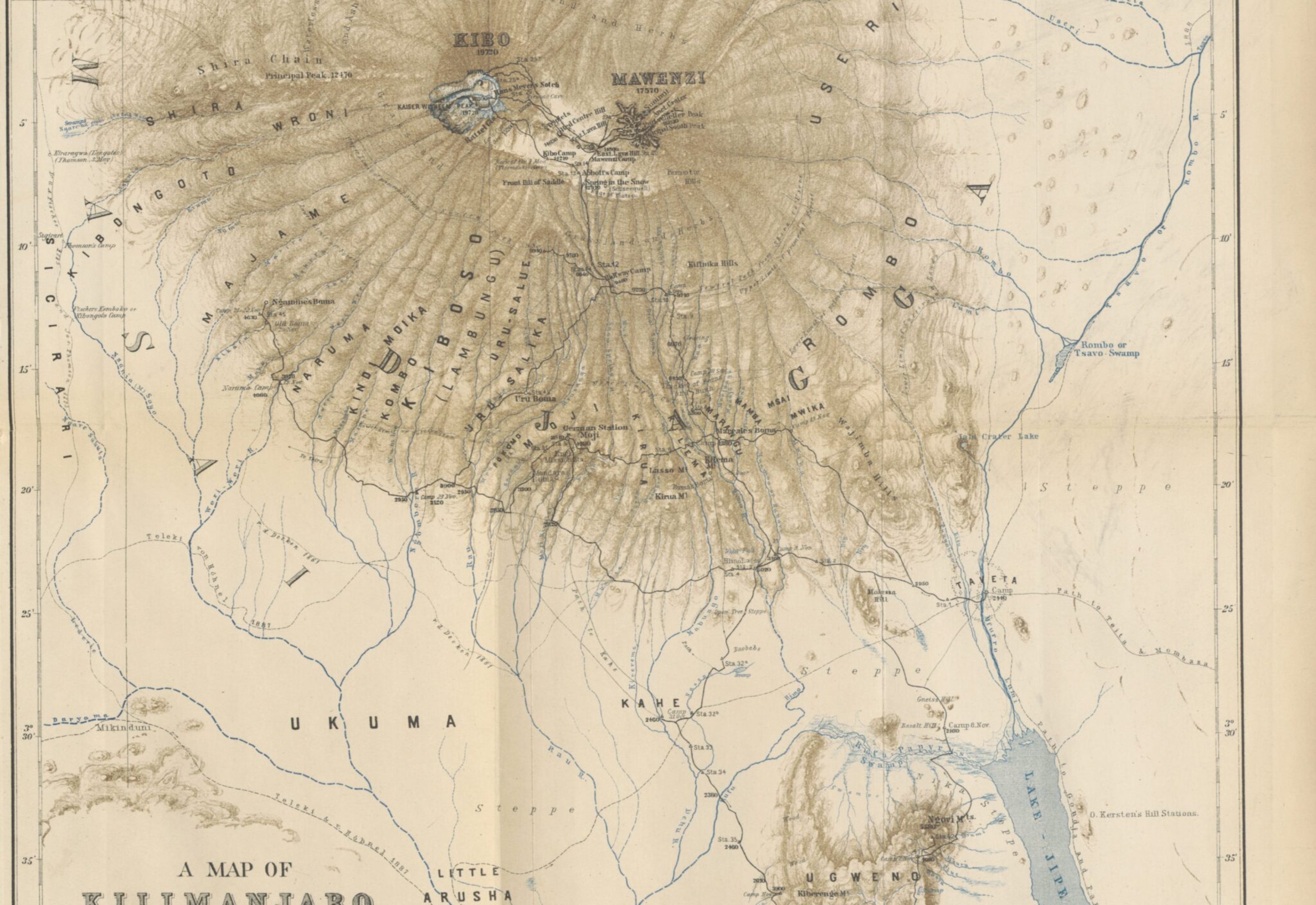

What’s Included in a Kilimanjaro Climb Package
Contact us today to plan your hut-based climb on the Marangu Route.

Related Articles