Climb Kilimanjaro with Experts

Follow the path of the first explorers ,and reach the summit with a trusted local team.

Plan Your Climb

Prepare the right way before your Kilimanjaro adventure:

OUR CATEGORIES

Who Was Hans Meyer? The First Ascent of Kilimanjaro | Kili Quests

In 1889, German geographer Hans Meyer became one of the central figures in the first recorded successful ascent of Mount Kilimanjaro. Together with Austrian mountaineer Ludwig Purtscheller and support from local guides and porters, Meyer reached the summit of Kibo, the highest volcanic cone of Kilimanjaro.

Today, this summit is known as Uhuru Peak, the highest point in Africa at 5,895 meters / 19,341 feet.

This article explains who Hans Meyer was, how the 1889 ascent happened, why the climb became important in Kilimanjaro history, and why the story should also recognize the local support behind the expedition.

For the local guide story, read our full article about Yohani Kinyala Lauwo and Kilimanjaro’s first ascent.

Quick Answer: Who Was Hans Meyer?

Hans Meyer was a German geographer, explorer, and professor who became famous for his role in the first recorded successful ascent of Mount Kilimanjaro in 1889. He reached the summit with Austrian mountaineer Ludwig Purtscheller, supported by local guides, porters, and expedition crew.
 
His climb helped document Kilimanjaro’s geography, summit area, and volcanic structure for later explorers and climbers. However, the full story of the ascent should not ignore the local knowledge and support that made the expedition possible.
Year Event Why It Matters
1887 Hans Meyer made an earlier unsuccessful attempt on Kilimanjaro. This showed the difficulty of climbing Kibo before modern gear and support.
1889 Hans Meyer and Ludwig Purtscheller reached Kilimanjaro’s summit area. This became the first recorded successful ascent of Mount Kilimanjaro.
1961 The summit became associated with the name Uhuru Peak after Tanzania’s independence. The name reflects freedom and Tanzania’s national identity.
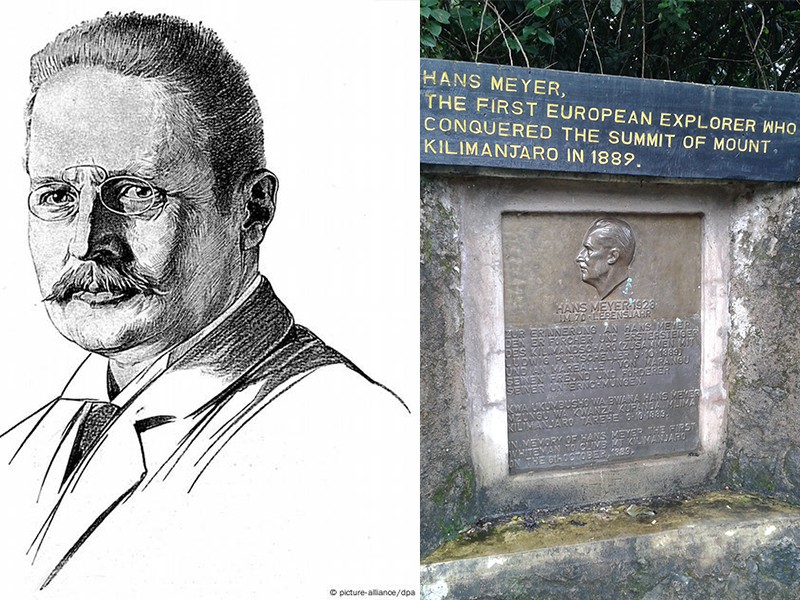
Hans Meyer Kilimanjaro first ascent plaque at Marangu Gate
Hans Meyer was the first European to reach the summit of Kilimanjaro in 1889. This historical plaque at the Marangu Gate Information Center honors his achievement and marks his contribution to the mountain’s climbing history.

Table of Contents

Who Was Hans Meyer?

Hans Meyer was a German geographer, mountaineer, and professor at the University of Leipzig. He became interested in Kilimanjaro during a period when European explorers were trying to study and document major mountains in East Africa.
 
Meyer made more than one attempt to climb Kilimanjaro before finally reaching the summit in October 1889. His success came through better planning, stronger expedition support, and help from Austrian mountaineer Ludwig Purtscheller and local mountain guides.
 
Meyer’s role is important because his expedition helped place Kilimanjaro into the written history of modern mountaineering. But Kilimanjaro was not “discovered” by Meyer. The mountain was already known, named, lived around, and understood by local communities long before European expeditions arrived.
 
To understand the mountain itself, read our guide to what Mount Kilimanjaro is and how it formed.
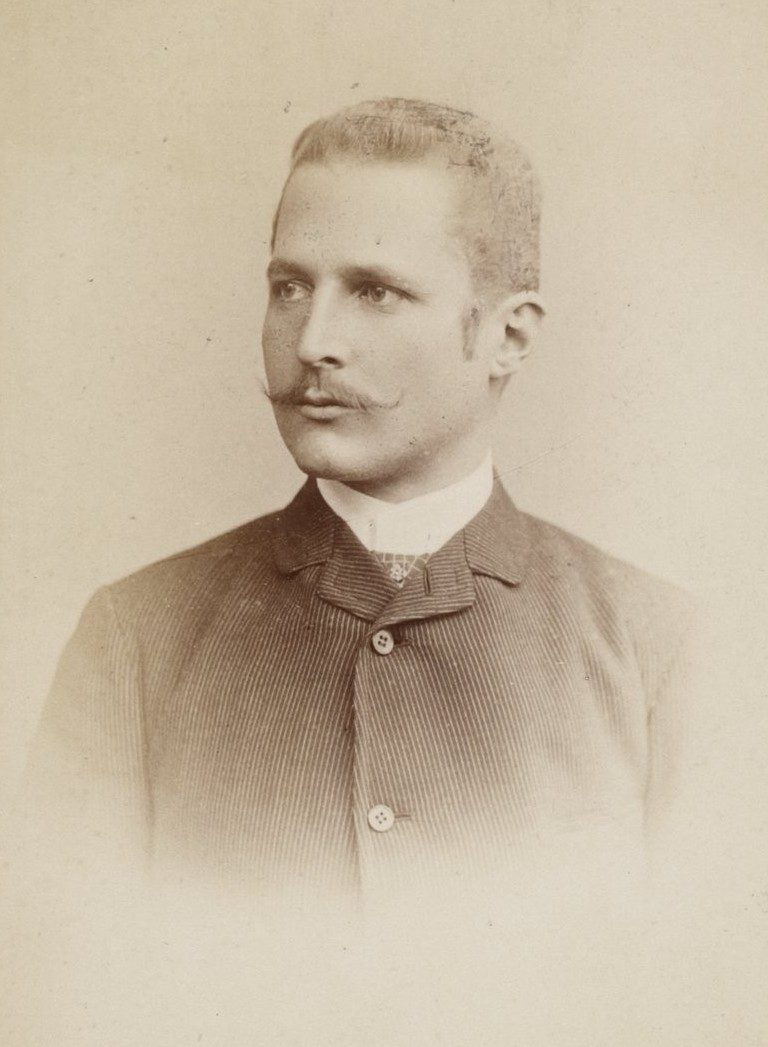
Portrait of Hans Meyer German geographer linked to Kilimanjaro first ascent
Hans Meyer, a German geographer, became the first documented person to reach Uhuru Peak on Mount Kilimanjaro in 1889, accompanied by Austrian climber Ludwig Purtscheller and a Chagga guide named Lauwo.
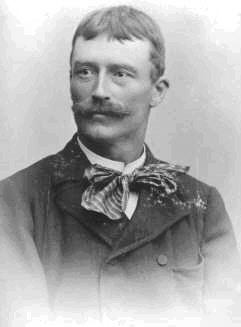
Portrait of Ludwig Purtscheller Austrian mountaineer Kilimanjaro 1889 ascent
Ludwig Purtscheller, an experienced Austrian mountaineer, reached the summit of Kilimanjaro with Hans Meyer and local guide Lauwo in 1889.

The First Successful Ascent of Kilimanjaro

Hans Meyer’s successful 1889 expedition included Austrian mountaineer Ludwig Purtscheller, local guides, porters, and support crew. Historical accounts commonly connect Yohani Kinyala Lauwo, a Chagga guide from the Kilimanjaro region, with the expedition’s local support.
 
On October 6, 1889, Meyer and Purtscheller reached the summit area of Kibo, Kilimanjaro’s highest volcanic cone. This became known as the first recorded successful ascent of Mount Kilimanjaro.
 
The climb was difficult because the team faced altitude, cold, ice, limited equipment, and the logistical challenge of moving supplies on a high mountain before modern trekking support existed.
 
For the full local guide story, read our dedicated article about Yohani Kinyala Lauwo and Kilimanjaro’s first ascent.
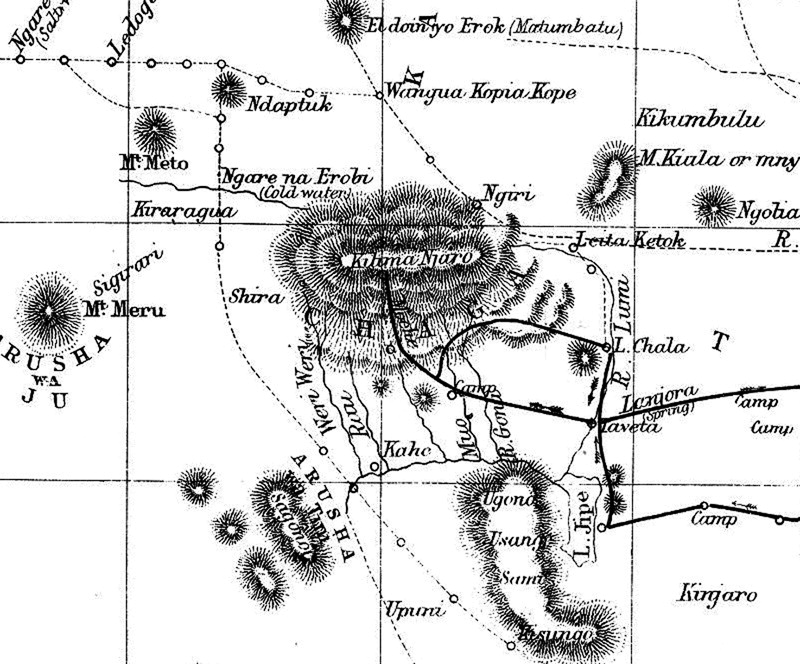
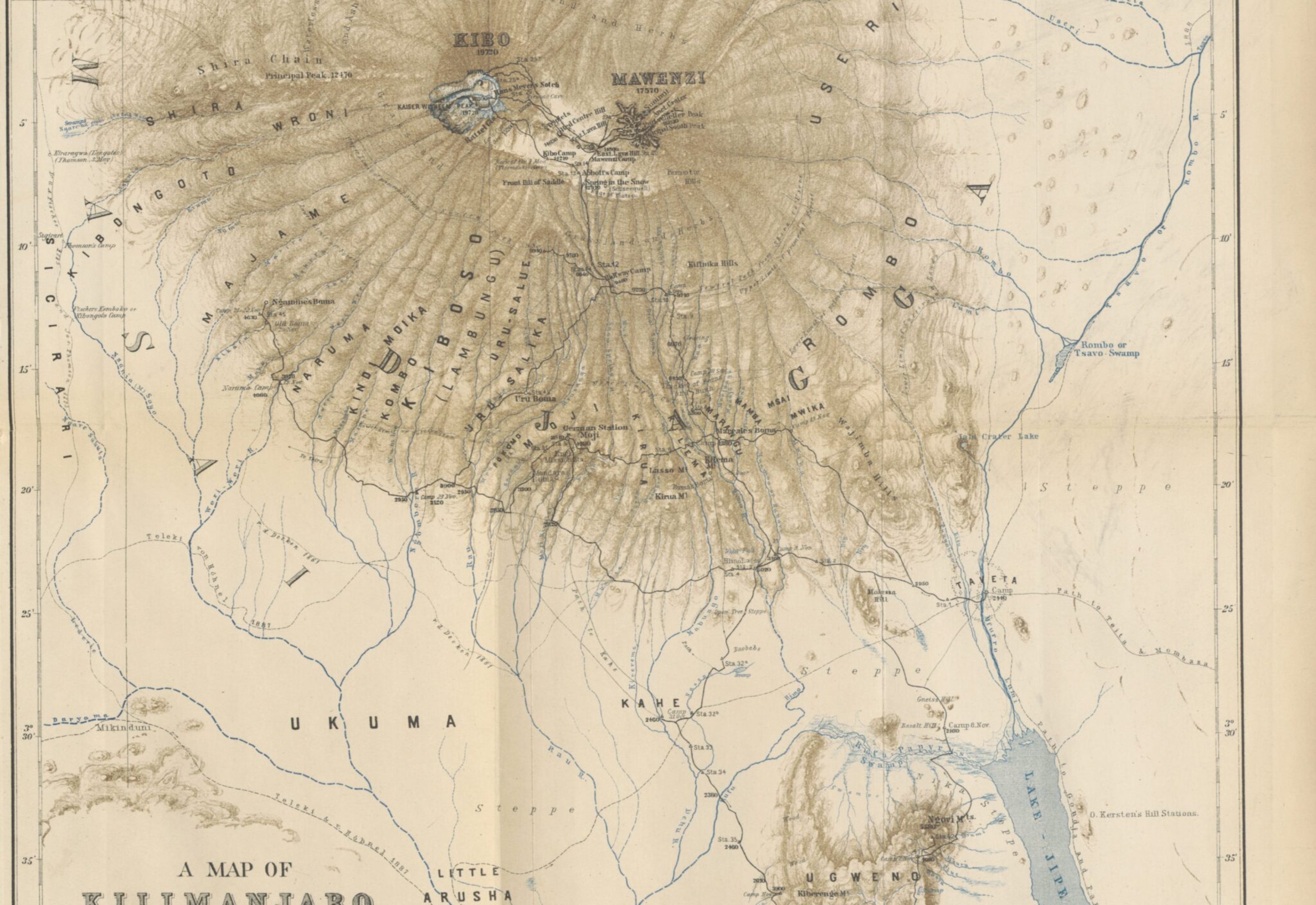
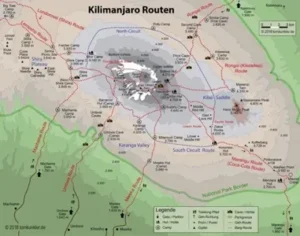
Hans Meyer 1889 map of Mount Kilimanjaro summit area
A look back in time — this 1990s Kilimanjaro map reflects how the mountain was explored, traveled, and understood decades ago.

What Made the Expedition Historic?

Meyer’s 1889 ascent was historic because it became the first recorded successful climb to Kilimanjaro’s highest summit. The expedition also helped document the mountain’s geography, crater area, ice, and summit landscape for later climbers and researchers.

The climb mattered because:
  • It confirmed a recorded route to Kilimanjaro’s highest summit
  • It helped document Kibo, the highest of Kilimanjaro’s volcanic cones
  • It showed the challenge of altitude, ice, and logistics on the mountain
  • It became a major event in East African exploration history
  • It helped shape Kilimanjaro’s later identity as a major climbing destination
Modern climbers have better equipment, trained guides, and safer logistics, but Kilimanjaro is still demanding. Read How Hard Is Kilimanjaro? to understand the challenge today.
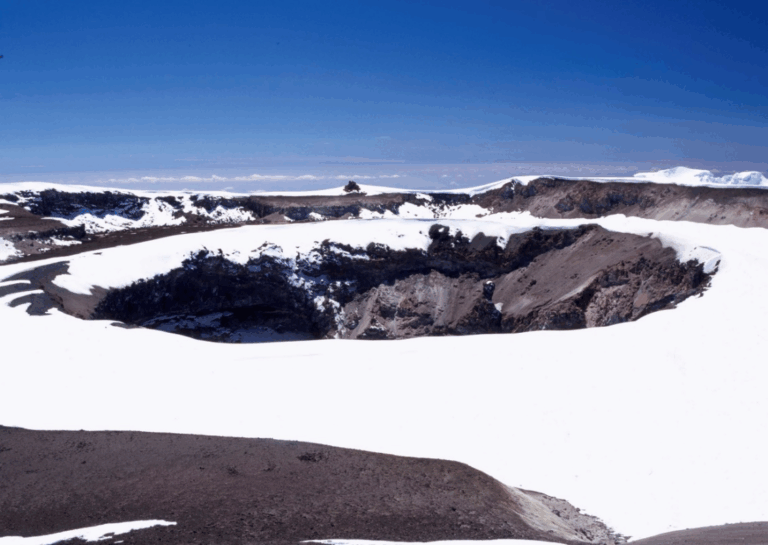
Glacial snow and ice covering the crater rim of Mount Kilimanjaro during dry season ascent | Kili Quests
Kilimanjaro’s crater rim wrapped in snow and ancient ice — a glimpse into the mountain’s glacial past.
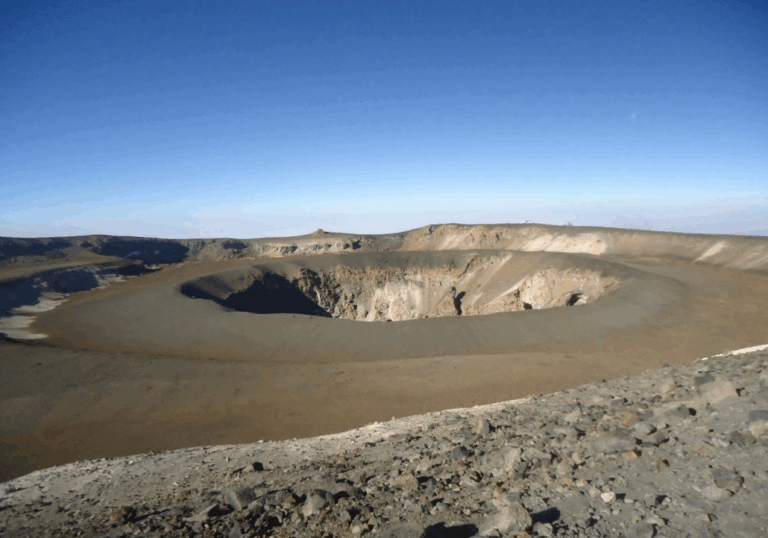
Dry, snowless crater rim of Mount Kilimanjaro showing volcanic rock and summit trail | Kili Quests
The exposed crater rim reveals Kilimanjaro’s raw volcanic structure — dramatic, vast, and wind-carved by time.

Naming the Summit Points

Kilimanjaro’s summit area has several famous names, including Gilman’s Point, Stella Point, and Uhuru Peak. These names reflect different periods of exploration, mapping, climbing history, and Tanzania’s national identity.
 
During the German colonial period, the highest summit was known as Kaiser-Wilhelm-Spitze. After Tanzania’s independence, the summit became known as Uhuru Peak, with “Uhuru” meaning freedom in Swahili.
 
Gilman’s Point is another historic crater-rim landmark, while Stella Point is one of the key summit markers reached by climbers from routes such as Machame, Lemosho, and Umbwe.
 
For more detail, read our guides to Gilman’s Point, Stella Point on Kilimanjaro, and Why Uhuru Peak Is Called Uhuru.

Meyer’s Legacy on Kilimanjaro

Hans Meyer’s legacy is tied to Kilimanjaro’s written climbing history, early geographic documentation, and the first recorded ascent of the mountain’s highest summit.

His expedition helped make Kilimanjaro known internationally as a major mountain objective. His maps, writings, and observations also contributed to how later climbers and researchers understood the mountain.

But Meyer’s legacy should be explained honestly. The 1889 ascent was not only the story of one European explorer. It also depended on Ludwig Purtscheller, local guides, porters, and mountain knowledge from the Kilimanjaro region.
1889 exploration map of Mount Kilimanjaro drawn by Hans Meyer, highlighting the early summit path and crater area | Kili Quests
A legacy etched in ink — Hans Meyer’s 1889 map captured Kilimanjaro’s summit long before modern routes existed.

Frequently Asked Questions About Hans Meyer and Kilimanjaro

Who was Hans Meyer?

Hans Meyer was a German geographer, mountaineer, and professor who became famous for his role in the first recorded successful ascent of Mount Kilimanjaro in 1889.

When was Mount Kilimanjaro first climbed?

The first recorded successful ascent of Mount Kilimanjaro took place in October 1889, when Hans Meyer and Ludwig Purtscheller reached the summit area of Kibo.

Did Hans Meyer climb Kilimanjaro alone?

No. Hans Meyer did not climb Kilimanjaro alone. He climbed with Austrian mountaineer Ludwig Purtscheller and relied on local guides, porters, and expedition support.

What was the original name of Uhuru Peak?

During the German colonial period, Kilimanjaro’s highest summit was known as Kaiser-Wilhelm-Spitze. Today, it is called Uhuru Peak, a name associated with Tanzania’s independence and freedom.

Why is Hans Meyer important in Kilimanjaro history?

Hans Meyer is important because his 1889 expedition became the first recorded successful ascent of Mount Kilimanjaro and helped document the mountain’s geography, summit area, and climbing history.

Who was the local guide in the first Kilimanjaro expedition?

The local guide who assisted Hans Meyer’s expedition was Yohani Kinyala Lauwo, a Chagga man from Marangu. His role in the climb is now widely recognized as an important part of Kilimanjaro’s history.
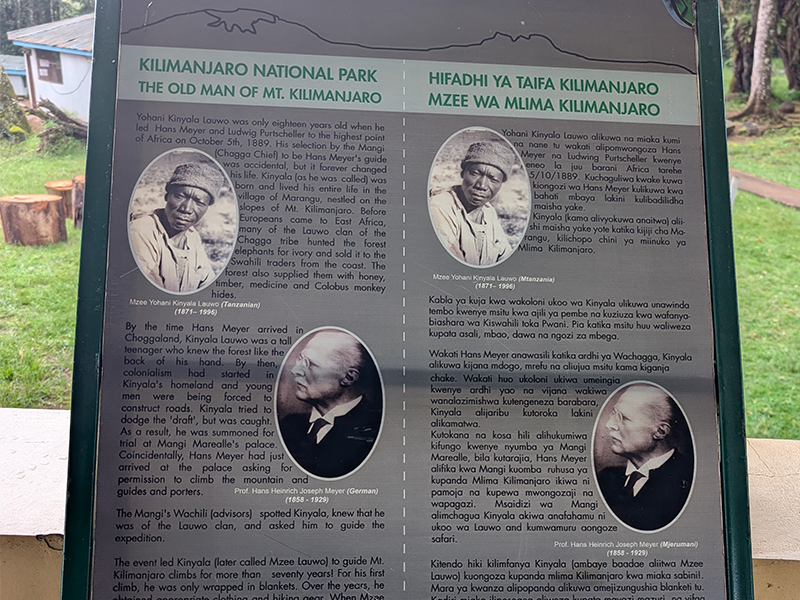
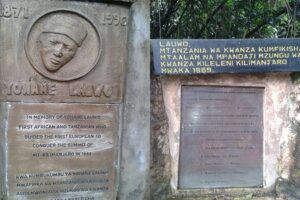
Interpretive sign at Kilimanjaro National Park showing historical profiles of Yohani Kinyala Lauwo, the first local guide of Mount Kilimanjaro, and Hans Meyer, the first recorded European to summit Kilimanjaro in 1889.
Informational sign at Kilimanjaro National Park honoring Yohani Kinyala Lauwo, the first local Kilimanjaro guide, and Hans Meyer, the first European summiteer in 1889. Their partnership marked the beginning of Kilimanjaro’s climbing history.

The Legacy of Kilimanjaro’s First Ascent

Hans Meyer’s first recorded successful climb of Mount Kilimanjaro was more than a mountaineering achievement. It became part of the mountain’s written history and helped shape how later generations understood Kibo, the crater rim, and the summit area.

But the story is stronger when it is told honestly. Meyer’s success depended not only on his ambition, but also on Ludwig Purtscheller, local guides, porters, and the mountain knowledge of people from the Kilimanjaro region.

Today, climbers follow safer routes with better equipment and experienced local guides, but the journey still carries the same sense of challenge, history, and achievement.

Plan Your Kilimanjaro Climb with Kili Quests

Kilimanjaro’s history gives the mountain deeper meaning, but reaching the summit today still requires preparation, pacing, acclimatization, and experienced support.
 
At Kili Quests, we guide climbers with local mountain knowledge, careful planning, and respect for the history behind Africa’s highest peak.
 
Contact us today to start planning your Kilimanjaro climb.

Related Articles