Climb Kilimanjaro with Local Guides

Experience the mountain behind the name with local guides who understand its routes, history, culture, and summit challenge.

Related Kilimanjaro Stories

OUR CATEGORIES

Why Kilimanjaro Is Called ‘Kilimanjaro’ | Kili Quests

Mount Kilimanjaro is the highest mountain in Africa, but the meaning of its name is still debated. Unlike some famous mountains with clear naming origins, “Kilimanjaro” has several possible explanations connected to Swahili, Chagga language roots, early explorer records, snow, difficulty, and local stories.
 
No single meaning has been proven. Some people interpret Kilimanjaro as a “shining mountain” or “mountain of whiteness,” while others connect it to Chagga phrases describing a difficult or impossible climb. The truth is likely more complicated because the name passed through local languages, traders, missionaries, explorers, maps, and colonial spellings.
 
This article explains the main theories behind the name Kilimanjaro and why the mystery still matters today.
 
To understand the mountain’s physical shape and volcanic history, read our guide to what Mount Kilimanjaro is and how it formed.

Quick Answer: What Does Kilimanjaro Mean?

The exact meaning of “Kilimanjaro” is uncertain. Several theories exist, but no single origin has been proven.
 
One common explanation connects the name to Swahili and Chagga language roots, often interpreted as “mountain of whiteness” or “shining mountain” because of the snow and glaciers on the summit. Another theory links the name to Chagga words suggesting something difficult, impossible, or defeating to climb.
 
Early European explorers and missionaries recorded different spellings and interpretations, which helped standardize the name internationally. So the honest answer is this: Kilimanjaro does not have one confirmed meaning, but its name is tied to language, snow, local stories, early exploration, and the mountain’s powerful presence in East Africa.
Mount Kilimanjaro with local tribal regions such as Chagga and Pare surrounding the base
The origin of the name “Kilimanjaro” remains debated — with influences from Chagga, Swahili, Maasai, and colonial languages

Table of Contents

Why the Meaning of Kilimanjaro Is Uncertain

The meaning of Kilimanjaro is uncertain because the name passed through different languages, communities, interpreters, explorers, maps, and colonial records.
 
Local communities around the mountain did not always use one single name for the whole mountain in the same way outsiders later recorded it. Some names referred to specific peaks, such as Kibo and Mawenzi, while the wider name “Kilimanjaro” became more common through outside records.

European Records vs. Local Language

European missionaries and explorers helped spread the name “Kilimanjaro” internationally during the 19th century, but they did not create the mountain itself or the local meanings around it.

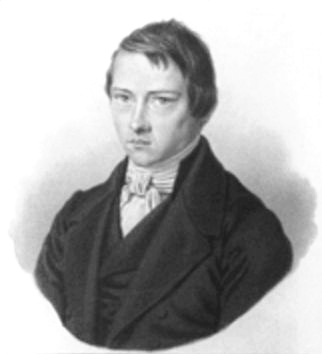
Johannes Rebmann, a German missionary, is widely credited as the first European to report seeing Kilimanjaro’s snow-covered summit in 1848. Later explorers, mapmakers, and colonial writers recorded the name in different spellings and interpretations.

One popular explanation connects “Kilima” with a Swahili word often interpreted as mountain or hill, and “Njaro” with a Chagga-related word linked to shining or whiteness. But this explanation is debated because mlima is the common Swahili word for mountain, while kilima usually means hill or small mountain.

This is why Kilimanjaro’s name is not simple. It likely passed through local speech, Swahili usage, guides, interpreters, and European writing before becoming the internationally recognized name.
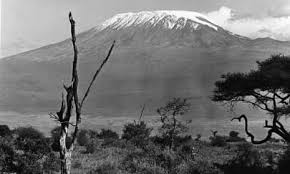
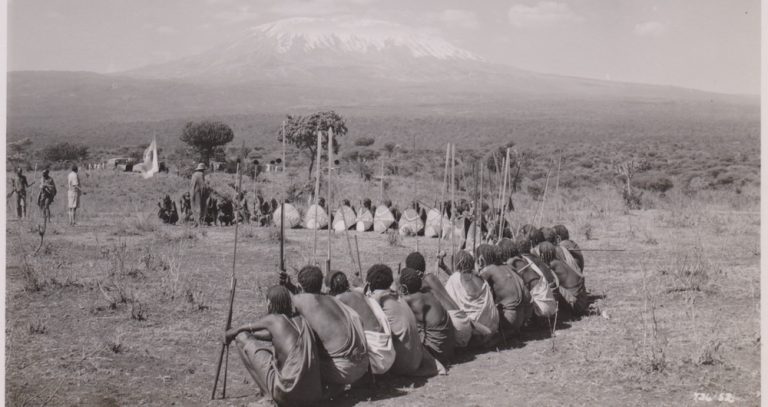
Historical photograph of Mount Kilimanjaro from early exploration or colonial era
Historical explorers and early local communities referred to the mountain by various names before “Kilimanjaro” became widely accepted
Portrait of Johannes Rebmann, the first European to report seeing Mount Kilimanjaro in 1848
In 1848, German missionary Johannes Rebmann was the first European to report Kilimanjaro’s snow-covered summit to the outside world

Local Language Theories Behind Kilimanjaro

Several local language theories try to explain the name Kilimanjaro.
 
One Chagga-related theory suggests that the name may have come from a phrase such as Kilelema Kyaro or a similar form, sometimes interpreted as “that which defeats the caravan” or “that which is difficult to climb.” This theory connects the name to the mountain’s difficulty and the challenge of reaching its high slopes.
 
Another theory links the name to snow, whiteness, or brightness. From far away, Kilimanjaro’s white summit would have been one of its most striking features, especially before the glaciers began shrinking.
 
There are also ideas connected to nearby languages, including Pare interpretations related to coldness or water. These should be treated as possible influences, not proven origins.
The strongest point is this: Kilimanjaro’s name likely developed from a mixture of local language, Swahili usage, outside interpretation, and later map records.
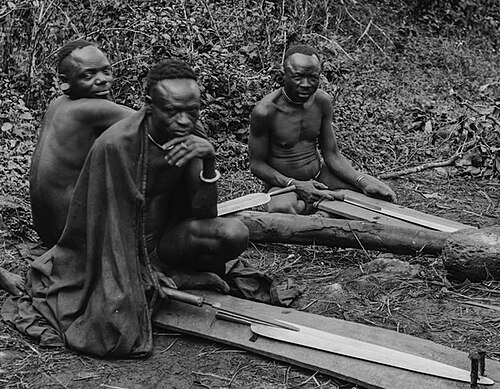
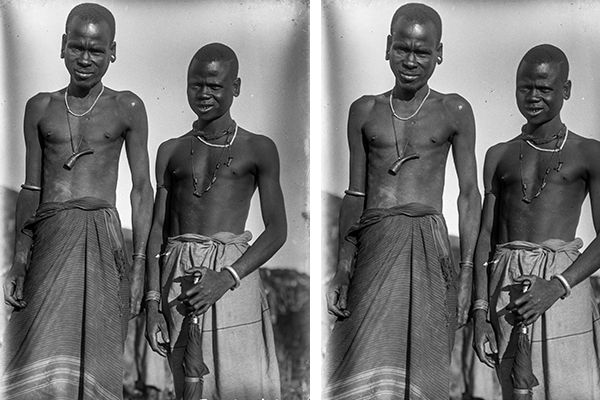
Members of the Chagga tribe near Mount Kilimanjaro in traditional attire
Members of the Pare tribe from the southeastern Kilimanjaro region, dressed in traditional clothing
The Pare people, known for their rituals and herbal knowledge, view Kilimanjaro as a sacred force and conduct spiritual ceremonies in its presence

Did Pare or Maasai Words Influence the Name?

Some local explanations connect the name Kilimanjaro with words from nearby communities, including Pare or Maasai interpretations. These ideas often relate to coldness, water, greatness, or spiritual respect for the mountain.
 
However, these theories are harder to prove. The Pare people live southeast of Kilimanjaro around the Pare Mountains, while Maasai communities have long lived across nearby plains in northern Tanzania and southern Kenya.
 
Kilimanjaro’s name may have passed through several language environments before being written down by outsiders. That makes it possible that nearby languages influenced how people understood the mountain, but no single Pare or Maasai origin has been proven.
 
For more about traditional stories and beliefs around the mountain, read Mount Kilimanjaro Myths: Chagga, Maasai & Pare Beliefs.

Colonial Influence on the Name Kilimanjaro

During the colonial period, German and British writers recorded place names based on what they heard from local guides, traders, missionaries, and interpreters. Because different languages and dialects were spoken around the mountain, names could be simplified, misheard, or reshaped in written records.
 
By the late 19th century, “Kilimanjaro” appeared more regularly on European maps and publications. Over time, this spelling became internationally accepted, even though the exact original meaning remained uncertain.
 
This does not mean the name is fake. It means the modern spelling of Kilimanjaro was shaped by contact between local languages, Swahili-speaking networks, European records, and colonial-era mapmaking.
Historical image of Mount Kilimanjaro with glacier-covered summit during early exploration era
Early photographs of Kilimanjaro show more extensive glaciers and fewer local people

Kilimanjaro: A Name with Many Meanings

Theory Meaning
Swahili: Kilima + Njaro Hill of shining whiteness
Chagga: Kilelema Kyaro That which defeats caravans
Pare dialect Possibly “cold place” or “water source”
European explorers Misheard combination of tribal names
These meanings are historical theories, not confirmed translations. The name Kilimanjaro remains debated because it passed through local languages, Swahili-speaking networks, explorer records, and colonial mapmaking.
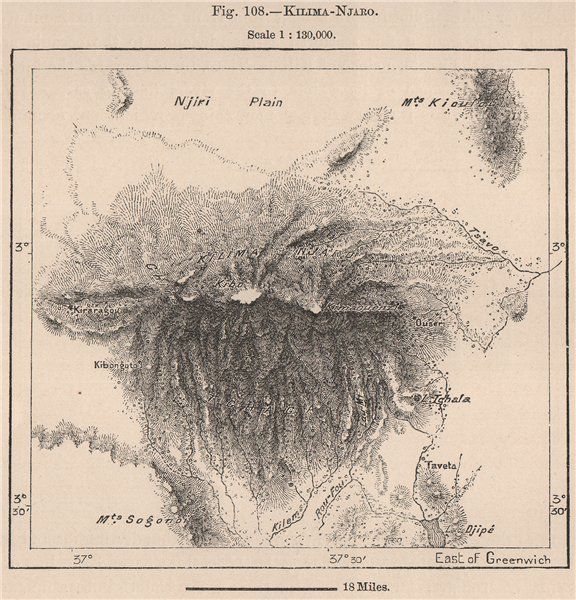
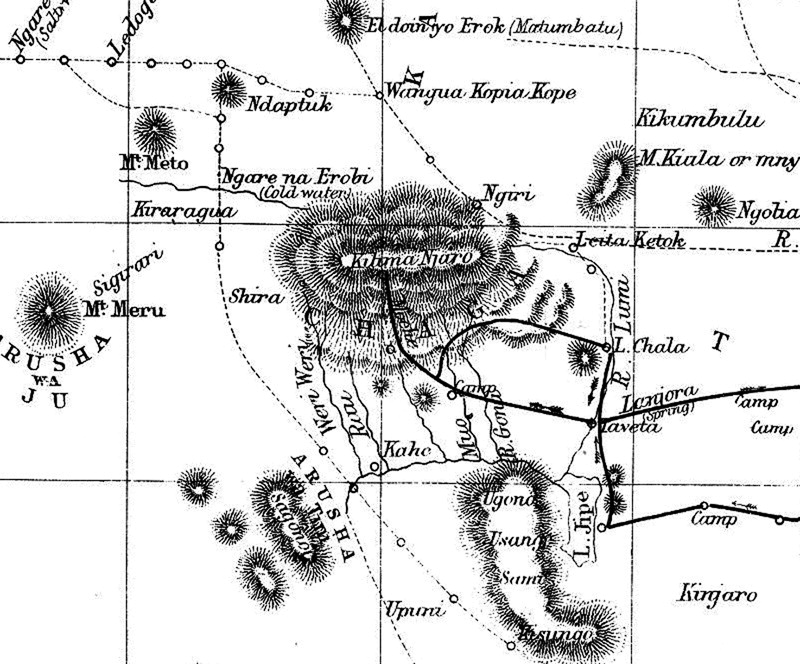
Hans Meyer 1889 map of Mount Kilimanjaro summit area
A look back in time — this 1990s Kilimanjaro map reflects how the mountain was explored, traveled, and understood decades ago.

Cultural Meaning Beyond the Name

For communities around the mountain, Kilimanjaro is more than a word on a map. It is connected to farming, water, forests, rain, ancestors, sacred places, and local identity.
 
The Chagga people, especially communities around the southern and eastern slopes, have lived close to the mountain for generations. Nearby Pare and Maasai communities also have their own cultural relationships with the wider Kilimanjaro landscape.
 
These stories do not prove one exact translation of the name, but they show why the mountain has always carried meaning beyond its height.
 
To understand the communities around the mountain, read Chagga Culture Around Mount Kilimanjaro.

Why the Name Kilimanjaro Still Matters Today

The name Kilimanjaro matters because it carries mystery, language, history, and identity. Even though no single meaning is proven, the different theories show how many communities, explorers, and storytellers tried to explain the mountain’s power.
 
For travelers, understanding the name adds depth to the climb. You are not just walking toward a summit; you are entering a landscape shaped by local languages, oral traditions, colonial records, and Tanzania’s modern identity.
 
Today, Kilimanjaro is known around the world as Africa’s highest mountain and one of the most iconic natural landmarks on Earth.
 
At its highest point stands Uhuru Peak, a name connected to Tanzania’s independence and freedom.

Frequently Asked Questions About the Name Kilimanjaro

What does the name Kilimanjaro mean?

The exact meaning of Kilimanjaro is still debated. Common theories connect the name with whiteness, shining snow, difficulty, greatness, caravans, or local spiritual ideas. No single meaning has been proven.

Does Kilimanjaro mean mountain of whiteness?

It may, according to one popular theory. This explanation connects the name with the snow and glaciers on Kilimanjaro’s summit. However, it is only one theory, not a confirmed translation.

Is Kilimanjaro a Swahili word?

Kilimanjaro is often linked to Swahili and Chagga language roots, but its exact origin is debated. The common Swahili word for mountain is mlima, while kilima usually means hill or small mountain, which makes the simple “kilima equals mountain” explanation more complicated.

Did local people originally call the mountain Kilimanjaro?

Not exactly. Some local communities referred to specific parts of the mountain, especially Kibo and Mawenzi, rather than using one single confirmed name for the whole mountain. The name Kilimanjaro became widely known through outside records, maps, and later international use.

How did European explorers influence the name Kilimanjaro?

European missionaries, explorers, and mapmakers helped standardize the spelling “Kilimanjaro” in international records. They recorded the name based on what they heard from local guides, Swahili speakers, traders, and interpreters.

Climb the Mountain Behind the Name

The meaning of Kilimanjaro may never be explained by one simple translation, but that is part of its power. The name carries snow, mystery, language, history, and the stories of people who have lived around the mountain for generations.
 
If you are ready to experience Kilimanjaro for yourself, Kili Quests can help you choose the right route, prepare properly, and climb with experienced local guides.
 
Contact us today to start planning your Kilimanjaro climb.

Related Articles