How Many Days to Climb Kilimanjaro? Route Duration Guide

Choose the Right Kilimanjaro Itinerary

The number of days you choose can affect your acclimatization, comfort, and summit success.

Plan Your Kilimanjaro Climb

Choosing the right number of days is easier when you understand the route, altitude, and preparation required.

OUR CATEGORIES

How Many Days Does It Take to Climb Mount Kilimanjaro?

Climbing Mount Kilimanjaro, the highest mountain in Africa at 5,895 meters (19,341 feet), is one of the world’s most popular trekking adventures. Every year thousands of travelers come to Tanzania to attempt reaching Uhuru Peak, the summit of Kilimanjaro.One of the most common questions climbers ask while planning their trip is: How many days does it take to climb Mount Kilimanjaro?
 
The answer depends mainly on the route chosen, acclimatization schedule, and the climber’s pace. Before choosing your itinerary, it helps to compare the different Kilimanjaro routes and understand how acclimatization works on Kilimanjaro. Most Kilimanjaro climbs take between 5 and 9 days, though longer itineraries generally provide a better chance of reaching the summit safely.In this guide, we explain how long a Kilimanjaro climb usually takes, how route choice affects duration, and why taking more days on the mountain can increase your chances of success.
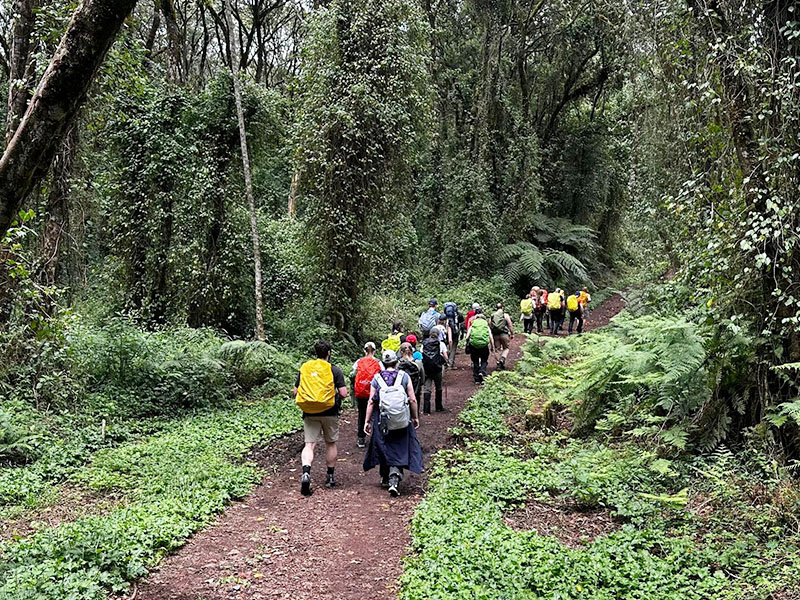
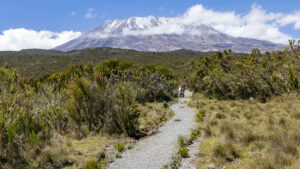
Climbers walking through Kilimanjaro’s rainforest trail with excitement | Kili Quests
Climbing Kilimanjaro takes several days, with each stage helping trekkers adjust to altitude.

Table of Contents

Typical Kilimanjaro Climb Duration

Most Kilimanjaro climbs take between 5 and 9 days, depending on the route and itinerary you choose.These days are not just about hiking from one point to another. A proper Kilimanjaro itinerary includes gradual altitude gain, time for your body to acclimatize, and a carefully planned summit attempt.During your climb, you will:

  • Trek for several hours each day at a steady pace
  • Sleep at different altitude camps
  • Take time to rest and recover
  • Attempt the summit during a long overnight climb
  • Descend back to lower altitude after reaching the peak
Although shorter itineraries may look appealing, they often push climbers too quickly to high altitude. That is why many trekkers first read about altitude sickness on Kilimanjaro before deciding how many days to spend on the mountain.This puts stress on the body and significantly reduces the chances of reaching the summit.

Kilimanjaro Climb Duration by Route

Different routes on Kilimanjaro take different amounts of time depending on their length and acclimatization profile.
Route Typical Duration
Marangu Route ……………….5–6 days
Machame Route……………….6–7 days
Lemosho Route………………..7–8 days
Northern Circuit……………….8–9 days
Rongai Route……………………6–7 days
Umbwe Route…………………..5–6 days
Routes that include more days typically have higher summit success rates because climbers have more time to acclimatize.
 
If you are still unsure which itinerary fits your goals, see our full Kilimanjaro routes comparison guide to compare scenery, difficulty, acclimatization, and success rates.

Why More Days Increase Summit Success

The biggest challenge on Kilimanjaro is not the distance  it is the altitude.As you climb higher, the air becomes thinner, and your body receives less oxygen. If you ascend too quickly, your body cannot adjust properly, which can lead to altitude sickness.Longer itineraries solve this problem by giving your body time to adapt.
With more days, you can:
  • Gain altitude gradually
  • Rest at strategic camps
  • Follow the “climb high, sleep low” principle
  • Maintain better energy levels throughout the climb
This is why climbers on 7–9 day routes have significantly higher success rates compared to those on shorter itineraries. You can see this more clearly in our guide to Kilimanjaro success rates by route.

What Happens During a Typical Kilimanjaro Climb

A Kilimanjaro expedition usually follows a structured daily schedule.

Early Days – Gradual Ascent Through Changing Landscapes

The first few days take you through rainforest and moorland zones. These stages are generally more comfortable, and your body is still adjusting to the altitude.You hike for several hours each day and arrive at camp in the afternoon, where you rest and prepare for the next day.As you move higher, you also pass through several distinct ecological zones of Mount Kilimanjaro, which is one of the reasons the climb feels so varied from day to day.

Middle Days – Acclimatization Becomes Important

As you climb higher, the environment becomes drier and more exposed. The air feels thinner, and your body starts to notice the effects of altitude.This is where proper pacing and acclimatization become critical.Some days include hikes to higher altitude followed by descent to sleep, helping your body adjust more effectively. This “climb high, sleep low” approach is one of the most important parts of Kilimanjaro acclimatization.

Summit Night – The Most Challenging Stage

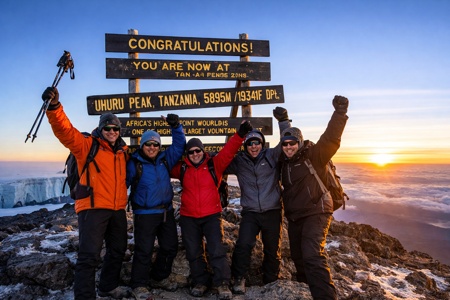
Summit night is the most demanding part of the climb.You begin around midnight and hike slowly in the dark for several hours toward the summit. The combination of cold temperatures, altitude, and fatigue makes this stage physically and mentally challenging.However, reaching Uhuru Peak at sunrise is one of the most rewarding moments of the entire journey.Proper clothing and pacing matter most here, so it is worth reviewing a full Kilimanjaro summit day gear guide before your trek.

Temperatures can drop well below freezing, especially near the crater rim, so climbers should also understand Kilimanjaro night temperatures before summit night.

Descent – Returning to Lower Altitude

After the summit, climbers descend back to lower camps and eventually exit the park.
As you lose altitude, oxygen levels increase, and your body begins to recover. Many climbers feel stronger during the descent, even after the long summit day.

How to Choose the Right Number of Days for Your Climb

Choose Longer Itineraries for Better Success

If your goal is to reach the summit, choosing a longer itinerary is the best strategy. More days mean better acclimatization and a higher chance of success.Routes such as Lemosho Route and Northern Circuit are often recommended because they give climbers more time to acclimatize.

Avoid Rushing the Climb

Trying to save time by choosing a shorter route can backfire. Many climbers who rush the climb struggle with altitude and are forced to turn back before reaching the summit.Taking your time increases both your safety and your overall experience.
 
Shorter routes may seem cheaper at first, but rushing the mountain can reduce your summit chances and affect the overall value of your trip. It helps to understand the full cost of climbing Kilimanjaro before choosing only based on price.

Consider Your Fitness Level

Climbers with limited trekking experience may benefit from longer itineraries with gradual ascents.Proper preparation also helps improve endurance, and many climbers follow a structured Kilimanjaro training plan before their trek.

Listen to Your Guides

Professional mountain guides monitor climbers carefully and adjust the pace to ensure safety and comfort.A good guide team also plays a major role in safety, pacing, and early detection of altitude problems. Read more about Kilimanjaro safety and risks before your climb.
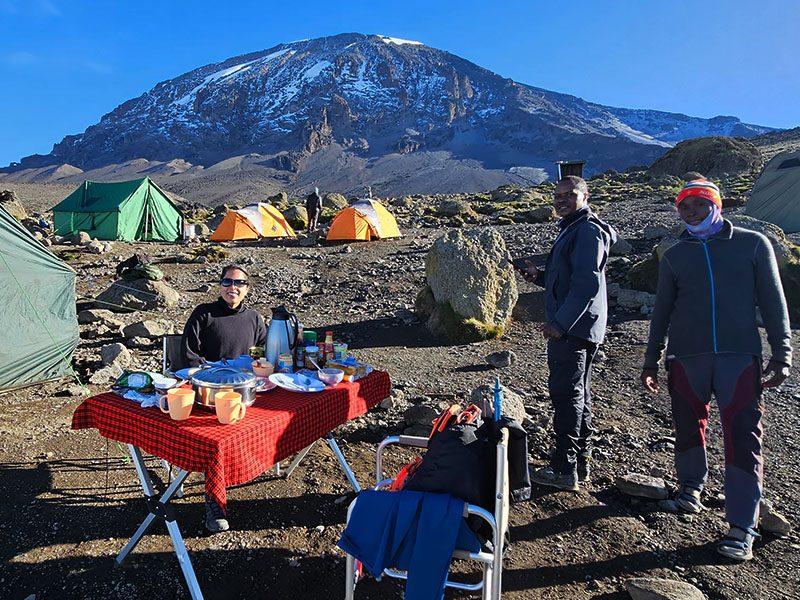
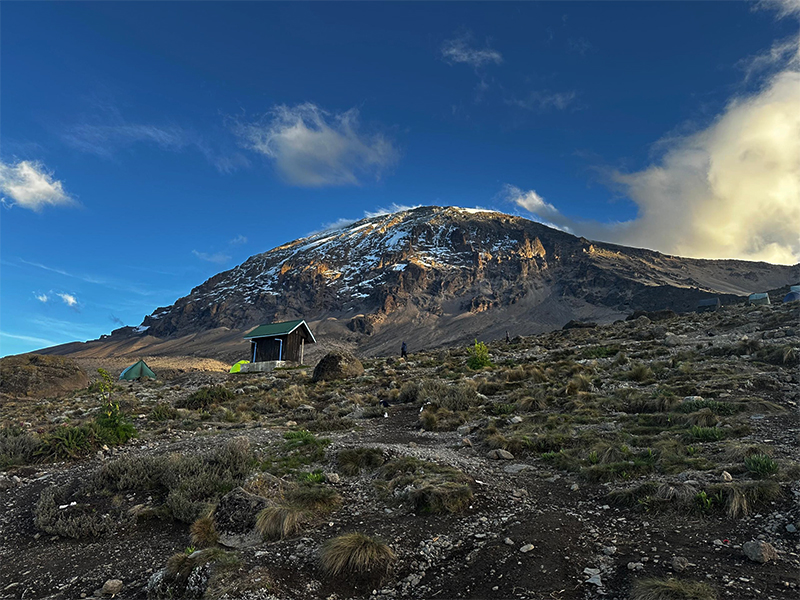
Trekkers enjoying breakfast at Karanga Camp on the Shira Route of Mount Kilimanjaro, with colorful tents and Kibo Peak in the background | Kili Quests
Each day on Kilimanjaro brings different terrain, from rainforest to alpine desert.

How to Prepare for a Successful Kilimanjaro Climb

Preparing properly before your climb can make a significant difference in your experience.
Focus on:
  • Building endurance through hiking and cardio training
  • Staying consistent with physical activity before your trip
  • Choosing the right route and itinerary
  • Mentally preparing for a multi-day challenge
  • Choosing the right route and itinerary
  • Packing properly for changing temperatures
  • Understanding what food and support to expect on the mountain
Kilimanjaro is not about speed  ,it is about consistency, patience, and preparation.

Frequently Asked Questions About Kilimanjaro Duration

What is the shortest time to climb Kilimanjaro?

The shortest time to climb Kilimanjaro is typically 5 days, and this is usually done via routes like Marangu or Umbwe. While it is possible to complete the climb in this timeframe, it is not recommended for most climbers.The main reason is that shorter itineraries do not provide enough time for acclimatization. As a result, climbers are more likely to experience altitude sickness, which is the leading cause of failed summit attempts. Many climbers who attempt 5-day routes end up turning back before reaching Uhuru Peak.For this reason, most experienced guides strongly recommend choosing longer itineraries that allow your body to adjust gradually to the altitude.

What is the best number of days to climb Kilimanjaro?

The best number of days to climb Kilimanjaro is generally between 7 and 8 days. This duration offers a good balance between acclimatization, comfort, and overall success rate.With a 7- or 8-day itinerary, climbers have enough time to ascend gradually, allowing the body to adapt to decreasing oxygen levels. This significantly reduces the risk of altitude sickness and improves the chances of reaching the summit.For most people, this range provides the ideal combination of safety and success without requiring an extended time commitment.

Does a longer climb increase summit success rates?

Yes, a longer climb significantly increases summit success rates. The key factor behind this is acclimatization.When you spend more days on the mountain, your body has more time to adjust to the lower oxygen levels at higher altitudes. This reduces the risk of altitude sickness and allows you to maintain better energy levels throughout the climb.Climbers on longer routes often feel stronger and more prepared during summit night, which is the most challenging part of the journey.

Do beginners need more days to climb Kilimanjaro?

Beginners are strongly encouraged to choose longer itineraries, typically 7 to 8 days or more. This allows for a slower pace and better acclimatization, which are essential for first-time climbers.While Kilimanjaro does not require technical climbing skills, it is still a physically demanding high-altitude trek. Beginners benefit from having more time to adjust both physically and mentally to the conditions.With proper preparation and the right itinerary, beginners can successfully reach the summit.

How long does summit night take on Kilimanjaro?

Summit night is the longest and most demanding part of the climb. It typically takes between 10 and 14 hours in total, including both the ascent to Uhuru Peak and the descent back to a lower camp.Climbers usually begin the summit attempt around midnight and hike slowly for several hours to reach the crater rim. From there, they continue to Uhuru Peak, often arriving at sunrise.After spending a short time at the summit, climbers begin the descent, which can take several more hours. This makes summit day the most physically and mentally challenging part of the entire journey.

Ready to Climb Mount Kilimanjaro?

Climbing Mount Kilimanjaro is an incredible adventure, but choosing the right itinerary length is essential for a safe and successful climb.At Kili Quests, our experienced local guides help climbers select the best route and duration based on their fitness level, travel schedule, and experience.With professional guides, carefully planned itineraries, and strong support teams, we maximize your chances of reaching the summit of Africa’s highest mountain.

Related Articles

Kilimanjaro Success Rate by Route: Which Route Is Best?

Maximize Your Summit Success

Climb with the right strategy and experienced local support.

Plan for a Successful Kilimanjaro Summit

Reaching the summit depends on preparation, route choice, and pacing.

OUR CATEGORIES

Kilimanjaro Success Rate by Route: Which Route Has the Highest Summit Success?

Climbing Mount Kilimanjaro, Africa’s highest mountain at 5,895 meters (19,341 feet), is a life-changing adventure for thousands of trekkers every year. One of the most common questions climbers ask when planning their trip is: What is the success rate of climbing Kilimanjaro?
 
Choosing the right route is one of the biggest factors in success , compare all options in our Kilimanjaro routes comparison guide.
 
While many people attempt to reach the summit of Uhuru Peak, not everyone succeeds. The likelihood of reaching the summit depends on several factors, including the route chosen, the number of days on the mountain, acclimatization time, and overall preparation.In this guide, we explore the Kilimanjaro success rate by route, explain why some routes have higher success rates than others, and share tips to improve your chances of reaching the summit.
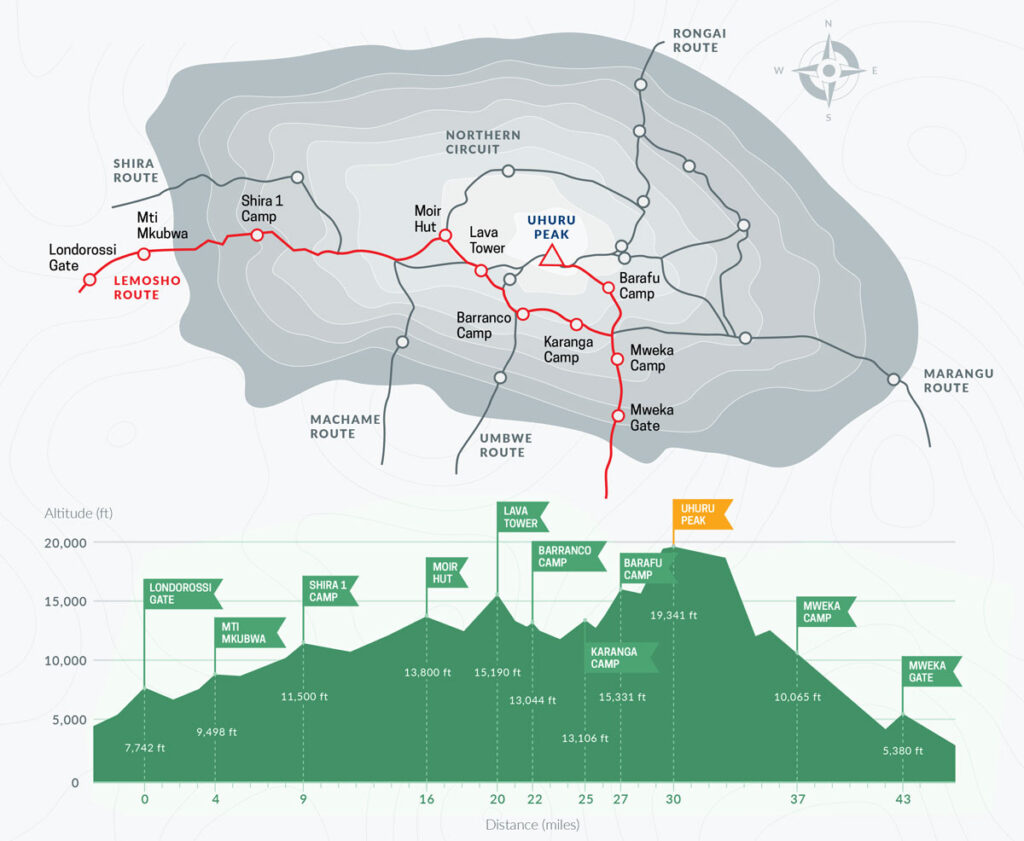
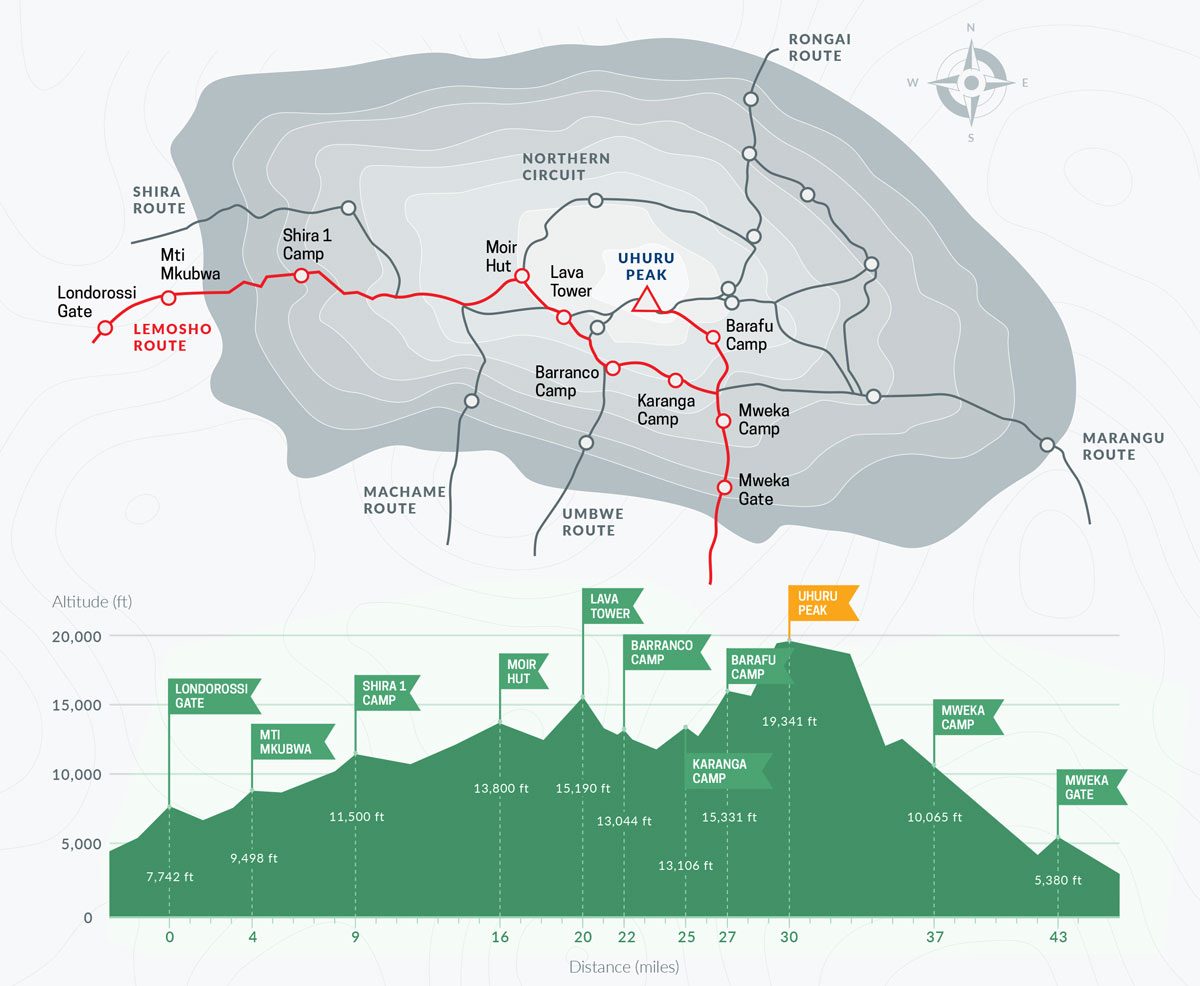
Lemosho Route map on Mount Kilimanjaro with full trail, elevation profile, and camp locations to Uhuru Peak
Trekkers climb Mount Kilimanjaro on a longer route with better acclimatization and higher summit success rates.

Table of Contents

What Is the Average Kilimanjaro Success Rate?

The overall success rate for climbing Mount Kilimanjaro is estimated to be between 65% and 75%.This overall average doesn’t tell the full story , success rates vary widely depending on your itinerary. See the full Kilimanjaro itinerary breakdown to understand how daily structure affects acclimatization.However, this number varies greatly depending on the route and itinerary. Shorter routes that ascend quickly tend to have lower success rates because climbers have less time to acclimatize to the high altitude.Longer routes with gradual ascents usually offer higher summit success rates, giving trekkers more time to adapt to lower oxygen levels as they climb.
 
Rapid altitude gain increases the risk of altitude sickness , learn how to properly acclimatize on Kilimanjaro to improve your chances.

Kilimanjaro Success Rate by Route

Each Kilimanjaro route has a different summit success rate based on its length, acclimatization profile, and difficulty. Below is a comparison of the most popular routes on Mount Kilimanjaro.
 
Marangu Route ……………….50–60%
Machame Route……………….70–80%
Lemosho Route………………..85–90%
Northern Circuit……………….90–95%
Rongai Route……………………70–80%
Umbwe Route…………………..50–60%
 
These percentages may vary slightly depending on the itinerary and the guiding company.

Machame Route Success Rate

Success Rate: 70–80%

The Machame Route, often called the “Whiskey Route,” is one of the most popular Kilimanjaro climbing routes.It offers a good balance of scenery, acclimatization, and challenge, which helps improve summit success rates. The Machame Route typically takes 6 to 7 days, allowing climbers to gradually adjust to the altitude.Because of its acclimatization profile and longer itinerary options, the Machame Route has a significantly higher success rate than shorter routes like Marangu.
 

Lemosho Route Success Rate

Success Rate: 85–90%

The Lemosho Route is widely considered one of the best routes for climbing Kilimanjaro.Starting on the western side of the mountain, this route offers beautiful scenery and a gradual ascent that allows climbers to acclimatize effectively. Most Lemosho climbs take 7 to 8 days, which significantly improves the chances of reaching the summit.Because of its longer duration and excellent acclimatization profile, Lemosho has one of the highest success rates on the mountain.

Marangu Route Success Rate

Success Rate: 50–60%

The Marangu Route, also known as the “Coca-Cola Route,” is one of the oldest and most traditional routes on Kilimanjaro.It is the only route that offers hut accommodation instead of tents, which makes it appealing to some climbers.However, the standard Marangu itinerary typically takes only 5 days, which means climbers gain altitude quickly with limited time for acclimatization. This is one reason why the Marangu Route has a lower success rate compared to longer routes.

Northern Circuit Success Rate

Success Rate: 90–95%

The Northern Circuit Route has the highest success rate of all Kilimanjaro routes.This route takes 8 to 9 days, making it the longest route on the mountain. The extended itinerary allows climbers plenty of time to acclimatize, greatly increasing their chances of reaching Uhuru Peak.In addition to its high success rate, the Northern Circuit offers quieter trails and spectacular views around the northern slopes of Kilimanjaro.
Rongai Route Success Rate

Success Rate: 70–80%

The Rongai Route approaches Kilimanjaro from the northern side near the Kenyan border.
It is one of the quieter routes on the mountain and offers a gradual ascent, which helps with acclimatization. Rongai climbs usually take 6 to 7 days, giving trekkers a reasonable chance of reaching the summit.
Because it is less crowded than other routes, some climbers prefer Rongai for a more peaceful trekking experience.

Umbwe Route Success Rate

Success Rate: Around 50–60%

The Umbwe Route is known as the steepest and most direct route on Mount Kilimanjaro.
Because it ascends quickly with fewer acclimatization days, it has one of the lowest success rates on the mountain. Umbwe is generally recommended only for experienced trekkers who are confident in their ability to handle rapid altitude gain.
Why Some Kilimanjaro Routes Have Higher Success Rates

The biggest factor affecting summit success on Kilimanjaro is acclimatization.
Routes with longer itineraries allow climbers to adjust gradually to the decreasing oxygen levels at higher elevations. This significantly reduces the risk of altitude sickness.
Other factors that influence success include:
  • The number of days spent on the mountain
  • The experience of the guiding team
  • Physical preparation before the climb
  • Weather conditions
  • Proper hydration and pacing
Choosing a longer route and climbing with experienced guides can greatly improve your chances of reaching the summit.
 
Altitude is the biggest challenge on the mountain , understand the real risks in our guide to Kilimanjaro altitude sickness and safety.
Mount Kilimanjaro rising alone above the African savanna, with snowcapped summit and open sky
Trekkers follow a longer Kilimanjaro route where gradual ascent improves acclimatization and summit success.

Tips to Improve Your Kilimanjaro Summit Success

Climbing Kilimanjaro is challenging, but the following tips can increase your chances of reaching the top.

Choose a Longer Route

Routes lasting 7 to 9 days provide better acclimatization and significantly improve summit success rates.

Train Before Your Climb

Preparing with hiking, cardio exercises, and strength training helps your body handle long trekking days.Physical preparation plays a key role , follow our Kilimanjaro training plan to build endurance before your trek.

Walk Slowly

On Kilimanjaro, guides often remind climbers to walk “pole pole”, meaning slowly. A slower pace helps your body adjust to the altitude.Many climbers underestimate the difficulty , see exactly how hard Kilimanjaro is before your climb.

Stay Hydrated

Drinking plenty of water helps prevent dehydration and reduces the risk of altitude sickness.

Listen to Your Guides

Experienced mountain guides monitor climbers closely and adjust the pace to ensure safety and success.

Frequently Asked Questions

What is the easiest Kilimanjaro route to reach the summit?

 The Northern Circuit Route generally has the highest summit success rate because it allows the most time for acclimatization.

Which Kilimanjaro route has the lowest success rate?

The Umbwe Route typically has the lowest success rate due to its steep ascent and shorter acclimatization time.

Does a longer climb increase success rates?

Yes. Routes lasting 7–9 days significantly improve acclimatization and increase summit success.

How many people reach the summit of Kilimanjaro each year?

Approximately 30,000 to 35,000 climbers attempt Kilimanjaro each year, and most who choose longer routes successfully reach Uhuru Peak.

Can beginners successfully climb Mount Kilimanjaro?

Yes. Many beginners successfully climb Kilimanjaro each year. With proper training, gradual acclimatization, and experienced guides, first-time climbers can safely reach the summit.

Ready to Climb Mount Kilimanjaro?

Choosing the right route is one of the most important decisions when planning a Kilimanjaro climb. Routes with better acclimatization profiles give climbers the best chance of reaching the summit safely.At Kili Quests, our experienced local guides help climbers choose the best route based on their fitness level, schedule, and experience. With carefully planned itineraries and a professional support team, we maximize your chances of standing on Uhuru Peak, the highest point in Africa.

Related Articles

Kilimanjaro Routes Comparison: Which Route Is Best?

Plan Your Kilimanjaro Climb

Climbing Kilimanjaro is a once-in-a-lifetime adventure choosing the right route and preparation makes all the difference.

Kilimanjaro Guides

OUR CATEGORIES

Kilimanjaro Routes Comparison: Which Route Is Best?

Choosing the right route is one of the most important decisions you will make when planning to climb Mount Kilimanjaro. Every route leads to Uhuru Peak, but the journey to the summit can feel completely different depending on the trail you choose. Some routes are longer and give your body more time to adjust to altitude. Others are shorter, steeper, and more physically demanding. Some are known for dramatic scenery, while others are chosen for comfort, quiet trails, or the highest chance of summit success.
 
Because of this, there is no single route that is perfect for everyone. The best route depends on your fitness level, trekking experience, available time, comfort preference, and how important summit success is to you. A first-time climber with enough time will usually benefit from a longer route with better acclimatization, while an experienced trekker may be comfortable with a steeper and faster option.This guide compares all seven official Kilimanjaro routes in detail so you can understand how each one works and decide which route is the best fit for your climb.
 
Before choosing, it’s important to understand how to acclimatize on Kilimanjaro, compare the full cost to climb Kilimanjaro, and see how different routes affect your chances of success.
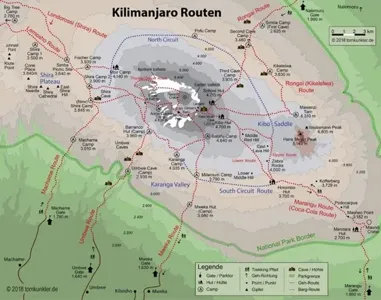
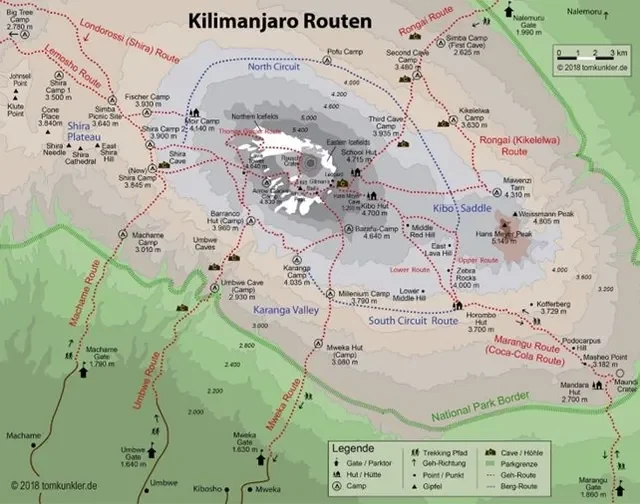
Topographic map showing all major climbing routes on Mount Kilimanjaro, including Machame, Lemosho, Marangu, Rongai, Umbwe, Shira, and Northern Circuit.
This detailed map shows all main Kilimanjaro climbing routes, including Machame, Marangu, Lemosho, Rongai, Umbwe, Shira, and the Northern Circuit, with campsites, elevation points, and park boundaries.

Table of Contents

Why Choosing the Right Kilimanjaro Route Matters

On Kilimanjaro, route choice is not just about scenery or duration. It directly affects how well your body adapts to altitude and how likely you are to reach the summit. The mountain is not technical, but altitude makes it serious. That means the route you choose can either support your success or make the climb much harder than it needs to be.
 
Longer routes usually give climbers a better chance of reaching Uhuru Peak because they allow more time for acclimatization. That extra time can make a major difference, especially for first-time climbers. Shorter routes may look attractive because they cost less and require fewer days, but they often come with a lower summit success rate because the body has less time to adapt.Route choice also shapes the overall experience. Some trails feel busy and social, while others feel remote and peaceful. Some begin in dense rainforest and open gradually into moorland and alpine desert, while others start high and immediately expose you to altitude. That is why comparing routes carefully before booking is one of the smartest things a climber can do.
 
Understanding altitude sickness on Kilimanjaro is key to improving your chances of reaching the summit.

How Many Routes Are There on Kilimanjaro?

There are seven official trekking routes on Mount Kilimanjaro: Lemosho, Machame, Marangu, Rongai, Northern Circuit, Umbwe, and Shira. Each has its own style, pace, scenery, and acclimatization profile.Some routes share sections of trail higher up on the mountain, but their starting points, first days, and overall experience are still different. For example, Lemosho and Shira eventually join parts of the same path, but their starts are not the same. Likewise, Machame and Lemosho share later sections, yet they attract climbers for different reasons.Understanding these differences makes it easier to match the route to the kind of experience you want rather than just choosing the most popular name.
 
Your budget also plays a role, so it’s important to understand the cost to climb Kilimanjaro before making a decision.

Lemosho Route – The Best All-Around Choice

The Lemosho Route is widely considered the best overall route on Kilimanjaro because it combines beautiful scenery, strong acclimatization, and a high summit success rate. It starts on the western side of the mountain and gives climbers a gradual approach, which is one of the main reasons it is so highly recommended.
 
Physical preparation matters, which is why many climbers follow a structured training plan for Kilimanjaro before their trip.

What the Lemosho Route Is Like

The route begins in rainforest and then opens into the wide scenery of the Shira Plateau. From there, climbers continue through moorland, alpine desert, and higher camps before making the final summit push. It is one of the most visually rewarding routes because it offers variety almost from the beginning to the end.Another advantage is that Lemosho starts with fewer crowds than some of the more popular routes. That gives the first few days a quieter and more remote feel, which many trekkers enjoy.

Who the Lemosho Route Is Best For

Lemosho is ideal for first-time climbers who want a strong chance of reaching the summit without choosing an overly aggressive itinerary. It is also excellent for trekkers who care a lot about scenery and want a route that feels more complete and less rushed.
Because it is usually done over 7 to 8 days, it gives the body more time to adjust to altitude. That makes it one of the safest and smartest choices for many climbers.
Lemosho Route map on Mount Kilimanjaro with full trail, elevation profile, and camp locations to Uhuru Peak
A scenic and well-acclimatized trail starting from Londorossi Gate and joining the Machame Route via Lava Tower.

Machame Route – The Most Popular Route

The Machame Route is often called the “Whiskey Route” and is the most popular climbing route on Kilimanjaro. It is known for its dramatic scenery, active trekking days, and strong acclimatization profile when done over enough days.

What the Machame Route Is Like

Machame takes climbers through rainforest, moorland, alpine desert, and the high summit zone, offering a varied and classic Kilimanjaro experience. It includes famous landmarks such as Lava Tower and the Barranco Wall, both of which are highlights for many trekkers.Compared with Marangu, Machame provides a better acclimatization profile because the route allows for more gradual altitude gain. The trail itself is a bit steeper and more physically active, but many climbers see that as part of its appeal.

Who the Machame Route Is Best For

Machame is best for climbers who want a balance between challenge, scenery, and summit success. It suits first-time trekkers who are reasonably fit and want a popular, proven route with strong overall value.
The main downside is that it can be busy, especially during peak climbing seasons. Still, for many people, the scenery and route design make it worth it.
Machame Route map on Mount Kilimanjaro showing trail path, elevation profile, and major camps to Uhuru Peak
A scenic Kilimanjaro trail via Lava Tower and Barafu Camp, descending through Mweka Gate.

Marangu Route – The Hut Route

The Marangu Route is the only Kilimanjaro route with hut accommodation. For some climbers, that makes it immediately attractive, especially if they prefer not to sleep in tents for several nights.

What the Marangu Route Is Like

Marangu follows the same path up and down the mountain, which makes it different from most other routes. The huts provide a more sheltered sleeping arrangement, and the trail is often seen as more straightforward in terms of logistics.However, the shorter itinerary is its biggest weakness. Because many Marangu climbs are done in 5 to 6 days, climbers often do not get enough time to acclimatize properly. That is one reason why its summit success rate is usually lower than longer routes.

Who the Marangu Route Is Best For

Marangu is best for climbers who strongly prefer hut accommodation and want a simpler, shorter itinerary. It can work well for some trekkers, but it is not automatically the best route for beginners just because it has huts. In fact, the shorter profile can make it a harder climb from an altitude perspective.
For climbers who care most about summit success, longer routes are generally a better choice.
Marangu Route map on Mount Kilimanjaro showing elevation, trail path, and major camps to Uhuru Peak
Marangu Route Map – The only Kilimanjaro route with huts, following the same trail up and down via Horombo and Kibo Huts.

Rongai Route – The Quiet Northern Trail

The Rongai Route approaches Kilimanjaro from the north, near the Kenyan side of the mountain. This gives it a quieter and often drier character than the southern routes.

What the Rongai Route Is Like

Rongai is known for its peaceful feel. It usually has fewer climbers, which makes it a good option for people who want a less crowded experience. The northern side of Kilimanjaro also tends to be drier, so this route can be especially appealing during wetter months.The scenery is different from the western and southern routes. While some people find it less dramatic at the beginning, the route offers a unique perspective of the mountain and beautiful views near Mawenzi.

Who the Rongai Route Is Best For

Rongai is a good choice for climbers who want a quieter trail, a gradual ascent, and a different side of Kilimanjaro. It is also a smart option for people climbing during the rainy season when drier conditions can make a big difference.It may not have the same reputation for scenery as Lemosho, but it offers peace, space, and a solid acclimatization profile.
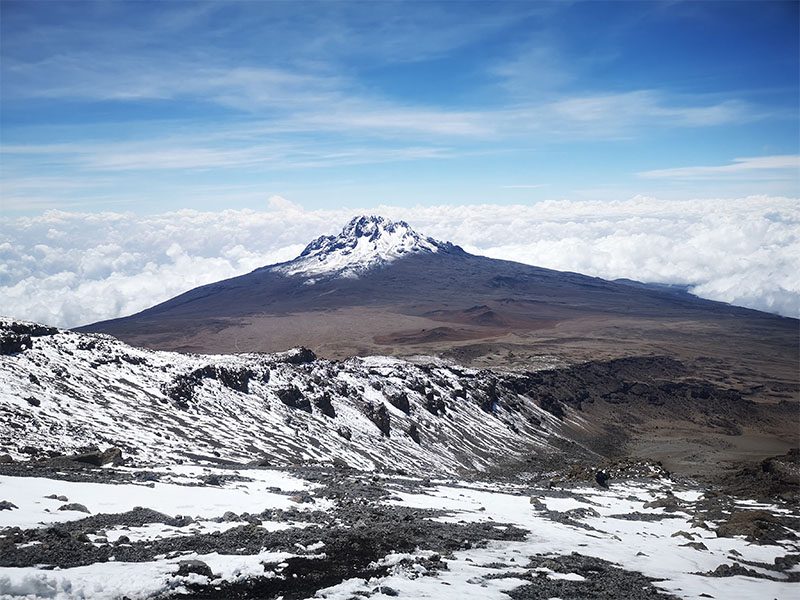
View of Mawenzi Peak from Stella Point on Mount Kilimanjaro, with snow-covered terrain and clouds below — typical scenery on the Rongai Route | Kili Quests
The Rongai Route’s final summit approach offers this dramatic view of Mawenzi Peak from Stella Point. A snowy, unforgettable moment near the crater rim.
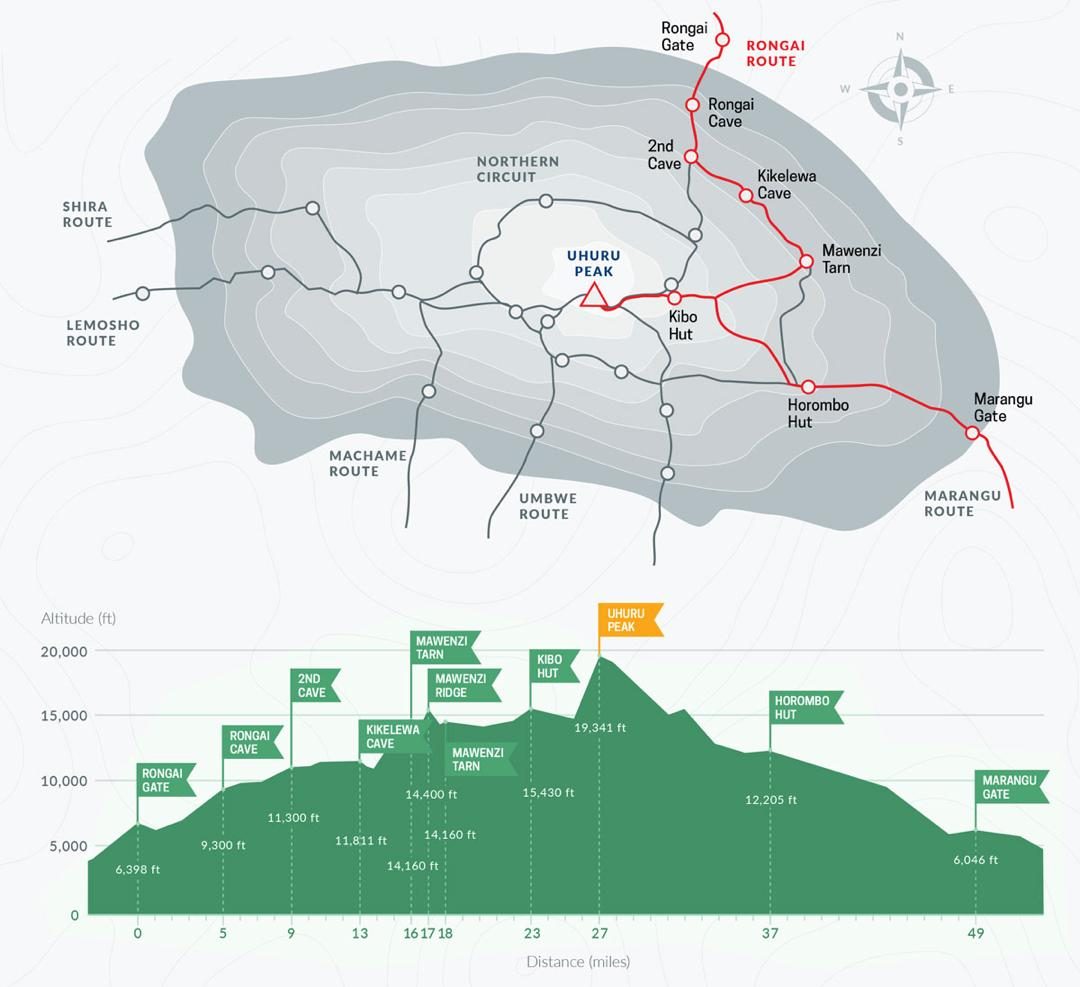
Rongai Route map on Mount Kilimanjaro showing ascent path, camps, and elevation profile to Uhuru Peak
A remote trail from the north side of Kilimanjaro, passing Mawenzi Tarn and Kibo Hut before summiting.

Northern Circuit – The Best Route for Acclimatization

The Northern Circuit is the longest route on Kilimanjaro and is often considered the best route for acclimatization. It circles around the mountain’s northern slopes, creating a longer and more gradual approach to the summit.

What the Northern Circuit Is Like

This route offers one of the most complete mountain experiences because it covers more ground and gives trekkers long, scenic days with fewer crowds. It provides broad views from multiple angles and avoids the busier traffic found on some other routes.Its greatest strength is time. Because the route is usually done over 9 or more days, climbers have an excellent chance to adjust to altitude before summit night.

Who the Northern Circuit Is Best For

The Northern Circuit is best for climbers whose main goal is to maximize summit success. It is also ideal for those who want a quieter route and are willing to spend more time on the mountain.For travelers with enough days and budget, it is one of the strongest choices available. The extra time often turns into extra safety, better recovery, and a more enjoyable climb.
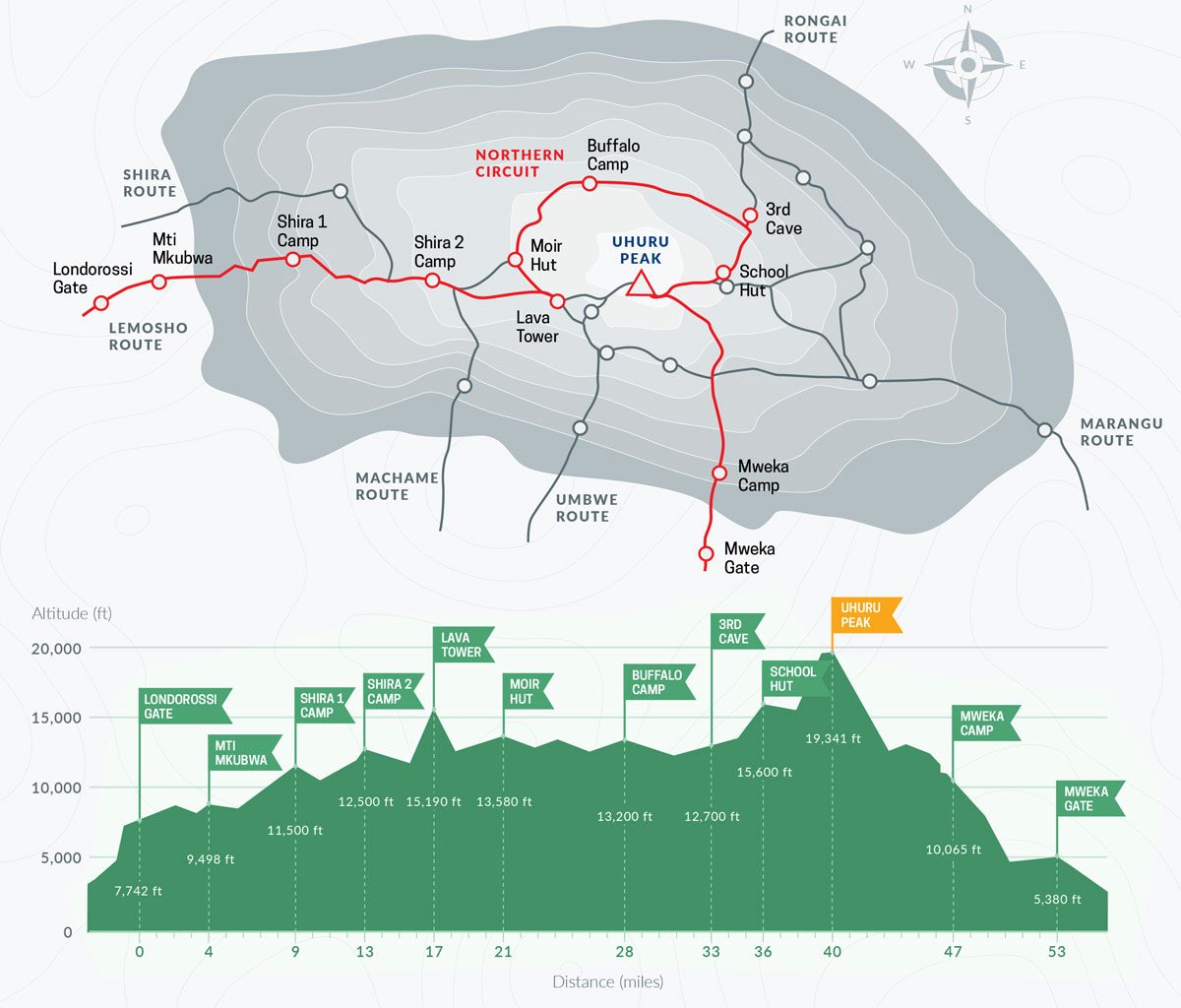
Northern Circuit Route map on Mount Kilimanjaro showing full circuit trail, elevation profile, and key camps to Uhuru Peak
The longest Kilimanjaro route, offering excellent acclimatization and 360° views around the mountain.

Umbwe Route – The Steepest and Toughest Option

Umbwe is known as the steepest and most direct route on Kilimanjaro. It is intense, demanding, and not usually recommended for beginners.

What the Umbwe Route Is Like

The route climbs quickly and gives the body less time to adapt to altitude. It is physically demanding from early on and is often chosen by trekkers who want a more aggressive and remote climb.Because it is less popular, Umbwe can feel quiet and wild. That gives it a certain appeal for experienced trekkers who do not mind a tougher route.

Who the Umbwe Route Is Best For

Umbwe is best for experienced climbers who are confident in their fitness and understand the challenge of rapid altitude gain. It is not a route chosen for comfort or ease. It is chosen for intensity.For most first-time Kilimanjaro trekkers, other routes are a safer and smarter choice.
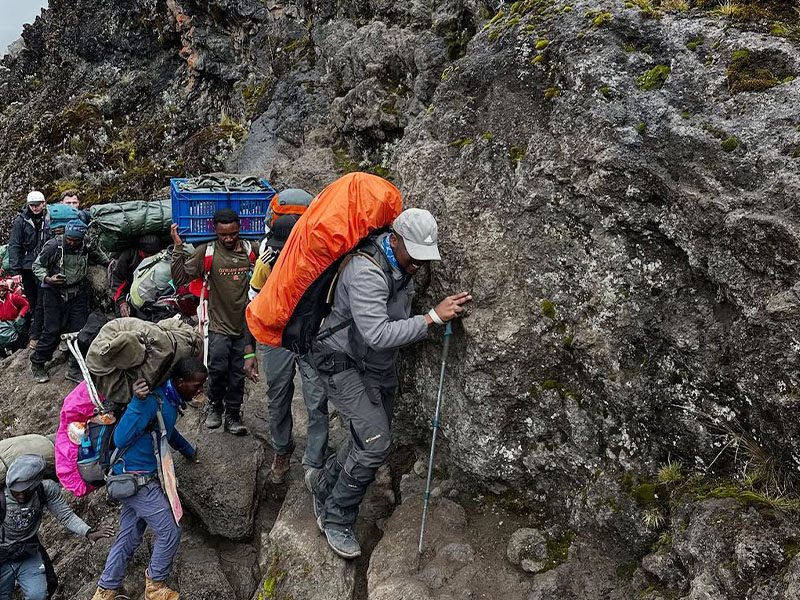
Trekkers and porters carefully ascending the Kissing Rock section on Barranco Wall along the Machame Route, Kilimanjaro | Kili Quests
The Kissing Rock – Barranco Wall – Climbers squeeze through one of the most iconic and narrow points on the Umbwe Route: the "Kissing Rock" on Barranco Wall.
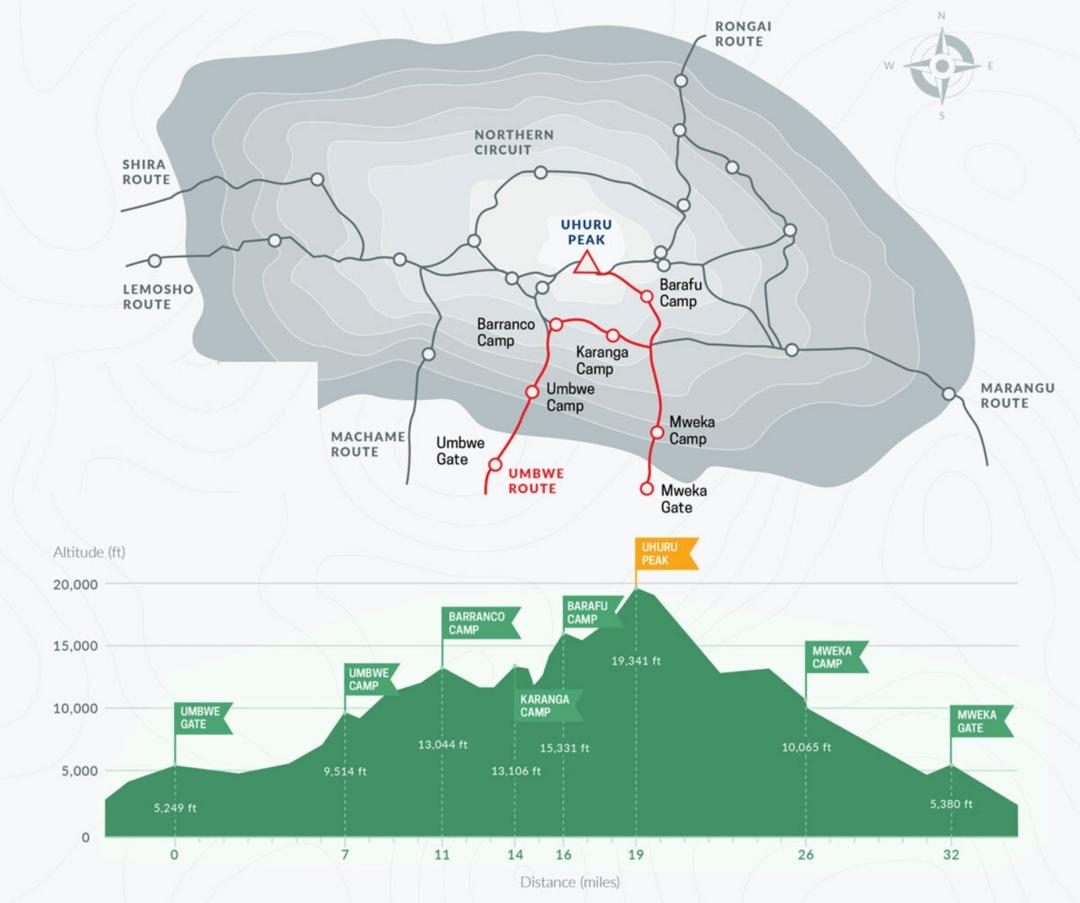
Umbwe Route map on Mount Kilimanjaro showing trail path, elevation chart, and key camps to Uhuru Peak
Kilimanjaro’s steepest and most direct route, ascending via Barranco and Karanga Camps.

Shira Route – A High-Altitude Start

The Shira Route begins at a higher elevation than most other routes, which makes it unique but also more demanding at the beginning.

What the Shira Route Is Like

Because the route starts high on the Shira Plateau, climbers skip much of the rainforest zone and enter a higher-altitude environment very early. That can make the first days harder for people who have not acclimatized already.After the opening section, Shira joins the Lemosho path, so much of the later scenery and route experience becomes similar. The landscapes are dramatic and open, with wide views that many climbers love.

Who the Shira Route Is Best For

Shira is best for trekkers who already have some altitude experience or have acclimatized before starting the climb. It is not usually the first recommendation for people completely new to high-altitude trekking.For the right climber, it offers striking scenery and a less typical start, but it requires more care than routes with a lower beginning.
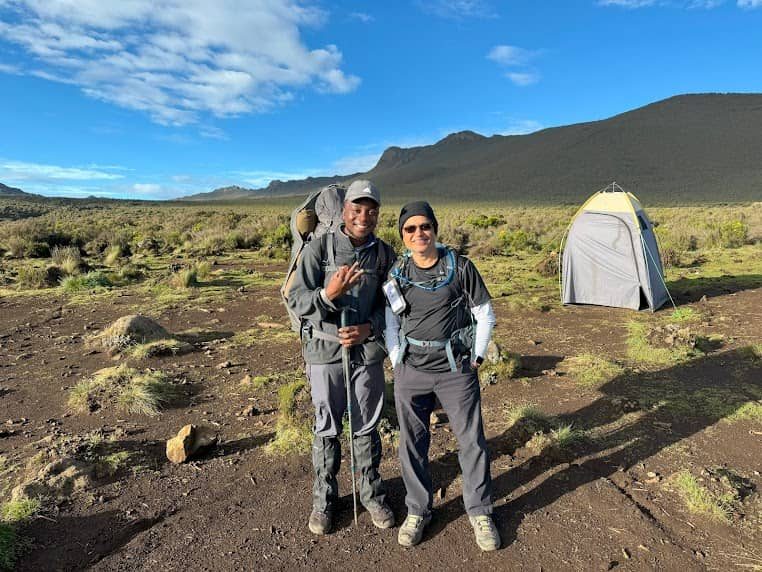
Two trekkers standing at Shira One Camp on the Lemosho Route, Kilimanjaro, with scenic moorland and tent in the background | Kili Quests
Shira One Camp (3,610m) – Trekkers enjoying a clear morning at Shira Plateau, the first high-altitude campsite on the Lemosho Route.
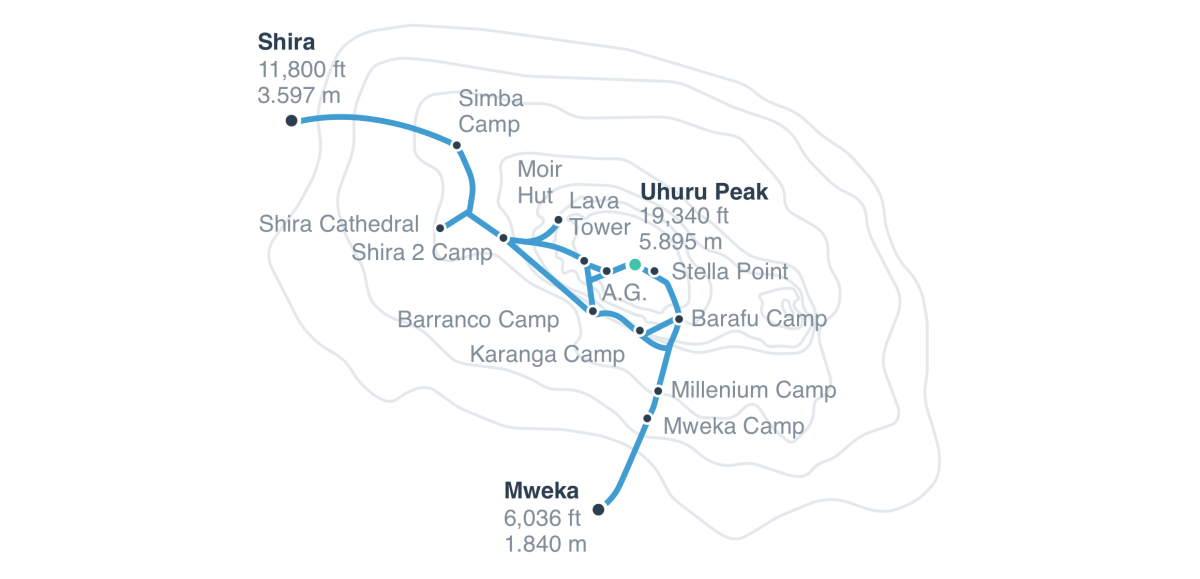
Shira Route map on Mount Kilimanjaro showing trail path from Shira Plateau to Uhuru Peak via Barranco and Barafu Camps
Begins at high altitude on the Shira Plateau and joins the Lemosho-Machame trail to the summit.

Which Kilimanjaro Route Is Best for Beginners?

For most beginners, the best Kilimanjaro routes are Lemosho, Machame, and the Northern Circuit. These routes provide better acclimatization and a stronger balance between challenge and summit success.Lemosho is often the top recommendation because it combines scenery, lower early crowds, and a gradual profile that supports first-time climbers very well. Machame is also beginner-friendly when done over enough days, especially for people who are fit and want a classic Kilimanjaro experience. The Northern Circuit is excellent for beginners who have enough time and want the safest acclimatization profile possible.Routes like Umbwe and Shira are usually less suitable for beginners because of either their steepness or high-altitude start.

Which Kilimanjaro Route Has the Best Scenery?

If scenery is your top priority, Lemosho, Shira, and the Northern Circuit are often considered the most visually rewarding routes on Kilimanjaro. These routes offer wide views, varied landscapes, and a stronger sense of openness across the mountain.Lemosho is especially loved because it combines beautiful western approaches, the Shira Plateau, and a gradual transition through Kilimanjaro’s ecological zones. The Northern Circuit stands out for its panoramic views around the mountain and quiet, remote feel. Shira offers dramatic early scenery because of its high-altitude start.Machame is also scenic, but it is more crowded, which can slightly change the feel of the experience for some climbers.

Which Route Gives the Highest Chance of Reaching the Summit?

The routes with the highest chance of summit success are generally Lemosho and the Northern Circuit. The reason is simple: longer itineraries allow better acclimatization, and better acclimatization leads to stronger summit outcomes.That does not mean shorter routes cannot succeed, but they usually leave less margin for the body to adapt. On Kilimanjaro, altitude is the main obstacle, not technical climbing. That is why route length and ascent profile matter so much.A climber who chooses a longer route and prepares properly will almost always give themselves a better chance than someone who rushes the mountain on a shorter schedule.
 
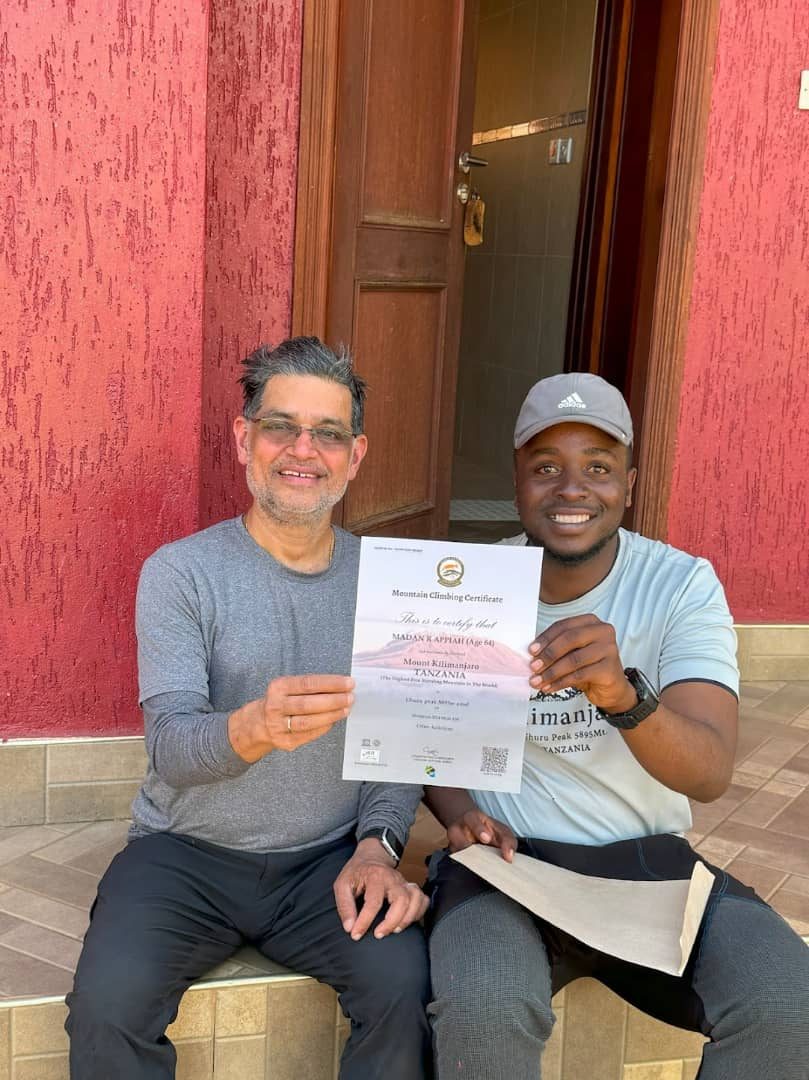
A climber proudly holding a Mount Kilimanjaro summit certificate with their Kili Quests guide after completing the trek to Uhuru Peak | Kili Quests
Every route leads to this moment — celebrating your Kilimanjaro summit with a certificate in hand and memories for a lifetime.

How to Choose the Best Route for Your Goals

The best Kilimanjaro route depends on what matters most to you.If you want the strongest balance of scenery and success, Lemosho is usually the best choice. If you want a classic and popular climb, Machame is a strong option. If you want hut accommodation, Marangu is the clear route for that. If you want fewer crowds, Rongai and the Northern Circuit stand out. If your main goal is the highest chance of success, the Northern Circuit deserves serious consideration. If you are an experienced trekker seeking a more intense route, Umbwe may appeal to you.The smartest approach is to choose a route based on your real priorities, not just the shortest itinerary or the cheapest option. Kilimanjaro is a serious mountain, and a better route choice often leads to a safer, more successful, and more enjoyable climb.
 

Frequently Asked Questions About Kilimanjaro Routes

What is the best route to climb Kilimanjaro?

The best route for most climbers is the Lemosho Route because it offers excellent scenery, good acclimatization, and a high summit success rate. However, the best route still depends on your priorities. If you want maximum acclimatization time, the Northern Circuit may be an even better fit.

Which Kilimanjaro route is easiest?

The Northern Circuit is often considered the easiest in terms of altitude adaptation because it gives the body the most time to acclimatize. It is longer, but that extra time usually makes the climb feel more manageable than shorter and steeper routes.

Which route is best for first-time climbers?

Lemosho and Machame are usually the best choices for first-time climbers. Both offer strong acclimatization and a well-rounded mountain experience. The Northern Circuit is also excellent for beginners who have enough time for a longer trek.

Which route is the shortest?

Marangu and Umbwe are among the shortest routes on Kilimanjaro. While that may seem attractive, shorter routes often come with lower summit success because they do not leave enough time for proper acclimatization.

Which route has huts?

Marangu is the only Kilimanjaro route with hut accommodation. All other main routes involve camping in tents.

Which Kilimanjaro route has the best scenery?

Many climbers say the Lemosho Route, Shira Route, and Northern Circuit Route offer the most scenic landscapes on Mount Kilimanjaro.

Plan Your Climb with Kili Quests

At Kili Quests, we help climbers choose the right Kilimanjaro route based on fitness, time, comfort preferences, and summit goals. That matters because the best route is not always the same for every person. A good decision at the planning stage can improve your entire experience on the mountain.Our team guides climbers on all official Kilimanjaro routes and helps match each trekker with the route that gives them the best chance of success. Whether you are drawn to the scenic Lemosho Route, the classic Machame Route, or the longer Northern Circuit, we make sure your climb is properly planned, safely supported, and built around your goals.Climbing Kilimanjaro should feel challenging, exciting, and unforgettable. With the right route and the right support, it can be exactly that.
Contact us today and let our team guide you to the summit with confidence.

Related Articles

Machame Route Kilimanjaro: Most Popular Trek Guide

Reach the Summit with Confidence

Success on Kilimanjaro depends on the right route, acclimatization, and team.We plan every Machame climb for a safe summit.

Plan Your Machame Route the Right Way

The right route, acclimatization, and team make the difference.We plan your Machame climb for a safe summit

OUR CATEGORIES

Machame Route on Kilimanjaro: Most Popular Kilimanjaro Path

Why Choose the Machame Route?

The Machame Route is the most popular way to climb Mount Kilimanjaro, known for its scenic diversity, steeper trails, and strong summit success rate. Often called the “Whiskey Route,” it is more physically demanding than easier options like Marangu, but rewards climbers with some of the most varied landscapes on the mountain.
 
Unlike longer routes such as Lemosho, Machame follows a slightly faster ascent profile while still allowing for effective acclimatization. This makes it a great choice for trekkers who want a more active and challenging climb without sacrificing their chances of reaching Uhuru Peak.
 
Each route offers a different balance of difficulty, scenery, and acclimatization , see our Kilimanjaro Routes Comparison: Which Route Is Best? to understand how Machame compares to other options.
Trekkers and porters carefully ascending the Kissing Rock section on Barranco Wall along the Machame Route, Kilimanjaro | Kili Quests
The Kissing Rock – Barranco Wall – Climbers squeeze through one of the most iconic and narrow points on the Machame Route: the "Kissing Rock" on Barranco Wall.

Table of Contents

What Is the Machame Route on Kilimanjaro?

  Where Does the Machame Route Start?

The Machame Route begins at Machame Gate on the southwestern side of Mount Kilimanjaro. The trail quickly enters dense rainforest before climbing into moorland and alpine desert zones.

How Long Is the Machame Route?

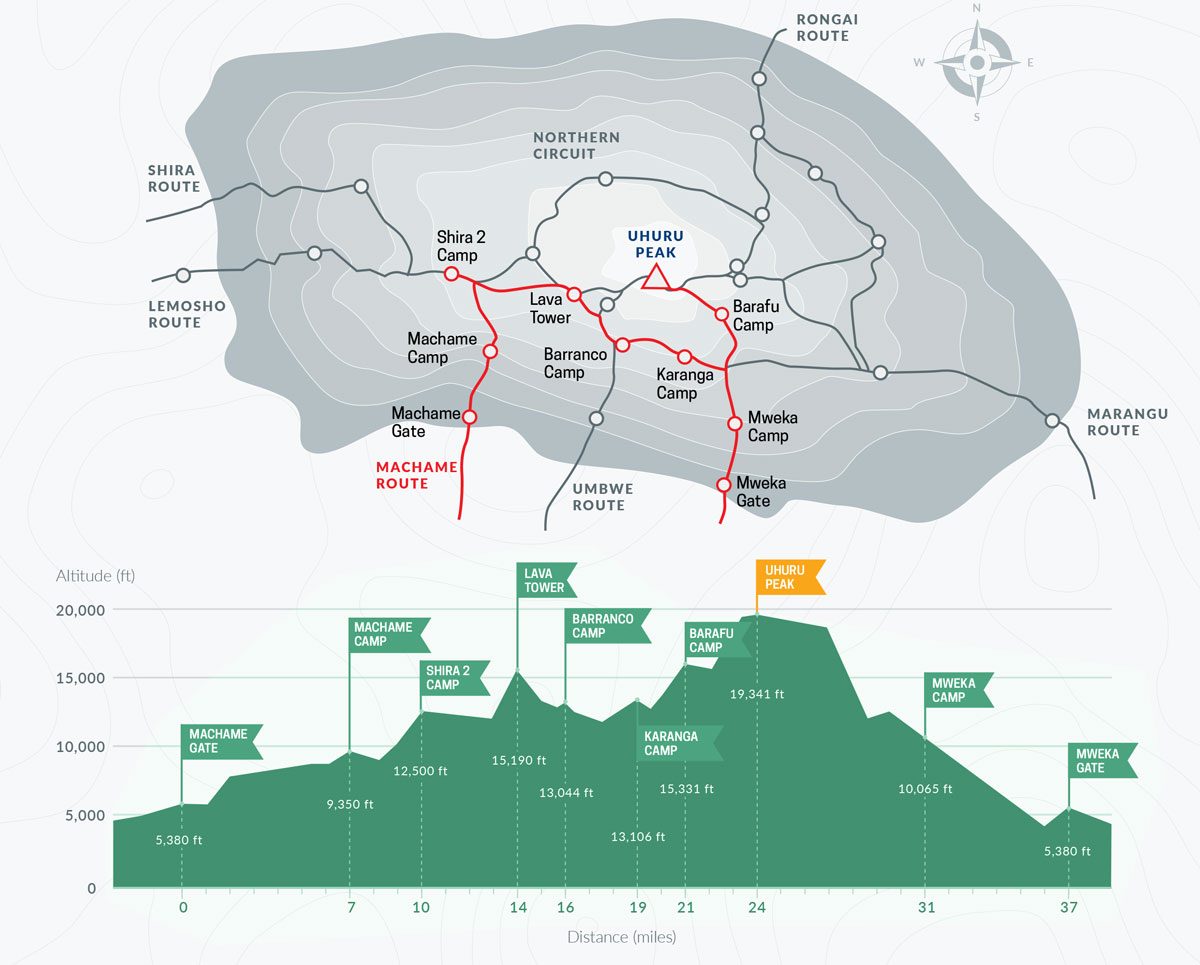
The route is typically completed in 6 or 7 days, covering approximately 62 kilometers (37 miles). The 7-day version is recommended because it provides better acclimatization and improves summit success.

Machame Route Overview

Feature Details
Route Length            –      6 or 7 days
Distance                    –    ~62 km (37 miles)
Start Point                –     Machame Gate (southwest side)
Highest Point          –      Uhuru Peak (5,895 m / 19,341 ft)
Difficulty                  –      Moderate to challenging
Best                           –      For  Hikers wanting adventure & scenery
Success Rate          –       ~95% on the 7-day Itinerary

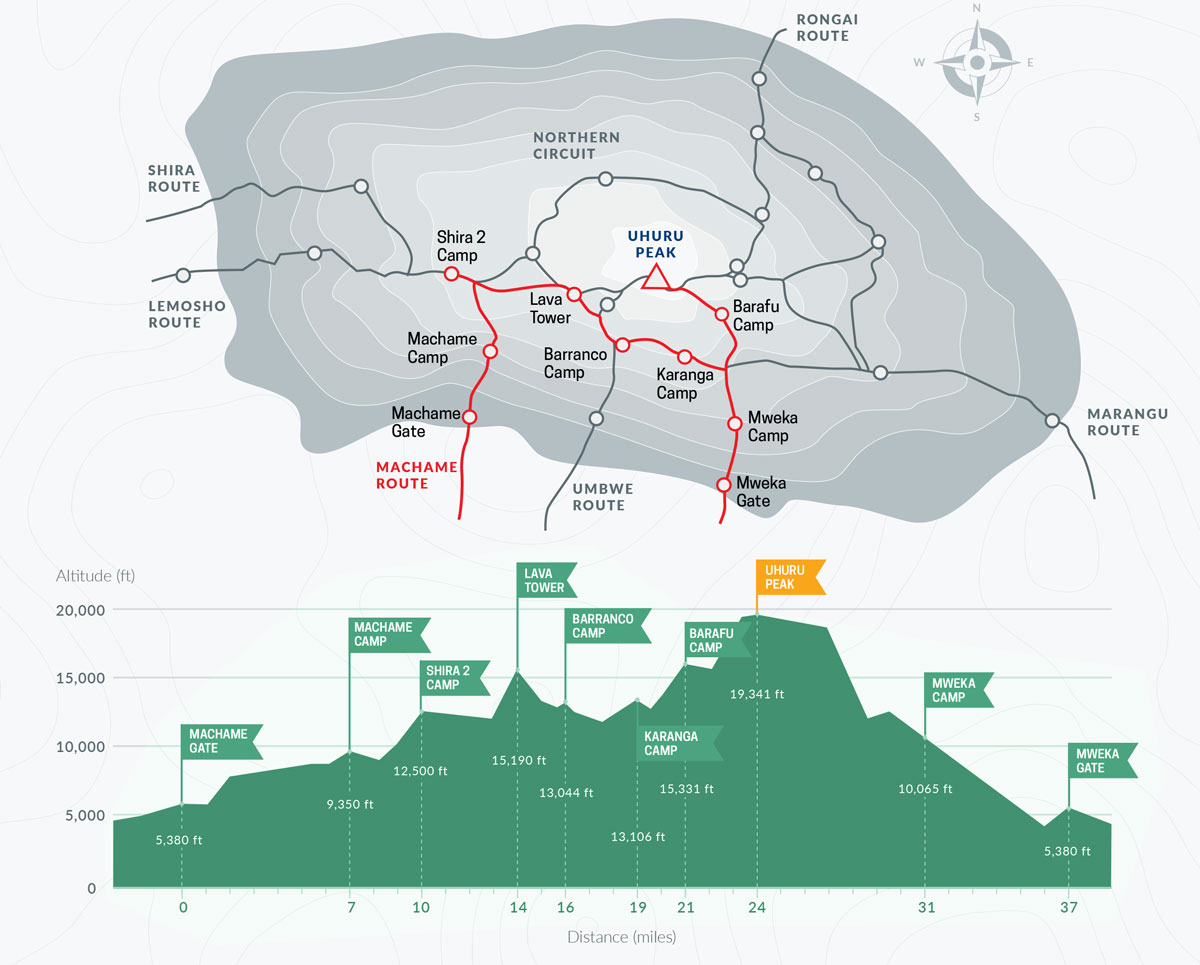
Machame Route Days and Elevation Profile

Machame Route map on Mount Kilimanjaro showing trail path, elevation profile, and major camps to Uhuru Peak
A scenic Kilimanjaro trail via Lava Tower and Barafu Camp, descending through Mweka Gate.

Machame Route Itinerary (7-Day Version)

Day 1 – Machame Gate to Machame Camp

This first day is a steady climb through rainforest, where humidity and muddy trails can make the hike feel more demanding than expected.
  • Altitude: 1,800 m to 2,835 m
  • Time: 5–6 hrs
  • Rainforest zone; trail can be muddy

Day 2: Machame Camp to Shira Cave Camp

  • Altitude: 2,835 m to 3,750 m
  • Time: 5 hrs
  • Enter moorland zone with stunning views

Day 3: Shira Camp to Barranco Camp (via Lava Tower)

This is a key acclimatization day following the “climb high, sleep low” principle, which helps your body adjust to altitude.
 
  • Altitude gain: up to 4,630 m, then sleep at 3,960 m
  • Time: 6–7 hrs
  • Acclimatization day with dramatic scenery

Day 4: Barranco to Karanga Camp

  • Altitude: 3,960 m to 4,035 m
  • Time: 4–5 hrs
  • Scramble the famous Barranco Wall

Day 5: Karanga to Barafu Camp

  • Altitude: 4,035 m to 4,673 m
  • Time: 3–4 hrs
  • Alpine desert zone, prepare for summit

Day 6: Summit Day – Barafu to Uhuru Peak & Mweka Camp

Summit night is the most challenging part of the climb, combining altitude, cold, and long trekking hours in low oxygen conditions.

  • Altitude: 4,673 m to 5,895 m, then descend to 3,100 m
  • Time: 12–14 hrs
  • Summit at sunrise, long descent
 Read Our Article about,How Hard Is Kilimanjaro?

Day 7: Mweka Camp to Mweka Gate

  • Altitude: 3,100 m to 1,640 m
  • Time: 3 hrs
  • Finish your trek with certificate ceremony

Machame Route Difficulty, Acclimatization & Fitness

Is the Machame Route Difficult?

The Machame Route is considered moderately challenging due to its steeper sections and faster elevation gain compared to longer routes like Lemosho.

How Acclimatization Works on Machame

Although shorter than Lemosho, Machame still includes important acclimatization days, especially around Lava Tower, helping improve summit success.
 
Read our article about, Kilimanjaro Success Rate

Who Should Choose This Route?

  • Trekkers in good physical condition
  • Climbers who prefer a more active pace
  • Those looking for a balance of challenge and scenery
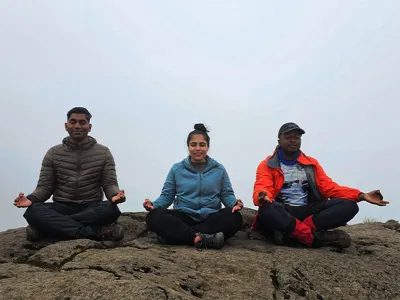
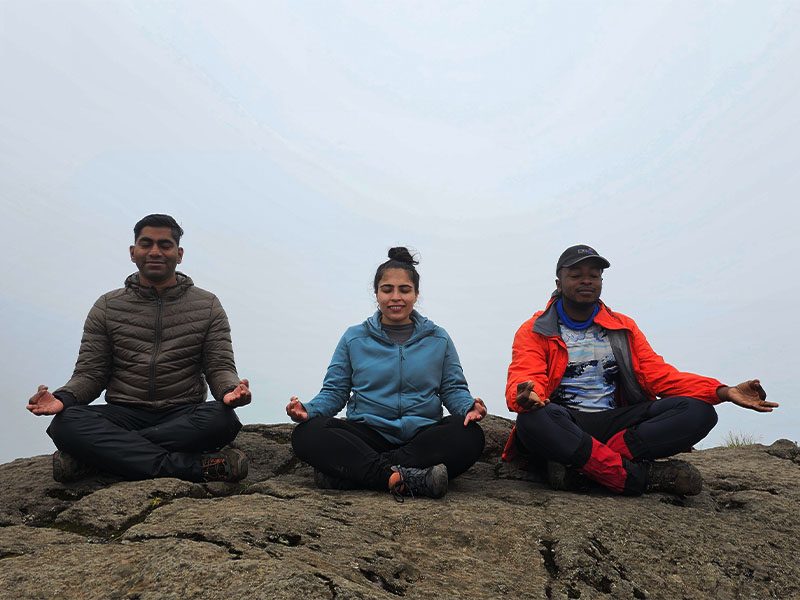
Trekkers meditating on a rock during a peaceful break on the Machame Route, Mount Kilimanjaro | Kili Quests
Mindful Moment on the Machame Trail – Climbers pause for a short meditation break on the way to Shira Camp, embracing Kilimanjaro’s calm Moorland environment.

Best Time to Climb the Machame Route

Dry Seasons (Best Conditions)

The best time to climb is during January–March and June–October, when trails are drier and visibility is clearer.

  •  January–March: Clear skies, mild weather
  • June–October: Dry season, most popular
  • Avoid April–May and November due to rain
Read our article about, Best Time to Climb Kilimanjaro

What Makes Machame Special?

 Iconic Barranco Wall challenge

Excellent views of Kibo and Mount Meru

Shared trail with Lemosho Route  from Shira  Route onwards

Wide ecological diversity — rainforest to arctic zone

Is the Machame Route Right for You?

Choose Machame If You Want:

  • A more active and challenging climb
  • Excellent scenery in fewer days
  • A popular route with strong success rates
 

When Machame May Not Be Ideal

  • If you prefer a slower pace
  • If you want maximum acclimatization (Lemosho better)
Trekkers posing with hiking poles at the Shira Cave Camp sign on Day 2 of the Machame Route, Kilimanjaro | Kili Quests
Shira Cave Camp (3,750m) – Climbers celebrate their arrival at this scenic moorland campsite on Day 2 of the Machame Route, Kilimanjaro.

Frequently Asked Questions About the Machame Route

How difficult is the Machame Route on Mount Kilimanjaro?

The Machame Route is considered moderately challenging. It includes steep sections such as the Barranco Wall and long trekking days, but it does not require technical climbing skills. With proper acclimatization and preparation, many trekkers successfully reach the summit.

Why is the Machame Route called the “Whiskey Route”?

The Machame Route is nicknamed the “Whiskey Route” because it is more physically demanding than the Marangu Route, which is known as the “Coca-Cola Route.”

How many days does it take to climb the Machame Route?

Most climbers complete the Machame Route in 6 or 7 days. The 7-day itinerary is recommended because it provides better acclimatization and increases summit success rates.

What is the success rate of the Machame Route?

The Machame Route has a high summit success rate, often around 90–95% on the 7-day itinerary due to its gradual acclimatization profile.

What makes the Machame Route popular?

The Machame Route is popular because it offers diverse scenery, including rainforest, moorland, alpine desert, and the summit glaciers of Mount Kilimanjaro. It also provides good acclimatization compared to shorter routes.

Which routes connect with the Machame Route?

Several routes join the Machame Route, including the Lemosho Route and Shira Route near the Shira Plateau before continuing toward the summit

Climb Kilimanjaro via Machame with Kili Quests

At Kili Quests, we guide climbers on the Machame Route with a strong focus on pacing, acclimatization, and safety. This route offers the perfect balance between challenge and success when approached correctly.Our 7-day Machame climbs are designed to give you the best chance of reaching Uhuru Peak while enjoying one of Kilimanjaro’s most scenic trails.

 
Kilimanjaro Packing List (Essential Gear Guide)
Contact us to plan your 7-day Machame Route trek.

Related Articles

Shira Route Kilimanjaro: Scenic & Remote Trek Guide

Choose the Right Kilimanjaro Route

The right route makes all the difference on Kilimanjaro.We help you plan your climb based on:

Plan Your Kilimanjaro Climb

Choosing the right route is key to your success.
Explore these guides to prepare properly:

OUR CATEGORIES

Shira Route on Kilimanjaro: Remote Trail with Open Views

Climbing Kilimanjaro via the Shira Route offers one of the most unique and scenic experiences on the mountain , but it also comes with a serious challenge.Starting high on the Shira Plateau at 3,600 meters, this route gives you incredible views from day one, but less time for your body to adjust to altitude.
 
If you’re an experienced trekker looking for fewer crowds and wide-open landscapes, the Shira Route is worth considering.Kilimanjaro routes comparison.Each route has its pros and cons,see our Kilimanjaro Route Comparison to choose the best fit

Why Choose the Shira Route?

The Shira Route is one of the least-used trails on Mount Kilimanjaro, making it ideal for climbers who want a quieter, more remote experience.Unlike other routes that begin in the rainforest, Shira starts high on the plateau , offering panoramic views right from the beginning.However, this high starting point makes acclimatization more difficult compared to other routes.
 
Learn more about how to acclimatize on Kilimanjaro  to improve your success chances.
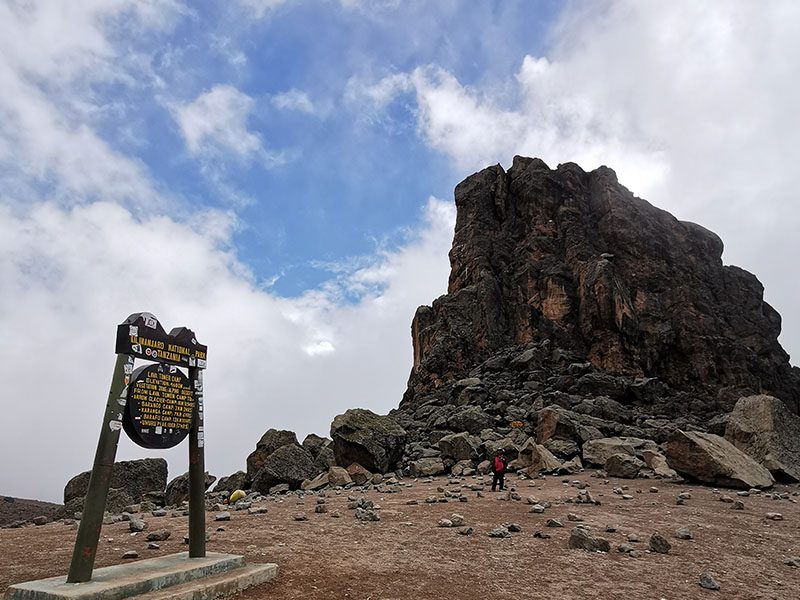
Lava Tower rising steeply at 4,630m on Mount Kilimanjaro’s Shira Route, with the trail sign and a trekker standing beneath the massive volcanic rock | Kili Quests
Lava Tower is a surreal landmark on the Shira Route, often used as an acclimatization stop before descending to Barranco Camp. A must-see on the mountain.

Table of Contents

Shira Route Overview

 Feature Details
Route Length                  –       7 days
Distance                           –       ~56 km (35 miles)
Start Point                       –        Shira Gate (Western Kilimanjaro)
Highest Point                  –        Uhuru Peak (5,895 m / 19,341 ft)
Difficulty                          –        Challenging due to fast altitude gain
Best For                            –         Experienced trekkers, scenic lovers, fewer crowds
Success Rate                   –         85% on the 7-day version

Shira Route Days and Elevation Profile

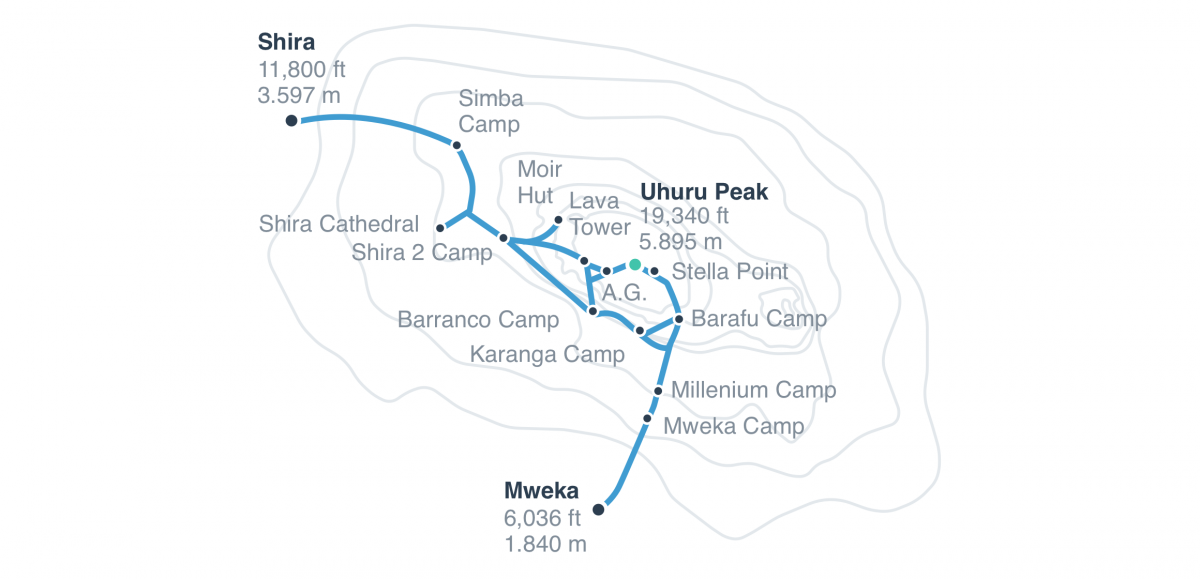
Shira Route map on Mount Kilimanjaro showing trail path from Shira Plateau to Uhuru Peak via Barranco and Barafu Camps
Begins at high altitude on the Shira Plateau and joins the Lemosho-Machame trail to the summit.

Shira Route Days and Elevation Profile

The Shira Route begins at high altitude on the Shira Plateau and later joins the Lemosho–Machame trail toward the summit.
 
See how this compares with the Lemosho Route guide, known for better acclimatization and higher success rates.

Day-by-Day Itinerary (7-Day Itinerary)

Day 1: Shira Gate to Shira 1 Camp

Altitude: 3,600 m – 3,610 m
Hike Time: 1–2 hours
 
Your adventure begins high on the Shira Plateau  unlike most routes that start in the rainforest. This short first day helps your body begin adjusting to altitude while you enjoy wide, open views of the mountain and surrounding plains.

Day 2: Shira 1 to Shira 2 Camp

Altitude: 3,610 m – 3,850 m
Hike Time: 4–5 hours
 
A steady and gradual trek across alpine terrain. The landscape becomes more rugged and exposed, with fewer plants and more volcanic rock formations. This is an important day for building rhythm and pacing.

Day 3: Shira 2 to Barranco Camp (via Lava Tower)

Altitude: 3,850 m → 4,640 m → 3,960 m
Hike Time: 6–7 hours
 
One of the most important days for acclimatization. You climb up to Lava Tower (4,640 m), where many trekkers begin to feel the effects of altitude, before descending to Barranco Camp.
This “climb high, sleep low” strategy helps your body adapt and improves your chances of reaching the summit.
 
Reader more about how to acclimatize on Kilimanjaro to increase your success rate.

Day 4: Barranco Camp to Karanga Camp

Altitude: 3,960 m → 4,035 m
Hike Time: 4–5 hours
 
Start the day by climbing the famous Barranco Wall — a steep but non-technical scramble that offers incredible views. After reaching the top, the trail continues through valleys and ridges toward Karanga Camp.

Day 5: Karanga Camp to Barafu Camp

Altitude: 4,035 m → 4,673 m
Hike Time: 3–4 hours
 
A shorter trekking day as you make your way to Barafu Camp, the base camp for your summit attempt. After lunch, you’ll rest, hydrate, and prepare your gear before an early night.

Day 6: Summit Day – Barafu Camp to Uhuru Peak to Mweka Camp

Altitude: 4,673 m → 5,895 m → 3,100 m
Hike Time: 12–14 hours
The most challenging and rewarding day of your climb. You’ll begin your ascent around midnight, trekking in cold, dark conditions toward Stella Point, then continue to Uhuru Peak , the highest point in Africa.After celebrating at the summit, you descend back to Barafu for a short rest, then continue down to Mweka Camp.
 
Understand what to expect in our Kilimanjaro summit day guide 

Day 7: Mweka Camp to Mweka Gate

Altitude: 3,100 m → 1,640 m
Hike Time: 3–4 hours
 
Your final descent takes you through lush rainforest terrain. At the gate, you’ll receive your summit certificate marking the end of your Kilimanjaro adventure.

Shira Route Difficulty and Acclimatization

The Shira Route is considered more difficult than the Lemosho Route because of its high starting point.Beginning at 3,600 meters gives your body less time to adjust, increasing the risk of altitude sickness.
 
 Read our full guide on altitude sickness on Kilimanjaro  to understand symptoms and prevention.
Best for:
  • Experienced hikers
  • Climbers already acclimatized
  • Those seeking a quieter, scenic route
If success rate is your priority, see why the Lemosho Route  has one of the highest success rates on the mountain.
Trekkers enjoying breakfast at Karanga Camp on the Shira Route of Mount Kilimanjaro, with colorful tents and Kibo Peak in the background | Kili Quests
Karanga Camp (3,995m) offers a peaceful stop on the Shira Route, with hot breakfast, scenic campsites, and stunning views of Kibo’s icy slopes.

Best Time to Climb the Shira Route

Best seasons:
  • January to early March – warmer, fewer crowds
  • June to October – dry, clear conditions


See full seasonal breakdown in our best time to climb Kilimanjaro guide


Avoid:
  • March to May (long rains)
  • November (short rains)

What Makes Shira Route Unique?

  • Starts high on the Shira Plateau
  • Immediate panoramic views from Day 1
  • Less crowded than Machame or Marangu
  • Joins Lemosho trail after Day 1
  • Passes Lava Tower and Barranco Wall
Wondering what’s included? Check our Kilimanjaro climb package guide to see everything from airport pickup to summit support.

Is the Shira Route Right for You?

Choose the Shira Route if you:
  • Already have high-altitude experience
  • Want fewer crowds and remote landscapes
  • Prefer a shorter itinerary with strong scenery
Not sure if Kilimanjaro is hard for you? Read our guide: How Hard Is Kilimanjaro to Climb?
Sweeping view of Mount Kilimanjaro’s Kibo Peak from Karanga Camp on the Shira Route, with rocky alpine terrain under a bright morning sky | Kili Quests
From Karanga Camp, Shira Route trekkers enjoy this dramatic view of Kibo — a reminder of the summit that awaits beyond Barafu Camp.

Frequently Asked Questions About the Shira Route

Where does the Shira Route start on Kilimanjaro?

The Shira Route begins at Shira Gate on the western side of Mount Kilimanjaro, starting at a high elevation on the Shira Plateau.

Why is the Shira Route considered challenging?

The Shira Route starts at about 3,600 meters, which means climbers gain altitude quickly. This rapid ascent can increase the risk of altitude sickness compared to routes that begin at lower elevations.

How many days does the Shira Route take?

Most climbers complete the Shira Route in 7 days, following a route that later joins the Lemosho Route before reaching the summit.

Is the Shira Route good for beginners?

The Shira Route is generally recommended for experienced trekkers or climbers who have already acclimatized, because of its high starting altitude.

What summit point do Shira Route climbers reach?

Climbers on the Shira Route eventually reach the crater rim near Stella Point before continuing to Uhuru Peak, the highest point in Africa.

What makes the Shira Route unique?

The Shira Route offers wide open landscapes across the Shira Plateau, dramatic volcanic formations like Lava Tower, and fewer crowds compared to other Kilimanjaro routes.

Climb Kilimanjaro with Kili Quests via the Shira Route

At Kili Quests, we offer expertly guided Shira Route climbs for adventurers who want something scenic yet off the beaten path. Our professional mountain teams ensure you’re safe, well-supported, and prepared for the summit  even on this high-starting route.
 
Contact us today to start planning your Shira Route adventure with Kili Quests.

Related Articles