How Many Days to Climb Kilimanjaro? Route Duration Guide

Choose the Right Kilimanjaro Itinerary

The number of days you choose can affect your acclimatization, comfort, and summit success.

Plan Your Kilimanjaro Climb

Choosing the right number of days is easier when you understand the route, altitude, and preparation required.

OUR CATEGORIES

How Many Days Does It Take to Climb Mount Kilimanjaro?

Climbing Mount Kilimanjaro, the highest mountain in Africa at 5,895 meters (19,341 feet), is one of the world’s most popular trekking adventures. Every year thousands of travelers come to Tanzania to attempt reaching Uhuru Peak, the summit of Kilimanjaro.One of the most common questions climbers ask while planning their trip is: How many days does it take to climb Mount Kilimanjaro?
 
The answer depends mainly on the route chosen, acclimatization schedule, and the climber’s pace. Before choosing your itinerary, it helps to compare the different Kilimanjaro routes and understand how acclimatization works on Kilimanjaro. Most Kilimanjaro climbs take between 5 and 9 days, though longer itineraries generally provide a better chance of reaching the summit safely.In this guide, we explain how long a Kilimanjaro climb usually takes, how route choice affects duration, and why taking more days on the mountain can increase your chances of success.
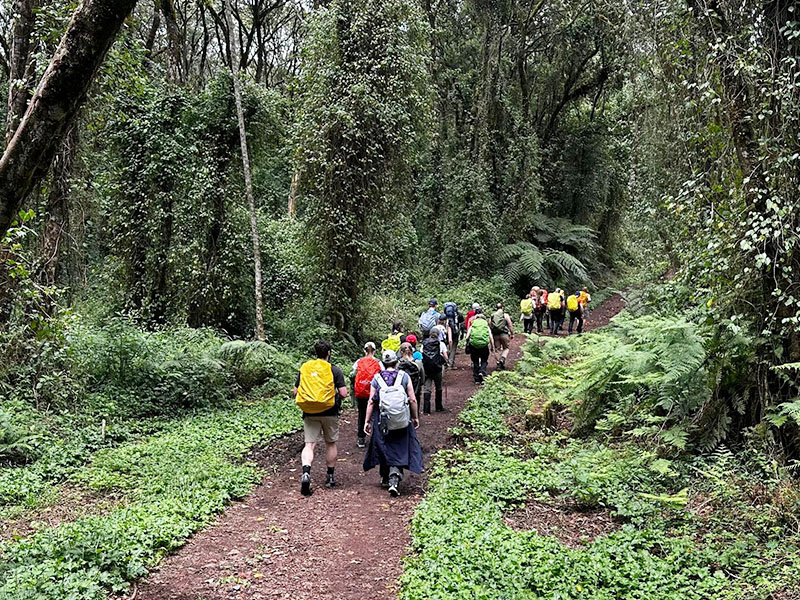
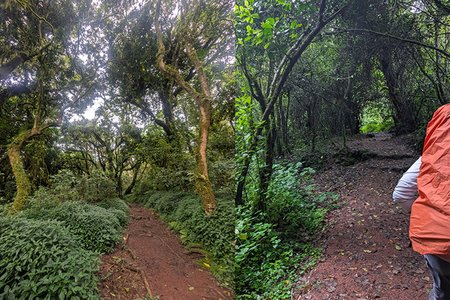
Climbers walking through Kilimanjaro’s rainforest trail with excitement | Kili Quests
Climbing Kilimanjaro takes several days, with each stage helping trekkers adjust to altitude.

Table of Contents

Typical Kilimanjaro Climb Duration

Most Kilimanjaro climbs take between 5 and 9 days, depending on the route and itinerary you choose.These days are not just about hiking from one point to another. A proper Kilimanjaro itinerary includes gradual altitude gain, time for your body to acclimatize, and a carefully planned summit attempt.During your climb, you will:

  • Trek for several hours each day at a steady pace
  • Sleep at different altitude camps
  • Take time to rest and recover
  • Attempt the summit during a long overnight climb
  • Descend back to lower altitude after reaching the peak
Although shorter itineraries may look appealing, they often push climbers too quickly to high altitude. That is why many trekkers first read about altitude sickness on Kilimanjaro before deciding how many days to spend on the mountain.This puts stress on the body and significantly reduces the chances of reaching the summit.

Kilimanjaro Climb Duration by Route

Different routes on Kilimanjaro take different amounts of time depending on their length and acclimatization profile.
Route Typical Duration
Marangu Route ……………….5–6 days
Machame Route……………….6–7 days
Lemosho Route………………..7–8 days
Northern Circuit……………….8–9 days
Rongai Route……………………6–7 days
Umbwe Route…………………..5–6 days
Routes that include more days typically have higher summit success rates because climbers have more time to acclimatize.
 
If you are still unsure which itinerary fits your goals, see our full Kilimanjaro routes comparison guide to compare scenery, difficulty, acclimatization, and success rates.

Why More Days Increase Summit Success

The biggest challenge on Kilimanjaro is not the distance  it is the altitude.As you climb higher, the air becomes thinner, and your body receives less oxygen. If you ascend too quickly, your body cannot adjust properly, which can lead to altitude sickness.Longer itineraries solve this problem by giving your body time to adapt.
With more days, you can:
  • Gain altitude gradually
  • Rest at strategic camps
  • Follow the “climb high, sleep low” principle
  • Maintain better energy levels throughout the climb
This is why climbers on 7–9 day routes have significantly higher success rates compared to those on shorter itineraries. You can see this more clearly in our guide to Kilimanjaro success rates by route.

What Happens During a Typical Kilimanjaro Climb

A Kilimanjaro expedition usually follows a structured daily schedule.

Early Days – Gradual Ascent Through Changing Landscapes

The first few days take you through rainforest and moorland zones. These stages are generally more comfortable, and your body is still adjusting to the altitude.You hike for several hours each day and arrive at camp in the afternoon, where you rest and prepare for the next day.As you move higher, you also pass through several distinct ecological zones of Mount Kilimanjaro, which is one of the reasons the climb feels so varied from day to day.

Middle Days – Acclimatization Becomes Important

As you climb higher, the environment becomes drier and more exposed. The air feels thinner, and your body starts to notice the effects of altitude.This is where proper pacing and acclimatization become critical.Some days include hikes to higher altitude followed by descent to sleep, helping your body adjust more effectively. This “climb high, sleep low” approach is one of the most important parts of Kilimanjaro acclimatization.

Summit Night – The Most Challenging Stage

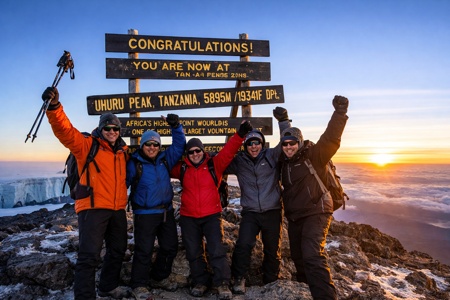
Summit night is the most demanding part of the climb.You begin around midnight and hike slowly in the dark for several hours toward the summit. The combination of cold temperatures, altitude, and fatigue makes this stage physically and mentally challenging.However, reaching Uhuru Peak at sunrise is one of the most rewarding moments of the entire journey.Proper clothing and pacing matter most here, so it is worth reviewing a full Kilimanjaro summit day gear guide before your trek.

Temperatures can drop well below freezing, especially near the crater rim, so climbers should also understand Kilimanjaro night temperatures before summit night.

Descent – Returning to Lower Altitude

After the summit, climbers descend back to lower camps and eventually exit the park.
As you lose altitude, oxygen levels increase, and your body begins to recover. Many climbers feel stronger during the descent, even after the long summit day.

How to Choose the Right Number of Days for Your Climb

Choose Longer Itineraries for Better Success

If your goal is to reach the summit, choosing a longer itinerary is the best strategy. More days mean better acclimatization and a higher chance of success.Routes such as Lemosho Route and Northern Circuit are often recommended because they give climbers more time to acclimatize.

Avoid Rushing the Climb

Trying to save time by choosing a shorter route can backfire. Many climbers who rush the climb struggle with altitude and are forced to turn back before reaching the summit.Taking your time increases both your safety and your overall experience.
 
Shorter routes may seem cheaper at first, but rushing the mountain can reduce your summit chances and affect the overall value of your trip. It helps to understand the full cost of climbing Kilimanjaro before choosing only based on price.

Consider Your Fitness Level

Climbers with limited trekking experience may benefit from longer itineraries with gradual ascents.Proper preparation also helps improve endurance, and many climbers follow a structured Kilimanjaro training plan before their trek.

Listen to Your Guides

Professional mountain guides monitor climbers carefully and adjust the pace to ensure safety and comfort.A good guide team also plays a major role in safety, pacing, and early detection of altitude problems. Read more about Kilimanjaro safety and risks before your climb.
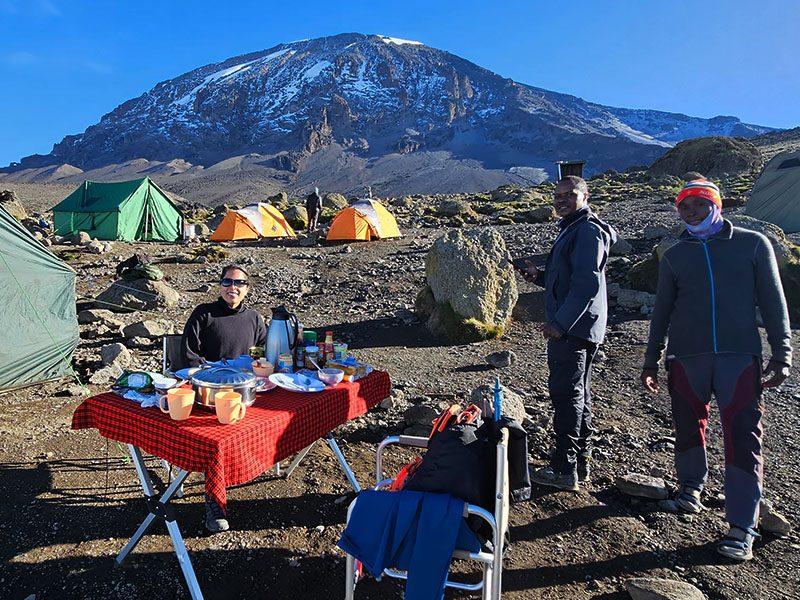
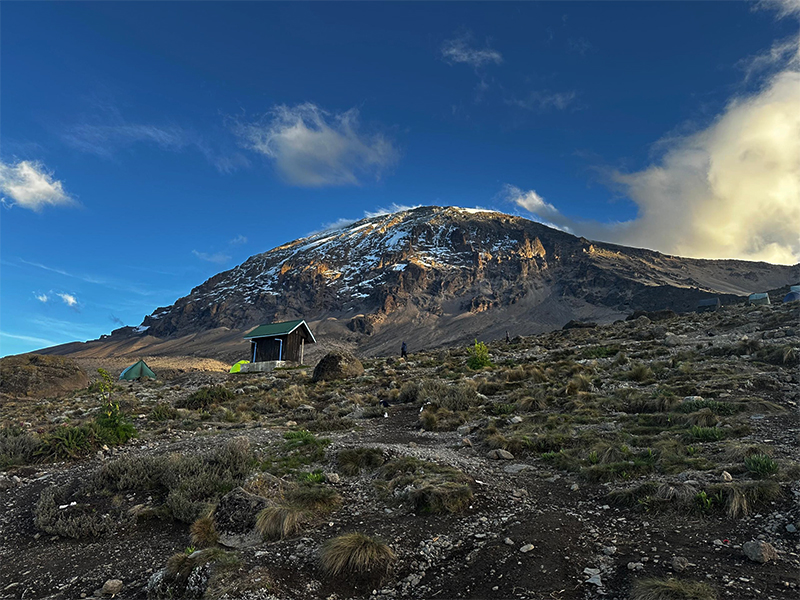
Trekkers enjoying breakfast at Karanga Camp on the Shira Route of Mount Kilimanjaro, with colorful tents and Kibo Peak in the background | Kili Quests
Each day on Kilimanjaro brings different terrain, from rainforest to alpine desert.

How to Prepare for a Successful Kilimanjaro Climb

Preparing properly before your climb can make a significant difference in your experience.
Focus on:
  • Building endurance through hiking and cardio training
  • Staying consistent with physical activity before your trip
  • Choosing the right route and itinerary
  • Mentally preparing for a multi-day challenge
  • Choosing the right route and itinerary
  • Packing properly for changing temperatures
  • Understanding what food and support to expect on the mountain
Kilimanjaro is not about speed  ,it is about consistency, patience, and preparation.

Frequently Asked Questions About Kilimanjaro Duration

What is the shortest time to climb Kilimanjaro?

The shortest time to climb Kilimanjaro is typically 5 days, and this is usually done via routes like Marangu or Umbwe. While it is possible to complete the climb in this timeframe, it is not recommended for most climbers.The main reason is that shorter itineraries do not provide enough time for acclimatization. As a result, climbers are more likely to experience altitude sickness, which is the leading cause of failed summit attempts. Many climbers who attempt 5-day routes end up turning back before reaching Uhuru Peak.For this reason, most experienced guides strongly recommend choosing longer itineraries that allow your body to adjust gradually to the altitude.

What is the best number of days to climb Kilimanjaro?

The best number of days to climb Kilimanjaro is generally between 7 and 8 days. This duration offers a good balance between acclimatization, comfort, and overall success rate.With a 7- or 8-day itinerary, climbers have enough time to ascend gradually, allowing the body to adapt to decreasing oxygen levels. This significantly reduces the risk of altitude sickness and improves the chances of reaching the summit.For most people, this range provides the ideal combination of safety and success without requiring an extended time commitment.

Does a longer climb increase summit success rates?

Yes, a longer climb significantly increases summit success rates. The key factor behind this is acclimatization.When you spend more days on the mountain, your body has more time to adjust to the lower oxygen levels at higher altitudes. This reduces the risk of altitude sickness and allows you to maintain better energy levels throughout the climb.Climbers on longer routes often feel stronger and more prepared during summit night, which is the most challenging part of the journey.

Do beginners need more days to climb Kilimanjaro?

Beginners are strongly encouraged to choose longer itineraries, typically 7 to 8 days or more. This allows for a slower pace and better acclimatization, which are essential for first-time climbers.While Kilimanjaro does not require technical climbing skills, it is still a physically demanding high-altitude trek. Beginners benefit from having more time to adjust both physically and mentally to the conditions.With proper preparation and the right itinerary, beginners can successfully reach the summit.

How long does summit night take on Kilimanjaro?

Summit night is the longest and most demanding part of the climb. It typically takes between 10 and 14 hours in total, including both the ascent to Uhuru Peak and the descent back to a lower camp.Climbers usually begin the summit attempt around midnight and hike slowly for several hours to reach the crater rim. From there, they continue to Uhuru Peak, often arriving at sunrise.After spending a short time at the summit, climbers begin the descent, which can take several more hours. This makes summit day the most physically and mentally challenging part of the entire journey.

Ready to Climb Mount Kilimanjaro?

Climbing Mount Kilimanjaro is an incredible adventure, but choosing the right itinerary length is essential for a safe and successful climb.At Kili Quests, our experienced local guides help climbers select the best route and duration based on their fitness level, travel schedule, and experience.With professional guides, carefully planned itineraries, and strong support teams, we maximize your chances of reaching the summit of Africa’s highest mountain.

Related Articles

Kilimanjaro Success Rate by Route: Which Route Is Best?

Maximize Your Summit Success

Climb with the right strategy and experienced local support.

Plan for a Successful Kilimanjaro Summit

Reaching the summit depends on preparation, route choice, and pacing.

OUR CATEGORIES

Kilimanjaro Success Rate by Route: Which Route Has the Highest Summit Success?

Climbing Mount Kilimanjaro, Africa’s highest mountain at 5,895 meters (19,341 feet), is a life-changing adventure for thousands of trekkers every year. One of the most common questions climbers ask when planning their trip is: What is the success rate of climbing Kilimanjaro?
 
Choosing the right route is one of the biggest factors in success , compare all options in our Kilimanjaro routes comparison guide.
 
While many people attempt to reach the summit of Uhuru Peak, not everyone succeeds. The likelihood of reaching the summit depends on several factors, including the route chosen, the number of days on the mountain, acclimatization time, and overall preparation.In this guide, we explore the Kilimanjaro success rate by route, explain why some routes have higher success rates than others, and share tips to improve your chances of reaching the summit.
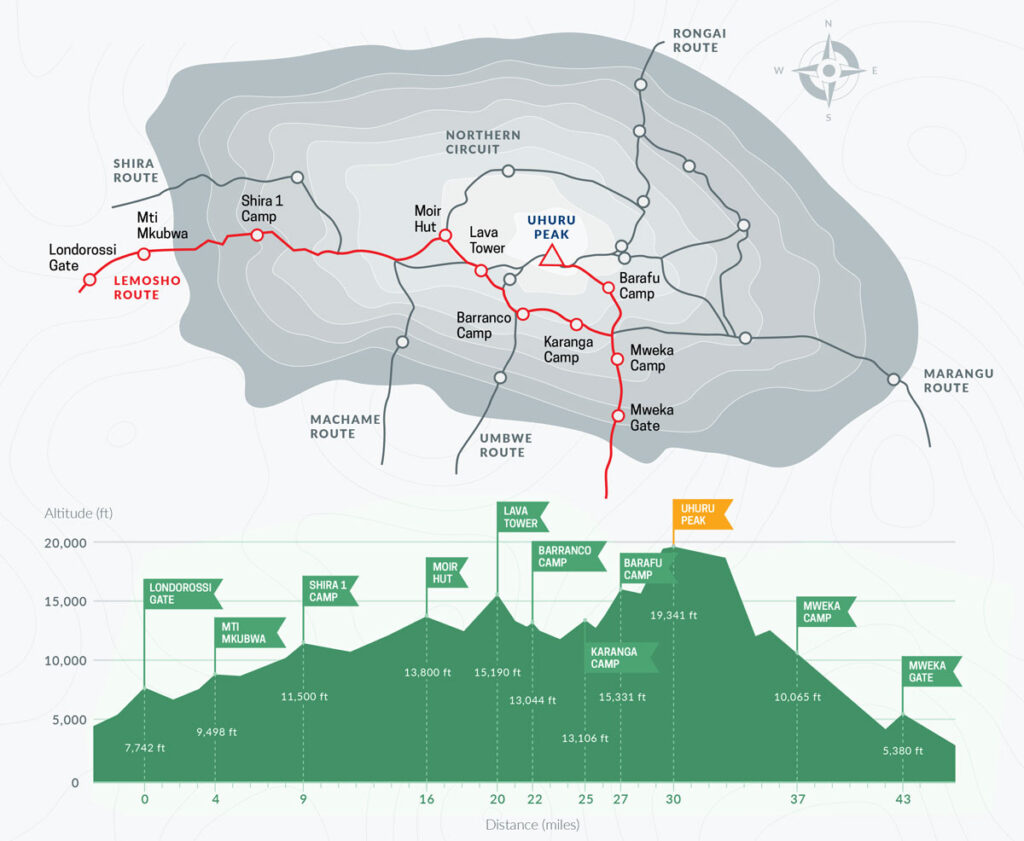
Lemosho Route map on Mount Kilimanjaro with full trail, elevation profile, and camp locations to Uhuru Peak
Trekkers climb Mount Kilimanjaro on a longer route with better acclimatization and higher summit success rates.

Table of Contents

What Is the Average Kilimanjaro Success Rate?

The overall success rate for climbing Mount Kilimanjaro is estimated to be between 65% and 75%.This overall average doesn’t tell the full story , success rates vary widely depending on your itinerary. See the full Kilimanjaro itinerary breakdown to understand how daily structure affects acclimatization.However, this number varies greatly depending on the route and itinerary. Shorter routes that ascend quickly tend to have lower success rates because climbers have less time to acclimatize to the high altitude.Longer routes with gradual ascents usually offer higher summit success rates, giving trekkers more time to adapt to lower oxygen levels as they climb.
 
Rapid altitude gain increases the risk of altitude sickness , learn how to properly acclimatize on Kilimanjaro to improve your chances.

Kilimanjaro Success Rate by Route

Each Kilimanjaro route has a different summit success rate based on its length, acclimatization profile, and difficulty. Below is a comparison of the most popular routes on Mount Kilimanjaro.
 
Marangu Route ……………….50–60%
Machame Route……………….70–80%
Lemosho Route………………..85–90%
Northern Circuit……………….90–95%
Rongai Route……………………70–80%
Umbwe Route…………………..50–60%
 
These percentages may vary slightly depending on the itinerary and the guiding company.

Machame Route Success Rate

Success Rate: 70–80%

The Machame Route, often called the “Whiskey Route,” is one of the most popular Kilimanjaro climbing routes.It offers a good balance of scenery, acclimatization, and challenge, which helps improve summit success rates. The Machame Route typically takes 6 to 7 days, allowing climbers to gradually adjust to the altitude.Because of its acclimatization profile and longer itinerary options, the Machame Route has a significantly higher success rate than shorter routes like Marangu.
 

Lemosho Route Success Rate

Success Rate: 85–90%

The Lemosho Route is widely considered one of the best routes for climbing Kilimanjaro.Starting on the western side of the mountain, this route offers beautiful scenery and a gradual ascent that allows climbers to acclimatize effectively. Most Lemosho climbs take 7 to 8 days, which significantly improves the chances of reaching the summit.Because of its longer duration and excellent acclimatization profile, Lemosho has one of the highest success rates on the mountain.

Marangu Route Success Rate

Success Rate: 50–60%

The Marangu Route, also known as the “Coca-Cola Route,” is one of the oldest and most traditional routes on Kilimanjaro.It is the only route that offers hut accommodation instead of tents, which makes it appealing to some climbers.However, the standard Marangu itinerary typically takes only 5 days, which means climbers gain altitude quickly with limited time for acclimatization. This is one reason why the Marangu Route has a lower success rate compared to longer routes.

Northern Circuit Success Rate

Success Rate: 90–95%

The Northern Circuit Route has the highest success rate of all Kilimanjaro routes.This route takes 8 to 9 days, making it the longest route on the mountain. The extended itinerary allows climbers plenty of time to acclimatize, greatly increasing their chances of reaching Uhuru Peak.In addition to its high success rate, the Northern Circuit offers quieter trails and spectacular views around the northern slopes of Kilimanjaro.

Rongai Route Success Rate

Success Rate: 70–80%

The Rongai Route approaches Kilimanjaro from the northern side near the Kenyan border.
It is one of the quieter routes on the mountain and offers a gradual ascent, which helps with acclimatization. Rongai climbs usually take 6 to 7 days, giving trekkers a reasonable chance of reaching the summit.
Because it is less crowded than other routes, some climbers prefer Rongai for a more peaceful trekking experience.

Umbwe Route Success Rate

Success Rate: Around 50–60%

The Umbwe Route is known as the steepest and most direct route on Mount Kilimanjaro.
Because it ascends quickly with fewer acclimatization days, it has one of the lowest success rates on the mountain. Umbwe is generally recommended only for experienced trekkers who are confident in their ability to handle rapid altitude gain.

Why Some Kilimanjaro Routes Have Higher Success Rates

The biggest factor affecting summit success on Kilimanjaro is acclimatization.
Routes with longer itineraries allow climbers to adjust gradually to the decreasing oxygen levels at higher elevations. This significantly reduces the risk of altitude sickness.
Other factors that influence success include:
  • The number of days spent on the mountain
  • The experience of the guiding team
  • Physical preparation before the climb
  • Weather conditions
  • Proper hydration and pacing
Choosing a longer route and climbing with experienced guides can greatly improve your chances of reaching the summit.
 
Altitude is the biggest challenge on the mountain , understand the real risks in our guide to Kilimanjaro altitude sickness and safety.
Mount Kilimanjaro rising alone above the African savanna, with snowcapped summit and open sky
Trekkers follow a longer Kilimanjaro route where gradual ascent improves acclimatization and summit success.

Tips to Improve Your Kilimanjaro Summit Success

Climbing Kilimanjaro is challenging, but the following tips can increase your chances of reaching the top.

Choose a Longer Route

Routes lasting 7 to 9 days provide better acclimatization and significantly improve summit success rates.

Train Before Your Climb

Preparing with hiking, cardio exercises, and strength training helps your body handle long trekking days.Physical preparation plays a key role , follow our Kilimanjaro training plan to build endurance before your trek.

Walk Slowly

On Kilimanjaro, guides often remind climbers to walk “pole pole”, meaning slowly. A slower pace helps your body adjust to the altitude.Many climbers underestimate the difficulty , see exactly how hard Kilimanjaro is before your climb.

Stay Hydrated

Drinking plenty of water helps prevent dehydration and reduces the risk of altitude sickness.

Listen to Your Guides

Experienced mountain guides monitor climbers closely and adjust the pace to ensure safety and success.

Frequently Asked Questions

What is the easiest Kilimanjaro route to reach the summit?

 The Northern Circuit Route generally has the highest summit success rate because it allows the most time for acclimatization.

Which Kilimanjaro route has the lowest success rate?

The Umbwe Route typically has the lowest success rate due to its steep ascent and shorter acclimatization time.

Does a longer climb increase success rates?

Yes. Routes lasting 7–9 days significantly improve acclimatization and increase summit success.

How many people reach the summit of Kilimanjaro each year?

Approximately 30,000 to 35,000 climbers attempt Kilimanjaro each year, and most who choose longer routes successfully reach Uhuru Peak.

Can beginners successfully climb Mount Kilimanjaro?

Yes. Many beginners successfully climb Kilimanjaro each year. With proper training, gradual acclimatization, and experienced guides, first-time climbers can safely reach the summit.

Ready to Climb Mount Kilimanjaro?

Choosing the right route is one of the most important decisions when planning a Kilimanjaro climb. Routes with better acclimatization profiles give climbers the best chance of reaching the summit safely.At Kili Quests, our experienced local guides help climbers choose the best route based on their fitness level, schedule, and experience. With carefully planned itineraries and a professional support team, we maximize your chances of standing on Uhuru Peak, the highest point in Africa.

Related Articles

Kilimanjaro Ecological Zones: Altitude & Climate Guide

Climb with Experts Who Understand Every Zone

We guide you through every zone with expert pacing and safety.We help you:

Explore More Kilimanjaro Planning Guides

Your route, preparation, and strategy will shape your entire climb. Explore these essential guides:

OUR CATEGORIES

Mount Kilimanjaro’s Ecological Zones Explained

Mount Kilimanjaro is not just the highest mountain in Africa , it is a vertical journey through completely different environments. As you climb from the base to Uhuru Peak (5,895 m), you pass through five distinct ecological zones, each with its own climate, vegetation, and challenges.
This is what makes Kilimanjaro unique. In less than a week, you move from tropical farmland to an arctic summit.Understanding these zones is essential for preparing your gear, managing altitude, and choosing the right route. If you’re still deciding,
 
it helps to first explore the best options in this detailed guide on Kilimanjaro routes comparison: which route is best.

The Five Ecological Zones of Mount Kilimanjaro

Kilimanjaro is divided into five main ecological zones:
  • Cultivation Zone
  • Montane Forest Zone
  • Heather & Moorland Zone
  • Alpine Desert Zone
  • Arctic Summit Zone
Each zone represents a major environmental shift , and you will feel that change physically as you climb.
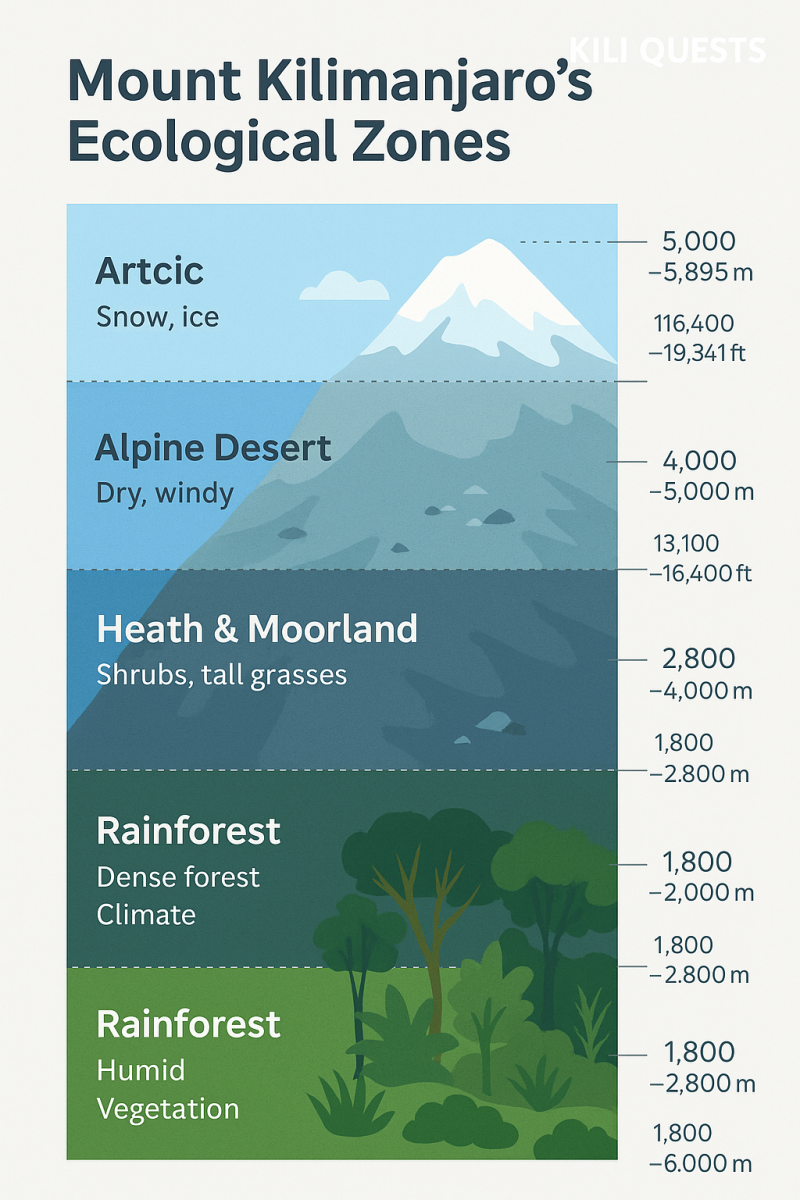
Infographic of Mount Kilimanjaro’s ecological zones showing rainforest, heath, moorland, alpine desert, and arctic summit with altitude labels in meters and feet.
Explore the five ecological zones of Mount Kilimanjaro — from lush rainforest to the icy arctic summit — each with unique climate, vegetation, and wildlife.

Cultivation Zone (800–1,800 m / 2,600–6,000 ft)

Landscape and Human Activity

This is the lowest part of Kilimanjaro, where local life thrives. The fertile volcanic soil supports farming by the Chagga people.
You’ll find coffee plantations, banana farms, and small-scale agriculture across the slopes.

Climate Conditions

  • Warm and humid
  • Regular rainfall
  • Dense green vegetation

Your Experience

Most climbs begin above this zone, but you pass through it on the way to the trailhead in Moshi or nearby villages.

Montane Forest Zone (1,800–2,800 m / 6,000–9,200 ft)

Climate and Atmosphere

This zone is humid and often covered in mist:
  • Frequent rainfall
  • Muddy, slippery trails
  • Thick cloud cover

Vegetation and Biodiversity

This is the most biologically rich zone on Kilimanjaro, filled with towering trees, moss, and dense canopy.

Wildlife

You may encounter blue monkeys, colobus monkeys, and forest birds along the trail.
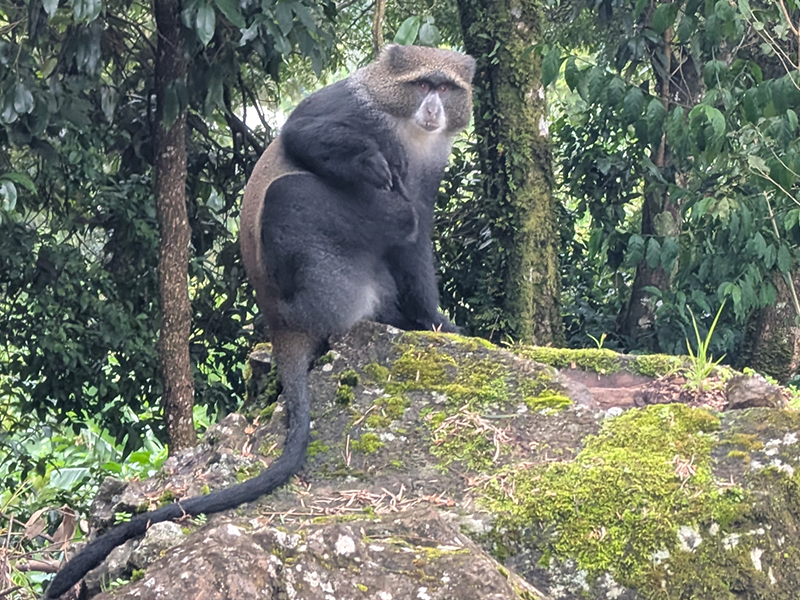
Blue monkey sitting on a moss-covered rock in the rainforest of Mount Kilimanjaro
A blue monkey (Cercopithecus mitis) rests on a mossy rock in Kilimanjaro’s montane rainforest — a common sight in the lower forest zone of the mountain.

Trekking Conditions

Because of constant moisture, this section requires proper waterproof gear.Before starting your climb, it’s important to prepare properly , this Kilimanjaro packing list guide explains exactly what you need for every zone.

Heather & Moorland Zone (2,800–4,000 m / 9,200–13,100 ft)

Transition Landscape

The dense forest disappears and opens into wide landscapes with rolling hills and volcanic rock formations.

Unique Vegetation

You’ll see giant groundsels and lobelias , plants that only grow in high-altitude environments.

Climate Conditions

  • Cooler temperatures
  • Strong UV exposure
  • Cold nights

Altitude Effects Begin

This is where altitude starts affecting most climbers. You may notice slower breathing, fatigue, or mild headaches.At this stage, understanding proper acclimatization becomes critical.
 
This is explained in detail in our guide on how to acclimatize on Mount Kilimanjaro and avoid altitude sickness.
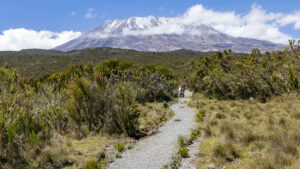
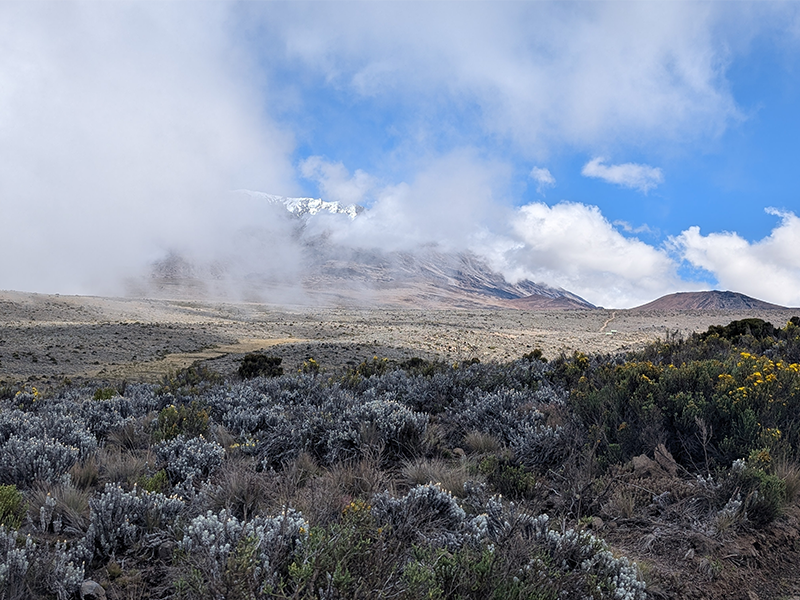
Moorland vegetation on Mount Kilimanjaro with cloud-covered summit and scattered alpine shrubs under a blue sky.
The heath and moorland zone on Mount Kilimanjaro, located between 2,800 and 4,000 meters, is known for its scattered shrubs, giant heathers, and surreal alpine landscape.

Alpine Desert Zone (4,000–5,000 m / 13,100–16,400 ft)

Environmental Conditions

This zone is dry, exposed, and extreme:
  • Strong winds
  • Very low humidity
  • Large temperature differences between day and night

Landscape

You’ll walk across volcanic rock, ash, and gravel in a landscape that feels almost lifeless.

Physical Impact

At this altitude:
  • Oxygen levels drop significantly
  • Your body tires faster
  • Hydration becomes critical
Temperature changes become more noticeable here. To understand what conditions you’ll face overnight, read the Kilimanjaro night temperature guide by altitude.
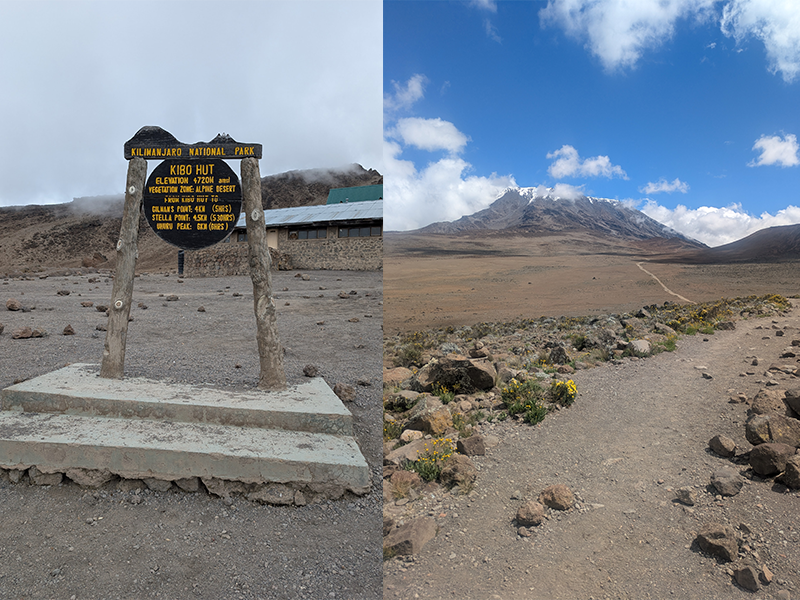
Kibo Hut signpost and view of Mount Kilimanjaro’s alpine desert zone with rocky terrain and sparse vegetation.
Kibo Hut, located at 4,720 meters, marks the start of the alpine desert zone on Mount Kilimanjaro — a dry, wind-swept region just below the summit.

Arctic Zone / Summit (5,000–5,895 m / 16,400–19,341 ft)

Climate Reality

  • Freezing temperatures
  • Strong winds
  • Extremely low oxygen levels

Landscape

This is a polar-like environment with glaciers, snowfields, and loose volcanic scree.

Summit Experience

This is the most physically and mentally demanding part of the climb. Reaching this zone means you are approaching Uhuru Peak.
 
If you’re curious about the meaning and history behind the summit, you can explore it in why it is called Uhuru Peak on Kilimanjaro.
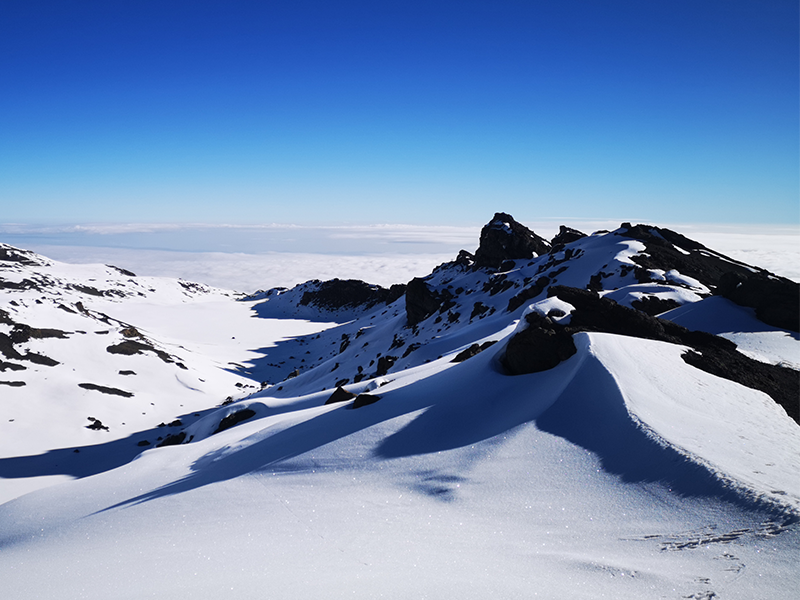
Snow-covered ridges near Stella Point on Mount Kilimanjaro with a clear blue sky above the clouds.
The arctic summit zone of Kilimanjaro near Stella Point is often blanketed in snow, offering breathtaking views above the cloud layer.

Why Understanding the Zones Matters

Gear Preparation

You are not climbing one climate , you are climbing five.
From rain in the forest to freezing temperatures at the summit, preparation is key. Make sure you’re fully equipped using this Kilimanjaro packing list.

Acclimatization Strategy

Each zone increases altitude stress on your body. Moving too fast increases the risk of altitude sickness.
 
To understand the risks and prevention, read altitude sickness on Kilimanjaro: what you need to know.

Mental Preparation

Each zone feels completely different , from vibrant rainforest to silent alpine desert. Knowing this helps you stay mentally strong during the climb.

Understanding Kilimanjaro as a Complete Journey

 Climbing Kilimanjaro is not just about reaching the summit  it’s about experiencing a full environmental transition in just a few days.From farmland to rainforest, from moorland to alpine desert, and finally to an arctic summit, the journey is what makes Kilimanjaro one of the most unique treks in the world.
 
If you’re wondering how challenging this journey really is, read our full guide on how hard it is to climb Mount Kilimanjaro.

Frequently Asked Questions About Mount Kilimanjaro’s Ecological Zones

How many ecological zones are on Mount Kilimanjaro?

 Mount Kilimanjaro has five distinct ecological zones: the cultivation zone, montane forest zone, heath and moorland zone, alpine desert zone, and the arctic summit zone. As climbers ascend the mountain, they pass through these zones, each with unique climate conditions, vegetation, and landscapes.
 

What is the rainforest zone on Mount Kilimanjaro?

The rainforest zone, also called the montane forest zone, lies between about 1,800 and 2,800 meters. It is characterized by dense vegetation, frequent rainfall, and rich biodiversity including monkeys, birds, and lush plant life.
 

At what altitude does the alpine desert zone begin on Kilimanjaro?

The alpine desert zone on Mount Kilimanjaro begins at around 4,000 meters (13,100 feet). This zone is dry and windy, with sparse vegetation and dramatic temperature changes between day and night.
 

What is the coldest ecological zone on Mount Kilimanjaro?

The coldest zone is the arctic summit zone, located above 5,000 meters. Temperatures often drop well below freezing, oxygen levels are low, and the terrain is dominated by glaciers, ice fields, and volcanic rock.
 

Why does Mount Kilimanjaro have different ecological zones?

Mount Kilimanjaro’s ecological zones are created by changes in altitude. As elevation increases, temperature drops and environmental conditions change, creating different ecosystems from tropical farmland to arctic summit conditions.

Climb with Experts Who Know the Zones

At Kili Quests, our guides are trained to navigate every zone , from dense forests to glacial ridges. We help you adjust to each stage of the mountain with expert pacing, acclimatization, and gear advice.Make sure to check our [Essential Kilimanjaro Packing List 2025] to avoid missing anything important.
 
If you’re new to high-altitude trekking, our [Altitude Sickness Tips & Risks] guide can help you stay safe.

Contact us today to start your Kilimanjaro climb 

Related Articles