Climb Through Five Kilimanjaro Zones
Kilimanjaro changes from rainforest to alpine desert and arctic summit. We help you choose the right route and prepare for each stage of the mountain.
- Route advice for scenery
- Gear tips for changing terrain
- Local guide support from forest to summit
Explore More Kilimanjaro Planning Guides
Your route, preparation, and strategy will shape your entire climb. Explore these essential guides:
OUR CATEGORIES
Kilimanjaro Ecological Zones: Vegetation & Altitude Guide
Mount Kilimanjaro is not just a climb to Africa’s highest summit. It is a journey through five completely different natural worlds stacked on one mountain.
As you ascend from the lower slopes to Uhuru Peak at 5,895 meters, the landscape changes from cultivated farmland to dense rainforest, open moorland, dry alpine desert, and finally the cold arctic summit zone. Few treks in the world offer such a dramatic environmental change in such a short time.
These ecological zones shape what climbers see, feel, and experience each day. The vegetation changes. The air becomes thinner. The terrain becomes more exposed. Wildlife becomes less common. Nights become colder. Even the mood of the mountain changes as you move higher.
This guide explains Kilimanjaro’s five ecological zones, including their altitude ranges, vegetation, wildlife, terrain, and what climbers should expect in each section of the mountain.
Before choosing your route, it also helps to compare Kilimanjaro routes because different trails pass through these zones in different ways.
Quick Answer: What Are Kilimanjaro’s Ecological Zones?
Mount Kilimanjaro has five main ecological zones: the cultivation zone, montane forest zone, heath and moorland zone, alpine desert zone, and arctic summit zone.
As climbers gain altitude, the mountain changes dramatically. The lower slopes are warmer, greener, and more humid. Higher up, the landscape becomes cooler, drier, rockier, and more exposed. Near the summit, vegetation almost disappears, and climbers enter a cold, arctic-like environment with ice, scree, and thin air.
These zones are one reason Kilimanjaro feels so unique. In one climb, you move from farms and rainforest to giant groundsels, volcanic desert, and the icy summit area near Uhuru Peak. Understanding these zones helps you prepare for the scenery, terrain, altitude, and changing conditions you will experience during the trek.
The Five Ecological Zones of Mount Kilimanjaro
Kilimanjaro’s ecological zones are created by altitude. As you climb higher, temperature drops, rainfall patterns change, vegetation becomes thinner, and the landscape becomes more exposed. This is why Kilimanjaro feels like several different treks in one journey.
| Ecological Zone | Altitude Range | Landscape & Vegetation | What Climbers Experience |
|---|---|---|---|
| Cultivation Zone | 800–1,800 m 2,600–6,000 ft |
Farms, coffee plantations, banana trees, villages, and fertile volcanic soil. | Warm lower slopes and cultural scenery before reaching the main trailheads. |
| Montane Forest Zone | 1,800–2,800 m 6,000–9,200 ft |
Dense rainforest, moss-covered trees, ferns, vines, monkeys, and forest birds. | Humid air, muddy trails, frequent mist, and rich biodiversity. |
| Heath & Moorland Zone | 2,800–4,000 m 9,200–13,100 ft |
Open hills, giant groundsels, lobelias, heathers, volcanic rock, and wide views. | Cooler air, stronger sun, colder nights, and the first noticeable altitude effects. |
| Alpine Desert Zone | 4,000–5,000 m 13,100–16,400 ft |
Dry volcanic terrain, gravel, ash, sparse plants, open ridges, and exposed slopes. | Stronger wind, colder nights, dry air, slower walking, and more serious altitude pressure. |
| Arctic Summit Zone | 5,000–5,895 m 16,400–19,341 ft |
Ice, glaciers, scree, volcanic rock, snowfields, and almost no vegetation. | Freezing temperatures, thin air, strong winds, and the final push to Uhuru Peak. |
For weather conditions like rain, wind, clouds, and muddy trails, use our Kilimanjaro Weather Conditions guide before your climb.
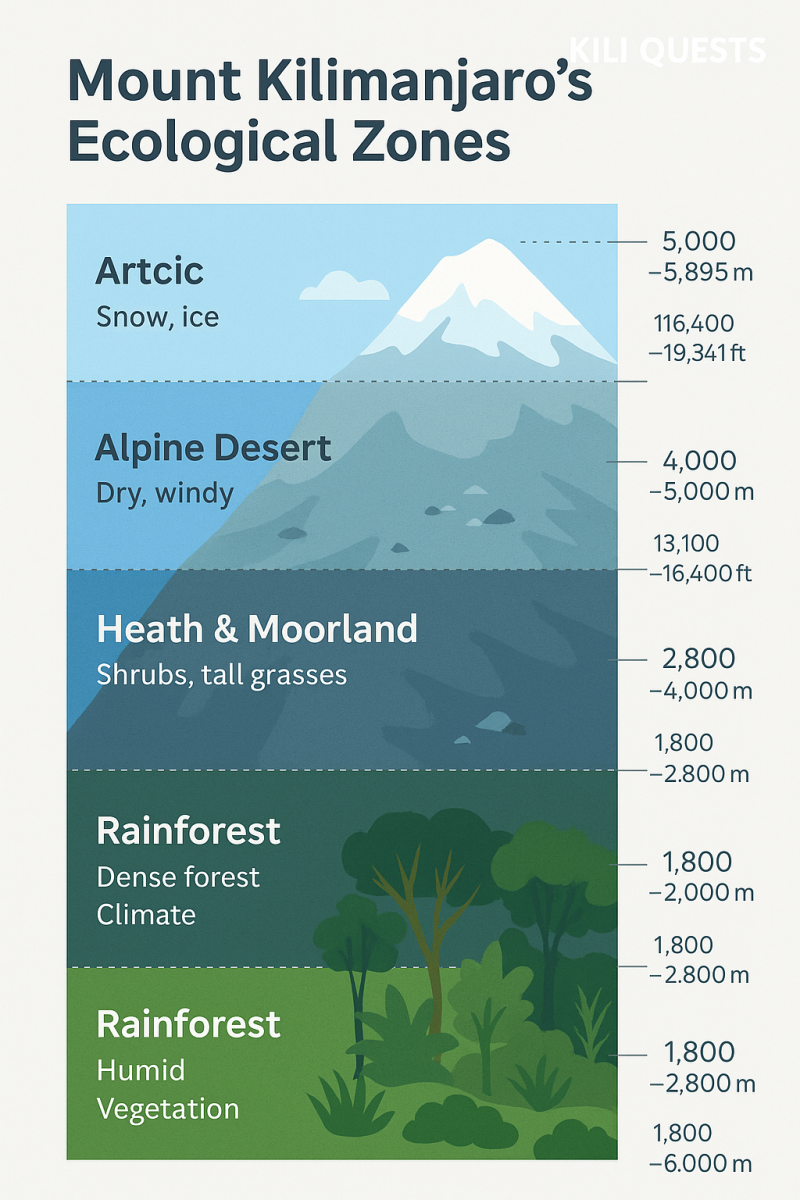
Table of Contents
Cultivation Zone: Kilimanjaro’s Lower Slopes
The cultivation zone is the lowest ecological zone on Mount Kilimanjaro. It sits on the fertile lower slopes where volcanic soil, rainfall, and local farming communities shape the landscape.
Most climbers do not spend much trekking time in this zone, but they often pass through it on the way to the trailhead. It gives the first view of how closely Kilimanjaro is connected to local life.
Landscape and Vegetation
This zone is green, warm, and heavily used for farming. You may see banana trees, coffee farms, maize fields, small villages, and cultivated land around the base of the mountain.
The fertile soil comes from Kilimanjaro’s volcanic past, making the lower slopes highly productive for agriculture.
Wildlife and Local Life
The cultivation zone is more about people and farming than wild mountain scenery. It is home to local communities, especially the Chagga people, who have lived on the slopes of Kilimanjaro for generations.
This zone shows that Kilimanjaro is not only a trekking destination. It is also a living cultural landscape.
What Climbers Experience
For most trekkers, the cultivation zone is part of the approach to the climb rather than a full trekking stage. The air is warmer, the land is greener, and the mountain may appear above farms and villages before you enter the national park.
This lower zone helps set the scene before the trail moves into denser forest and higher mountain terrain.
Montane Forest Zone: Rainforest, Mist, and Wildlife
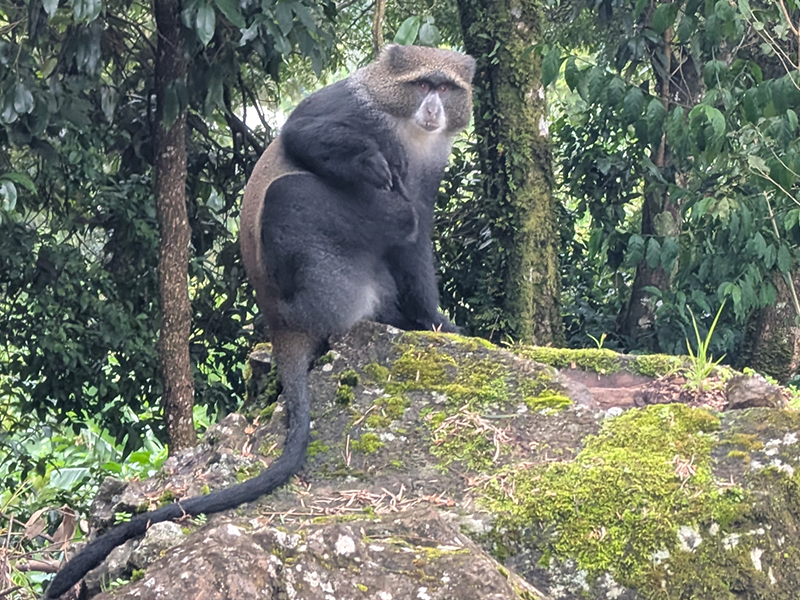
The montane forest zone is one of the richest and most atmospheric parts of Mount Kilimanjaro. After leaving the lower slopes, climbers enter a dense rainforest filled with tall trees, moss, ferns, vines, and mist.
This zone feels completely different from the open mountain terrain higher up. It is greener, wetter, more enclosed, and full of life.
Landscape and Vegetation
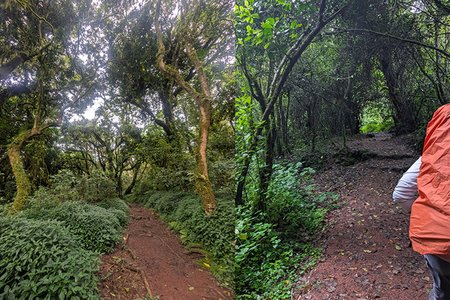
The forest zone is thick, humid, and often damp. Trees grow tall, the canopy blocks direct sunlight, and the trail may pass through moss-covered trunks, tangled roots, and muddy sections.
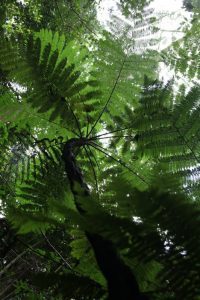
Common vegetation includes ferns, vines, mosses, and broadleaf forest plants. Because this zone receives more moisture than higher elevations, it supports some of the densest plant life on Kilimanjaro.
Wildlife in the Forest Zone
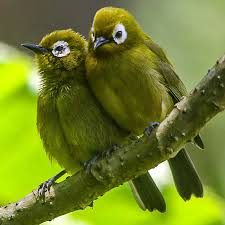
This is one of the best areas on Kilimanjaro for seeing wildlife. Climbers may spot blue monkeys, black-and-white colobus monkeys, forest birds, and other small animals.
Wildlife sightings are never guaranteed, but the forest zone gives climbers the best chance to experience Kilimanjaro as a living ecosystem, not just a mountain trail.
What Climbers Experience
The forest zone can be beautiful, but it can also be wet and slippery. Rain, mist, and mud are common, especially during wetter months or after recent rainfall.
Climbers should expect humid air, shaded trails, softer ground, and occasional muddy sections. Good waterproof boots and trekking poles can make this part of the climb more comfortable.
For more detail on rain, mud, clouds, and trail conditions, read our Kilimanjaro Weather Conditions guide.
Heath and Moorland Zone: Giant Plants and Open Views
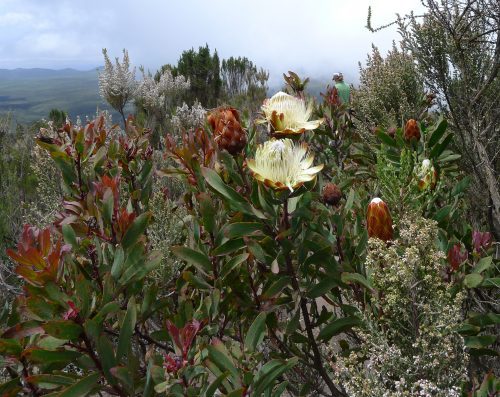
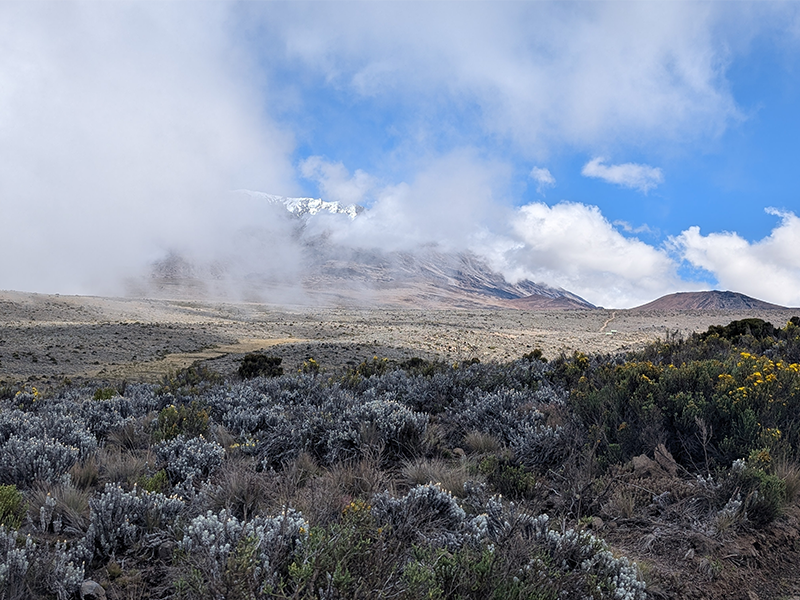
The heath and moorland zone is where Kilimanjaro starts to feel more open, wild, and high-altitude. The dense rainforest disappears, the trail becomes more exposed, and climbers begin to see wider views of the mountain landscape.
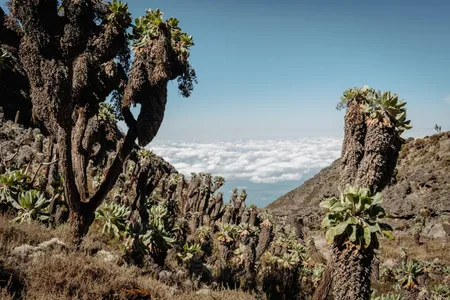
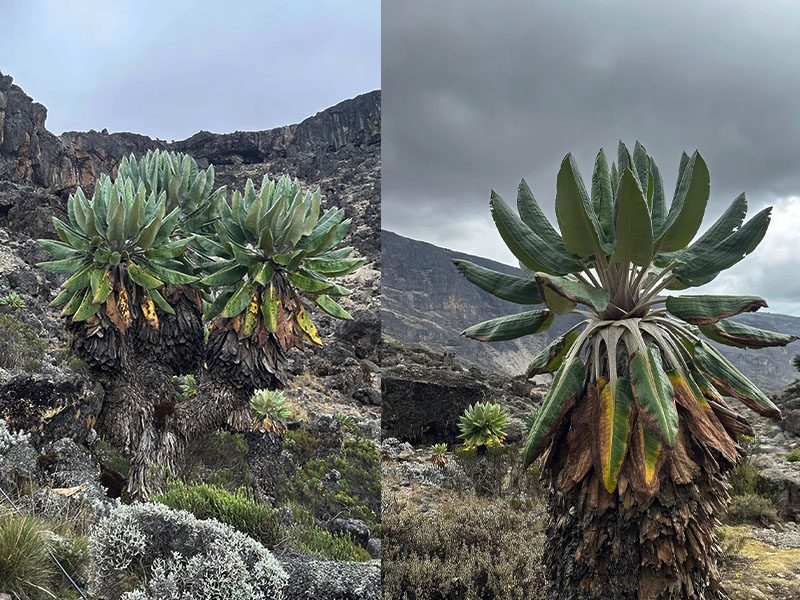
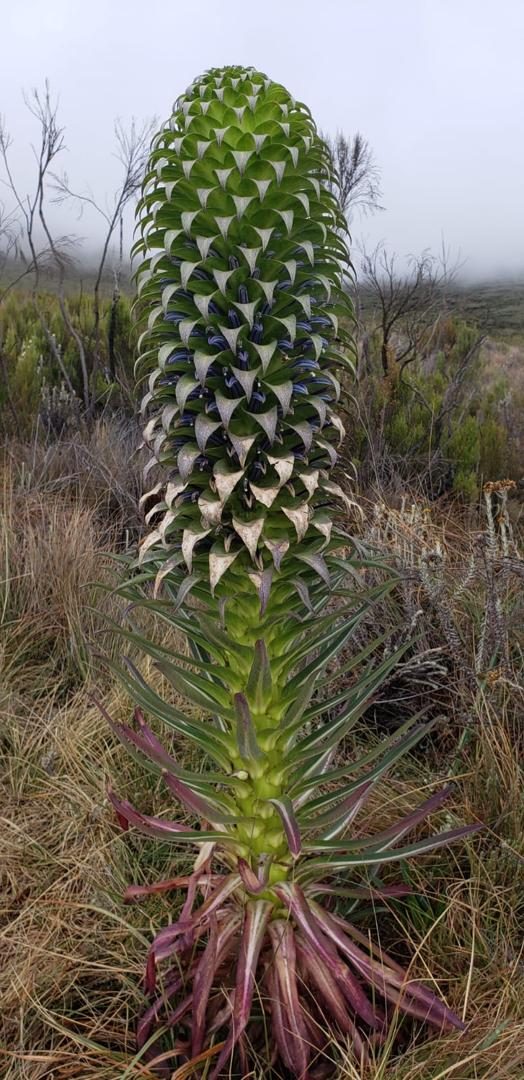
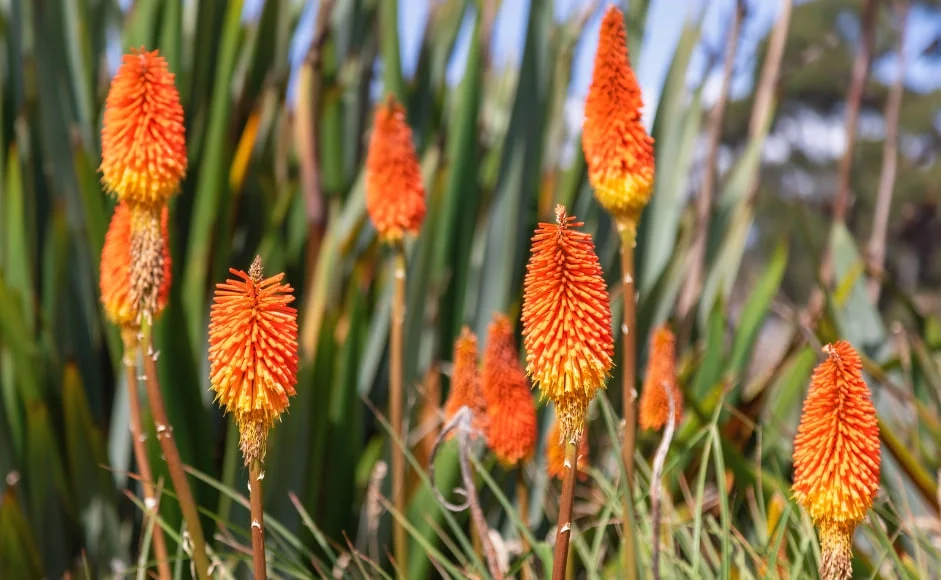
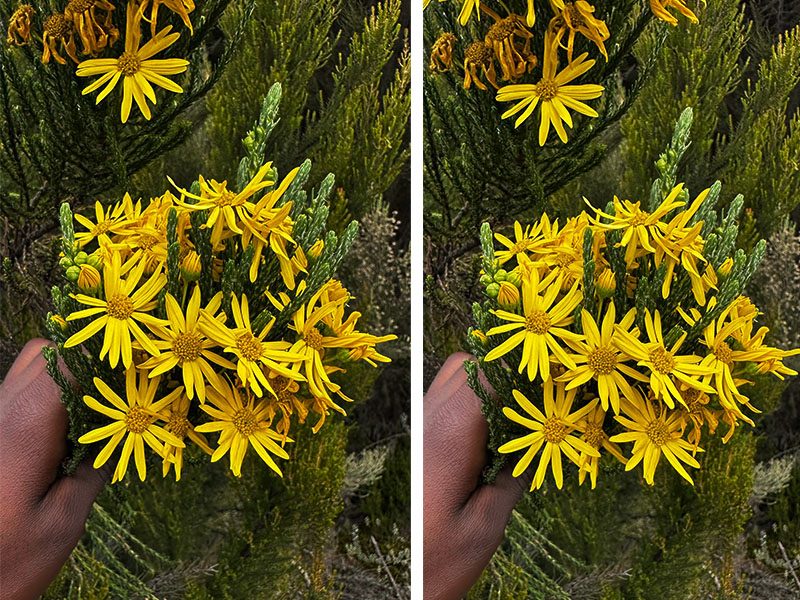
This zone is famous for its unusual high-altitude plants, especially giant groundsels and lobelias. These plants give the moorland a strange, almost prehistoric feeling that many climbers remember long after the trek.
Landscape and Vegetation
The landscape changes from thick forest to open hills, volcanic rock, shrubs, heathers, giant groundsels, and lobelias. The air is cooler, the sun can feel stronger, and the trail often feels more spacious than the forest below.
This is one of the most visually interesting zones on Kilimanjaro because the plants are adapted to harsh mountain conditions. They survive cold nights, strong sun, and changing moisture levels.
Wildlife and Plant Life
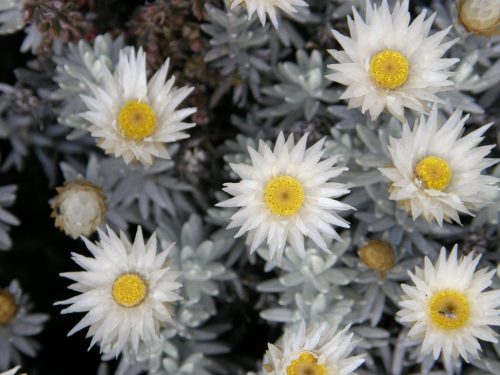
Wildlife becomes less common than in the forest, but the plant life becomes more unique. Giant groundsels, lobelias, heathers, and alpine shrubs dominate the scenery.
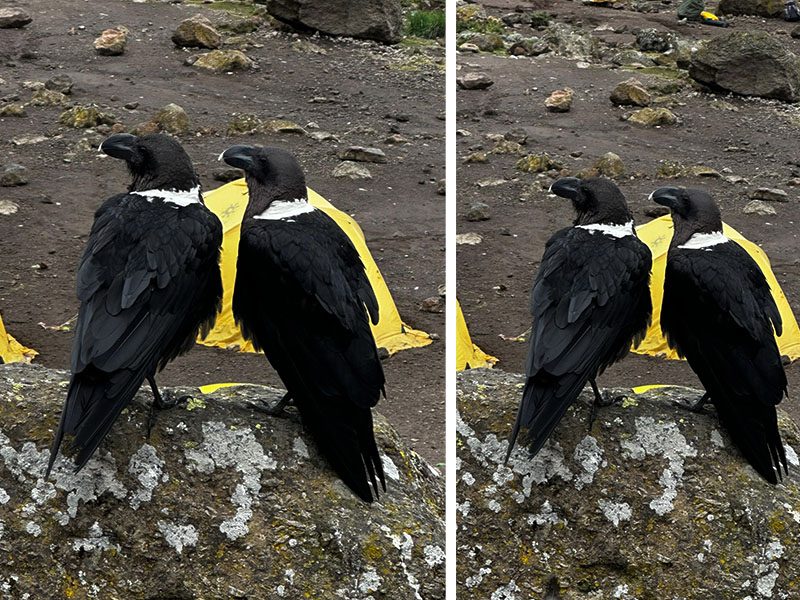
Birds may still be seen, and small animals may appear, but this zone is more known for its strange vegetation and open mountain views than for large wildlife.
What Climbers Experience
This is where many climbers first feel the altitude more clearly. Breathing may become slower, walking pace becomes more important, and nights begin to feel colder.
The heath and moorland zone is also where layering becomes more important. You may feel warm while walking in the sun, then cold quickly when clouds move in or when you stop for a break.
If you are preparing for the altitude changes that begin around this stage, read our Acclimatization Tips on Kilimanjaro guide before your climb.
Alpine Desert Zone: Dry, Exposed, and Almost Lifeless
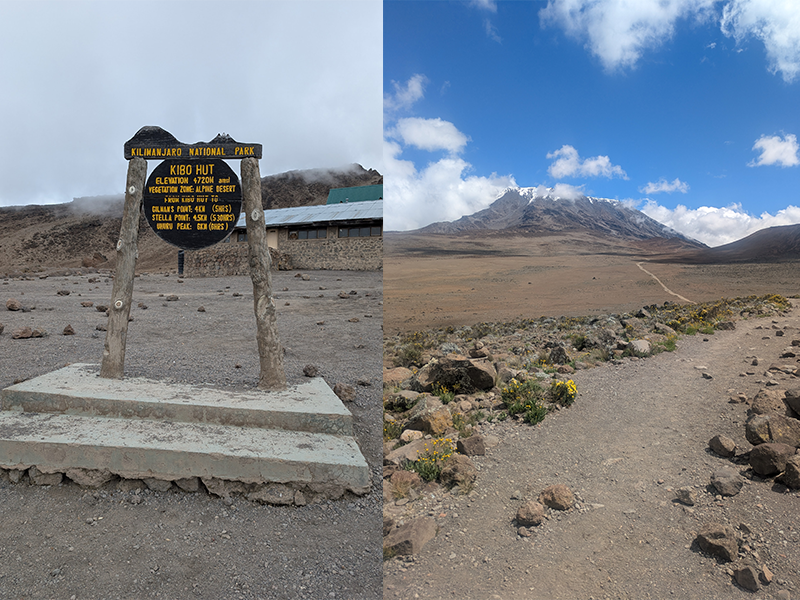
The alpine desert zone is one of the harshest parts of Mount Kilimanjaro. By this stage, the mountain feels drier, colder, emptier, and more exposed. Vegetation becomes sparse, the ground turns rocky, and the landscape starts to feel more like another planet than a normal hiking trail.
This zone is important because it shows how quickly Kilimanjaro changes with altitude. The rainforest and giant plants are now behind you. Ahead, the mountain becomes more serious.
Landscape and Vegetation
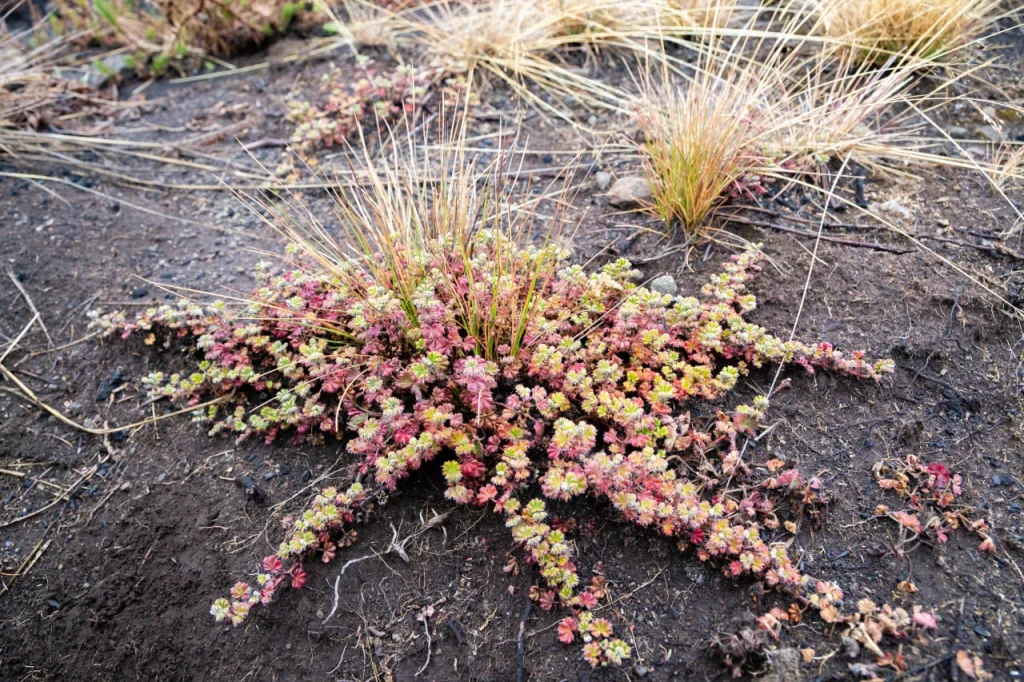
The alpine desert zone has very little plant life. The terrain is mostly volcanic rock, gravel, ash, dust, and open slopes. A few hardy plants may survive in protected areas, but compared with the forest and moorland zones, this section feels almost empty.
The lack of vegetation makes the landscape feel wide and exposed. There is less shade, less shelter, and more direct contact with sun, wind, and cold.
Terrain and Mountain Conditions
This zone can feel dry during the day and very cold at night. The sun may be strong when skies are clear, but the air is thin and the temperature can drop quickly after sunset.
Climbers should expect:
- Rocky and dusty trails
- Stronger wind exposure
- Dry air
- Bigger temperature changes between day and night
- Fewer plants and less natural shelter
- More noticeable altitude effects
This is where hydration, pacing, and proper layering become even more important.
What Climbers Experience
The alpine desert zone often feels mentally different from the lower mountain. The scenery is dramatic, but the environment is less forgiving. Walking can feel slower, breathing may feel harder, and the body starts working more seriously against altitude.
This is also where many climbers begin to understand why Kilimanjaro is not just a simple hike. The trail may not be technical, but the altitude, dryness, wind, and exposure make this section demanding.
For cold nights and high-camp preparation, read our Kilimanjaro Night Temperature guide before your climb.
Arctic Summit Zone: Ice, Scree, and Uhuru Peak
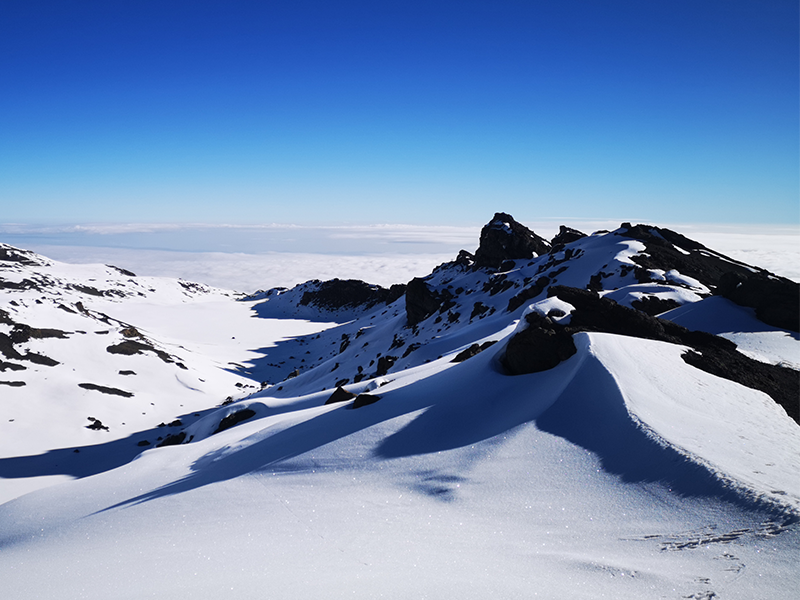
The arctic summit zone is the highest and most extreme ecological zone on Mount Kilimanjaro. Vegetation almost disappears, the air becomes very thin, and the landscape is dominated by volcanic scree, ice, snowfields, glaciers, and exposed rock.
This is the final environment climbers enter before reaching Stella Point, Gilman’s Point, or Uhuru Peak. It is beautiful, but it is also the most physically and mentally demanding part of the mountain.
Landscape and Vegetation
There is almost no vegetation in the arctic summit zone. The conditions are too cold, dry, windy, and oxygen-poor for most plant life to survive.
Instead, climbers see loose volcanic scree, frozen ground, ice formations, crater views, and the remaining glaciers near the summit. This zone feels completely different from the rainforest, moorland, and alpine desert below.
Terrain and Summit Conditions
The summit zone is harsh because several challenges come together at once:
- Freezing temperatures
- Strong wind exposure
- Loose scree underfoot
- Very low oxygen levels
- Darkness during summit night
- Slow movement because of altitude
- Mental fatigue near the final push
Most summit attempts begin around midnight, so climbers often enter this zone in darkness and cold. The terrain is not technical climbing, but the combination of altitude, cold, and exhaustion makes it the hardest section of the trek.
What Climbers Experience
This is where Kilimanjaro becomes serious. Every step feels slower, breathing becomes more deliberate, and the climb demands patience.
The reward is also powerful. As sunrise begins near the crater rim, the views above the clouds can be unforgettable. Reaching Uhuru Peak means you have crossed every ecological zone on the mountain, from cultivated lower slopes to the arctic summit of Africa.
For a full breakdown of summit-night gear, use our Kilimanjaro Summit Day Gear Checklist before your climb.
Why Kilimanjaro’s Ecological Zones Matter for Climbers
Kilimanjaro’s ecological zones are not just interesting scenery. They affect how the climb feels, how your body responds, what gear you need, and how mentally prepared you feel each day.
A climber who understands the zones is less likely to be surprised when the trail changes from humid forest to cold moorland, dry alpine desert, and freezing summit terrain.
They Help You Understand the Journey
Kilimanjaro does not feel the same from bottom to top. Each zone has its own terrain, vegetation, weather feel, and physical challenge.
The forest may feel wet and enclosed. The moorland feels open and strange. The alpine desert feels dry and exposed. The summit zone feels cold, thin, and demanding.
Understanding this progression helps you see the climb as a full mountain journey, not just a race to Uhuru Peak.
They Help You Pack Smarter
Different zones require different gear decisions. The forest may demand waterproof boots and rain protection. The moorland may require sun protection and flexible layers. The alpine desert and summit zones demand warmer clothing and stronger cold protection.
This is why a Kilimanjaro packing list should prepare you for several environments, not one simple climate.
For a complete gear breakdown, use our Kilimanjaro Packing List before your climb.
They Help You Respect Altitude
As you climb through the zones, altitude becomes more important. The higher you go, the thinner the air becomes and the more carefully you need to manage pace, hydration, and rest.
The ecological zones make this change visible. Vegetation becomes smaller, the landscape becomes harsher, and your body starts to work harder.
If you are new to high-altitude trekking, read our Altitude Sickness on Kilimanjaro guide before your trip.
They Make the Climb More Meaningful
Kilimanjaro is not only about reaching the summit. The mountain is special because the journey changes so dramatically along the way.
When you understand the zones, you notice more: the farms on the lower slopes, the monkeys in the forest, the giant groundsels in the moorland, the silence of the alpine desert, and the icy summit landscape near Uhuru Peak.
Kilimanjaro Is a Journey Through Five Natural Worlds
Climbing Kilimanjaro is not only about reaching Uhuru Peak. The mountain is powerful because every stage feels different. You begin near farms and villages, enter dense rainforest, walk through strange giant plants, cross dry volcanic desert, and finish in an arctic summit environment.
That variety is what makes Kilimanjaro one of the most unique trekking mountains in the world. Few climbs allow you to move through so many ecosystems without technical climbing.
Why the Route You Choose Matters
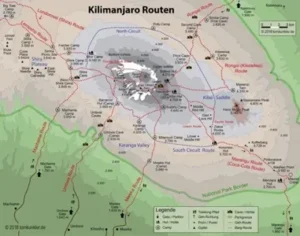
Not every route gives the same ecological-zone experience. Some routes spend more time in scenic moorland. Some feel drier and more remote. Some offer better views of Kibo, Mawenzi, or the Shira Plateau.
This is why route choice matters if you care about scenery, photography, solitude, and acclimatization. Before choosing your itinerary, compare Kilimanjaro routes so you understand how each trail changes the mountain experience.
What Makes Kilimanjaro’s Zones Special
The zones make the climb feel like a natural story. The lower mountain shows local life and fertile land. The forest shows biodiversity. The moorland shows strange high-altitude plants. The alpine desert shows exposure and altitude. The summit zone shows the extreme final environment near the Roof of Africa.
When climbers understand this progression, they enjoy the journey more. They know what they are seeing, why the landscape changes, and why each stage demands different preparation.
The Summit Is Only One Part of the Experience
Reaching Uhuru Peak is the goal, but the zones are part of the reward. If you only focus on the summit, you miss much of what makes Kilimanjaro special.
The mountain gives you a full environmental transition in just a few days. That is why Kilimanjaro is not just a high-altitude trek. It is a complete journey from rainforest to arctic summit.
Frequently Asked Questions About Mount Kilimanjaro’s Ecological Zones
How many ecological zones are on Mount Kilimanjaro?
Mount Kilimanjaro has five main ecological zones: the cultivation zone, montane forest zone, heath and moorland zone, alpine desert zone, and arctic summit zone.
These zones change as altitude increases. The lower mountain is warmer, greener, and more humid, while the upper mountain becomes colder, drier, rockier, and more exposed.
What are the five ecological zones of Kilimanjaro?
The five ecological zones of Kilimanjaro are:
- Cultivation zone
- Montane forest zone
- Heath and moorland zone
- Alpine desert zone
- Arctic summit zone
Each zone has different vegetation, terrain, wildlife, and climbing conditions. This is one reason Kilimanjaro feels like several different treks in one climb.
Which Kilimanjaro zone has the most wildlife?
The montane forest zone has the most wildlife. This lower forest section has dense vegetation, more moisture, and better habitat for animals and birds.
Climbers may see blue monkeys, black-and-white colobus monkeys, forest birds, and other small wildlife. Sightings are never guaranteed, but the rainforest zone gives the best chance of seeing animals on Kilimanjaro.
Which ecological zone has giant groundsels and lobelias?
Giant groundsels and lobelias are found mainly in the heath and moorland zone. This zone sits above the rainforest and has cooler air, open views, shrubs, heathers, and unusual high-altitude plants.
For many climbers, this is one of the most memorable parts of Kilimanjaro because the plants look strange, ancient, and very different from normal forest vegetation.
At what altitude does the alpine desert zone begin on Kilimanjaro?
The alpine desert zone begins around 4,000 meters and continues up to about 5,000 meters. This section is dry, rocky, windy, and exposed, with very little vegetation.
Climbers often feel the altitude more strongly in this zone. The air is thinner, the trail feels more demanding, and nights become much colder.
What is the coldest ecological zone on Kilimanjaro?
The coldest ecological zone is the arctic summit zone. This zone begins around 5,000 meters and continues to Uhuru Peak at 5,895 meters.
The summit zone has freezing temperatures, strong winds, very thin air, scree, ice, and almost no vegetation. Most climbers enter this zone during summit night, which is usually the hardest stage of the climb.
Why does Kilimanjaro have different ecological zones?
Kilimanjaro has different ecological zones because altitude changes the mountain environment. As elevation increases, temperatures drop, rainfall patterns change, oxygen becomes thinner, and vegetation becomes more limited.
This creates a dramatic transition from cultivated lower slopes and rainforest to moorland, alpine desert, and the arctic summit zone.
Experience Kilimanjaro’s Ecological Zones With Kili Quests
Kilimanjaro is not just a summit climb. It is a journey through farms, rainforest, giant plants, volcanic desert, and the icy summit zone near Uhuru Peak. Each stage has its own scenery, terrain, altitude challenge, and preparation needs.
At Kili Quests, our local mountain guides help you understand what to expect as the landscape changes each day. We guide your pace, help you prepare for each altitude zone, and make sure you experience the mountain as more than just a climb to the top.
We can help you plan:
- The best route for scenery and ecological variety
- What to expect in each Kilimanjaro zone
- How to prepare for rainforest mud, moorland sun, alpine desert exposure, and summit cold
- What gear to carry for changing terrain and altitude
- How to pace your climb through each stage of the mountain
Contact Kili Quests today and tell us your preferred route, travel month, and trekking experience. We will help you plan a Kilimanjaro climb that lets you experience the full journey from rainforest to arctic summit.
Related Articles
Is Climbing Kilimanjaro Dangerous? Safety Guide
April 6, 2026
No Comments
Plan Your Kilimanjaro Climb Climb safely with the right preparation and expert support. Choose the safest route Prepare for altitude properly Climb with experienced local
Kilimanjaro Deaths Explained: Statistics, Causes & Real Risk
April 6, 2026
No Comments
Plan Your Kilimanjaro Climb Climb with the right preparation, support, and safety strategy. Choose the safest route Prepare for altitude properly Climb with expert local
Mount Kilimanjaro Difficulty: How Hard Is the Climb?
March 24, 2026
No Comments
Plan Your Kilimanjaro Climb The right route, timing, and preparation make all the difference.At Kili Quests, we help you plan based on: Best routes for