Kilimanjaro Success Rate by Route: Best Summit Chances

Maximize Your Summit Success

Climb with the right strategy and experienced local support.

Plan for a Successful Kilimanjaro Summit

Reaching the summit depends on preparation, route choice, and pacing.

OUR CATEGORIES

Kilimanjaro Success Rate by Route: Which Route Gives the Best Summit Chance?

Most climbers planning Mount Kilimanjaro ask one important question: which route gives the best chance of reaching Uhuru Peak?

The answer depends mostly on acclimatization time. Kilimanjaro is not a technical climb, but the summit reaches 5,895 meters / 19,341 feet, where altitude becomes the main challenge. Routes with more days on the mountain usually give the body better time to adjust, while shorter routes often make the climb harder because the ascent is faster.

This guide compares Kilimanjaro routes by summit success profile, route length, acclimatization, difficulty, and best fit. The goal is to help you choose a route that matches your fitness, schedule, and altitude concerns instead of choosing only the cheapest or shortest option.

Before deciding, compare all route options in Kilimanjaro Routes Comparison: Which Route Is Best? and read How to Acclimatize on Kilimanjaro to understand why route length matters.

Quick Answer: Which Kilimanjaro Route Has the Best Summit Chance?

The Northern Circuit Route usually gives climbers the strongest summit chance because it is the longest route and allows more time for acclimatization. The Lemosho Route is often the best overall choice because it balances scenery, acclimatization, route experience, and summit preparation time.
 
The Machame Route can also give a strong summit profile when done over 7 days. Shorter routes such as 5-day Marangu or steep routes such as Umbwe are usually harder because the body has less time to adjust to altitude.
 
For most climbers, the best route is not the fastest route. It is the route that gives your body enough time to adapt before summit night.
Route Recommended Days Summit Success Profile Why It Matters
Northern Circuit Route 8–9+ days Very strong Longest route with the most time for altitude adjustment.
Lemosho Route 7–8 days Very strong Gradual western approach with strong acclimatization time.
Machame Route 7 days preferred Strong when properly paced Good climb-high-sleep-low profile when not rushed.
Rongai Route 6–7 days Moderate to strong Quieter northern approach with a more gradual start.
Marangu Route 6 days preferred Lower when rushed Shorter itineraries give less time for acclimatization.
Umbwe Route 6+ days Lower for most climbers Steep, direct route with faster altitude gain.
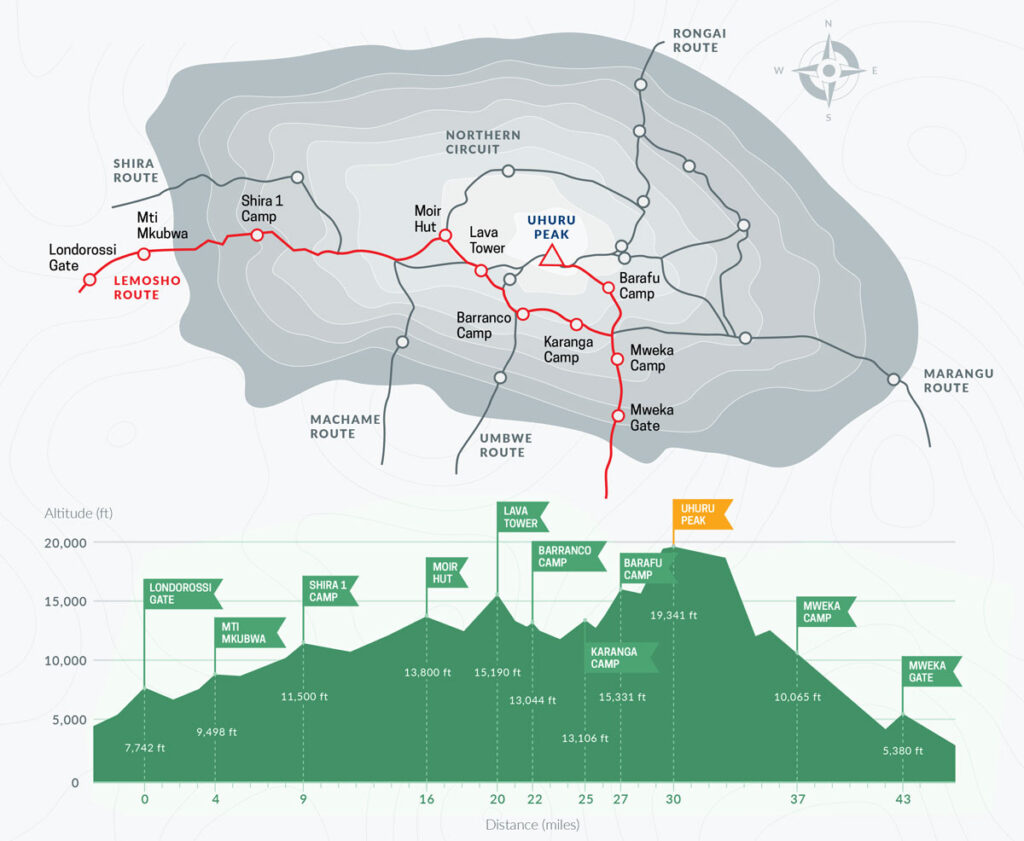
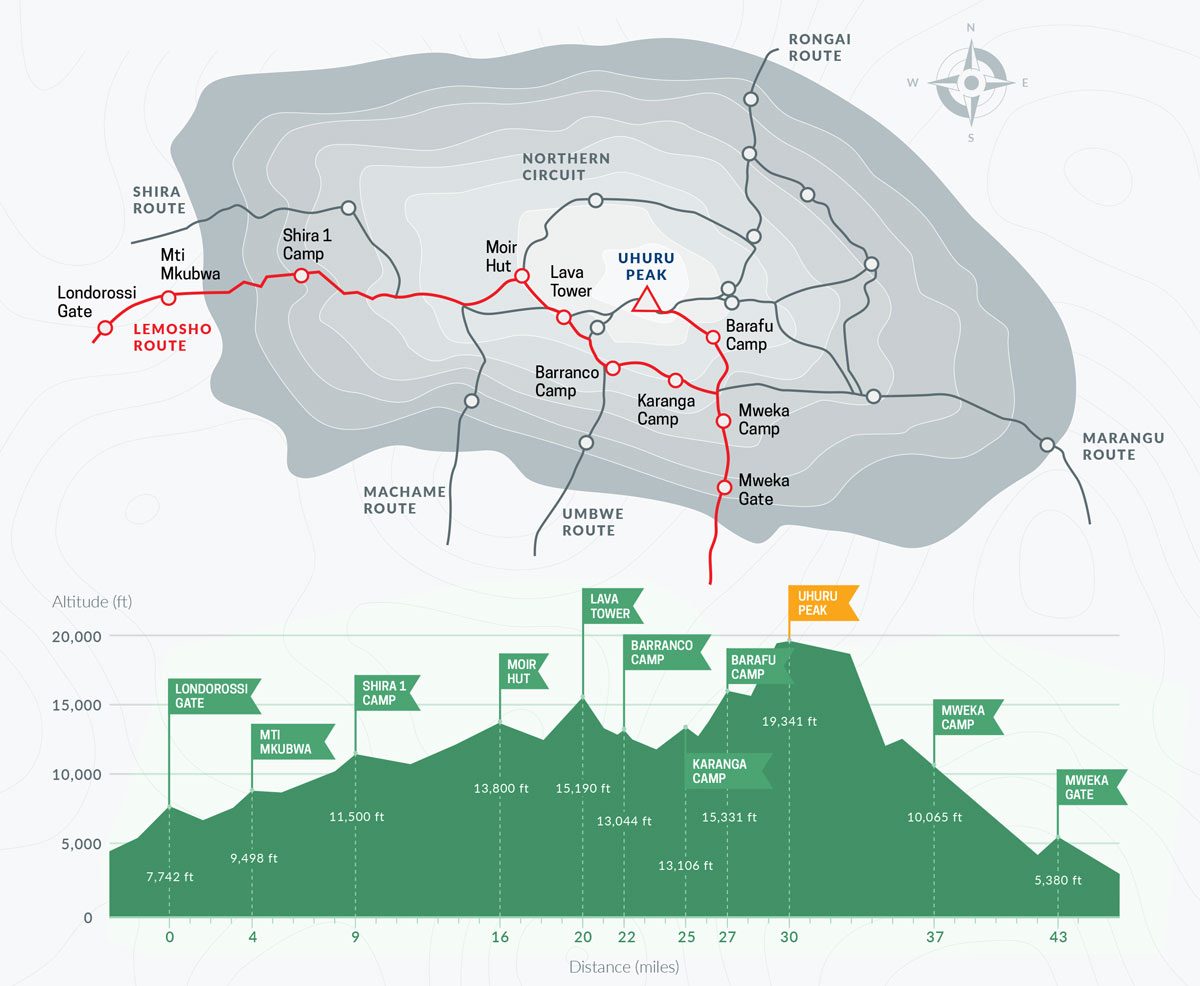
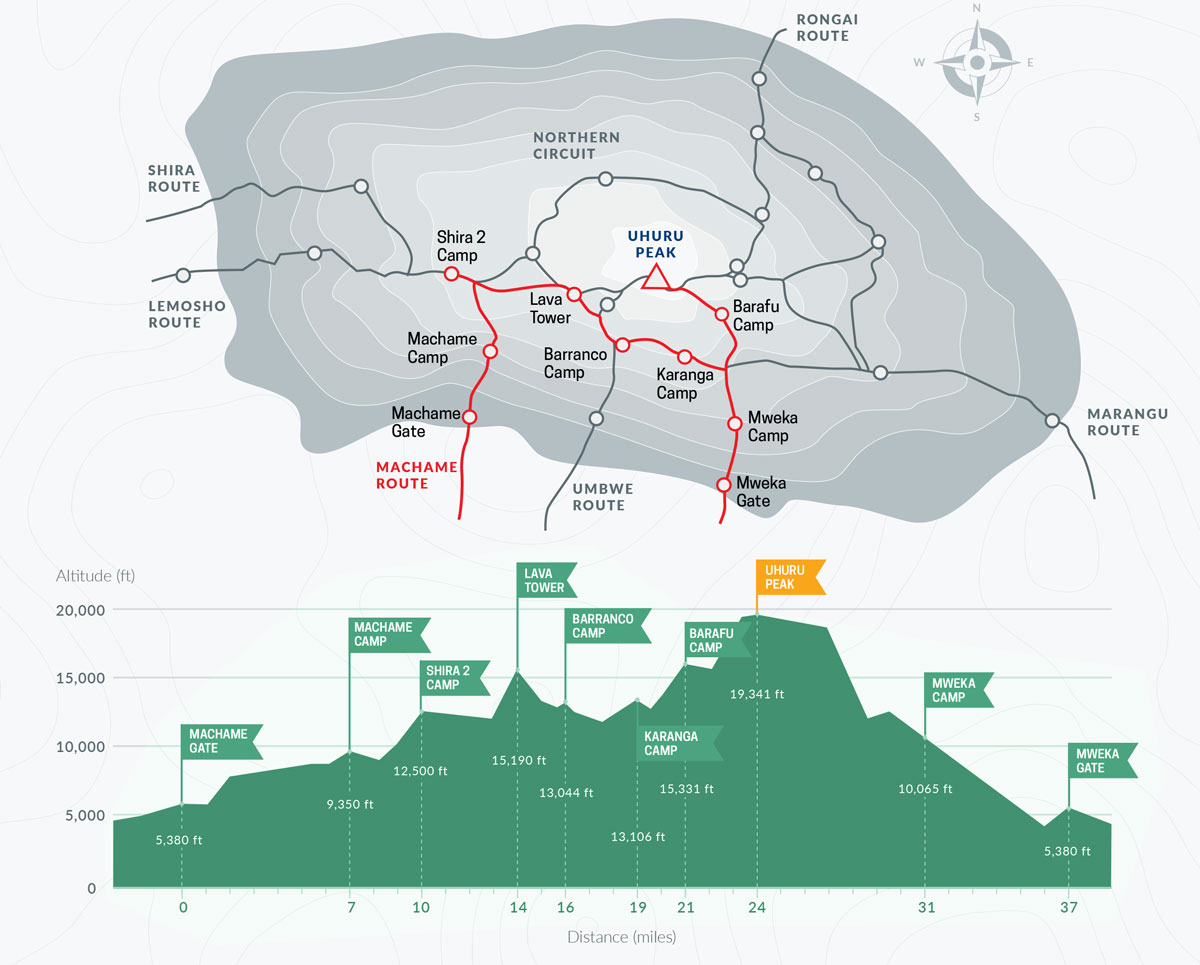
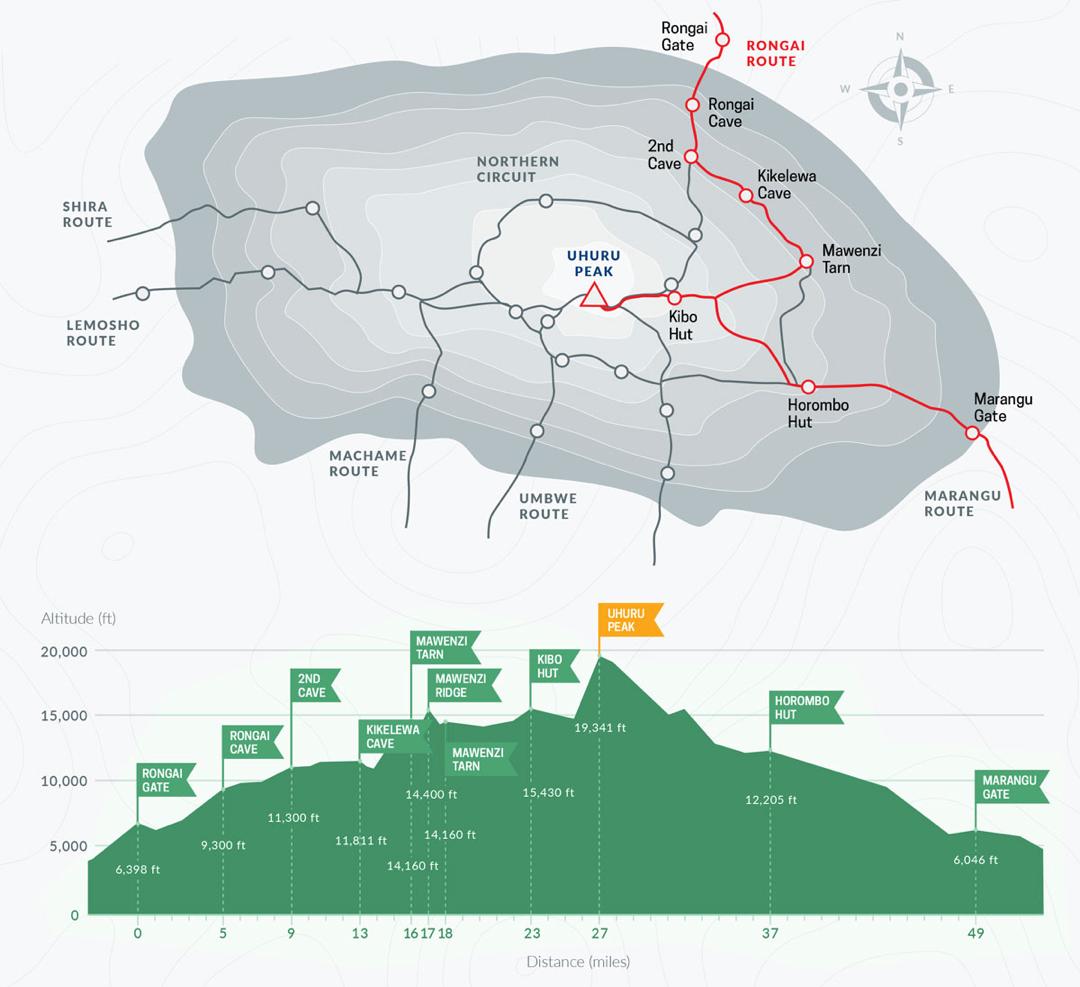
Lemosho Route map on Mount Kilimanjaro with full trail, elevation profile, and camp locations to Uhuru Peak
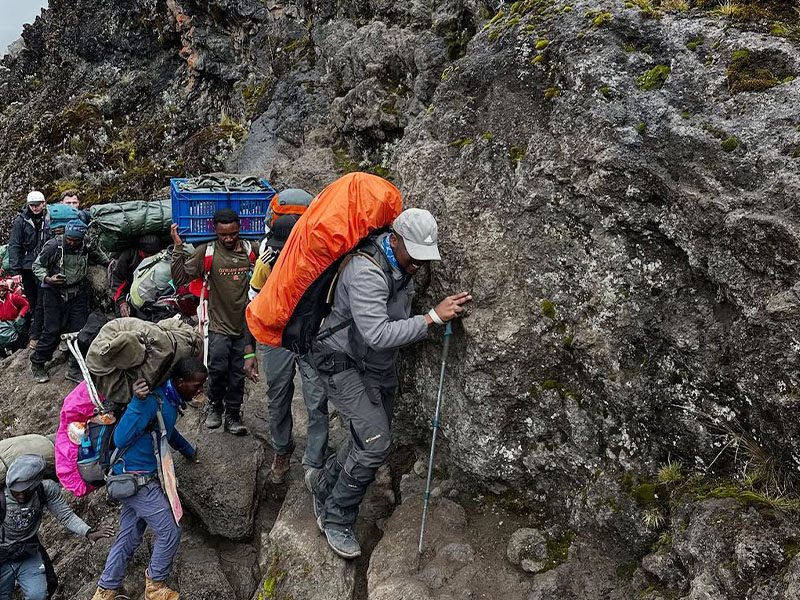
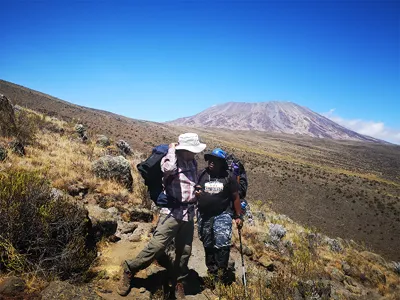
Trekkers climb Mount Kilimanjaro on a longer route with better acclimatization and higher summit success rates.

Table of Contents

What Affects Kilimanjaro Summit Success?

Kilimanjaro summit success depends on several factors, but acclimatization is usually the most important. The mountain does not require technical climbing, but the high altitude makes the final days physically and mentally demanding.
 
The main factors that affect summit success include:
  • Route length
  • Acclimatization profile
  • Walking pace
  • Fitness and endurance
  • Hydration and nutrition
  • Guide experience
  • Weather conditions
  • How early symptoms are reported
  • Mental strength on summit night
Shorter routes often make the climb harder because the body has less time to adjust to altitude. Longer routes usually give climbers better preparation before summit night because they allow more gradual acclimatization.
 
To understand the altitude side more deeply, read How to Acclimatize on Kilimanjaro and Altitude Sickness on Kilimanjaro.

Kilimanjaro Success Rate by Route

Each Kilimanjaro route has a different summit profile because each route has a different length, altitude gain, terrain style, and acclimatization pattern. The longer and more gradual routes usually give climbers a better chance of reaching Uhuru Peak.
Route Days Success Rate Difficulty Best For
Northern Circuit 8–9 90–95% Moderate Highest success rate
Lemosho 7–8 85–90% Moderate Best overall balance
Machame 6–7 70–80% Moderate Popular route
Marangu 5–6 50–60% Moderate Budget option
Umbwe 5–6 50–60% Hard Experienced climbers

Route-by-Route Summit Success Profile

Northern Circuit Route

The Northern Circuit usually gives climbers one of the strongest summit profiles on Kilimanjaro because it is the longest route. The extra days allow more time for altitude adjustment before summit night.
 
This route is a strong choice for climbers who want better acclimatization, fewer crowds, and a more gradual approach to the summit. It usually costs more because it takes more days, but the extra time can make a major difference.

Lemosho Route

The Lemosho Route is one of the best overall choices for summit preparation. It starts on the western side of Kilimanjaro and gives climbers a more gradual approach than shorter routes.
 
Lemosho is especially strong for first-time climbers who want scenery, good pacing, and better acclimatization time. The 8-day version is stronger than the 7-day version for climbers who want more time to adjust.

Machame Route

The Machame Route can have a strong summit profile when done over 7 days. It offers good scenery, varied terrain, and a useful climb-high-sleep-low pattern that helps the body adjust.
 
The 6-day Machame itinerary is more demanding because it gives less time for acclimatization. For most climbers, 7 days is the smarter choice.

Rongai Route

The Rongai Route approaches Kilimanjaro from the northern side and is usually quieter than the southern routes. It can be a good choice for climbers who want fewer crowds and a more gradual early approach.
 
Its summit profile is strongest when done over enough days. Rongai is also often considered during wetter months because the northern side is usually drier.

Marangu Route

The Marangu Route is the only main Kilimanjaro route with hut accommodation. That makes it attractive to climbers who prefer not to sleep in tents.
 
However, Marangu is often underestimated. The shorter 5-day itinerary gives limited time for acclimatization, which can reduce summit chances. If choosing Marangu, a 6-day itinerary is usually the smarter option.

Umbwe Route

The Umbwe Route is steep, direct, and physically demanding. It gains altitude quickly, which gives the body less time to adjust.
 
For most first-time climbers, Umbwe is not the best route for summit success. It is better suited to experienced trekkers who understand altitude risk and want a more aggressive climb.

Why Longer Kilimanjaro Routes Usually Have Better Summit Chances

Longer Kilimanjaro routes usually give better summit chances because they allow more time for acclimatization. Your body needs time to adjust as oxygen levels drop, and that adjustment cannot be rushed.
A route with more days helps climbers:
  • Gain altitude more gradually
  • Recover better between trekking days
  • Sleep at altitude before moving higher
  • Arrive at summit night less exhausted
  • Recognize and manage symptoms earlier
  • Follow a steadier mountain pace
Shorter routes may look attractive because they cost less and take fewer days, but they often come with a harder altitude profile. On Kilimanjaro, saving one or two days can make the climb more difficult.
 
For most climbers, the safest decision is to choose the route that gives enough time for acclimatization, not just the route that fits the shortest schedule.

Best Kilimanjaro Route by Climber Type

Climber Type Best Route Why It Fits
Best overall summit chance Northern Circuit Route Longest route with the most time for acclimatization.
Best balance for most climbers Lemosho Route Strong balance of scenery, pacing, acclimatization, and route experience.
Best popular route 7-day Machame Route Good scenery and climb-high-sleep-low profile when not rushed.
Best hut route 6-day Marangu Route Only main route with huts, but extra acclimatization time is important.
Best quiet route Rongai Route or Northern Circuit Fewer crowds and a more peaceful mountain experience.
Most demanding option Umbwe Route Steep, direct, and not ideal for most first-time climbers.
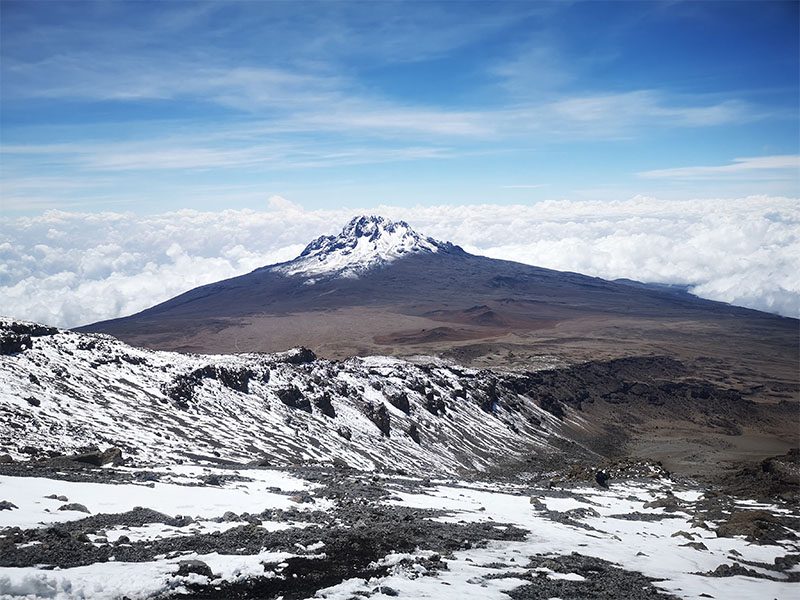
Mount Kilimanjaro rising above the African savanna with snow on the summit
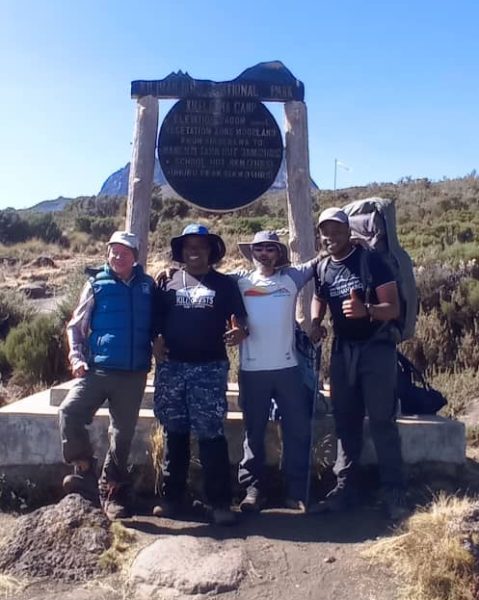
Trekkers follow a longer Kilimanjaro route where gradual ascent improves acclimatization and summit success.

How to Improve Your Kilimanjaro Summit Chances

You cannot guarantee the summit, but you can make smarter decisions that improve your chances. The strongest climbers are not always the fastest. On Kilimanjaro, patience, pacing, and acclimatization matter more than ego.

Choose a Longer Route

A longer route gives your body more time to adjust to altitude. For most climbers, 7 to 9 days is better than a rushed 5 or 6-day climb.

Walk Slowly From Day One

Do not wait until summit night to slow down. A steady “pole pole” pace from the beginning helps your body adapt gradually.

Train Before Your Climb

Training helps your legs, lungs, and mind handle long trekking days. Focus on hiking, uphill walking, stairs, cardio, and leg strength. Read Kilimanjaro Training Plan before your climb.

Hydrate and Eat Properly

At altitude, your body works harder. Drinking water regularly and eating enough food helps maintain energy and supports recovery.

Listen to Your Guides

Experienced guides monitor your pace, symptoms, oxygen levels, appetite, and overall condition. Report symptoms early and follow their advice.

Prepare Mentally for Summit Night

Summit night is long, cold, slow, and demanding. Mental patience is important because the final push often tests discipline more than speed.
 
For a deeper preparation guide, read How Hard Is Kilimanjaro?

Common Mistakes That Reduce Kilimanjaro Summit Chances

Many climbers reduce their own summit chances before they even arrive by choosing the wrong route or underestimating altitude.
Avoid these mistakes:
  • Choosing the shortest route only to save money
  • Booking a 5-day itinerary without understanding altitude risk
  • Walking too fast in the first few days
  • Ignoring headaches, nausea, dizziness, or unusual fatigue
  • Skipping meals when appetite drops
  • Drinking too little water
  • Arriving without enough training
  • Choosing Umbwe without enough experience
  • Thinking fitness alone protects you from altitude
The mountain should not be treated like a race. The best decision is to choose enough days, walk slowly, report symptoms early, and follow your guide’s pace.

Frequently Asked Questions About Kilimanjaro Success Rates

Which Kilimanjaro route gives the best summit chance?

The Northern Circuit usually gives climbers the strongest summit chance because it is the longest main route and allows the most time for acclimatization. Lemosho is also one of the strongest choices because it offers a good balance of scenery, pacing, and altitude adjustment time.

Is Lemosho or Northern Circuit better for summit success?

Northern Circuit is usually stronger for acclimatization because it takes more days. Lemosho is often the better overall choice for climbers who want excellent scenery, strong acclimatization, and a slightly shorter itinerary than Northern Circuit.

Does a longer Kilimanjaro climb improve summit chances?

Yes, longer climbs usually improve summit chances because the body has more time to adjust to altitude. A 7, 8, or 9-day climb usually gives better acclimatization than a rushed 5 or 6-day itinerary.

Which Kilimanjaro route has the lowest summit chance?

Umbwe is usually one of the hardest routes for summit success because it is steep and gains altitude quickly. Short 5-day Marangu itineraries can also be difficult because they give limited acclimatization time.

Can beginners reach the summit of Kilimanjaro?

Yes, many beginners reach Uhuru Peak with the right route, enough preparation, slow pacing, and experienced guides. For beginners, Lemosho, 7-day Machame, or Northern Circuit are usually stronger choices than short or steep routes.

Does fitness guarantee summit success on Kilimanjaro?

No. Fitness helps, but it does not guarantee success because altitude affects everyone differently. A fit climber can still struggle if they ascend too quickly, ignore symptoms, or choose a rushed route.

Choose the Kilimanjaro Route That Gives You the Best Chance

Choosing the right route is one of the most important decisions you will make before climbing Kilimanjaro. The best route is not always the cheapest, shortest, or most famous. It is the route that gives your body enough time to adjust while matching your fitness, budget, and travel schedule.
 
At Kili Quests, we help climbers choose realistic itineraries based on route profile, acclimatization time, fitness level, and summit goals. Our local guides focus on steady pacing, daily health checks, strong mountain meals, and safe summit preparation.
 
If reaching Uhuru Peak is your goal, start with the route that gives you the best chance to climb safely and confidently.

Related Articles
Machame vs Lemosho: Which Route Is Better?-Kili Quests

Choose the Right Route for Your Climb

Compare routes and get expert advice before your climb.

Kilimanjaro Planning Guides

Prepare for your climb:

OUR CATEGORIES

Machame vs Lemosho: Which Kilimanjaro Route Is Better?

Choosing between the Machame Route and the Lemosho Route is one of the most common decisions climbers face when planning a Kilimanjaro trek. Both routes are among the most popular on the mountain, and both offer beautiful scenery, strong trekking experiences, and good summit potential when properly paced.

However, they are not the same. The differences between Machame and Lemosho can affect how well you acclimatize, how crowded the trail feels, how much time you need, how much the climb costs, and how comfortable the overall experience feels.

Lemosho is known for its longer itinerary, quieter western approach, and strong acclimatization profile. Machame is popular for its balance of scenery, challenge, accessibility, and cost.

Still comparing routes? See our Kilimanjaro routes comparison guide or explore the full Machame Route guide and Lemosho Route guide for detailed breakdowns.

Quick Answer: Is Machame or Lemosho Better?

Lemosho is usually the better choice if you want more time to acclimatize, a quieter start, and a more gradual overall experience. It is especially strong for climbers who want a longer itinerary and a better summit profile.
 
Machame is usually better if you want a shorter, more affordable, and well-established Kilimanjaro route with excellent scenery and a classic trail experience. The 7-day Machame itinerary is much stronger than the 6-day version because it gives your body more time to adjust to altitude.
 
In simple terms: choose Lemosho for better acclimatization and a quieter start. Choose Machame for strong scenery, lower cost, and a shorter classic route.
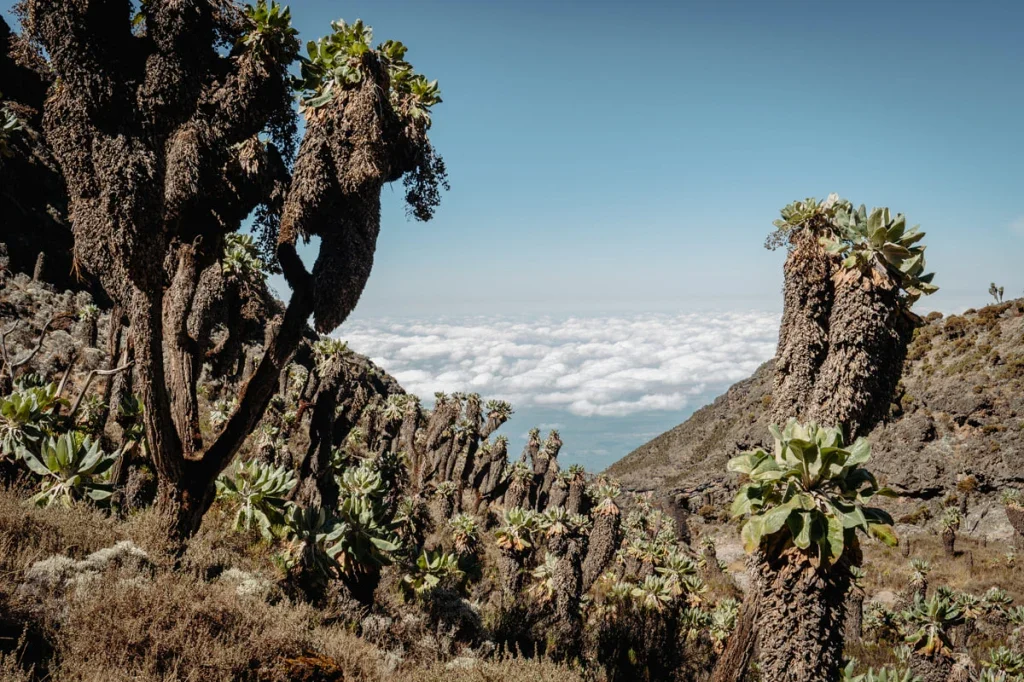
Giant groundsels in the alpine desert zone of Mount Kilimanjaro | Kili Quests
Machame vs Lemosho: comparing Kilimanjaro’s most scenic routes — a popular trail versus a quieter, more gradual approach.

Table of Contents

Overview of Machame and Lemosho Routes

Feature Machame Route Lemosho Route
Common nickname Whiskey Route No common nickname
Starting side Southern Kilimanjaro Western Kilimanjaro
Typical duration 6 or 7 days 7 or 8 days
Route experience Popular, scenic, active, and well-established Remote start, scenic landscapes, and a quieter first few days
Scenery Rainforest, moorland, alpine desert, Barranco Wall, and high summit zone Rainforest, Shira Plateau, moorland, alpine desert, Barranco Wall, and high summit zone
Crowd level Busier because it is one of the most popular Kilimanjaro routes Quieter at the beginning before joining the Machame trail later
Acclimatization Strong when completed over 7 days Stronger because of the longer 7 to 8-day itinerary
Best for Climbers who want a classic scenic route with a shorter itinerary and lower cost Climbers who want more acclimatization time, a quieter start, and a more gradual experience

What Is the Machame Route Like?

The Machame Route is one of the most popular Kilimanjaro routes and is often called the “Whiskey Route.” It is known for scenic trails, varied landscapes, and a strong acclimatization profile when completed over 7 days.
 
Machame approaches Kilimanjaro from the southern side and passes through rainforest, moorland, alpine desert, and the high summit zone. It also includes famous sections such as the Barranco Wall, which makes the route feel adventurous without requiring technical climbing skills.
 
Because Machame is well-established and widely offered, it can feel busier than Lemosho, especially during peak climbing seasons. However, it remains a strong choice for climbers who want a classic Kilimanjaro experience with excellent scenery, a shorter itinerary, and a more affordable price than longer routes.
 
For a full breakdown, see our Machame Route Kilimanjaro guide.

What Is the Lemosho Route Like?

The Lemosho Route starts on the western side of Kilimanjaro and is known for its quieter beginning, remote landscapes, and gradual approach. It is often chosen by climbers who want more time on the mountain and a stronger acclimatization profile.

The route begins in a less crowded area before crossing the Shira Plateau and later joining the same southern circuit used by Machame. This gives Lemosho a strong mix of remote scenery, open highland views, and classic Kilimanjaro trail sections.

Lemosho is usually completed over 7 or 8 days, with the 8-day itinerary offering the most comfortable pacing. Because the route gives climbers more time to adjust to altitude, it is often a better choice for those who want to improve their summit profile without rushing the climb.

Learn more in our detailed Lemosho Route Kilimanjaro guide.

Key Differences Between Machame and Lemosho

Category Machame Route Lemosho Route
Acclimatization Strong when completed over 7 days, but the 6-day version can feel more rushed. Stronger because the route is longer and more gradual, especially on the 8-day version.
Scenery Very scenic, with rainforest, moorland, alpine desert, Barranco Wall, and summit views. More varied early scenery, including a quieter western approach and the Shira Plateau.
Difficulty Physically demanding, especially on shorter itineraries because the altitude gain feels faster. Similar overall difficulty, but the longer itinerary spreads the effort over more days.
Crowds Busier because it is one of the most popular Kilimanjaro routes. Quieter at the start before joining the Machame trail later in the climb.
Cost Usually more affordable because it is shorter and starts from a more common access point. Usually costs more because it is longer and starts from the western side of the mountain.
Best choice for Climbers who want a classic scenic route, lower cost, and a shorter itinerary. Climbers who want more acclimatization time, quieter early days, and a more gradual route profile.

Acclimatization: Which Route Gives You a Better Summit Profile?

One of the biggest differences between Machame and Lemosho is how much time each route gives your body to adjust to altitude.
 
Lemosho has the advantage because it is usually climbed over 7 or 8 days. The longer itinerary creates a more gradual approach, especially during the early part of the climb. This gives climbers more time to adapt before reaching the higher camps and summit night.
 
Machame also has a strong acclimatization profile when completed over 7 days. The route follows a good “climb high, sleep low” pattern, especially around Lava Tower and Barranco Camp. However, the 6-day Machame itinerary can feel more rushed because there is less time for your body to adjust.
 
If acclimatization is your top priority, Lemosho has the stronger advantage. If you choose Machame, the 7-day itinerary is the smarter option because it gives you a better pace than the shorter 6-day version.
For a deeper explanation of altitude risk and prevention, read our Altitude Sickness on Kilimanjaro guide and Kilimanjaro Acclimatization Tips.

Scenery and Overall Experience

Both Machame and Lemosho are among the most scenic Kilimanjaro routes, but they deliver the experience differently.
 
Machame gives climbers a dramatic southern approach with rainforest, moorland, alpine desert, the Barranco Wall, and strong views toward Kibo. It feels active and energetic because it is a popular route with many climbers on the trail, especially during peak seasons.
 
Lemosho offers more variety in the early days. The route begins on the quieter western side of Kilimanjaro, crosses remote forest and heath zones, then opens onto the wide Shira Plateau before joining the southern circuit. This gives Lemosho a more gradual and spacious feel before it later shares some of the same dramatic sections as Machame.
 
If you want the most classic scenic route with a lively trail atmosphere, Machame is strong. If you want a quieter beginning, more landscape variety, and a more remote early experience, Lemosho has the edge.

Difficulty Level: Is Machame or Lemosho Harder?

Machame and Lemosho are similar in overall difficulty because both eventually follow the southern circuit and include challenging sections such as the Barranco Wall, high-altitude trekking days, and summit night.
 
Neither route requires technical climbing skills. You do not need ropes or mountaineering experience. The real challenge is endurance, altitude, and how well your body adapts as you climb higher.
 
Machame can feel harder if you choose the 6-day itinerary because the altitude gain is faster and the recovery time is shorter. The 7-day Machame itinerary gives a better pace and is usually the smarter option for most climbers.
 
Lemosho can feel more comfortable because the route spreads the effort over 7 or 8 days. The extra time does not make Kilimanjaro easy, but it gives your body more space to adjust and makes the climb feel less rushed.
 
If you are worried about difficulty, compare the 7-day Machame Route against the 8-day Lemosho Route. That is the fairest comparison for most climbers.
 
Not sure what to expect? Read our full guide on how difficult Kilimanjaro really is.

Crowd Levels: Which Route Is Quieter?

Machame is usually busier because it is one of the most popular Kilimanjaro routes. During peak climbing seasons, the camps and trail sections can feel active, especially around Machame Camp, Barranco Camp, Karanga Camp, and Barafu Camp.
 
Lemosho starts quieter because it begins on the western side of Kilimanjaro. The first few days often feel more remote and peaceful, especially before the route reaches the Shira Plateau and later joins the southern circuit.
 
However, Lemosho does not stay completely quiet for the whole climb. After it joins the trail system used by Machame, the route becomes busier, especially near Barranco, Karanga, Barafu, and summit night.
 
If you want a classic route with more energy and other climbers around, Machame is fine. If you want a quieter start and a more remote early experience, Lemosho is the better choice.

Cost and Value: Which Route Is More Affordable?

Machame is usually more affordable than Lemosho because it is shorter, easier to access, and more commonly offered by Kilimanjaro operators. A 6 or 7-day Machame climb normally costs less than a 7 or 8-day Lemosho climb.
 
Lemosho usually costs more because it takes more days, starts from the western side of the mountain, and requires more crew support, food, park fees, and logistics. The extra cost is not only about comfort. It also gives climbers more time to acclimatize and enjoy a less rushed route experience.
 
If your main priority is budget, Machame gives strong value. If your main priority is acclimatization, scenery, and a more gradual climb, Lemosho often gives better overall value despite the higher cost.
 
For a full price breakdown, read our Kilimanjaro Climb Cost guide.
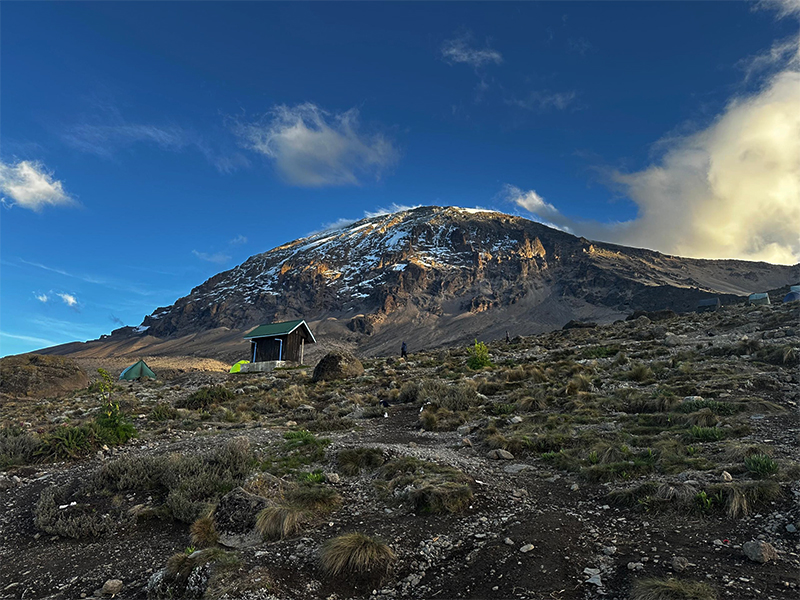
View of Kibo Peak from Karanga Camp on the Shira Route with rocky alpine terrain in the foreground.
Lemosho offers a longer and more gradual ascent, while Machame can feel steeper depending on the itinerary.

Machame vs Lemosho: Which Route Should You Choose?

Choose Lemosho if your main priority is acclimatization, a quieter start, and a more gradual climb. The route gives you more time on the mountain, especially if you choose the 8-day itinerary, which helps create a stronger summit profile.
 
Choose Machame if you want a shorter, more affordable, and classic Kilimanjaro route with excellent scenery. The 7-day Machame itinerary is the better choice for most climbers because it gives more time to adjust than the 6-day version.

Choose Lemosho If You Want More Acclimatization Time

Lemosho is the stronger choice if you want a slower approach and more time for your body to adapt to altitude. This is especially important for first-time high-altitude trekkers or anyone worried about rushing the climb.

Choose Machame If You Want a Shorter Classic Route

Machame is a strong option if you want a well-established trail, dramatic scenery, and a shorter itinerary. It is especially good for climbers who want a classic Kilimanjaro experience without the extra time and cost of Lemosho.

Choose Lemosho If You Prefer a Quieter Start

Lemosho begins on the western side of Kilimanjaro, so the first few days are usually quieter and more remote. This makes the early part of the climb feel more peaceful before the route later joins the busier southern circuit.

Choose Machame If You Are Watching Your Budget

Machame is usually more budget-friendly because it is shorter and easier to access. If cost matters but you still want a strong scenic route, Machame is a practical choice, especially over 7 days.

Machame vs Lemosho Pros and Cons

Route Pros Cons
Machame Route
  • Classic and well-established Kilimanjaro route
  • Excellent scenery across several vegetation zones
  • Strong acclimatization profile when climbed over 7 days
  • Usually more affordable than Lemosho
  • Good option for climbers with limited time
  • Can feel crowded during peak climbing seasons
  • 6-day version can feel rushed
  • Faster altitude gain than Lemosho
  • Less remote at the beginning of the climb
Lemosho Route
  • Longer and more gradual route profile
  • Quieter western approach in the early days
  • Strong acclimatization support, especially over 8 days
  • Highly scenic route with the Shira Plateau
  • Good option for climbers who want a less rushed experience
  • Usually more expensive than Machame
  • Requires more days on the mountain
  • Later joins the busier southern circuit
  • Not ideal for climbers with a tight schedule

How to Choose the Right Route for Your Kilimanjaro Climb

Choosing between Machame and Lemosho depends on your time, budget, altitude concerns, and the kind of trail experience you want.
 
Machame is the better fit if you want a shorter, more affordable, and classic Kilimanjaro route with dramatic scenery. Lemosho is the better fit if you want more acclimatization time, a quieter start, and a more gradual approach to the mountain.
Your Priority Better Route Choice Why
Best acclimatization support Lemosho Route It gives you more time on the mountain, especially with the 8-day itinerary.
Lower overall cost Machame Route It is usually shorter and easier to access, so it normally costs less than Lemosho.
Quieter early trail experience Lemosho Route It starts on the western side of Kilimanjaro before joining the busier southern circuit later.
Classic Kilimanjaro trail Machame Route It is one of the most established and recognizable Kilimanjaro routes.
More gradual pacing Lemosho Route The longer itinerary spreads the effort over more days and feels less rushed.
Limited travel time Machame Route It can be completed in fewer days, though 7 days is better than 6 for acclimatization.
Still unsure? Compare all options in our Kilimanjaro routes comparison guide to see how Machame and Lemosho compare with Marangu, Rongai, Northern Circuit, and other routes.
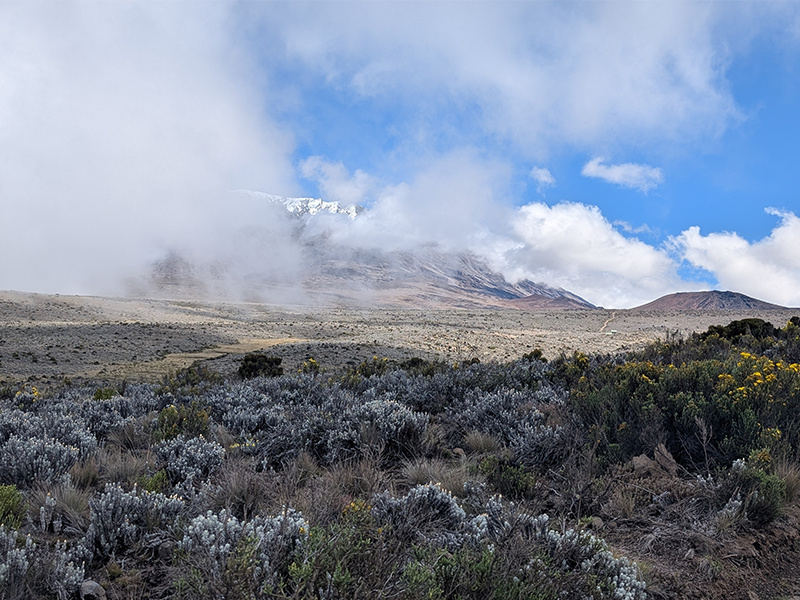
Moorland vegetation on Mount Kilimanjaro with cloud-covered summit and scattered alpine shrubs under a blue sky.
Lemosho features remote landscapes like the Shira Plateau, while Machame offers dramatic scenery across multiple zones.

Frequently Asked Questions About Machame vs Lemosho

Which route is better, Machame or Lemosho?

Lemosho is usually better if you want more acclimatization time, a quieter start, and a more gradual route profile. Machame is better if you want a shorter, more affordable, and classic Kilimanjaro route with excellent scenery. The best choice depends on your budget, schedule, fitness level, and comfort with altitude.

Is Machame or Lemosho better for beginners?

Lemosho is often the better option for beginners because it gives climbers more time to adjust to altitude, especially on the 8-day itinerary. Machame can also work well for beginners if you choose the 7-day version instead of the faster 6-day itinerary.

Is the Lemosho Route worth the extra cost?

Yes, Lemosho is worth the extra cost for many climbers because it offers a quieter start, more time on the mountain, stronger acclimatization support, and excellent scenery. If your budget allows, it is often the more comfortable choice.

Which route is more scenic, Machame or Lemosho?

Both routes are scenic, but Lemosho has the edge for variety because it starts on the western side of Kilimanjaro and crosses the Shira Plateau before joining the southern circuit. Machame is also very beautiful, especially around the rainforest, Barranco Wall, Karanga Valley, and summit zone.

Is Machame harder than Lemosho?

Machame can feel harder if you choose the 6-day itinerary because the altitude gain feels faster and there is less recovery time. Lemosho usually feels more gradual because it is climbed over 7 or 8 days. However, both routes still require good fitness, preparation, and respect for altitude.

Do Machame and Lemosho use the same trail?

Not at the beginning. Machame starts from the southern side of Kilimanjaro, while Lemosho starts from the western side. Lemosho later joins the southern circuit, so both routes share some of the same trail sections later in the climb, including areas around Barranco, Karanga, Barafu, and the summit approach.

Choose the Right Kilimanjaro Route with Local Experts

Choosing between Machame and Lemosho is not only about scenery. It is about your fitness level, time, budget, altitude concerns, and the kind of trekking experience you want.

At Kili Quests, we help you choose the Kilimanjaro route that matches your goals, travel dates, and comfort level. Whether Machame or Lemosho is the better fit, our local team will guide you toward a route and itinerary that gives you a strong, well-paced climb.
 
Contact our team for expert Kilimanjaro trip advice and a custom climb plan.

Related Articles

Lemosho Route Kilimanjaro: 8-Day Itinerary, Difficulty & Cost

Reach the Summit with Confidence

Your success depends on the right route, acclimatization, and expert guidance.
We plan every climb for a safe summit.

Plan Your Kilimanjaro Climb the Right Way

Kilimanjaro success depends on preparation and acclimatization.Explore these essential guides:

OUR CATEGORIES

Lemosho Route Kilimanjaro: 8-Day Itinerary, Difficulty & Cost

Why Choose the Lemosho Route?

The Lemosho Route is one of the best Kilimanjaro routes for climbers who want strong acclimatization, beautiful scenery, and a quieter start on the mountain. It begins on the remote western side of Mount Kilimanjaro, crosses the wide Shira Plateau, joins the southern circuit near Lava Tower, and reaches the summit from Barafu Camp.

This route is not the easiest way up Kilimanjaro, but it is one of the smartest choices for climbers who want enough time to adjust to altitude. The longer 8-day Lemosho itinerary gives your body more time to adapt, which can improve your summit chances compared with shorter, faster routes.

Lemosho is especially good for first-time Kilimanjaro climbers who want a scenic route without rushing the ascent. If you are still comparing routes, read our Kilimanjaro Routes Comparison: Which Route Is Best? to see how Lemosho compares with Machame, Marangu, Rongai, and the Northern Circuit.

Quick Answer: Is the Lemosho Route Worth It?

Yes, the Lemosho Route is worth it for most climbers who want a scenic, well-paced Kilimanjaro climb with better acclimatization. The 8-day version is the best choice for most travelers because it gives your body more time to adjust before summit night.
 
The route is especially strong for first-time climbers, photographers, and trekkers who want more than a rushed climb. It starts quietly on the western side of Kilimanjaro, crosses the Shira Plateau, passes Lava Tower and Barranco Wall, then joins the summit approach from Barafu Camp.
Best For Why Lemosho Works Well
First-time climbers The 8-day itinerary gives more time for altitude adjustment.
Scenery lovers The route crosses rainforest, Shira Plateau, Lava Tower, Barranco Wall, and alpine desert.
Climbers wanting fewer crowds early Lemosho starts on the quieter western side before joining the busier southern circuit.
Better acclimatization The route follows a gradual profile and includes the Lava Tower climb-high, sleep-low day.
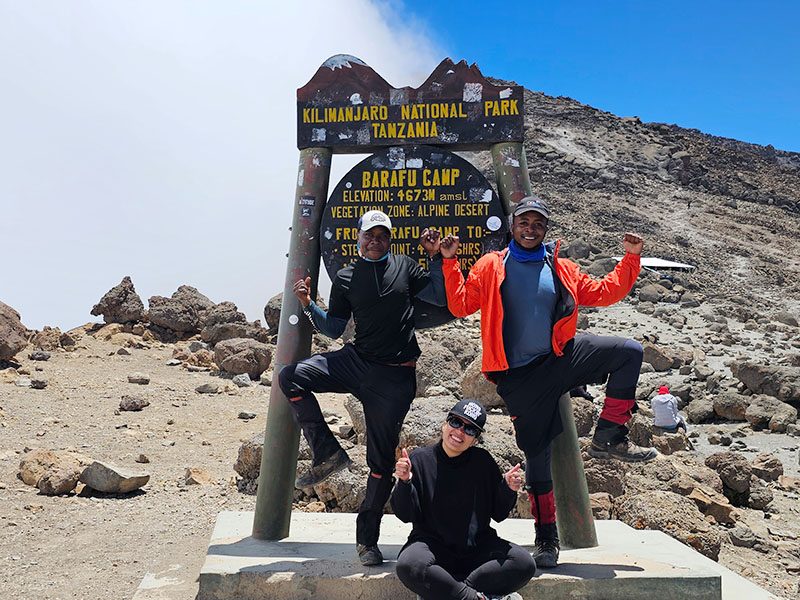
Climbers posing at Barafu Camp on the Lemosho Route before summit night on Mount Kilimanjaro
Climbers at Barafu Camp, the final staging point before summit night on the Lemosho Route.

Table of Contents

What Is the Lemosho Route on Kilimanjaro?

The Lemosho Route is a western approach route on Mount Kilimanjaro. It starts at Londorossi Gate, passes through rainforest, climbs onto the Shira Plateau, and then joins the southern circuit used by the Machame Route. From there, climbers continue toward Lava Tower, Barranco Camp, Karanga Camp, Barafu Camp, and finally Uhuru Peak.
 
The route is popular because it gives climbers a strong balance of scenery, acclimatization, and summit success. Compared with shorter routes, Lemosho gives your body more time to adapt to altitude, especially when done over 8 days.

Where Does the Lemosho Route Start?

The Lemosho Route begins at Londorossi Gate on the western side of Mount Kilimanjaro. After registration, climbers continue to the trailhead and begin walking through the rainforest toward Mti Mkubwa Camp. This western start is one reason Lemosho feels quieter and more remote during the first part of the climb.

How Long Is the Lemosho Route?

The Lemosho Route is usually completed in 7 or 8 days and covers about 70 kilometers / 43 miles. The 8-day version is strongly recommended for most climbers because it gives better acclimatization and reduces the pressure of gaining altitude too quickly.
 
If you are still deciding how many days you need, read our How Many Days to Climb Kilimanjaro guide before choosing your itinerary.

Lemosho Route Overview

Feature Details
Route Length 7 to 8 days
Distance ~70 km / 43 miles
Start Point Londorossi Gate, Western Kilimanjaro
Highest Point Uhuru Peak, 5,895 m / 19,341 ft
Difficulty Moderate to challenging
Best For Scenic views, high success rate, and fewer crowds
Success Rate ~98% on the 8-day itinerary

Lemosho Day Map and Elevation Profile

Lemosho Route map on Mount Kilimanjaro with full trail, elevation profile, and camp locations to Uhuru Peak
A scenic and well-acclimatized trail starting from Londorossi Gate and joining the Machame Route via Lava Tower.

8-Day Lemosho Route Itinerary

The 8-day Lemosho itinerary is the best version for most climbers because it gives more time for acclimatization before summit night. The route starts slowly, gains altitude gradually, and uses the important Lava Tower acclimatization day before sleeping lower at Barranco Camp.

Day 1 – Londorossi Gate to Mti Mkubwa Camp

The first day starts with registration at Londorossi Gate before entering the rainforest zone. The walk is usually short and gentle, which helps climbers begin slowly instead of rushing into altitude too fast.
  • Altitude: 2,100 m to 2,650 m
  • Hiking time: 3–4 hours
  • Zone: Rainforest
  • Camp: Mti Mkubwa Camp

Day 2: Mti Mkubwa Camp to Shira 1 Camp

Day 2 leaves the forest and climbs into the moorland zone. The trail becomes more open, and you begin to see the wide Shira Plateau. This is one of the first days where climbers start feeling the altitude, so pacing matters.
  • Altitude: 2,650 m to 3,610 m
  • Hiking time: 5–6 hours
  • Zone: Rainforest to moorland
  • Camp: Shira 1 Camp

Day 3: Shira 1 Camp to Shira 2 Camp

This is a gentler day across the Shira Plateau. The walk is not extremely steep, but it is important for acclimatization because you are now sleeping above 3,800 meters. Clear weather can give excellent views across the plateau.
  • Altitude: 3,610 m to 3,850 m
  • Hiking time: 4–5 hours
  • Zone: Moorland
  • Camp: Shira 2 Camp

Day 4: Shira 2 Camp to Barranco Camp via Lava Tower

This is one of the most important acclimatization days on the Lemosho Route. Climbers ascend to Lava Tower at about 4,640 meters, then descend to sleep at Barranco Camp. This follows the climb high, sleep-low principle, which helps the body adjust before going higher.
  • Altitude: 3,850 m to 4,640 m, then down to 3,960 m
  • Hiking time: 6–7 hours
  • Zone: Alpine desert
  • Camp: Barranco Camp
This is also the day when some climbers may start noticing altitude symptoms. Read our Altitude Sickness on Kilimanjaro guide so you understand what symptoms are normal and which signs should not be ignored.

Day 5: Barranco Camp to Karanga Camp

Day 5 begins with the Barranco Wall, one of the most famous parts of the Lemosho Route. It looks intimidating from camp, but most climbers find it manageable with slow movement and guide support. After the wall, the trail continues through valleys and ridges toward Karanga Camp.
  • Altitude: 3,960 m to 4,035 m
  • Hiking time: 4–5 hours
  • Highlight: Barranco Wall
  • Camp: Karanga Camp

Day 6: Karanga Camp to Barafu Camp

This is a shorter but important day because Barafu Camp is the base camp for summit night. Climbers arrive, rest, eat early, prepare summit gear, and try to sleep before the midnight summit push.
  • Altitude: 4,035 m to 4,673 m
  • Hiking time: 3–4 hours
  • Zone: Alpine desert
  • Camp: Barafu Camp

Day 7: Barafu Camp to Uhuru Peak, then down to Mweka Camp

Summit day is the hardest part of the Lemosho Route. The climb begins around midnight in cold, thin air. The trail climbs slowly toward Stella Point before continuing along the crater rim to Uhuru Peak, the highest point in Africa.
 
After reaching the summit, climbers descend back to Barafu Camp for a short rest, then continue down to Mweka Camp. This is a long day and requires mental strength, warm summit gear, and steady pacing.
  • Altitude: 4,673 m to 5,895 m, then down to 3,100 m
  • Hiking time: 12–14 hours total
  • Summit: Uhuru Peak
  • Camp: Mweka Camp
If you are worried about summit night, read our How Hard Is Mount Kilimanjaro? guide for a realistic look at the physical and mental challenge.

Day 8: Mweka Camp to Mweka Gate

The final day is a descent through the rainforest to Mweka Gate. After signing out, successful climbers receive their Kilimanjaro summit certificate before returning to Moshi or Arusha.
    • Altitude: 3,100 m to 1,640 m
    • Hiking time: 3–4 hours
    • Zone: Rainforest
    • Finish: Mweka Gate

7-Day vs 8-Day Lemosho Route: Which Is Better?

The Lemosho Route can be climbed in 7 or 8 days, but the 8-day itinerary is the better choice for most climbers. The extra day gives your body more time to adapt to altitude and makes the overall climb feel less rushed.
Option Best For Main Risk
7-Day Lemosho Fit climbers with some trekking experience Less time for acclimatization
8-Day Lemosho Most first-time climbers and travelers who want better acclimatization Higher cost because of the extra day
For most climbers, the extra day is worth it. Kilimanjaro is not a mountain where speed should be the goal. A slower itinerary gives you a better chance of reaching the summit safely and enjoying the climb.

Lemosho Route Difficulty and Acclimatization

How Difficult Is the Lemosho Route?

The Lemosho Route is moderately difficult. The trail is not technical, and you do not need climbing equipment, but the altitude, long trekking days, cold summit night, and mental fatigue make it a serious challenge.
 
The hardest part is usually summit night from Barafu Camp to Uhuru Peak. Climbers start in darkness, move slowly in freezing temperatures, and continue for several hours at high altitude. Good preparation, warm gear, and steady pacing are essential.

Why Lemosho Has Strong Acclimatization

Lemosho is one of the better Kilimanjaro routes for acclimatization because it gains altitude gradually and includes the important Lava Tower day. This gives the body exposure to higher altitude before descending to sleep lower at Barranco Camp.
 
The 8-day version is especially strong because it reduces the pressure of climbing too high too quickly. This is why Lemosho is often recommended for climbers who want a safer and more comfortable summit attempt.

Who Should Choose the Lemosho Route?

Choose the Lemosho Route if you are:
  • A first-time Kilimanjaro climber who wants better acclimatization
  • A trekker with average to good fitness
  • A traveler who wants one of Kilimanjaro’s most scenic routes
  • A climber who prefers a quieter start before joining the southern circuit
  • Someone who wants a strong balance of scenery, pacing, safety, and summit preparation
Training still matters. Even with a good route, weak preparation can make the climb harder than it needs to be. Read our Kilimanjaro Training Plan before your trek so you know how to prepare your legs, lungs, and endurance.

How Much Does the Lemosho Route Cost?

The Lemosho Route usually costs more than shorter Kilimanjaro routes because it takes more days on the mountain. More days mean more park fees, guide and porter support, meals, camping equipment, and mountain logistics.
 
The 8-day Lemosho Route is not normally the cheapest Kilimanjaro option, but it gives better acclimatization and a more complete mountain experience. Choosing only by price is a mistake if it forces you into a rushed itinerary with less time to adjust to altitude.
 
Your final cost depends on the number of climbers, route length, service level, season, and what is included in the package. Before comparing prices, read our Kilimanjaro Climb Cost so you understand park fees, crew support, equipment, food, transport, and other important costs.
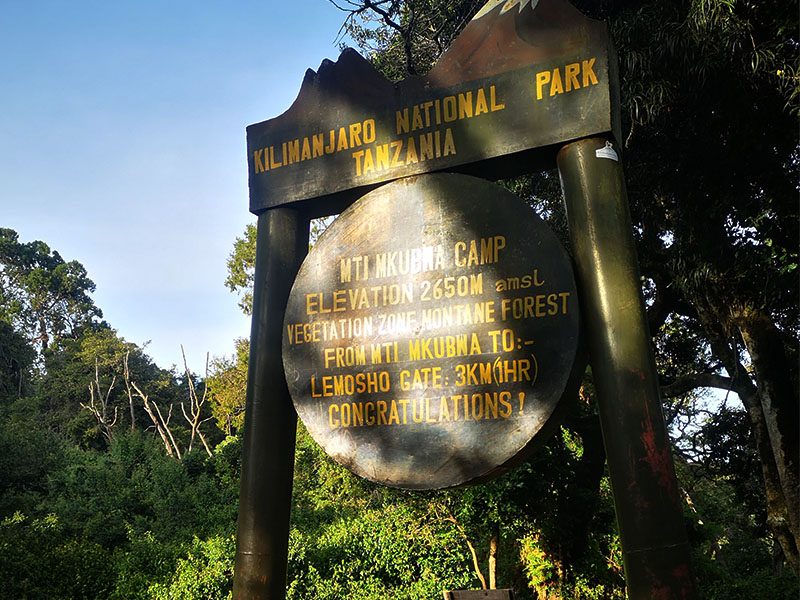
Mti Mkubwa Camp sign on Lemosho Route, Kilimanjaro National Park, showing elevation and distance to Lemosho Gate | Kili Quests
Mti Mkubwa Camp Sign (2,650m) – The first overnight stop on the Lemosho Route, located in the lush montane forest of Kilimanjaro.

Best Time to Climb the Lemosho Route

The best time to climb the Lemosho Route is during the drier months, especially from January to early March and from June to October. These months usually offer better trail conditions, clearer views, and more stable weather.
Season What to Expect Best For
January to early March Warmer conditions, good visibility, and fewer crowds than peak season Climbers who want a good balance of weather and quieter trails
June to October Drier weather, clear skies, colder nights, and busier trails Climbers who want the most reliable weather window
April to May Long rains, muddy trails, lower visibility, and wetter camps Usually not recommended
November Short rains and more unpredictable conditions Possible, but not ideal for most climbers
For a full month-by-month breakdown, read our Best Time to Climb Kilimanjaro guide before choosing your travel dates.

What Makes Lemosho Unique?

The Lemosho Route is unique because it combines a quieter western approach with some of Kilimanjaro’s most dramatic landscapes. The early days feel more remote than the busier southern routes, especially before Lemosho joins the main trail near Lava Tower and Barranco.

The route gives climbers a full mountain experience. You begin in rainforest, cross the Shira Plateau, pass through moorland and alpine desert, climb near Lava Tower, face the Barranco Wall, and finish with the summit push from Barafu Camp to Uhuru Peak.

Lemosho is not only scenic. Its real strength is pacing. The longer 8-day itinerary gives your body more time to adjust, which is why many climbers choose Lemosho when safety, acclimatization, and summit preparation matter more than speed.

Lemosho Route vs Machame Route

Lemosho and Machame are two of the most popular Kilimanjaro routes, and many climbers compare them before booking. Both routes use the southern circuit, both pass Lava Tower and Barranco Wall, and both usually summit from Barafu Camp. The main difference is the beginning of the route and the pacing.
Category Lemosho Route Machame Route
Starting Side Western Kilimanjaro Southern Kilimanjaro
Best Duration 8 days 7 days
Scenery Excellent, especially Shira Plateau and western approach Excellent, with varied landscapes and dramatic southern circuit views
Crowds Quieter at the start, busier after joining the southern circuit Busier from the beginning
Acclimatization Very strong on the 8-day itinerary Good on the 7-day itinerary
Best For Climbers who want scenery, better pacing, and a quieter start Climbers who want a popular, scenic, slightly shorter route
Choose Lemosho if you want more time, a quieter beginning, and one of the most scenic Kilimanjaro approaches. Choose Machame if you want a shorter scenic route and are comfortable with a busier trail. You can also read our Machame Route Kilimanjaro Guide for a deeper comparison.
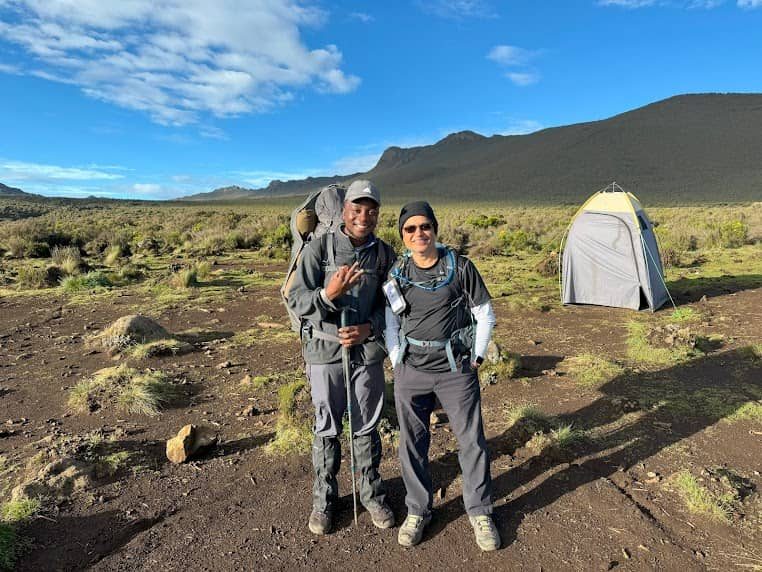
Two trekkers standing at Shira One Camp on the Lemosho Route, Kilimanjaro, with scenic moorland and tent in the background | Kili Quests
Shira One Camp (3,610m) – Trekkers enjoying a clear morning at Shira Plateau, the first high-altitude campsite on the Lemosho Route.

Is the Lemosho Route Right for You?

The Lemosho Route is right for you if you want a scenic Kilimanjaro climb with strong acclimatization and enough time to enjoy the mountain. It is especially good for climbers who do not want to rush the ascent and who understand that altitude, not technical climbing, is the biggest challenge on Kilimanjaro.

Choose Lemosho If You Want:

  • A scenic Kilimanjaro route with rainforest, Shira Plateau, Lava Tower, Barranco Wall, and summit views
  • A quieter start on the western side of the mountain
  • Better acclimatization on an 8-day itinerary
  • A strong route for first-time Kilimanjaro climbers
  • A route that balances scenery, pacing, and summit potential

Lemosho May Not Be Ideal If:

  • You only have 5 or 6 days for the climb
  • You are looking for the cheapest Kilimanjaro route
  • You prefer a shorter itinerary even if it gives less acclimatization time
  • You want the quietest route all the way to the summit, because Lemosho joins the southern circuit after Shira
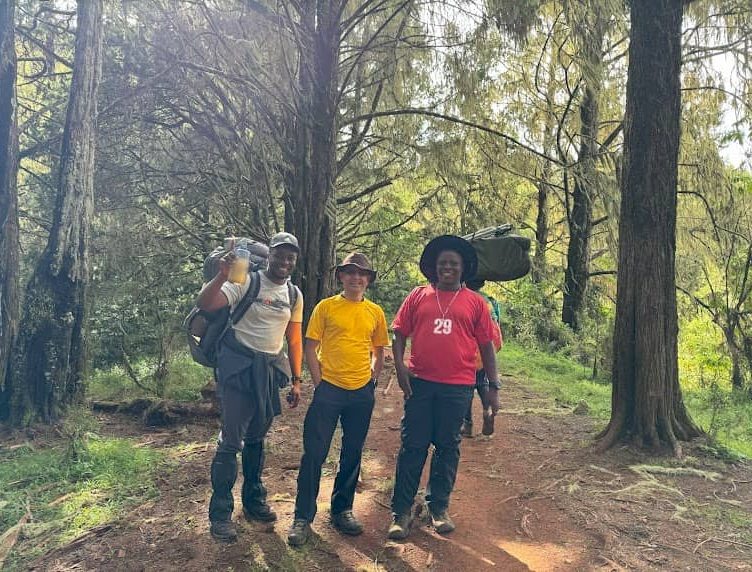
Trekkers and porters hiking through the forest into the moorland zone on the Lemosho Route, Mount Kilimanjaro | Kili Quests
Forest to Moorland Transition – Climbers and porters passing through the lush forest as they ascend toward the moorland zone on Day 2 of the Lemosho Route.

What to Pack for the Lemosho Route

The Lemosho Route crosses several climate zones, so you need to pack for rainforest, moorland, alpine desert, and freezing summit conditions. The most important items are warm layers, a waterproof jacket, strong hiking boots, gloves, a headlamp, a sleeping bag, and comfortable daypack essentials.
 
Do not underestimate summit night. Temperatures can feel extremely cold near Stella Point and Uhuru Peak, especially when wind and fatigue are added. Pack properly and test your gear before arrival.
 
Use our Kilimanjaro Packing List to prepare your clothing, boots, sleeping bag, summit gear, toiletries, and daypack items before your climb

Frequently Asked Questions About the Lemosho Route

How difficult is the Lemosho Route on Mount Kilimanjaro?

The Lemosho Route is moderately difficult. It is not technical, but the altitude, long trekking days, cold summit night, and mental fatigue make it challenging. The 8-day version is easier to manage than shorter routes because it gives more time for acclimatization.

How many days does the Lemosho Route take?

The Lemosho Route usually takes 7 or 8 days. The 8-day itinerary is better for most climbers because it provides more time to adjust to altitude before summit night.

Is the Lemosho Route good for beginners?

Yes, Lemosho is a strong choice for many first-time Kilimanjaro climbers. It gives better acclimatization than shorter routes and has a gradual profile, especially when climbed over 8 days. Beginners still need proper training and realistic preparation.

What is the success rate of the Lemosho Route?

The Lemosho Route has one of the stronger summit success profiles on Kilimanjaro, especially on the 8-day itinerary. Success depends on acclimatization, fitness, guide pacing, weather, health, and how well the climb is managed.

Is Lemosho better than Machame?

Lemosho is usually better if you want a quieter start, more scenery, and stronger acclimatization on an 8-day itinerary. Machame is also scenic and popular, but it is busier and usually done in fewer days.

How much does the Lemosho Route cost?

The Lemosho Route usually costs more than shorter routes because it includes more days on the mountain. More days mean more park fees, crew support, food, camping logistics, and guide services. The extra cost can be worth it if it improves acclimatization and summit preparation.

Climb Kilimanjaro via the Lemosho Route with Kili Quests

The Lemosho Route is one of the best choices if you want a scenic, well-paced Kilimanjaro climb with strong acclimatization. At Kili Quests, we plan Lemosho climbs with experienced local guides, proper pacing, safety checks, good mountain meals, fair porter care, and realistic summit preparation.

Our 8-day Lemosho itinerary is designed for climbers who want more than a rushed climb. You get time to adjust, time to enjoy the mountain, and a better chance of reaching Uhuru Peak safely.
 
Ready to climb Kilimanjaro on the Lemosho Route? Contact Kili Quests today and let our local team help you plan the right itinerary, dates, gear, and preparation for your climb.

Related Articles

Machame Route Kilimanjaro: 7-Day Itinerary, Difficulty & Cost

Reach the Summit with Confidence

Success on Kilimanjaro depends on the right route, acclimatization, and team.We plan every Machame climb for a safe summit.

Plan Your Machame Route the Right Way

The right route, acclimatization, and team make the difference.We plan your Machame climb for a safe summit

OUR CATEGORIES

Machame Route Kilimanjaro: 7-Day Itinerary, Difficulty & Cost

Why Choose the Machame Route?

The Machame Route is one of the most popular ways to climb Mount Kilimanjaro because it offers strong scenery, a varied trail, good acclimatization, and a classic Kilimanjaro adventure. It begins at Machame Gate on the southwestern side of the mountain, climbs through rainforest, crosses moorland and alpine desert, passes Lava Tower and Barranco Wall, and reaches the summit from Barafu Camp.

Machame is often called the “Whiskey Route” because it is more demanding than the Marangu Route, which is sometimes called the “Coca-Cola Route.” That does not mean Machame is only for expert climbers. Many first-time Kilimanjaro climbers choose Machame, but they should choose the 7-day version, train properly, and respect the altitude.

The Machame Route is best for climbers who want a scenic and active Kilimanjaro climb without choosing one of the longest routes. If you are still comparing your options, read our Kilimanjaro Routes Comparison: Which Route Is Best? to see how Machame compares with Lemosho, Marangu, Rongai, and the Northern Circuit.

Quick Answer: Is the Machame Route Worth It?

Yes, the Machame Route is worth it if you want a scenic, active, and popular Kilimanjaro climb with good acclimatization. The 7-day version is the best choice for most climbers because it gives more time to adjust to altitude before summit night.
 
Machame is not the easiest Kilimanjaro route, but it gives a strong balance of scenery, challenge, and summit preparation. It is best for climbers with average to good fitness who want a more adventurous route than Marangu but do not want the longer schedule of Lemosho or the Northern Circuit.
Best For Why Machame Works Well
Active trekkers The route has steeper sections, varied terrain, and a more adventurous feel.
First-time climbers with good fitness The 7-day itinerary gives better acclimatization than the shorter 6-day version.
Scenery lovers Machame crosses rainforest, moorland, Lava Tower, Barranco Wall, alpine desert, and summit terrain.
Climbers comparing popular routes Machame gives a strong balance of scenery, challenge, and route popularity.
Trekkers and porters ascending the Kissing Rock section on Barranco Wall along the Machame Route, Kilimanjaro
The Kissing Rock on Barranco Wall, one of the most famous sections of the Machame Route on Mount Kilimanjaro.

Table of Contents

What Is the Machame Route on Kilimanjaro?

The Machame Route is a southern approach route on Mount Kilimanjaro. It starts at Machame Gate, climbs through rainforest, continues to Shira Cave Camp, crosses toward Lava Tower, descends to Barranco Camp, and then follows the southern circuit toward Karanga, Barafu, and Uhuru Peak.

Machame is popular because it gives climbers a full Kilimanjaro experience in 6 or 7 days. The route has varied scenery, good acclimatization when done over 7 days, and several memorable sections, including Lava Tower, Barranco Wall, and the summit climb from Barafu Camp.

  Where Does the Machame Route Start?

The Machame Route begins at Machame Gate on the southwestern side of Mount Kilimanjaro. The first hiking day enters the rainforest zone, where the trail can be humid, muddy, and slippery depending on weather conditions.

How Long Is the Machame Route?

The Machame Route is usually climbed in 6 or 7 days and covers about 62 kilometers / 37 miles. The 7-day version is strongly recommended for most climbers because it gives more time for acclimatization and makes the climb less rushed.
 
If you are deciding how many days you need, read our How Many Days to Climb Kilimanjaro guide before choosing your route.

Machame Route Overview

Feature Details
Route Length 6 or 7 days
Distance ~62 km / 37 miles
Start Point Machame Gate, southwest side
Highest Point Uhuru Peak, 5,895 m / 19,341 ft
Difficulty Moderate to challenging
Best For Hikers wanting adventure and scenery
Success Rate ~95% on the 7-day itinerary

Machame Route Days and Elevation Profile

Machame Route map on Mount Kilimanjaro showing trail path, elevation profile, and major camps to Uhuru Peak
A scenic Kilimanjaro trail via Lava Tower and Barafu Camp, descending through Mweka Gate.

7-Day Machame Route Itinerary

The 7-day Machame itinerary is the best version for most climbers because it gives more time for acclimatization than the 6-day option. The route still feels active and challenging, but the extra day helps reduce the pressure of gaining altitude too quickly.

Day 1 – Machame Gate to Machame Camp

The climb begins at Machame Gate, where your team completes park registration before entering the rainforest. The trail climbs steadily through thick forest, and conditions can be muddy or slippery after rain. This first day is not technically difficult, but the steady uphill walking can feel demanding.
  • Altitude: 1,800 m to 2,835 m
  • Hiking time: 5–6 hours
  • Zone: Rainforest
  • Camp: Machame Camp

Day 2: Machame Camp to Shira Cave Camp

Day 2 leaves the rainforest and enters the moorland zone. The trail becomes more open, with better views of Kilimanjaro and the surrounding landscape. The climb is steady, and you begin sleeping at a higher altitude, so slow pacing becomes important.
  • Altitude: 2,835 m to 3,750 m
  • Hiking time: 5–6 hours
  • Zone: Moorland
  • Camp: Shira Cave Camp

Day 3: Shira Cave Camp to Barranco Camp via Lava Tower

This is one of the most important acclimatization days on the Machame Route. Climbers ascend toward Lava Tower at about 4,630 meters, then descend to sleep lower at Barranco Camp. This follows the climb-high, sleep-low principle, which helps the body adapt before going higher.
  • Altitude: 3,750 m to 4,630 m, then down to 3,960 m
  • Hiking time: 6–7 hours
  • Zone: Alpine desert
  • Camp: Barranco Camp
This is also where some climbers may begin noticing altitude symptoms. Read our Altitude Sickness on Kilimanjaro guide so you understand what symptoms are common and which warning signs should not be ignored.

Day 4: Barranco Camp to Karanga Camp

Day 4 begins with the Barranco Wall, one of the most famous features on the Machame Route. The wall looks intimidating from camp, but most climbers manage it safely with slow movement and guide support. After the wall, the trail continues across ridges and valleys toward Karanga Camp.

  • Altitude: 3,960 m to 4,035 m
  • Hiking time: 4–5 hours
  • Highlight: Barranco Wall
  • Camp: Karanga Camp

Day 5: Karanga Camp to Barafu Camp

This is a shorter but important day because Barafu Camp is the base camp for summit night. Climbers arrive, rest, eat early, prepare warm summit gear, and try to sleep before the midnight summit attempt.
  • Altitude: 4,035 m to 4,673 m
  • Hiking time: 3–4 hours
  • Zone: Alpine desert
  • Camp: Barafu Camp

Day 6: Barafu Camp to Uhuru Peak, then down to Mweka Camp

Summit day is the hardest part of the Machame Route. The climb begins around midnight in cold, thin air. Climbers move slowly toward Stella Point before continuing along the crater rim to Uhuru Peak, the highest point in Africa.
 
After reaching the summit, climbers descend back to Barafu Camp for a short rest before continuing down to Mweka Camp. This is a long and exhausting day, so mental strength, warm clothing, and steady guide pacing are very important.
  • Altitude: 4,673 m to 5,895 m, then down to 3,100 m
  • Hiking time: 12–14 hours total
  • Summit: Uhuru Peak
  • Camp: Mweka Camp
If you are worried about the challenge, read our How Hard Is Mount Kilimanjaro? guide for a realistic look at summit night, altitude, fitness, and mental preparation.

Day 7: Mweka Camp to Mweka Gate

The final day is a descent through the rainforest to Mweka Gate. After signing out, successful climbers receive their Kilimanjaro certificate before returning to Moshi or Arusha.
  • Altitude: 3,100 m to 1,640 m
  • Hiking time: 3–4 hours
  • Zone: Rainforest
  • Finish: Mweka Gate

6-Day vs 7-Day Machame Route: Which Is Better?

The Machame Route can be climbed in 6 or 7 days, but the 7-day itinerary is the better choice for most climbers. The extra day gives your body more time to adjust to altitude and makes the climb less rushed.
Option Best For Main Risk
6-Day Machame Very fit climbers with previous trekking experience Faster ascent and less time for acclimatization
7-Day Machame Most first-time climbers and travelers who want better acclimatization Slightly higher cost because of the extra day
The 6-day Machame Route may look attractive because it saves time and money, but it gives your body less time to adapt. For most climbers, the 7-day version is the smarter choice because summit success depends more on acclimatization than speed.

Machame Route Difficulty, Acclimatization & Fitness

How Difficult Is the Machame Route?

The Machame Route is moderately difficult to challenging. It is not a technical climb, and you do not need ropes or climbing equipment, but the trail includes steep sections, long trekking days, high altitude, and a cold summit night.
 
The hardest part is usually summit night from Barafu Camp to Uhuru Peak. Climbers start around midnight, move slowly in freezing conditions, and continue for several hours at high altitude before reaching the summit. This is where fitness, mental strength, pacing, and warm gear matter most.

How Acclimatization Works on Machame

Machame has good acclimatization when done over 7 days because it includes the Lava Tower climb-high, sleep-low day. Climbers ascend to a higher altitude during the day, then descend to sleep lower at Barranco Camp. This helps the body adapt before the route continues toward Karanga and Barafu.
 
The 6-day version is more rushed, which can make acclimatization harder. If you want a stronger summit profile and a less pressured climb, choose the 7-day Machame itinerary.
 
Read our Kilimanjaro Success Rate by Route guide to understand how route choice, itinerary length, pacing, and acclimatization affect summit success.

Who Should Choose the Machame Route?

Choose the Machame Route if you are:


  • A first-time climber with average to good fitness
  • A trekker who wants a more active route than Marangu
  • A traveler who wants dramatic scenery in 7 days
  • A climber who wants good acclimatization without choosing a longer route
  • Someone who is comfortable with a popular and sometimes busy trail

Training still matters. Machame is not a route you should treat casually. Read our Kilimanjaro Training Plan before your climb so you know how to prepare your endurance, legs, lungs, and hiking strength.

How Much Does the Machame Route Cost?

The Machame Route usually costs less than longer routes such as Lemosho or the Northern Circuit because it is normally completed in 6 or 7 days. However, the final price still depends on the number of climbers, service level, park fees, guide and porter support, meals, equipment, transport, and what is included in the package.
 
The 7-day Machame Route costs more than the 6-day version because it adds one extra day of park fees, crew wages, food, and mountain logistics. For most climbers, that extra day is worth it because it gives better acclimatization and a stronger summit profile.
 
Do not choose Machame only because it may be cheaper than Lemosho.A lower price may not be a good value if the itinerary is too rushed or the operator cuts corners on safety, food, guides, or porter care.Before comparing packages, read Kilimanjaro Climb Cost so you understand park fees, crew support, route length, tips, gear, insurance, and other expenses before booking.
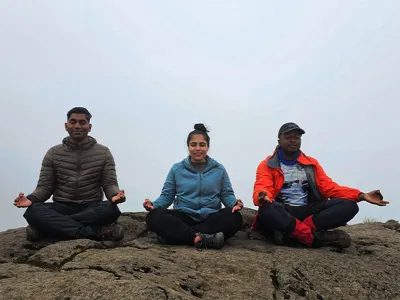
Trekkers meditating on a rock during a peaceful break on the Machame Route, Mount Kilimanjaro | Kili Quests
Mindful Moment on the Machame Trail – Climbers pause for a short meditation break on the way to Shira Camp, embracing Kilimanjaro’s calm Moorland environment.

Best Time to Climb the Machame Route

The best time to climb the Machame Route is during the drier months, especially from January to early March and from June to October. These months usually offer better trail conditions, clearer views, and more stable weather.
 
Season What to Expect Best For
January to early March Warmer conditions, good visibility, and fewer crowds than peak season Climbers who want a good balance of weather and trail conditions
June to October Drier weather, clear skies, colder nights, and busier trails Climbers who want the most reliable weather window
April to May Long rains, muddy trails, lower visibility, and wetter camps Usually not recommended
November Short rains and more unpredictable conditions Possible, but not ideal for most climbers
For a full month-by-month breakdown, read our Best Time to Climb Kilimanjaro guide before choosing your travel dates.

What Makes the Machame Route Special?

The Machame Route is special because it gives climbers a dramatic and varied Kilimanjaro experience in a 7-day itinerary. The trail starts in rainforest, climbs into moorland, crosses alpine desert, passes Lava Tower, climbs the Barranco Wall, and reaches the summit from Barafu Camp.
 
Machame is also popular because it gives better acclimatization than very short routes when climbed over 7 days. The Lava Tower day is especially important because climbers gain altitude during the day and sleep lower at Barranco Camp.
 
The route is not the quietest option on Kilimanjaro, but it is one of the most rewarding for climbers who want scenery, challenge, and a classic mountain experience.

Machame Route vs Lemosho Route

Machame and Lemosho are two of the best Kilimanjaro routes for scenery and acclimatization. Both routes pass Lava Tower, Barranco Wall, Karanga Camp, and Barafu Camp before summiting from the southern side. The biggest differences are the starting point, route length, crowd levels, and pacing.
Category Machame Route Lemosho Route
Starting Side Southwestern Kilimanjaro Western Kilimanjaro
Best Duration 7 days 8 days
Scenery Excellent, with rainforest, Lava Tower, Barranco Wall, and southern circuit views Excellent, with rainforest, Shira Plateau, western approach, Lava Tower, and Barranco Wall
Crowds Busier from the beginning Quieter at the start, busier after joining the southern circuit
Acclimatization Good on the 7-day itinerary Very strong on the 8-day itinerary
Best For Climbers who want a popular, scenic, active route in 7 days Climbers who want more time, a quieter start, and stronger acclimatization

Choose Machame if you want a scenic and active Kilimanjaro route in 7 days. Choose Lemosho if you want more time, a quieter beginning, and a stronger acclimatization profile. You can also read our Lemosho Route Kilimanjaro Guide for a deeper comparison.

Is the Machame Route Right for You?

The Machame Route is right for you if you want a scenic, active, and popular Kilimanjaro climb with good acclimatization on a 7-day itinerary. It is a strong choice for climbers who want more challenge than Marangu but do not want the longer schedule of Lemosho or the Northern Circuit.

Choose Machame If You Want:

  • A scenic Kilimanjaro route with rainforest, moorland, Lava Tower, Barranco Wall, and summit views
  • A more active and adventurous climb than Marangu
  • A popular route with strong support logistics
  • Good acclimatization on the 7-day itinerary
  • A classic Kilimanjaro trekking experience

Machame May Not Be Ideal If:

  • You want the quietest route on Kilimanjaro
  • You prefer the slowest possible acclimatization profile
  • You only want the easiest route
  • You are uncomfortable with steeper trail sections
  • You want a more remote start, where Lemosho may be a better choice
Trekkers posing with hiking poles at the Shira Cave Camp sign on Day 2 of the Machame Route, Kilimanjaro | Kili Quests
Shira Cave Camp (3,750m) – Climbers celebrate their arrival at this scenic moorland campsite on Day 2 of the Machame Route, Kilimanjaro.

What to Pack for the Machame Route

The Machame Route crosses several climate zones, so you need to pack for rainforest, moorland, alpine desert, and freezing summit conditions. The most important items include warm layers, waterproof clothing, broken-in hiking boots, gloves, a warm hat, a headlamp, a sleeping bag, trekking poles, and a comfortable daypack.
 
Do not underestimate summit night. The climb from Barafu Camp to Uhuru Peak is cold, slow, and physically demanding. Good gear can make a major difference in comfort, safety, and performance.
 
Use our Kilimanjaro Packing List to prepare your clothing, boots, sleeping bag, summit gear, toiletries, and daypack items before your climb.

Frequently Asked Questions About the Machame Route

How difficult is the Machame Route on Mount Kilimanjaro?

The Machame Route is moderately difficult to challenging. It does not require technical climbing skills, but it includes steep sections, long trekking days, high altitude, and a cold summit night. The 7-day version is easier to manage than the 6-day version because it gives more time for acclimatization.

Why is the Machame Route called the Whiskey Route?

The Machame Route is called the “Whiskey Route” because it is more physically demanding than the Marangu Route, which is often called the “Coca-Cola Route.” The nickname reflects the route’s steeper trail, longer camping style, and more adventurous character.

How many days does the Machame Route take?

The Machame Route usually takes 6 or 7 days. The 7-day itinerary is recommended for most climbers because it provides better acclimatization and makes the climb less rushed.

Is the Machame Route good for beginners?

Yes, Machame can be good for beginners who have average to good fitness and choose the 7-day itinerary. Beginners should train properly, walk slowly, use the right gear, and take altitude seriously.

Is Machame better than Lemosho?

Machame is better if you want a scenic, active, and popular route in 7 days. Lemosho is usually better if you want a quieter start, more time, and stronger acclimatization on an 8-day itinerary.

How much does the Machame Route cost?

The Machame Route usually costs less than longer routes because it takes fewer days, but the final price depends on route length, group size, service level, park fees, crew support, food, equipment, and transport. The 7-day version costs more than the 6-day version but gives better acclimatization.

Climb Kilimanjaro via the Machame Route with Kili Quests

The Machame Route is a strong choice if you want a scenic, active, and well-paced Kilimanjaro climb. At Kili Quests, we guide Machame climbs with experienced local guides, proper pacing, safety checks, good mountain meals, fair porter care, and realistic summit preparation.
 
Our 7-day Machame itinerary is designed for climbers who want better acclimatization than the shorter version while still enjoying one of Kilimanjaro’s most famous routes.
 
Ready to climb Kilimanjaro on the Machame Route? Contact Kili Quests today and let our local team help you choose the right dates, itinerary, gear, and preparation plan for your climb.

Related Articles

Rongai Route Kilimanjaro: 6–7 Day Itinerary, Difficulty & Cost

Plan Your Rongai Route Climb

The Rongai Route offers a quiet, steady path to the summit.
Get expert advice and a personalized quote for your climb.

Kilimanjaro Planning Guides

Choosing the right route is just the start. Explore these key guides:

OUR CATEGORIES

Rongai Route Kilimanjaro: 6–7 Day Itinerary, Difficulty & Cost

Rongai Route Kilimanjaro: Quiet Northern Trail from the North

 The Rongai Route is the only Kilimanjaro trail that approaches the mountain from the north, near the Kenya–Tanzania border. It is known for being quieter and drier than the southern routes, making it a strong choice for climbers who want a more peaceful trekking experience.

Rongai offers a steady ascent, remote wilderness, wide views, and dramatic scenery around Mawenzi Peak. It is not as lush or varied as Lemosho or Machame, but it gives climbers a quieter side of Kilimanjaro that many people never see.
The route is usually climbed in 6 or 7 days, with the 7-day itinerary offering a better acclimatization profile. If you want a less crowded trail with a gradual approach and a different Kilimanjaro experience, Rongai is worth considering.
 
For a full route comparison, see our Kilimanjaro Routes Comparison guide.

Quick Answer: Is the Rongai Route a Good Kilimanjaro Route?

Yes, the Rongai Route is a good Kilimanjaro route for climbers who want a quieter, drier, and more gradual trail from the northern side of the mountain. It is usually climbed in 6 or 7 days, with the 7-day version recommended for better acclimatization.
 
Rongai is best for climbers who prefer fewer crowds, remote scenery, and a steady approach. It is less dramatic than Lemosho or Machame in terms of scenery, but it offers excellent views of Mawenzi Peak and a peaceful wilderness feel.
View of Mawenzi Peak from Stella Point on Mount Kilimanjaro
Mawenzi Peak views are one of the highlights of the Rongai Route near the summit zone.

Table of Contents

Why the Rongai Route Is Unique on Kilimanjaro

The Rongai Route is unique because it is the only official Kilimanjaro route that starts from the northern side of the mountain. Most other routes begin from the south or west, where rainfall is higher and trails are busier.
 
Because Rongai approaches from the drier northern side, it can be a strong option during wetter months. The trail also feels quieter and more remote, especially in the early stages near Simba Camp, Second Cave, and Kikelewa.
 
Another unique feature is the descent. Climbers ascend from the north but usually descend through the Marangu Route, giving them two different sides of Kilimanjaro in one trek.

Rongai Route Overview

Feature Rongai Route Details
Typical duration 6 to 7 days
Distance About 73 km / 45 miles
Starting point Rongai Gate, northern Kilimanjaro
Exit point Marangu Gate
Highest point Uhuru Peak, 5,895 m / 19,341 ft
Difficulty Moderate, with altitude still the main challenge
Best for Quiet trails, dry conditions, remote scenery, and steady ascent
Recommended option 7-day Rongai for better acclimatization
Not sure if Rongai is the right route for you? Compare all options in our Kilimanjaro Routes Comparison guide.

Rongai Route Days and Elevation Profile

Rongai Route map showing camps and elevation profile on Kilimanjaro
The Rongai Route approaches Kilimanjaro from the quieter northern side before descending through Marangu.

Who Is the Rongai Route Best For?

The Rongai Route is best for climbers who want a quieter Kilimanjaro experience with fewer crowds, a drier northern approach, and a steady trail profile.
 
It is a good choice for:
  • First-time climbers who want a less crowded route
  • Trekkers climbing during wetter months
  • Climbers who prefer remote wilderness over busy camps
  • People who want strong views of Mawenzi Peak
  • Trekkers who are comfortable choosing a 7-day itinerary for better acclimatization
Rongai is not the best choice if you want the most dramatic scenery or the strongest acclimatization profile. In that case, Lemosho or Northern Circuit may be better.

7-Day Rongai Route Itinerary

The 7-day Rongai Route is the better choice for most climbers because it gives more time for acclimatization than the shorter 6-day version. The route starts at Rongai Gate, passes through Simba Camp, Second Cave, Kikelewa, Mawenzi Tarn, and Kibo Hut, then descends through the Marangu Route after summit day.
 
Below is the typical 7-day Rongai itinerary.

Day 1: Rongai Gate to Simba Camp

  • Altitude: 2,000 m to 2,625 m
  • Time: 4–5 hours
  • Gentle hike through forest zone
Your adventure begins on the quiet northern side of Kilimanjaro at Rongai Gate, near the Kenya border. After registration, you’ll start a gentle hike through farmland and pine forest.
This section is relatively easy and allows your body to begin adjusting gradually. Wildlife sightings such as colobus monkeys are sometimes possible.You’ll arrive at Simba Camp in the afternoon, where you’ll enjoy your first night on the mountain.

Day 2: Simba Camp to Second Cave Camp

  • Altitude: 2,625 m to 3,450 m
  • Time: 5–6 hours
  • Beautiful views of Kibo and wilderness trail
The trail leaves the forest behind and enters the moorland zone, offering wide open views of Kibo Peak. The path remains steady and not too steep, making it a comfortable trekking day.As you gain altitude, you’ll begin to feel the effects of thinner air, so it’s important to maintain a slow, steady pace.Second Cave Camp provides a scenic and less crowded overnight stop.

Day 3: Second Cave to Kikelewa Camp

  • Altitude: 3,450 m to 3,600 m
  • Time: 4 hours
  • Scenic moorland terrain with fewer climbers
This is a shorter trekking day designed to support acclimatization. The trail becomes quieter and more remote, with fewer climbers compared to southern routes.You’ll hike across rolling moorland terrain with beautiful views of Mawenzi Peak, one of Kilimanjaro’s three volcanic cones.Kikelewa Camp is set in a sheltered valley, offering a peaceful atmosphere for rest and recovery.

Day 4: Kikelewa to Mawenzi Tarn Camp

  • Altitude: 3,600 m to 4,330 m
  • Time: 4–5 hours
  • Camp beneath rugged Mawenzi Peak
Today’s trek is steeper but rewarding, as you climb toward Mawenzi Tarn, one of the most scenic camps on Kilimanjaro.The camp sits beneath the dramatic spires of Mawenzi Peak, providing incredible views and a true high-altitude environment.This is an important acclimatization day, allowing your body to adjust before moving higher.

Day 5: Mawenzi Tarn to Kibo Hut

  • Altitude: 4,330 m to 4,700 m
  • Time: 4–5 hours
  • Final staging point before summit night
The landscape changes dramatically as you enter the alpine desert zone. Vegetation disappears, and the terrain becomes dry and rugged.The hike is steady but feels more demanding due to the altitude. You’ll arrive at Kibo Hut, the final base camp before your summit attempt.After an early dinner, you’ll rest for a few hours before beginning the summit push around midnight.

Day 6: Kibo Hut to Uhuru Peak, descend to Horombo Hut

  • Altitude: 4,700 m to 5,895 m (summit), then down to 3,720 m
  • Time: 12–14 hours
  • Overnight climb, summit at sunrise, long descent
This is the most challenging and rewarding day of the climb. You’ll start your summit attempt in the early hours of the morning, trekking slowly in the dark toward Gillman’s Point and Stella Point.From there, it’s a final push to Uhuru Peak — the highest point in Africa. Reaching the summit at sunrise is an unforgettable experience.After celebrating, you’ll descend back to Kibo Hut briefly, then continue down to Horombo Hut for rest.

Day 7: Horombo Hut to Marangu Gate

  • Altitude: 3,720 m to 1,870 m
  • Time: 5–6 hours
  • Final descent through forest and receive certificate
Your final day is a long but steady descent through moorland and forest zones. As you reach lower altitudes, the air becomes richer in oxygen, making the hike feel easier.At Marangu Gate, you’ll receive your summit certificate and celebrate the successful completion of your Kilimanjaro climb.
 
Choosing a longer itinerary like this significantly improves your chances of reaching the summit. Learn more about Kilimanjaro success rates and why Kilimanjaro climb duration plays a key role in summit success.

6-Day vs 7-Day Rongai Route: Which Is Better?

The Rongai Route can be climbed in either 6 or 7 days, but the 7-day itinerary is usually the better choice for acclimatization and comfort.
 
The 6-day version is shorter and may cost less, but it gives your body less time to adjust to altitude. The 7-day version adds more breathing room and creates a steadier climb profile, especially for first-time Kilimanjaro climbers.
Option Best For Main Consideration
6-Day Rongai Route Climbers with limited time and strong fitness Faster ascent with less acclimatization time
7-Day Rongai Route Most climbers, especially first-time Kilimanjaro trekkers Better acclimatization and a more comfortable pace
For most climbers, we recommend the 7-day Rongai Route because the extra day supports a safer and more comfortable climb.

Rongai Route Difficulty and Acclimatization

The Rongai Route is considered moderately difficult. The trail is not technical, and it is generally less steep than routes such as Machame, but it still reaches the same summit: Uhuru Peak at 5,895 meters.
 
The main challenge is altitude. Even though Rongai has a steady ascent profile, climbers still need enough time for the body to adjust. The 7-day itinerary is better than the 6-day version because it gives more time for acclimatization before summit night.
 
Rongai can be a good option for first-time climbers who want a quieter trail and a more gradual approach. However, it does not offer as many natural “climb high, sleep low” opportunities as some other routes, so pacing and guide support are very important.
 
For a deeper explanation of the challenge, read How Difficult Is Kilimanjaro? You can also read our guide on How to Acclimatize on Kilimanjaro before choosing your route.

Rongai Route Cost: What Affects the Price?

The cost of the Rongai Route depends on the number of days, group size, service level, park fees, crew support, transport, meals, camping equipment, and safety arrangements.
 
A 7-day Rongai climb usually costs more than a 6-day option because it requires an extra day of park fees, food, guide support, porter support, and camp logistics. However, the extra day can be worth it because it gives climbers more time to acclimatize.
 
Do not choose Rongai only by the cheapest price. Very low prices can mean weaker safety support, rushed itineraries, poor crew treatment, or missing services. A responsible Kilimanjaro climb should include experienced guides, proper meals, fair porter support, emergency planning, and clear inclusions.
 
For a full price breakdown, read our main guide to Kilimanjaro Climb Cost.

Best Time to Climb the Rongai Route

The Rongai Route is one of the better Kilimanjaro routes during wetter months because it approaches the mountain from the drier northern side. This does not mean it never rains, but conditions are often less wet than on the southern slopes.

The best times to climb Rongai are usually:

  • January to early March: warmer conditions and good visibility
  • June to October: drier weather and popular trekking months
  • November or wetter shoulder periods: Rongai can be a better option than some southern routes because of its drier northern approach

If you want the most stable weather, choose the main dry seasons. If you want fewer crowds and are comfortable with possible rain, Rongai can still be considered outside peak months.

For a full seasonal breakdown, read Best Time to Climb Kilimanjaro.
Trekkers at Kikelewa Camp on the Rongai Route with Mawenzi Peak in the distance
Kikelewa Camp offers peaceful moorland scenery and strong views toward Mawenzi Peak.

What Makes the Rongai Route Different?

Rongai is different from other Kilimanjaro routes because it gives climbers a quieter northern approach and a descent through the Marangu Route. This creates a different experience from routes that start and finish on the southern side.
 
Main differences include:
  • It is the only route that starts from northern Kilimanjaro
  • It is usually quieter than Machame and Marangu
  • It has a drier trail profile than southern routes
  • It offers strong views of Mawenzi Peak
  • It can be useful during wetter seasons
  • It descends through Marangu, giving climbers a different exit route
The trade-off is scenery. Rongai is beautiful, but it is generally less varied than Lemosho or Machame, especially in the early stages.

Is the Rongai Route Right for You?

The Rongai Route is a good choice if you want a quieter Kilimanjaro climb with fewer trekkers, drier conditions, and a gradual approach from the north.

Rongai may be right for you if:
  • You want a peaceful trail with fewer crowds
  • You are climbing during a wetter season
  • You prefer a steady ascent profile
  • You like remote wilderness and open landscapes
  • You want strong views of Mawenzi Peak
  • You are considering a 7-day itinerary for better acclimatization
Rongai may not be the best choice if you want the most dramatic scenery, the strongest acclimatization profile, or a very social trail experience. In that case, Lemosho, Machame, or Northern Circuit may be better options.
 

Rongai Route Pros and Cons

Pros Cons
Quieter than many popular Kilimanjaro routes Less scenic variety than Lemosho or Machame
Drier northern approach, useful in wetter periods Fewer natural climb-high, sleep-low features than some routes
Gradual trail profile, especially comfortable on 7 days Long travel to the starting gate from Moshi or Arusha
Excellent Mawenzi Peak views Summit night is still demanding and should not be underestimated
Descends through Marangu, giving two route experiences Not ideal for climbers who want the most varied scenery
Kilimanjaro trekker walking through alpine desert near Kibo Hut on Rongai Route
The alpine desert near Kibo Hut marks the final stage before Rongai’s summit night.

Rongai vs Other Kilimanjaro Routes

Rongai is best understood by comparing it with the more popular Kilimanjaro routes.
 
  • Rongai vs Marangu: Rongai is quieter and starts from the north, while Marangu has hut accommodation and is often busier.
  • Rongai vs Machame: Machame is more scenic and social, while Rongai is quieter and drier.
  • Rongai vs Lemosho: Lemosho has more varied scenery and a stronger acclimatization profile, while Rongai offers solitude and a remote northern approach.
  • Rongai vs Northern Circuit: Northern Circuit is longer and has excellent acclimatization, while Rongai is shorter, quieter, and simpler.
If you are still unsure, compare all routes in our Kilimanjaro Routes Comparison guide.

What to Pack for the Rongai Route

Packing for Rongai is similar to other Kilimanjaro routes, but you should pay attention to dry, windy, and cold conditions as you move higher toward Mawenzi Tarn and Kibo Hut.
 
Important items include:
  • Warm layers for cold nights and summit day
  • Waterproof jacket and trousers
  • Broken-in hiking boots
  • Trekking poles for the descent
  • Sun protection for exposed sections
  • Warm gloves, hat, and neck gaiter
  • A good sleeping bag rated for cold conditions
  • A comfortable daypack for water, snacks, and extra layers
For the full gear checklist, read our Kilimanjaro Packing List.

Frequently Asked Questions About the Rongai Route

Is the Rongai Route difficult?

The Rongai Route is moderately difficult. It has a steady trail profile and is not technical, but altitude is still the main challenge. The 7-day itinerary is better for most climbers because it gives the body more time to adjust before summit night.

How many days does the Rongai Route take?

The Rongai Route usually takes 6 or 7 days. The 7-day itinerary is recommended for most climbers because it offers better acclimatization, a more comfortable pace, and a stronger summit profile than the shorter 6-day option.

Why choose the Rongai Route on Kilimanjaro?

Choose the Rongai Route if you want a quieter Kilimanjaro climb, a drier northern approach, remote scenery, strong Mawenzi Peak views, and fewer crowds than the busier southern routes.

Is the Rongai Route good during the rainy season?

Yes, Rongai can be a good option during wetter months because it approaches Kilimanjaro from the drier northern side. Rain is still possible, but the route is often less wet than southern approaches such as Machame, Umbwe, or Marangu.

Is Rongai better than Machame or Lemosho?

Rongai is better if you want a quieter and drier route with fewer trekkers. Machame and Lemosho are usually better if you want more scenic variety and stronger acclimatization features. For most climbers, the best choice depends on your travel dates, fitness, scenery preference, and how many days you can spend on the mountain.
 

Climb the Rongai Route With Kili Quests

The Rongai Route is a strong choice for climbers who want a quieter Kilimanjaro trail, a drier northern approach, and a steady 6–7 day route to the summit.
 
At Kili Quests, we recommend the 7-day Rongai itinerary for better acclimatization and a more comfortable pace. Our local guides help you plan the right route, prepare properly, and climb with safe support from the first day to the final descent.
 
Contact us today to plan your Rongai Route climb with Kili Quests.

Related Articles