
Questions before you book? WhatsApp us: +255 (762) 187 967
Quick answer: Machame or Marangu?
For most climbers who are happy to sleep in tents, including first-timers who are comfortable camping, the 7-day Machame route is the better choice, because it gives your body more time to adjust to altitude and crosses more varied scenery. Choose Marangu if you strongly prefer a bed in a hut to a tent, and book the 6-day version, which adds an acclimatization day at Horombo Hut, rather than the 5-day version. With Kili Quests, Marangu costs about USD 1,800 to 2,000 per person and Machame about USD 2,200 to 2,400 (indicative prices, November 2026). Neither route needs technical climbing skills.
Machame and Marangu are two of the best-known Kilimanjaro routes, and they feel very different. Marangu is the only route with mountain huts, and it has a reputation as the “easier” route. Machame is a camping route with a longer schedule and more varied scenery. The decision that matters most is not tents against huts, but how much time your body gets to adjust to altitude before summit night.
This guide compares the two routes on accommodation, acclimatization, difficulty, scenery and price, using our own guiding experience and published research. Kili Quests co-founder Allen Minja has more than 30 years of mountain experience. For all the routes side by side, see our Kilimanjaro routes comparison.
Machame vs Marangu at a glance
| Feature | Machame route | Marangu route |
|---|---|---|
| Accommodation | Tents, set up by the crew | Shared mountain huts; private “luxury” rooms at extra cost |
| Length we offer | 6 or 7 days | 5 or 6 days |
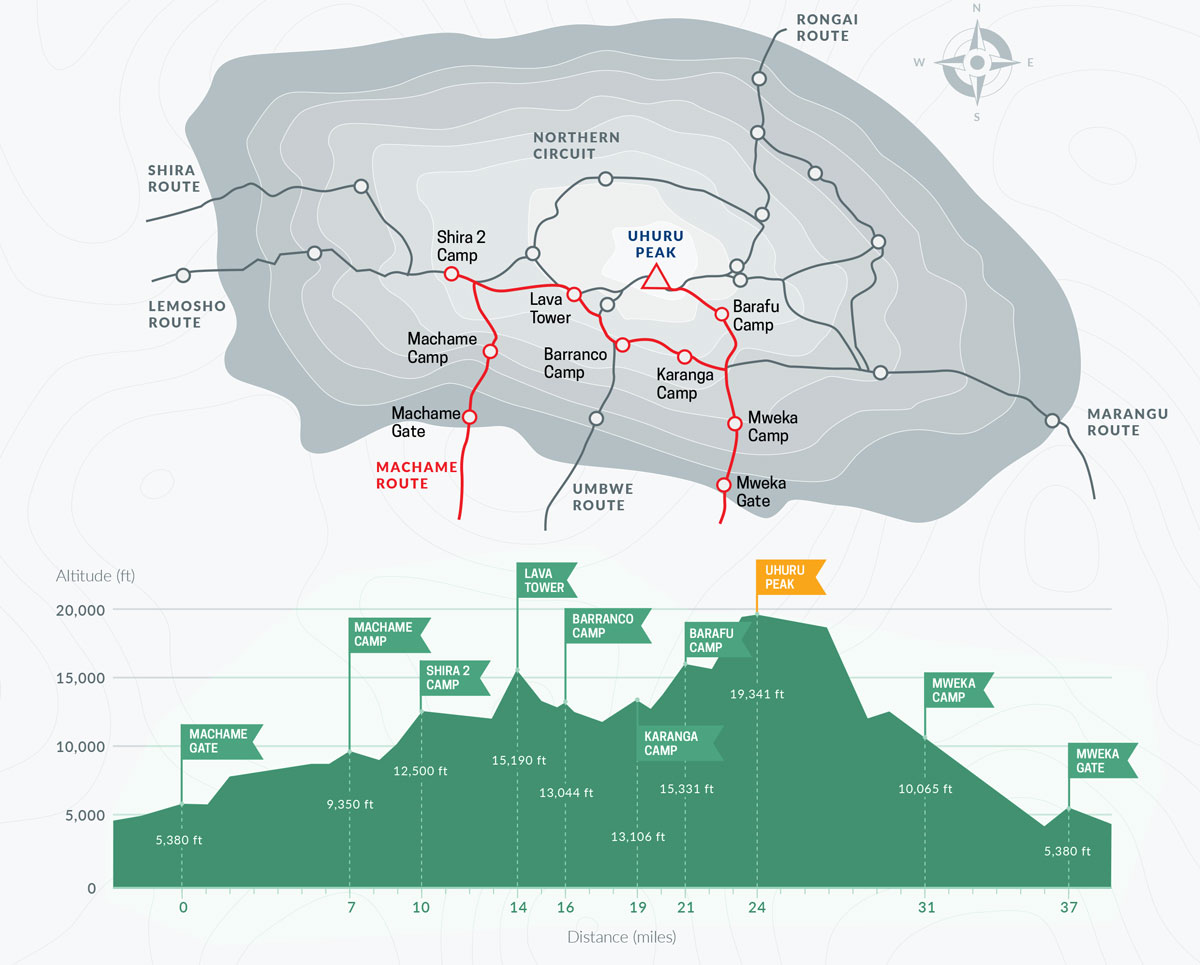
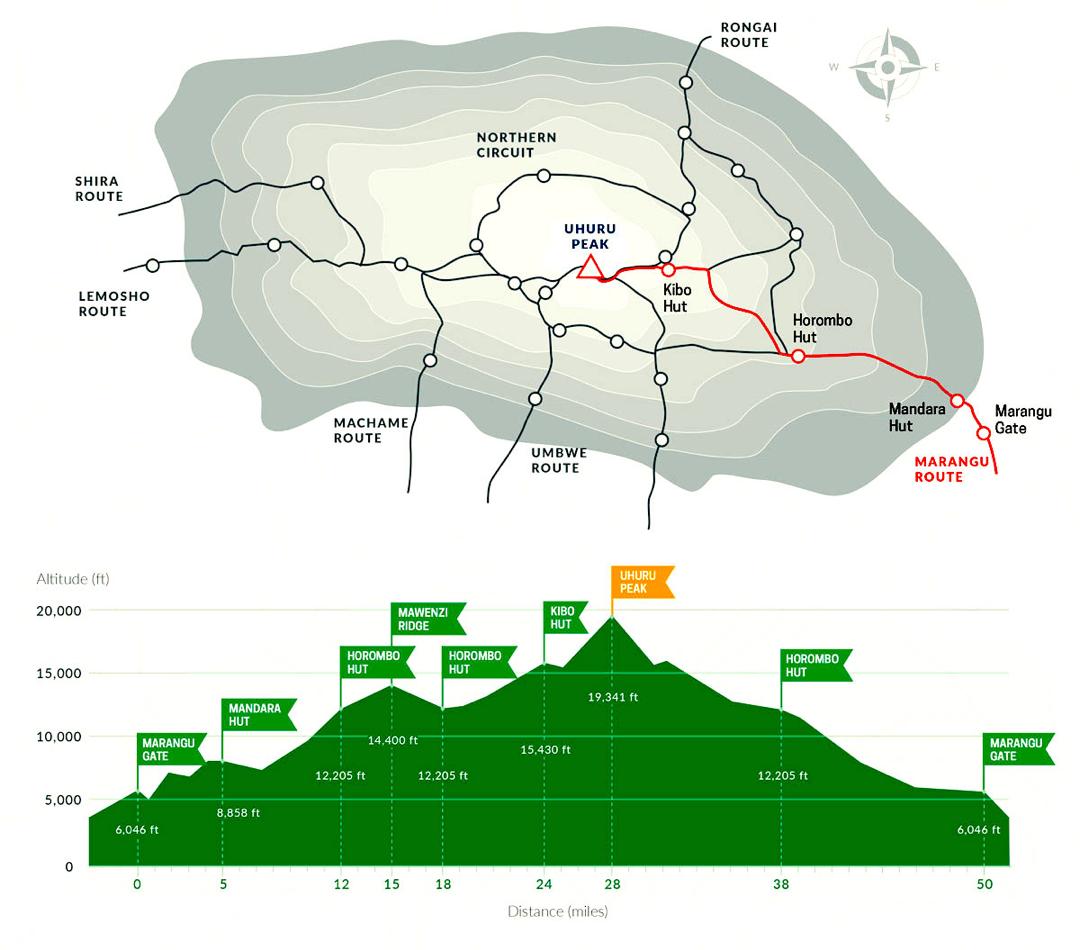
| Trail | Up by the Machame trail, down by the Mweka trail | Same trail up and down, via Horombo Hut and Kibo Hut |
| Toilets | Private toilet with a dedicated toilet porter | Hut toilets with water; no private toilet |
| Summit climb | From Barafu Camp, via Stella Point: about 6 hours to Uhuru Peak (about 7 if slower) | From Kibo Hut, via Gilman’s Point and Stella Point: about 7 hours to Uhuru Peak |
| Whole summit day | 12 to 15 hours to Millennium Camp, or 15 to 18 hours to Mweka Camp, rest included | 12 to 14 hours, ending at Horombo Hut |
| Kili Quests price | About USD 2,200 to 2,400 per person | About USD 1,800 to 2,000 per person |
Summit-day hours run from the start of the summit climb to the night camp. On a normal walking day on either route you can expect about 3 to 7 hours on the trail.
Accommodation: tents or huts?
On Machame you sleep in mountain tents that the crew sets up at each camp. The porters carry your sleeping mattress, a waiter brings washing and drinking water, and each morning you receive bed tea or coffee and a bowl of warm water to wash. Camping routes also have a private toilet, with a dedicated toilet porter who cleans it and carries it away when it is full.
On Marangu you sleep in huts at Mandara, Horombo and Kibo. This is what to expect, from our guiding:
- Rooms: one room holds 3 to 6 beds, and you share it with other climbers, including people from other groups.
- Privacy: there are luxury rooms where you can stay on your own. They cost extra and must be arranged in advance.
- Meals: three meals a day, as on our camping routes.
- Dining: the huts have shared dining areas where climbers from different companies often eat together, so mealtimes are a chance to meet other climbers.
- Washing: bathing with warm water is available only in the luxury rooms. In the other rooms we bring warm water for washing, as we do when camping.
- Toilets: the huts have toilets with water, so there is no private toilet on Marangu.
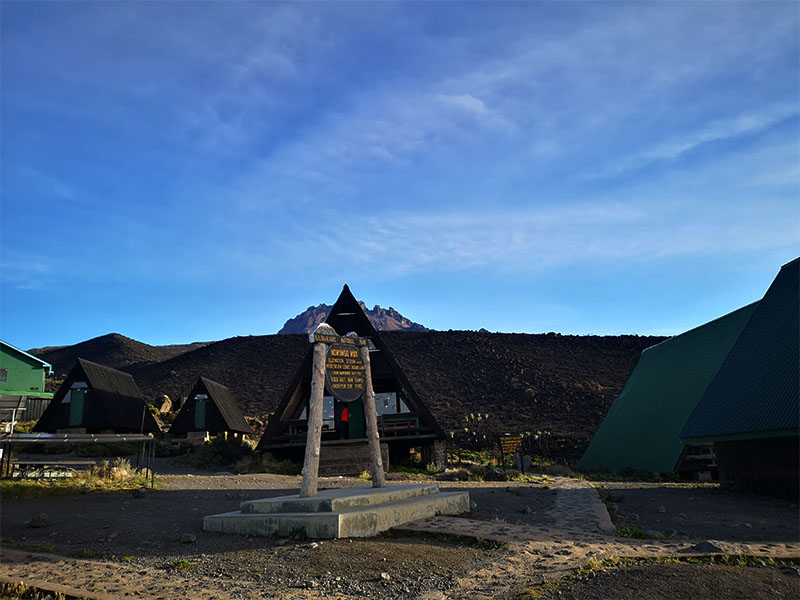
A hut gives you a roof and walls, which some climbers find more comfortable than a tent in wet or cold weather. The trade-off is sharing a room with strangers unless you pay for a luxury room, although many climbers enjoy meeting others at meals. If a hut to yourself matters to you, tell us when you book.
Acclimatization: which route gives your body more time?
This is the difference that matters most for your chance of reaching Uhuru Peak. The CDC advises that above 3,000 m your sleeping altitude should rise by no more than about 500 m per night, with an extra night added for every 1,000 m you gain. These are general guidelines, not a guarantee of safety. The CDC also says that training and physical fitness do not affect your risk of altitude illness, so being fit does not make a fast ascent safe.
| Route | Camp | Sleeping altitude | Note |
|---|---|---|---|
| Marangu | Mandara Hut | 2,720 m | Night one |
| Marangu | Horombo Hut | 3,720 m | 1,000 m above Mandara |
| Marangu | Kibo Hut | 4,720 m | 1,000 m above Horombo |
| Machame | Machame Camp | 2,835 m | Night one |
| Machame | Shira Cave Camp | 3,720 m | Night two; 885 m above Machame Camp |
| Machame | Barranco Camp | 3,900 m | Sleeps lower than the Lava Tower day |
| Machame | Karanga Camp | 3,995 m | 7-day itinerary only |
| Machame | Barafu Camp | 4,650 m | 655 m above Karanga (7-day) or 750 m above Barranco (6-day) |
The table shows camps we use on our itineraries, and published sources differ slightly on camp elevations, so treat the figures as approximate. Neither route keeps every night within the CDC’s 500 m guideline, so the difference lies in how the days are arranged, not in a route that avoids altitude.
How Marangu handles altitude
Marangu’s sleeping altitude rises about 1,000 m from Mandara to Horombo and again from Horombo to Kibo. The CDC guideline applies above 3,000 m, so it covers the whole Horombo to Kibo night, where the rise is twice the guideline, and part of the Mandara to Horombo night, which starts below 3,000 m. The 6-day Marangu itinerary softens this by adding a second night at Horombo. On that extra day the group walks up toward Zebra Rocks, at roughly 4,000 m, and comes back to sleep at Horombo at 3,720 m. Climbing high and sleeping low is a good way to help acclimatization, and the day takes about 3 to 4 hours. The 5-day version does not have this day.
At Kili Quests, we also recommend the 6-day Marangu route to beginners who prefer sleeping in mountain huts to camping in tents. We adjust the itinerary so the group walks to Zebra Rocks and returns to sleep a second night at Horombo Hut, which gives climbers more time on the mountain before Kibo Hut and the summit. Previous mountain experience can help with trail skills and endurance, but it does not protect anyone from altitude illness. What matters is choosing an itinerary that allows enough time to acclimatize and watching how each climber responds. Even on six days, altitude illness is still possible, and no route can guarantee a summit.
A published study followed 312 trekkers on the Marangu route. Of the 181 who returned complete data sets, 61% reached the summit and 77% developed acute mountain sickness (Davies and colleagues, 2009). That is the experience of one group of trekkers, not a Kili Quests figure. We keep no summit-success records, so we do not publish a success percentage for either route, and we have not found a comparable published study for Machame.
How Machame handles altitude
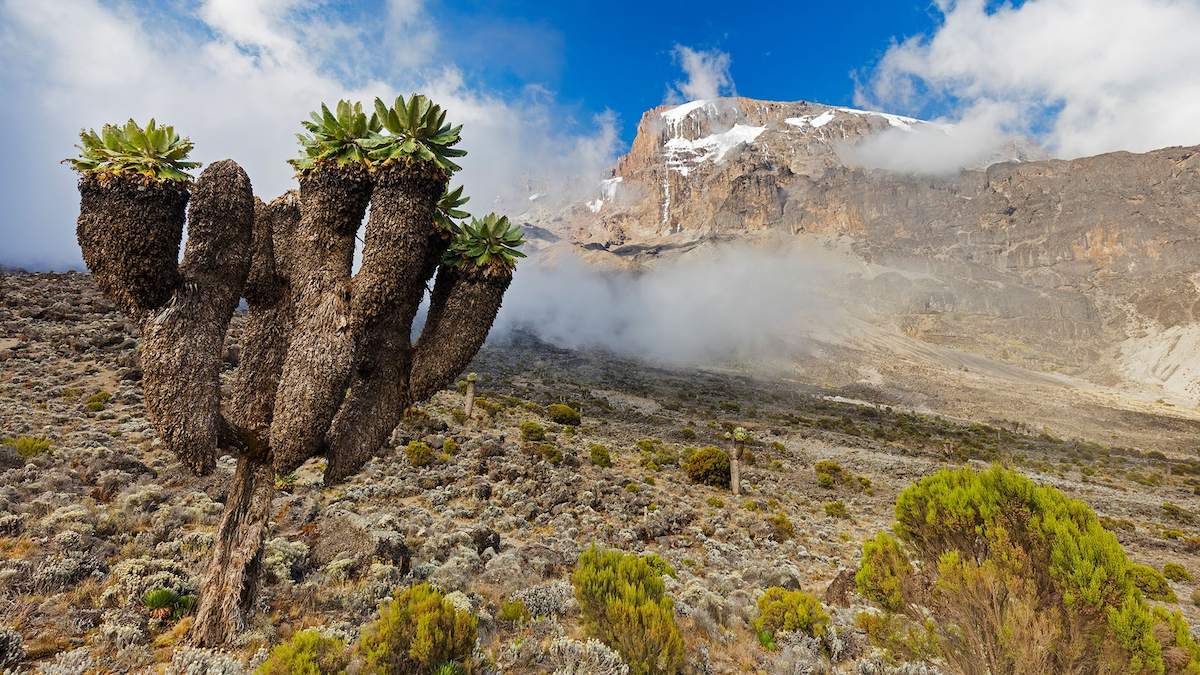
Machame builds acclimatization into the middle of the climb. On the Lava Tower day you walk high, eat lunch at Lava Tower, and then sleep lower at Barranco. The Barranco Wall follows, and what happens next depends on the length you choose.
- 7 days: after the Barranco Wall you sleep at Karanga. The next day it is about 3 to 4 hours to Barafu, with lunch and an afternoon of rest before summit night. See our 7-day Machame itinerary.
- 6 days: you cross the Barranco Wall, walk past Karanga and continue to Barafu the same day. Karanga to Barafu is about 4 hours after a day already spent walking, and you usually arrive between 5:00 and 6:00 pm. Dinner follows, and you wake at 11:00 pm for the summit climb.
What I see on shorter itineraries
As a guide, I see that climbers on shorter itineraries are more likely to reach summit night already tired and sleepy, with altitude-sickness symptoms such as nausea and headache, and some do not reach the top because their body has not had enough time to rest and acclimatize. A good night’s sleep before summit night is hard to get on a short schedule. This is why we plan six days when a beginner chooses Marangu, and why the Karanga night on 7-day Machame matters. These are my observations as a guide, not medical diagnoses. — Given Minja
Our guides check each climber’s oxygen saturation twice a day, in the morning and after dinner. A reading is one piece of information, never the whole picture: it is read alongside how the climber looks and feels, and a reading alone cannot show that someone is safe to continue. For symptoms and what to do about them, read our guide to altitude sickness on Kilimanjaro, and for pacing see how to acclimatize on Kilimanjaro.
Difficulty: which route is harder?
They are hard in different ways. Neither route needs technical climbing skills, so the real challenge on both is altitude, endurance and summit night. Our guide to how hard Kilimanjaro is covers that in more detail.
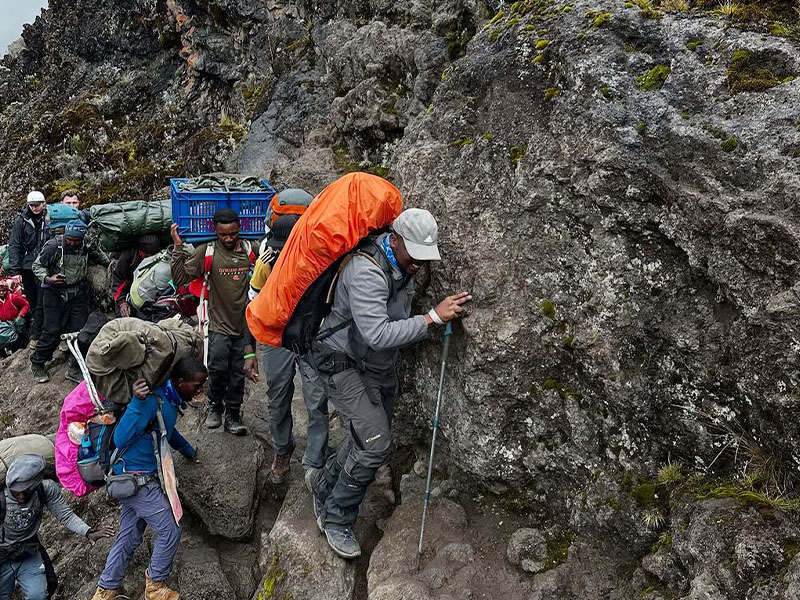
- Machame is harder on the legs. The first day from Machame Gate to Machame Camp is about 11 km. The second day can feel like climbing a long flight of stairs. The Barranco Wall is a scramble where you use your hands, so you stow your poles, and one narrow section called Kissing Rock has you hug the rock to pass. Summit day can also be longer than on Marangu, as the table above shows.
- Marangu is harder on the body if you go fast. The trail is steady and gradual, but the altitude gain between huts is quick, and the 5-day version has no extra day to absorb it.
The summit path is different too. From Kibo Hut on Marangu, you reach Gilman’s Point first, which takes about 5 hours, then Stella Point about 1 hour later, and then Uhuru Peak about 1 hour after that. From Barafu Camp on Machame you reach Stella Point first, after about 5 hours, and then continue to Uhuru Peak. So Marangu climbers pass one more point on the crater rim than Machame climbers do.
So “easier” depends on what you are measuring. A route that is gentle underfoot can still be the harder one for your body if it leaves less time to acclimatize.
Scenery and route style
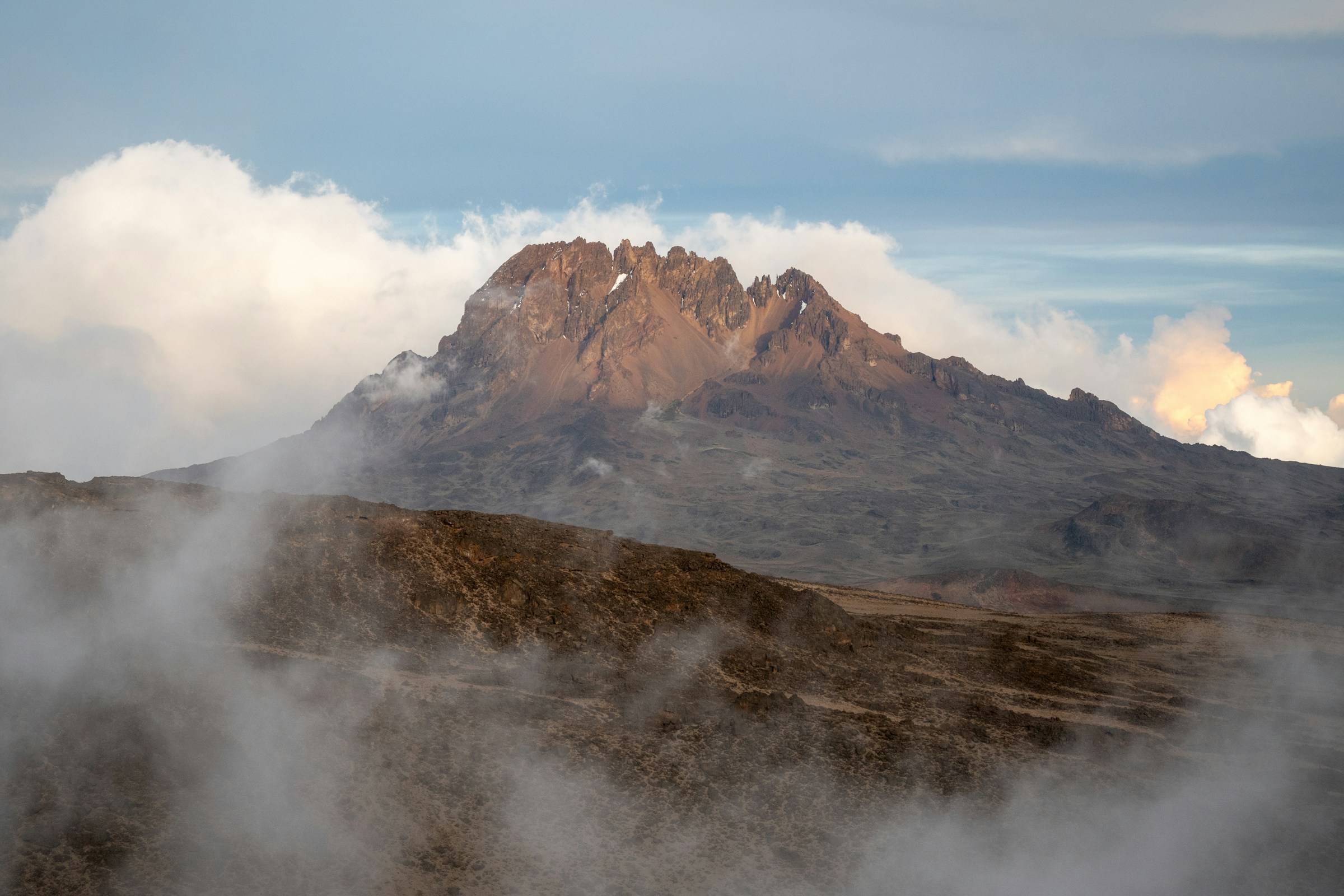
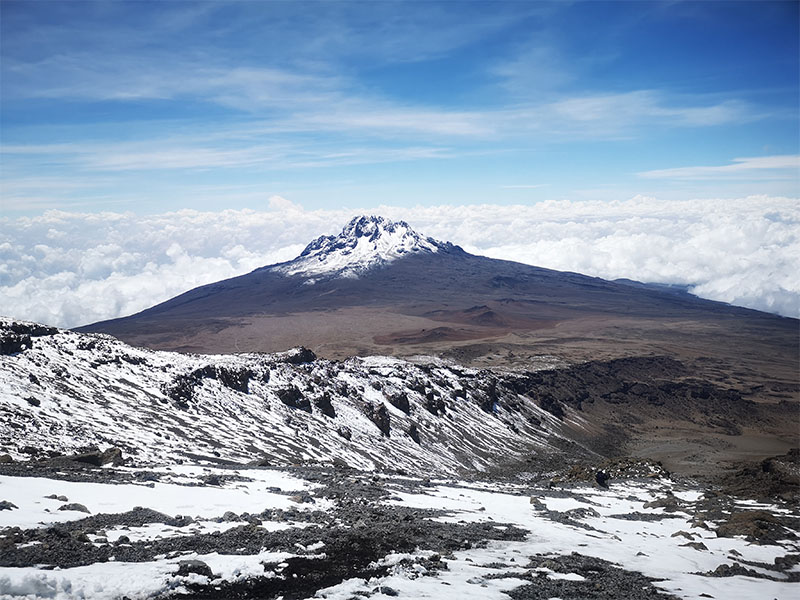
Machame crosses more landscape zones, including rainforest, moorland, alpine desert, the Lava Tower and the Barranco Wall, and it comes down a different trail from the one you go up. Marangu follows one trail up and down, through rainforest and moorland to Horombo, with views toward Mawenzi, and then across the saddle to Kibo. It is beautiful, but you see fewer changes of landscape, and you walk back over ground you have already seen.
Cost: which route is cheaper?
Marangu is the cheaper route with Kili Quests. Our indicative prices in November 2026 are about USD 1,800 to 2,000 per person for Marangu and about USD 2,200 to 2,400 per person for Machame. Machame costs about USD 400 more at both ends of those ranges. These are price ranges, not fixed quotations, so send us your dates and route length for a quote. Our Kilimanjaro climb cost guide explains what a climb costs more broadly. The gap exists because on Marangu we do not carry tents, a dining tent, tables or chairs, so the team is smaller and we cook for fewer people than on a camping route.
Price should not push you into a shorter climb than your body needs. If a lower price means skipping the Horombo acclimatization day, the saving may cost you time you would want on summit night. When you compare quotes from any operator, check what each one includes, because two prices are only comparable if they cover the same things:
- The number of days on the mountain and the accommodation (huts or tents).
- Park fees, including camping or hut fees.
- Guide, cook and porter support.
- Meals and drinking water on the mountain.
- Transfers, and hotel nights before and after the climb.
- Safety and emergency arrangements.
- Equipment, extras, taxes and other mandatory charges.
Which route should you choose?
| Your priority | Better choice | Why |
|---|---|---|
| A bed in a hut, not a tent | Marangu (6 days) | It is the only route with huts. Rooms hold 3 to 6 beds, and private rooms cost extra. |
| More time to acclimatize | Machame (7 days) | The Lava Tower day and the Karanga night spread the altitude gain over more days. |
| Varied scenery | Machame | It crosses more landscape zones and goes down a different trail. |
| The lowest price | Marangu | About USD 400 less per person at both ends of our ranges. |
| First climb, comfortable camping | Machame (7 days) | More time on the mountain and the Lava Tower and Karanga nights spread the altitude gain. |
| First climb, strongly prefer huts | Marangu (6 days) | The extra night at Horombo gives you an acclimatization day. We do not suggest the 5-day version for a first climb. |
First-timer advice: if this is your first Kilimanjaro climb and you are comfortable camping, we generally recommend the 7-day Machame itinerary. If you strongly prefer huts, Marangu can still suit you, but choose the 6-day itinerary rather than the 5-day one. If you have little experience at altitude and can spare more days, Lemosho or the 7-day Rongai route give your body more time still. See our Machame vs Lemosho comparison.
As a rule of thumb by experience, we usually suggest Lemosho or the 7-day Rongai route to beginners, Machame or Rongai to intermediate climbers, and Marangu, Umbwe or Shira to experienced climbers. Your experience on the mountain, your comfort with camping and how many days you can spare should decide, not the reputation of the route. If you are still undecided, send us your dates and hiking experience.
Machame vs Marangu pros and cons
| Route | Pros | Cons |
|---|---|---|
| Machame | More acclimatization time on 7 days More varied scenery and the Barranco Wall Private toilet with a toilet porter | Camping in tents Harder on the legs on some days Costs about USD 400 more per person |
| Marangu | The only route with huts Shared dining where you meet other climbers Steady, gradual trail Lower price | Quick altitude gain between huts Shared rooms unless you book a luxury room Same trail up and down |
Frequently asked questions about Machame vs Marangu
Is Machame or Marangu better for beginners?
If you are comfortable camping, we generally recommend the 7-day Machame itinerary for a first climb, because it gives your body more time to adjust. If you strongly prefer huts, Marangu can suit a first-timer, but only the 6-day itinerary with the extra night at Horombo. If you have little experience at altitude and can spare more days, we often suggest Lemosho or the 7-day Rongai route instead.
Is the 5-day Marangu route enough time to acclimatize?
For most climbers, no. The 5-day version has no acclimatization day, and the sleeping altitude rises about 1,000 m between huts. We do not suggest the 5-day itinerary for a first climb, and even experienced climbers get less time to acclimatize on it, because mountain experience does not make anyone immune to altitude illness. We plan six days for beginners who choose Marangu.
What are the huts on the Marangu route like?
They are shared. One room holds 3 to 6 beds, and you share it with other climbers, including people from other groups. Luxury rooms for staying on your own cost extra and must be arranged in advance. Meals are three a day, and the huts have shared dining areas where climbers from different companies often eat together. The huts have toilets with water, and warm-water bathing is available only in the luxury rooms. In other rooms we bring warm water for washing.
Which route is cheaper, Machame or Marangu?
Marangu. Our indicative prices in November 2026 are about USD 1,800 to 2,000 per person for Marangu and about USD 2,200 to 2,400 per person for Machame. These are ranges, not fixed quotations. Marangu costs less because we do not carry tents, tables or chairs, so the team is smaller and we cook for fewer people. Send us your dates and we will quote for your itinerary.
Is Machame harder than Marangu?
It depends on what you measure. Machame is harder on the legs, with longer summit-day hours and the Barranco Wall scramble. Marangu is gentler underfoot but gains altitude faster, which can make it harder on the body, especially on the 5-day version. Neither route needs technical climbing skills.
Not sure which route fits you?
Tell us a little about your plans and we will suggest the route and length that suit you. No operator can guarantee a summit.
- When would you like to climb?
- How many people will be joining?
- Would you rather sleep in a hut or a tent?
- How many days can you spend on the mountain?
- Have you climbed at high altitude before?
About the author
Given Minja is a Kilimanjaro guide at Kili Quests in Moshi, Tanzania, with more than eight years of guiding experience. Given Minja and fellow guide Daniel Munuo each completed Sentinel Outdoor Institute’s 80-hour Wilderness First Responder course and a Sentinel Outdoor Institute CPR course. Kili Quests co-founder Allen Minja has more than 30 years of mountain experience. Learn more about Kili Quests and the team.
Sources
- CDC Yellow Book, High-Altitude Travel and Altitude Illness
- Davies AJ and colleagues, Wilderness & Environmental Medicine 2009;20(4):311–317, a study of acute mountain sickness and summit success among trekkers on the Marangu route
Sleeping altitudes, hut details, summit-day times and prices come from Kili Quests itineraries and guiding experience, and are approximate. Prices are in US dollars per person and can change. This article gives general information, not individual medical advice. See a doctor before climbing, especially if you have a heart, lung or circulation condition.
Keep planning your climb