Reach the Summit

Climb to Gilman’s Point and continue to Uhuru Peak with expert local guides.

Plan Your Climb

Prepare for your Kilimanjaro adventure:

OUR CATEGORIES

Why Is It Called Gilman’s Point? The Story Behind the Name | Kili Quests

Climbers taking the Marangu Route or Rongai Route to the top of Mount Kilimanjaro reach an important milestone before Uhuru Peak: Gilman’s Point. Located on the rim of Kibo crater, Gilman’s Point is one of Kilimanjaro’s recognized summit markers and a major achievement during the final summit push.
 
But why is it called Gilman’s Point, and who was Gilman?
 
In this article, Kili Quests explains the story behind the name, where Gilman’s Point is located, why it matters, and how it differs from Uhuru Peak and Stella Point.
 
To understand the mountain’s volcanic structure, read our guide to Kilimanjaro’s volcanic cones: Kibo, Mawenzi, and Shira.
 

Quick Answer: Why Is It Called Gilman’s Point?

Gilman’s Point is named after Clement Gillman, a British geographer, civil engineer, and surveyor connected with early mapping and geographic study in East Africa. The summit marker on Mount Kilimanjaro is widely spelled Gilman’s Point, although the historical surname is often written as Gillman with two “l” letters.
 
On Kilimanjaro, Gilman’s Point marks a recognized crater-rim summit point reached most commonly by climbers using the Marangu Route or Rongai Route. It is a major achievement, but it is not the highest point on the mountain. The true summit of Kilimanjaro is Uhuru Peak.
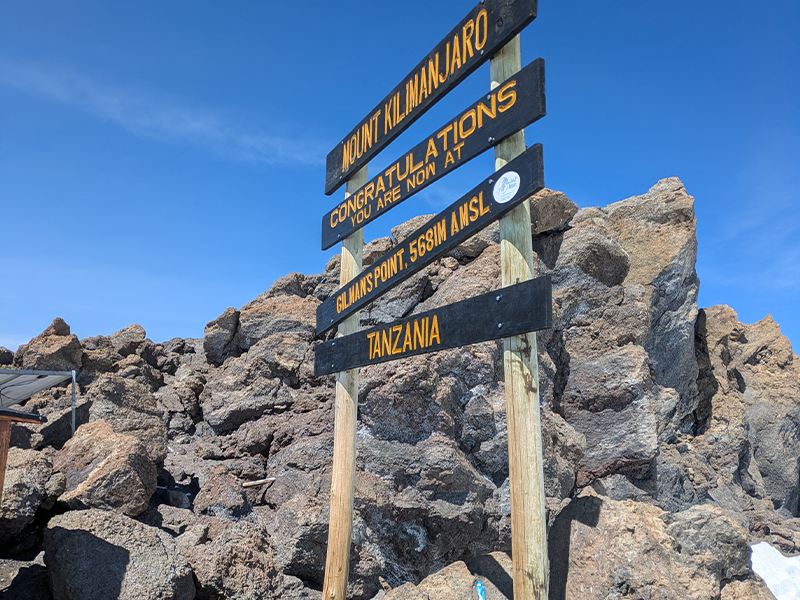
Gilman’s Point summit sign on Mount Kilimanjaro crater rim
Gilman’s Point marks one of Kilimanjaro’s recognized summit points on the rim of Kibo crater.

Table of Contents

Where Is Gilman’s Point on Kilimanjaro?

Gilman’s Point lies on the eastern rim of Kilimanjaro’s Kibo crater. It is the first major crater-rim marker reached by many climbers ascending via the Marangu Route or Rongai Route.
 
Reaching Gilman’s Point is a huge accomplishment because it means you have reached the crater rim after the steep overnight summit climb. From here, climbers who still have enough energy and safe conditions can continue toward Uhuru Peak, the highest point on Mount Kilimanjaro.
 
The walk from Gilman’s Point to Uhuru Peak usually takes around 1.5 to 2 hours, depending on pace, weather, trail conditions, and how well your body is handling the altitude.
 
These routes approach the summit differently, so if you are still choosing your trail, compare them in our Kilimanjaro Routes Guide.

Who Was Gilman?

Gilman’s Point is named after Clement Gillman, a British geographer, civil engineer, and surveyor who carried out mapping and survey work in East Africa during the early 20th century.
 
His work helped document the physical geography, routes, and terrain of the region, including areas around Mount Kilimanjaro. Although he was not the first person to climb Kilimanjaro, his name became connected with one of the mountain’s important crater-rim landmarks.
 
One detail often confuses climbers: the place is commonly spelled Gilman’s Point, while the historical surname is often written Gillman. For the Kilimanjaro location, use Gilman’s Point.
 
For more Kilimanjaro history, read the story of Hans Meyer and the first Kilimanjaro ascent in 1889.
 
Historical names on Kilimanjaro can be confusing because many landmarks were recorded during the colonial mapping period, and spellings were not always used consistently across maps, guidebooks, and local references.
Portrait of Clement Gillman British geographer and surveyor
Clement Gillman was connected with early mapping and geographic study in East Africa.

Why Does Gilman’s Point Matter?

Gilman’s Point matters because it is one of Kilimanjaro’s recognized crater-rim summit points. For climbers on the Marangu or Rongai Route, reaching this point means they have completed the steepest and most exhausting part of summit night.
 
Gilman’s Point is not a separate mountain peak. It is a named point on the crater rim of Kibo, Kilimanjaro’s highest volcanic cone.
 
For many climbers, Gilman’s Point represents:
  • The first major crater-rim milestone before Uhuru Peak
  • A major psychological victory after hours of climbing in darkness
  • A recognized Kilimanjaro summit point
  • A place where climbers may receive a summit certificate
  • A decision point before continuing toward Uhuru Peak
This is also where guides carefully assess each climber’s condition. If someone is too exhausted, showing altitude symptoms, or moving too slowly, stopping at Gilman’s Point may be the safer decision.

Gilman’s Point vs. Uhuru Peak

Feature Gilman’s Point Uhuru Peak
Elevation 5,681 m / 18,638 ft 5,895 m / 19,341 ft
Location Eastern rim of Kibo crater Highest point on Kilimanjaro
Common routes Marangu Route and Rongai Route Final goal for most Kilimanjaro routes
Meaning Recognized crater-rim summit point True highest summit of Mount Kilimanjaro
Certificate Summit certificate usually awarded Full summit certificate awarded
Time from Gilman’s Point Starting point on the crater rim Usually 1.5 to 2 hours farther

Gilman’s Point vs Stella Point

Gilman’s Point and Stella Point are both important crater-rim landmarks on Mount Kilimanjaro, but they are reached from different summit approaches.
 
Gilman’s Point is most commonly reached by climbers using the Marangu Route or Rongai Route. Stella Point is more commonly reached by climbers coming from routes such as Machame, Lemosho, and Umbwe.
 
Both points are major achievements, but neither is the highest point on Kilimanjaro. Uhuru Peak remains the true summit of the mountain.
 
To understand the other major crater-rim landmark, read our guide to Stella Point on Kilimanjaro.
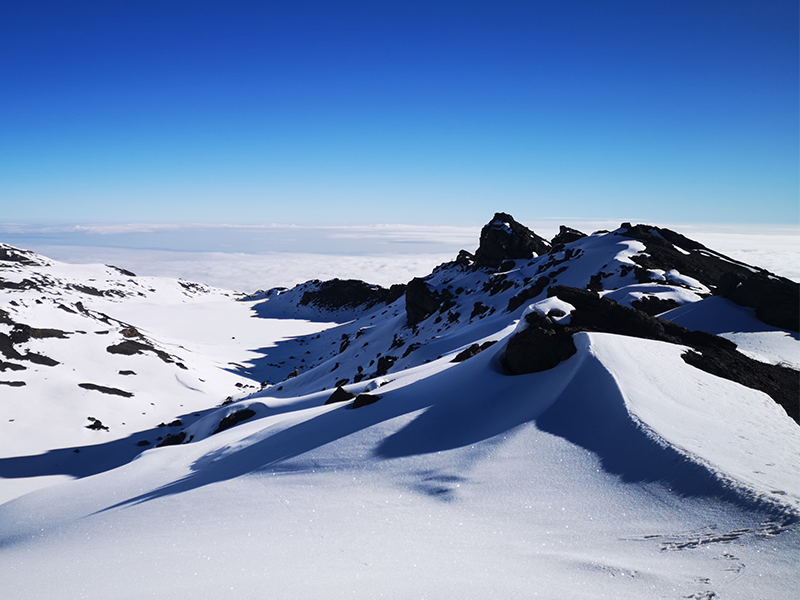
Snow-covered crater rim view from Gilman’s Point on Mount Kilimanjaro
From Gilman’s Point, climbers continue along Kilimanjaro’s crater rim toward Uhuru Peak.

Did You Know?

The final push to Gilman’s Point is often done at night. Summit attempts usually begin around midnight so climbers can reach the crater rim near sunrise.

This section is one of the toughest parts of the Marangu Route because climbers move slowly through cold temperatures, thin air, and loose volcanic scree.

At sunrise, Gilman’s Point can offer dramatic views across the crater rim, the clouds below, and the distant landscape toward Kenya. It is one of three famous summit markers on Kilimanjaro, along with Stella Point and Uhuru Peak.

If you want to understand why summit night feels so demanding, read How Hard Is Kilimanjaro?

Frequently Asked Questions About Gilman’s Point

What is Gilman’s Point on Mount Kilimanjaro?

Gilman’s Point is one of Mount Kilimanjaro’s recognized summit markers. It is located on the eastern rim of Kibo crater at about 5,681 meters, or 18,638 feet. Climbers who reach this point have reached the crater rim and are close to the final summit route toward Uhuru Peak.

Is Gilman’s Point the summit of Mount Kilimanjaro?

Gilman’s Point is a recognized crater-rim summit point, but it is not the highest point on Mount Kilimanjaro. The true summit is Uhuru Peak, which stands at 5,895 meters, or 19,341 feet. From Gilman’s Point, it usually takes 1.5 to 2 hours to reach Uhuru Peak.

Which Kilimanjaro routes reach Gilman’s Point?

Gilman’s Point is most commonly reached by climbers using the Marangu Route and Rongai Route. These routes approach the crater rim from the eastern side before climbers continue toward Uhuru Peak.

How difficult is the climb to Gilman’s Point?

The climb to Gilman’s Point is difficult because it usually happens during summit night in cold, dark, high-altitude conditions. Climbers ascend steep volcanic scree from Kibo Hut while dealing with fatigue, thin air, and freezing temperatures.

Do you get a summit certificate at Gilman’s Point?

Yes. Climbers who reach Gilman’s Point usually receive an official Kilimanjaro summit certificate. However, Uhuru Peak is the highest point on the mountain and is considered the main summit goal for most climbers.

Reaching Gilman’s Point: What It Means for Your Summit

Reaching Gilman’s PoGilman’s Point may not be the highest point on Kilimanjaro, but it is still a powerful achievement. After hours of climbing through darkness, cold, and thin air, reaching the crater rim is a major physical and emotional milestone.

For some climbers, Gilman’s Point is the safest stopping point. For others, it becomes the final push before continuing along the crater rim toward Uhuru Peak. Either way, standing at Gilman’s Point means you have reached one of Kilimanjaro’s most important historic summit landmarks.

To understand the meaning of Kilimanjaro’s highest summit, read how Uhuru Peak got its name after Tanzania’s independence.

Plan Your Kilimanjaro Climb with Kili Quests

If you are planning to climb via the Marangu Route or Rongai Route, Gilman’s Point will be one of the most important landmarks on your summit journey.
 
With Kili Quests, you climb with experienced local guides who understand the route, the altitude, the summit pace, and the stories behind Kilimanjaro’s famous landmarks.
 
Contact us today to start planning your Kilimanjaro climb.

Related Articles