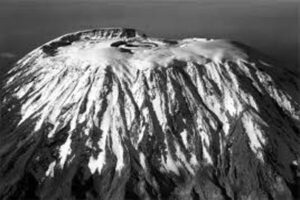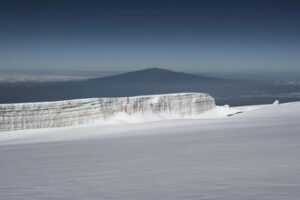
Mount Kilimanjaro: Africa’s Highest and Most Famous Mountain

Table of Contents

Why Kilimanjaro Is Africa’s Most Iconic Landmark | Kili Quests

Mount Kilimanjaro is one of the most recognized and revered natural features in the world. Towering at 5,895 meters (19,341 ft), it is not just the highest mountain in Africa — it’s a symbol of achievement, resilience, and natural beauty. But what exactly makes Kilimanjaro so iconic?

Whether you’re drawn to it for the adventure, the scenery, or its cultural importance, here’s why Kilimanjaro earns its legendary status among global travelers.

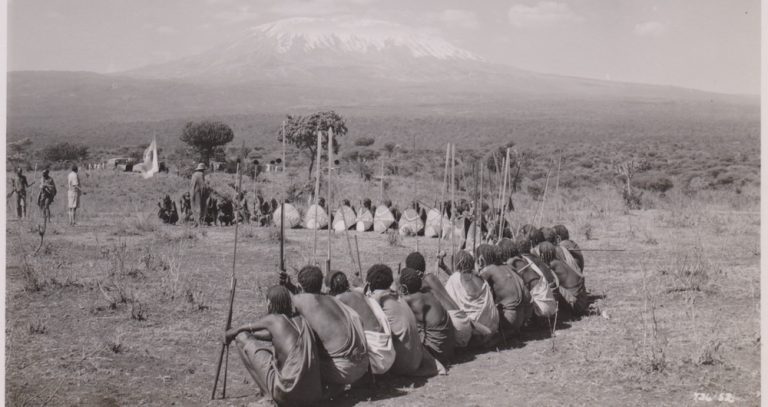
Mount Kilimanjaro rising above the African plains with acacia trees in the foreground
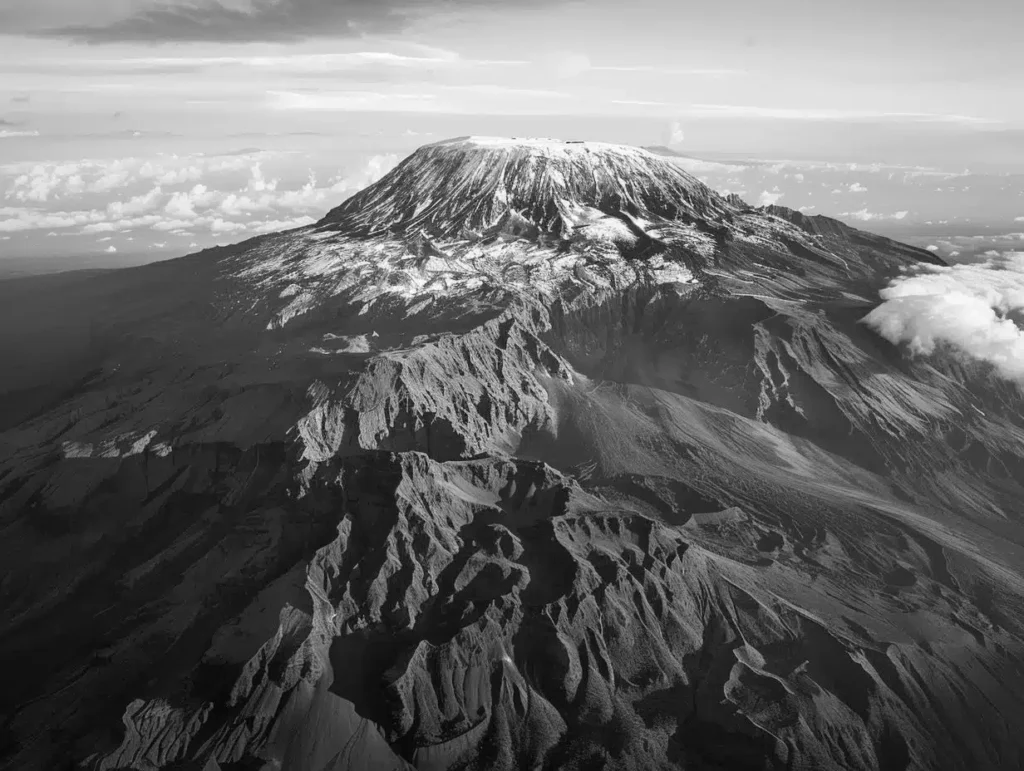
Kilimanjaro’s snowcapped summit and free-standing presence make it one of Africa’s most iconic and photographed landmarks

It’s the Highest Free-Standing Mountain in the World

Unlike most major peaks that are part of mountain ranges, Kilimanjaro stands alone. Its dramatic rise from the surrounding savanna makes it visible from miles away — a breathtaking spectacle, especially at sunrise or sunset. It’s the tallest free-standing mountain on Earth, making it geologically and visually unique.
 
For more geological insight, read:

Snow at the Equator — A Surprising Natural Wonder

Located just south of the equator, Kilimanjaro’s summit is capped with permanent glaciers and snow — a rare sight in tropical Africa. This surreal contrast between hot plains and icy summit is part of the mountain’s magic and mystery.

It Has Five Distinct Ecological Zones

Climbing Kilimanjaro takes you through five ecological zones, each with unique landscapes, flora, and fauna:
  • Cultivation Zone – farmland and villages
  • Rainforest Zone – home to monkeys and exotic birds
  • Heather and Moorland Zone – surreal plant life and rolling fog
  • Alpine Desert Zone – dry, rocky terrain with wide views
  • Arctic Summit Zone – glaciers, ice, and thin air
Learn more about the zones:
Local Chagga farmer working in the fields with Mount Kilimanjaro in the background
Kilimanjaro is not just a landmark — it’s a source of life, culture, and pride for the communities around it

It’s the Most Accessible of the Seven Summits

Kilimanjaro is part of the Seven Summits — the tallest mountains on each continent — but it’s the most accessible to non-technical climbers. No ropes or climbing gear are needed. With good fitness and altitude preparation, anyone can attempt the climb.
 
Prepare for your summit with this plan:

It Attracts Trekkers from All Over the World

Each year, over 35,000 climbers attempt to summit Kilimanjaro. From solo hikers to charity groups and family expeditions, the mountain draws people from every continent. It’s not just a climb — it’s a global pilgrimage of determination, teamwork, and personal triumph.
 
Wondering if you’re ready?
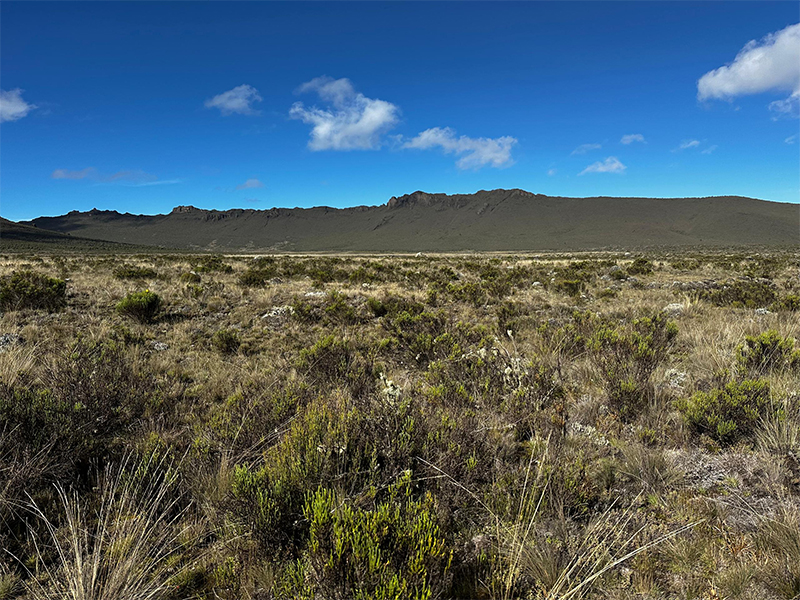
Wide view of the Shira Plateau with its flat landscape and Shira Peak rising in the background
The Shira Plateau offers a rare flat expanse on Kilimanjaro — once the crater floor of an ancient volcano, with Shira Peak visible on the horizon

It’s a Cultural and Spiritual Symbol

To local communities like the Chagga, Maasai, and Pare, Kilimanjaro is sacred. It plays a central role in oral stories, rituals, and traditional beliefs. It is believed to house spirits, ancestors, and divine energy — and locals treat it with profound respect.
 
Dive into the legends and rituals:
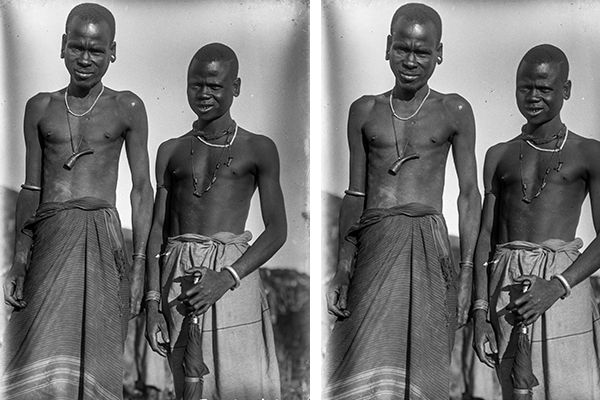
Members of the Pare tribe from the southeastern Kilimanjaro region, dressed in traditional clothing
The Pare people, known for their rituals and herbal knowledge, view Kilimanjaro as a sacred force and conduct spiritual ceremonies in its presence
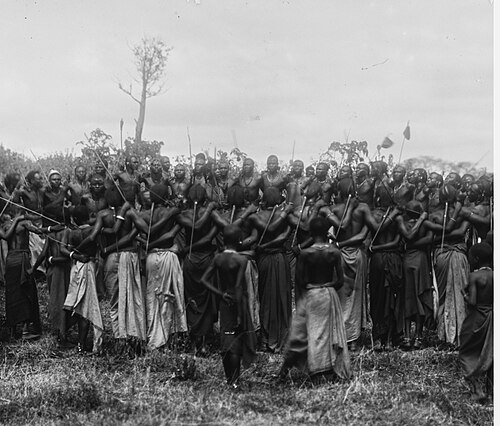
Chagga people performing a traditional dance during the 1990s in Kilimanjaro region | Kili Quests
Cultural pride in motion — this 1990s Chagga dance reflects deep-rooted heritage passed through generations.

It’s One of the Most Photographed Natural Landmarks

From National Geographic covers to adventure films and global brand campaigns, Kilimanjaro’s silhouette is iconic. With its towering form above the plains and its snowy peak contrasting against blue skies or golden savannas, it’s a dream scene for photographers and travelers alike.
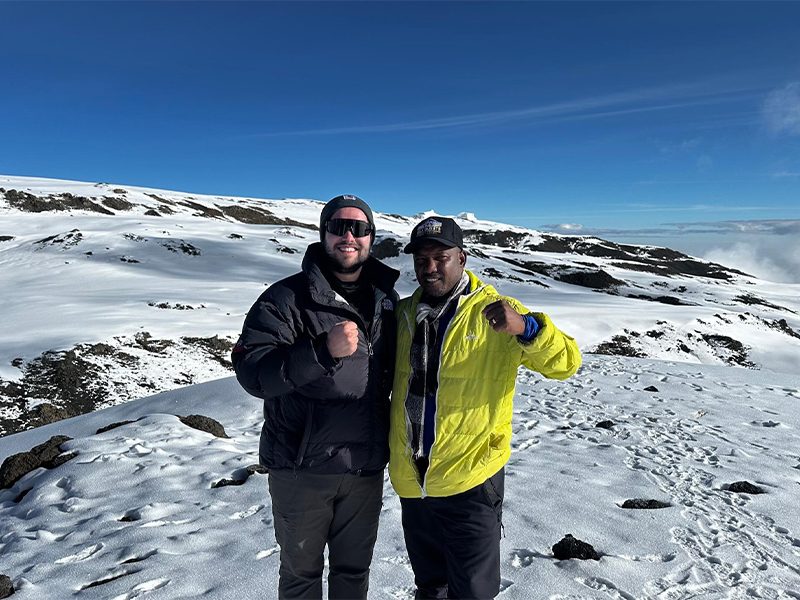
Kilimanjaro guide and climber standing together at Stella Point, sharing a moment in fresh snow
A powerful moment between guide and climber at Stella Point — a key milestone on the way to the summit of Kilimanjaro
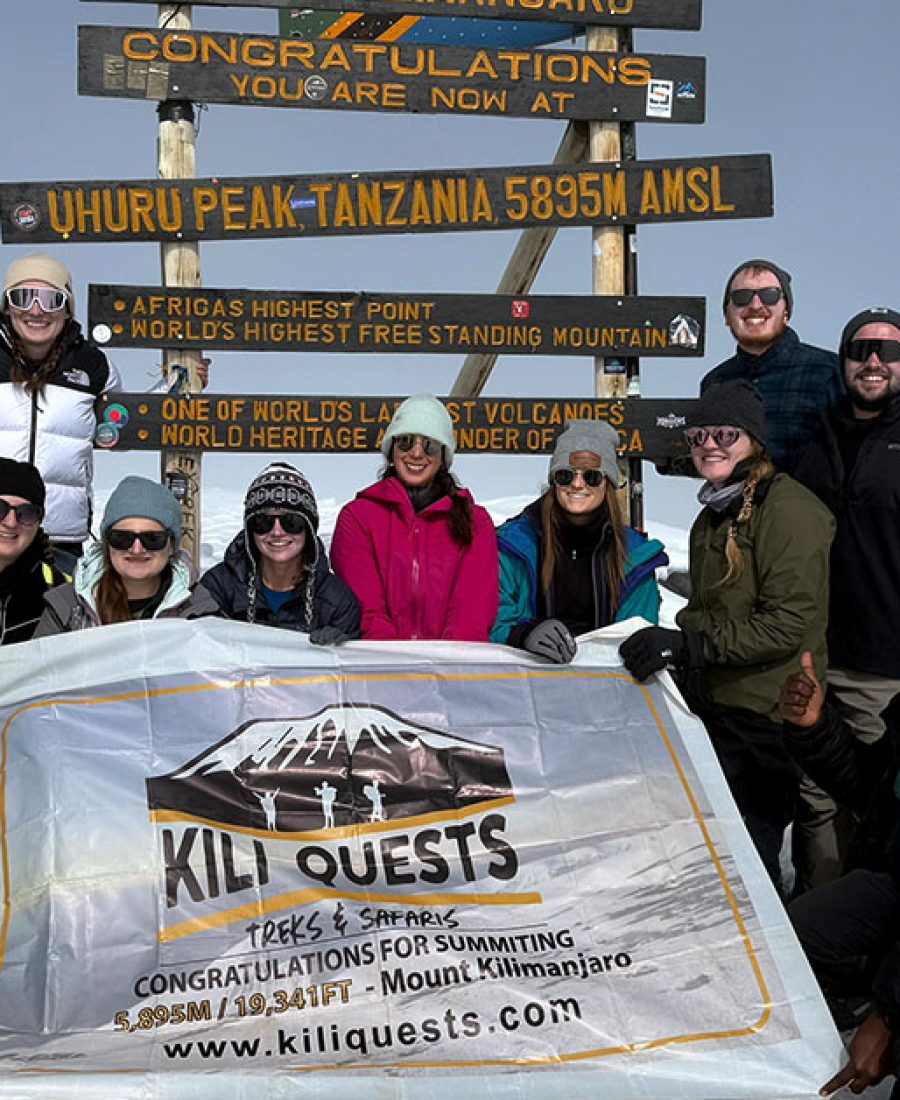
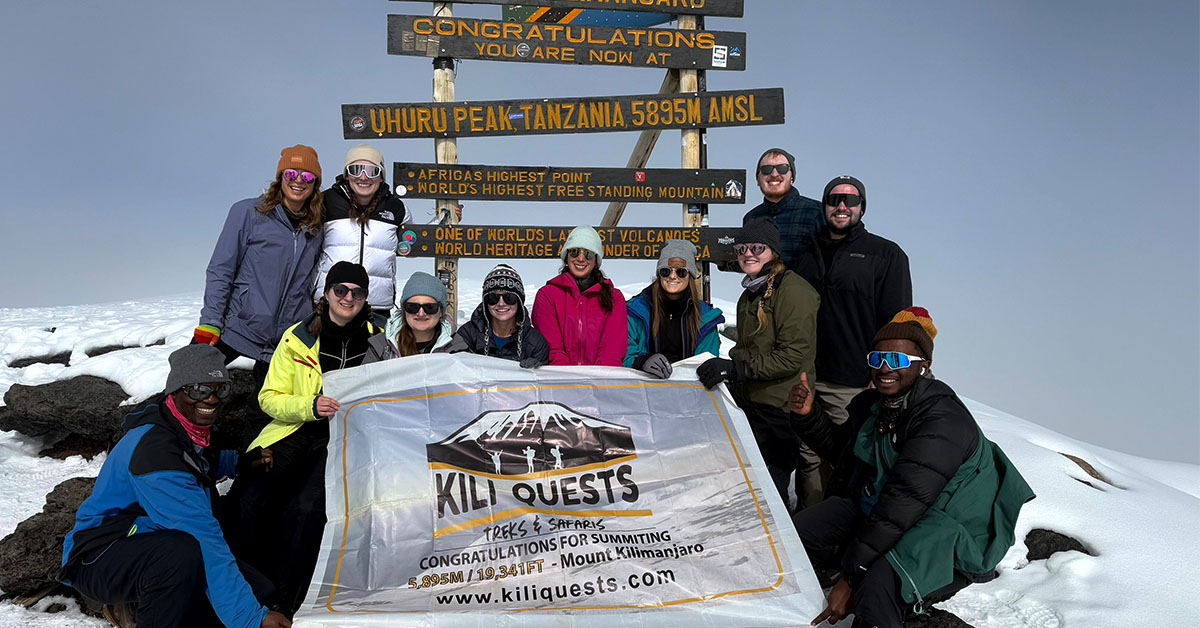
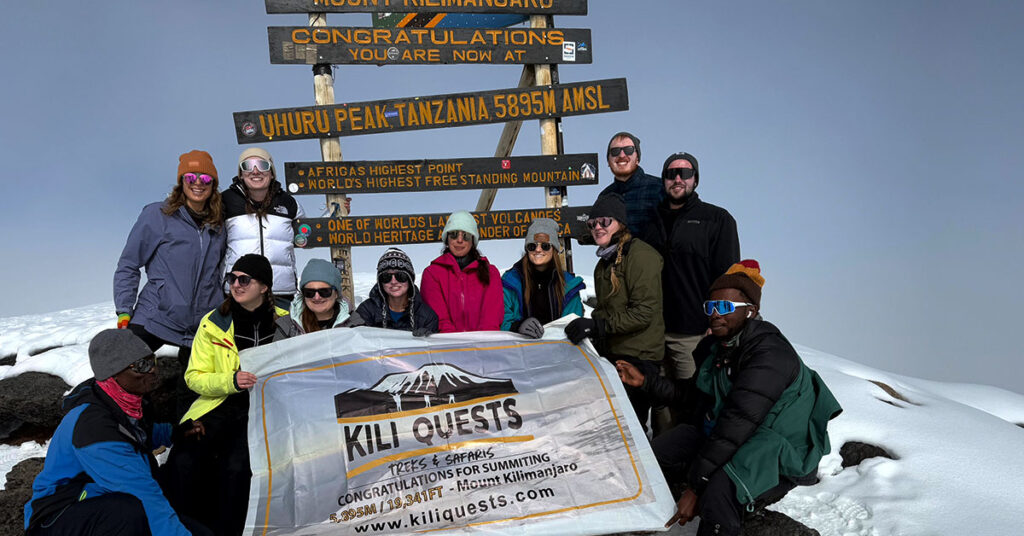
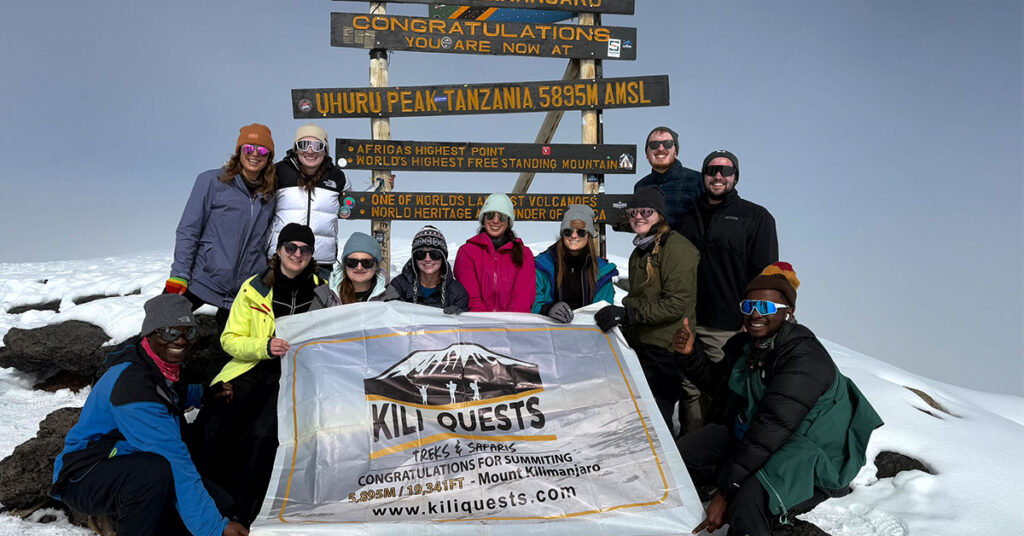
Group of trekkers celebrating together at Uhuru Peak, the summit of Mount Kilimanjaro
Reaching Uhuru Peak is a shared triumph — this final photo marks the ultimate goal of every Kilimanjaro climber

It Borders Rich Wildlife Ecosystems

Kilimanjaro National Park is home to elephants, monkeys, antelope, and countless birds. Nearby destinations like Amboseli (Kenya) and Arusha National Park (Tanzania) allow trekkers to combine summit adventure with safari.
 
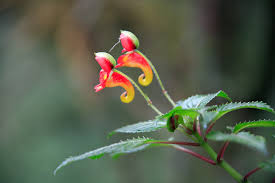
Impatien kilimanjarica flower blooming on Mount Kilimanjaro | Kili Quests
Impatien kilimanjarica- endemic flower of KilimanjaroDelicate beauty — this bright flower grows only on Kilimanjaro.
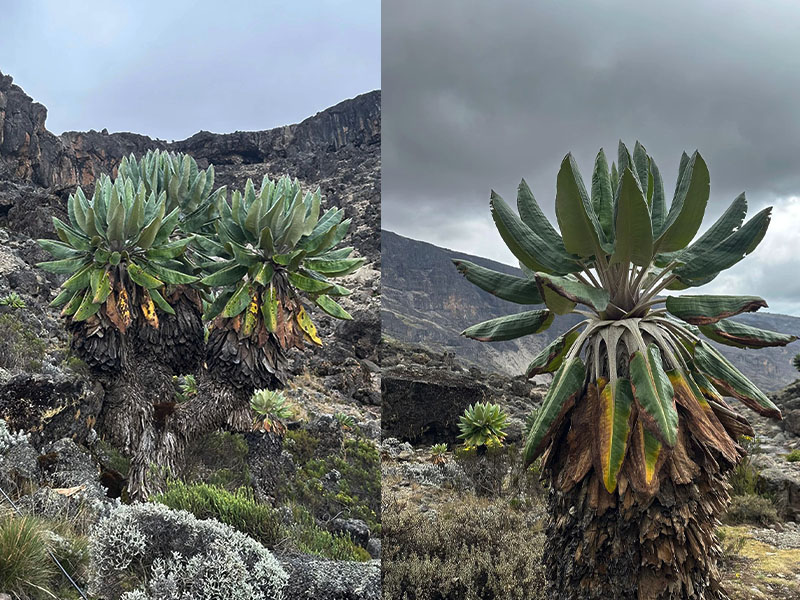
Giant groundsels in the alpine desert zone of Mount Kilimanjaro | Kili Quests
Strange and beautiful giant groundsels are among Kilimanjaro’s most iconic high-altitude plants.

 Why It All Matters

Kilimanjaro is not just a mountain — it’s a symbol of Africa’s beauty, challenge, and spirit. It represents hope, resilience, and nature’s grandeur. Whether you summit it or simply admire it from below, you are engaging with one of the greatest landmarks on Earth.
 
At Kili Quests, we help you connect with this wonder — responsibly, respectfully, and with expert guidance.
Mount Kilimanjaro rising alone above the African savanna, with snowcapped summit and open sky
Kilimanjaro’s unmatched height, freestanding shape, and snowcapped peak make it one of Africa’s most iconic natural landmarks

Frequently Asked Questions About Why Kilimanjaro Is Africa’s Most Iconic Landmark

Why is Mount Kilimanjaro considered Africa’s most iconic landmark?

Mount Kilimanjaro is widely considered Africa’s most iconic landmark because it is the highest mountain on the continent and the tallest free-standing mountain in the world. Its snow-covered summit rising above tropical plains creates one of the most recognizable natural landscapes on Earth.

What makes Mount Kilimanjaro unique compared to other mountains?

Unlike most famous mountains that are part of large ranges, Kilimanjaro stands alone. Its dramatic rise from the surrounding savanna, combined with glaciers near the equator and diverse ecosystems along its slopes, makes it geologically and visually unique.

Why do so many travelers want to climb Mount Kilimanjaro?

Kilimanjaro attracts tens of thousands of climbers each year because it offers a rare opportunity to reach a very high summit without technical climbing skills. Trekkers can walk to the summit while passing through multiple ecological zones, making the journey both accessible and diverse.

Is Mount Kilimanjaro part of the Seven Summits?

Yes. Kilimanjaro is the highest mountain in Africa and represents the African continent in the famous Seven Summits challenge, which includes the tallest peaks on each continent.

Why is Kilimanjaro culturally important to local communities?

For many local communities, including the Chagga people, the Maasai people, and the Pare people, Kilimanjaro holds spiritual and cultural significance. Stories, traditions, and ancestral beliefs connected to the mountain have been passed down for generations.

Why is Mount Kilimanjaro famous around the world?

Kilimanjaro is globally famous for its height, dramatic landscape, and reputation as one of the world’s great trekking destinations. Its distinctive silhouette, glaciers near the equator, and cultural importance have made it one of the most recognizable mountains in the world.

Ready to Experience Kilimanjaro for Yourself?

Whether you’re planning your first trek or returning for a new route, Mount Kilimanjaro is calling — and we’re here to guide you every step of the way.
At Kili Quests, we offer:
  • 98% summit success rate on popular routes like Lemosho and Machame
  • Certified local guides with years of experience
  • Full cultural immersion with a Chagga-owned team
  • Private, customizable itineraries based on your goals and pace
 
 Book a free consultation or ask us your questions:
Contact Us | WhatsApp: +255 654 639 963   OR +255 762 187 967
Your journey to the Roof of Africa begins here.

Related Articles

Mount Meru vs Kilimanjaro: Which Trek Should You Choose?

Kilimanjaro vs Mount Meru: Which Trek Should You Choose?

If you’re planning a mountain adventure in Tanzania, two peaks often come up: Mount Kilimanjaro and Mount Meru. While Kilimanjaro is the tallest and most famous, Meru is a hidden gem with fewer crowds and stunning scenery.So, which trek is right for you? Here’s a detailed comparison to help you decide.Explore the highlights of Mount Meru — Kilimanjaro’s lesser-known sister climb.

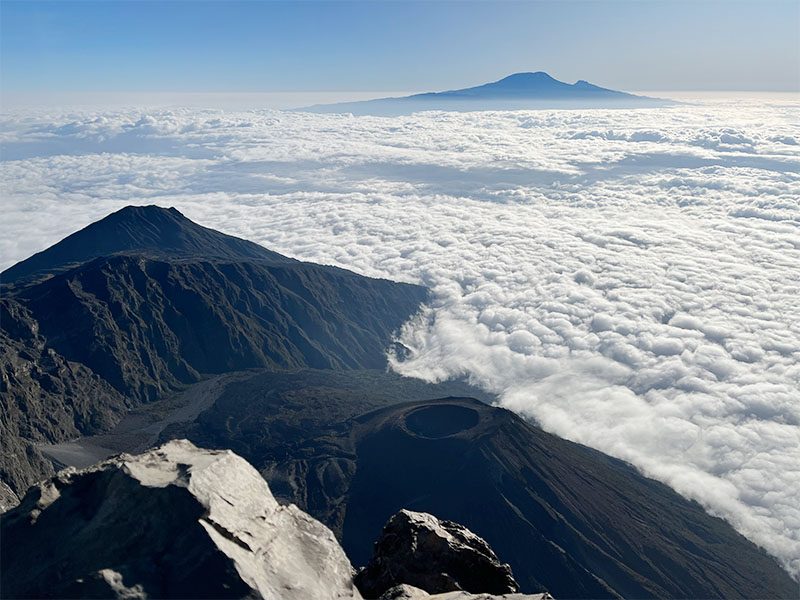
: Mount Meru and Mount Kilimanjaro seen from a distance across the Tanzanian plains
Mount Meru and Kilimanjaro rise above northern Tanzania — offering two very different trekking experiences

Table of Contents

Altitude & Challenge

Mount Kilimanjaro stands at 5,895 meters (19,341 ft), making it the highest mountain in Africa. The climb is non-technical but physically demanding due to the altitude and the multi-day trek.Mount Meru rises to 4,566 meters (14,980 ft) and is often used as an acclimatization trek before Kilimanjaro. While shorter, Meru is steeper and includes some narrow ridge walking.
Learn more about high-altitude trekking here:
 
Snow and glaciers at the summit of Mount Kilimanjaro
Kilimanjaro offers high-altitude glacier trekking and the chance to stand on Africa’s highest peak

Scenery & Wildlife

Mount Meru offers incredible views of Kilimanjaro and a more wildlife-rich environment. It begins in Arusha National Park, where you might see giraffes, buffalos, and colobus monkeys on the lower slopes.Kilimanjaro, while less wildlife-dense, offers five unique ecological zones and surreal alpine landscapes at higher elevations.

Duration of the Trek

Kilimanjaro: Typically 6–9 days, depending on the route
Meru: Usually 3–5 days
Kilimanjaro requires a longer time commitment, while Meru is ideal if you have limited time.
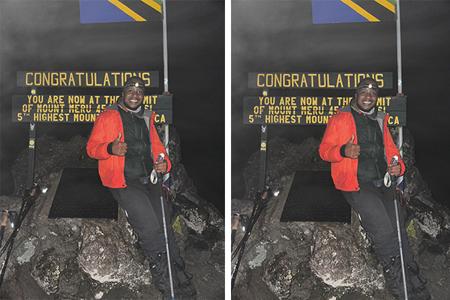
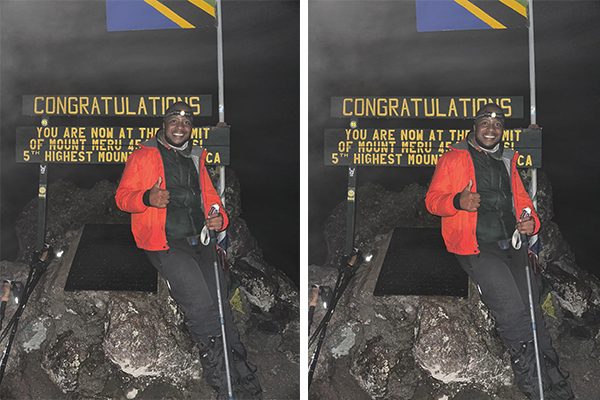
Kili Quests guide standing at the summit of Mount Meru in early morning darkness before sunrise, with limited visibility
Our guide reached the summit of Mount Meru around 5:30 AM — capturing the quiet, powerful moment before sunrise that few trekkers experience

 Cost & Permits

Kilimanjaro treks cost more due to national park fees, staff requirements (guides, porters, cooks), and logistical needs.Meru is significantly more affordable and still includes park fees and guide services  but requires fewer support staff.
 

Trekking Traffic

Kilimanjaro is popular  meaning busy trails, especially during high season.Meru is quieter, offering solitude and peaceful surroundings, even during peak months. It’s ideal for hikers who prefer fewer crowds and a more remote feel.
Trekkers walking along the crater rim of Mount Meru during the final ascent
Mount Meru features steep ridges, wildlife sightings, and fewer crowds — perfect for a quieter adventure

 Trekking Experience

Kilimanjaro offers a bucket list experience, with the reward of reaching the highest point in Africa  Uhuru Peak.Meru offers a wilder, more intimate adventure with dramatic ridge walks and views over a volcanic crater.Many trekkers choose to climb Meru first, then attempt Kilimanjaro.
 
New to trekking? Start here:
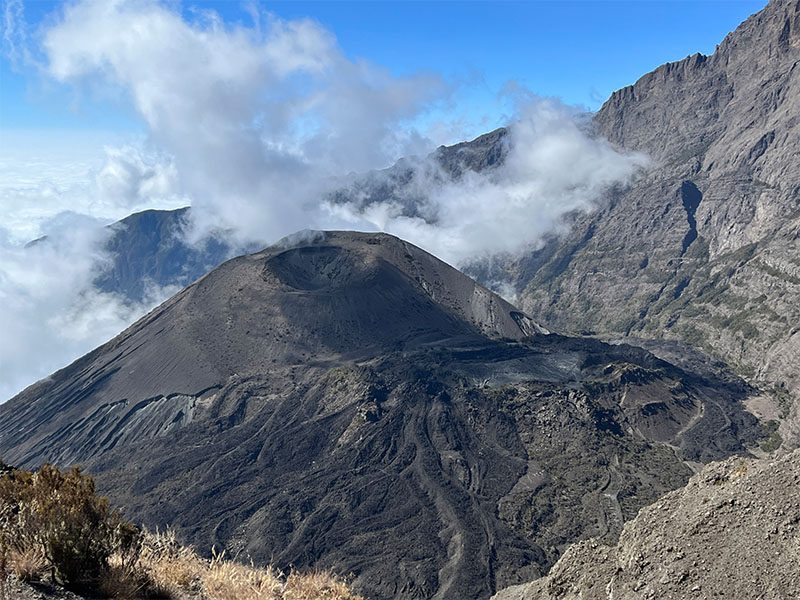
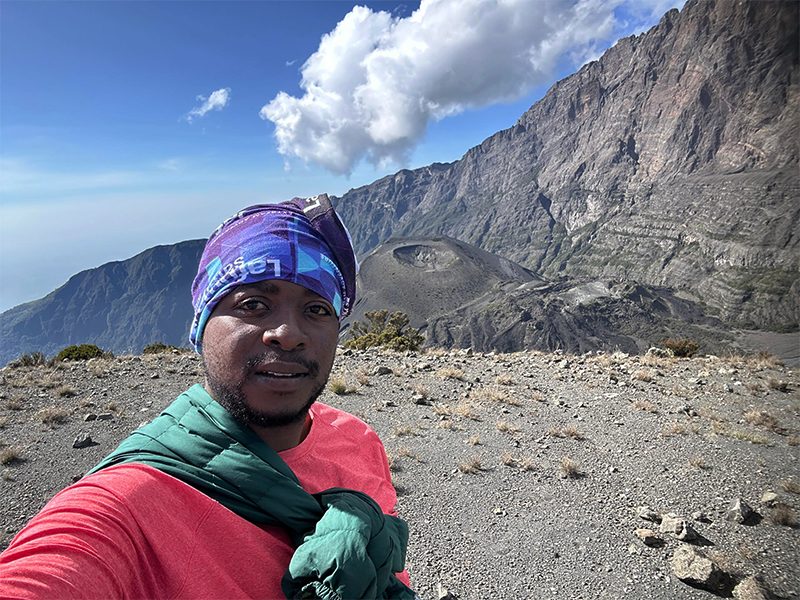
Our experienced guides also lead treks up Mount Meru — here standing near the summit with the volcano’s striking ash cone below

 Quick Comparison: Kilimanjaro vs Mount Meru

Altitude:
  • Kilimanjaro – 5,895 m (19,341 ft)
  • Meru – 4,566 m (14,980 ft)
Trek Duration:
  • Kilimanjaro – 6 to 8 days
  • Meru – 3 to 5 days
Difficulty Level:
  • Kilimanjaro – Moderate to hard (due to high altitude)
  • Meru – Steep but moderate (shorter, lower elevation)
Wildlife:
  • Kilimanjaro – Moderate wildlife on lower slopes
  • Meru – High chance of spotting wildlife like giraffes and buffalo
Scenery:
  • Kilimanjaro – Five climate zones, glaciers, alpine desert
  • Meru – Lush forest, crater rim views, ridge trails
Trekking Traffic:
  • Kilimanjaro – Busy, especially during peak seasons
  • Meru – Quiet and less crowded
Cost:
  • Kilimanjaro – Higher due to park fees and support team
  • Meru – Lower and more budget-friendly

 Which One Should You Choose?

Choose Kilimanjaro if you want to stand on the highest point in Africa and complete a world-famous challenge.Choose Mount Meru if you prefer a shorter, less crowded, and more budget-friendly adventure with great views and wildlife.Or even better  do both! Many of our guests climb Meru first to acclimatize, then take on Kilimanjaro with more confidence.
Kilimanjaro trekker walking across the dry alpine desert zone with summit in view
Kilimanjaro features five ecological zones, including alpine desert near the summit

Frequently Asked Questions About Kilimanjaro vs Mount Meru

Which is harder to climb, Kilimanjaro or Mount Meru?

In general, Mount Kilimanjaro is considered more challenging because of its extreme altitude at 5,895 meters (19,341 ft). While Mount Meru is steeper in certain sections, it is lower in elevation and usually climbed over fewer days, making altitude sickness less common.

Is Mount Meru a good preparation climb for Kilimanjaro?

Yes. Many trekkers climb Mount Meru first to help their bodies acclimatize to high altitude before attempting Kilimanjaro. The Meru trek provides excellent altitude exposure, physical training, and confidence before taking on Africa’s highest peak.

How long does it take to climb Mount Meru compared to Kilimanjaro?

Climbing Mount Meru typically takes 3 to 5 days, while Kilimanjaro treks usually last 6 to 9 days depending on the chosen route. The longer duration on Kilimanjaro helps climbers adjust to higher elevations and improves summit success rates.

Which mountain has more wildlife during the trek?

Mount Meru offers more wildlife sightings because the trek begins inside Arusha National Park. Trekkers may see animals such as giraffes, buffalo, and monkeys along the lower slopes. Wildlife is less common on Kilimanjaro, especially at higher altitudes.

Is Mount Meru cheaper to climb than Kilimanjaro?

Yes. Mount Meru treks are generally more affordable because they are shorter and require fewer support staff. Kilimanjaro expeditions involve higher park fees, longer itineraries, and larger trekking crews.

Should beginners climb Mount Meru or Kilimanjaro first?

Many beginners choose to climb Mount Meru first because it is shorter, quieter, and provides good altitude experience. However, beginners with good fitness and proper preparation can still successfully climb Kilimanjaro with the support of experienced guides.

 Ready to Plan Your Trek?

At Kili Quests, we offer:
  • Custom itineraries for both Kilimanjaro and Mount Meru
  • Experienced, local guides
  • High summit success rates and full safety support
  • Flexible trip combinations to match your budget and goals
Contact Us today or WhatsApp us at +255 654 639 963  OR  +255 762 187 967
We’ll help you choose the right trek — or combine both into one unforgettable adventure.

Related Articles

Kilimanjaro Ecological Zones: Altitude & Climate Guide

Mount Kilimanjaro’s Ecological Zones Explained | Kili Quests

Mount Kilimanjaro is not only Africa’s tallest peak  it’s a vertical world of diverse climate zones, changing dramatically from the base to the summit. As you climb higher, you pass through five distinct ecological zones, each with its own temperature, vegetation, and wildlife.In this article, Kili Quests explains each zone in detail  helping you prepare for what you’ll see, feel, and experience on your trek to Uhuru Peak.
 
This trail also passes through multiple [ecological zones], each with unique vegetation and wildlife(Flora and Fauna).
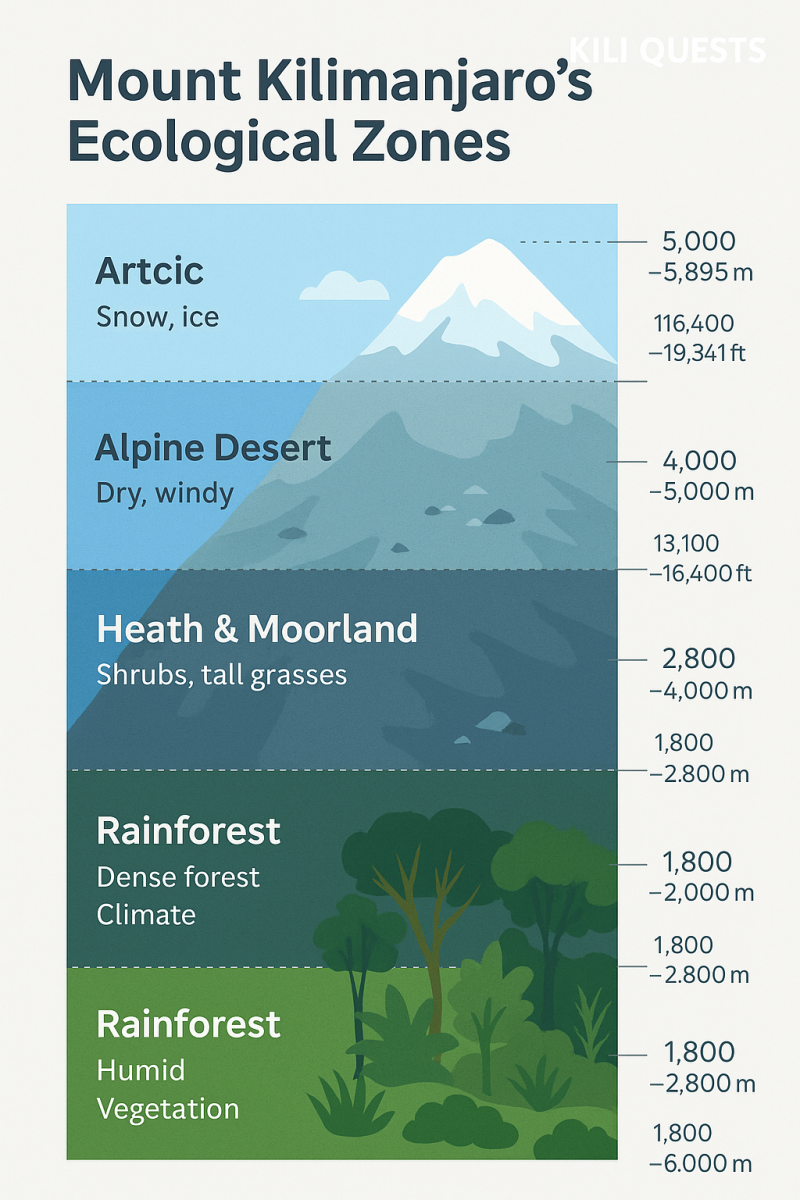
Infographic of Mount Kilimanjaro’s ecological zones showing rainforest, heath, moorland, alpine desert, and arctic summit with altitude labels in meters and feet.
Explore the five ecological zones of Mount Kilimanjaro — from lush rainforest to the icy arctic summit — each with unique climate, vegetation, and wildlife.

Table of Contents

Cultivation Zone (800–1,800 m / 2,600–6,000 ft)

This is the lowest zone, covering the fertile foothills of Kilimanjaro.
Climate: Warm, humid, and tropical
Vegetation: Coffee farms, banana trees, maize, and sugarcane
People: Chagga communities live and farm here
Notable towns: Moshi, Marangu, Machame
Your trek usually starts above this zone, but you’ll pass through it while traveling to the trailhead.

Montane Forest Zone (1,800–2,800 m / 6,000–9,200 ft)

This is one of the richest biodiversity zones on Kilimanjaro.
Climate: Moist, foggy, with frequent rainfall
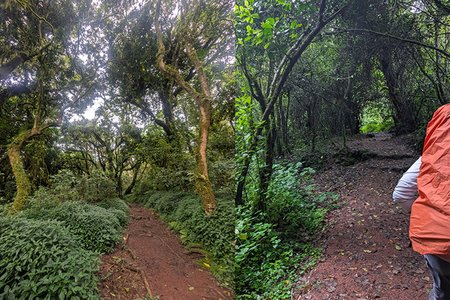
Vegetation: Dense tropical rainforest with ferns, fig trees, and lichens
Wildlife: Blue monkeys, black-and-white colobus monkeys, bushbuck
Experience: Lush scenery, birdsong, muddy trails
This zone is often wet and slippery — good waterproof boots and gaiters are essential.
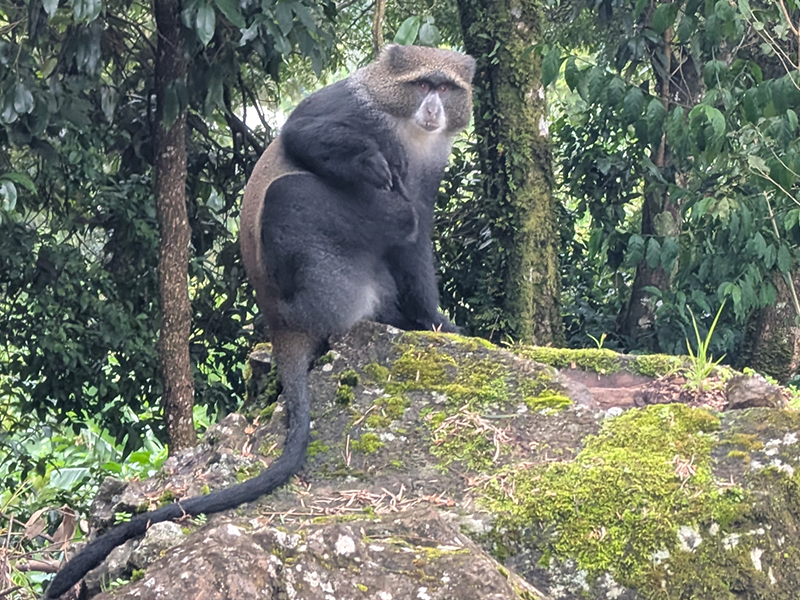
Blue monkey sitting on a moss-covered rock in the rainforest of Mount Kilimanjaro
A blue monkey (Cercopithecus mitis) rests on a mossy rock in Kilimanjaro’s montane rainforest — a common sight in the lower forest zone of the mountain.

Heather & Moorland Zone (2,800–4,000 m / 9,200–13,100 ft)

Here, the forest thins out into a surreal landscape.
Climate: Cooler, with sunny days and cold nights
Vegetation: Heath shrubs, giant groundsels, lobelias, and moss
Scenery: Open hills, valleys, and volcanic boulders
Sunlight: Intense UV during the day; sunscreen needed
You’ll notice a change in oxygen levels here, and altitude symptoms may begin to appear.
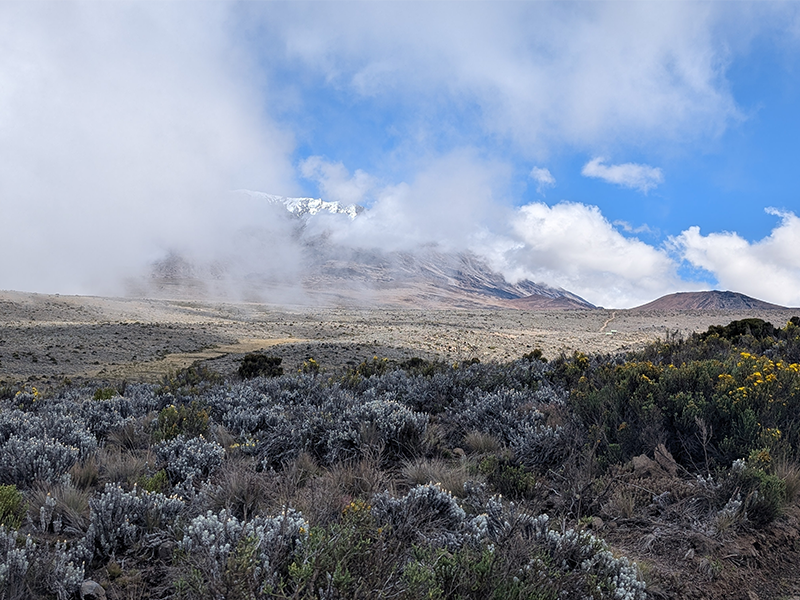
Moorland vegetation on Mount Kilimanjaro with cloud-covered summit and scattered alpine shrubs under a blue sky.
The heath and moorland zone on Mount Kilimanjaro, located between 2,800 and 4,000 meters, is known for its scattered shrubs, giant heathers, and surreal alpine landscape.

Alpine Desert Zone (4,000–5,000 m / 13,100–16,400 ft)

A dry, wind-blasted region with extreme temperature swings.
Climate: Very dry, hot in daytime, freezing at night
Vegetation: Sparse — mostly hardy lichens and small grasses
Terrain: Loose gravel, ash, and volcanic rock
Feel: Isolated, otherworldly, and vast
This is where you begin to feel like you’re walking on another planet.
 
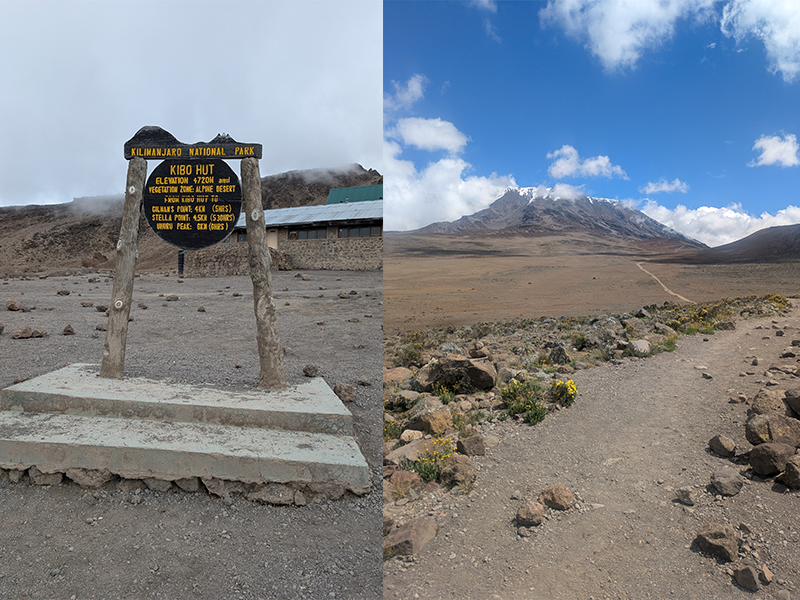
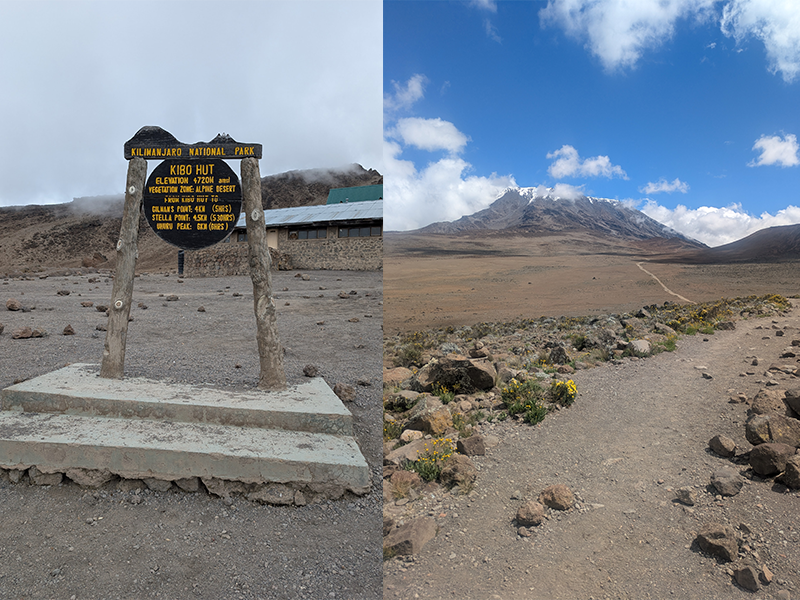
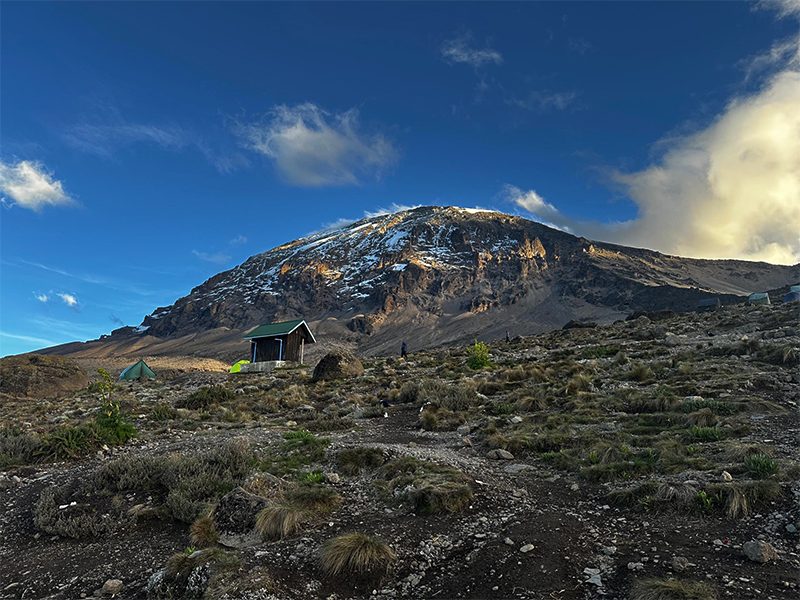
Kibo Hut signpost and view of Mount Kilimanjaro’s alpine desert zone with rocky terrain and sparse vegetation.
Kibo Hut, located at 4,720 meters, marks the start of the alpine desert zone on Mount Kilimanjaro — a dry, wind-swept region just below the summit.

Arctic Zone / Summit (5,000–5,895 m / 16,400–19,341 ft)

The final stretch to Uhuru Peak is harsh and unforgiving.
Climate: Freezing temperatures, high winds, low oxygen
Vegetation: None — this is a polar desert
Terrain: Glaciers, ice fields, volcanic scree
Experience: Physically intense, mentally rewarding
Despite the difficulty, reaching this zone means you’re almost at the summit of Africa.
 
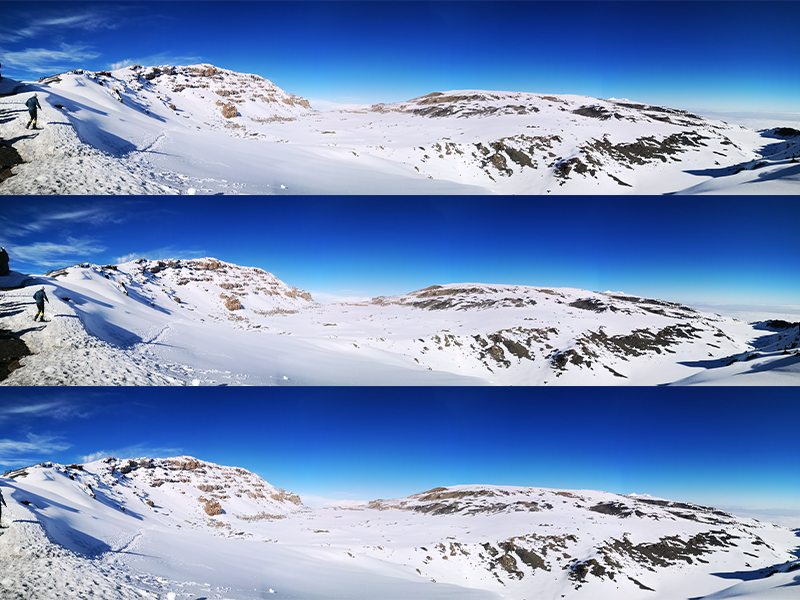
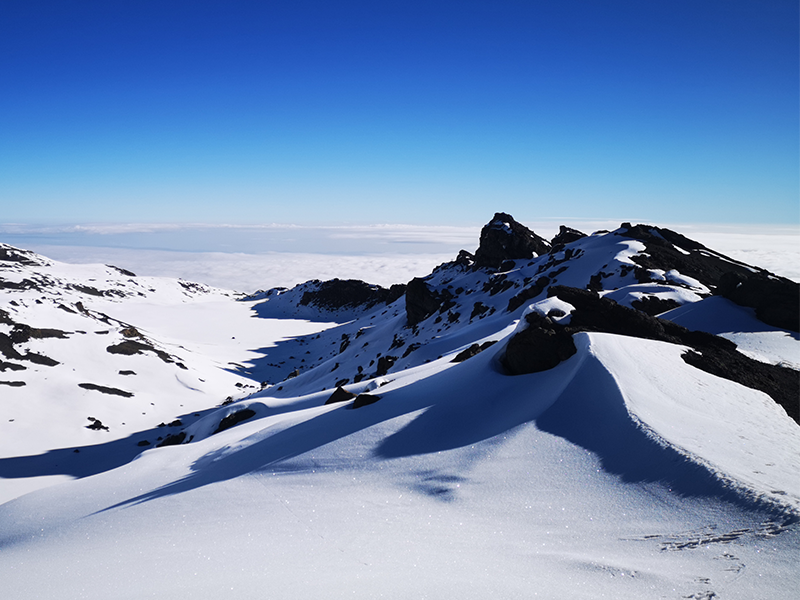
Snow-covered ridges near Stella Point on Mount Kilimanjaro with a clear blue sky above the clouds.
The arctic summit zone of Kilimanjaro near Stella Point is often blanketed in snow, offering breathtaking views above the cloud layer.

Why Understanding the Zones Matters

Gear prep: Knowing the zones helps you pack correctly for temperature and terrain
Mental prep: Each zone presents its own challenges
Appreciation: It’s rare to walk from rainforest to glaciers in a single journey — Kilimanjaro makes it possible

Understanding Kilimanjaro’s Unique Ecological Zones

Climbing Mount Kilimanjaro is like walking from the equator to the Arctic, all in under a week. Each ecological zone is a chapter in your journey  from warm farmland to icy summit. Understanding these zones helps you prepare better and appreciate the incredible natural transitions along the way.

Frequently Asked Questions About Mount Kilimanjaro’s Ecological Zones

How many ecological zones are on Mount Kilimanjaro?

 Mount Kilimanjaro has five distinct ecological zones: the cultivation zone, montane forest zone, heath and moorland zone, alpine desert zone, and the arctic summit zone. As climbers ascend the mountain, they pass through these zones, each with unique climate conditions, vegetation, and landscapes.
 

What is the rainforest zone on Mount Kilimanjaro?

The rainforest zone, also called the montane forest zone, lies between about 1,800 and 2,800 meters. It is characterized by dense vegetation, frequent rainfall, and rich biodiversity including monkeys, birds, and lush plant life.
 

At what altitude does the alpine desert zone begin on Kilimanjaro?

The alpine desert zone on Mount Kilimanjaro begins at around 4,000 meters (13,100 feet). This zone is dry and windy, with sparse vegetation and dramatic temperature changes between day and night.
 

What is the coldest ecological zone on Mount Kilimanjaro?

The coldest zone is the arctic summit zone, located above 5,000 meters. Temperatures often drop well below freezing, oxygen levels are low, and the terrain is dominated by glaciers, ice fields, and volcanic rock.
 

Why does Mount Kilimanjaro have different ecological zones?

Mount Kilimanjaro’s ecological zones are created by changes in altitude. As elevation increases, temperature drops and environmental conditions change, creating different ecosystems from tropical farmland to arctic summit conditions.

Climb with Experts Who Know the Zones

At Kili Quests, our guides are trained to navigate every zone — from dense forests to glacial ridges. We help you adjust to each stage of the mountain with expert pacing, acclimatization, and gear advice.Make sure to check our [Essential Kilimanjaro Packing List 2025] to avoid missing anything important.
 
If you’re new to high-altitude trekking, our [Altitude Sickness Tips & Risks] guide can help you stay safe.
 

Related Articles

What Is Uhuru Peak? Kilimanjaro Summit History

Uhuru Peak? The Story Behind the Name | Kili Quests

Uhuru Peak is not only the summit of Mount Kilimanjaro, but also the highest point in Africa at 5,895 meters (19,341 feet). While it’s a dream destination for trekkers worldwide, the name “Uhuru” carries deep historical and cultural significance for the people of Tanzania.In this article, we uncover the meaning behind the name Uhuru Peak, and how it came to symbolize more than just a mountain summit — it became a tribute to a nation’s freedom.
 
Learn how Uhuru Peak got its name after Tanzania’s independence
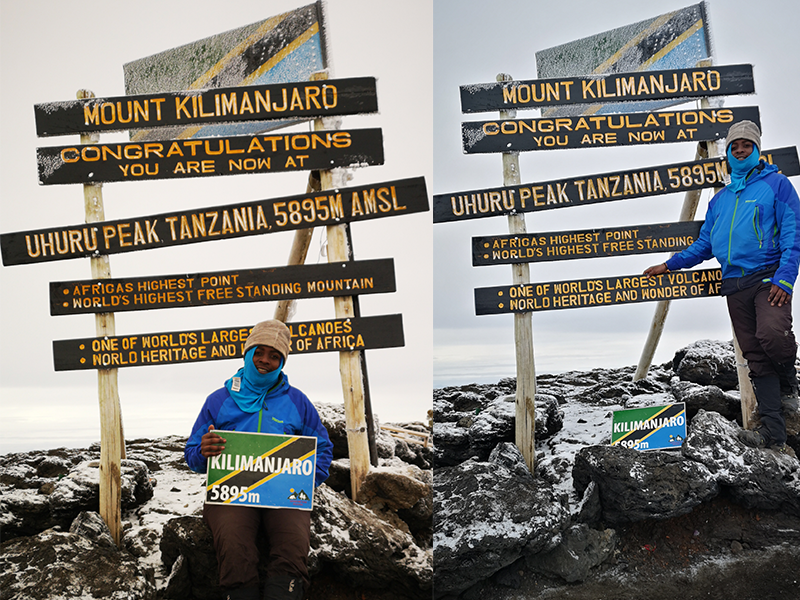
Trekkers posing at the Uhuru Peak summit sign on Mount Kilimanjaro, marking Africa’s highest point at 5,895 meters.
Trekkers celebrate reaching Uhuru Peak, the highest point in Africa. The sign marks 5,895 meters above sea level — a powerful moment for every Kilimanjaro climber.

Table of Contents

What Does “Uhuru” Mean?

“Uhuru” is a Swahili word that means freedom or independence. It’s one of the most powerful and unifying words in East Africa, especially in the context of post-colonial history.
When Tanganyika — now part of modern-day Tanzania — gained independence from British rule on December 9, 1961, it marked a major milestone in the African liberation movement. In honor of that moment, the highest point on Mount Kilimanjaro was renamed Uhuru Peak.

Uhuru Peak: A Symbol of National Pride

Renaming the summit wasn’t just symbolic. It made Kilimanjaro an emblem of a free and united Tanzania. Here’s why:
  • Kilimanjaro, already a towering natural landmark, became a national monument of independence.
  • The name Uhuru Peak reflects the collective spirit of Tanzanians rising above colonial history.
  • It serves as a message of hope and empowerment to both citizens and international climbers.
  • Climbing to Uhuru Peak is not only a physical achievement — it’s a journey through history.

Where Is Uhuru Peak on Mount Kilimanjaro?

Uhuru Peak is located on the crater rim of Kibo, one of Kilimanjaro’s three volcanic cones. It is the final and highest point that climbers reach after passing important waypoints such as:
  • Stella Point (5,739 m / 18,829 ft)
  • Gillman’s Point (5,681 m / 18,638 ft)
All major Kilimanjaro routes — including the Lemosho, Machame, Marangu,Umbwe,Shira,Northern circuit and Rongai routes — ultimately lead to this same iconic summit sign:
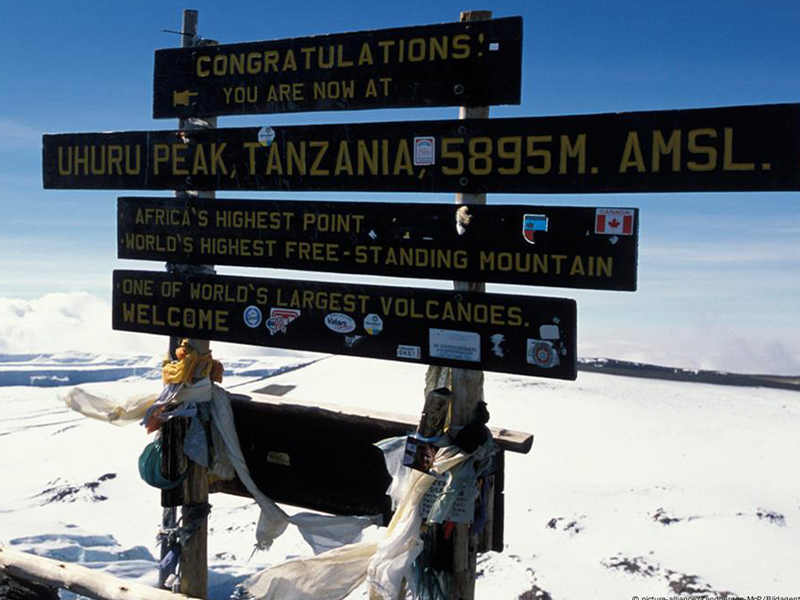
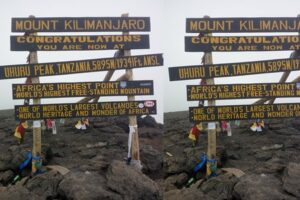
“Congratulations! You are now at Uhuru Peak, Tanzania, 5,895 m. Africa’s highest point. World’s highest free-standing mountain.”
 
Ever wondered why it’s called Gilmans Point? Here’s the real story.”

Did You Know?

  • Before independence, the summit didn’t have an official name.
  • The name “Uhuru” was chosen to inspire unity among Tanzanians and other African nations seeking liberation.
  • December 9th — Tanzania’s Independence Day — is still celebrated with pride, and for many climbers, reaching Uhuru Peak on that day is especially meaningful.
Uhuru Peak sign at the summit of Mount Kilimanjaro showing elevation and independence-related messages.
Since 1964, the summit of Kilimanjaro has been officially known as Uhuru Peak — a name symbolizing Tanzanian freedom. During colonial times, it was called Kaiser Wilhelm Spitze by Europeans, until it was renamed following Tanganyika’s independence in 1961.

Conclusion: More Than a Summit

Today, Uhuru Peak stands as a place where natural beauty and cultural heritage meet. It’s where trekkers from around the world are welcomed by the legacy of a nation that claimed its freedom and stood tall.
When you stand at Uhuru Peak, you’re not just on top of Africa — you’re standing on a summit named for freedom, shaped by history, and fueled by the determination of those who made it possible.
 
Ever wondered why it’s called Stella Point? Here’s the real story.”
Group of trekkers celebrating together at Uhuru Peak, the summit of Mount Kilimanjaro
Tourists celebrate their successful summit at Uhuru Peak alongside our expert KILI QUESTS guides, proudly raising the flag at Africa’s highest point.

Frequently Asked Questions About Uhuru Peak

What is Uhuru Peak?

Uhuru Peak is the highest point on Mount Kilimanjaro, standing at 5,895 meters (19,341 feet) above sea level. It is also the highest point in Africa and one of the world’s most famous trekking summits.

What does the name Uhuru Peak mean?

The word “Uhuru” means freedom or independence in Swahili. The summit was named Uhuru Peak to celebrate Tanzania’s independence and symbolize national pride.

When was Uhuru Peak named?

Uhuru Peak was officially named after Tanganyika gained independence on December 9, 1961. The new name replaced the colonial-era name used during earlier expeditions.

Where is Uhuru Peak located?

Uhuru Peak sits on the crater rim of Kibo, the highest volcanic cone of Mount Kilimanjaro.

Do all Kilimanjaro routes lead to Uhuru Peak?

Yes. All major climbing routes on Mount Kilimanjaro eventually lead to Uhuru Peak, including the Machame Route, Lemosho Route, Marangu Route, and other established routes.

How long does it take to reach Uhuru Peak?

Most climbers reach Uhuru Peak after 5–9 days of trekking, depending on the route and itinerary chosen.

Plan Your Journey with Kili Quests

Is Kilimanjaro one of the world’s wonders? Learn what makes it globally iconic — from UNESCO status to its place among the Seven Natural Wonders.
 

Ready to summit Uhuru Peak?

Let Kili Quests guide you to the top with expert-led Kilimanjaro treks, full route support, and meaningful insight into the history, culture, and nature of the mountain.

Related Articles

Best Time for a Tanzania Safari: When to See the Big Five

Table of Contents

Best Time for Safari in Tanzania: Seasons Explained | Kili Quests

Tanzania is home to world-renowned safari destinations like the Serengeti, Ngorongoro Crater, Lake Manyara, and Tarangire. Whether you want to witness the Great Migration, the calving season, or just enjoy peaceful game drives, choosing the right time of year can make your experience truly unforgettable.

In this guide, we break down the three safari seasons — high, low, and shoulder — and explain what to expect in each. Plus, we’ll show you what’s included in a Kili Quests safari and which parks shine in each season.

Find out what’s included in our safari tours — from private guides to luxury lodges.
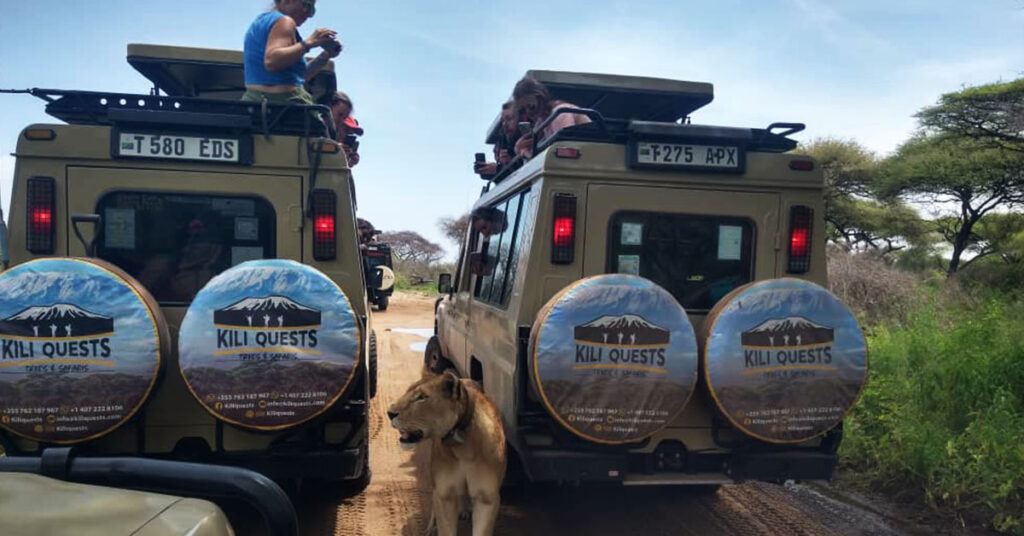
Lion walking between safari vehicles in Tanzania with guide inside the vehicle
Guests witnessing a wild lion up close during a Kili Quests safari adventure.

 High Season: June to October

Best for: Big game viewing, dry weather, Great Migration
 
Why It’s the Peak Safari Season in Tanzania:
  • The Great Migration: Millions of wildebeest, zebras, and gazelles move across the Serengeti plains during this time.
  • Incredible Game Viewing: With limited water, animals gather around rivers and waterholes, making sightings easier.
  • Dry & Pleasant Weather: Days are sunny and comfortable, with minimal rain and great conditions for photography.

Best Parks to Visit in High Season:

  • Serengeti National Park – Prime time to see the Great Migration.
  • Ngorongoro Crater – Reliable year-round wildlife, especially visible in the dry season.
  • Tarangire National Park – Home to massive elephant herds during the dry months.

 Low Season: March to May

Best for: Quiet safaris, birdwatching, lower prices
Why Some Travelers Prefer the Green Season:
  • Fewer Crowds: Enjoy peaceful drives without tourist traffic.
  • More Affordable: Lodges and tours often offer lower prices during this rainy season.
  • Lush Landscapes: Parks turn green and beautiful, great for photography and birdwatching.

Things to Consider:

  • Rainfall & Mud: Trails can be slippery and access to some areas may be limited.
  • Scattered Wildlife: Animals don’t need to gather at waterholes, making sightings less predictable.

Best Parks to Visit in Low Season

  • Ngorongoro Crater – Still teeming with animals year-round.
  • Serengeti – Quieter but still active; best for experienced wildlife lovers.
  • Lake Manyara – Superb for birdwatching and scenic greenery.
Discover Tanzania’s Birdlife – Why the green season is perfect for birders.

 Shoulder Seasons: November–December & January–February

Best for: Calving season, fewer crowds, great weather
Why This Is the Best-Kept Secret:
  • Wildebeest Calving (Jan–Feb): Thousands of newborn animals attract dramatic predator activity.
  • Pleasant Weather: Warm, with little rain — a perfect in-between.
  • Migration Movement: Early stages of the migration begin in southern Serengeti.

Best Parks to Visit in Shoulder Season

  • Southern Serengeti – See calves take their first steps and predators on the hunt.
  • Tarangire National Park – Great views with fewer tourists.
  • Ngorongoro Crater – Reliable sightings and cooler conditions.
  • What’s in Our Safari Package? – Learn everything included in your Kili Quests journey.
Make the most of your safari with our expert preparation tips and insider advice
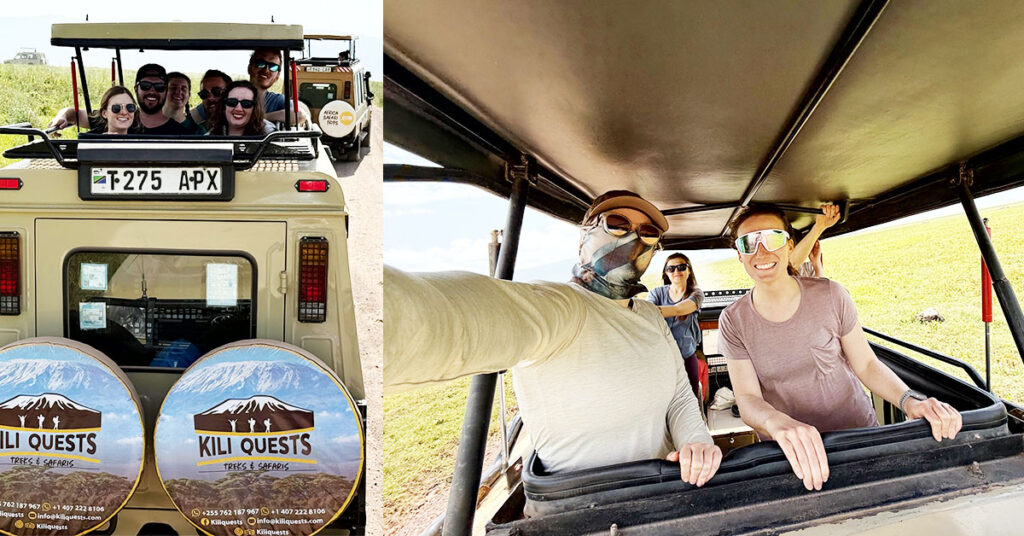
Inside the Kili Quests safari vehicle: every seat has a view, and every moment is worth a selfie.

What’s Included in a Kili Quests Safari?

Booking with Kili Quests means your safari is handled by professionals who know Tanzania inside out.
Here’s what’s always included:
  • Private 4×4 safari vehicle with pop-up roof
  •  Professional, English-speaking driver-guide
  •  Full-board accommodation in lodges or tented camps
  •  Park fees and government permits
  •  Bottled water during game drives
  •  24/7 local support during your trip
  • We also offer optional add-ons like:
 Luxury upgrades
  •  Hot air balloon safaris
  •  Medical evacuation insurance
  •  Airport transfers and domestic flights
Learn How Long Trip Payments Take to Transfer – Plan ahead for your safari booking.

 Best Time for Safari in Tanzania – Quick Season Overview

Not sure when to plan your Tanzanian safari? Here’s a quick breakdown of each season and what makes it unique:


June to October
  • Peak wildlife viewing season
  • Great Migration is in full swing in the Serengeti
  • Dry weather and clearer visibility
  • Fewer mosquitoes and ideal conditions for first-time travelers


November to February
  • Calving season in the southern Serengeti
  • Fewer crowds compared to peak months
  • Excellent for predator-prey action and photography
  • Warm weather and green landscapes


March to May
  • Long rainy season with lush scenery and dramatic skies
  • Fewer tourists and discounted safari prices
  • Great for birdwatching and quiet experiences
  • Some lodges may close due to heavy rains, so plan accordingly

When Should You Go?

  • For First-Time Safari Travelers: June–October offers the most action and ideal weather.
  • For Photographers & Birders: March–May provides stunning landscapes and migratory birds.
  • For Repeat Visitors or Budget Travelers: Shoulder seasons (Nov–Feb, Mar–May) offer excellent value.

Kili Quests customizes safaris year-round, so no matter your timing, we’ll help you make the most of it.

Frequently Asked Questions About the Best Time for Safari in Tanzania

What is the best time of year for a safari in Tanzania?

The best time for a safari in Tanzania is generally during the dry season from June to October. Wildlife is easier to spot because animals gather around rivers and waterholes, and vegetation is thinner. This period also offers comfortable weather and excellent conditions for visiting parks such as Serengeti National Park and Ngorongoro Crater.

When can you see the Great Migration in Tanzania?

The famous Great Migration takes place primarily in Serengeti National Park and can be observed throughout the year as herds move across the ecosystem. River crossings often occur between June and October, while the calving season usually happens between January and February in the southern Serengeti.

Is the rainy season a good time for a Tanzania safari?

Yes, the rainy season from March to May can still be a good time for a safari. Landscapes become lush and green, birdwatching is excellent, and visitor numbers are lower. Some roads may be muddy, but parks like Ngorongoro Conservation Area still offer reliable wildlife viewing.
 

Which months are best for wildlife photography in Tanzania?

Many photographers prefer the shoulder seasons from November to February because the landscapes are greener and wildlife activity remains high. The calving season in the southern Serengeti during January and February provides dramatic predator-prey interactions and unique photography opportunities.

Which parks are best to visit during Tanzania’s dry season?

During the dry months, wildlife viewing is excellent in parks such as Tarangire National Park, Serengeti National Park, and Ngorongoro Crater. Animals gather near water sources, making sightings more frequent and easier during game drives.

Is Tanzania good for safari all year round?

Yes. Tanzania offers year-round safari opportunities because its major national parks support large resident wildlife populations. While the dry season is best for viewing animals, the green season offers fewer crowds, beautiful landscapes, and excellent birdlife.

Ready to Book Your Dream Safari?

At Kili Quests, we’ll help you plan your perfect safari — from choosing the right season to selecting parks and accommodations that match your goals.
 
 Contact us today to start building your personalized safari itinerary and get ready to witness the wild heart of Tanzania like never before.

Related Articles

How to Stay Clean on Mount Kilimanjaro: Showers & Hygiene

Table of Contents

Hygiene on Mount Kilimanjaro: Showers, Water, and Staying Fresh While Trekking

Maintaining good hygiene during your Mount Kilimanjaro trek is essential for your health and overall comfort. At high altitudes, staying clean becomes more difficult due to limited facilities and rugged conditions — but with the right gear and mindset, you can stay fresh and confident throughout your journey.

 Stay healthy on the mountain with our expert hygiene tips, water safety advice, and simple cleanliness routines.
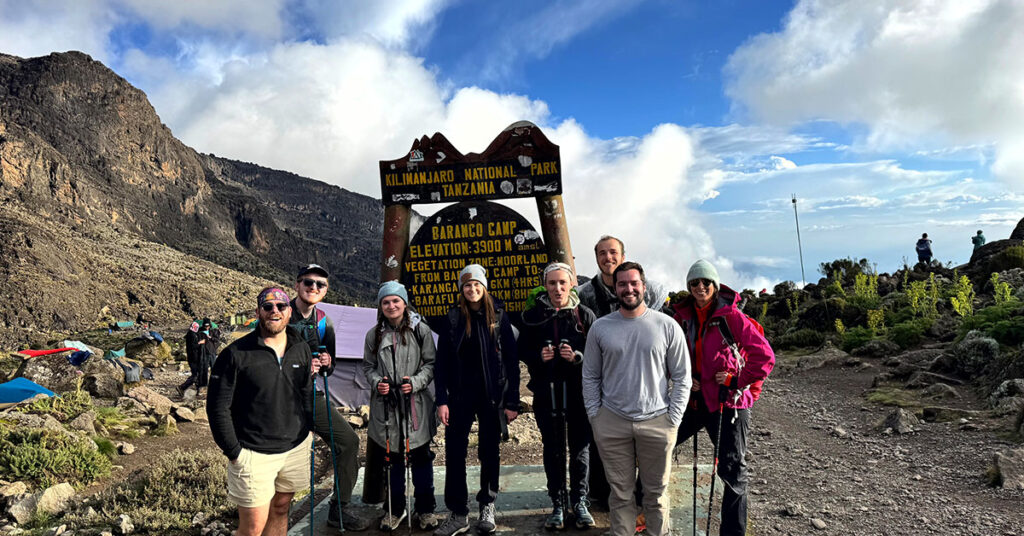
Smiles and strength at Baranco Camp — halfway to Uhuru Peak.

Showers on Kilimanjaro: What You Can Expect

Many trekkers worry about going several days without a shower. While it’s true that showers aren’t available at every campsite, Kili Quests offers portable hot showers as part of our Premier Package.
Premier Package Showers
  • Select camps include private shower tents for Premier trekkers. Our team sets up warm, clean water units — so you can enjoy a refreshing rinse after a long hike. This comfort feature is ideal for those who want added cleanliness during the trek.

How to Stay Clean Without Showers

If you’re not using the Premier Package, there are still great ways to stay clean and refreshed:
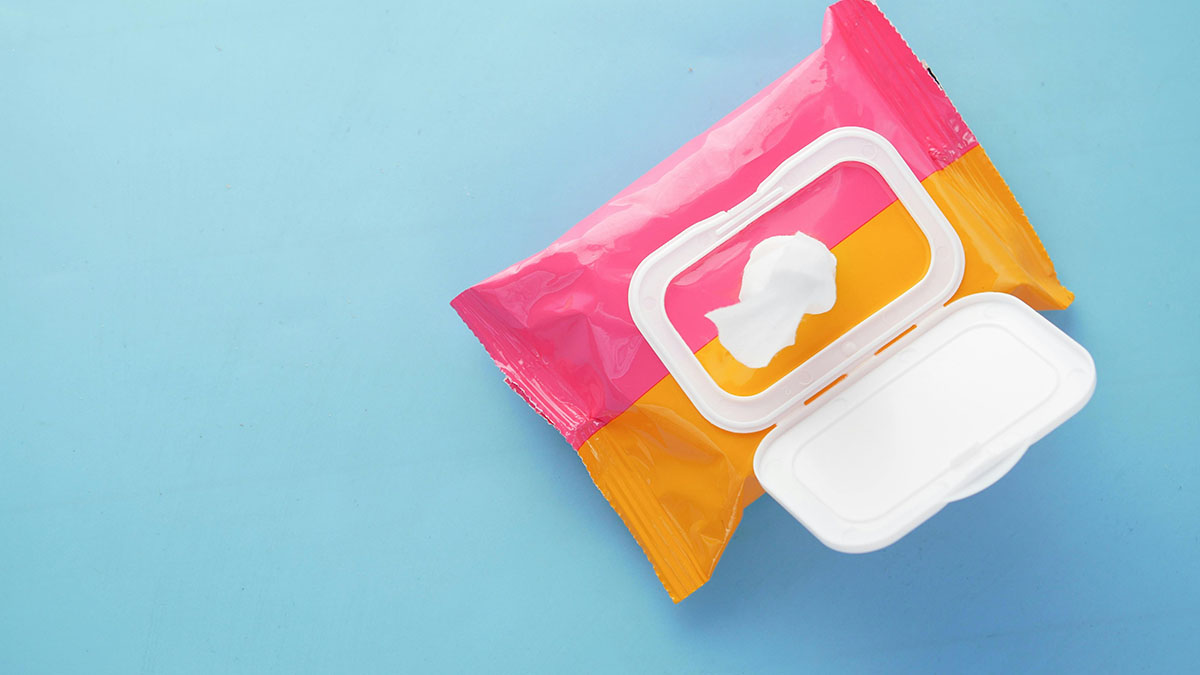
  • Hygiene wipes and wet towels: Lightweight and effective for wiping down at camp.
  • Sponge baths: Your porters will provide a small bowl of water for washing face, hands, and underarms.
  • Dry shampoo or body powder: Useful to absorb sweat and reduce odors.
 Don’t forget to double-check your hygiene supplies in our Kilimanjaro Packing List.

Water on Kilimanjaro: Hydration and Hygiene

Water is vital not only for hydration but also for cleaning. Here’s what to expect:
Water Sources
  • Your guides purify water from mountain streams using filtration and tablets. This water is safe for drinking and for basic cleaning.
Personal Hygiene Water
  • Porters provide limited amounts of water for face and handwashing. Use sparingly. A collapsible water bottle is helpful for keeping some clean water with you.
 Staying Hydrated
  • Trekking at high altitudes requires 3–4 liters of water per day. Hydration supports your body’s adjustment to altitude and helps avoid sickness — don’t neglect it.
Discover how to keep your gear clean and powered up on the mountain
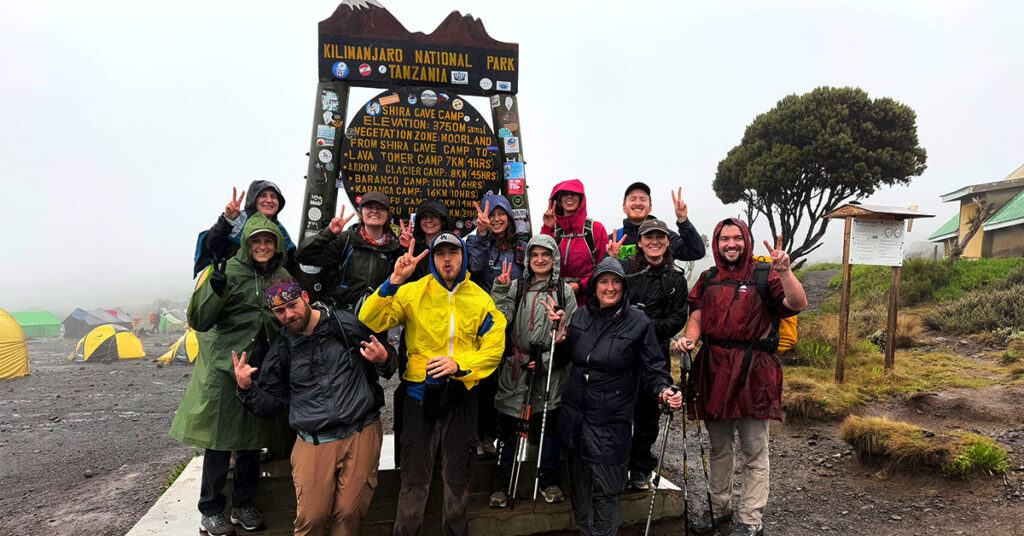
Light rain falls as one of our trekkers arrives at Shira Cave — embracing every part of the mountain’s mood.

Staying Fresh & Comfortable on the Trail

Even without daily showers, small routines help you stay clean:
  • Change clothes daily: Quick-dry shirts, clean socks, and undergarments make a huge difference.
  • Foot care: Air out your feet at camp, use foot powder, and change socks to prevent blisters.
  • Deodorant & spray: Travel-sized options help manage odor.
  • Breath refreshers: Gum or mints keep your mouth feeling fresh on the trail.
Tip: Keep your hygiene kit easily accessible in your daypack.
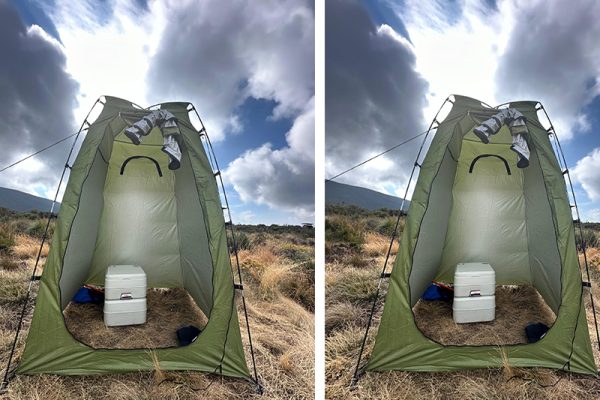
Portable toilet tent setup on Mount Kilimanjaro with private enclosure and toilet box for trekkers
Private Toilet Tent – Clean and discreet portable toilet setup used on Kilimanjaro treks.

Respecting the Environment: Clean Trekking Practices

Kilimanjaro is a UNESCO World Heritage site — let’s help protect it.
  • Use biodegradable soap and wipes only.
  • Carry your waste: Never leave tissue or plastic behind. Kili Quests provides trash bags at every camp.
  • Avoid overuse of water from natural sources — it’s a shared resource.

Personal Hygiene Kit: What to Pack

Here’s what to bring for a clean trek:

  • Hygiene wipes or wet towels
  • Biodegradable soap
  • Small washcloth or sponge
  • Quick-dry clothes and underwear
  • Foot powder
  • Deodorant
  • Toothbrush and toothpaste
  • Breath mints or gum
  • Moisture-wicking socks
  • Small quick-dry towel

 Kilimanjaro Trek Health & Medication Tips – Good hygiene supports your health — especially at altitude.

Frequently Asked Questions About Hygiene on Kilimanjaro

Are there showers on Mount Kilimanjaro?

Showers are generally not available on standard trekking routes on Mount Kilimanjaro. However, some premium trekking packages offer portable shower tents with warm water at selected camps. Most trekkers rely on hygiene wipes, sponge baths, and fresh clothing to stay clean during the climb.

How do trekkers stay clean while climbing Kilimanjaro?

Trekkers usually stay clean by using wet wipes, small wash basins, and quick-dry towels  . Changing into clean clothes each evening and maintaining good foot care are also important ways to stay comfortable during the multi-day trek.

Is the water on Kilimanjaro safe for washing and drinking?

Yes. Trekking crews collect water from mountain streams and purify it using filtration systems, boiling, or purification tablets. This treated water is safe for drinking and basic hygiene while trekking on Kilimanjaro.

Are there toilets on Mount Kilimanjaro?

Yes. Public toilets are located at most official campsites within Kilimanjaro National Park. Some trekking companies also provide private portable toilet tents Including us, which offer a cleaner and more comfortable option during the trek.

What hygiene items should you pack for a Kilimanjaro climb?

Important hygiene items include wet wipes, biodegradable soap, a small quick-dry towel, toothbrush and toothpaste, deodorant, foot powder, and extra socks. These essentials help trekkers stay fresh and comfortable during the several days spent on the mountain.

Why is hygiene important when trekking Kilimanjaro?

Good hygiene helps prevent illness, skin irritation, and infections during a long trek at high altitude. Staying clean, washing hands regularly, and keeping gear dry can improve comfort and support overall health throughout the climb.

Ready to Trek Kilimanjaro with Comfort?

Ready to Trek Kilimanjaro with Comfort?
If you value comfort and cleanliness, choose Kili Quests’ Premier Package for access to hot showers, private toilets, and expert mountain support.
 
Contact us today to book your trek and upgrade your Kilimanjaro experience — because adventure should never mean discomfort.

Related Articles

Best Tanzania Safari Adventures: 2026 Travel Guide

Table of Contents

Embark on an Unforgettable Safari with Kili Quests: Book Your Dream Adventure Today

Ready to experience the wild beauty of Tanzania’s iconic national parks? Whether you’re dreaming of lions in the Serengeti or the rare black rhinos of Ngorongoro, a safari with Kili Quests goes beyond just sightseeing — it’s an expertly guided journey into Africa’s most unforgettable landscapes.

From tailor-made itineraries to luxury accommodations and expert guides, we handle every detail of your safari, so you can focus on the experience of a lifetime.

See when to visit Serengeti, Ngorongoro, and more for peak wildlife viewing.
Lion walking between safari vehicles in Tanzania with guide inside the vehicle
Guests witnessing a wild lion up close during a Kili Quests safari adventure.

Why Book Your Safari with Kili Quests?

1. Tailored Safari Packages
Every traveler is different — that’s why we create fully customized itineraries based on your:
  • Wildlife interests (Big Five, birdwatching, rare species)
  • Travel style (luxury, mid-range, private groups)
  • Activities (walking safaris, Maasai visits, hot air balloon rides)
  • Timeline and budget
2. Expert Local Guides
Our experienced guides are:
  • Skilled in animal tracking and behavior
  • Passionate about Tanzania’s wildlife and culture
  • Fluent in English and Swahili
  • Trained in guest care and safety

They enrich your trip with in-depth knowledge of ecosystems, history, and hidden wildlife viewing spots.

3. Comfort and Luxury
Choose from:
  • Intimate luxury tented camps
  • Stunning five-star lodges
  • Comfortable eco-friendly safari retreats

No matter your budget, we ensure clean, safe, and scenic accommodations at every stop.

4. Flexible, Personalized Itineraries
Whether you’re planning:
  • A short 2-day getaway
  • A full 10-day grand tour
  • Or a family safari with kids,
  • We design it all for you.

Add extra parks, private upgrades, or cultural stops — everything is built around you.

What’s Included in Our Safari Package – Explore everything covered in your trip, with no hidden costs.

What to Expect on a Safari with Kili Quests

When you book with us, you can expect:
  •  Expert safari planning from start to finish
  •  Seamless booking and park permit handling
  •  A comfortable, intimate safari vehicle experience
  •  Flexible itineraries that fit your time and goals
  •  Warm, professional service from a Tanzanian-owned team
How Long Do Trip Payments Take to Transfer? – Learn how bookings are processed and what to expect after payment.

Top Safari Destinations in Tanzania

Serengeti National Park
  • Home to the Great Migration and the Big Five
  • Vast plains, dramatic predator action, and unforgettable sunsets
  • Year-round wildlife viewing, with peaks in June–October
Ngorongoro Crater
  • A UNESCO World Heritage Site
  • Lush volcanic caldera filled with black rhinos, flamingos, lions, and hippos
  • Offers the highest density of wildlife in Africa within a small area
Tarangire National Park
  • Known for its giant elephant herds and ancient baobabs
  • Less crowded, ideal for peaceful wildlife encounters
  • Rich in giraffes, lions, leopards, and hundreds of bird species
Lake Manyara National Park
  • Famous for tree-climbing lions and pink flamingos
  • Hippos, monkeys, and lush groundwater forests
  • Ideal for a scenic, short-day safari with diverse landscapes
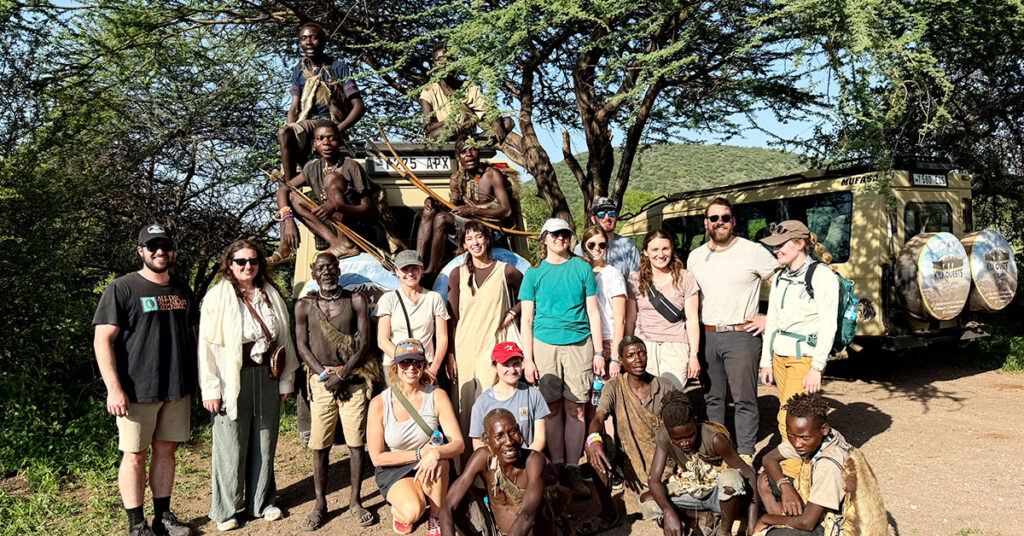
Kili Quests with tourists visiting the Hazabe tribe — a journey into Tanzania's living history

  How to Book Your Safari with Kili Quests

Step 1: Contact Us
  • Tell us about your dream safari. We’ll help choose the best destinations and design your ideal itinerary.
Step 2: Confirm Your Dates and Package
  • Choose from our handpicked accommodation options and lock in your travel dates.
Step 3: Get Ready to Go
  • We’ll send you:
  • A packing checklist
  • Travel preparation tips
  • Local safari guidance
Step 4: Embark on Your Adventure
  • Your Kili Quests guide will welcome you upon arrival and take care of everything from that moment on — so you can fully enjoy the experience.
Meet the Hazabe Tribe – Add cultural experiences to your safari itinerary for a deeper connection with Tanzania.

Frequently Asked Questions About Booking a Safari in Tanzania

How do I book a safari in Tanzania?

Booking a safari in Tanzania is usually done through a licensed tour operator who arranges park permits, guides, accommodation, and transportation. Most travelers start by choosing their travel dates, preferred parks, and budget before confirming their itinerary with a safari company.

What are the best national parks to visit on a Tanzania safari?

Some of the most popular safari destinations include Serengeti National Park for the Great Migration, Ngorongoro Crater for dense wildlife populations, Tarangire National Park for large elephant herds, and Lake Manyara National Park for scenic landscapes and birdlife.

How many days do you need for a Tanzania safari?

Most safaris last between 3 and 7 days, depending on the number of parks you want to visit. Short safaris may focus on nearby destinations like Tarangire or Ngorongoro, while longer trips often include the Serengeti for a more complete wildlife experience.

What animals can you see on a Tanzania safari?

Tanzania’s national parks are home to the famous Big Five — lions, elephants, leopards, buffalo, and rhinos — along with giraffes, zebras, cheetahs, hippos, and hundreds of bird species. Parks like the Serengeti and Ngorongoro offer some of the best wildlife viewing in Africa.

Is Tanzania a good destination for a first safari?

Yes. Tanzania is considered one of the best countries in Africa for first-time safari travelers because of its well-protected national parks, experienced guides, and incredible wildlife diversity.

When is the best time to go on safari in Tanzania?

The best time for wildlife viewing is during the dry season from June to October, when animals gather near water sources and vegetation is thinner. However, safaris are possible year-round, with each season offering unique wildlife experiences

 Ready to Start Your Tanzanian Safari?

At Kili Quests, your safari is more than a tour — it’s a custom, guided adventure built around your goals and hosted by passionate locals who love what they do.
 
 Contact us today to book your unforgettable safari through Tanzania’s iconic wildlife parks. Let us bring your safari dream to life — one game drive at a time.
 

Related Articles

Climb Mount Kilimanjaro with Local Trekking Experts

Table of Contents

Ready for the Challenge? Book Your Kilimanjaro Climb with Kili Quests Today and Choose Your Ideal Route

Mount Kilimanjaro, Africa’s highest peak at 5,895 meters, offers one of the most incredible trekking experiences on Earth. But reaching the summit takes preparation, expert support, and the right route.
 
At Kili Quests, we help you choose the perfect Kilimanjaro route, tailor your trek to your goals, and guide you to the summit with experienced staff, safe practices, and unforgettable service.
 
See exactly what’s covered when you climb with Kili Quests — no hidden costs.
Group of trekkers celebrating together at Uhuru Peak, the summit of Mount Kilimanjaro
A dream fulfilled at 5,895m — our climber reaches the highest point in Africa

Why Climb with Kili Quests?

Expert Guidance
Our guides have decades of experience on Kilimanjaro and are WFR-certified, offering personal attention, motivation, and altitude safety expertise throughout the climb.
Custom Packages
We tailor every trek to your:
  • Preferred route and pace
  • Gear needs (rentals available)
  • Accommodation and timing preferences
Safety First
We provide:
  • Emergency oxygen and health checks
  • Direct access to evacuation services
  • High-quality gear and daily support

 A True Tanzanian Welcome

Beyond the summit, we offer a genuine cultural experience, combining the spirit of Chagga hospitality with international trekking standards.
 
How to Choose a Kilimanjaro Tour Company – Learn what sets experienced operators apart.
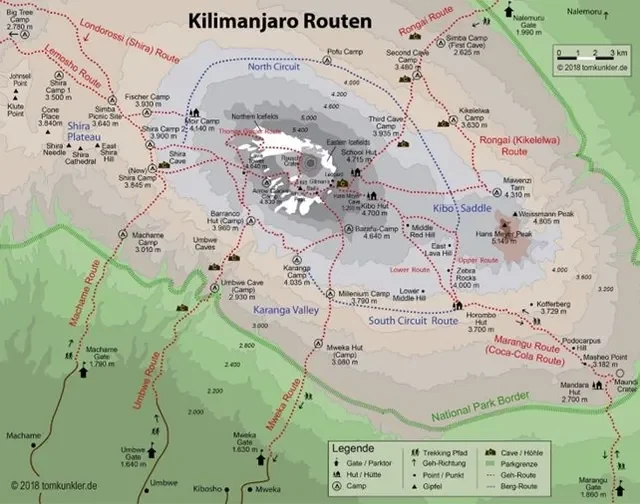
Topographic map showing all major climbing routes on Mount Kilimanjaro, including Machame, Lemosho, Marangu, Rongai, Umbwe, Shira, and Northern Circuit.
This detailed map shows all main Kilimanjaro climbing routes, including Machame, Marangu, Lemosho, Rongai, Umbwe, Shira, and the Northern Circuit, with campsites, elevation points, and park boundaries.

Choosing the Right Kilimanjaro Route

Here’s a quick overview of the top routes we offer — each with its own character and challenge:
1. Lemosho Route (8 Days)
Difficulty: Moderate to Challenging
Why Choose It:
  • Most scenic route on the mountain
  • Excellent acclimatization and success rate
  • Fewer crowds = more solitude
Ideal for photographers and first-timers who want the best balance of challenge and success.
 
2. Machame Route (7 Days)
Difficulty: Challenging
Why Choose It:
  • Diverse terrain including the famous Barranco Wall
  • High success rate with a steady ascent
  • Great for trekkers seeking adventure and views

One of the most popular routes for good reason.

3. Marangu Route (6 Days)
Difficulty: Moderate
Why Choose It:
  • Only route with hut accommodations
  • Straightforward trail and shorter duration
  • Great for beginners or travelers with limited time
Also called the “Coca-Cola Route” for its comfort and accessibility.
 
4. Rongai Route (7 Days)
Difficulty: Moderate
Why Choose It:
  • Northern approach = fewer climbers
  • Drier climate and remote trail
  • Offers unique views of Mawenzi Peak
A peaceful option with beautiful scenery and low crowds.
 
5. Umbwe Route (6 Days)
Difficulty: Very Challenging
Why Choose It:
  • Steep, direct, and fast-paced
  • For fit and experienced climbers only
  • More rugged and isolated than other routes
If you want intensity and minimal traffic, this is your route.
 
Compare Kilimanjaro Routes – Match your ability to the right trek.
Selfie at Stella Point — 5,756 meters above sea level, just steps from the summit.

How to Book Your Kilimanjaro Climb with Kili Quests

Step 1: Contact Us
Send us a message with:
  • Your preferred route
  • Group size and travel dates
  • Any special requirements

Our team will walk you through every detail.

Step 2: Choose Your Dates
Best time to climb Kilimanjaro:
  • June to October (dry season)
  • December to February (warmer but clear)

Book early — especially during peak months.

Step 3: Prepare for the Trek
We’ll send you:
  • A complete packing list
  • Rental gear options
  • Training tips and acclimatization advice


Beginner’s Guide to Climbing Kilimanjaro – Start here if it’s your first big trek.


Step 4: Arrive and Begin the Journey
  • We’ll greet you at the airport, help you settle in Moshi or Arusha, inspect your gear, and ensure you’re 100% ready before your trek begins.
 

Why Kili Quests?

  •  Trusted by climbers from around the world
  •  Experienced, licensed, and locally owned
  •  Committed to fair porter treatment and sustainability
  •  Proven high success rates on every route
From the first step to Uhuru Peak, we’re with you every step of the way

Frequently Asked Questions About Booking a Kilimanjaro Climb

How do I book a Mount Kilimanjaro climb?

Most travelers book their trek through a licensed tour operator that arranges permits, guides, porters, and accommodation. Because independent climbing is not allowed, visitors must organize their expedition through an authorized company operating in Mount Kilimanjaro.

Which Kilimanjaro route is best for beginners?

The Lemosho Route is often recommended for beginners because it offers gradual acclimatization, beautiful scenery, and a high summit success rate. The Marangu Route is another beginner-friendly option because it provides hut accommodations instead of camping.

How long does it take to climb Mount Kilimanjaro?

Most Kilimanjaro climbs take 6 to 9 days, depending on the chosen route and acclimatization schedule. Longer itineraries allow trekkers to adjust to the altitude more gradually, which improves the chances of successfully reaching the summit.

What is the best time of year to climb Kilimanjaro?

The best times to climb Kilimanjaro are during the dry seasons from June to October and December to February. These months usually offer clearer skies, better trail conditions, and more stable weather for trekking.

Do I need climbing experience to climb Kilimanjaro?

No technical climbing experience is required. Kilimanjaro is a trekking peak, meaning climbers walk to the summit without ropes or mountaineering equipment. However, good physical fitness and proper altitude preparation are important for a successful climb.

What support team is included on a Kilimanjaro trek?

A typical Kilimanjaro expedition includes a professional mountain guide, assistant guides, cooks, and porters who carry equipment and set up camps. These team members help ensure safety, provide meals, and support trekkers throughout the journey to the summit.

Start Your Kilimanjaro Adventure Today

Are you ready to conquer the Roof of Africa?
Book your Kilimanjaro trek with Kili Quests and let our expert team guide you to the top — safely, successfully, and with memories to last a lifetime.
 
Contact us now to reserve your climb and choose the ideal route for your Kilimanjaro challenge.

Related Articles

How Cold Are Nights on Mount Kilimanjaro? Temperature Guide

Prepare for Kilimanjaro’s Night Temperatures

We help you plan your climb with:

Plan Your Climb

Good preparation starts with understanding the key parts of your trek:

OUR CATEGORIES

Mount Kilimanjaro Night Temperature: What to Expect from Rainforest to Summit

Climbing Mount Kilimanjaro is a unique journey through dramatically changing climates  but one of the most underestimated challenges is how cold it gets at night.While daytime conditions can feel warm and sunny, temperatures drop quickly after sunset, especially as you gain altitude. By the time you reach the upper mountain, nights become freezing, and summit night brings the coldest conditions of the entire trek.
 
In this guide, Kili Quests explains how nighttime temperatures change across Kilimanjaro’s different altitude zones  and what you should expect from your first night on the mountain to your final push to Uhuru Peak.
 
Before you pack, make sure you’re fully prepared:Kilimanjaro Packing List 
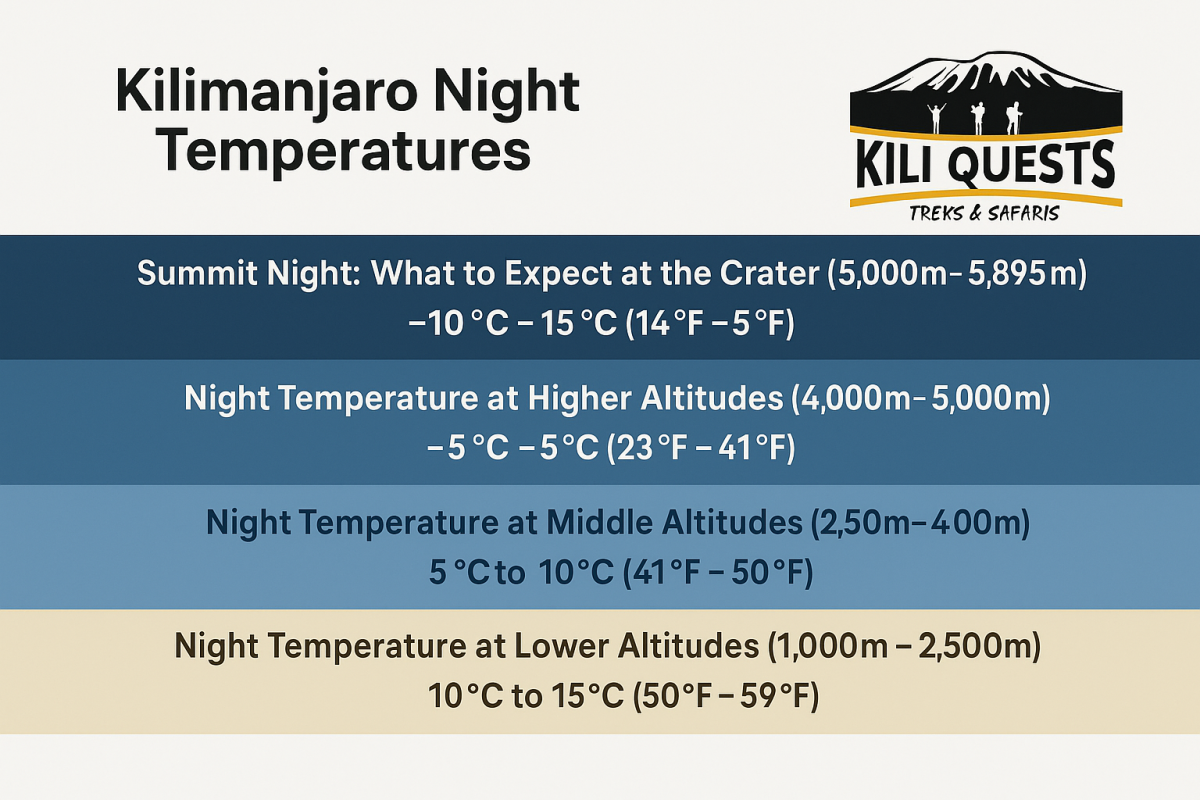
Infographic showing Kilimanjaro night temperatures at different altitudes, from 15°C at 1,000m to -15°C at the summit.
Kilimanjaro Night Temperatures by Altitude – From mild lower camps to extreme summit cold, here’s what to expect during your climb

Table of Contents

Kilimanjaro Night Temperatures by Altitude

Kilimanjaro is not one single climate. As you climb, you move through different ecological zones, and each one brings a noticeable drop in temperature  especially at night.

Lower Altitudes (1,000m – 2,500m)

Temperature Range: 10°C to 15°C
Example Camps: Machame Gate, Rongai Start Point
At the beginning of your trek, conditions are relatively warm and humid. Nights are cool but comfortable, and most trekkers do not experience significant cold at this stage.
The main challenge here is not temperature, but moisture from rain and humidity.
What to wear:
Light layers, a fleece or light jacket, and basic warmth for early mornings.

Middle Altitudes (2,500m – 4,000m)

Temperature Range: 5°C to 10°C
Example Camps: Shira Camp, Barranco Camp, Karanga Camp
As you climb higher, the air becomes cooler and drier. Nights begin to feel noticeably colder, especially after sunset.
This is where many trekkers first realize that Kilimanjaro is not just a warm African mountain , temperatures begin to drop quickly once the sun disappears.
What to wear:
An insulating layer such as fleece or light down, along with thermal clothing for the evening and night.
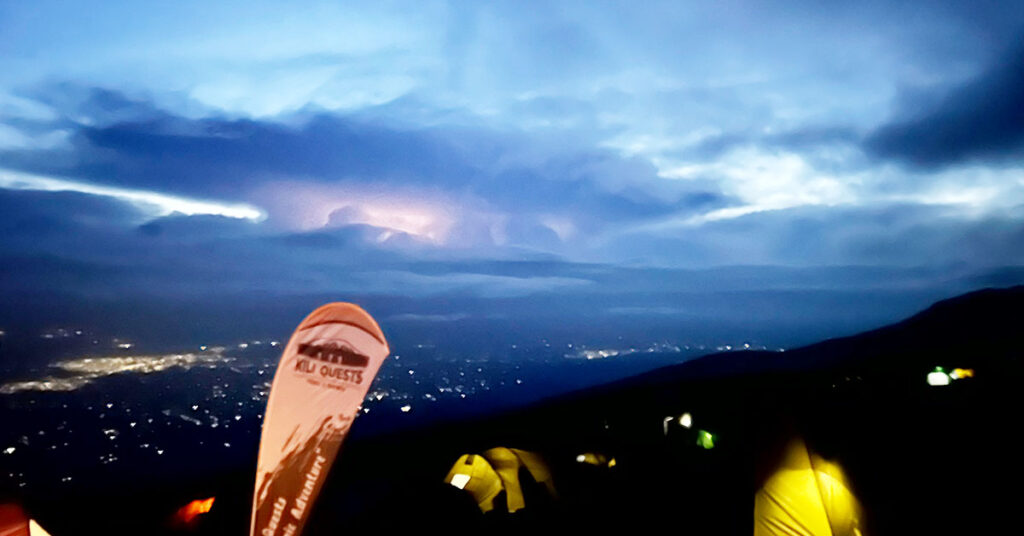
The Kili Quests flag waves under the stars — with Moshi city glowing far below.

High Altitudes (4,000m – 5,000m)

Temperature Range: -5°C to 5°C
Example Camps: Barafu Camp, Kibo Hut
At high altitude, conditions become much colder and more exposed. Nights often drop below freezing, and staying warm becomes essential for both comfort and recovery.Sleep can become more difficult here, not only because of the cold, but also due to altitude.
What to wear:
A proper insulated jacket, thermal base layers, warm socks, and a cold-rated sleeping bag (–10°C or lower).

Summit Night (5,000m – 5,895m)

Temperature Range: -10°C to -15°C (or lower with wind chill)
Start Time: Around midnight from Barafu Camp or Kibo Hut
Summit night is the coldest and most demanding part of the entire Kilimanjaro climb.You begin your ascent in total darkness, often in freezing temperatures, with wind making the cold feel even more intense. At this altitude, your body is already fatigued, and the combination of cold, altitude, and long hours of trekking makes this stage especially challenging.
Unlike lower camps, the cold here is not just uncomfortable  it directly affects your performance, energy levels, and mental strength.
What to expect:
  • Continuous exposure to freezing temperatures
  • Reduced body heat due to slow pace and altitude
  • Strong wind, especially near Stella Point
  • 6–8 hours of climbing before sunrise
What to wear on summit night:
  • Heavy insulated down jacket
  • Thermal base layers and mid-layer insulation
  • Waterproof outer shell
  • Warm gloves, hat, and face covering
  • Insulated boots and thick socks
Optional items like hand and toe warmers can provide additional comfort.
 
Proper preparation for this stage is critical:Kilimanjaro Summit Day Gear Guide 
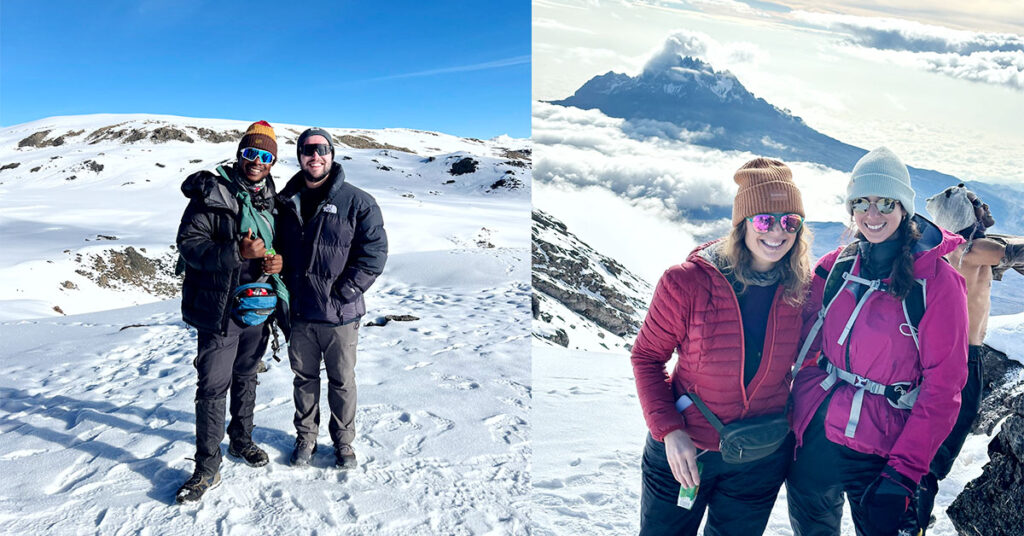
The journey tests you, the view rewards you. Stella Point, with Mawenzi Peak looking on.

Why Kilimanjaro Nights Feel Colder Than Expected

Many climbers are surprised that Kilimanjaro feels colder than the actual temperature suggests.
  • This is because several factors combine at high altitude:
  • Thin air loses heat quickly after sunset
  • Wind increases heat loss from the body
  • Fatigue reduces your ability to stay warm
  • Lower oxygen levels affect circulation
As a result, even a temperature of –10°C can feel significantly colder during summit night.
 
Read our article about .How Hard Is Kilimanjaro ?

Tips to Stay Warm on Kilimanjaro

Staying warm on Kilimanjaro is essential for maintaining energy, sleeping well, and recovering properly between trekking days.

Dress in Layers

Layering allows you to adjust to temperature changes throughout the day and night. A combination of base layer, insulating mid-layer, and outer shell helps regulate heat and prevent moisture buildup.

Stay Hydrated and Eat Well

Drink 3–4 liters of water daily to support circulation and body heat. Eating high-energy meals helps your body generate warmth, especially during cold nights.
Avoid alcohol and limit caffeine, as both can affect sleep and temperature regulation.

Use the Right Sleeping Gear

A sleeping bag rated for –10°C to –15°C is essential for higher camps. Adding a liner increases insulation, while dry thermal clothing helps retain body heat during sleep.

Move When You Feel Cold

If you wake up cold, light movement such as stretching or walking can help restore circulation. Warm drinks like tea also help increase body temperature.

Understand Cold and Altitude Together

Cold conditions can increase fatigue and make altitude symptoms feel worse. Managing warmth properly helps your body adapt and perform better.
 

Final Packing Advice for Cold Nights

Kilimanjaro requires preparation for a wide range of temperatures  from warm lower slopes to freezing summit conditions.
Make sure you pack:
  • Thermal base layers
  • Insulated down jacket
  • Warm hat, gloves, and neck covering
  • Cold-rated sleeping bag (–10°C or lower)
  • Hand and foot warmers
  • Dry socks and spare thermals
Check our Kilimanjaro Packing List to make sure you don’t miss important gear

Frequently Asked Questions About Kilimanjaro Night Temperatures

How cold does it get at night on Mount Kilimanjaro?

Night temperatures on Mount Kilimanjaro vary depending on altitude. Lower camps may stay around 10°C to 15°C (50°F to 59°F), while higher camps can drop to -5°C to 5°C (23°F to 41°F). Near the summit during the midnight ascent, temperatures can fall to -10°C to -15°C (14°F to 5°F) or colder with windchill.

Why are nights so cold on Kilimanjaro?

Kilimanjaro’s high altitude and thin atmosphere cause temperatures to drop sharply after sunset. The mountain also passes through multiple climate zones, from tropical forest to arctic summit conditions, which leads to significant nighttime cooling.

What is the coldest part of the Kilimanjaro climb?

The coldest part of the trek is summit night, when climbers usually start their ascent from high camps such as Barafu or Kibo Hut around midnight. Temperatures are well below freezing and strong winds can make it feel even colder.

What sleeping bag rating is recommended for Kilimanjaro?

Trekkers should bring a sleeping bag rated for at least -10°C to -15°C (14°F to 5°F). This rating ensures enough insulation to stay warm during cold nights at higher camps on Kilimanjaro.

How can you stay warm at night on Kilimanjaro?

Staying warm requires proper layering, warm sleeping gear, and dry clothing. Wearing thermal base layers, using a quality down jacket, and sleeping in a cold-rated sleeping bag can help maintain body heat during the cold nights on the mountain.

Does the temperature change between Kilimanjaro camps?

Yes. Temperatures generally decrease as climbers gain altitude. Lower camps in forest zones remain relatively mild, while camps in alpine and summit zones experience freezing conditions, especially overnight.

Prepare for Kilimanjaro’s Night  Temperatures with Confidence

Kilimanjaro’s beauty comes with extremes especially at night. But with the right preparation, you’ll stay warm, sleep well, and climb strong.At Kili Quests, we guide you through every detail, from recommended gear to how to dress for summit night. You can rent high-quality gear locally if you need extra layers.
 
Contact us today to plan your trek and stay safe from base to summit.
 

Related Articles

How to Choose the Best Kilimanjaro Tour Company

Table of Contents

Why Choosing an Experienced Kilimanjaro Tour Company Matters for Your Safety and Success | Kili Quests

Climbing Mount Kilimanjaro is one of the most life-changing experiences an adventurer can have. But with unpredictable weather, high altitude, and demanding terrain, choosing the right tour operator is just as important as preparing your gear.

At Kili Quests, our decades of experience on the mountain have shown one thing clearly — experienced guides save lives, improve success rates, and make the journey unforgettable.

Carrying the spirit of Kili Quests to the top of Africa — a moment to remember at Uhuru Peak.

 Expert Knowledge of Kilimanjaro’s Terrain and Routes

 Understanding the Routes
Not every route suits every trekker. A professional operator:
  • Recommends the best route for your fitness, goals, and schedule
  • Designs itineraries with proper acclimatization and pacing
  • Knows the advantages and risks of each route (e.g., Lemosho vs Marangu)
Kilimanjaro Routes Compared: Success, Scenery & Difficulty – Learn which path fits your climbing style best.
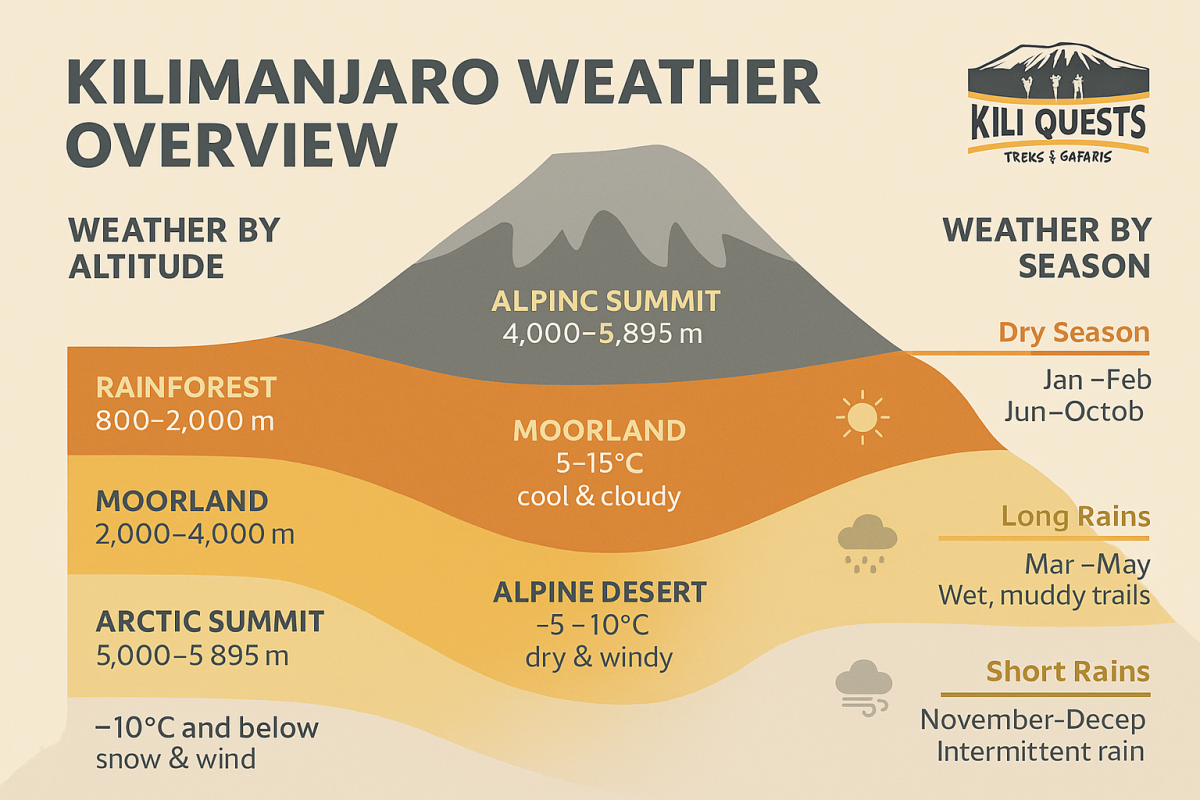
Kilimanjaro weather infographic showing climate conditions by altitude (rainforest, moorland, alpine desert, arctic summit) and season (dry season, long rains, short rains) with temperature and weather icons.
Kilimanjaro Weather by Altitude & Season – Understand the climate zones and seasonal changes as you prepare for your climb with Kili Quests.

Navigating Weather & Altitude Zones

With weather changing from humid rainforests to sub-zero alpine zones:
  • Our guides monitor forecasts daily and adapt to conditions
  • We prepare you for all five ecological zones — from rainforest to arctic summit
Kilimanjaro Weather by Altitude & Season – Understand climate zones to pack and plan better.

Acclimatization & Altitude Sickness Prevention

Altitude sickness is the #1 reason climbers don’t reach the summit.
How Kili Quests Keeps You Safe:
  • We follow the “climb high, sleep low” strategy
  • Routes like Lemosho and Northern Circuit are prioritized for acclimatization
  • Short acclimatization hikes are included on most days
  • Our guides are WFR-certified and trained in altitude emergency protocols
Understand Altitude Sickness on Kilimanjaro – Learn how acclimatization saves lives on the mountain.

Proper Equipment & Trekking Support

 High-Quality Gear

We provide:

  • Four-season tents and sleeping gear
  • Private portable toilets for hygiene
  • Hot, nutritious meals each day
  • Medical kits, oxygen cylinders, and radio communication equipment
Kilimanjaro Trek Rental Guide – Learn how we help you rent high-quality gear locally.

Experienced Staff

With over 25 years of mountain experience, our team includes:
  • Senior guides who’ve summited Kilimanjaro hundreds of times
  • Skilled porters and cooks who keep your morale high
  • Staff trained to support you both physically and emotionally

Emergency Procedures & Safety Protocols

Evacuation Plans

We have pre-established evacuation protocols, including:
  • 24/7 communication with rescue servicer
  • Access to helicopter evacuations (insurance required)
  • On-the-spot decision-making to descend if health declines
 Adherence to Safety Standards
All Kili Quests staff:
  • Carry first-aid kits and oxygen
  • Are trained in altitude and trauma response
  • Operate under Tanzania National Park regulations and international standards
The Best Medical Insurance for Kilimanjaro Treks – Learn why your policy should include helicopter evacuation.
From dense forest to open moorland — Day 2 of the Machame Route brings changing landscapes and rising altitude.

High Success Rates & Motivated Climbers

 Our Proven Summit Success
Thanks to our acclimatization-focused itineraries and strong team support, Kili Quests has one of the highest summit success rates among private operators.
 
We regularly guide trekkers along routes like:
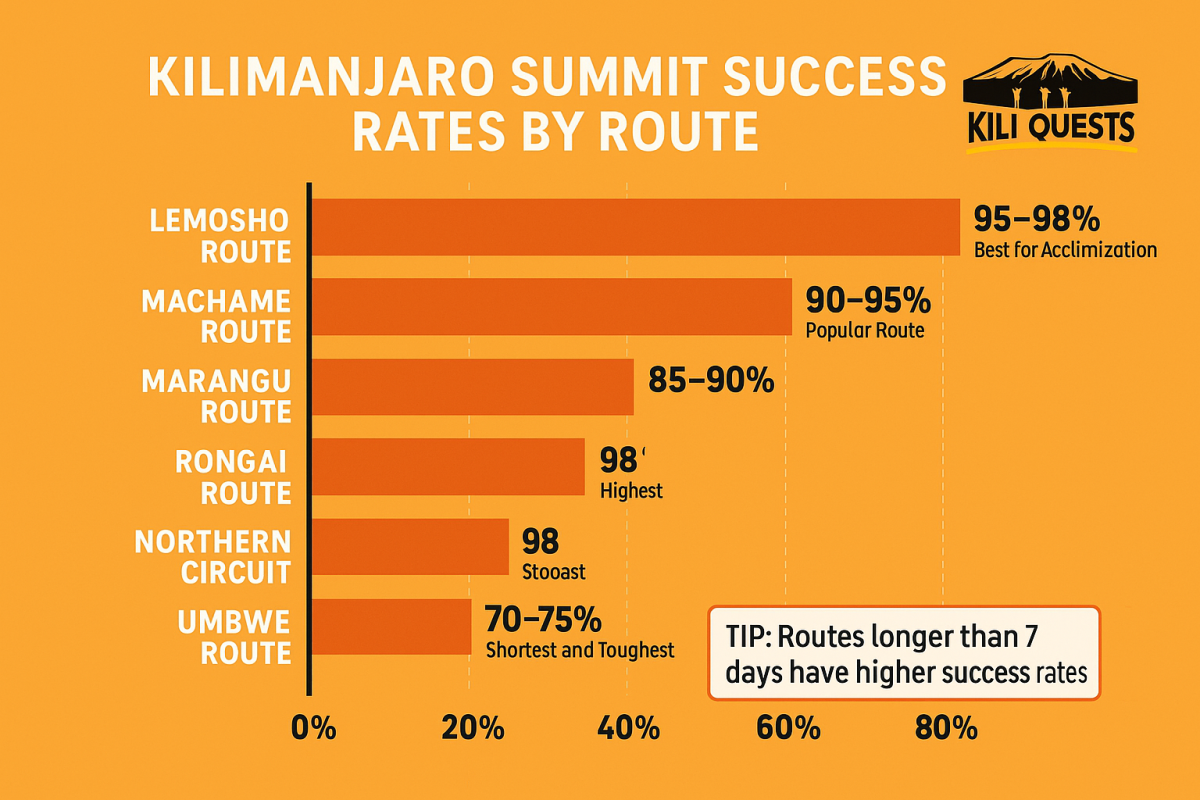
  • Lemosho (98% success rate)
  • Northern Circuit (99% success rate)
Lemosho Route: 8-Day Itinerary & Guide – See why this is our most recommended route.
Infographic comparing Kilimanjaro summit success rates by route including Lemosho, Machame, Marangu, Rongai, and others, showing Lemosho and Northern Circuit as the most successful.
Kilimanjaro Summit Success Rates – Choose your route wisely: Longer routes like Northern Circuit and Lemosho offer the best acclimatization and summit success

Motivation & Morale

The mountain is both a physical and mental challenge. Our experienced team:
  • Offers encouragement and emotional support
  • Builds camaraderie among climbers
  • Helps you push through summit night — when it counts most

Why Choose Kili Quests?

With Kili Quests, you’re not just hiring a tour — you’re gaining a support system committed to your safety, comfort, and summit success.
 
We provide:
  • Custom itineraries based on your pace
  • 24/7 local support
  • Transparent communication and ethical porter treatment
  • A reputation built on integrity and results
 

Frequently Asked Questions About Choosing a Kilimanjaro Tour Company

Why is choosing an experienced Kilimanjaro tour company important?

Climbing Mount Kilimanjaro involves high altitude, changing weather, and physical challenges. An experienced tour company provides trained guides, proper acclimatization plans, safety equipment, and professional support, all of which significantly improve climbers’ safety and chances of reaching the summit.

Is it possible to climb Mount Kilimanjaro without a tour operator?

No. Tanzanian park regulations require all climbers to book their expedition through a licensed tour operator approved by Kilimanjaro National Park Authority. Independent trekking is not permitted on Kilimanjaro.

How do experienced guides help prevent altitude sickness on Kilimanjaro?

Experienced guides monitor trekkers for symptoms of altitude sickness, plan gradual acclimatization schedules, and follow strategies such as “climb high, sleep low.” They also carry medical supplies and oxygen to respond quickly if altitude-related issues occur.

What safety equipment should a professional Kilimanjaro tour company provide?

A reputable operator should provide essential safety gear such as first-aid kits, oxygen cylinders, communication devices, and quality camping equipment. Many companies also conduct regular health checks during the trek to monitor climbers’ well-being.

Do experienced Kilimanjaro tour companies have higher summit success rates?

Yes. Companies with experienced guides and well-planned itineraries often achieve higher summit success rates because they prioritize acclimatization, safety monitoring, and proper pacing during the trek.

What should you look for when choosing a Kilimanjaro tour operator?

Travelers should look for licensed companies with experienced guides, strong safety procedures, ethical porter treatment, transparent pricing, and positive client reviews. These factors help ensure a safe and successful climbing experience on Kilimanjaro.

Ready for the Adventure of a Lifetime?

 Don’t risk your trek with an inexperienced operator. Choose Kili Quests — a seasoned, safety-focused Kilimanjaro team that has guided thousands to the summit and back.
 
 Contact us today to plan your Kilimanjaro adventure with confidence and care. Let’s reach the Roof of Africa — together.
Related Articles