Kilimanjaro Summit Tips: How to Reach Uhuru Peak

Reach Uhuru Peak with the Right Strategy

Summit success on Kilimanjaro depends on pacing, preparation, and experienced local support.

Prepare for Summit Night the Right Way

The best summit tips start long before midnight at high camp.

OUR CATEGORIES

Top Kilimanjaro Summit Tips from Local Guides: How to Reach Uhuru Peak
Reaching Uhuru Peak (5,895 meters) , the highest point in Africa , is the ultimate goal for anyone climbing Mount Kilimanjaro. It’s the moment you’ve trained for, planned for, and dreamed about.But here’s the truth many first-time climbers don’t fully understand:
 
 Summit night is the hardest part of the entire Kilimanjaro climb.Before summit night, it also helps to understand how many days it takes to climb Kilimanjaro and how hard it is to climb Kilimanjaro overall.It’s cold, dark, physically exhausting, and mentally demanding. Every year, some climbers turn back just a few hundred meters from the summit , not because they’re unfit, but because they weren’t prepared for what summit night really feels like.At Kili Quests, our experienced local guides have helped hundreds of climbers successfully reach Uhuru Peak. In this guide, we share real, practical Kilimanjaro summit tips that can make the difference between success and disappointment.
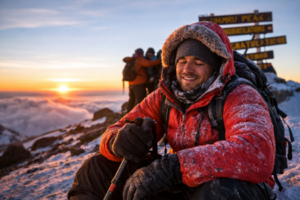
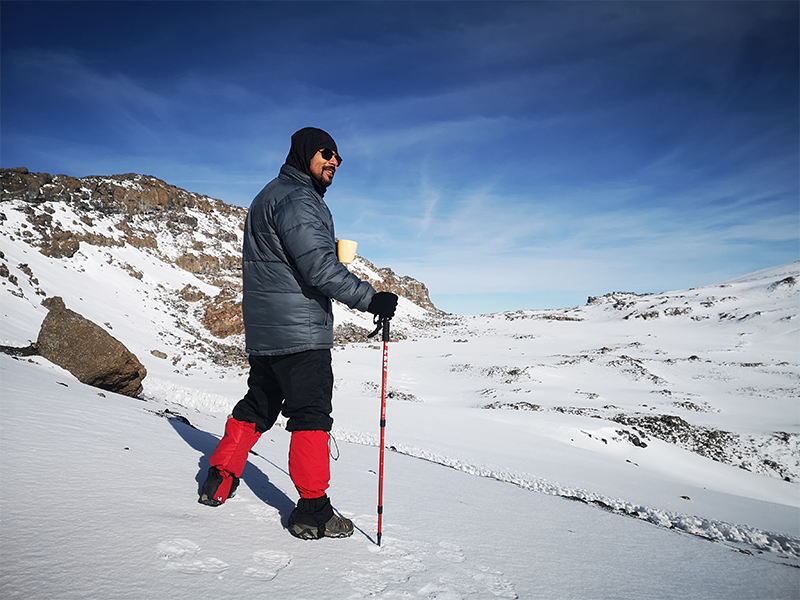
A climber stands on snow-covered terrain near Stella Point on Mount Kilimanjaro, holding a cup and trekking pole while overlooking the crater rim.
Reaching Uhuru Peak is the final reward after Kilimanjaro’s toughest ascent.

Table of Contents

What Makes Kilimanjaro Summit Night So Difficult?

Summit night usually begins around midnight from high camp (Barafu Camp or Kibo Hut). From there, climbers trek uphill for 6–8 hours in darkness before reaching the crater rim, then continue to Uhuru Peak.
The challenge comes from several factors combined:
  • High altitude (extremely low oxygen levels)
  • Freezing temperatures (as low as -20°C with wind chill)
  • Steep, slow ascent on loose volcanic terrain
  • Physical fatigue after multiple days of trekking
  • Mental exhaustion and lack of sleep
If you’re concerned about the risks involved, read our guide on whether climbing Mount Kilimanjaro is dangerous.Understanding these challenges is the first step toward preparing properly.
 
Much of this difficulty comes from altitude, which is why Kilimanjaro acclimatization matters so much before summit night

Go Slow — “Pole Pole” Is the Golden Rule

The most important advice from every Kilimanjaro guide is simple:
“Pole pole” — slowly, slowly.Climbing too fast is the number one reason climbers fail to reach the summit.
Why slow pacing works:
  • Allows your body to acclimatize to altitude
  • Reduces the risk of altitude sickness
  • Conserves energy for summit night
Even if you feel strong early on, resist the urge to go faster. Kilimanjaro is not a race  it’s an endurance challenge.
 
Going slowly is one of the best ways to prevent altitude sickness on Kilimanjaro and improve your overall summit chances.

Control Your Breathing at High Altitude

At nearly 6,000 meters, oxygen is limited. This is why many climbers learn about how to acclimatize on Mount Kilimanjaro before their trek.. You will feel short of breath  this is normal.To manage this, use a steady breathing rhythm:
  • Step → inhale
  • Step → exhale
This technique helps:
  • Maintain a consistent pace
  • Prevent dizziness
  • Improve oxygen efficiency

Dress Properly — Layering Is Critical

Summit night is extremely cold, and staying warm is essential for both comfort and safety.
Recommended clothing system:
  • Thermal base layers (top and bottom)
  • Insulating mid-layer (fleece or down)
  • Heavy down jacket
  • Waterproof outer shell
  • Warm gloves (inner + outer)
  • Thick wool socks
  • Hat or balaclava
For a full checklist of summit layers and equipment, see our Kilimanjaro summit day gear guide.It also helps to know the typical Kilimanjaro night temperatures before packing.

Eat and Hydrate — Even If You Don’t Feel Like It

At high altitude, your appetite often disappears — but your body still needs fuel.
Summit night nutrition tips:
  • Drink small sips of water regularly
  • Carry a thermos with hot tea
  • Eat quick-energy snacks (chocolate, nuts, energy bars)
Dehydration and lack of calories are hidden reasons why many climbers struggle near the summit.
 
Good nutrition before and during summit night matters more than many trekkers expect. Learn what food to expect on Mount Kilimanjaro before your climb.

Prepare Mentally — The Real Challenge Is in Your Mind

Summit night is as much a mental challenge as it is physical.
You may feel:
  • Extremely tired
  • Cold and uncomfortable
  • Slow and discouraged
This is completely normal.
Mental strategies used by successful climbers:
  • Focus on one step at a time
  • Avoid thinking about how far is left
  • Trust your guide’s pace
  • Stay positive and patient
Most people who reach Uhuru Peak are not the strongest  they are the most determined.

Listen to Your Guide — Your Success Depends on It

Your guide is your biggest advantage on Kilimanjaro.
At Kili Quests, guides:
  • Monitor your oxygen levels
  • Check for signs of altitude sickness
  • Adjust your pace
  • Make critical safety decisions
If your guide tells you to slow down, drink more water, or rest , follow their advice.
A strong guide team matters because Kilimanjaro success is not only about fitness , it is also about pacing, health checks, and decision-making on the mountain. Read more about Kilimanjaro safety and risks.

Choose the Right Route for Higher Summit Success

Your route plays a major role in your success rate.
Best routes for acclimatization:
  • Lemosho Route
  • Machame Route
  • Northern Circuit
These routes are longer, allowing your body more time to adjust to altitude.
Shorter routes may seem cheaper, but they significantly reduce your chances of reaching Uhuru Peak.
 Explore routes:

Your Summit Success Starts Days Before

Many climbers think summit night is everything — but success actually begins earlier.
Key preparation factors:
  • Proper acclimatization
  • Enough rest before summit push
  • Consistent hydration
  • Good nutrition
  • Arriving at high camp in good condition makes a huge difference.
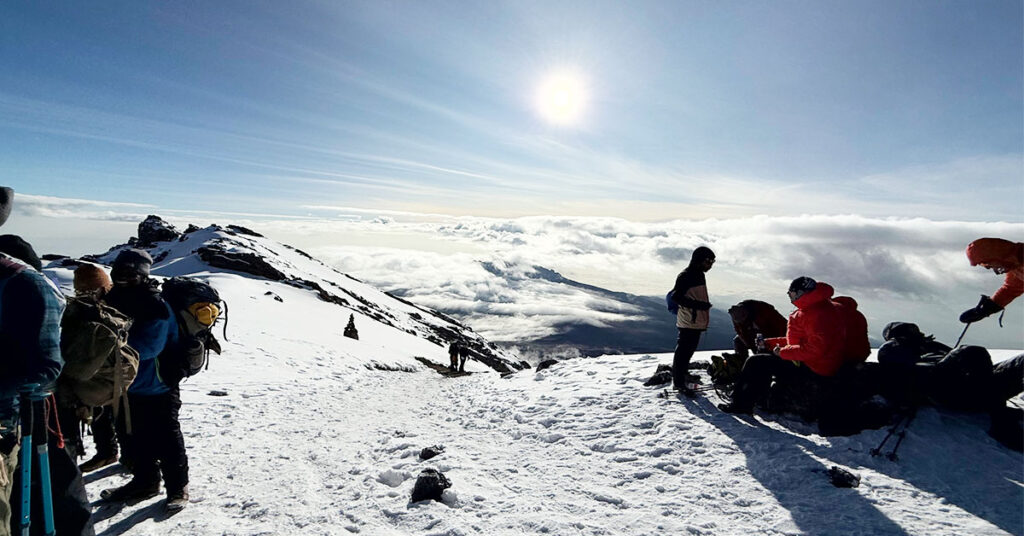
 

Summit success is usually built over the full itinerary, not just on the final push. That is why route length and acclimatization days matter so much in our guide to Kilimanjaro success rates by route.
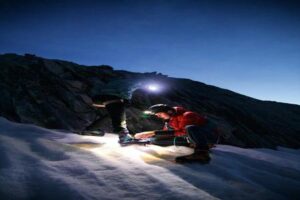
A small group stopping on the upper slope in cold-weather gear before continuing upward.

Use the Right Gear — Small Mistakes Matter

The right gear can make or break your summit attempt.
Essential items:
  • Headlamp with spare batteries
  • Trekking poles
  • Insulated water bottles
  • Hand warmers
A simple issue like a weak headlamp or frozen water bottle can become a serious problem on summit night.
 
Many first-time climbers underestimate how much the right clothing and equipment affect comfort and performance. Review a full Kilimanjaro packing list before your trek.

Believe in Yourself — Confidence Is Key

Thousands of people from all backgrounds reach Uhuru Peak every year — including beginners.
What they share:
  • Determination
  • Patience
  • The right support team
If you trust the process and stay committed, you can reach the summit too.Confidence comes from preparation, which is why many climbers follow a Kilimanjaro training plan before arriving in Tanzania.

What Happens After You Reach Uhuru Peak?

Reaching Uhuru Peak is an emotional and unforgettable moment.
But keep in mind:
  • You’ll stay only 10–20 minutes due to extreme cold
  • Photos are quick
  • The descent begins immediately

Reaching Uhuru Peak Is About Strategy, Not Strength

Climbing Kilimanjaro is not about being the fittest person  it’s about being the most prepared.
With the right pacing, proper acclimatization, strong mindset, and experienced local guides, your chances of success are very high.

Frequently Asked Questions About Kilimanjaro Summit Tips

How difficult is summit night on Mount Kilimanjaro?

Summit night is the most physically and mentally demanding part of climbing Mount Kilimanjaro. By this stage, you have already spent several days trekking at increasing altitude, and your body is dealing with fatigue, lower oxygen levels, and limited rest.The difficulty comes from a combination of factors including the steep uphill climb, freezing temperatures that can drop below -10°C, and trekking for several hours in darkness. In addition, the lack of oxygen at high altitude makes even slow walking feel exhausting.However, it’s important to understand that Kilimanjaro is a non-technical mountain, meaning you don’t need climbing experience or special equipment like ropes. With proper acclimatization, a slow pace, and support from experienced local guides, most climbers can successfully complete summit night and reach Uhuru Peak.

What time does the Kilimanjaro summit climb start and why?

The summit push on Kilimanjaro typically begins between midnight and 1:00 AM from high camp, such as Barafu Camp or Kibo Hut. This early start is carefully planned to maximize both safety and the overall experience.Climbing at night allows trekkers to reach the summit at sunrise, which is one of the most rewarding moments of the entire journey. Watching the sun rise above the clouds from Uhuru Peak is unforgettable and gives climbers a strong mental boost near the end of the ascent.Another reason for the midnight start is that the ground is more stable in colder temperatures, reducing slipping on loose volcanic scree. It also ensures that climbers can descend safely in daylight after reaching the summit, which is important because the descent can be long and tiring.

How long does it take to reach Uhuru Peak and return?

From high camp, it usually takes between 6 to 8 hours to reach Uhuru Peak, depending on your pace and how well you are acclimatized. The first major milestone is Stella Point, which sits on the crater rim and is reached after about 4 to 6 hours of climbing.From Stella Point, it takes an additional 1 to 2 hours to walk along the crater rim to Uhuru Peak. This final stretch is less steep but still challenging due to altitude and fatigue.After reaching the summit, climbers typically spend only 10 to 20 minutes taking photos before starting the descent. The full summit day, including the climb up and descent back to a lower camp, can take anywhere from 10 to 14 hours, making it the longest and most demanding day of the entire trek.

What are the most important tips to successfully reach Uhuru Peak?

Successfully reaching Uhuru Peak depends more on strategy and preparation than physical strength. The most important tip is to climb slowly, often referred to as “pole pole,” which allows your body to adjust to the altitude and reduces the risk of altitude sickness.Staying hydrated is equally important, as dehydration can worsen altitude symptoms and reduce energy levels. Climbers should aim to drink at least 3 liters of water per day, even when they don’t feel thirsty.Proper layering of clothing is essential to handle extreme cold during summit night, and eating small, energy-rich snacks helps maintain strength during the long climb. Finally, listening to your guide is critical, as they are trained to monitor your condition and make decisions that increase your chances of success.

Can beginners climb Kilimanjaro and reach the summit?

Yes, beginners can successfully climb Mount Kilimanjaro and reach Uhuru Peak, and many do every year. One of the reasons Kilimanjaro is so popular is that it does not require technical climbing skills, making it accessible to people with no mountaineering experience.However, beginners should not underestimate the challenge. Proper preparation is key, including physical training such as hiking, cardio workouts, and endurance exercises in the weeks leading up to the climb.Choosing the right route is also very important. Longer routes, such as Lemosho or Machame, give your body more time to acclimatize and significantly increase your chances of reaching the summit. With the right preparation, mindset, and support from experienced guides, even first-time climbers can achieve this incredible goal.

Climb Kilimanjaro Safely with Kili Quests

Climbing Kilimanjaro with Trusted Local Experts .At Kili Quests, our experienced local guides, carefully designed itineraries, and strong focus on safety give you the best possible chance of reaching Uhuru Peak.

Related Articles
Mount Meru vs Kilimanjaro: Which Trek Should You Choose?

Plan Your Kilimanjaro or Meru Climb

Choosing the right mountain depends on your goals and experience.

Plan Your Kilimanjaro Climb

Good planning makes your climb easier and more successful.

OUR CATEGORIES

Kilimanjaro vs Mount Meru: Which Trek Should You Choose?

If you’re planning a mountain adventure in Tanzania, two peaks stand out: Mount Kilimanjaro and Mount Meru. Both offer incredible trekking experiences , but they are very different in terms of altitude, difficulty, scenery, and overall experience.Kilimanjaro is Africa’s highest mountain and a global bucket-list climb. Mount Meru, on the other hand, is quieter, steeper, and often overlooked , but equally rewarding in its own way.
 
So which one is right for you?
 
This guide breaks down the real differences so you can choose the trek that matches your goals, time, and experience level.
: Mount Meru and Mount Kilimanjaro seen from a distance across the Tanzanian plains
Mount Meru and Kilimanjaro rise above northern Tanzania — offering two very different trekking experiences

Table of Contents

Altitude and Overall Challenge

Mount Kilimanjaro – High Altitude, Longer Exposure

Mount Kilimanjaro rises to 5,895 meters (19,341 ft), making it the highest mountain in Africa. While the climb is non-technical, the altitude is the biggest challenge.
You spend several days above 3,000 meters, which increases the risk of altitude sickness and requires proper acclimatization.
 
Before choosing, it’s important to understand altitude sickness on Kilimanjaro and how to prevent it.

Mount Meru – Steeper but Lower

Mount Meru stands at 4,566 meters (14,980 ft). Although lower, the climb can feel physically demanding because:
  • The trails are steeper
  • The summit ridge is narrow and exposed
  • The ascent is more direct
However, the lower altitude makes it slightly easier from a physiological perspective.
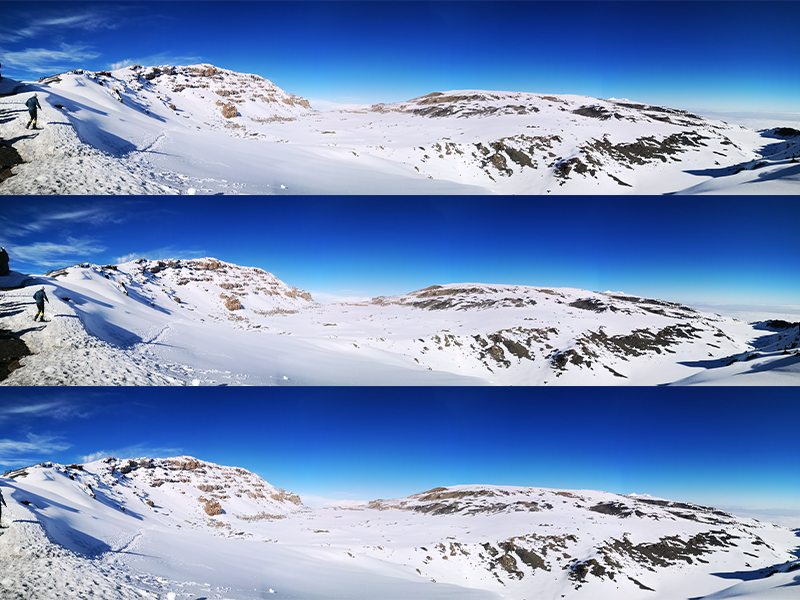
Snow and glaciers at the summit of Mount Kilimanjaro
Kilimanjaro offers high-altitude glacier trekking and the chance to stand on Africa’s highest peak

Scenery and Overall Experience

Kilimanjaro – A Journey Through Five Worlds

Kilimanjaro offers one of the most unique trekking experiences in the world. You pass through five ecological zones:
  • Rainforest
  • Moorland
  • Alpine desert
  • Arctic summit
 You can explore these transitions in detail in Kilimanjaro ecological zones explained.

Mount Meru – Dramatic and Wild

Mount Meru delivers a more rugged and dramatic landscape:
  • A massive volcanic crater
  • Narrow ridgelines near the summit
  • Direct views of Kilimanjaro at sunrise
It feels more adventurous and less commercial.

Wildlife and Natural Environment

Mount Meru – Wildlife-Rich Trek

The trek starts inside Arusha National Park, where you may see:
  • Giraffes
  • Buffalo
  • Colobus monkeys
This is one of the few mountain treks in Africa where wildlife is part of the experience.

Kilimanjaro – Limited Wildlife at Higher Altitude

Wildlife is mostly found in the lower forest zone. As you climb higher, the focus shifts from animals to landscapes.

Trek Duration and Time Commitment

Kilimanjaro – 6 to 9 Days

Most Kilimanjaro routes take between 6 and 9 days. Longer routes improve acclimatization and increase summit success.
 
 Compare options in Kilimanjaro routes comparison: which route is best.

Mount Meru – 3 to 5 Days

Mount Meru is shorter and more compact:
  • Ideal for travelers with limited time
  • Easier to fit into a broader Tanzania itinerary
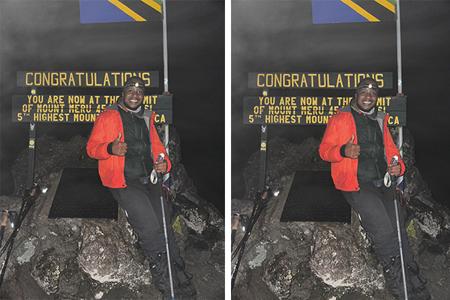
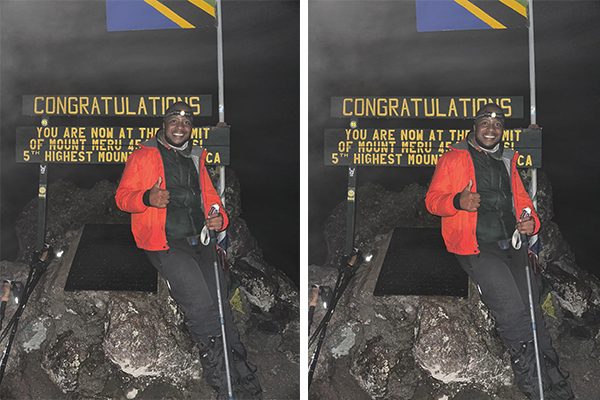
Kili Quests guide standing at the summit of Mount Meru in early morning darkness before sunrise, with limited visibility
Our guide reached the summit of Mount Meru around 5:30 AM — capturing the quiet, powerful moment before sunrise that few trekkers experience

Cost Comparison

Kilimanjaro – Higher Cost

Climbing Kilimanjaro involves:
  • Higher park fees
  • Larger support teams (guides, porters, cooks)
  • Longer duration

Mount Meru – More Affordable

Mount Meru is generally more budget-friendly because:
  • Shorter trek
  • Fewer crew members
  • Lower total logistics

Crowds and Trail Experience

Kilimanjaro – Popular and Busy

Kilimanjaro is one of the most climbed mountains in the world. During peak season:
  • Trails can be busy
  • Camps can feel crowded

Mount Meru – Quiet and Remote

Meru offers:
  • Fewer climbers
  • Peaceful camps
A more personal connection with nature
Trekkers walking along the crater rim of Mount Meru during the final ascent
Mount Meru features steep ridges, wildlife sightings, and fewer crowds — perfect for a quieter adventure

Trekking Style and Difficulty Feel

Kilimanjaro – Gradual but Long

  • Slower pace (“pole pole”)
  • Longer trekking days
  • Focus on endurance

Mount Meru – Shorter but Steeper

  • Steeper sections
  • Narrow summit ridge
  • More technical feel (but still non-technical climb)
 
 
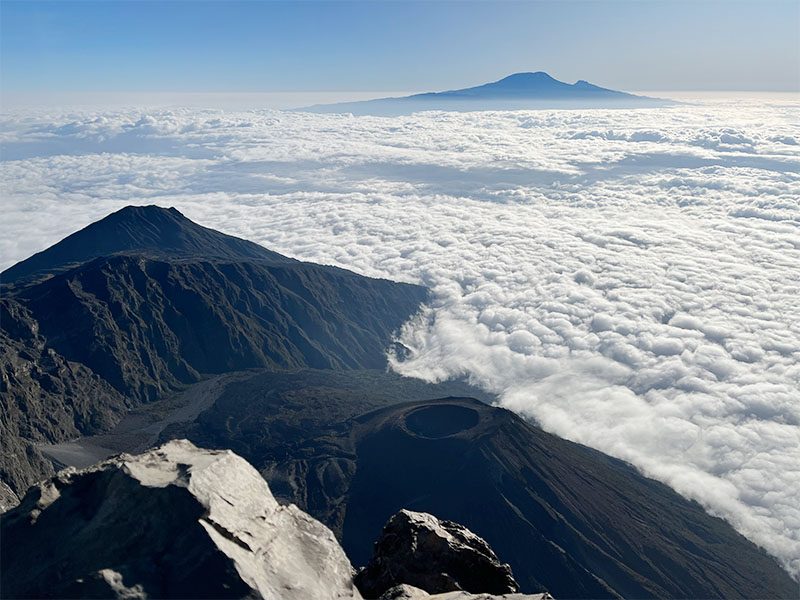
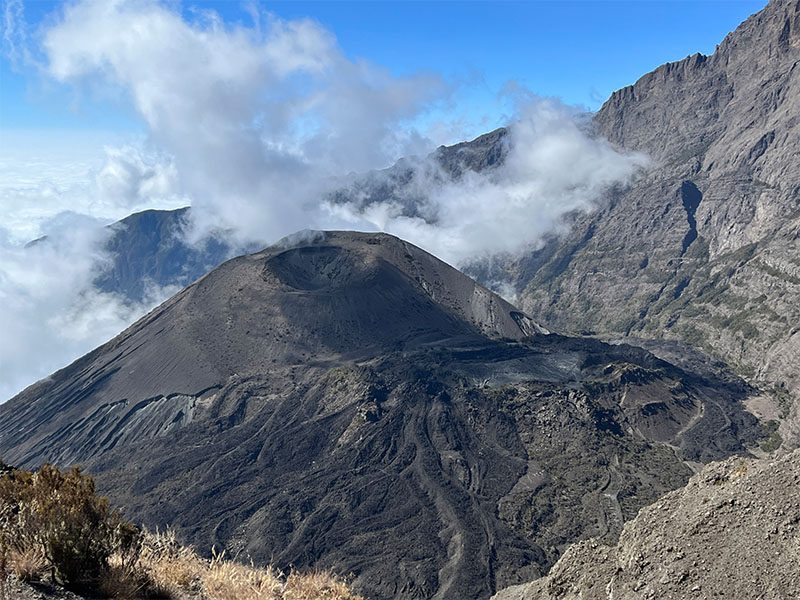
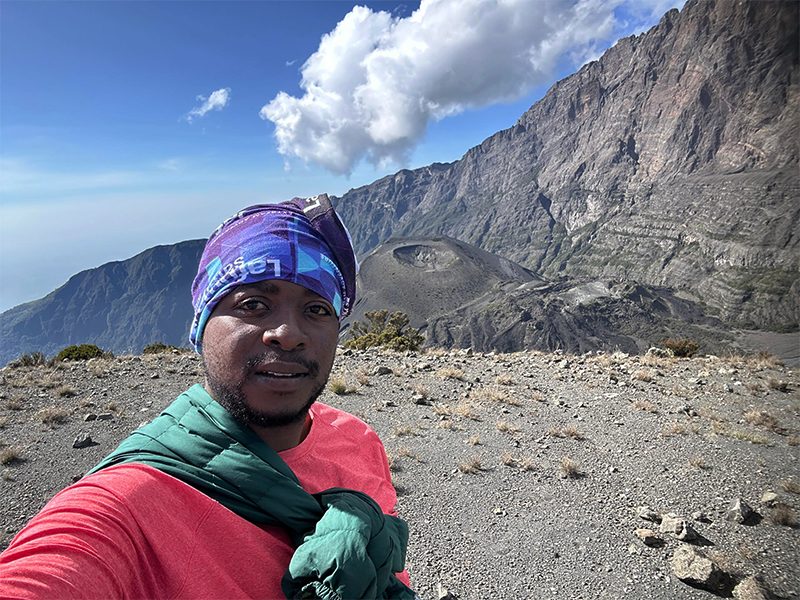
Our experienced guides also lead treks up Mount Meru — here standing near the summit with the volcano’s striking ash cone below

 Quick Comparison: Kilimanjaro vs Mount Meru

Altitude:
  • Kilimanjaro – 5,895 m
  • Meru – 4,566 m
Duration:
  • Kilimanjaro – 6–9 days
  • Meru – 3–5 days
Difficulty:
  • Kilimanjaro – High altitude challenge
  • Meru – Steeper terrain

Wildlife:

  • Kilimanjaro – Limited
  • Meru – High
Crowds:
  • Kilimanjaro – Busy
  • Meru – Quiet
Cost:
  • Kilimanjaro – Higher
  • Meru – Lower

 Which One Should You Choose?

Choose Kilimanjaro If:

  •  You want to reach the highest point in Africa
  • You are prepared for a longer, high-altitude challenge
  • You want a world-famous trekking experience

Choose Mount Meru If:

  • You prefer fewer crowds and a quieter experience
  • You want a shorter trek
  • You enjoy steeper, more rugged terrain

Best Strategy — Do Both

  • Many climbers choose to climb Mount Meru first, then attempt Kilimanjaro.
  • This approach:
  • Improves acclimatization
  • Builds confidence
  • Increases summit success rate
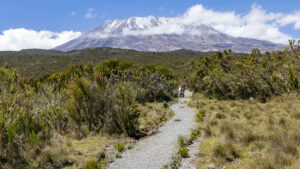
Kilimanjaro trekker walking across the dry alpine desert zone with summit in view
Kilimanjaro features five ecological zones, including alpine desert near the summit

Frequently Asked Questions About Kilimanjaro vs Mount Meru

Which is harder to climb, Kilimanjaro or Mount Meru?

In general, Mount Kilimanjaro is considered more challenging because of its extreme altitude at 5,895 meters (19,341 ft). While Mount Meru is steeper in certain sections, it is lower in elevation and usually climbed over fewer days, making altitude sickness less common.

Is Mount Meru a good preparation climb for Kilimanjaro?

Yes. Many trekkers climb Mount Meru first to help their bodies acclimatize to high altitude before attempting Kilimanjaro. The Meru trek provides excellent altitude exposure, physical training, and confidence before taking on Africa’s highest peak.

How long does it take to climb Mount Meru compared to Kilimanjaro?

Climbing Mount Meru typically takes 3 to 5 days, while Kilimanjaro treks usually last 6 to 9 days depending on the chosen route. The longer duration on Kilimanjaro helps climbers adjust to higher elevations and improves summit success rates.

Which mountain has more wildlife during the trek?

Mount Meru offers more wildlife sightings because the trek begins inside Arusha National Park. Trekkers may see animals such as giraffes, buffalo, and monkeys along the lower slopes. Wildlife is less common on Kilimanjaro, especially at higher altitudes.

Is Mount Meru cheaper to climb than Kilimanjaro?

Yes. Mount Meru treks are generally more affordable because they are shorter and require fewer support staff. Kilimanjaro expeditions involve higher park fees, longer itineraries, and larger trekking crews.

Should beginners climb Mount Meru or Kilimanjaro first?

Many beginners choose to climb Mount Meru first because it is shorter, quieter, and provides good altitude experience. However, beginners with good fitness and proper preparation can still successfully climb Kilimanjaro with the support of experienced guides.

 Ready to Plan Your Trek?

At Kili Quests, we offer:
  • Custom itineraries for both Kilimanjaro and Mount Meru
  • Experienced, local guides
  • High summit success rates and full safety support
  • Flexible trip combinations to match your budget and goals
Contact us today

Related Articles

How to Charge Devices on Mount Kilimanjaro (Power & Solar Tips)

Stay Powered and Prepared on Kilimanjaro

The right gear setup makes your climb easier, safer, and more enjoyable.

Plan Your Kilimanjaro Gear the Right Way

Charging is just one part of preparation , your gear, route, and conditions all matter.

OUR CATEGORIES

How to Charge Your Devices on Mount Kilimanjaro: Power Tips for Trekkers | Kili Quests

 If you’re heading to Mount Kilimanjaro, one of the most common questions is:
How will I charge my phone or camera on the mountain?”
 
Since there’s no standard electricity on Kilimanjaro, staying powered up requires preparation. Whether it’s capturing summit moments, navigating offline maps, or staying in touch, here’s how to keep your devices charged during your trek with Kili Quests.
 
Internet Access , Staying online depends on both your power supply and coverage , learn how to manage both.
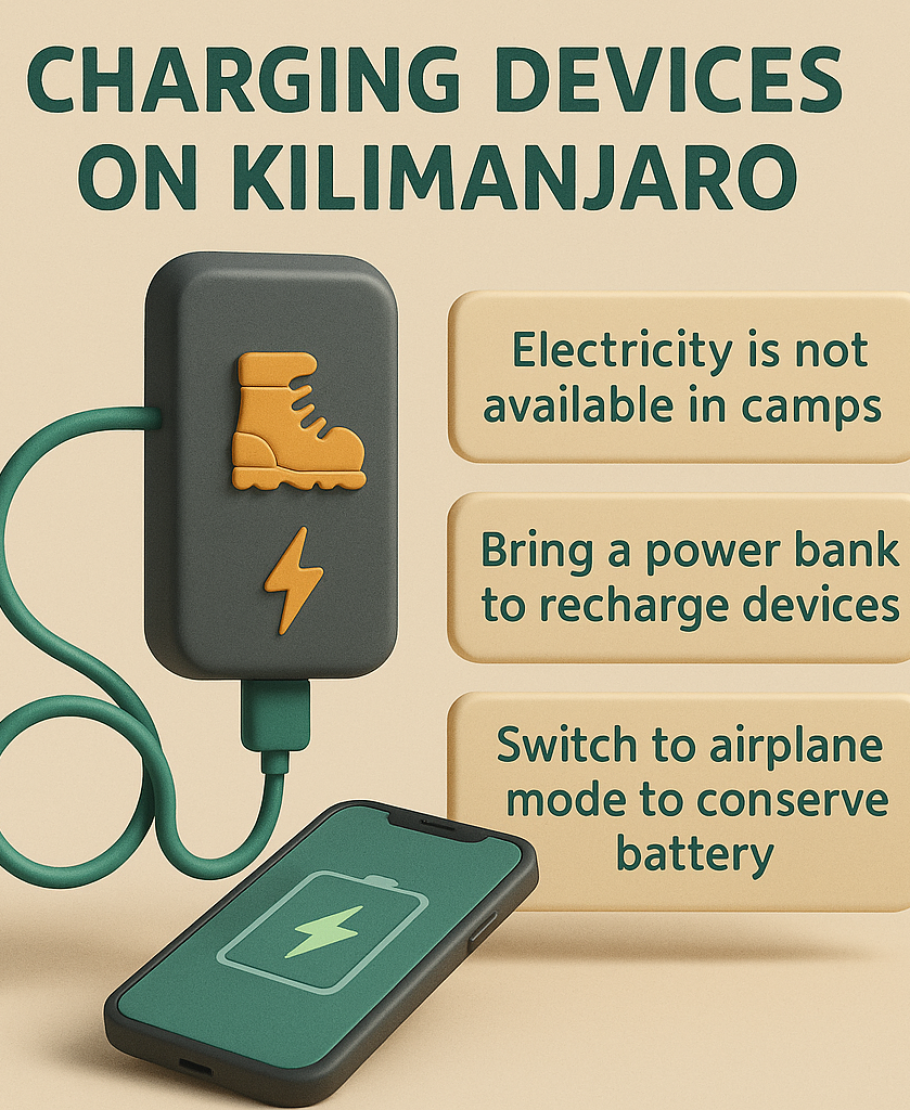
3D-style infographic showing power bank, smartphone, and battery-saving tips for Kilimanjaro.
No charging stations on the mountain — bring a power bank and use airplane mode.

Table of Contents

Is There Electricity on Mount Kilimanjaro?

There is no public electricity or grid on the mountain. Camps are remote and lack outlets , but that doesn’t mean you’ll be without power completely.
Here’s what’s available:

Charging Services at Camps (Limited)

  • Some high camps (e.g., Barafu Camp) may offer charging via solar or generator
  • Usually available for a fee
  • Devices may need to be left for a few hours

Solar-Powered Lights

  • A few camps have solar lightin
  • Charging small items may be possible (not guaranteed)
  • Ask Kili Quests about your specific route for updated info
  •  

Best Ways to Charge Your Devices on the Mountain

Power Banks (Portable Chargers)

The most reliable option.
  • Recommended Capacity: At least 20,000mAh (more for multi-device use)
  • How Many? Bring 1–2 depending on device usage
  • Tip: Charge fully before departure; store in warm layers to protect battery life

Solar Chargers

Optional backup if you prefer to recharge on the go.
  • Works Best: During clear sunny days while hiking
  • Limitations: Less effective at high altitude or in cloudy weather
  • Tip:Mount panels on your backpack to collect sunlight while walking
 

Charge During Rest Stops (If Available)

Some camps have shared solar systems or small generators.
  • You may be able to charge during meals or long stops
  • Charging speed is slow
  • Availability is not guaranteed on all routes
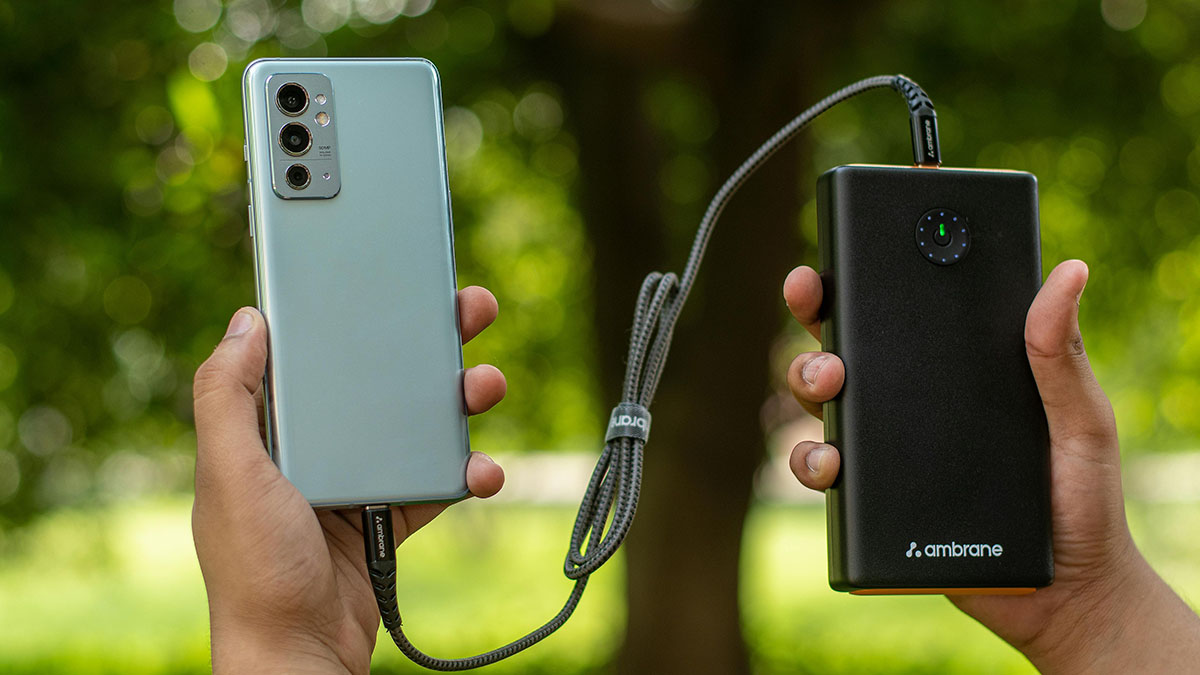
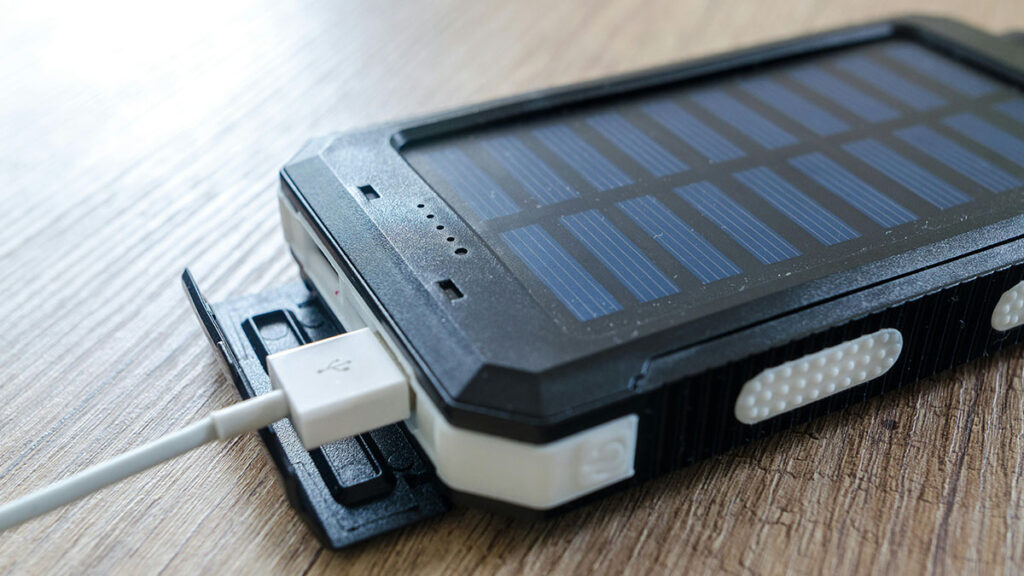
Recharged Solar Power Bank
Power Bank

Smart Battery Management Tips

 Even with backup power, conserving energy is critical. Use these tips to extend your battery life:
  •  Turn off: Wi-Fi, Bluetooth, GPS, and background apps
  •  Lower brightness: Especially during summit night
  •  Use Airplane Mode: Your signal won’t work anyway at high altitudes
  •  Limit usage: Use only when needed to preserve charge
  •  Keep warm: Cold reduces battery performance — store devices inside warm clothing at night
Gear Rentals Guide – Need a power bank or solar charger? See what you can rent locally.

Alternative Power-Free Solutions

Don’t want to worry about charging at all? Here are a few reliable offline solutions:
  • Digital Camera + Extra Batteries: Great for photography without draining phone power
  • Offline Maps: Use apps like Maps.me or download Google Maps offline
  • Pen & Journal: Record your adventure the old-school way
  • Spare Phone: Carry a basic feature phone as a backup communication device
Summit Day Gear Checklist – Know what gear is essential for the coldest and longest day of your trek.

Stay Connected the Smart Way

While Mount Kilimanjaro doesn’t offer traditional charging stations, it is still possible to keep your devices powered up with smart planning. Bring power banks, use solar as backup, and manage battery life wisely.
 
Night Temperatures Guide – Extreme cold affects battery life , be prepared with the right setup.

Frequently Asked Questions

Can you charge your phone on Mount Kilimanjaro?

Charging options on Mount Kilimanjaro are limited because there is no regular electricity on the mountain. Some camps may offer solar or generator charging for a small fee, but the most reliable way to keep devices powered is by bringing a fully charged power bank.

What is the best way to charge devices during a Kilimanjaro trek?

The best solution is to bring high-capacity power banks (around 20,000mAh or more). Many trekkers carry one or two power banks to charge phones, cameras, and headlamps throughout the trek.

Do Kilimanjaro camps have charging stations?

Most camps on Kilimanjaro do not have public charging stations. Occasionally, some high camps may provide limited charging through solar panels or generators, but availability is not guaranteed and charging can take several hours.

Can solar chargers work on Mount Kilimanjaro?

Solar chargers can work on clear sunny days and are sometimes attached to backpacks while hiking. However, they should be used as a backup option because weather conditions and altitude can reduce charging efficiency.

How can cold temperatures affect phone batteries on Kilimanjaro?

Cold temperatures at high altitude can drain batteries quickly. To protect battery life, keep your devices and power banks inside warm clothing or sleeping bags at night.

How can trekkers save battery power during the climb?

Trekkers can extend battery life by using airplane mode, lowering screen brightness, turning off Wi-Fi and Bluetooth, and limiting phone use. Downloading maps, documents, and music before the trek also helps reduce power consumption.

Ready to Climb with Power?

 Book your Kilimanjaro trek with Kili Quests today and get expert advice on gear, packing, and device charging.
 Contact us for personalized route guidance and power tips for your adventure.

Related Articles

Internet on Mount Kilimanjaro: WiFi, SIM Cards & Coverage

Plan Your Kilimanjaro Climb

The right preparation makes your climb safer and more successful.

Plan Your Climb the Right Way

Your route, preparation, and timing matter more than staying connected.

OUR CATEGORIES

Internet Access on Kilimanjaro: What to Know | Kili Quests

Wondering if you can stay connected during your Mount Kilimanjaro trek?
Whether it’s messaging loved ones, posting photos, or accessing offline maps, internet access can be useful on the mountain. But Kilimanjaro is remote , so knowing where and how you can connect is essential.This guide breaks down everything you need to know about Wi-Fi, mobile coverage, and how Kili Quests helps you stay connected while climbing Africa’s tallest peak.
 
If you’re planning your trek, it’s also important to understand how to charge your devices on Kilimanjaro so you don’t lose power when you need it most.
Celebrating the climb at Stella Point. One last push to Uhuru!

Table of Contents

Is There Internet on Mount Kilimanjaro?

Kilimanjaro has no consistent or reliable internet , especially at high altitudes.
However, there are options at:
  • Lower altitudes (e.g. Moshi, Arusha)
  • Certain campsites with mobile network zones
  • Selected locations where Kili Quests provides hotspot access
Before focusing on internet access, it’s important to understand how to acclimatize on Kilimanjaro, since altitude affects both your energy and device performance.

Internet Access Before the Climb

 Before your trek, you’ll have strong internet access in the towns at the base of the mountain:
Moshi & Arusha
  • Mobile data: Local SIM cards (Vodacom, Airtel, Tigo) offer good 4G/5G coverage
  • Wi-Fi: Most hotels, restaurants, and cafes have free or paid Wi-Fi

Weather conditions can affect both your experience and signal availability — learn the best time to climb Kilimanjaro to plan your trek properly.

Buy a Local SIM Card

We recommend purchasing a local SIM card before your trek  Or e-Sim option:

  • Provides mobile data coverage on the mountain’s lower slopes
  • Affordable and easy to find in Moshi or Arusha

Internet Access at Camps (Higher Altitudes)

As you ascend, mobile network coverage becomes limited. But it’s not gone entirely.
 Where Can You Connect?
  • Popular routes like Machame, Lemosho, and Marangu often have camps with designated signal spots
  • Signal strength varies with altitude and location
  • Wi-Fi is not guaranteed, but limited mobile data is sometimes possible
Many climbers focus on staying connected, but the real challenge is the climb itself , understand how hard Kilimanjaro is before you go.

 Kili Quests Guide Assistance

Our guides will:
  • Show you exact camp spots where mobile signals are strongest
  • Advise on network availability at each altitude
  • Provide Hotspot access when available

Tips to Stay Connected on Kilimanjaro

Here’s how to maximize your connectivity:
 1. Purchase a SIM Card Before the Trek
  • Use Vodacom, Airtel, or Tigo
  • Enable mobile data for lower camps
2. Download Essentials in Advance
  • Maps (use Maps.me or Google offline maps)
  • Music, books, or documents
  • Offline backup of itinerary and contacts

Staying connected depends on preparation , see the full Kilimanjaro packing list to make sure you bring the right gear and power solutions.

Disconnect to Reconnect

While it’s helpful to stay connected, don’t underestimate the value of switching off.
Embrace the Journey
  • Focus on your climb and the scenery
  • Share real moments with fellow trekkers
  • Reflect without digital noise

 Capture Memories — Then Post Later

  • Use offline camera modes or bring a digital camera
  • Save battery life and enjoy the trail

You’ll have plenty of time to share your summit photo afterward.

Smile, breathe, and enjoy every step of the journey.

How Kili Quests Helps You Stay Connected

 At Kili Quests, we understand that some climbers value occasional access to the outside world. That’s why we provide:
  • Hotspot service at selected camps
  • Route-specific guidance on mobile coverage
  • Local SIM recommendations before the climb
  • Tech support for staying connected responsibly

Connection with Balance

While internet access on Kilimanjaro is limited, it is possible to stay connected at lower altitudes and certain camps. But the best part of the journey? You’ll discover a deeper connection — not just to your phone, but to the experience.

Frequently Asked Questions

Is there internet access on Mount Kilimanjaro?

Internet access on Mount Kilimanjaro is limited. While there is no consistent Wi-Fi across the mountain, some lower camps and areas may have mobile network coverage, allowing climbers to access basic internet services using mobile data.

Can I use mobile data on Mount Kilimanjaro?

Yes, mobile data may work in certain areas of the mountain, especially at lower elevations. Local networks such as Vodacom, Airtel, and Tigo sometimes provide signal coverage along popular trekking routes, although the connection can be weak or intermittent at higher altitudes.

Where can I get reliable internet before climbing Kilimanjaro?

Before starting your trek, you can access strong internet connections in towns near the mountain such as Moshi and Arusha. Most hotels, cafes, and lodges in these towns offer Wi-Fi or mobile network coverage.

Should I buy a local SIM card before climbing Kilimanjaro?

Yes. Purchasing a local SIM card before the trek can help you access mobile data at lower camps and communicate when signal is available. SIM cards from Tanzanian providers are affordable and easy to find in Moshi or Arusha.

Are there Wi-Fi hotspots on Kilimanjaro?

Wi-Fi is generally not available on the mountain itself. However, some trekking companies may provide limited hotspot access at certain camps when conditions allow, though this should not be relied upon as a primary internet source.

How can I prepare to stay connected during a Kilimanjaro trek?

To stay connected, download important information such as offline maps, travel documents, and contacts before starting your climb. This allows you to access essential information even when internet service is unavailable on the mountain.

Book with Kili Quests

Book your Kilimanjaro trek with Kili Quests today and get expert advice on how to stay connected , and when it’s best to unplug.
 

Related Articles

Mount Kilimanjaro Guide: Facts, Location & Overview

What Is Mount Kilimanjaro? The Ultimate Guide | Kili Quests

Mount Kilimanjaro—Africa’s tallest and most iconic peak
Mount Kilimanjaro is Africa’s tallest and most iconic peak — and a dream destination for trekkers worldwide. Standing at 5,895 meters (19,341 feet), it is not only the highest mountain in Africa but also the tallest free-standing mountain in the world.

At Kili Quests, we help adventurers like you climb to the top — safely, confidently, and with unforgettable memories.

This guide covers everything you need to know about Kilimanjaro, from its volcanic geography and trekking routes to history, ecosystems, and how to prepare for your climb.
 
 
10 Must-Know Facts About Kilimanjaro – Discover quick facts that every trekker should know before climbing.

Table of Contents

Geography & Volcanic Features of Mount Kilimanjaro

Located in northeastern Tanzania, near the Kenya border, Kilimanjaro is a massive dormant volcano made up of three cones:
  • Kibo: The tallest and home to Uhuru Peak
  • Mawenzi: Rugged and rarely climbed
  • Shira: The oldest and eroded cone
As you ascend, you’ll pass through five unique ecological zones, from lush rainforest to arctic summit — each with different views, temperatures, and wildlife.
 
UNESCO World Wonder Article – Explore Kilimanjaro’s global recognition and cultural importance.

History & Cultural Significance

Kilimanjaro has deep meaning for the Chagga people, who live around its base. The mountain is considered sacred, with myths of spirits and ancestral guardians.
  • First summit: Hans Meyer (Germany), 1889
  • Current spiritual value: Chagga and Pare tribes still perform rituals in sacred areas
  • Global importance: Kilimanjaro is a UNESCO World Heritage Site

Why Kilimanjaro Is Called ‘Kilimanjaro’ – Uncover the origin and meaning behind the mountain’s mysterious name.

The final push—climbing toward the Roof of Africa

Trekking Routes to the Summit

There are 7 main routes to Uhuru Peak — each with its own difficulty, scenery, and success rate. Kili Quests offers guided treks on all routes.
 
Popular Routes We Offer:
  • Machame Route: “Whiskey route” — scenic and popular
  • Marangu Route: “Coca-Cola route” — huts instead of tents
  • Lemosho Route: Gradual, quiet, and great for acclimatization
  • Rongai Route: Drier, remote trail from the north
  • Northern Circuit: Longest and best for acclimatization
  • Shira Route: High starting point, scenic but challenging
  • Umbwe Route: Steepest, for experienced trekkers only
Heading toward greatness—Mount Kilimanjaro awaits.

Challenges of Climbing Mount Kilimanjaro

While Kilimanjaro isn’t technical (no ropes or climbing gear), it’s still a tough trek — mainly due to altitude and temperature shifts.
 
Common Challenges:
  • Altitude sickness – risk starts above 3,000m
  • Summit night cold – temperatures drop to -10°C or lower
  • Fatigue – long trekking days require stamina
Understand how to adapt: Altitude Sickness on Kilimanjaro

How to Prepare for a Kilimanjaro Climb

 Preparation is key — here’s how to get ready:
 
Fitness & Training
  • Walk or hike regularly
  • Practice with a daypack on uneven terrain
  • Train at higher elevations if possible

Gear & Clothing
  • Layered clothing system
  • Waterproof hiking boots
  • Daypack, headlamp, thermal wear
Morning views from Millennium Camp—Kilimanjaro standing proud.

 Wildlife & Ecosystems

Kilimanjaro’s five zones are home to diverse plant and animal life:
  • Rainforest zone: Blue monkeys, colobus monkeys, bushbucks
  • Moorland: Giant groundsels, lobelias
  • Alpine desert: Hardy shrubs and unique high-altitude flowers
  • Birds: White-necked ravens, eagles, sunbirds

Ecological Zones – Learn how Kilimanjaro’s unique climates change from rainforest to arctic summit.

Safety & Support

At Kili Quests, your safety is our top priority.
Our Safety Measures:
  • WFR-certified guides
  • Pulse oximeters & oxygen available
  • Emergency evacuation protocols
  • Porter support for carrying gear
  • Route flexibility in case of illness or weather

 Why Climb with Kili Quests?

We’re not just guides — we’re locals, mountain professionals, and passionate adventurers. When you climb with Kili Quests, you get:
  • Expert route advice
  • Small group or private trek options
  • Full preparation support
  • Transparent pricing and ethics
  • Cultural insights and Chagga heritage storytelling

Frequently Asked Questions

Where is Mount Kilimanjaro located?

Mount Kilimanjaro is located in northeastern Tanzania, near the border with Kenya. The mountain rises dramatically from the surrounding plains and is visible from many parts of northern Tanzania.

How high is Mount Kilimanjaro?

Mount Kilimanjaro stands at 5,895 meters (19,341 feet) above sea level. Its highest point is Uhuru Peak, located on the Kibo volcanic cone, making it the tallest mountain in Africa.

Is Mount Kilimanjaro a volcano?

Yes. Mount Kilimanjaro is a dormant stratovolcano made up of three volcanic cones: Kibo, Mawenzi, and Shira. Kibo is the highest and still considered dormant, while Mawenzi and Shira are extinct.

How long does it take to climb Mount Kilimanjaro?

Most Kilimanjaro treks take between 5 and 9 days, depending on the route chosen. Longer routes allow better acclimatization to altitude, which improves the chances of reaching the summit successfully.

What is the best time to climb Mount Kilimanjaro?

The best time to climb Kilimanjaro is during the dry seasons from January to March and June to October. These months usually offer clearer skies, more stable weather, and better trekking conditions.

Do you need technical climbing skills to climb Mount Kilimanjaro?

No. Kilimanjaro is considered a non-technical trek, meaning climbers do not need ropes or advanced mountaineering skills. However, good physical fitness, proper preparation, and experienced guides are important for a safe and successful climb.
 

Ready to Conquer Kilimanjaro?

Join the many climbers who have reached the Roof of Africa with Kili Quests.
From planning and packing to celebrating your summit — we’re with you every step of the way.


Related Articles