
Questions before you book? WhatsApp us: +255 (762) 187 967
Quick answer: how should you prepare for Kilimanjaro summit night?
Choose an itinerary with time to acclimatize, walk slowly, wear warm layers you can adjust, keep your water from freezing and tell your guide about any symptom as soon as it starts. Confusion, poor coordination or breathlessness at rest mean stopping the ascent and going down. On our usual Barafu Camp plan you leave around midnight and reach Stella Point after about 5 hours and Uhuru Peak after about 6 to 7 hours, but weather, pace and each climber’s condition change this.
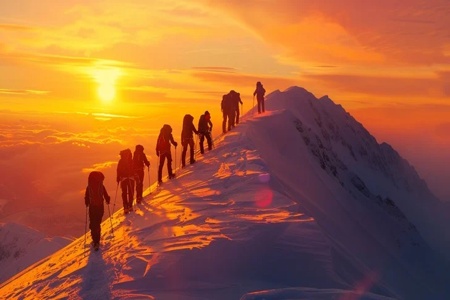
Summit night on Mount Kilimanjaro is the final climb from high camp to Uhuru Peak, the highest point in Africa at 5,895 m (19,341 ft). It usually starts around midnight, and for many climbers it is the hardest part of the trek: freezing air, steep volcanic ground and less oxygen in every breath, after several days of walking.
These 12 tips come from guiding climbers through summit night. I have checked the medical points against the CDC Yellow Book and Wilderness Medical Society guidance listed under Sources. If you are still deciding whether the climb suits you, start with how hard Kilimanjaro really is.
Kilimanjaro summit night at a glance
| Fact | Typical value (approximate, varies by route, season and climber) |
|---|---|
| Summit | Uhuru Peak, 5,895 m (19,341 ft), the highest point in Africa |
| High camp on Barafu routes | Barafu Camp, about 4,600 to 4,700 m |
| Our usual Barafu plan | Wake-up 11:00 pm, tea, coffee and biscuits at 11:30 pm, departure around midnight |
| Barafu to Stella Point | About 5 hours |
| Barafu to Uhuru Peak | About 6 hours at a normal pace, about 7 hours if you are slower |
| From Kibo Hut (Marangu and Rongai) | About 5 hours to Gilman’s Point, about 1 hour more to Stella Point and about 1 hour more to Uhuru Peak, around 7 hours in total |
| Whole summit day on Barafu routes | About 12 to 15 hours from the midnight start to Millennium Camp, or 15 to 18 hours to Mweka Camp, rest included |
| Temperature | In my experience Stella Point is around −15°C on summit night, and wind makes it feel colder. It varies with the season and the weather. |
| Technical skills | None needed on the standard trekking routes |
| First response to serious altitude illness | Stop ascending and descend |
What makes Kilimanjaro summit night so difficult?
Four demanding conditions combine on summit night:
- Less oxygen per breath. Atmospheric pressure at the summit is roughly half that at sea level. Oxygen still makes up about 21% of the air, but the lower pressure means less of it is available with each breath. The CDC Yellow Book names the lower oxygen pressure as the main concern at altitude.
- Cold. Temperatures can fall well below freezing, and strong wind or damp clothing increases heat loss.
- Fatigue. You start after several days of trekking, usually with limited sleep.
- Terrain. From Barafu Camp the trail climbs loose volcanic scree towards the crater rim, which takes steady footing and a lot of energy.
The standard trekking routes are non-technical, so you do not need ropes or specialized climbing techniques. Reaching nearly 6,000 m is still a serious high-altitude challenge, and summit success is never guaranteed, whatever your fitness or previous mountain experience.
Kilimanjaro summit-night timeline: our usual Kili Quests schedule
At Kili Quests, summit-night preparation at Barafu Camp begins around 11:00 pm, when we wake you so you have time to dress and prepare your equipment. Around 11:30 pm you gather in the dining tent for tea, coffee and biscuits, and we normally leave around midnight. Midnight is the usual start, but the departure time can vary depending on the group, the weather and our guiding team’s assessment. Sometimes we recommend leaving at 1:00 or 2:00 am, decided together with the group. The aim is a safe, manageable pace, not reaching the summit at a particular time.
| When | Stage | What to expect |
|---|---|---|
| 11:00 pm | Wake-up | Dress and prepare your equipment. |
| 11:30 pm | Tea, coffee and biscuits | Gather in the dining tent. |
| Around midnight | Departure from Barafu Camp | Start at a slow, steady pace while the guides watch each climber. |
| About 5 hours later | Stella Point | You reach the crater rim. |
| About 6 to 7 hours later | Uhuru Peak | A brief stay, set by the conditions and your guide. |
| 3 to 4 hours after the summit | Back at Barafu Camp | Rest for 1 to 2 hours. |
| Afterwards | Descent to a lower camp | About 2 hours to Millennium Camp or about 5 hours to Mweka Camp. |
These are approximate timings from our usual itineraries. Actual walking times vary depending on weather, trail conditions, group pace and each climber’s condition, and worsening symptoms can change the plan or require an early descent.
Marangu and Rongai climbers start from Kibo Hut instead of Barafu. The walk takes about 5 hours to Gilman’s Point, about 1 hour more to Stella Point and about 1 hour more to Uhuru Peak. Coming back from Uhuru Peak to Kibo takes about 2.5 to 3 hours, and on our Rongai itinerary the whole day from Kibo to Uhuru Peak and down to Horombo takes 12 to 14 hours. For the days before summit night, see our guide to how to acclimatize on Kilimanjaro.
Stella Point, Gilman’s Point and Uhuru Peak: what is the difference?
Uhuru Peak (5,895 m) is the true summit of Mount Kilimanjaro and the highest point in Africa. Stella Point (5,756 m) and Gilman’s Point (5,685 m) are lower landmarks on the crater rim. Climbers coming from Barafu Camp reach Stella Point first, while Marangu and Rongai climbers commonly reach Gilman’s Point.
Reaching the rim is a major achievement, but you still have a demanding walk at very high altitude before Uhuru Peak: about 1 to 2 hours from Stella Point on Barafu itineraries, and some climbers need longer. Read the history in what Uhuru Peak means.
12 Kilimanjaro summit night tips from a local guide
These tips follow the order of your climb, from choosing an itinerary to the descent.
1. Choose an itinerary with time to acclimatize
Summit night starts days earlier, with the route you choose. An itinerary that gains sleeping altitude too quickly increases the risk of altitude illness. The Wilderness Medical Society describes gradually increasing your sleeping altitude as the best prevention (American Family Physician summary). The CDC Yellow Book advises no more than about 500 m of extra sleeping altitude per night above 3,000 m and says that adding extra days can make a trek safer (CDC). No itinerary removes the risk.
Seven- or eight-day Lemosho and seven-day Machame itineraries give more time to adjust than shorter ones, and the Northern Circuit adds more days still. Your ascent profile, health history, weather and personal response matter more than a route name, so compare schedules before you choose the cheapest or shortest option. Our Kilimanjaro routes comparison sets the options side by side.
2. Check your equipment before the climb
At Kili Quests, we inspect clients’ trekking equipment when they arrive, before the mountain climb. This lets us find missing or unsuitable clothing while there is still time to arrange replacements or rentals. We pay particular attention to summit-night clothing, because poor insulation, unsuitable gloves or inadequate footwear become serious problems in the cold.
- A working headlamp and spare batteries, kept warm inside your jacket or sleeping bag
- Proper thermal clothing and an insulated jacket
- Warm gloves or mittens
- Suitable hiking boots and warm socks
- Trekking poles
- Protected drinking water and accessible snacks
- A phone and power bank protected from extreme cold, because cold drains batteries quickly
- Sunglasses and sunscreen for the descent
- Crampons are not part of a normal climb. Icy, slippery conditions are most likely from around mid-January to March and can continue through the rain seasons. We do not supply crampons, so bring a pair or rent one in Moshi before you climb (see our Kilimanjaro gear rental guide). When the path is icy, guides fit them at Stella Point or lower.
Before you leave Barafu Camp, organize everything so you do not have to search through your backpack in the dark. For the full equipment list, see our Kilimanjaro packing list.
3. Rest before summit night, even if you cannot sleep
Summit night normally begins after a short rest at high camp, but many climbers find it hard to sleep. Excitement, anxiety, cold and altitude can all play a part. When we reach camp early enough, we encourage climbers to rest or take an afternoon nap, particularly after a poor night’s sleep. At Barafu, lie down and rest even if sleep does not come, and prepare your equipment before you lie down.
Avoid alcohol and opiates to help you sleep at altitude, because they depress breathing (CDC Yellow Book), and talk to a clinician who understands high-altitude travel before you take any sleeping medicine. If you develop a worsening headache, nausea or other symptoms before departure, tell your guide. Hiding symptoms to avoid missing the summit puts your health at risk.
A fit climber who vomited on summit night
I have guided a physically fit climber who kept a good pace throughout the trek and had no complaints about sore muscles. He had struggled to sleep at altitude, and on summit night, as we gained height, he felt nauseous and began vomiting. The altitude was the main cause, and the lack of sleep made it worse. After vomiting he felt better and was able to continue to the summit. That alone did not establish that it was safe to continue, and his condition had to be assessed as the climb progressed. His fitness did not protect him from the altitude, which is why we ask every climber to walk pole pole, however fit they are.
4. Wear the right layers without overheating
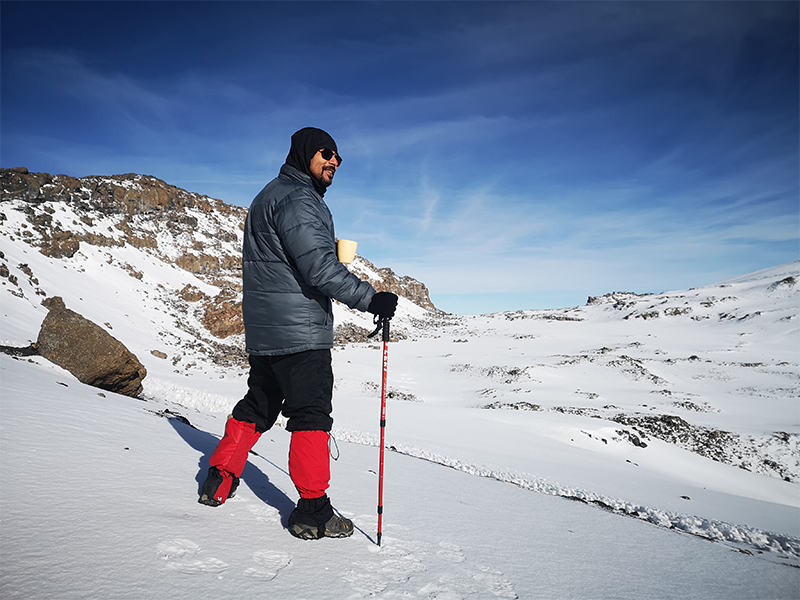
Overdressing before leaving high camp is a mistake I see often. Some climbers put on almost every warm layer they own because they expect severe cold, but walking uphill generates heat. Too many layers lead to heavy sweating, and damp clothing then increases heat loss at rest stops or in strong wind. I normally recommend inner thermal layers, with outer clothing adjusted to the conditions and extra warm clothing kept easy to reach in your backpack.
- Moisture-wicking thermal base layers
- An insulating fleece or other mid-layer
- A warm insulated or down jacket
- A windproof and waterproof outer shell, with suitable warm trousers
- Insulated gloves or mittens
- Warm socks and well-fitting boots
- A warm hat, neck protection and a balaclava
In my experience Stella Point is around −15°C on summit night, and wind makes it feel colder. Temperatures vary with the season and the weather, so pack for the coldest part of the night, not the average. Our Kilimanjaro night temperature guide shows how cold each camp gets. The goal is to stay warm without sweating heavily.

When a climber struggles with cold, my first questions are whether they have suitable clothing and whether their layers have become damp. I help them adjust clothing or add insulation when appropriate. Gentle movement of the hands and fingers can help comfort, but it is not a treatment for hypothermia or frostbite. Persistent numbness, severe shivering, confusion, reduced coordination or unusual drowsiness need serious attention, so tell your guide early.
5. Protect your water from freezing
Frozen water bottles are a real problem I have met on summit attempts. At Kili Quests, we sometimes provide slightly warm water before departure and advise clients to protect their bottles from freezing. I also recommend two practical tricks:
- Put the bottle inside an extra sock for some insulation.
- Pack it upside down. Ice often begins forming near the exposed water surface, so keeping the cap downward may keep the opening usable for longer.
Neither method guarantees that water stays liquid, so insulated bottles and protection from direct exposure still matter. Hydration-bladder hoses are particularly vulnerable to freezing.
Keep drinking regularly in small amounts, according to thirst and conditions, rather than forcing large volumes, because overhydration can cause dangerously low blood sodium. Warm water or tea can provide comfort, but it is not a treatment for altitude sickness.
6. Eat small snacks, even when your appetite is reduced
Many climbers lose their appetite at altitude. Before we leave Barafu Camp we offer tea, coffee and biscuits, and I encourage climbers to eat what they comfortably can. On the climb itself, small snacks are easier to manage than a large meal. Chocolate, nuts, energy bars and familiar snacks that open easily with gloves on all work. Keep food accessible rather than buried in your backpack, because some foods become very hard in freezing temperatures.
Nausea, vomiting and persistent loss of appetite can also be symptoms of altitude illness. If they develop or worsen, tell your guide instead of assuming you simply need more food. See what food is served on Kilimanjaro.
7. Walk slowly: follow the “pole pole” principle
One of the most common mistakes I see on summit night is walking too fast. Some climbers feel strong leaving Barafu Camp and try to hold a fast pace straight away, but summit night is an endurance challenge. On Kilimanjaro we use the Swahili expression “pole pole,” meaning “slowly, slowly.” A steady pace conserves energy and reduces unnecessary exertion.
As a guide, I ask climbers to follow the pace set by our team instead of trying to overtake other groups. If someone becomes unusually tired or breathes much harder than expected, we talk with them and assess their condition.
Slow walking alone does not prevent altitude sickness. Your overall ascent profile and your individual acclimatization remain important, and the CDC states that training and physical fitness do not affect your risk. My advice: start at a sustainable pace, communicate honestly with your guide and do not treat summit night like a race.
8. Watch your breathing and changes in behavior
At high altitude, reduced atmospheric pressure makes walking more demanding. You may breathe faster than normal, and even short uphill sections can take considerable effort. A steady breathing rhythm can help you manage your pace, but it does not prevent or treat altitude sickness.
As a guide, I watch how climbers breathe, walk, speak and respond during the ascent. We normally spend several days with our clients before summit night, so we learn their usual behavior. Some people are talkative and others quiet. If a client who has been cheerful and chatty suddenly becomes withdrawn, confused or hard to engage, we take that change seriously. It does not automatically prove altitude illness, but it signals that further assessment may be needed.
Breathlessness at rest, worsening breathing problems, confusion or poor coordination need immediate attention.
9. Ask for help early when you are exhausted
During one summit attempt, I helped a client who was struggling with exhaustion and looked unusually tired and overwhelmed. One practical concern was the load being carried, so I reduced the weight of their backpack to save energy. We also gave them time to rest and offered water and hot tea.
Helping with a backpack or providing tea is not a treatment for altitude illness. The guide’s real responsibility is to assess the person’s condition and tell ordinary exertion apart from symptoms that need medical action. If a climber develops worsening headache, nausea, unusual breathing, confusion or loss of coordination, we must consider altitude illness. My advice: tell your guide when you begin struggling, and do not wait until exhaustion becomes overwhelming.
10. Know the warning signs of altitude sickness
Altitude illness is one of the most important safety concerns on Kilimanjaro, and it can affect fit and experienced climbers as well as beginners. This section is general information from the CDC Yellow Book, not medical advice.
Symptoms to report
- A new or worsening headache
- Nausea or vomiting
- Unusual fatigue or dizziness
- Loss of appetite together with other symptoms
- Changes in breathing or physical condition
A headache with nausea, fatigue, dizziness or loss of appetite may be acute mountain sickness (AMS). Do not read these symptoms as proof that your body is acclimatizing well. Do not keep ascending with suspected AMS until your guide has assessed you. Guidelines advise against moving to a higher sleeping altitude while AMS symptoms are present, and worsening symptoms mean descent.
Serious warning signs
- Confusion, unusual behavior or reduced alertness
- Inability to walk normally, or loss of balance or coordination
- Breathlessness at rest
- A worsening cough with breathing difficulty
Stop ascending, arrange descent and get medical assistance. These signs may indicate high-altitude cerebral edema (HACE), high-altitude pulmonary edema (HAPE) or another serious condition, and they are life-threatening emergencies. Descent is the most important treatment (Wilderness Medical Society summary). Emergency oxygen and medical treatment may be used when available, but they must not delay descent.
Can ginger tea or medication treat altitude sickness?
Warm ginger water or tea may be comforting, but ginger tea is not an established treatment for altitude sickness. Nausea, vomiting and headache at altitude must be assessed, not simply masked. Anti-nausea medication can be medically appropriate, but treating nausea does not prove it is safe to ascend. Acetazolamide (Diamox) has a recognized role in preventing altitude illness and aiding acclimatization in appropriate circumstances. Discuss altitude medication with a qualified clinician before the trip, and do not start, share or stop medication on the mountain without medical advice. For more detail, see our guide to altitude sickness on Kilimanjaro.
11. Trust your guide and respect a decision to descend
During the trek, our guides talk with climbers about how they feel. On every Kili Quests climb we carry a first-aid kit and an oxygen cylinder, and we check your oxygen saturation with a pulse oximeter twice a day, in the morning and after dinner, and again if you feel unwell. A reading is only one piece of information. The CDC notes that oxygen saturation is usually normal for the altitude, or only slightly low, in acute mountain sickness, so a normal reading does not guarantee that someone is safe to continue.
What Kili Quests guides watch for on summit night
- Breathing, movement, coordination and alertness. By summit night we have spent several days with the group, so we know each person’s normal pace, communication style and behavior.
- Symptoms you describe. We listen carefully, so tell us.
- Oxygen saturation, as one piece of information. It is considered alongside the whole picture.
When symptoms suggest serious altitude illness, the summit attempt stops, and urgent descent and medical assistance take priority. Our emergency oxygen does not replace descent or appropriate medical care. If a climber has to go down on foot, one Kili Quests guide and two porters go with them while the rest of the team stays with the group. Our guide to whether climbing Kilimanjaro is dangerous explains how risk is managed on the mountain.
A stomach problem that began before the climb
On another summit night, a client told me at Barafu that she had diarrhoea and had taken Imodium so she could still attempt the summit. We slept, woke at midnight as usual and began the climb. Around 5,000 m the stomach pain became severe and she needed too many toilet breaks. I advised her that we needed to go back, because it could get worse if we continued. Diarrhoea and stomach pain can lead to dehydration and become harder to manage at altitude. Medication should not be used simply to hide symptoms so that someone can keep climbing. Always tell your guide about stomach problems before summit night.
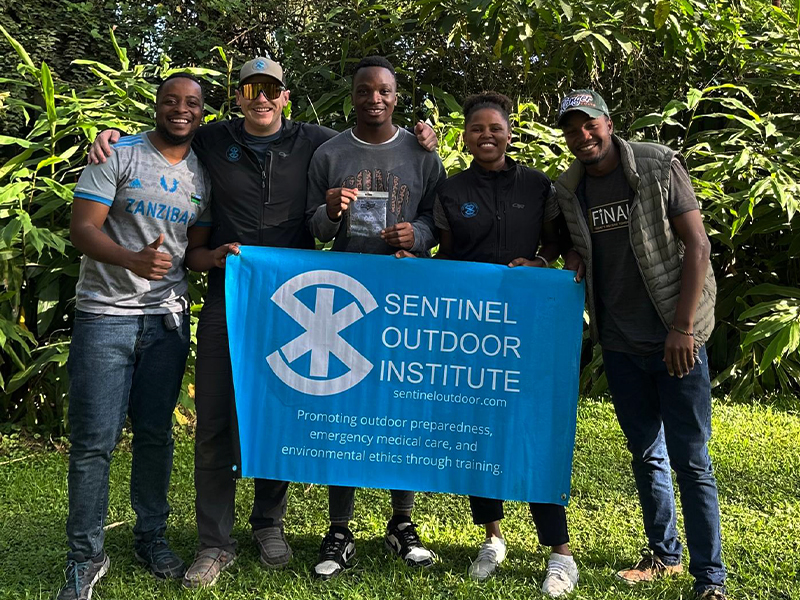
Given Minja, the Kilimanjaro guide who wrote this article, and Daniel Munuo, a Kili Quests guide, each completed Sentinel Outdoor Institute’s 80-hour Wilderness First Responder course and a Sentinel Outdoor Institute CPR course based on American Heart Association Hands-Only CPR guidelines.
One principle I follow is that a client’s life is more important than reaching Uhuru Peak. I remind climbers that they are someone’s father, mother, husband, wife or other loved one, and their families expect them home safely. If continuing becomes dangerous, I will tell a climber that we must descend, even when we are close to the summit. No achievement is worth risking someone’s life. If you have a medical condition or a history of altitude illness, discuss it with your doctor before you travel instead of relying on mountain checks to resolve it.
12. Prepare for the descent, not just the summit
Reaching Uhuru Peak is an emotional achievement, but summit day does not end at the summit sign. You still have to descend steep, sometimes loose terrain, with tired legs and reduced concentration. A brief stay at Uhuru Peak is generally sensible, and the actual time should depend on the weather and your guide’s safety assessment.
- Follow your guide’s instructions.
- Use trekking poles when appropriate and watch your footing on loose volcanic ground.
- Take suitable rest breaks, and keep eating and drinking as needed.
- Protect your skin and eyes from the sun.
- Report new or worsening symptoms immediately.
Descending to a lower altitude can also help when altitude-related symptoms develop. The summit is an important achievement, but returning safely is essential. For what to expect on the way down, read our guide to descending Kilimanjaro.
Frequently asked questions about Kilimanjaro summit night
How difficult is Kilimanjaro summit night?
Summit night is often the hardest part of climbing Kilimanjaro, because of altitude, severe cold, fatigue and steep terrain. The standard routes do not need technical mountaineering skills, but reaching the summit takes good preparation, a suitable acclimatization schedule and honest communication with your guide. Summit success is never guaranteed.
How long does it take to reach Uhuru Peak on summit night?
On our usual Barafu Camp plan you leave around midnight, reach Stella Point after about 5 hours and Uhuru Peak after about 6 hours at a normal pace, or about 7 if you are slower. The whole summit day lasts about 12 to 15 hours to Millennium Camp or 15 to 18 hours to Mweka Camp, rest included. From Kibo Hut on Marangu and Rongai the climb to Uhuru Peak takes about 7 hours. These are approximate timings, and weather, pace and your condition change them.
How cold is Kilimanjaro summit night?
In my experience Stella Point is around −15°C on summit night, and wind makes it feel colder still. Conditions depend on the season and the weather. Plan a full layering system with protection for your hands, feet and face, and follow your guide’s advice on the day.
What should I do if I feel unwell during summit night?
Tell your guide immediately. Do not keep ascending with suspected altitude illness until your guide has assessed you. Serious warning signs, including confusion, poor coordination and breathlessness at rest, mean stopping the ascent and arranging urgent descent and medical assistance. Descent is the first response to serious altitude illness.
Can beginners reach Uhuru Peak?
Yes. Kilimanjaro’s standard trekking routes do not need technical climbing skills, so beginners do reach the summit. They still need suitable physical preparation, an itinerary with enough time to acclimatize and an understanding of altitude risks. No route or training plan guarantees a summit.
Planning your Kilimanjaro summit attempt?
Share your preferred dates, the route you have in mind, how many of you are climbing, your hiking experience and any time you have spent above 3,000 m, and we will suggest a realistic itinerary and tell you honestly if we think you need more days. No operator can guarantee a summit.
About the author
Given Minja is a Kilimanjaro guide at Kili Quests in Moshi, Tanzania, with more than eight years of guiding experience and 64 personal summits of Mount Kilimanjaro. He completed Sentinel Outdoor Institute’s 80-hour Wilderness First Responder course and CPR training. His work includes supporting climbers on summit attempts, checking equipment and watching for changes in climbers’ condition.
Sources
- CDC Yellow Book, High-Altitude Travel and Altitude Illness
- Wilderness Medical Society, Clinical Practice Guidelines for the Prevention, Diagnosis, and Treatment of Acute Altitude Illness: 2024 Update
- American Family Physician, Acute Altitude Illness: Updated Prevention and Treatment Guidelines from the Wilderness Medical Society
This article gives general trekking and altitude-safety information, not individual medical advice. Consult a qualified healthcare professional before high-altitude travel, particularly if you have a medical condition or a history of altitude illness. Timings and temperatures are typical estimates and vary with season, weather and route.
Keep planning your climb