bahsegel

Türkiye’de adını duyuran bahsegel güvenilir yapısıyla fark yaratıyor.

bahsegel giriş

Canlı krupiyeli oyunların iade oranı (RTP) ortalama %98,3’tür; bu, slot oyunlarından yaklaşık %2 daha yüksektir ve paribahis giriş’te oyuncular bu avantajdan yararlanır.

bahsegel giriş bahsegel bahsegel giriş bettilt bahsegel-official.link bettilt bettilt bettilt bettilt bahsegel giriş bahsegel bahsegel bettilt bahsegel bahsegel bahsegel giriş

Bahis endüstrisinde ortalama RTP oranı %96’dır; bettilt giriş slot oyunlarında bu oranı %98’e kadar çıkarıyor.

Kilimanjaro Medicines List: What to Bring for Altitude

Stay Safe on Kilimanjaro

Your health is key to reaching the summit safely.

Plan Your Kilimanjaro Climb

Good preparation makes your climb safer and easier.

OUR CATEGORIES

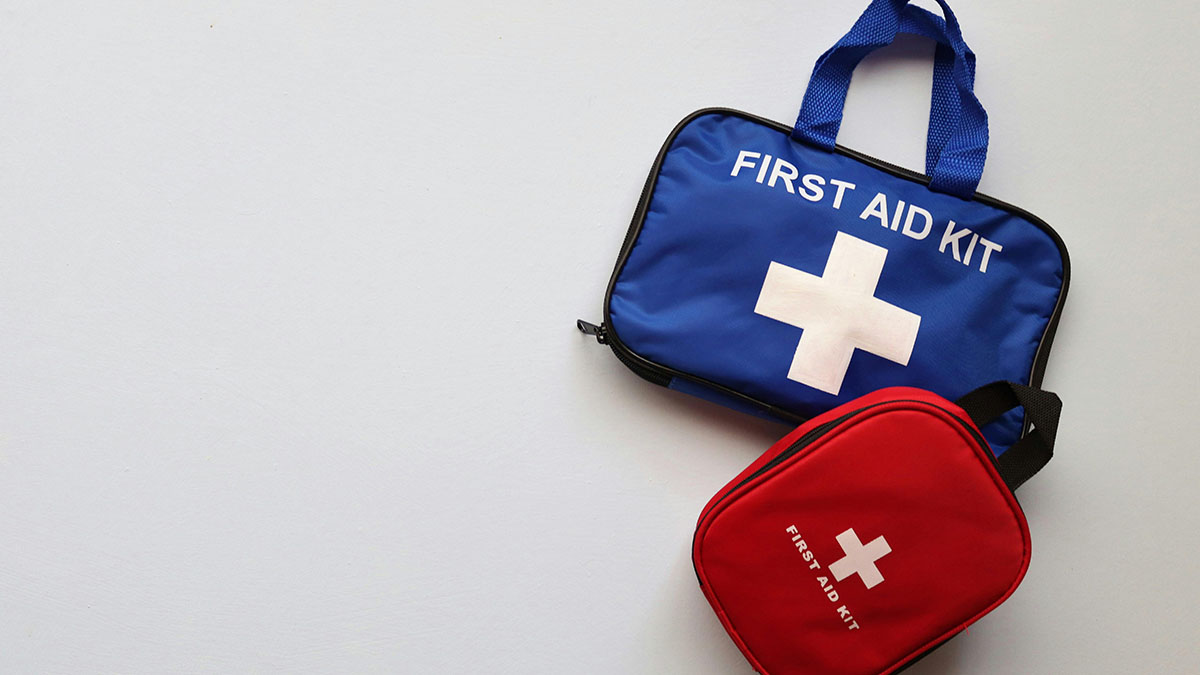
Kilimanjaro Medicine Kit: What to Bring

Climbing Mount Kilimanjaro is a high-altitude trek, so your health preparation matters as much as your fitness. Cold temperatures, long hiking days, lower oxygen levels, dehydration, and poor sleep can all affect how your body performs on the mountain.
 
A good Kilimanjaro medicine kit should help you manage common trail problems such as mild headaches, stomach issues, blisters, allergies, and personal health needs. But medicine should never be used to hide serious altitude symptoms or push through danger signs.
 
Before your climb, speak with a doctor or travel clinic about altitude medication, malaria prevention, personal prescriptions, and any health condition that could affect your trek. You should also understand how altitude affects your body on Kilimanjaro and why proper acclimatization is one of the most important parts of a safe climb.

Quick Answer: What Medicines Should You Bring for Kilimanjaro?

For Kilimanjaro, most climbers prepare a small personal medicine kit with items for altitude concerns, mild pain, nausea, stomach problems, diarrhea, blisters, allergies, hydration support, and personal prescriptions.
 
Altitude medication such as acetazolamide is commonly discussed for high-altitude travel, but it should only be used after advice from a doctor or travel clinic. Medicine does not replace proper acclimatization, slow pacing, hydration, guide monitoring, or descent when symptoms become serious.
 
 The CDC describes acetazolamide as a medicine that can help speed acclimatization in some altitude-risk situations, but prevention still depends heavily on proper ascent planning.
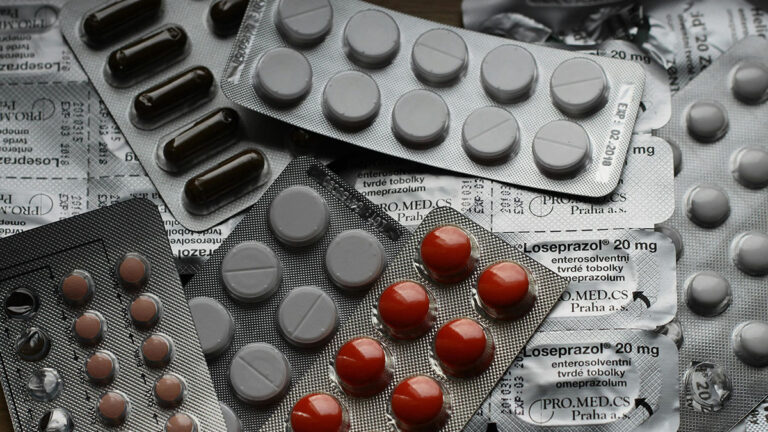
Painkiller carried for use during the climb

Table of Contents

Important Medical Note Before Your Kilimanjaro Climb

This guide is for general planning only. It does not replace advice from a qualified doctor, pharmacist, or travel clinic.
 
Every climber has different health needs, allergies, medication history, and altitude risk. Before traveling to Tanzania, ask a medical professional about altitude sickness prevention, malaria prevention, vaccines, personal prescriptions, and any condition that could affect your climb.
 
Never use medicine to hide worsening altitude symptoms and continue climbing. Headache, nausea, tiredness, dizziness, appetite loss, and sleep problems can be signs of altitude sickness, and symptoms can become serious if ignored.

Kilimanjaro Medicine Kit Overview

Item Why It May Help Important Note
Altitude medication May help some climbers with altitude acclimatization. Discuss with a doctor before your climb.
Pain relief May help with mild headaches, muscle aches, or general discomfort. Do not use painkillers to ignore worsening altitude symptoms.
Anti-nausea medicine May help with nausea or dizziness. Ask a doctor what is safe for you.
Diarrhea treatment Useful for travel-related stomach problems. Severe diarrhea can cause dehydration and should be treated seriously.
Electrolytes Help replace salts lost through sweating, diarrhea, or low appetite. Useful support, but not a cure for altitude sickness.
Blister care Helps protect feet during long trekking days. Pack blister plasters, tape, and basic wound care items.
Allergy medicine May help with mild allergies, dust, or irritation. Bring your usual allergy medicine if you normally use it.
Personal prescriptions Essential for existing medical conditions. Carry enough for the whole trip, plus extra days if possible.

Altitude Medication for Kilimanjaro

Altitude sickness is one of the main health concerns on Kilimanjaro. The best protection is a good route choice, slow pacing, proper acclimatization, hydration, rest, and honest communication with your guide.
 
Some climbers discuss altitude medication such as acetazolamide with a doctor before the climb. This medicine may help the body adjust to altitude, but it is not suitable for everyone and should not be taken without medical advice.
 
Medication should never be treated as permission to rush the mountain. If symptoms become worse, the safest response may be rest, monitoring, or descent.

Pain Relief, Nausea, and Stomach Medicine

Many climbers carry basic medicine for mild headaches, muscle aches, nausea, or stomach discomfort. These items can be helpful, but they must be used carefully.
 
A headache can be a normal discomfort, but it can also be an early altitude symptom. Nausea, vomiting, dizziness, loss of appetite, unusual fatigue, and poor sleep should not be ignored. Tell your guide early if symptoms appear.
 
Do not test new medicine for the first time on the mountain unless your doctor has advised it.

Personal Medication and Prescriptions

 If you use regular medication, bring enough for the full trip plus extra in case of travel delays. This may include asthma inhalers, allergy medicine, diabetes medication, blood pressure medicine, or any other prescribed treatment.
 
Keep important medication in your daypack, not only in your duffel bag. You should also carry a doctor’s note or prescription copy if you travel with controlled or important medication.

First Aid Items for Kilimanjaro

Your guides should carry a mountain first aid kit, but climbers should still bring a small personal kit for minor issues.
 
Useful personal items include blister pads, bandages, antiseptic wipes, medical tape, lip balm, sunscreen, hand sanitizer, and any personal items you normally use for small injuries or irritation.
 
For a full gear list, read our Kilimanjaro packing list.
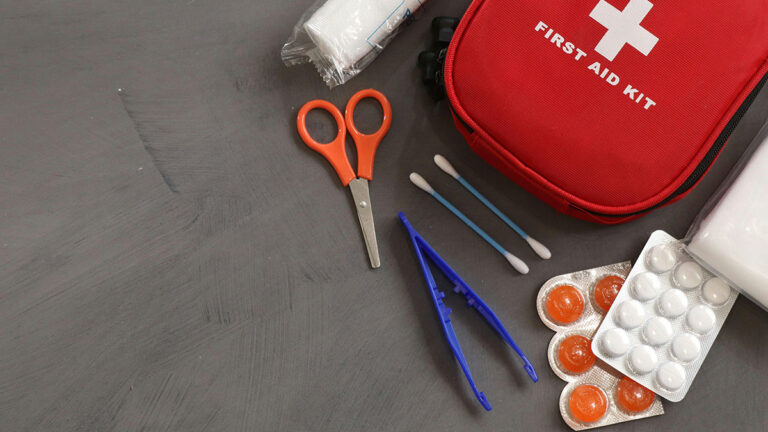
Essential first aid supplies for mountain safety.

Hydration, Sun Protection, and Recovery

Health on Kilimanjaro is not only about medicine. Hydration, food, sleep, warmth, and sun protection all matter.
 
Drink regularly, eat even when your appetite drops, protect your skin and eyes from strong sun, and keep warm at night. Avoid alcohol before and during the climb because it can affect hydration, sleep, and recovery.
 
Electrolytes can help support hydration, especially if you are sweating heavily or have stomach problems, but they do not prevent altitude sickness by themselves.

Altitude Warning Signs

Tell your guide if you notice headache, nausea, vomiting, dizziness, unusual tiredness, loss of appetite, or difficulty sleeping. These are common altitude sickness symptoms and should be monitored carefully.
 
More serious warning signs include confusion, difficulty walking, severe breathlessness, chest pain, or worsening symptoms that do not improve. CDC adventure travel guidance notes that mental status changes and loss of coordination can be warning signs of high-altitude cerebral edema, while breathlessness at rest can be a sign of life-threatening high-altitude pulmonary edema.

Malaria Medication and Travel Health

Kilimanjaro’s higher elevations are not the same as Tanzania’s lower-elevation regions. Many travelers spend time in Moshi, Arusha, safari parks, Zanzibar, or Dar es Salaam before or after the climb.
 
The CDC recommends that travelers going to certain areas of Tanzania take prescription medicine to prevent malaria, and it lists malaria transmission in areas below 1,800 meters / 5,900 feet. Speak with a doctor or travel clinic before your trip so you know what is right for your itinerary.

When to Seek Medical Help on the Mountain

Tell your guide immediately if symptoms become stronger or do not improve with rest. Do not wait until symptoms are severe.

Important warning signs include:
  1. worsening headache
  2. repeated vomiting
  3. confusion or unusual behavior
  4. difficulty walking straight
  5. severe weakness
  6. chest pain
  7. breathlessness at rest
  8. blue lips or fingers

On Kilimanjaro, your guide’s decision matters. If your symptoms suggest serious altitude illness, the safest option may be to stop climbing, rest, or descend. Medicine should never be used to push through dangerous symptoms.

What Not to Do With Medicine on Kilimanjaro

Medicine can support your climb, but it should never be used to ignore serious symptoms or force your body higher when it is struggling with altitude.
 
Avoid these mistakes:
  1. Do not take unfamiliar medicine for the first time on the mountain.
  2. Do not use painkillers to hide a worsening altitude headache.
  3. Do not continue climbing if symptoms become stronger.
  4. Do not mix medications without medical advice.
  5. Do not rely on medicine instead of proper acclimatization.
  6. Do not ignore your guide’s recommendation to rest or descend.
The safest Kilimanjaro climb depends on preparation, slow pacing, honest symptom reporting, and good guide decisions. Medicine is only one part of the safety plan.

Frequently Asked Questions About Kilimanjaro Medicines

What medicines should I bring for Kilimanjaro?

Most climbers prepare a small personal medicine kit with items for altitude concerns, mild pain, nausea, stomach problems, diarrhea, blisters, allergies, hydration support, and personal prescriptions. Speak with a doctor before taking altitude medication, malaria medication, antibiotics, or unfamiliar medicine.

Do I need Diamox for Kilimanjaro?

Not every climber uses Diamox, which is a brand name for acetazolamide. Some climbers discuss it with a doctor because it may help with altitude acclimatization, but it is not suitable for everyone and should not replace a good route choice, slow pacing, and proper acclimatization.

Should I bring painkillers for Kilimanjaro?

Many climbers bring basic pain relief for mild headaches or muscle aches. However, painkillers should not be used to hide worsening altitude symptoms. If a headache becomes stronger or comes with nausea, dizziness, vomiting, weakness, or confusion, tell your guide immediately.

Should I bring painkillers for Kilimanjaro?

Many climbers bring basic pain relief for mild headaches or muscle aches. However, painkillers should not be used to hide worsening altitude symptoms. If a headache becomes stronger or comes with nausea, dizziness, vomiting, weakness, or confusion, tell your guide immediately.

Do I need malaria tablets for Kilimanjaro?

You may need malaria prevention medicine for Tanzania, especially if your trip includes lower-elevation areas before or after the climb. Speak with a doctor or travel clinic before traveling so your malaria plan matches your full itinerary.

What medicine should I avoid on Kilimanjaro?

Avoid taking unfamiliar medicine for the first time on the mountain unless your doctor has approved it. Also avoid using medication to push through serious symptoms such as worsening headache, repeated vomiting, confusion, difficulty walking, severe weakness, or breathlessness at rest.

Climb Kilimanjaro with Better Health Preparation

Your medicine kit is only one part of a safe Kilimanjaro climb. Route choice, acclimatization, guide support, hydration, nutrition, warm gear, and honest symptom reporting all matter.
 
At Kili Quests, we help climbers prepare with realistic route advice, experienced local guides, daily health monitoring, and clear safety support on the mountain.
 
Contact us today to plan your Kilimanjaro climb with a team that takes health and safety seriously.

Related Articles
How to Acclimatize on Kilimanjaro: Routes, Pace & Tips

Plan Your Kilimanjaro Climb Safely

Altitude is the biggest challenge on Kilimanjaro ,the right route and preparation can make the difference between turning back and reaching the summit.

Choose Your Route

Your acclimatization depends on your route choice. Explore the best Kilimanjaro routes for your goals.

OUR CATEGORIES

How to Acclimatize on Kilimanjaro: Routes, Pace & Tips

Climbing Mount Kilimanjaro is not only a test of fitness. It is a test of how well your body adapts to altitude. The summit rises to 5,895 meters / 19,341 feet, where oxygen levels are much lower than at sea level, so proper acclimatization is one of the most important parts of a safe and successful climb.

Acclimatization means giving your body enough time to adjust as you climb higher. On Kilimanjaro, this depends on your route, number of days, walking pace, rest, hydration, nutrition, and how honestly you report symptoms to your guide.

This guide explains how to acclimatize on Kilimanjaro using practical mountain strategies such as choosing the right route, walking slowly, following the climb-high-sleep-low principle, drinking enough water, eating properly, and listening to your guide. For symptoms, danger signs, oxygen, and descent decisions, read Altitude Sickness on Kilimanjaro.

Quick Answer: How Do You Acclimatize on Kilimanjaro?

The best way to acclimatize on Kilimanjaro is to choose a route with enough days, walk slowly from the beginning, follow the climb-high-sleep-low principle, drink water regularly, eat enough food, rest properly, and report symptoms early to your guide.
 
For most climbers, 7 to 9 days gives the body better time to adjust than a short 5 or 6-day climb. Longer routes such as Lemosho and Northern Circuit usually provide stronger acclimatization profiles because they allow a more gradual approach to higher altitude.
 
Strong acclimatization does not guarantee the summit, but it gives your body a better chance to adapt before summit night.
Acclimatization Strategy What It Means Why It Helps
Choose enough days Pick a route with more time on the mountain. More days give your body more time to adjust to altitude.
Walk slowly Follow a steady “pole pole” pace from the first day. A slower pace reduces stress on your body as elevation increases.
Climb high, sleep low Ascend higher during the day, then sleep lower when the route allows. This exposes your body to altitude while giving it recovery time overnight.
Hydrate and eat well Drink regularly and eat enough even when appetite drops. Good hydration and nutrition support energy, recovery, and adjustment.
Listen to your guide Report symptoms early and follow safety advice. Guides can adjust pace, monitor your condition, and respond early.
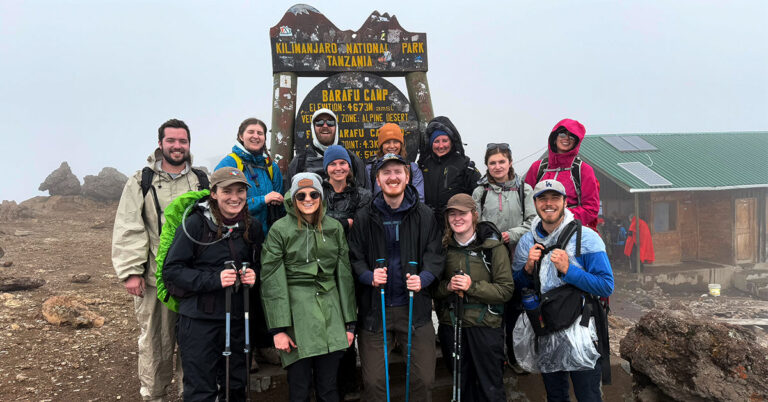
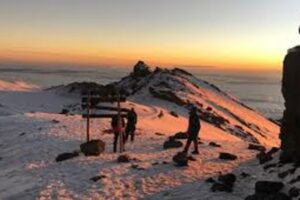
Arrival at Barafu Camp — the final base before the summit push

Understanding Acclimatization: What You Need to Know

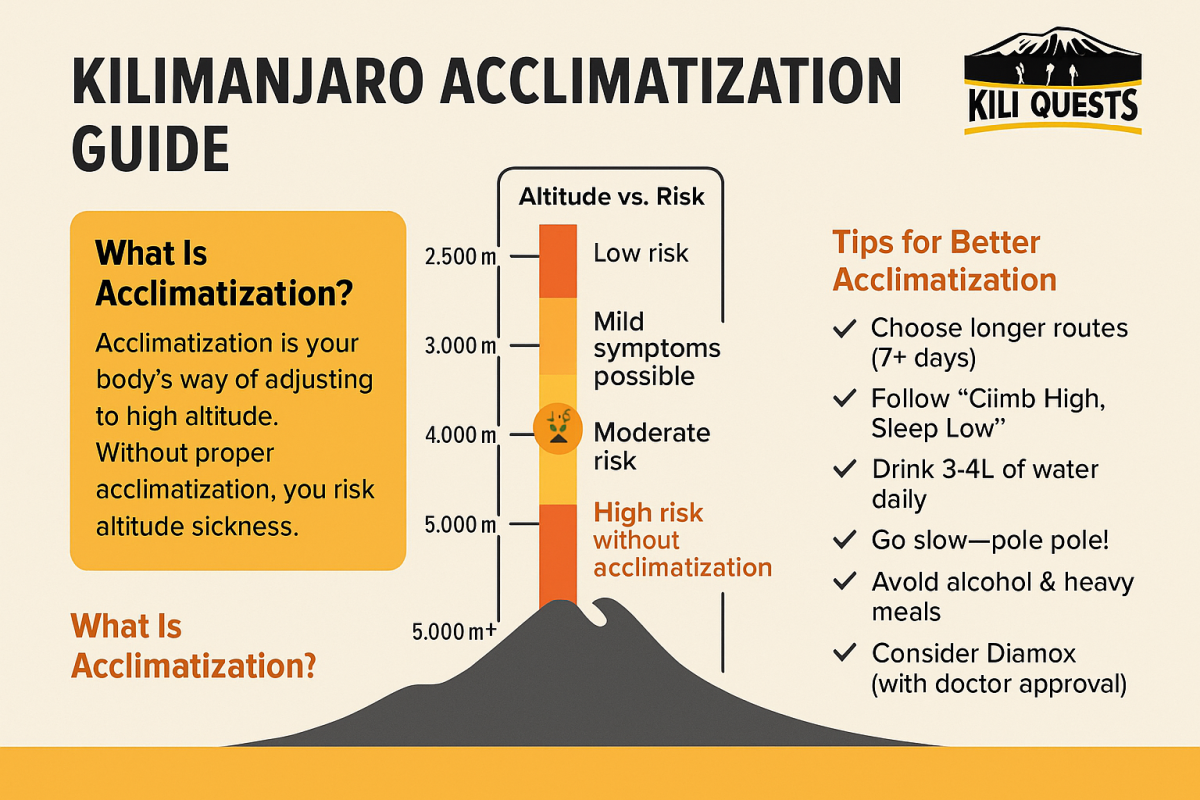
Kilimanjaro acclimatization guide infographic showing altitude risks and tips for avoiding altitude sickness on the climb
Acclimatization on Kilimanjaro – Understanding altitude and adjusting gradually is the key to reaching Uhuru Peak safely.

Table of Contents

What Is Acclimatization on Kilimanjaro?

Acclimatization is the process your body goes through as it adjusts to lower oxygen levels at high altitude. As you climb Kilimanjaro, the air becomes thinner and your body has to work harder to deliver oxygen to your muscles and brain.
 
Good acclimatization does not happen by rushing. It happens gradually through slow walking, steady altitude gain, enough rest, proper hydration, and enough days on the mountain. This is why the route and itinerary you choose matter so much.
 
On Kilimanjaro, poor acclimatization can lead to headaches, nausea, dizziness, fatigue, poor sleep, and more serious altitude problems. For a full explanation of symptoms and safety response, read Altitude Sickness on Kilimanjaro.

What Happens to Your Body at High Altitude

At high altitude, oxygen levels drop and your body must adapt gradually. If it doesn’t, altitude sickness can occur and affect your ability to continue the climb.
To understand symptoms and risks in detail, read Altitude Sickness on Kilimanjaro.

Why Acclimatization Is Critical for Summit Success

Altitude sickness is the main reason climbers fail to reach the summit. It does not depend on fitness, age, or experience  anyone can be affected.Common symptoms include:
  • Persistent headache
  • Nausea or loss of appetite
  • Fatigue and dizziness
  • Difficulty sleeping
In more serious cases, conditions like High Altitude Pulmonary Edema (HAPE) or High Altitude Cerebral Edema (HACE) can occur, which require immediate descent.
 

Best Acclimatization Strategy for Kilimanjaro

The best acclimatization strategy on Kilimanjaro is simple: choose enough days, walk slowly, gain altitude gradually, rest properly, and let your guide control the pace. The mountain rewards patience, not speed.
A strong acclimatization plan usually includes:
  • Gradual altitude gain
  • A 7 to 9-day itinerary when possible
  • Slow and steady walking from day one
  • Climb-high-sleep-low opportunities
  • Enough food and water each day
  • Daily communication with your guide
  • Rest and recovery before summit night
The goal is not to arrive at camp quickly. The goal is to arrive with enough energy and oxygen adaptation for the next day. This matters most before summit night, when your body is tired and the altitude is highest.
 
If you are still choosing a route, compare the options in Kilimanjaro Routes Comparison: Which Route Is Best?

How to Avoid Altitude Sickness on Kilimanjaro

Strategy What It Means Why It Works
Climb High, Sleep Low Ascend higher during the day, sleep lower Helps your body adapt with less stress
Walk Slowly (Pole Pole) Maintain a slow, steady pace Allows gradual oxygen adaptation
Acclimatization Walks Short hikes above camp after arrival Speeds up adaptation
Hydration & Nutrition Drink 3–4L daily and eat properly Supports recovery and reduces stress

Climb High, Sleep Low

One of the most effective techniques used on Kilimanjaro is the “climb high, sleep low” strategy. During the day, you ascend to a higher elevation, then descend slightly to sleep at a lower altitude.This allows your body to adapt without excessive stress and significantly reduces the risk of altitude sickness. Routes that naturally include this profile tend to have much higher success rates.

Walk Slowly and Maintain a Steady Pace

Speed is not your friend on Kilimanjaro. Moving too quickly reduces your body’s ability to adapt.
  • Walk slowly and consistently
  • Focus on breathing rhythm
  • Avoid rushing to camp
Guides often use the phrase “pole pole” (slowly, slowly) ,and following this advice is one of the most important things you can do.If you’re preparing physically, following a structured Kilimanjaro training plan will help your body handle long trekking days more efficiently.
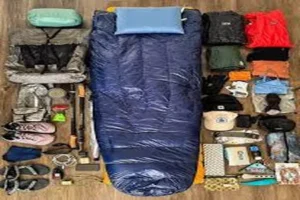
 
Proper physical preparation also plays a role, and following a structured Kilimanjaro training plan can make it easier for your body to adapt during the climb.
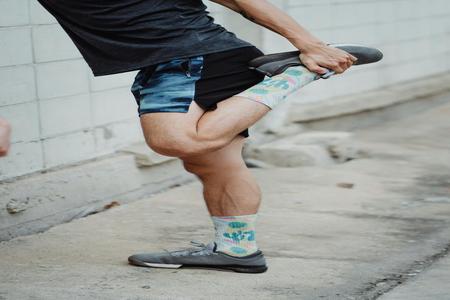
Use Acclimatization Walks at Camp

Short acclimatization hikes after reaching camp are extremely effective. These are usually 100–200 meters above camp and done at a relaxed pace.
These walks:
  • Encourage your body to adapt faster
  • Improve oxygen efficiency
  • Prepare you for the next day’s elevation gain
This strategy is commonly used on well-designed routes and plays a major role in improving summit success.

Stay Hydrated and Eat Properly

Hydration is essential at altitude. As you climb, your body loses fluids more quickly through breathing and exertion.
  • Drink 3–4 liters of water per day
  • Eat high-carbohydrate meals for energy
  • Maintain protein intake for recovery
Poor hydration and nutrition can significantly increase your risk of altitude sickness.

Common Acclimatization Mistakes to Avoid

Many climbers make acclimatization harder by rushing the mountain or choosing the wrong itinerary. These mistakes can increase fatigue and make altitude symptoms more likely.
Avoid these common mistakes:
  • Choosing the shortest route only to save money
  • Walking too fast during the first few days
  • Ignoring headaches, nausea, or dizziness
  • Skipping meals because appetite is low
  • Drinking too little water
  • Not reporting symptoms to your guide
  • Arriving undertrained for long trekking days
  • Choosing a route that does not match your altitude experience
The mountain should not be treated like a race. A slower, better-paced climb gives your body more time to adjust and gives you a stronger chance of reaching summit night in better condition.

Best Kilimanjaro Routes for Acclimatization

Not all Kilimanjaro routes give your body the same amount of time to adjust. Shorter routes may cost less and take fewer days, but they often make altitude harder because the body has less time to adapt.
 
Longer routes usually provide better acclimatization because they spread the altitude gain over more days. For most climbers, this makes the climb feel more manageable and gives better preparation before summit night.
 
The strongest acclimatization routes are usually Lemosho and Northern Circuit. Machame can also be a good option when done over 7 days. Shorter routes like 5-day Marangu or steep routes like Umbwe are usually harder from an altitude perspective.

Best Routes for Acclimatization

The following routes provide the best acclimatization profiles:
Route Recommended Duration Acclimatization Profile Best For
Lemosho Route 7–8 days Gradual western approach with strong altitude adjustment time. First-time climbers who want scenery and better acclimatization.
Northern Circuit Route 8–9+ days Longest route with the most time for gradual adjustment. Climbers who want the strongest acclimatization profile and fewer crowds.
Machame Route 7 days preferred Good climb-high-sleep-low profile when not rushed. Fit climbers who want a scenic, popular, and well-paced route.
Rongai Route 6–7 days More gradual than steep routes, but with fewer climb-high-sleep-low features. Climbers who want a quieter northern approach.
Marangu Route 6 days preferred Can be harder if done too quickly because acclimatization time is limited. Climbers who prefer hut accommodation but still want enough days.
Umbwe Route 6+ days Steep and fast altitude gain, making acclimatization more difficult. Experienced trekkers only.
If acclimatization is your main concern, avoid choosing a route only because it is cheaper or shorter. More days on the mountain often give your body a better chance to adjust. For most first-time climbers, Lemosho, Northern Circuit, or a properly paced 7-day Machame itinerary are stronger choices than short, rushed climbs.

Recognizing Altitude Symptoms Early

Even with good acclimatization, climbers can still feel the effects of altitude. Mild symptoms such as headache, tiredness, poor sleep, or reduced appetite can happen as your body adjusts.
 
Tell your guide immediately if symptoms appear. Do not hide discomfort because you want to continue climbing. Early communication helps your guide monitor your condition and make safer decisions.
 
If symptoms become severe, such as confusion, difficulty walking straight, shortness of breath at rest, or worsening weakness, descent may be necessary. For a full safety guide, read Altitude Sickness on Kilimanjaro.
Stella Point in ice — standing where time stands still and the summit is just within reach.

Why Experienced Guides Make a Difference

Climbing Kilimanjaro is not just about physical strength , it’s about making the right decisions at the right time.
Professional guides:

  • Monitor your oxygen levels and symptoms daily
  • Adjust pace and schedule when needed
  • Plan acclimatization walks strategically
  • Make critical decisions about ascent or descent

At Kili Quests, our team is trained to prioritize safety while maximizing your chances of reaching the summit.

Experienced guides play a major role in your success, especially when combined with a well-planned itinerary like those outlined in our Kilimanjaro climbing packages.

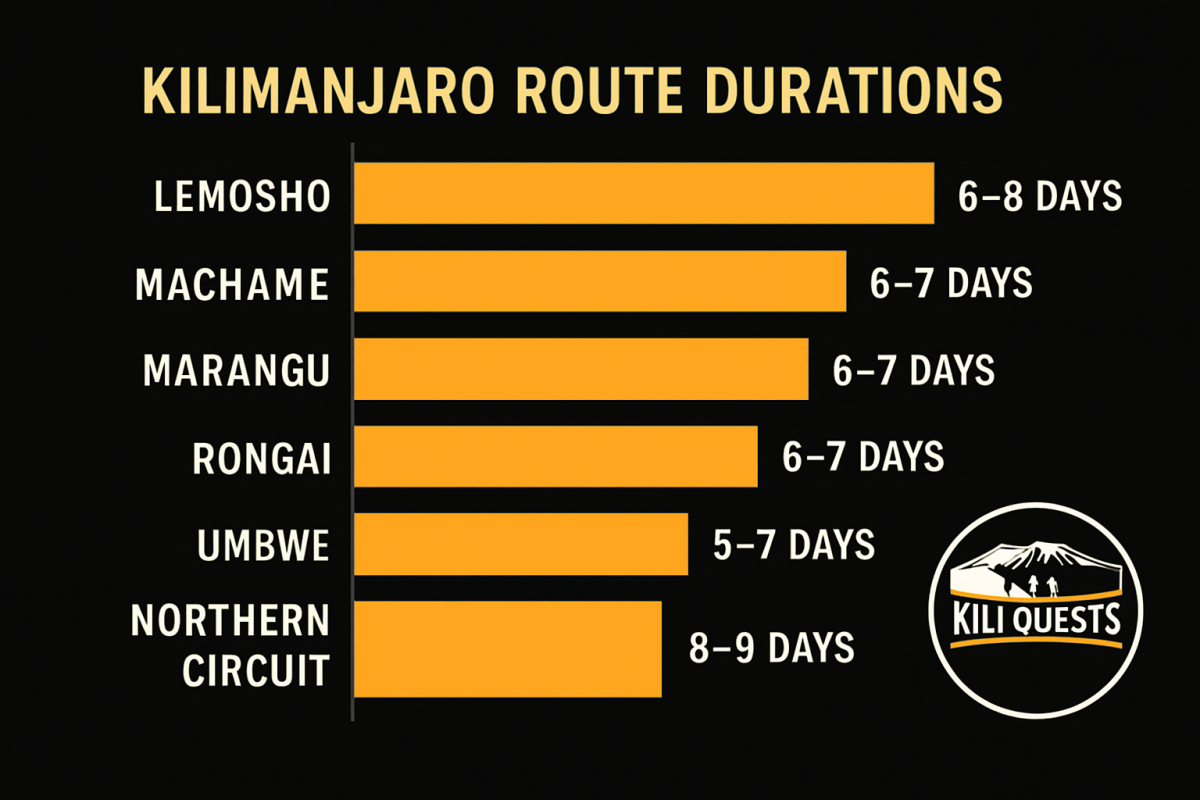
Infographic showing durations of Kilimanjaro routes: Lemosho (6–8 days), Machame (6–7), Marangu (6–7), Rongai (6–7), Umbwe (5–7), and Northern Circuit (8–9 days)
Kilimanjaro Route Durations – Compare how many days each route takes so you can choose the one that fits your schedule and acclimatization needs.

Acclimatization Is the Key to Reaching Uhuru Peak

Reaching the summit of Kilimanjaro is not about speed or strength  it’s about patience, preparation, and proper acclimatization.To give yourself the best chance of success:

  • Choose a longer route with gradual ascent
  • Follow “climb high, sleep low” principles
  • Walk slowly and stay hydrated
  • Listen to your body and your guide

When these factors come together, your chances of standing on Uhuru Peak increase dramatically.

Frequently Asked Questions About Acclimatization on Kilimanjaro

How do you acclimatize properly on Mount Kilimanjaro?

Proper acclimatization on Kilimanjaro involves gaining altitude gradually while allowing your body time to adjust to lower oxygen levels. This is achieved by choosing longer routes, maintaining a slow and steady pace, staying hydrated, and following the “climb high, sleep low” principle. Trekkers who follow these strategies give their bodies enough time to adapt, significantly improving their chances of reaching the summit.

How many days do you need to acclimatize on Kilimanjaro?

Most successful Kilimanjaro climbs take between 6 and 9 days, depending on the route. Longer itineraries such as the Lemosho Route or Northern Circuit Route provide more time for acclimatization and result in higher summit success rates. Shorter climbs may save time but increase the risk of altitude sickness.

What is the best route for acclimatization on Kilimanjaro?

Routes like the Lemosho Route and Northern Circuit Route are considered the best for acclimatization because they offer gradual elevation gain and extra trekking days. These routes allow your body to adjust naturally, reducing the risk of altitude sickness and increasing the likelihood of reaching Uhuru Peak.

How much water should you drink while acclimatizing?

Climbers are generally advised to drink between 3 and 4 liters of water per day while on the mountain. Proper hydration supports circulation, improves oxygen delivery, and helps reduce the effects of altitude. Dehydration can worsen symptoms of altitude sickness, making hydration a critical part of acclimatization.

Can you prevent altitude sickness completely?

Altitude sickness cannot be completely prevented, but it can be significantly reduced with proper acclimatization strategies. Choosing the right route, ascending slowly, staying hydrated, and listening to your guide all play a major role in minimizing risk.

Plan a Kilimanjaro Climb With Better Acclimatization

Acclimatization is one of the most important parts of a successful Kilimanjaro climb. The right route, number of days, pace, guide team, food, hydration, and safety checks all affect how your body handles altitude.
 
At Kili Quests, we help climbers choose realistic itineraries based on fitness, time, route preference, and altitude concerns. Our local guides focus on slow pacing, daily monitoring, proper acclimatization, strong mountain meals, and safe summit preparation.
 
If you are worried about altitude, we can help you choose a route that gives your body better time to adjust.
 
 If you’re planning your climb, explore Best Time to Climb Kilimanjaro and  Kilimanjaro Climbing Cost to prepare properly.
 
Contact Kili Quests today to plan a Kilimanjaro climb with proper acclimatization and experienced local guides.
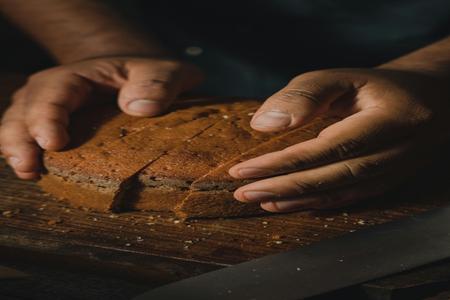
Related Articles

Kilimanjaro Packing List 2026: What to Bring for Your Climb

Pack Smart for Kilimanjaro

Packing the wrong gear can make your climb harder than it needs to be  especially on summit night.
At Kili Quests, we help you:

Ready for Your Kilimanjaro Climb?

Packing is just one part  route, pace, and acclimatization matter too.At Kili Quests, we help you:

OUR CATEGORIES

Kilimanjaro Packing List: Essential Gear for Your Trek | Kili Quests

Why Packing Properly Matters on Kilimanjaro

Packing for Mount Kilimanjaro is not like packing for a normal trip. Over the course of a single climb, you will move through multiple climate zones  from humid rainforest at the base to freezing, high-altitude conditions near the summit.
This means your gear must handle:
  • Warm daytime temperatures
  • Sudden rain in lower zones
  • Cold nights at camp
  • Extreme wind and freezing temperatures on summit night
Many climbers underestimate how demanding this combination can be. The right equipment doesn’t just improve comfort  it directly affects your ability to reach the summit.
 
At Kili Quests, we’ve guided hundreds of climbers to Uhuru Peak, and one thing is clear: poor packing is one of the most common reasons people struggle on the mountain.Download your packing list here
 
Before your climb, make sure you also understand the risks of altitude in our Altitude Sickness Guide.
Entrance to Kilimanjaro via the Machame Route.

Table of Contents

Kilimanjaro Packing Strategy (Before You Start)

Before diving into the checklist, it’s important to understand how packing works on Kilimanjaro.
You will typically carry:
  • A duffel bag (70–90L) carried by porters
  • A daypack (30–35L) for your daily essentials
Your duffel should contain most of your clothing and gear, while your daypack should carry:
  • Snacks
  • Rain gear( other you carried in backpack)
  • Warm layers
  • Personal items
 Not sure how your route affects what you carry? See our Kilimanjaro Routes Comparison Guide.

Planning Your Kilimanjaro Climb?

Packing is only one part of your success. The right route, pace, and preparation matter just as much.
At Kili Quests, we help climbers:
  • Choose the right gear
  • Avoid common packing mistakes
  • Prepare for real mountain conditions
 Get your custom Kilimanjaro climb plan 
Essential Kilimanjaro Packing List

Clothing (Layering System)

Layering is the foundation of your clothing system on Kilimanjaro.
You will constantly adjust your layers depending on temperature, altitude, and activity level. Instead of one heavy outfit, you’ll wear multiple layers that can be added or removed.
Essential clothing:
  • Waterproof insulated jacket – Critical for summit night
  • Fleece or down jacket – Provides mid-layer warmth
  • Rain jacket and rain pants – Protect against sudden weather changes
  • Thermal base layers (top and bottom) – Essential for cold nights
  • Convertible hiking pants – Practical for changing conditions
  • Long and short-sleeved shirts – Moisture-wicking preferred
  • Fleece pants – Comfortable for camp
 Avoid cotton , it traps moisture and makes you colder.

Headwear & Gloves

Your head and hands are highly exposed, especially during summit night.
Headwear:
  • Sun hat or cap – Protects against strong UV
  • Warm hat (fleece or wool) – Essential for cold evenings
  • Buff or balaclava – Protects face from wind and cold
Gloves:
  • Insulated gloves – For freezing conditions
  • Lightweight gloves – For layering and milder weather

Footwear for Kilimanjaro

Footwear is one of the most important decisions you’ll make.Poor footwear leads to blisters, discomfort, and even failed summits.
You’ll need:
  • Waterproof hiking boots (well broken-in)
  • Camp shoes or sandals
  • Gaiters (for mud, snow, and rocks)
  • Hiking socks (5 pairs, moisture-wicking)
  • Sock liners (to prevent blisters)
 Many climbers fail due to foot problems  preparation here is critical.

Gear & Equipment

These items support your daily trekking and comfort.
  • Daypack (30–35L, waterproof)
  • Duffel bag (70–90L, carried by porters)
  • Sleeping bag (-10°C to -17°C rating)
  • Sleeping bag liner (extra warmth)
  • Trekking poles (reduce strain on knees)
 Longer routes improve acclimatization , learn more in our Kilimanjaro Duration Guide.

Hydration & Accessories

Staying hydrated at altitude is essential for performance and safety.
  • Water bladder (2–3L)
  • Water bottle (backup)
  • Sunglasses (UV protection)
  • Quick-dry towel

Personal Gear & Electronics

  • Headlamp (with extra batteries) – Required for summit night
  • Power bank – Charging is limited on the mountain
  • Camera or smartphone

Toiletries & Hygiene

Maintaining hygiene helps you stay comfortable over multiple days.

  • Sunscreen (SPF 30+)
  • Lip balm with SPF
  • Wet wipes
  • Hand sanitizer
  • Toilet paper
  • Small first aid kit
  • Blister treatment kit

Learn What to pack for hygiene and Cleaning tools for your climb trip 

Important Documents

Do not overlook this section  it’s critical for your trip.
  • Passport (valid for at least 6 months)
  • Tanzania visa
  • Travel and medical insurance
  • Any required health documents
 Planning your budget? See our Kilimanjaro Cost Guide.
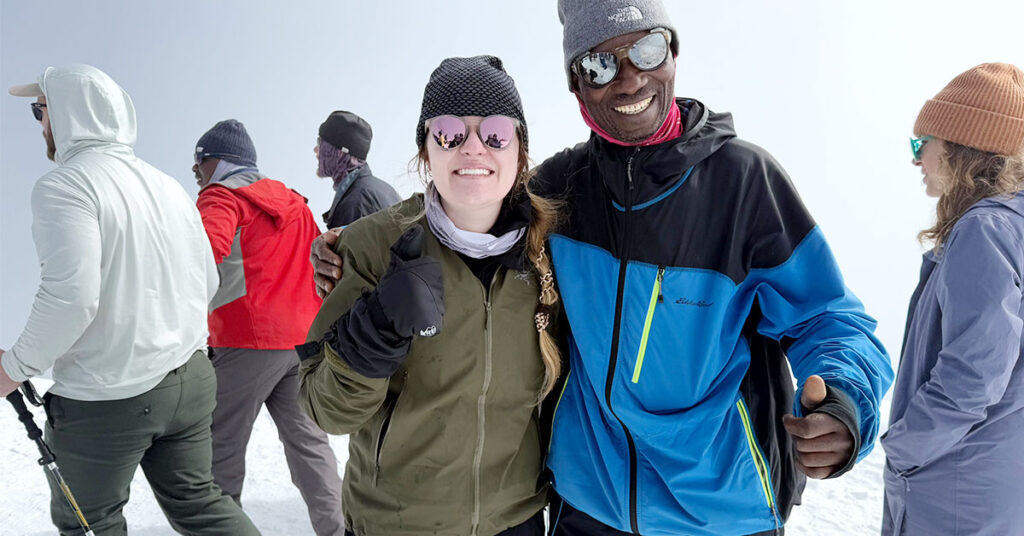
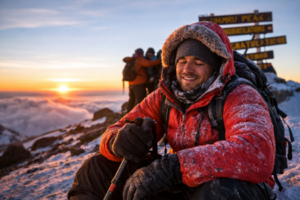
Celebrating at Uhuru Peak with our amazing guide Fredy — a.k.a. Freedom!

Final Packing Tips from Kilimanjaro Guides

After guiding many climbs, these are the most important lessons:
  • Pack light — porter limits apply (15–20kg)
  • Use dry bags or zip locks to protect gear
  • Break in your boots before your trip
  • Test all equipment in advance

Frequently Asked Questions About Packing for Kilimanjaro

What should you pack for a Mount Kilimanjaro trek?

Packing for Kilimanjaro requires more than just bringing warm clothes. You need a complete system that works across different climate zones. This includes layered clothing, waterproof gear, proper footwear, and essential equipment like a sleeping bag and headlamp.The goal is not just comfort  it’s maintaining energy, staying dry, and adapting to changing conditions throughout the trek.

How many bags can you bring on Kilimanjaro?

Most climbers use two main bags: a duffel bag carried by porters and a daypack carried during the hike.Porter weight limits are strictly enforced, so packing efficiently is important. Your daypack should always contain items you may need during the day, such as water, rain gear, and warm layers.

What sleeping bag rating is recommended?

A sleeping bag rated between -10°C and -17°C is recommended for Kilimanjaro.
Even if temperatures feel manageable at lower camps, nights become significantly colder at higher altitude — especially before summit night.

Do you need special hiking boots?

Yes , proper hiking boots are essential.
They should be:
  • Waterproof
  • Provide ankle support
  • Already broken in
New boots can cause blisters quickly, which can seriously affect your ability to continue the trek.

Can you rent gear in Tanzania?

Yes, many climbers rent equipment locally.Items like sleeping bags, jackets, and trekking poles are commonly available in Moshi or Arusha. However, personal items like boots and base layers are best brought from home.

Why is layering important?

Layering allows you to adjust your clothing based on changing conditions.You may start your day in warm sunshine and end it in freezing temperatures. A proper layering system helps regulate body temperature, maintain comfort, and prevent overheating or chilling.

Plan Your Kilimanjaro Trek With Kili Quests
Packing is only one part of preparing for Kilimanjaro  the real success comes from combining the right gear with the right strategy.
At Kili Quests, we help you:
  • Prepare your full packing system
  • Choose the best route and schedule
  • Increase your chances of reaching the summit
 Start planning your Kilimanjaro climb today
 
If you’re new to high-altitude trekking, start with our Climbing Kilimanjaro for Beginners Guide to understand what to expect and how to prepare properly.

Related Articles

Mount Meru Climb Guide: Itinerary, Difficulty & Cost

Climb Mount Meru with Experts

Mount Meru is the perfect climb for adventure and preparation.

Plan Your Kilimanjaro & Meru Adventure
Planning your trek properly makes a big difference. 

OUR CATEGORIES

Mount Meru Climb Guide: Tanzania’s Scenic Volcano Trek

Mount Meru is Tanzania’s second-highest mountain and one of the most rewarding trekking peaks in East Africa. Rising to 4,566 meters inside Arusha National Park, it offers steep volcanic ridges, wildlife-rich forests, quiet trails, and dramatic views of Mount Kilimanjaro.
Many climbers use Mount Meru as a preparation trek before Kilimanjaro because it gives the body time at altitude while building confidence on a serious mountain route. But Mount Meru is not just a warm-up hike. It is a challenging climb in its own right, with steep sections, a long summit push, and exposed crater-rim scenery near Socialist Peak.

This guide covers the Mount Meru itinerary, difficulty, altitude, wildlife, cost, best time to climb, and why it can be a strong choice before climbing Kilimanjaro.

Quick Answer: Is Mount Meru Worth Climbing Before Kilimanjaro?

 Yes, Mount Meru is worth climbing before Kilimanjaro if you have enough time in Tanzania and want better altitude preparation. The trek reaches 4,566 meters, which helps your body experience high altitude before attempting Kilimanjaro’s higher summit.
 
Mount Meru is also quieter, steeper, and more wildlife-rich than Kilimanjaro. The route passes through Arusha National Park, where trekkers may see giraffes, buffalo, monkeys, and many bird species before climbing toward alpine terrain and the summit ridge.
 
It is not an easy hike. Mount Meru requires good fitness, steady pacing, and comfort with steep mountain terrain. But for climbers preparing for Kilimanjaro, it can be an excellent acclimatization and confidence-building trek.
Feature Mount Meru Details
Location Arusha National Park, Tanzania
Elevation 4,566 m / 14,968 ft
Summit Socialist Peak
Typical duration Usually 4 days, sometimes 3 or 5 days depending on itinerary
Difficulty Moderate to challenging, with steep sections and a demanding summit push
Best for Kilimanjaro preparation, wildlife, quieter trekking, and volcanic scenery
Main advantage Strong acclimatization trek before Kilimanjaro
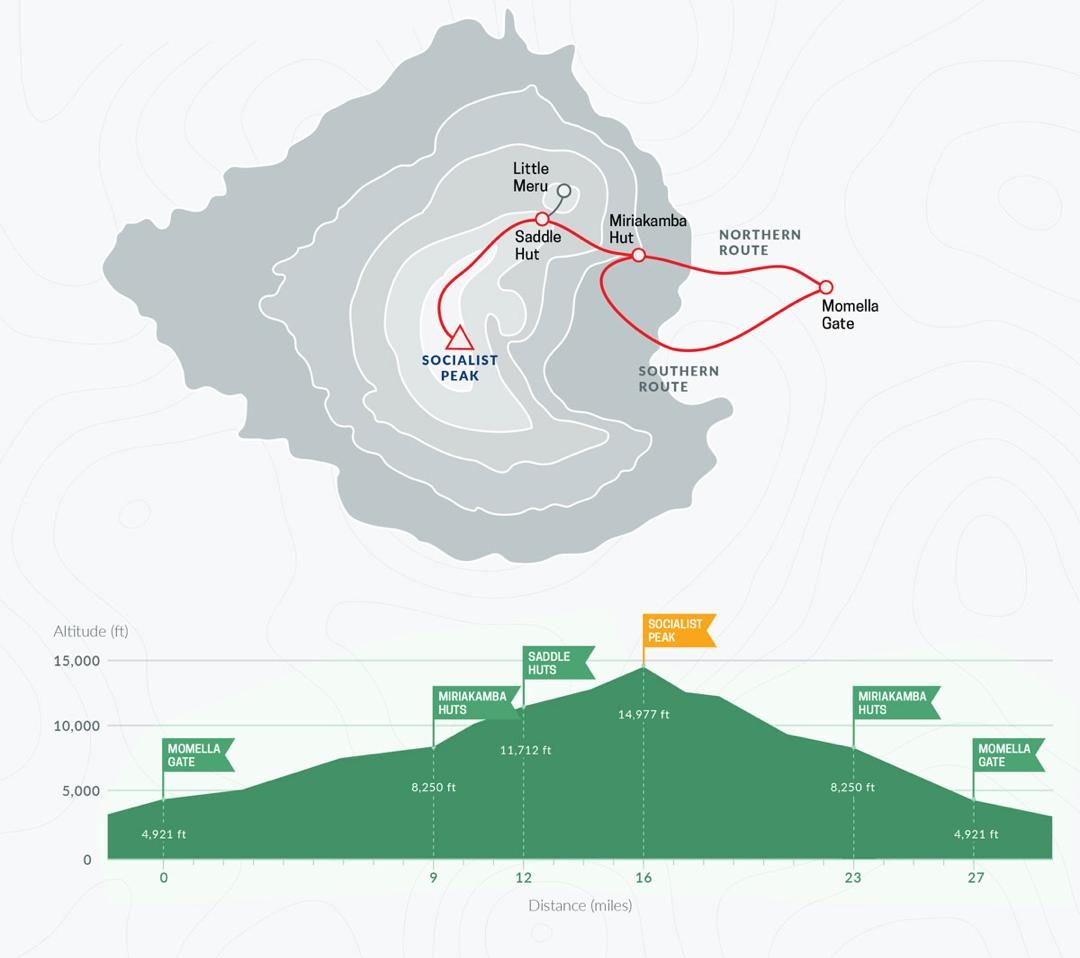
Mount Meru trekking route map showing the trail from Momella Gate to Socialist Peak via Miriakamba Hut and Saddle Hut.
The Mount Meru route climbs from Momella Gate through Miriakamba Hut and Saddle Hut before reaching Socialist Peak.
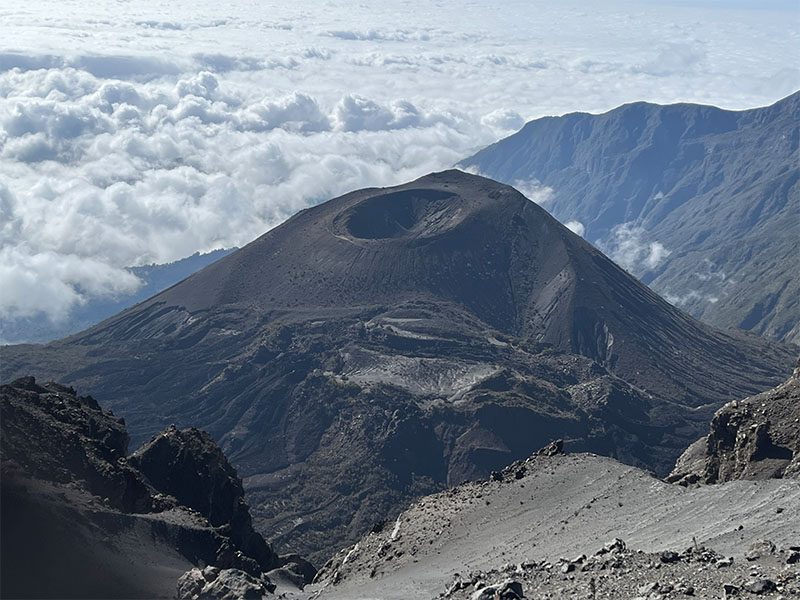
Mount Meru volcanic cone with crater walls and mist in Arusha National Park.
Mount Meru’s crater and steep volcanic ridges make the climb rugged, scenic, and very different from Kilimanjaro.

Table of Contents

 Why Climb Mount Meru?

Mount Meru is one of the best mountain treks in Tanzania for climbers who want scenery, wildlife, altitude, and fewer crowds in one route.

Unlike Kilimanjaro, Mount Meru begins inside Arusha National Park, so the lower trail feels like a walking safari. Trekkers may pass giraffes, buffalo, monkeys, antelope, and rich birdlife before climbing into higher volcanic terrain.

The upper mountain is steeper and more rugged, with crater views, ridgelines, cliffs, and a dramatic summit approach to Socialist Peak. On clear mornings, the summit also offers one of the best views of Mount Kilimanjaro in Tanzania.

Mount Meru is also useful for Kilimanjaro preparation because it helps climbers experience altitude, multi-day trekking, early summit starts, and mountain pacing before attempting Africa’s highest peak.
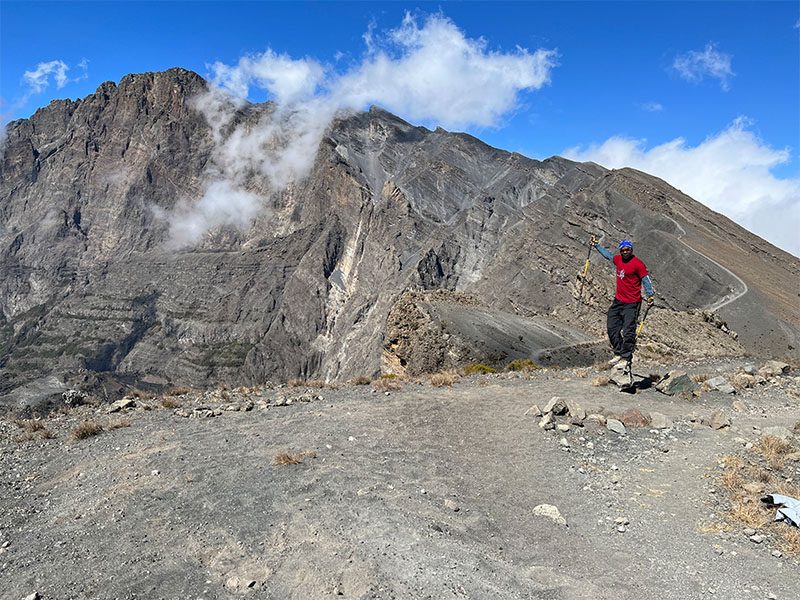
Trekker approaching Socialist Peak on Mount Meru with steep volcanic cliffs in the background
The final approach to Socialist Peak is one of the most dramatic sections of the Mount Meru climb.

Mount Meru Climb Itinerary

Most Mount Meru climbs are completed in 4 days. A 3-day climb is possible, but the 4-day version is better for pacing, comfort, and acclimatization.

Day 1: Momella Gate to Miriakamba Hut

The trek begins at Momella Gate inside Arusha National Park. After registration, you start walking through forest and open grassland with an armed ranger, because wildlife may be present along the lower trail.
 
This first day is scenic and gradual, with possible sightings of giraffes, buffalo, warthogs, monkeys, and many bird species. The day ends at Miriakamba Hut.

Day 2: Miriakamba Hut to Saddle Hut

 The trail becomes steeper as you climb toward Saddle Hut. Vegetation changes as you gain altitude, and the views become wider. This is where many trekkers begin to feel the mountain more seriously.
 
After reaching Saddle Hut, some climbers take a short acclimatization hike toward Little Meru if time and energy allow. This helps the body adjust before the summit attempt.
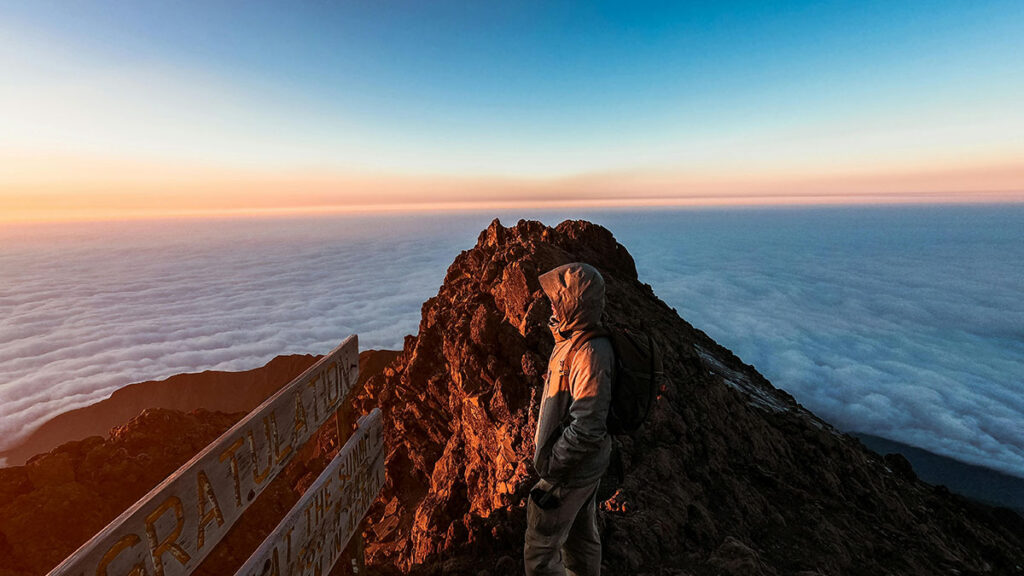
Trekker approaching the final ridge to Socialist Peak, the summit of Mount Meru, with steep volcanic cliffs in the background | Kili Quests
Reaching Socialist Peak (4,566m) on Mount Meru is a rewarding summit challenge — steeper and more rugged than Kilimanjaro’s approach.

Day 3: Saddle Hut to Socialist Peak, Then Down to Miriakamba Hut

Summit day begins very early, usually before sunrise. The trail climbs toward Rhino Point and continues along the crater rim toward Socialist Peak, the highest point of Mount Meru.
 
This is the hardest part of the trek. The route is steep, cold, and mentally demanding, with sections that feel more rugged than many parts of Kilimanjaro. From the summit, clear weather can reveal incredible views of Kilimanjaro, the crater, and the surrounding plains.
After the summit, you descend back to Saddle Hut and continue down to Miriakamba Hut.

Day 4: Miriakamba Hut to Momella Gate

The final day descends through forest and open parkland back to Momella Gate. Wildlife sightings are still possible on the way down. After checkout, you return to Arusha or continue with your Tanzania travel plans.

How Difficult Is Mount Meru?

Mount Meru is moderately to very challenging, depending on your fitness, trekking experience, and comfort with steep terrain. It is lower than Kilimanjaro, but that does not mean it is easy.
 
The climb includes forest trails, steep ascents, hut-to-hut trekking, a cold early summit start, and exposed volcanic ridges near the top. Some sections can feel more rugged and intense than Kilimanjaro, even though the overall altitude is lower.
The main challenges are:
  • Steep terrain
  • Long summit night
  • Crater-rim walking
  • Altitude above 4,500 meters
  • Cold temperatures near the summit
  • Physical fatigue over multiple days
Mount Meru is best for trekkers with good basic fitness and a serious attitude toward mountain conditions.

Why Climb Mount Meru Before Kilimanjaro?

Mount Meru is one of the best acclimatization treks before Kilimanjaro because it gives your body time at altitude before you attempt a higher mountain.
 
By reaching 4,566 meters on Mount Meru, climbers experience thinner air, summit pacing, cold early-morning conditions, and multi-day trekking. This can build confidence and help your body prepare for Kilimanjaro’s altitude.
 
Mount Meru also helps you test your gear, boots, layering system, hydration habits, and mountain fitness before the bigger climb.
 
However, Mount Meru should not be treated as a casual warm-up. It is a real mountain climb and deserves proper preparation.
 
For climbers planning both mountains, Mount Meru is usually climbed before Kilimanjaro, not after, because its altitude exposure can support acclimatization.
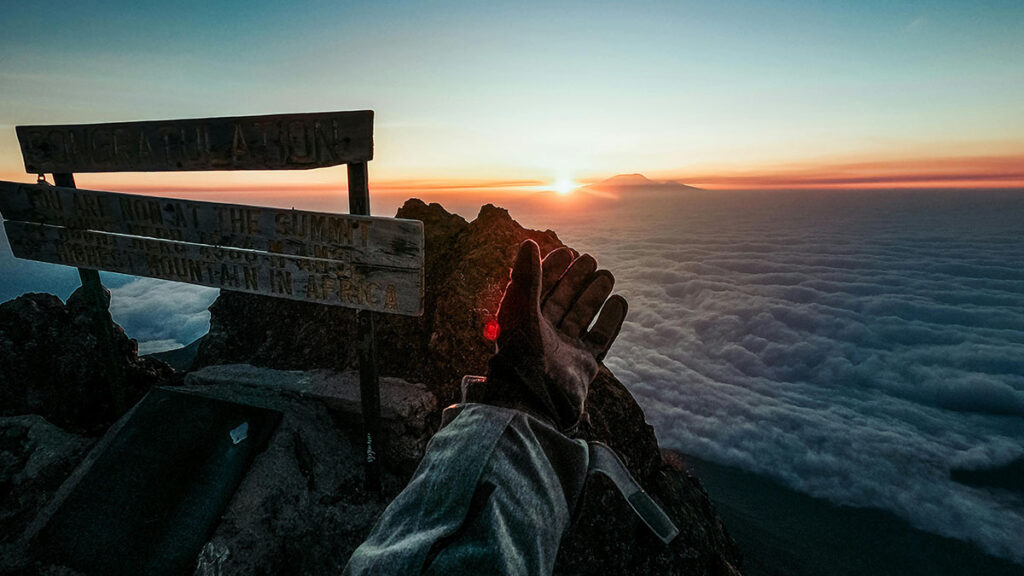
Mount Kilimanjaro seen from Mount Meru at sunrise above the clouds.
On clear mornings, Mount Meru offers one of the best sunrise views of Kilimanjaro in Tanzania.

Mount Meru Climb Pros and Cons

Pros Cons
Excellent acclimatization trek before Kilimanjaro Still physically demanding despite being lower than Kilimanjaro
Quieter and less crowded than Kilimanjaro Steep summit sections can feel rugged and exposed
Wildlife viewing inside Arusha National Park Requires extra travel days if combined with Kilimanjaro
Beautiful crater views and sunrise views of Kilimanjaro Not as famous or high as Kilimanjaro for bucket-list climbers

Mount Meru Climb Cost

Mount Meru climb cost depends on the number of days, group size, park fees, guide and ranger requirements, hut accommodation, meals, transport, and whether the trek is private or group-based.
 
A Mount Meru climb is usually less expensive than Kilimanjaro because it is shorter and lower, but it still requires proper guiding, park logistics, safety support, and accommodation planning.
 
Do not choose the cheapest option without checking what is included. A safe Mount Meru trek should include qualified guides, required park arrangements, meals, hut bookings, transport, and clear support throughout the climb.
 
If you are climbing Mount Meru before Kilimanjaro, it is also smart to plan both treks together so your schedule supports recovery and acclimatization.

Best Time to Climb Mount Meru

The best time to climb Mount Meru is during Tanzania’s drier trekking seasons, when trails are more stable and summit views are clearer.
The best months are usually:
  • January to early March
  • June to October
These months often offer better visibility, drier trails, and more comfortable trekking conditions. The long rainy season from March to May can make the trail wetter and more slippery, while parts of November may bring shorter rains.
 
If you are climbing Mount Meru before Kilimanjaro, choose dates that give you enough time to recover between the two treks.

Mount Meru vs Kilimanjaro: Quick Comparison

Mount Meru and Kilimanjaro are both excellent trekking mountains, but they serve different purposes.
 
Mount Meru is lower, steeper in places, quieter, and more wildlife-rich. It is ideal for climbers who want a rugged trek, fewer crowds, and strong preparation before Kilimanjaro.
 
Kilimanjaro is much higher, longer, more famous, and more demanding because of altitude. It is the main summit goal for most travelers visiting Tanzania.
 
For a deeper side-by-side breakdown, read our full guide to Kilimanjaro vs Mount Meru.
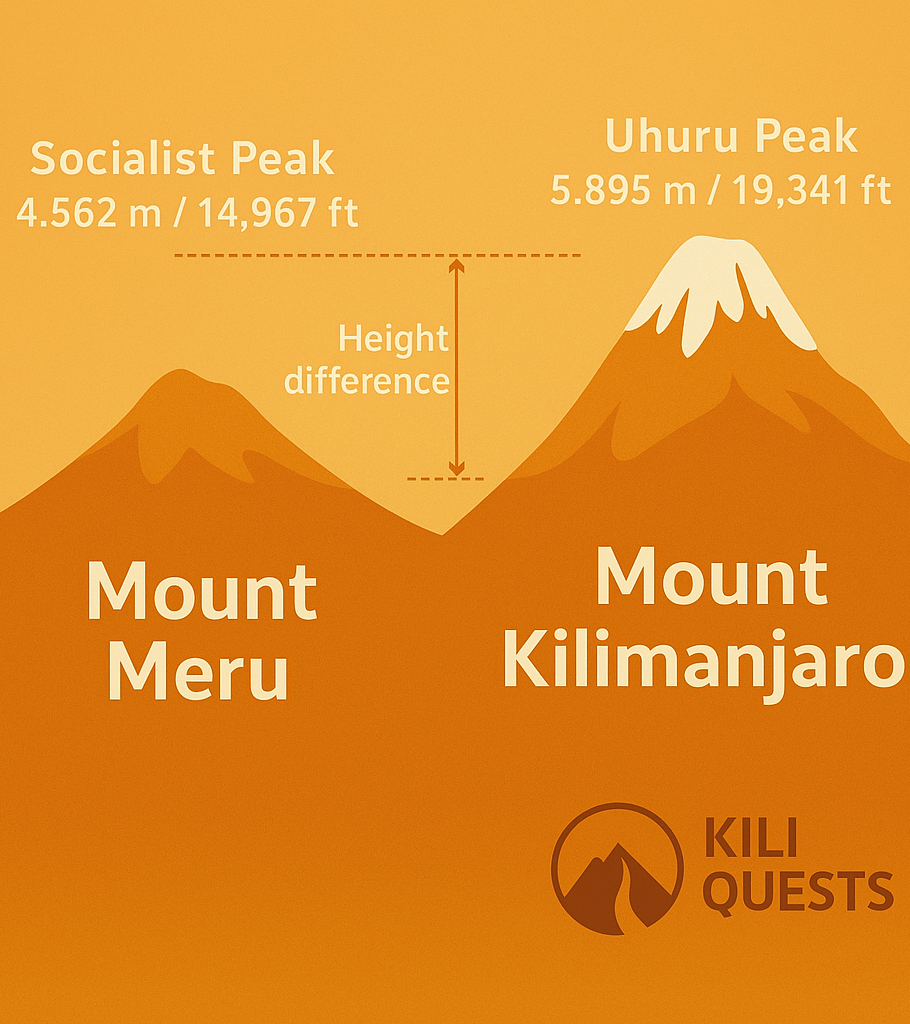
3D-style infographic comparing Mount Meru (4,562 m) to Mount Kilimanjaro (5,895 m).
Kilimanjaro towers nearly 1,300 meters above Mount Meru. Here's the visual difference.

Frequently Asked Questions About Climbing Mount Meru

How many days does it take to climb Mount Meru?

Most trekkers climb Mount Meru in 4 days. A 3-day itinerary is possible, but the 4-day version gives better pacing and more time to adjust before the summit attempt.

Is Mount Meru harder than Kilimanjaro?

Mount Meru is lower than Kilimanjaro, but some sections feel steeper and more rugged. Kilimanjaro is harder overall because it reaches much higher altitude, but Mount Meru should still be treated as a serious mountain climb.

Is Mount Meru good preparation for Kilimanjaro?

Yes, Mount Meru is one of the best preparation treks before Kilimanjaro. It helps climbers experience altitude, multi-day trekking, early summit starts, gear use, and mountain pacing before attempting Kilimanjaro.

Do you need a guide to climb Mount Meru?

Yes, Mount Meru must be climbed with official guiding support inside Arusha National Park. Trekkers are also accompanied by an armed ranger because wildlife may be encountered along the lower route.

What wildlife can you see on Mount Meru?

Mount Meru offers excellent wildlife viewing in the lower sections of Arusha National Park. Trekkers may see giraffes, buffalo, monkeys, warthogs, antelope, and many bird species along the trail.

Climb Mount Meru With Kili Quests

Mount Meru is a serious and rewarding trek, whether you climb it as a standalone adventure or as preparation before Kilimanjaro.
 
At Kili Quests, we help you plan Mount Meru with the right itinerary, pacing, guide support, park arrangements, and safety focus. If you are combining Mount Meru with Kilimanjaro, we can help you schedule both climbs in a way that supports acclimatization and recovery.
 
Contact our team for honest advice on whether Mount Meru fits your fitness level, travel dates, and Kilimanjaro plans.

Related Articles

Best Time to Climb Kilimanjaro: Month-by-Month Weather Guide

Choose the Best Time to Climb Kilimanjaro

The right season can make the difference between reaching the summit or turning back early.
At Kili Quests, we help you plan your climb based on:

Explore More Kilimanjaro Guides

Planning your Kilimanjaro climb takes more than timing. Explore these essential guides:

OUR CATEGORIES

Best Time to Climb Kilimanjaro: Month-by-Month Weather Guide

Choosing the best time to climb Kilimanjaro is one of the most important decisions you will make before booking your trek. The month you choose affects trail conditions, visibility, rainfall, crowd levels, summit-night cold, and the overall difficulty of the climb.

Kilimanjaro can be climbed year-round, but not every month gives the same experience. Some months offer drier trails and clearer summit views, while others bring heavier rain, muddy paths, more cloud cover, and a tougher mental challenge.

For most climbers, the best times to climb Kilimanjaro are January to early March and June to October. These periods usually offer the most reliable trekking conditions, especially for first-time climbers who want better weather, firmer trails, and a smoother summit experience.

At Kili Quests, we guide climbers throughout the year and help match each trekker with the right route, season, and pace. This guide explains Kilimanjaro weather month by month, the best and worst climbing seasons, and how to choose the right time for your own trek.

Before choosing your dates, it also helps to compare Kilimanjaro routes because some routes perform better than others in wet or crowded seasons.

Quick Answer: When Is the Best Time to Climb Kilimanjaro?

The best time to climb Kilimanjaro is usually during the two main drier seasons: January to early March and June to October.
 
For most climbers, June to October is the most reliable period because trails are generally drier, skies are clearer, and summit conditions are more predictable. This is also the busiest season, especially from July to September.
 
January to early March is another excellent window, with good weather, fewer crowds than the mid-year peak season, and a higher chance of seeing snow near the summit.
 
The least ideal months are usually April and May, when the long rains can make trails muddy, slippery, and more demanding. November can also be wet because of the short rains, although conditions vary from year to year.
 
For first-time climbers, the safest choice is usually a dry-season climb on a route with strong acclimatization, such as Lemosho, Machame, or the Northern Circuit.
Month Weather & Trail Conditions Crowds Best For Recommendation
January Generally good trekking weather with possible snow near the summit. Moderate Clear views, quieter trails, summit snow Excellent
February One of the better early-year months, with fairly stable weather. Moderate Good weather with fewer crowds than peak season Excellent
March Early March can be good, but rain becomes more likely later in the month. Low to moderate Flexible climbers avoiding peak crowds Good early, less ideal later
April Long rains often bring muddy trails, cloud cover, and wetter conditions. Low Experienced trekkers who accept wet conditions Less ideal
May Rain can continue, making trails slippery and views less reliable. Low Quiet trails and greener scenery Less ideal
June Weather improves as the dry season begins, with firmer trails. Moderate Start of dry-season climbing Very good
July Dryer trails, clearer skies, and reliable trekking conditions. High First-time climbers and clear views Excellent
August One of the most popular months, with strong weather reliability. Very high Reliable weather and classic Kilimanjaro views Excellent but busy
September Often one of the best months for dry trails and summit visibility. High Best balance of weather and summit views Excellent
October Still generally good, though rain chances may increase later in the month. Moderate to high Dry-season climbing with slightly fewer crowds Very good
November Short rains can bring wet lower trails and reduced visibility. Low Quiet trails and flexible trekkers Possible but less reliable
December Conditions often improve, but early December may still be affected by short rains. Moderate to high Holiday climbs and improving weather Good, especially later in the month

Table of Contents

Best Seasons to Climb Kilimanjaro

 Mount Kilimanjaro can be climbed throughout the year, but the best climbing conditions usually fall into two main drier seasons: January to early March and June to October.
 
These months are popular because they often bring firmer trails, better visibility, lower rainfall, and more manageable trekking conditions. That does not mean the weather is perfect every day.
 
Kilimanjaro is a high mountain with fast-changing conditions, especially near the summit. But compared with the rainy months, these seasons usually give climbers a more comfortable and predictable experience.

January to Early March: Good Weather With Fewer Crowds

January to early March is one of the best periods to climb Kilimanjaro if you want a strong weather window without the heaviest mid-year crowds.
During this period, climbers often experience:
  • Mild trekking conditions on the lower slopes
  • Moderate traffic on popular routes
  • Better chances of clear views
  • Possible snow near the summit
  • A quieter mountain atmosphere than July to September
This season is a good choice for climbers who want a balance between reliable weather and a less crowded experience. It can also be a beautiful time for photography because the summit may still have snow, especially around the higher elevations.

June to October: The Most Reliable Climbing Season

June to October is the most popular Kilimanjaro climbing season, and for good reason. These months usually offer the driest trails, clearest skies, and most stable overall trekking conditions.
 
This period is especially suitable for:
  • First-time Kilimanjaro climbers
  • Trekkers who want clearer summit views
  • Climbers who prefer drier trails
  • Travelers with fixed vacation dates
  • Anyone who wants the most predictable weather window
The trade-off is that this is also the busiest time on the mountain, especially on popular routes like Machame and Lemosho. If you want the weather benefits of this season but prefer a quieter trail, consider choosing a longer or less crowded route.
 
Before choosing your route, compare Kilimanjaro routes to understand which trails offer the best balance of scenery, acclimatization, and crowd levels.
Resting along the trail to Uhuru — one step at a time to the summit.

Dry Season vs Rainy Season on Kilimanjaro

Dry season is usually the best time to climb Kilimanjaro because the mountain is easier to manage when trails are firmer, visibility is better, and gear stays drier.
 
Kilimanjaro is already physically demanding because of altitude, long trekking days, and cold summit-night conditions. When heavy rain is added, the climb can feel much harder. Wet boots, damp clothing, slippery trails, and poor visibility all increase fatigue and reduce comfort.
 
During the drier months, climbers usually benefit from:
  • Firmer trails with less mud
  • Better visibility across the mountain
  • More comfortable walking conditions
  • Easier gear management
  • Clearer views from camps and viewpoints
  • A more predictable summit push
Rainy season climbs are still possible, but they require better preparation and the right mindset. The mountain can be quieter and greener, but the trade-off is wetter trails, more cloud cover, and a higher chance of cold, damp conditions.
This is why dry-season climbs are especially recommended for first-time trekkers. You still need proper fitness, pacing, and acclimatization, but you are not fighting constant wet conditions on top of the normal mountain challenge.
 
Dry season does not guarantee perfect weather every day. Kilimanjaro can still bring clouds, wind, cold nights, and sudden changes. But compared with the long rainy months, the dry seasons usually give climbers a stronger overall trekking window.
 
For a deeper look at how altitude affects cold, wind, and summit-night conditions, read our Kilimanjaro Weather and Climate Guide.

High Season, Shoulder Season, and Rainy Season on Kilimanjaro

Kilimanjaro has three main timing categories climbers should understand before choosing a date: high season, shoulder season, and rainy season. Each one has advantages and trade-offs.

High Season on Kilimanjaro

High season usually falls during the drier months, especially July to September and parts of December to February. These months are popular because they often bring clearer skies, drier trails, and better summit visibility.
 
High season is best for climbers who want:
  • More reliable weather
  • Better trail conditions
  • Clearer mountain views
  • A more social trekking atmosphere
  • A stronger option for first-time climbs
The downside is crowd level. Popular routes such as Machame, Lemosho, and Marangu can feel busier during peak months. Campsites may be more active, and some trail sections may have more climbers than in quieter seasons.

Shoulder Season on Kilimanjaro

Shoulder season usually includes months such as early March, June, October, and early December, depending on yearly weather patterns. These periods can offer a good balance between decent trekking conditions and fewer crowds.
 
Shoulder season is a good option if you want:
  • Fewer people than peak season
  • Better availability for guides and routes
  • A quieter mountain experience
  • A chance of good weather without the busiest camps
The trade-off is that conditions can be less predictable. Rain may arrive earlier or later than expected, especially around March, October, and November.

Rainy Season on Kilimanjaro

The main rainy periods are usually March to May for the long rains and November for the short rains. Kilimanjaro can still be climbed during these months, but the experience is more demanding.
 
Rainy season can bring:
  • Muddy and slippery trails
  • Wet boots and clothing
  • Reduced visibility
  • Cloudier views
  • Colder-feeling conditions when rain combines with altitude
  • More mental fatigue during long trekking days
The main advantage is solitude. Trails are quieter, the lower slopes are greener, and some climbers enjoy the more peaceful mountain atmosphere. But for most first-time climbers, the rainy season is not the best choice unless they are flexible, well-prepared, and comfortable trekking in wet conditions.

Which Season Should You Choose?

For most climbers, the best choice is a dry-season or shoulder-season climb. These periods usually give a better balance of weather, visibility, trail conditions, and overall comfort.
 
  1. Choose high season if you want the most reliable weather and do not mind more climbers.
  2. Choose shoulder season if you want a quieter experience with still reasonable weather potential.
  3. Choose rainy season only if you are prepared for wet trails, lower visibility, and a more physically demanding climb.
One of those moments where the mountain says it all

How to Choose the Best Time for Your Kilimanjaro Climb

The best time to climb Kilimanjaro is not the same for every traveler. The right month depends on your fitness level, route choice, comfort with crowds, budget, travel flexibility, and how much risk you are willing to accept with weather.
 
A first-time climber may prefer the most stable dry-season conditions, while an experienced trekker may accept wetter months for quieter trails. The goal is not just to choose the “best month” on paper. The goal is to choose the best month for your body, expectations, and itinerary.

Choose Based on Your Experience Level

If this is your first high-altitude trek, choose a drier month if possible. Dry trails are easier to walk on, gear stays more comfortable, and the daily trekking routine feels more manageable.
 
Rainy-season climbs can still be successful, but they require stronger preparation. Wet boots, slippery paths, and cold damp clothing can make the climb feel harder than expected.
 
If you are still building fitness, use our Kilimanjaro Training Guide before choosing your final climb date.

Choose Based on Crowds

If you want the best weather, you must accept that peak months are busier. July, August, September, and parts of December are popular for a reason: the conditions are usually more reliable.
 
If you prefer fewer people on the trail, look at January to early March, June, October, or early December. These months can offer a better balance between good conditions and quieter camps.
 
For the quietest experience, rainy-season months usually have fewer climbers, but the trade-off is wetter trails and less reliable visibility.

Choose Based on Your Route

Route choice matters because not every Kilimanjaro route performs the same in every season.
 
During wetter months, Rongai Route can be a better option because it approaches Kilimanjaro from the drier northern side. Marangu Route may also appeal to some climbers because it uses hut accommodation instead of tents.
 
During drier months, scenic camping routes such as Lemosho Route, Machame Route, and the Northern Circuit Route are excellent choices because visibility is often better and the landscapes are easier to enjoy.
 
Before booking, compare Kilimanjaro routes so your route and season work together instead of against each other.

Choose Based on Budget and Availability

Peak season can bring higher demand for guides, accommodation, and preferred route dates, especially in July, August, September, and holiday periods. Shoulder months may offer more flexibility, but do not choose a rainy month only because it looks cheaper. A lower price is not useful if wet trails, poor visibility, and uncomfortable conditions make the climb harder.

For a full breakdown of park fees, route length, crew support, tips, gear, insurance, and other expenses, read our Kilimanjaro Climb Cost guide.

Choose Based on the Experience You Want

Ask yourself what matters most.
  1. If you want clearer summit views and drier trails, choose the dry season.
  2. If you want fewer climbers and greener scenery, consider a shoulder month or a quieter route.
  3. If you want a better chance of seeing snow near the summit, January to early March can be a good option.
  4. If you want the most predictable conditions for a first Kilimanjaro climb, June to October is usually the safest planning window.

Best Kilimanjaro Routes by Season

The best time to climb Kilimanjaro also depends on the route you choose. Some routes are better for dry-season views, while others can be more practical during wetter months.

Best Routes During the Dry Season

During the drier months, especially January to early March and June to October, scenic camping routes become especially rewarding because visibility is often better and trails are easier to manage.
 
Good dry-season route choices include:
Dry-season conditions make it easier to enjoy viewpoints, camps, ridgelines, and summit scenery. This is one reason many first-time climbers choose these months.

Best Routes During the Rainy Season

Rainy-season climbs require more careful route selection. Trails can become muddy, visibility may be limited, and camping can feel less comfortable when conditions stay wet.
 
During wetter periods, two routes are often worth considering:
  • Rongai Route because it approaches Kilimanjaro from the drier northern side
  • Marangu Route because it uses hut accommodation instead of tents
This does not mean rainy-season climbs are easy. It means route choice becomes more important. If you climb during wetter months, you need proper rain gear, flexible expectations, and a guide team that understands how weather affects pace, safety, and daily planning.

Route Choice Matters as Much as the Month

Choosing a good month but the wrong route can still create problems. For example, a popular route during peak season may feel crowded, while a scenic camping route during heavy rain may feel harder than expected.
 
Before booking, compare Kilimanjaro routes carefully so your route, season, fitness level, and comfort expectations all work together.

Best Time to Climb Kilimanjaro by Climber Type

There is no single perfect month for every Kilimanjaro climber. The best time depends on your experience level, preferred route, comfort with crowds, and how much weather risk you are willing to accept.

Best Time for First-Time Climbers

For first-time climbers, the best time to climb Kilimanjaro is usually June to October or January to early March.
 
These months usually offer better trail conditions, clearer views, and more predictable weather. That matters because first-time climbers already have enough to manage with altitude, pacing, cold nights, and several days of trekking.
 
If this is your first major high-altitude trek, avoid choosing the wettest months only to save money or avoid crowds. Bad weather can make the climb feel much harder than expected.

Best Time for Fewer Crowds

If you want fewer climbers on the trail, consider January to early March, June, October, or early December.
 
These periods can offer a better balance between decent weather and a quieter mountain experience. You may still meet other climbers, especially on popular routes, but the trails and camps can feel less busy than July, August, and September.
 
For even quieter routes, consider Rongai Route, Northern Circuit Route, or carefully timed Lemosho departures.

Best Time for Clear Views and Photography

For clearer mountain views, the drier months are usually better. July, August, September, and early October are often strong choices for visibility, especially for climbers who want classic Kilimanjaro landscapes, sunrise views, and summit photos.
 
January to early March can also be beautiful, especially when there is snow near the summit. This period can give photographers a strong mix of clear views, dramatic cloud movement, and snow-capped scenery.

Best Time for Snow Near the Summit

If seeing snow near the summit is important to you, January to early March can be a good period to consider. Snow is never guaranteed, but the upper mountain may look more dramatic during this time compared with the driest parts of the year.
 
Remember that snow near the summit may look beautiful, but it can also mean colder conditions. Proper summit-night layers are still essential.

Best Time for Budget Flexibility

If budget and availability are important, shoulder months may give you more flexibility than the busiest peak months.
 
However, do not choose the rainy season only because it appears cheaper. A climb that costs less but gives you wet gear, muddy trails, poor visibility, and harder walking conditions may not be a good decision.
 
For a full breakdown of park fees, route length, crew support, tips, gear, insurance, and other expenses, read our Kilimanjaro Climb Cost guide.

Frequently Asked Questions About the Best Time to Climb Kilimanjaro

What is the best time of year to climb Mount Kilimanjaro?

The best time to climb Mount Kilimanjaro is usually during the two main drier seasons: January to early March and June to October.
 
These months usually offer better trail conditions, lower rainfall, clearer views, and a more comfortable trekking experience. For most first-time climbers, June to October is the most reliable planning window, while January to early March is a strong choice for good weather with fewer crowds than the busiest mid-year months.

What is the worst time to climb Kilimanjaro?

The least ideal months are usually April and May, during the long rains. Trails can become muddy and slippery, visibility may be reduced, and wet gear can make the climb feel colder and more tiring.
 
November can also be less reliable because of the short rains, although conditions vary from year to year. Kilimanjaro can still be climbed during these months, but they are not the best choice for most first-time trekkers.

Can you climb Kilimanjaro during the rainy season?

Yes, Kilimanjaro can be climbed during the rainy season, but it is more demanding. The main rainy periods are usually March to May and November.
 
Rainy-season climbs can offer quieter trails and greener scenery, but the trade-off is wet clothing, muddy paths, cloud cover, reduced visibility, and more mental fatigue. If you choose this period, proper rain gear and route choice become much more important.

Which month has the best weather for climbing Kilimanjaro?

July, August, and September are often among the most reliable months for Kilimanjaro weather because they fall in the main dry season. Trails are usually firmer, skies are often clearer, and summit visibility is generally better.
 
However, these are also busy months. If you want good weather with fewer crowds, consider January, February, June, or October.

Is Kilimanjaro crowded during peak climbing season?

Yes, Kilimanjaro can feel busy during peak months, especially from July to September and around holiday periods. Popular routes such as Machame, Lemosho, and Marangu usually see more climbers during these windows.
 
If you want fewer crowds, consider a shoulder month or a quieter route. Rongai and Northern Circuit can feel less crowded than the busiest classic routes, depending on the season and departure date.

Is it harder to climb Kilimanjaro during the rainy season?

Yes, rainy-season climbs usually feel harder because wet conditions add extra physical and mental stress. Muddy trails slow your pace, damp gear reduces comfort, and cloud cover can make long trekking days feel more tiring.
 
The altitude challenge is still the main difficulty, but bad weather can make everything feel heavier. That is why most first-time climbers are better off choosing a drier month and a route with good acclimatization.

Does the season affect how difficult Kilimanjaro feels?

Yes. Season can affect how difficult the climb feels because weather influences trail conditions, comfort, visibility, and fatigue.
 
A dry-season climb usually feels more manageable because trails are firmer and gear stays drier. A rainy-season climb can feel harder because you may deal with mud, wet clothing, colder-feeling conditions, and reduced views.
But season is only one factor. Route choice, pacing, acclimatization, training, and guide support are just as important.

Choose the Best Month for Your Kilimanjaro Climb

The best Kilimanjaro climb date is not always the most popular month. The right choice depends on your route, fitness level, travel dates, weather expectations, and how comfortable you are with crowds or rain.
 
If you are unsure whether to climb in January, February, July, September, October, or another month, do not guess. A good climb plan should match the season with the right route and enough time for acclimatization.
 
At Kili Quests, our local mountain team helps you choose a climb date that fits your goals, not just the calendar. We look at your preferred travel window, route options, experience level, and the kind of mountain experience you want.
 
We can help you decide:
  • Which month gives you the best balance of weather and crowds
  • Which route fits your chosen season
  • Whether your travel dates are better for Lemosho, Machame, Marangu, Rongai, or Northern Circuit
  • What weather and trail conditions to expect
  • How to prepare for summit-night cold and changing mountain conditions
Tell us your planned travel month, fitness level, and preferred route. We will help you choose the best Kilimanjaro itinerary for your climb.
 
If this is your first high-altitude trek, our Beginner’s Guide to Climbing Kilimanjaro can help you understand route choice, preparation, pacing, and what to expect on the mountain.
Tell us your planned travel month, fitness level, and preferred route. Contact Kili Quests today, and we will help you choose the best Kilimanjaro itinerary for your climb.

Related Articles

After Climbing Kilimanjaro: Recovery Tips & Stretches

Climb Strong, Recover Better

Train, climb, and recover with expert guidance from start to finish.

Prepare Your Body

Get ready for Kilimanjaro the right way:

OUR CATEGORIES

Post-Hike Muscle Care: Stretching Tips for Kilimanjaro Trekkers | Kili Quests

Climbing Mount Kilimanjaro is an incredible achievement ,Before reaching this stage, it’s important to understand how difficult Kilimanjaro really is and how your body is challenged. but the journey doesn’t end at the summit. After days of hiking, your body deserves care, attention, and time to recover.
 
At Kili Quests, we support you beyond the climb. This post-trek guide shares essential stretches and muscle recovery tips to help you bounce back quickly after your descent.
 
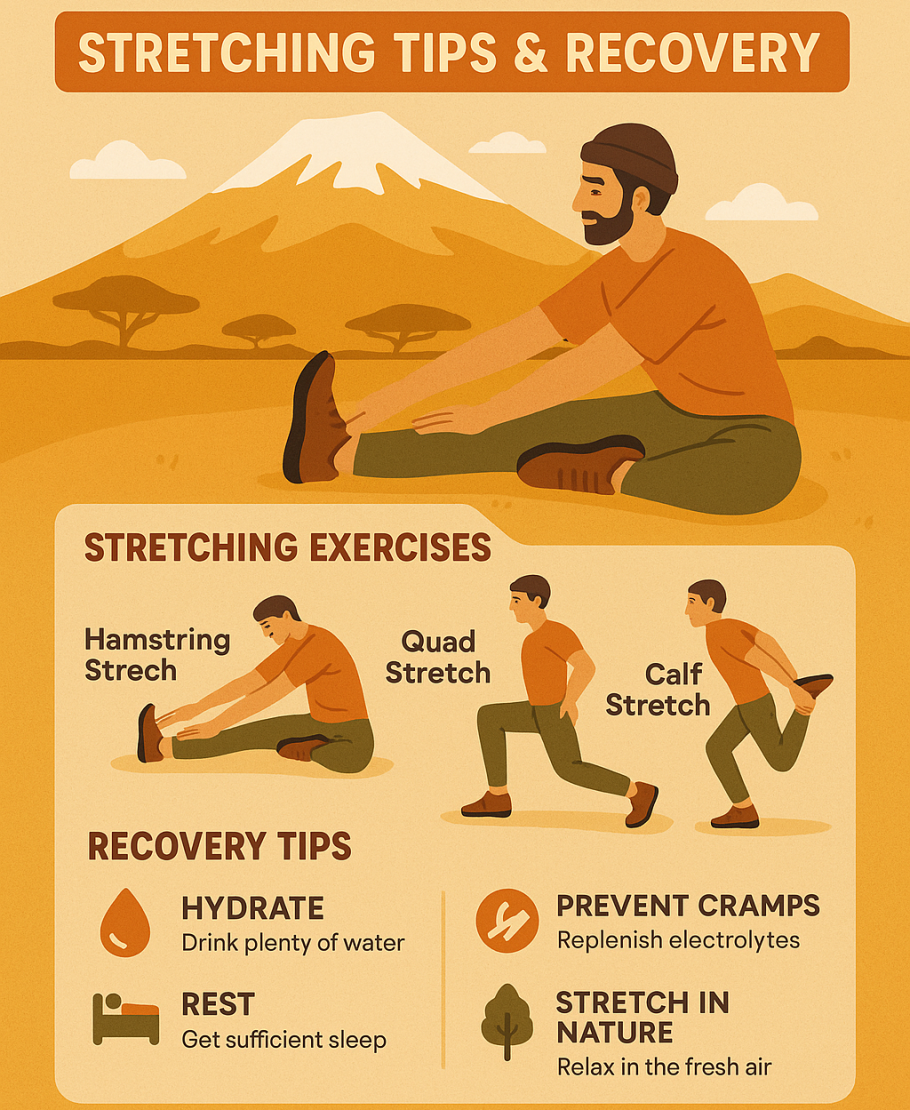
3D infographic showing hamstring, quad, and calf stretches along with hydration and rest tips.
Stretch, rest, and hydrate: Smart recovery after summiting Kilimanjaro.

Table of Contents

Why Stretching After Kilimanjaro Matters

1. Reduces Muscle Tension

 2. Improves Circulation

  • Increased blood flow delivers oxygen and nutrients to tired muscles, speeding up recovery.
 3. Prevents Injury

 4. Boosts Flexibility

  • You’ll move easier and feel better in the days after the trek by improving your range of motion.

Best Post-Hike Stretches for Kilimanjaro Trekkers

Use these stretches after reaching the base or back at your lodge. Hold each for 20–30 seconds per side.These stretches are especially helpful after summit day, when your body is under the most stress.
 
1. Quadriceps Stretch
  • Targets: Front of thighs
  • Stand tall, grab one ankle behind you, and pull it toward your glutes.
2. Hamstring Stretch
  • Targets: Back of thighs
  • Sit with one leg extended, reach toward your toes while keeping a straight back.
3. Calf Stretch
  • Targets: Lower legs
  • Stand facing a wall, step one foot back, and push the heel into the floor.
4. Hip Flexor Stretch
  • Targets: Front hips
  • Step into a forward lunge, lower hips, and feel the stretch in your rear hip.
5. IT Band Stretch
  • Targets: Outer thighs
  • Cross one leg over the other, lean sideways toward the back leg.
6. Lower Back Stretch
  • Targets: Lumbar spine
  • Lie on your back, bring one knee to your chest and hug it gently.
7. Upper Body Stretch
  • Targets: Arms, shoulders, back
  • Reach overhead and lean side to side, then push palms forward to stretch upper back.
 Learn what else supports recovery in our Kilimanjaro Health & Medication Guide.
 
Walking through the trail, one step at a time.

Effective Stretching Tips

  • Warm up first: A light walk or gentle motion preps your muscles.
  • Stretch gently: Never push into pain — just a mild, steady pull.
  • Breathe deeply: Deep breaths relax muscles and enhance each stretch.
  • Stretch consistently: Do these daily for a few days post-trek.Recovery is just as important as preparation when climbing Kilimanjaro.
     

Bonus Recovery Tips for Sore Muscles

Climb Kilimanjaro with Experts – Our guides help you stretch and recover after your trek — not just during the climb.

Frequently Asked Questions About Post-Hike Recovery After Kilimanjaro

Why is stretching important after climbing Mount Kilimanjaro?

After trekking on Mount Kilimanjaro for several days, muscles,especially in the legs and lower back,can become tight and fatigued. Stretching helps relieve tension, improve circulation, and speed up recovery so trekkers can regain mobility and reduce soreness after the climb.

Which muscles are most affected during a Kilimanjaro trek?

The muscles most affected include the quadriceps, hamstrings, calves, hip flexors, and lower back. These muscle groups work continuously during uphill climbs and long descents, making them especially prone to stiffness and fatigue after the trek.

When should you start stretching after a Kilimanjaro trek?

Trekkers can begin gentle stretching once they reach the base of the mountain or return to their lodge after the descent. It’s best to start with light movement or walking before performing deeper stretches to avoid muscle strain.

How long should you hold stretches after a long hike?

Most recovery stretches should be held for 20 to 30 seconds per muscle group. This allows the muscles to gradually relax and lengthen without causing discomfort or injury.

What other recovery tips help after climbing Kilimanjaro?

In addition to stretching, effective recovery includes drinking plenty of water, eating protein-rich meals, resting, and light walking to keep muscles active. These habits help reduce soreness and support muscle repair after the trek.

How long does it take to recover after climbing Kilimanjaro?

Recovery time varies depending on fitness level and trekking intensity, but most climbers feel fully recovered within a few days to a week. Gentle stretching, proper hydration, and good rest can significantly speed up the process.

Let Kili Quests Guide Your Full Journey

At Kili Quests, we support you through every phase of your trek , before, during, and after the summit. Our guides help with post-hike recovery routines, hydration reminders, and proper stretching techniques at camp.
 
 Contact Kili Quests today and prepare for an adventure you’ll never forget , with recovery built in.

Related Articles

Descending Kilimanjaro: What Happens After the Summit

Climb Safely, Finish Strong

From summit to descent, climb with expert support every step of the way.

Plan Your Climb

Prepare for every stage of your Kilimanjaro journey:

OUR CATEGORIES

Final Descent of Kilimanjaro: Tips & What to Expect | Kili Quests

After reaching the summit of Mount Kilimanjaro,Reaching the summit ,Uhuru Peak — is a huge achievement, but the journey down is just as important. many trekkers feel a wave of joy and relief , but the journey isn’t over yet. The final descent presents its own challenges, often testing your stamina, knees, and focus just as much as the climb up.
 
In this guide, Kili Quests shares what to expect, how to manage fatigue, and tips for a safe and successful descent from the Roof of Africa.
Make sure you’re fully prepared with this Kilimanjaro summit day gear guide.

Table of Contents

What to Expect on the Way Down

1. Slippery & Rocky Terrain
Descending routes often involve:

You’ll need to stay focused to avoid slips and strain.

2. Fatigue and Altitude
Altitude affects your body even during descent  learn how to manage altitude sickness on Kilimanjaro.
Even while going down, altitude can affect your:
  • Breathing — still shallow until you reach lower camps
  • Energy — you’re physically and emotionally drained from the summit push
3. Cold Temperatures
Expect:
  • Freezing winds near the crater rim
  • Chilly mornings/late evenings, even on descent
Layer up! Keep your shell jacket and warm fleece handy to adapt to changing conditions.
 
4. Emotional Exhaustion
You’ve reached the top — now comes the mental dip. It’s common to feel:
  • Relief mixed with fatigue
  • Less motivation, especially during the long walk down
Stay present, take breaks, and celebrate the journey.

Tips for a Safe Descent

  1. Take It Slow
  • Use short, stable steps
  • Avoid rushing to protect your knees and ankles
  • Watch out for scree and gravel slopes
 2. Use Trekking Poles
  • Reduce joint impact on your knees
  • Improve balance on unstable terrain
Adjust your poles for downhill support — you’ll thank yourself later.
 
3. Stay Hydrated & Eat Snacks
  • Continue drinking water regularly
  • Fuel your body with nuts, chocolate, or energy bars
Hydration is just as important on descent as during the climb up.
4. Listen to Your Body
Preparation before your trek can reduce strain on your muscles and joints.
  • If your knees ache, slow down or stretch
  • Take frequent breaks to catch your breath and prevent injury
5. Dress in Layers
  • The temperature rises as you descend
  • Remove layers gradually — but keep your rain jacket close
Descent weather can shift quickly — be ready for cold, wind, or even light rain.
On the way down, with memories made at the top.

After the Descent: What Happens Next?

 Rest & Recovery
Recovery is an important part of the overall Kilimanjaro experience.
  • Your body will need 1–2 days to recover from the summit effort
  • Sleep, stretch, and hydrate to promote muscle recovery
 
Speed up recovery with our post,Kilimanjaro stretching and recovery guide. 
 
Celebration & Reflection
  • Completing the trek is a huge milestone — emotionally and physically
  • Take time to reflect on your accomplishment with your team
 
Final Camp or Exit Gate
  • Most climbers descend to Mweka Camp or Horombo Hut, then hike out the next day
  • You’ll receive a summit certificate and enjoy a final lunch before departure
 

Frequently Asked Questions About the Descent from Kilimanjaro

How long does it take to descend Mount Kilimanjaro?

Descending Mount Kilimanjaro usually takes 1 to 2 days, depending on the route and itinerary. After summit night, most climbers descend from high camps like Barafu or Kibo Hut to a lower camp such as Mweka Camp or Horombo Hut before exiting the park the following day.

Is descending Kilimanjaro harder than climbing up?

For many trekkers, the descent can feel harder on the body than the ascent. Long downhill sections place extra strain on the knees, ankles, and leg muscles, especially after the physical effort of summit night.
 
Many climbers find Kilimanjaro more challenging than expected ,learn more about how hard it is to climb Kilimanjaro.

Why is the descent from Kilimanjaro dangerous?

The descent can be challenging because of loose gravel, rocky trails, and tired legs after reaching the summit. Areas near Stella Point and Gilman’s Point often include scree slopes where careful footing is important to avoid slips or falls.

How can trekking poles help during the Kilimanjaro descent?

Trekking poles help reduce the impact on your knees and improve balance on steep or unstable terrain. They are especially useful when descending loose volcanic scree or rocky trails on Kilimanjaro.

What should you do after descending Kilimanjaro?

After finishing the trek, climbers should focus on recovery by resting, hydrating, stretching, and eating nutritious meals. Most trekkers spend a night in nearby towns such as Moshi or Arusha before continuing their travels.

Do climbers receive a certificate after climbing Kilimanjaro?

Yes. Climbers who reach the summit of Kilimanjaro receive an official summit certificate issued by park authorities when exiting Kilimanjaro National Park. Different certificates are given depending on the highest point reached during the climb.

 Final Word from Kili Quests

At Kili Quests, we guide you through the entire journey , not just the summit. From pacing to packing to proper descent planning, our experienced team ensures that every part of your trek is safe, ethical, and rewarding. Ready to plan your Kilimanjaro climb with experts who care?
 
 Contact Kili Quests now and let us guide you from base to summit , and safely back again.
 

Related Articles

Kilimanjaro Summit Night Essentials: Gear & Packing Tips

Prepare for Summit Day the Right Way

The right gear and preparation can make the difference between reaching the summit and turning back.At Kili Quests, we help you plan your climb with:

Plan Your Kilimanjaro Climb

Preparation goes beyond gear , understand the full climb:

OUR CATEGORIES

Kilimanjaro Summit Day Gear Guide: What to Pack for the Final Push

Summit day on Mount Kilimanjaro is the toughest  and most unforgettable  part of your trek. You’ll start in the middle of the night, climb through freezing temperatures, and push toward Uhuru Peak as the sun rises over Africa.The difference between success and turning back often comes down to one thing: proper preparation.
 
In this guide, you’ll learn exactly what gear you need for summit night, how to stay warm, and how to manage the physical and mental challenge of reaching the top.
 
Before packing, make sure you have the full checklist: Kilimanjaro Packing List: What to Bring 
 
Reached Stella Point — 5,756m above sea level!

Table of Contents

What Makes Summit Day So Challenging?

Summit day is not just another hiking day it’s the most demanding part of the climb.
  • You’ll start around midnight
  • Temperatures can drop well below freezing
  • Oxygen levels are significantly lower
  • The terrain becomes steep, slow, and exhausting
This combination of cold, altitude, and fatigue is what makes summit day the hardest part of Kilimanjaro.Want to understand the difficulty in detail?How Hard is Kilimanjaro? 

Summit Day Essentials: What to Pack

You’ll need gear that keeps you warm, visible, hydrated, and energized for 6–10 hours of climbing in extreme conditions.They are especially helpful during the descent on loose scree.

Layered Clothing System

A proper layering system is critical for staying warm without overheating.
  • Base Layer: Moisture-wicking top and bottom (synthetic or merino wool)
  • Mid Layer: Fleece or insulated jacket
  • Outer Shell: Waterproof and windproof jacket and pants
Accessories:
  • Insulated gloves
  • Warm hat or beanie
  • Neck gaiter or buff
Temperatures drop significantly during summit night. How Cold Are Nights on Kilimanjaro?

Proper Footwear

You’ll be trekking over loose rock, scree, and sometimes snow.
  • Waterproof hiking boots (well broken-in)
  • Warm socks (merino wool recommended)
  • Optional gaiters
Uncomfortable or wet feet can end your summit attempt early.

Headlamp + Extra Batteries

You’ll be climbing in complete darkness for several hours.
  • High-quality headlamp
  • Spare batteries (cold drains power faster)
A reliable headlamp is non-negotiable for summit day.

Water & Hydration System

Even in freezing temperatures, hydration is critical for performance and safety.
  • Water bottles or insulated hydration system
  • Electrolyte tablets
Pro tip: Keep bottles upside down or inside your jacket to prevent freezing.
 
Proper hydration also reduces the risk of altitude sickness. Altitude Sickness on Kilimanjaro Guide 

Sun Protection

As soon as the sun rises, UV exposure becomes intense at high altitude.
  • Sunscreen
  • UV-protection sunglasses
Snow and altitude can amplify sunlight, increasing the risk of sunburn.

Snacks & Energy

Your body burns a significant amount of energy during summit day.
  • Energy bars
  • Chocolate
  • Trail mix
  • Energy gels
Choose foods that are easy to eat even when you’re tired or wearing gloves.

Trekking Poles

Trekking poles are highly recommended for both ascent and descent.
  • Improve balance
  • Reduce strain on knees
  • Help maintain a steady rhythm
They are especially helpful during the descent on loose scree.
Arriving at Stella Point — the summit is within reach!

Summit Day Tips for Success

Pace Yourself

Summit day is not about speed  it’s about consistency. The altitude and terrain will naturally slow you down, so trying to go too fast can quickly drain your energy. Focus on taking small, steady steps and maintaining a rhythm that you can sustain for several hours. Most successful climbers follow a slow pace known as “pole pole” (slowly, slowly).

Pace Yourself

Reaching the summit is as much a mental challenge as it is physical. The darkness, cold, and fatigue can make the climb feel overwhelming. Instead of thinking about the entire distance, break the climb into smaller goals  such as reaching Stella Point or the next rest stop. This approach keeps you motivated and focused.

Listen to Your Body

At high altitude, your body gives important warning signs. Symptoms like headache, dizziness, nausea, or unusual fatigue can indicate altitude sickness. Never ignore these signs. Communicate openly with your guide  they are trained to monitor your condition and make the right decisions for your safety.
 
If you want to understand altitude risks in detail:Altitude Sickness on Kilimanjaro Guide 

Manage Your Layers

Temperature changes throughout the night and early morning can be extreme. While climbing, your body generates heat, but during rest stops, you can cool down quickly. Adjust your layers frequently to avoid sweating, as moisture can make you dangerously cold later in the climb.

Fuel and Hydrate Regularly

Even if you don’t feel hungry, your body needs energy to keep moving at altitude. Eat small snacks regularly and drink water consistently throughout the climb. Dehydration and low energy are common reasons climbers struggle during summit day.

Focus on the Descent Too

Reaching the summit is only halfway — the descent is physically demanding and often overlooked. Loose scree and fatigue increase the risk of slipping or injury. Use trekking poles, stay focused, and conserve some energy for the way down.
 
Your route and acclimatization strategy also affect summit success: Kilimanjaro Routes Guide 

Keep Your Devices Powered

Cold temperatures drain batteries quickly.
  • Bring a power bank
  • Keep electronics warm inside your jacket
Read our article about: Charging Devices on Kilimanjaro 

Quick Summit Day Checklist

 
Before you leave camp, make sure you have:
  • Headlamp + spare batteries
  • Warm layered clothing
  • Gloves, hat, and neck protection
  • Water + electrolytes
  • Snacks
  • Sunglasses
This quick check can prevent small mistakes that could affect your summit attempt.

Frequently Asked Questions About Kilimanjaro Summit Day Gear

What should I wear on Kilimanjaro summit day?

On summit night of Mount Kilimanjaro you should wear a layered clothing system to handle freezing temperatures and strong winds. This usually includes a moisture-wicking base layer, an insulating mid-layer such as fleece or down, and a waterproof outer shell. Accessories like insulated gloves, a warm hat, and a neck gaiter are also essential.

How cold does it get on Kilimanjaro summit night?

Temperatures near the summit can drop to –10°C to –15°C (14°F to 5°F) or even colder with wind chill. Climbers heading toward Uhuru Peak often start around midnight, so proper insulation and windproof gear are critical for staying warm.

Do I need a headlamp for the Kilimanjaro summit climb?

Yes. Summit attempts begin in total darkness, usually around midnight. A reliable headlamp with spare batteries is essential for safely navigating rocky trails and scree slopes on the way to points like Stella Point.

What food should you bring for Kilimanjaro summit day?

High-energy, easy-to-eat snacks are best. Many climbers carry items like chocolate, energy bars, trail mix, or energy gels to stay fueled during the long ascent to Uhuru Peak.

Why are trekking poles important on Kilimanjaro summit day?

Trekking poles improve balance and reduce pressure on the knees, especially on steep volcanic scree near the summit. They are particularly helpful during both the climb and descent from the crater rim of Mount Kilimanjaro.

How much water should you drink on Kilimanjaro summit day?

Trekkers should aim to drink 3–4 liters of water per day, including summit day. Even in freezing temperatures, staying hydrated helps your body cope with altitude and maintain energy during the climb.

 Ready for the Top?

Summit day is the ultimate moment of your Kilimanjaro trek. With the right gear and mindset, you’ll be prepared to face the cold, the altitude, and the challenge  and stand proudly on Africa’s highest point.At Kili Quests, we help you gear up, pace smart, and summit strong.
 
 Contact us to plan your trek and get expert advice from our team

Related Articles

What Food Is Served on Kilimanjaro? Meals & Snacks Guide,

Stay Strong on the Mountain

Fuel and preparation play a key role in your success on Kilimanjaro.

Plan Your Kilimanjaro Climb

Good planning makes your climb easier and safer.

OUR CATEGORIES

What Food Can You Expect on Mount Kilimanjaro?

Food is an important part of every Kilimanjaro climb. You are trekking for several hours a day, sleeping at altitude, dealing with changing weather, and relying on your body to recover before the next stage of the route.
 
Many climbers worry about what food is served on Kilimanjaro, whether meals are enough, and what they should bring for extra energy. A well-organized climb should include warm meals, safe drinking water, trail snacks, and food that helps you stay fueled as the altitude increases.
 
At Kili Quests, meals are prepared by a trained mountain cook team using a practical menu built for trekking conditions. This guide explains what to expect for breakfast, lunch, dinner, snacks, drinking water, and summit-night food on Mount Kilimanjaro.
 
For a full breakdown of what is covered in your climb, see What’s Included in Our Climb Package.

Quick Answer: What Food Is Served on Kilimanjaro?

On Kilimanjaro, trekkers are served three main meals per day: breakfast, lunch, and dinner, plus trail snacks and hot drinks. Typical foods include porridge, eggs, pancakes, bread, soup, rice, pasta, potatoes, vegetables, chicken, beef, beans, lentils, fruit, tea, coffee, and hot chocolate.
 
Meals are prepared by the mountain cook team and designed to keep climbers fueled during long trekking days, cold evenings, and high-altitude conditions. Drinking water is also provided and purified on the mountain.
 
Climbers should still bring a few personal snacks, especially for summit night, when appetite can drop and easy-to-eat energy food becomes important.

Typical Meals Served on Kilimanjaro

Meal Type Typical Food Served Purpose
Breakfast Porridge, eggs, pancakes or French toast, sausages, bread with butter, jam or honey, fresh fruit, tea, coffee, or hot chocolate. Provides warm energy before the trekking day begins.
Lunch Sandwiches, rice or pasta with vegetables or protein, fruits, juice, nuts, or energy bars. Keeps energy stable during the day without feeling too heavy on the trail.
Dinner Soup, rice, pasta, potatoes, vegetables, chicken, beef, fish, beans, lentils, and hot drinks. Helps restore energy, support recovery, and keep the body warm overnight.
Trail Snacks Energy bars, biscuits, cookies, and fresh fruit. Helps maintain energy between meals during long trekking hours.

Table of Contents

What Food Is Served on Kilimanjaro Each Day?

Meals are prepared fresh by a trained cook team in portable kitchens. Here’s a breakdown:
 

Breakfast on Kilimanjaro

  •  Start your day with a warm, energy-boosting meal:
  • Porridge (oats, millet, or semolina)
  • Eggs (boiled, scrambled, or fried)
  • Pancakes or French toast
  • Sausages
  • Bread with butter, jam, or honey
  • Fresh fruit (bananas, apples, oranges)
  • Tea, coffee, or hot chocolate

Lunch on Kilimanjaro

  • Usually lighter, served mid-day on the trail:
  • Sandwiches (cheese, tuna, chicken, or peanut butter)
  • Rice or pasta with vegetables or protein
  • Fruits and juice
  • Trail snacks (nuts or bars)

Dinner on Kilimanjaro

Dinner is usually the most filling meal of the day and helps your body recover after long trekking hours:
  • Soup
  • Rice, pasta, or potatoes
  • Vegetables
  • Chicken, beef, fish, beans, or lentils
  • Chapati or bread
  • Fresh fruit when available
  • Tea, coffee, or hot chocolate

Snacks on Kilimanjaro

We provide trail snacks to keep your energy levels stable:
  • Energy bars
  • Biscuits and cookies
  • Fresh fruit
Summit night requires easy-to-eat snacks and careful preparation, so review our Summit Day Gear & Nutrition Guide before your climb.

What Snacks Should You Bring for Kilimanjaro?

Even when snacks are provided, it is smart to bring a few personal snacks you already enjoy. Appetite can change at altitude, so familiar foods are easier to eat when you feel tired or low on energy.
 
Good personal snacks for Kilimanjaro include energy bars, trail mix, dried fruit, chocolate, nuts, electrolyte tablets, and small sweets for summit night. Choose snacks that are easy to carry, easy to eat, and do not require preparation.

How We Prepare Food on the Mountain

 
Meals on Kilimanjaro are prepared in a mountain camp environment, so hygiene, storage, and clean water matter. A reliable crew should have a clear system for cooking, serving, and keeping ingredients safe.
  • Mess tent: Your dining area for warm meals and group discussions
  • Cook team: Includes a chef and assistant trained in high-altitude meal prep
  • Fuel source: Cooking is done using gas cylinders (not open fire)
  • Food storage: Ingredients stored in insulated cool bags for freshness
  • Clean water: All water is filtered or treated with purification tablets
Food preparation also depends on the support crew, so our guide to What Porters Do on Kilimanjaro explains how the mountain team helps keep the climb organized.
Kilimanjaro trekkers eating a warm meal at camp during the climb
A warm meal on Kilimanjaro helps trekkers recover, stay energized, and prepare for the next stage of the climb.

Is Drinking Water Provided on Kilimanjaro?

You’ll be provided with safe, clean drinking water throughout the trek:
  • Collected from mountain streams
  • Purified using filters or tablets
  • Available at all camps for refilling bottles
For bottles, snacks, clothing, and personal gear, use our Essential Kilimanjaro Packing List before preparing your duffel bag.

Eating at High Altitude on Kilimanjaro

At high elevation, appetite can drop, especially as the trek moves higher. This is normal, but it does not mean your body needs less energy. Eating regularly helps you maintain strength, warmth, and focus during the climb.
  1. provide high-calorie meals rich in carbohydrates and protein
  2. serve warm comfort food to support morale
  3. encourage trekkers to eat even when appetite is low
  4. recommend easy snacks for summit night
For more preparation around digestion, medication, and altitude-related comfort, read our Trek Health & Medication Tips before your climb.
 
Eating and drinking well support your body at altitude, but they do not replace proper pacing and route choice. For more preparation, read our Kilimanjaro acclimatization tips before your climb.

Can Special Dietary Requirements Be Handled on Kilimanjaro?

Yes, special dietary requirements can usually be handled on Kilimanjaro if they are shared before the climb. Vegetarian, vegan, gluten-free, and allergy-sensitive meals may be possible, but the mountain team needs advance notice so the right ingredients can be prepared and packed.
 
Do not wait until you arrive at the mountain gate to mention serious food allergies or dietary restrictions. Tell your operator early so the cook team can plan properly and avoid unnecessary problems during the trek.
 
Food quality is one reason very cheap climbs can become risky. Before choosing an operator based only on price, read our Kilimanjaro Climb Cost guide so you understand what should be included in a properly supported climb.

Frequently Asked Questions About Food on Kilimanjaro

What kind of food is served during a Kilimanjaro trek?

During a trek on Mount Kilimanjaro, meals are freshly prepared by mountain cooks and designed to provide energy at high altitude. Typical menus include porridge, eggs, pancakes, rice, pasta, vegetables, soups, chicken or beef dishes, and fresh fruit. Snacks such as energy bars, biscuits, and nuts are also provided during the day.

Is the food safe to eat on Mount Kilimanjaro?

Yes. Reputable trekking companies follow strict hygiene standards when preparing meals on Mount Kilimanjaro. Food is cooked fresh in portable kitchens, and water used for cooking or drinking is filtered or treated with purification tablets.

Can Kilimanjaro trekkers request special dietary meals?

Yes. Most operators can accommodate dietary requirements such as vegetarian, vegan, gluten-free, or allergy-friendly meals. It’s important to inform your trekking company before your trip so the kitchen team can prepare the appropriate ingredients.

How many meals do you eat per day on Kilimanjaro?

Trekkers usually receive three main meals per day — breakfast, lunch, and dinner — plus snacks. Breakfast provides energy for the hike, lunch is lighter during the trek, and dinner is a warm, hearty meal served at camp after a long day on the trail.

What do climbers eat before the Kilimanjaro summit attempt?

Before the midnight summit push toward Uhuru Peak, climbers usually eat a light meal such as porridge, biscuits, or toast with tea or coffee. Energy snacks like chocolate or trail mix are also carried for the ascent.

Plan a Kilimanjaro Climb With Proper Mountain Meals

Climbing Kilimanjaro takes energy, and proper meals help you stay fueled, warm, and ready for each stage of the route. With Kili Quests, your mountain food, drinking water, and camp meals are handled by a trained support team, so you can focus on the climb.
 
Contact us to start planning your Kilimanjaro trek, and we will help you choose the route, package, and preparation plan that fits your goals.

Related Articles

Kilimanjaro Porter Weight Limit: Rules & Responsibilities

Understand Your Kilimanjaro Team

A successful climb depends on the people behind it.

Start Your Kilimanjaro Journey

The right plan makes your climb safer and more successful.

OUR CATEGORIES

How Much Weight Does a Kilimanjaro Porter Carry? | Kili Quests

When trekking Mount Kilimanjaro, porters play a crucial role in your success. They carry essential gear, set up camps, and help make your journey smoother. But how much do these hardworking individuals carry  and how are they protected?
 
Let’s explore the weight limits, regulations, and ethical guidelines that ensure porters are treated fairly  and how you, as a trekker, can help.Understanding porter limits also helps you plan your trek properly  including team size and logistics
 
Explore the daily efforts and responsibilities of your support crew.What Porters Do Behind the Scenes  
3D infographic of a porter carrying 20 kg client gear and 5–7 kg personal gear on Kilimanjaro.
Each porter carries up to 20 kg of client gear — plus their own essentials.

Table of Contents

Kilimanjaro Porter Weight Limit

Each Kilimanjaro porter is allowed to carry up to 20 kg (44 lbs) of client gear, as per Kilimanjaro National Park Authority (KINAPA) regulations.
This weight often includes:
  • Trekker’s duffel bag (clothing, sleeping bag)
  • Food supplies
  • Camping equipment
 On average, porters carry 15–20 kg of client gear, plus 5–7 kg of their own belongings.
See how team size is planned in how many porters you need for Kilimanjaro

How the Load Is Divided

Your load is carefully distributed to ensure safety and fairness:
  • You carry: a small daypack (5–7 kg) with water, snacks, jacket, etc.
  • Porters carry: the rest of your gear, shared across the team
  • Group gear (tents, cooking items) is divided among several porters
This system ensures no single porter is overloaded and helps maintain safe trekking conditions.
 

Ethical Porter Guidelines: What KINAPA Requires

Ethical trekking companies like Kili Quests follow strict rules to protect porter welfare:
  • Max weight: 20 kg (client load only)
  • Fair wages: Paid based on load, route, and trek days
  • Proper clothing: Warm jackets, boots, rain protection
  • Meal provisions: Porters are fed daily and sleep in provided tents
  • Breaks and rest: Scheduled rest periods to prevent exhaustion
Understand fair tipping in Kilimanjaro tipping guide

 Why Weight Limits Matter

Respecting porter weight limits supports:
  •  Porter safety – Reduces risk of injury and strain
  •  Sustainable tourism – Helps maintain fair labor standards
  • Ethical climbing – Ensures your trek aligns with responsible travel practices
Ignoring these limits can lead to serious injuries and poor working conditions, which is why ethical operators strictly enforce them.

Trekker Tips: Supporting Your Porters

Here’s how you can make the climb easier and more ethical:
  • Pack light: Only bring essentials – extra weight means more load for porters
  • Tip well: Tips make up a large part of a porter’s income
  • Be kind: A simple “thank you” or smile means a lot
  • Report abuse: Only trek with companies that treat their crew with respect
 Prepare properly with our Kilimanjaro packing list
 
The beauty of walking through land untouched by time.

Frequently Asked Questions

How much weight can a Kilimanjaro porter carry?

According to regulations set by the Kilimanjaro National Park Authority (KINAPA), a porter can carry a maximum of 20 kg (44 lbs) of client gear. In addition to this, porters usually carry 5–7 kg of their own personal items, including clothing and sleeping equipment.

What items do Kilimanjaro porters usually carry?

Kilimanjaro porters typically carry trekkers’ duffel bags, camping equipment, food supplies, cooking gear, and tents. These items are distributed among the porter team to ensure that no individual carries more than the allowed weight.

Do climbers carry any gear themselves on Kilimanjaro?

Yes. Climbers are expected to carry a small daypack weighing about 5–7 kg. This usually contains essentials such as water, snacks, rain gear, sunscreen, camera equipment, and extra clothing needed during the day’s hike.

How many porters are usually assigned to each climber?

The number of porters per climber depends on the route, group size, and amount of equipment. On average, 2 to 3 porters are assigned per trekker to carry personal gear and share group equipment like tents and cooking supplies.

Why are weight limits important for Kilimanjaro porters?

Weight limits help protect porter health and safety by reducing the risk of injury and exhaustion. These rules also support ethical trekking practices and ensure fair working conditions for the support crews on Mount Kilimanjaro.

How can trekkers support porters during a Kilimanjaro climb?

Trekkers can support porters by packing light, choosing ethical tour operators, tipping fairly, and treating the crew with respect. Responsible trekking helps maintain fair labor standards and ensures porters are treated with dignity.

Choose Ethical Trekking with Kili Quests

At Kili Quests, we:
  •  Follow all porter weight limits
  •  Equip our crew with proper gear
  •  Pay fair wages and offer good working conditions
  • Educate our clients about responsible trekking

 Contact Us to plan your Kilimanjaro trek with a company that respects the mountain and its people.Ready for the climb? Let’s reach the summit together—ethically and safely.

Related Articles