
Climb Kilimanjaro the Right Way

Your success starts with the right team.
At Kili Quests, we focus on:

Plan Your Kilimanjaro Climb

Choosing the right route, budget, and plan makes a big difference in your success.
Explore these essential guides:

OUR CATEGORIES

How Many Porters Do You Need on Kilimanjaro?

Why Porters Matter on Mount Kilimanjaro

Climbing Kilimanjaro is not just about you and your guide. Behind every successful climb is a mountain crew that carries equipment, sets up camp, prepares water, supports meals, and keeps the expedition moving safely from one camp to the next.
 
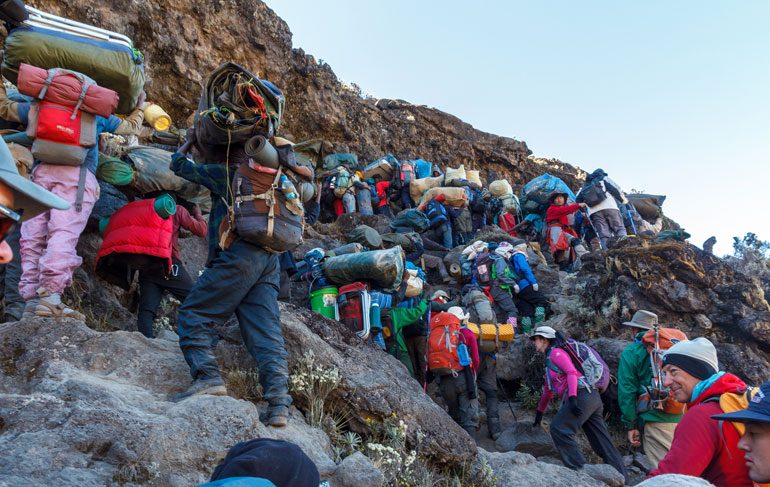
Porters are the backbone of a Kilimanjaro trek. They carry tents, food supplies, cooking equipment, climbers’ duffel bags, and shared mountain gear so trekkers can focus on hiking, acclimatization, and reaching the summit safely.
 
At Kili Quests, we believe every climber should understand how many porters are needed, not only for planning, but also to respect the people who make every Kilimanjaro climb possible.
 
For a deeper look at their daily work, read our guide to Kilimanjaro porter responsibilities.

Quick Answer: How Many Porters Do You Need on Kilimanjaro?

Most Kilimanjaro climbs need about 3 to 5 porters per climber, depending on the route, number of days, group size, camping setup, and service level.
 
A solo climber may still need several porters because the crew must carry more than one personal duffel bag. They also carry tents, food, fuel, cooking equipment, safety items, and shared camp supplies.
 
Longer camping routes such as Lemosho, Machame, Rongai, and Northern Circuit usually require more porter support than shorter or hut-based climbs because more food and equipment must be moved between camps.
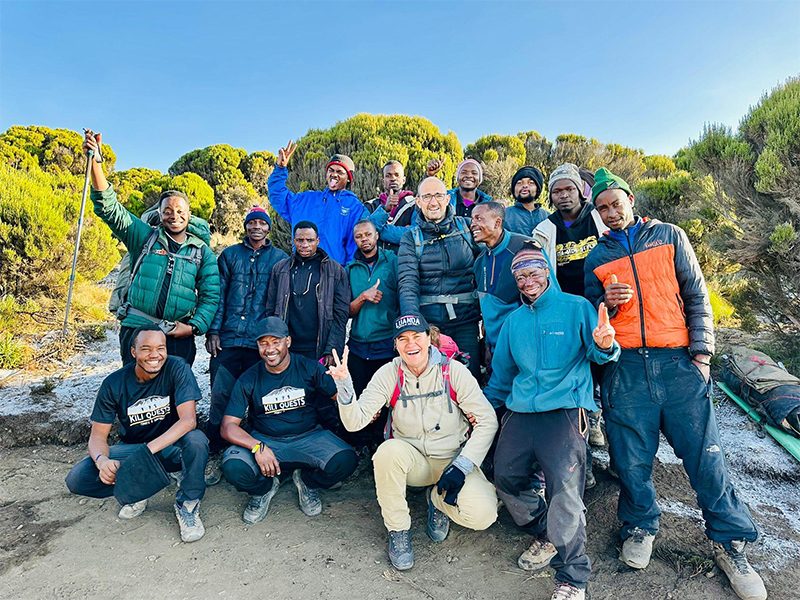
Kilimanjaro trekkers and porters smiling together at the end of a successful hike
Each climber on Kilimanjaro requires several porters to carry gear, food, and tents , a full support crew ensures safety and comfort

Table of Contents

Typical Porter-to-Climber Ratio on Kilimanjaro

A common estimate is 3 to 5 porters per climber, but this should be treated as a guide, not a fixed rule. The real number depends on the route, trek duration, equipment, food supplies, and how the climb is organized.
 
A proper porter ratio helps with:
  • Safe load distribution
  • Faster and better camp setup
  • Enough food, fuel, and water support
  • Better working conditions for the crew
  • A smoother trekking experience for climbers
If a Kilimanjaro climb looks unusually cheap, one thing to check is whether the operator is using enough porters. Cutting porter numbers can reduce the price, but it may also lead to overloaded crew members and weaker support on the mountain.
 
See how crew size affects appreciation and end-of-climb payments in our Kilimanjaro tipping guide.

What Porters Carry on Kilimanjaro

Porters carry the equipment needed to keep a multi-day Kilimanjaro climb running safely and comfortably. This includes both personal climber gear and shared group supplies.
 
Common items carried by porters include:
  • Climbers’ duffel bags
  • Sleeping tents and camping equipment
  • Dining tent and kitchen equipment
  • Food supplies and cooking fuel
  • Water containers and camp supplies
  • Staff gear and mountain support items
  • Private toilet equipment where included
  • Safety and emergency support items
Climbers usually carry only a small daypack with water, snacks, rain gear, warm layers, sunscreen, camera, and personal items needed during the day.
 
Porter load limits matter because responsible operators should not overload fewer porters to reduce costs. KPAP states that porter loads should not exceed 20 kg for company gear, excluding the porter’s personal kit.For the full breakdown, read our guide to Kilimanjaro porter weight limits.
 
To see what support, meals, equipment, and safety items are included in your trek, visit our guide to what’s included in our Kilimanjaro climb package.

How Many Porters Do You Need for Your Group?

Here’s a typical breakdown based on group size:
Group Size Typical Porters Other Crew Why This Crew Size Is Needed
1 climber 4–5 porters 1 guide, 1 cook Even solo climbs need support for tents, food, kitchen gear, safety items, and personal luggage.
2 climbers 8–9 porters 1–2 guides, 1 cook More climbers add duffel bags, meals, water needs, and camping supplies, even when some equipment is shared.
4 climbers 14–17 porters 2 guides, 1–2 cooks Group support increases because food, fuel, tents, dining setup, and porter load limits must be managed properly.
6 climbers 21–25 porters 3 guides, 2 cooks Larger groups need more porter support, but shared equipment can make the crew more efficient.
Kilimanjaro porter walking along the mountain trail with gear balanced on head
Porters walk long distances each day through tough terrain — carrying essential supplies that make your trek possible

Why the Number of Porters Changes

The number of porters needed for Kilimanjaro is not fixed. A responsible company calculates crew size based on the route, number of days, equipment, food supply, and safe load distribution.

Route Choice

Camping routes such as Machame, Lemosho, Rongai, and Northern Circuit usually require more porters because tents, kitchen gear, dining equipment, and camp supplies must be carried between camps.

The Marangu Route is different because climbers sleep in huts instead of tents. This can reduce some camping equipment needs, although porters are still required for duffel bags, food, and other support items.

Before choosing your trail, compare the main options in our Kilimanjaro routes guide.

Trek Duration

More days on the mountain means more food, fuel, and supplies. A 7-day or 8-day climb usually needs more porter support than a shorter climb because the crew must carry enough resources for the full expedition.
 
This is one reason longer routes often cost more than shorter routes. They provide better acclimatization time, but they also require more staff, food, and logistics.
 
To understand how crew size, park fees, food, route length, and logistics affect your total price, read our full guide to Kilimanjaro climb cost.

Level of Service

The style of climb also affects porter numbers. A basic camping setup may need fewer supplies, while a more comfortable climb may require extra equipment such as larger tents, private toilet tents, better dining support, or additional camp gear.
 
That does not mean extra porters are a bad thing. When the service level increases, crew size must also increase so that loads remain fair and the climb runs smoothly.
 
For example, climbs that include a private toilet tent, extra dining comfort, or more camp equipment may require additional porter support. This is normal when the extra equipment is planned responsibly and porter loads remain within safe limits.

Camping Routes vs Marangu Route

Camping routes usually require more porters because the team must carry tents, dining equipment, kitchen gear, and more camp supplies between each campsite. This applies to routes such as Machame, Lemosho, Rongai, Umbwe, and Northern Circuit.
 
The Marangu Route is different because climbers sleep in mountain huts instead of tents. This can reduce some camping equipment needs, but porters are still needed for duffel bags, food, cooking supplies, and other support items.
 
So the question is not only “how many porters per climber?” The better question is: which route are you climbing, how many days are you on the mountain, and what level of support is included?

Why Too Few Porters Can Be a Red Flag

Some climbers are surprised by the size of a Kilimanjaro mountain crew. But on Kilimanjaro, fewer porters does not always mean a better or more efficient climb.
 
In many cases, too few porters can be a warning sign.
 
A low-cost operator may reduce crew size to make the package look cheaper. The problem is that the same equipment still has to reach each camp: tents, food, cooking gear, fuel, water containers, safety items, and climbers’ duffel bags.
 
When there are not enough porters, the result can be:
  • Overloaded crew members
  • Poor camp organization
  • Delayed meals and camp setup
  • Lower morale among the team
  • Less reliable support for climbers
A proper crew size protects both the climber and the porter. It also shows that the operator is serious about safety, logistics, and ethical trekking.

Before Booking, Ask About Porter Support

Before choosing a Kilimanjaro operator, ask how the company plans porter numbers, load limits, meals, wages, and crew welfare.
 
A responsible company should be able to explain:
  • How many porters are used for your group size
  • How porter loads are controlled
  • Whether crew members receive proper meals and shelter
  • How tipping is handled
  • What support equipment is included in the climb
If the company cannot answer clearly, that is a red flag.

The Kili Quests Difference

At Kili Quests, porter welfare is part of how we plan every climb. We do not see porters as background workers. They are essential members of the mountain team.

Before each trek, we consider the route, group size, number of days, food supply, camping setup, and equipment needs so the crew is properly organized from the start.

We focus on:
  • The correct number of porters for each trek
  • Responsible load distribution
  • Fair wages and respectful treatment
  • Proper meals and mountain support for the crew
  • Safe working conditions throughout the climb
  • Experienced guides who manage the team properly
We do not just organize climbs. We support the people who make Kilimanjaro climbs possible.

For more about mountain safety, read our guide: Is Kilimanjaro dangerous?

Tipping and Respect for Kilimanjaro Porters

Porters are not just part of the logistics. They are part of the experience. They often reach camp before climbers, prepare the site, organize gear, support meals, and help keep the climb moving smoothly each day.
 
You can show respect by:
  • Greeting the crew each day
  • Learning a few Swahili words such as “asante” and “pole pole”
  • Keeping your duffel bag within the allowed weight
  • Following guide instructions at camp
  • Giving tips fairly at the end of the climb
Tipping is an important part of the Kilimanjaro climbing culture, but it should be handled transparently so the crew receives what is intended for them.
 
See full recommendations in our Kilimanjaro tipping guide.
Kilimanjaro trekker handing a thank-you tip to a smiling mountain guide at the end of the climb
Tipping your Kilimanjaro crew is a meaningful way to show appreciation for their hard work throughout the trek

Frequently Asked Questions About Kilimanjaro Porter Numbers

How many porters are needed for a Kilimanjaro trek?

Most Kilimanjaro expeditions need about 3 to 5 porters per climber. The exact number depends on the group size, route, number of days, camping setup, and level of service. Even solo climbers need several porters because the crew carries tents, food, cooking equipment, safety items, and shared camp supplies.

Why are so many porters required on Kilimanjaro?

Kilimanjaro climbs last several days and require moving equipment from camp to camp. Porters carry food, tents, cooking gear, water containers, duffel bags, and other support items so climbers can focus on hiking and acclimatization.

What is the weight limit for Kilimanjaro porters?

A common ethical standard is that porters should carry no more than 20 kg of company or client gear, excluding their own personal kit. This is why responsible operators plan enough porters instead of overloading fewer crew members.

Does the number of porters change depending on the route?

Yes. Longer camping routes such as Lemosho, Machame, Rongai, and Northern Circuit usually require more porters because they involve more days, more food, and more camping equipment. Hut-based routes such as Marangu may require a different crew setup.

Why is hiring enough porters important for ethical trekking?

Hiring enough porters keeps loads safer, improves camp organization, and protects the people who support the climb. If an operator uses too few porters, the climb may look cheaper, but the crew may be overloaded or poorly supported.

Climb with a Team That Values People

Choosing the right Kilimanjaro company is not only about price, route, or summit success. It is also about how people are treated on the mountain.
 
At Kili Quests, we organize climbs with ethical porter support, experienced local guides, safe logistics, and a mountain team that is respected from start to finish.
 
If you want a Kilimanjaro climb that is well-planned, responsible, and properly supported, contact us today to start planning your trek.
 
Request your custom Kilimanjaro climb plan with Kili Quests.

Related Articles