
Questions before you book? WhatsApp us: +255 (762) 187 967
We could not verify a current official annual death toll for Mount Kilimanjaro. Kilimanjaro Christian Medical Centre in Moshi recorded 21 deaths linked to climbs between January 2016 and December 2017. Nineteen were tourists and two were porters. For tourists alone, the researchers estimated 23 deaths per 100,000 climbers, based on an estimated 40,000 tourist climbers per year. Read the hospital study.
This page is about the numbers and the causes. If you are deciding whether to climb, read Is Climbing Kilimanjaro Dangerous?
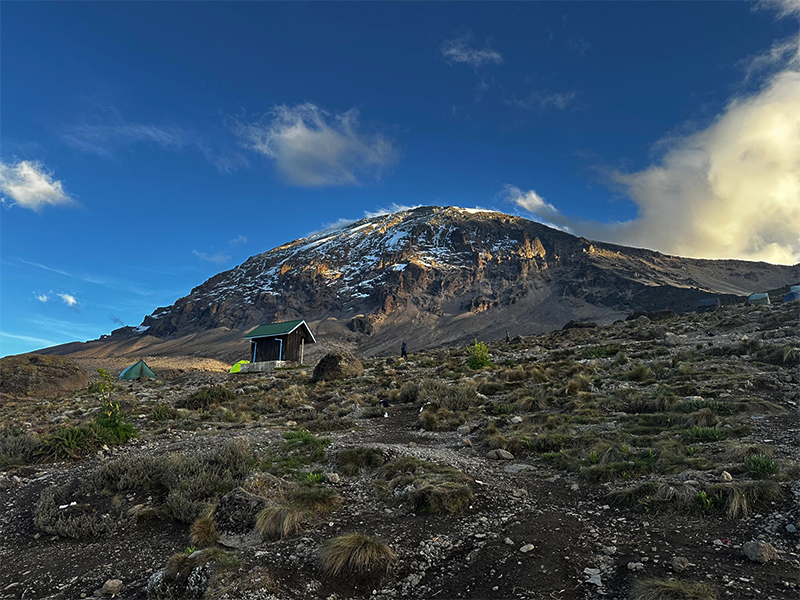
Tens of thousands of people climb Kilimanjaro each year, but we could not find a published, checked count of the people who die. The table lists the studies we did find and what each one can and cannot tell you.
| Source | What it counted | What it found | What it cannot tell you |
|---|---|---|---|
| Referral-hospital review, Wilderness & Environmental Medicine, 2021 (deaths) | Climbers who died and had a postmortem evaluation, from hospital records and referrals, January 2016 to December 2017 | 21 deceased climbers: 19 tourists and 2 porters. 17 died while climbing. Causes: 16 HAPE, 3 HAPE together with HACE (swelling of the brain), 1 trauma, 1 cardiopulmonary. The authors estimate a rate among tourist climbers of 23 per 100,000 (1 in 4,350), using an estimated 40,000 tourist climbers a year. An invasive autopsy was not permitted for 12 of the 21, so for them only an external examination and the climber’s history were available. 10 of those 12 were compatible with HAPE. | Deaths that were not referred to that hospital. It covers one hospital and two years, and the rate depends on an estimate of how many tourists climbed. The 2 porters are in the death count but not in the rate. |
| Same review (illness) | 62 climbers who came to the hospital: 47 inpatients and 15 outpatients | 56 had altitude illness, and HAPE was the most common diagnosis (30 of the 56). 41 of the 47 inpatients (87%) had improved by discharge. The vast majority of climbers who reached hospital made a full recovery. | Climbers who were ill but never went to hospital. |
| Hauser and colleagues, 2004 conference paper (as described by later sources) | Autopsy records of tourists who died while climbing, 1996 to 2003 | 25 tourist deaths: 14 from altitude illness and 11 from other causes. Later sources report an overall rate of about 13.6 deaths per 100,000 climbers. The 2021 hospital paper describes the earlier rate as about 1 per 7,300, with about 22,700 climbers a year at that time. | Today’s risk. It covers tourists only, in a period when fewer people climbed than now, so crew deaths are not included. We could not read the original paper. |
| Prospective cohort, Journal of Travel Medicine, 2022 | 1,237 recreational hikers and 266 porters and guides, December 2019 to March 2020 | Severe altitude symptoms in 8.6% of hikers and 1.5% of porters and guides. 1.1% of hikers were hospitalized. No deaths were reported among the hikers followed. | Deaths in the wider climbing population. It covers one season. |
| Observational study of Finnish trekkers, High Altitude Medicine & Biology, 2008 | 130 trekkers on one route in the winter season of 2006 to 2007 | Acute mountain sickness in 75%. The authors link it mainly to rapid ascent. | Severe illness or deaths. It covers one group and one route. |
| UIAA Medical Commission | No count. An expert summary. | Says reliable mortality figures are very difficult to obtain, and cites an unnamed estimate of about 30 deaths a year. | Where the estimate comes from, so it cannot be checked. |
A death rate needs two numbers: a complete count of deaths and a count of the people who climbed. We have neither in full. The hospital review’s rate is an estimate for tourists only, and it rests on an estimated 40,000 tourist climbers a year. The earlier figure of about 13.6 deaths per 100,000 climbers from 1996 to 2003 is a historical estimate, also for tourists only. The 2021 paper reports the newer rate as higher than the earlier one, but the two used different climber counts and different records, so the difference is not proof that the mountain became more dangerous. Estimates of how many people climb each year also vary by source, so a rate is only as reliable as the climber number behind it.
As far as we could find, the Kilimanjaro National Park Authority (KINAPA) and Tanzania National Parks (TANAPA) publish visitor and climber numbers, not death counts. TANAPA stated that the park recorded 57,456 tourists in 2011/12. That is a count of park visitors, not of climbers who died or even of everyone who climbed. Visitor numbers help with the denominator, but they cannot tell you how many people died.
Many websites quote 3 to 10 deaths a year. We could not verify the underlying records, which years the figure covers, or whether it includes guides and porters.
In the hospital review, 19 of the 21 deaths involved HAPE, three of them together with HACE. One death was from trauma and one from a cardiopulmonary cause. The cause that matters most is therefore altitude illness, not a fall on the trail.
HAPE and HACE are the severe forms of altitude illness. In the review, symptoms began at an average of about 4,600 m for HAPE and about 5,000 m for HAPE together with HACE, with wide variation between patients. The CDC says descent is urgent for HAPE and suspected HACE, with oxygen given if it is available and as little exertion as possible (CDC guidance). Our guide to Kilimanjaro altitude sickness symptoms and causes explains the warning signs.
Many of these cases begin with a symptom that someone decides to carry on through. In the 2022 cohort, the authors concluded that how hikers reacted to symptoms was not appropriate. The only measure linked to fewer severe symptoms was not climbing further, and lack of clear advice was one of the factors linked to severe symptoms. A guide cannot make that decision for you if you hide how you feel.
On Kilimanjaro, the summit is not the measure of a good climb. Getting down safely is.
The Finnish study linked the high rate of acute mountain sickness mainly to rapid ascent. The CDC’s Tanzania guidance recommends a flexible itinerary with extra days, and suggests considering an extra guide who can take an ill climber down (CDC Tanzania guidance). Our guide to acclimatizing on Kilimanjaro covers how route and pace affect this.
Anaphylaxis is a severe, life-threatening allergic reaction that can start within minutes. It can cause swelling of the throat and tongue and difficulty breathing (NHS guidance on anaphylaxis). HAPE affects the lungs in a different way: fluid builds up in the air sacs, so less oxygen reaches the blood. Both can make breathing hard, so from the outside they can look alike, and in principle a climber could have both.
This matters for the numbers, because the cause of a death is decided by examination afterwards. A review of high-altitude illness deaths notes that other causes of death can have symptoms and findings that overlap with altitude illness, which makes postmortem diagnosis challenging, and that HAPE and HACE are diagnoses of exclusion. In the hospital review, an invasive autopsy was not permitted for 12 of the 21 climbers, so for them the cause rested on the climber’s history and an external examination. We are not saying that the deaths in the studies above were caused by allergy. Those studies report HAPE. The practical point is that a climber with a known allergy should tell the team, because an allergic airway emergency and altitude illness both need action within minutes.
If you have had a severe allergic reaction, tell your guide before the climb what triggered it. At our pre-climb briefing you can raise this with us privately, one to one. Carry the adrenaline auto-injectors your doctor prescribed and show your guide where they are. If anaphylaxis is suspected, use the auto-injector straight away and tell the team so they can arrange urgent descent and medical help. The NHS advises that the person does not stand or walk, even if they feel better, and still gets emergency help after using the injector. If HAPE is also suspected, the CDC advises urgent descent with oxygen if it is available.
No. In the hospital review, 17 of the 21 deaths happened while climbing, and HAPE began at an average of about 4,600 m, which is below the summit, with wide variation. The published summary does not break deaths down by day, so we cannot say how many happened on summit night. In the 2022 cohort, severe symptoms usually started before the summit was reached (81%). That is why guides check climbers at camp as well as on the way up.
A review of high-altitude illness deaths describes the illness as not associated with age or physical conditioning, so a fit climber can still become seriously ill. Heart and lung conditions can become more serious at altitude, which is why the CDC advises talking to a doctor before you go.
Deaths are only part of the picture. In the hospital review, the vast majority of the climbers who came to hospital made a full recovery, and 87% of the inpatients had improved by discharge. That is why an early descent matters, and why it helps to know in advance how an evacuation would work and who pays for it. Our Kilimanjaro travel insurance guide explains what cover to look for.
Allen Minja, co-founder of Kili Quests, has taken part in 40 or more evacuations over more than 30 years on Kilimanjaro. That figure covers his personal guiding experience. Kili Quests has not calculated an evacuation rate for its climbs.
Given Minja, who wrote this article, has carried out up to six evacuations so far: two descents on foot and four helicopter rescues.
In Allen Minja’s early years on the mountain, the main way to evacuate a climber was by stretcher. Helicopters are now available, so many evacuations today are done by helicopter.
Some clients ask Allen Minja what happened when they hear about a death on Kilimanjaro. Could the guide have helped? Was there time to get the climber to hospital? A death count cannot answer those questions about one person. You would need to know when symptoms began, what the team saw and what help was available at the time. What you can do before you book is ask who would go down with you, as we explain at the end of this page.
On the Machame route, Allen Minja noticed that a climber was breathing heavily on the walk from Barranco to Karanga. The climber could say only two or three words before coughing. His condition worsened as the team approached Karanga.
The team took him down from Karanga by stretcher that night. They reached town at about 4 am and went straight to hospital. After several days under medical supervision, the climber was able to return home.
What should happen if you see those signs? A climber struggling to breathe at rest or too breathless to finish a sentence needs urgent assessment where the symptoms appear. If high-altitude pulmonary edema (HAPE) is suspected, begin assisted descent urgently, minimise the climber’s exertion and give oxygen if available. Waiting until the next camp can delay lifesaving care. Read the CDC guidance on HAPE.
I was guiding a client on the Marangu route. Her oxygen readings had been getting lower as we arrived at Kibo Hut. After the evening check, we asked her to eat and sleep. When we woke for the summit attempt, I checked her again, and the reading was very low. I gave her oxygen and started the descent to Horombo Hut that same midnight.
We reached Horombo at about 5:00 am and called for a rescue car, which arrived around 8:00 am. On the way down to town she said she felt fine, but I insisted that she go to hospital to be checked.
The two accounts have some things in common. A guide noticed low readings and stayed with the climber, the descent began without waiting for the summit attempt, and the climber went to hospital to be checked, including the one who felt fine on the way down.
This is how Kili Quests works. Other operators do things differently, so ask any company what it checks and how often.
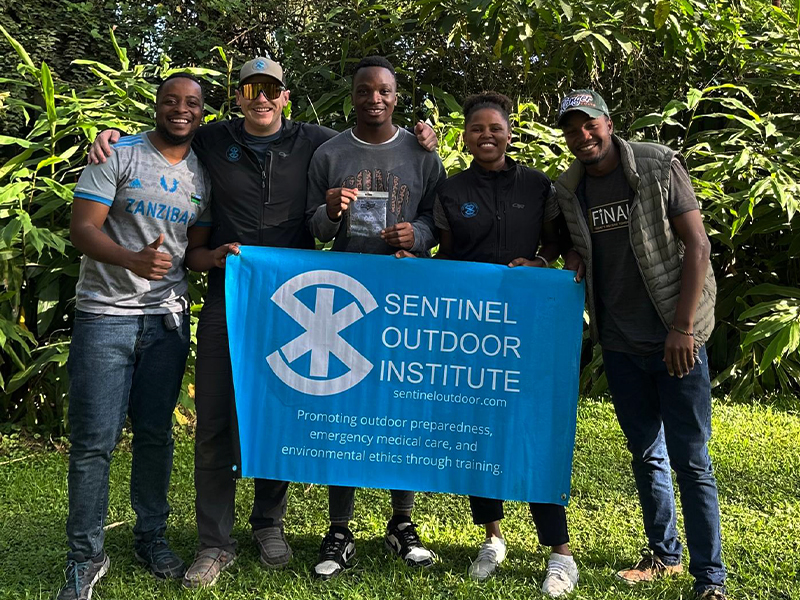
Given Minja, the Kilimanjaro guide who wrote this article, and Daniel Munuo, a Kili Quests guide, each completed Sentinel Outdoor Institute’s 80-hour Wilderness First Responder course and a Sentinel Outdoor Institute CPR course based on American Heart Association Hands-Only CPR guidelines. These are the two guides whose training records we state here.
The evidence points to a few practical steps. Choose an itinerary with enough days to adjust, tell your guide about any symptom as soon as it starts, do not go higher while you have symptoms, and descend if they get worse. We recommend evacuation insurance that covers up to 6,000 m. If you have a severe allergy, tell your guide at the pre-climb briefing and carry your prescribed adrenaline auto-injectors.
Before you book, ask any operator a direct question: “If I become breathless at rest tonight, who goes down with me?” Ask about the ground plan even if you have helicopter cover, because a helicopter needs to be arranged and the climber still has to be looked after until it comes. If you are still deciding whether the climb is right for you, our guide to how dangerous Kilimanjaro is takes you through that decision.
There is no reliable official count. A two-year hospital review (January 2016 to December 2017) found 21 deceased climbers, 19 tourists and 2 porters, and 17 of them died while climbing. The authors estimate 1 death in 4,350 tourist climbers (23 per 100,000), using an estimated 40,000 tourist climbers a year. Many websites quote 3 to 10 deaths a year without a source we could check, and the UIAA cites an unnamed estimate of about 30. We do not publish a single yearly figure.
Altitude illness. In the hospital review, 16 of 21 deaths were from HAPE and 3 were from HAPE together with HACE. One death was from trauma and one from a cardiopulmonary cause.
We found no published study that ranks routes by death rate. That would need comparable death counts and the number of people who started each route over the same period. To compare routes for your own booking, look at the overnight elevations, the days allowed for acclimatization and the descent plan. Our Kilimanjaro routes comparison sets these out.
Crew work at the same altitude. In the 2022 cohort, 1.5% of the 266 porters and guides had severe altitude symptoms, compared with 8.6% of the hikers. Two of the 21 deceased climbers in the hospital review were porters. We did not find a reliable count of crew deaths.
If you can walk down with assistance, our usual team is one guide and two porters. If you need a stretcher, our usual team is one guide and six porters. Ask about the ground evacuation plan even if your insurance includes helicopter rescue.
Sources checked on 20 November 2026
Talk to us before you choose a route
Tell us your dates, how many days you can spend on the mountain and your hiking and altitude experience. We will compare the overnight camps for you and explain how we handle health checks and descent on the route you are considering.
Related articles