Machame Route Kilimanjaro: Most Popular Trek Guide

Reach the Summit with Confidence

Success on Kilimanjaro depends on the right route, acclimatization, and team.We plan every Machame climb for a safe summit.

Plan Your Machame Route the Right Way

The right route, acclimatization, and team make the difference.We plan your Machame climb for a safe summit

OUR CATEGORIES

Machame Route on Kilimanjaro: Most Popular Kilimanjaro Path

Why Choose the Machame Route?

The Machame Route is the most popular way to climb Mount Kilimanjaro, known for its scenic diversity, steeper trails, and strong summit success rate. Often called the “Whiskey Route,” it is more physically demanding than easier options like Marangu, but rewards climbers with some of the most varied landscapes on the mountain.


Unlike longer routes such as Lemosho, Machame follows a slightly faster ascent profile while still allowing for effective acclimatization. This makes it a great choice for trekkers who want a more active and challenging climb without sacrificing their chances of reaching Uhuru Peak.
 
Each route offers a different balance of difficulty, scenery, and acclimatization — see our Kilimanjaro Routes Comparison: Which Route Is Best? to understand how Machame compares to other options.
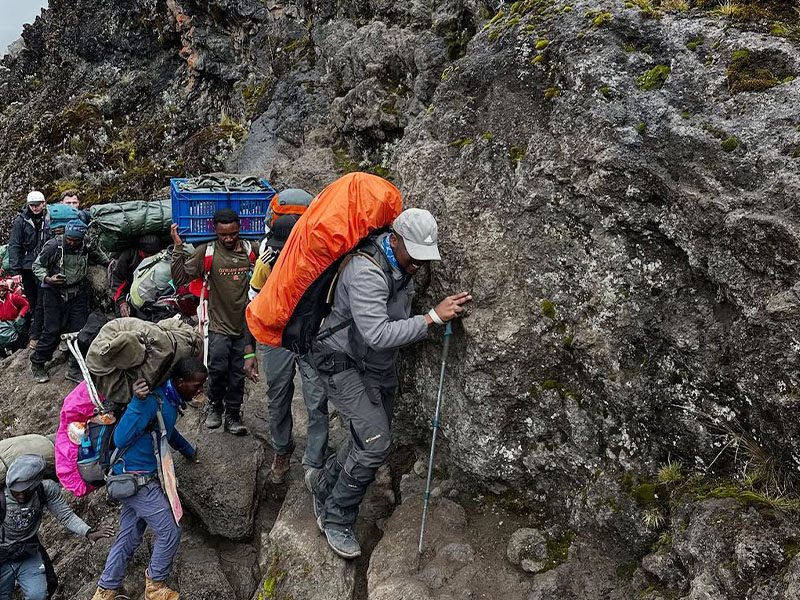
Trekkers and porters carefully ascending the Kissing Rock section on Barranco Wall along the Machame Route, Kilimanjaro | Kili Quests
The Kissing Rock – Barranco Wall – Climbers squeeze through one of the most iconic and narrow points on the Machame Route: the "Kissing Rock" on Barranco Wall.

Table of Contents

What Is the Machame Route on Kilimanjaro?

  Where Does the Machame Route Start?

The Machame Route begins at Machame Gate on the southwestern side of Mount Kilimanjaro. The trail quickly enters dense rainforest before climbing into moorland and alpine desert zones.

How Long Is the Machame Route?

The route is typically completed in 6 or 7 days, covering approximately 62 kilometers (37 miles). The 7-day version is recommended because it provides better acclimatization and improves summit success.

Machame Route Overview

Feature Details
Route Length            –      6 or 7 days
Distance                    –    ~62 km (37 miles)
Start Point                –     Machame Gate (southwest side)
Highest Point          –      Uhuru Peak (5,895 m / 19,341 ft)
Difficulty                  –      Moderate to challenging
Best                           –      For  Hikers wanting adventure & scenery
Success Rate          –       ~95% on the 7-day Itinerary

Machame Route Days and Elevation Profile

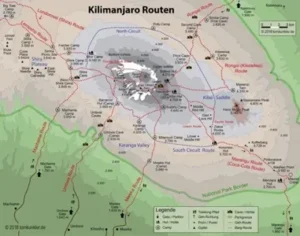
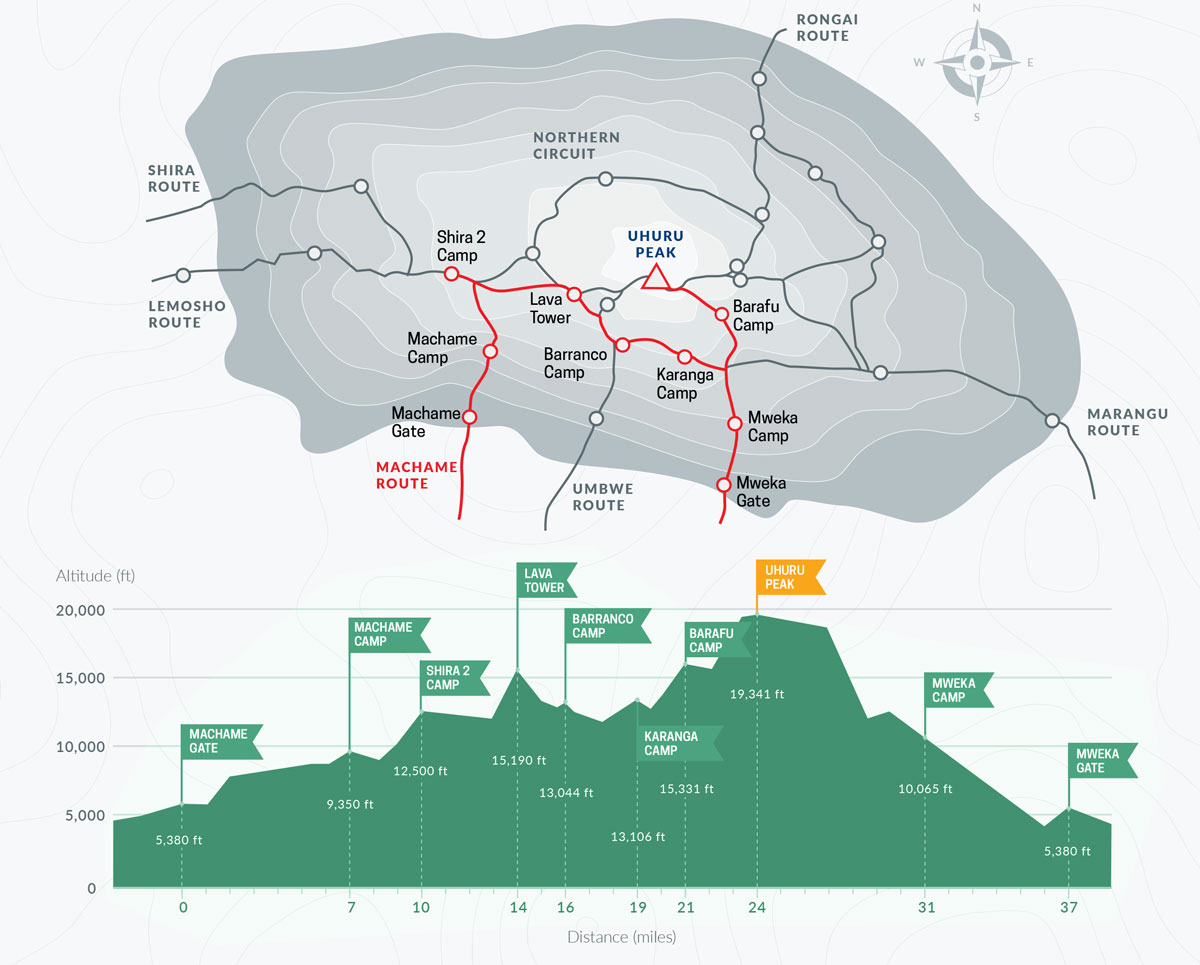
Machame Route map on Mount Kilimanjaro showing trail path, elevation profile, and major camps to Uhuru Peak
A scenic Kilimanjaro trail via Lava Tower and Barafu Camp, descending through Mweka Gate.

Machame Route Itinerary (7-Day Version)

Day 1 – Machame Gate to Machame Camp

This first day is a steady climb through rainforest, where humidity and muddy trails can make the hike feel more demanding than expected.
  • Altitude: 1,800 m to 2,835 m
  • Time: 5–6 hrs
  • Rainforest zone; trail can be muddy

Day 2: Machame Camp to Shira Cave Camp

  • Altitude: 2,835 m to 3,750 m
  • Time: 5 hrs
  • Enter moorland zone with stunning views

Day 3: Shira Camp to Barranco Camp (via Lava Tower)

This is a key acclimatization day following the “climb high, sleep low” principle, which helps your body adjust to altitude.
 
  • Altitude gain: up to 4,630 m, then sleep at 3,960 m
  • Time: 6–7 hrs
  • Acclimatization day with dramatic scenery

Day 4: Barranco to Karanga Camp

  • Altitude: 3,960 m to 4,035 m
  • Time: 4–5 hrs
  • Scramble the famous Barranco Wall

Day 5: Karanga to Barafu Camp

  • Altitude: 4,035 m to 4,673 m
  • Time: 3–4 hrs
  • Alpine desert zone, prepare for summit

Day 6: Summit Day – Barafu to Uhuru Peak & Mweka Camp

Summit night is the most challenging part of the climb, combining altitude, cold, and long trekking hours in low oxygen conditions.

  • Altitude: 4,673 m to 5,895 m, then descend to 3,100 m
  • Time: 12–14 hrs
  • Summit at sunrise, long descent
 Read Our Article about,How Hard Is Kilimanjaro?

Day 7: Mweka Camp to Mweka Gate

  • Altitude: 3,100 m to 1,640 m
  • Time: 3 hrs
  • Finish your trek with certificate ceremony

Machame Route Difficulty, Acclimatization & Fitness

Is the Machame Route Difficult?

The Machame Route is considered moderately challenging due to its steeper sections and faster elevation gain compared to longer routes like Lemosho.

How Acclimatization Works on Machame

Although shorter than Lemosho, Machame still includes important acclimatization days, especially around Lava Tower, helping improve summit success.
 
Read our article about, Kilimanjaro Success Rate

Who Should Choose This Route?

  • Trekkers in good physical condition
  • Climbers who prefer a more active pace
  • Those looking for a balance of challenge and scenery
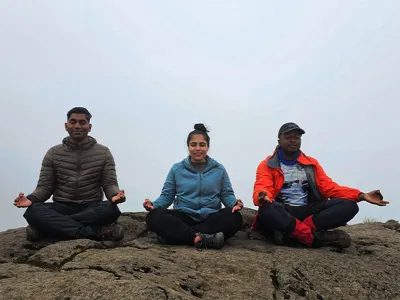
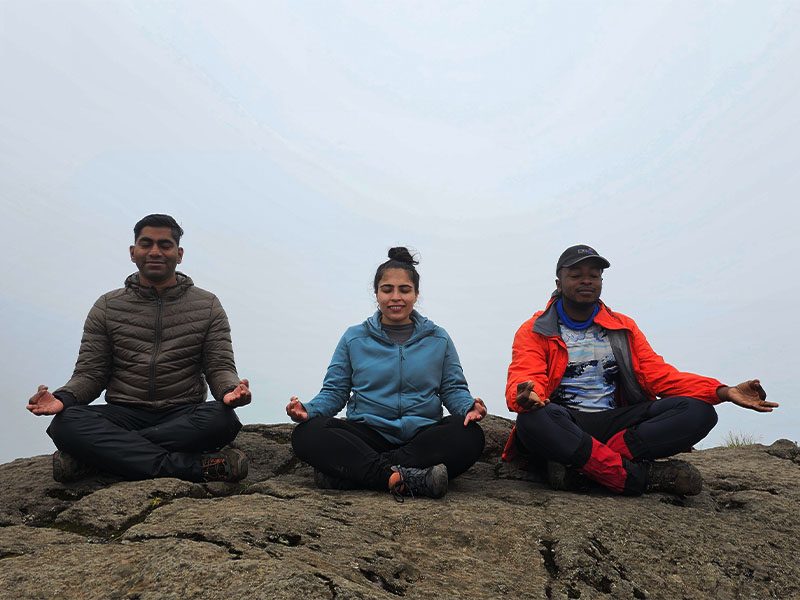
Trekkers meditating on a rock during a peaceful break on the Machame Route, Mount Kilimanjaro | Kili Quests
Mindful Moment on the Machame Trail – Climbers pause for a short meditation break on the way to Shira Camp, embracing Kilimanjaro’s calm Moorland environment.

Best Time to Climb the Machame Route

Dry Seasons (Best Conditions)

The best time to climb is during January–March and June–October, when trails are drier and visibility is clearer.

  •  January–March: Clear skies, mild weather
  • June–October: Dry season, most popular
  • Avoid April–May and November due to rain
Read our article about, Best Time to Climb Kilimanjaro

What Makes Machame Special?

 Iconic Barranco Wall challenge

Excellent views of Kibo and Mount Meru

Shared trail with Lemosho Route  from Shira  Route onwards

Wide ecological diversity — rainforest to arctic zone

Is the Machame Route Right for You?

Choose Machame If You Want:

  • A more active and challenging climb
  • Excellent scenery in fewer days
  • A popular route with strong success rates
 

When Machame May Not Be Ideal

  • If you prefer a slower pace
  • If you want maximum acclimatization (Lemosho better)
Trekkers posing with hiking poles at the Shira Cave Camp sign on Day 2 of the Machame Route, Kilimanjaro | Kili Quests
Shira Cave Camp (3,750m) – Climbers celebrate their arrival at this scenic moorland campsite on Day 2 of the Machame Route, Kilimanjaro.

Frequently Asked Questions About the Machame Route

How difficult is the Machame Route on Mount Kilimanjaro?

The Machame Route is considered moderately challenging. It includes steep sections such as the Barranco Wall and long trekking days, but it does not require technical climbing skills. With proper acclimatization and preparation, many trekkers successfully reach the summit.

Why is the Machame Route called the “Whiskey Route”?

The Machame Route is nicknamed the “Whiskey Route” because it is more physically demanding than the Marangu Route, which is known as the “Coca-Cola Route.”

How many days does it take to climb the Machame Route?

Most climbers complete the Machame Route in 6 or 7 days. The 7-day itinerary is recommended because it provides better acclimatization and increases summit success rates.

What is the success rate of the Machame Route?

The Machame Route has a high summit success rate, often around 90–95% on the 7-day itinerary due to its gradual acclimatization profile.

What makes the Machame Route popular?

The Machame Route is popular because it offers diverse scenery, including rainforest, moorland, alpine desert, and the summit glaciers of Mount Kilimanjaro. It also provides good acclimatization compared to shorter routes.

Which routes connect with the Machame Route?

Several routes join the Machame Route, including the Lemosho Route and Shira Route near the Shira Plateau before continuing toward the summit

Climb Kilimanjaro via Machame with Kili Quests

At Kili Quests, we guide climbers on the Machame Route with a strong focus on pacing, acclimatization, and safety. This route offers the perfect balance between challenge and success when approached correctly.Our 7-day Machame climbs are designed to give you the best chance of reaching Uhuru Peak while enjoying one of Kilimanjaro’s most scenic trails.

 
Kilimanjaro Packing List (Essential Gear Guide)
Contact us to plan your 7-day Machame Route trek.

Related Articles

Kilimanjaro Climb Package: Meals, Gear, Guides & More

Choose the Right Kilimanjaro Package

The package you choose affects your comfort, safety, and overall experience on the mountain.
At Kili Quests, we help you plan your climb based on:

Plan Your Kilimanjaro Climb the Right Way

Understanding routes, cost, and difficulty will help you prepare better.At Kili Quests, start with:

OUR CATEGORIES

Kilimanjaro Climbing Package: What’s Included | Kili Quests

Climbing Mount Kilimanjaro is one of the most rewarding adventures in the world  but many climbers don’t fully understand what they are actually paying for.At Kili Quests, our climbing packages are designed to be fully supported, safe, and stress-free, so you can focus on the journey instead of worrying about logistics.
In this guide, you’ll get a complete breakdown of what’s included, what’s not included, and what to expect when booking your Kilimanjaro climb.
Before choosing a package, it’s important to understand the full cost. You can read our detailed breakdown here:How Much Does It Cost to Climb Mount Kilimanjaro? 
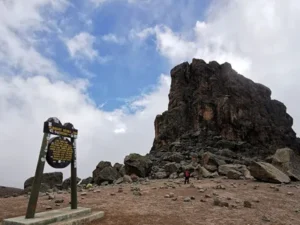
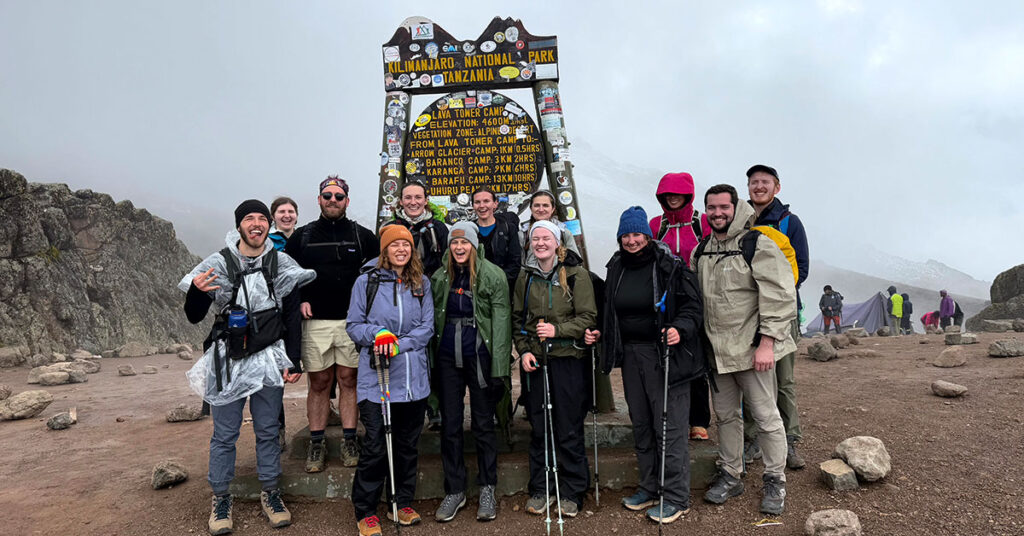
Welcome to Lava Tower, a key acclimatization point on Kilimanjaro

Who This Kilimanjaro Package Is Best For

  • First-time climbers who want full support
  • Travelers who want a stress-free experience
  • Climbers who value safety, logistics, and ethical porter treatment
  • People comparing operators and wanting to understand real value

What’s Included in Our Kilimanjaro Climbing Package

Transportation & Transfers

  • Airport pick-up from Kilimanjaro International Airport (JRO), Moshi, or Arusha
  • Return transfer after your trek
  • Round-trip transport to and from the Kilimanjaro National Park gate
Everything is arranged so your journey runs smoothly from arrival to departure.

Park Fees & Permits

  • Kilimanjaro National Park entry fees
  • Camping fees
  • Rescue fees
  • Environmental and conservation charges
These are mandatory fees set by TANAPA and are fully included in your package.

Professional Guides & Support Team

  • Certified, English-speaking lead guides (WFR trained)
  • Assistant guides (1 per 2 climbers)
  • Experienced porters carrying equipment and supplies
  • Mountain cooks preparing fresh meals daily
  • pulse oximeter
  • emergency oxygen
  • first aid kit
  • daily health checks
Your support team is one of the most important factors for a safe and successful climb.
 If you’re wondering how challenging the climb actually is, read:How Hard is Kilimanjaro? 

Accommodation (Before, During & After)

  • 2 hotel nights (before and after your climb, breakfast included)
  • High-quality mountain tents
  • Sleeping mats
  • Dining tent with tables and chairs
  • Full camp setup and breakdown
You don’t need camping experience — everything is taken care of.

Meals & Drinking Water

  • 3 fresh meals per day on the mountain
  • Hot breakfasts, packed or cooked lunches, and warm dinners
  • Clean, treated drinking water daily
  • Special dietary options available (vegetarian, vegan, gluten-free)
Read about what you’ll eat on the mountain:What Food Is Served on Kilimanjaro?

Camping & Climbing Equipment (Provided)

  • Sleeping mats
  • Dining tent and furniture
  • Cooking equipment and gas stoves
  • Cutlery and dining supplies
  • Solar lighting
  • Private portable toilet (flush system) at every camp
Comfort plays a bigger role than most people expect, especially at high altitude.

Ethical Treatment of Crew

  • Fair wages above TANAPA recommendations
  • Strict porter weight limits
  • Ethical working conditions
Responsible tourism ensures both climbers and crew have a positive experience.
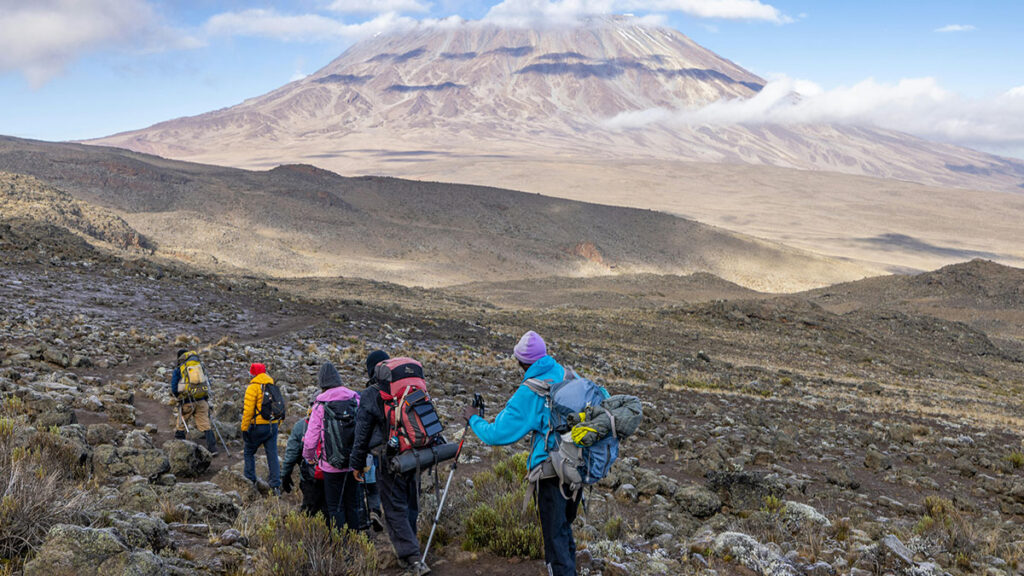
Step by step across the land that knows no boundaries.

Why These Inclusions Matter on Kilimanjaro

  • Park fees are mandatory and affect total cost
  • Experienced guides improve safety and summit success
  • Good meals and hydration help with energy and recovery
  • Proper camp setup improves comfort at altitude
  • Ethical porter treatment matters when choosing an operator

What’s Not Included in the Package

Personal Gear

  • Sleeping bags
  • Hiking boots
  • Trekking poles
  • Thermal clothing
  • Gloves and backpacks
These can be rented locally in Moshi or Arusha.
Not sure what to bring?Kilimanjaro Packing List Guide 

Tips & Gratuities

  • Tips for guides, porters, and cooks are not included
Tipping is a standard part of the Kilimanjaro experience.
See full recommendations here:Kilimanjaro Tipping Guide 

Flights & External Transport

  • International or domestic flights
  • Transfers from other regions (e.g., Nairobi)

Tanzania Visa

  • Visa fees and application

Don’t know where how to apply for visa read our: Tanzania Visa Guide.

Travel Insurance

Not included, but highly recommended.Your insurance should cover:
  • Medical emergencies
  • Altitude sickness
  • Emergency evacuation
  • Trip interruption
Read how to stay safe at altitude:Altitude Sickness on Kilimanjaro Guide 
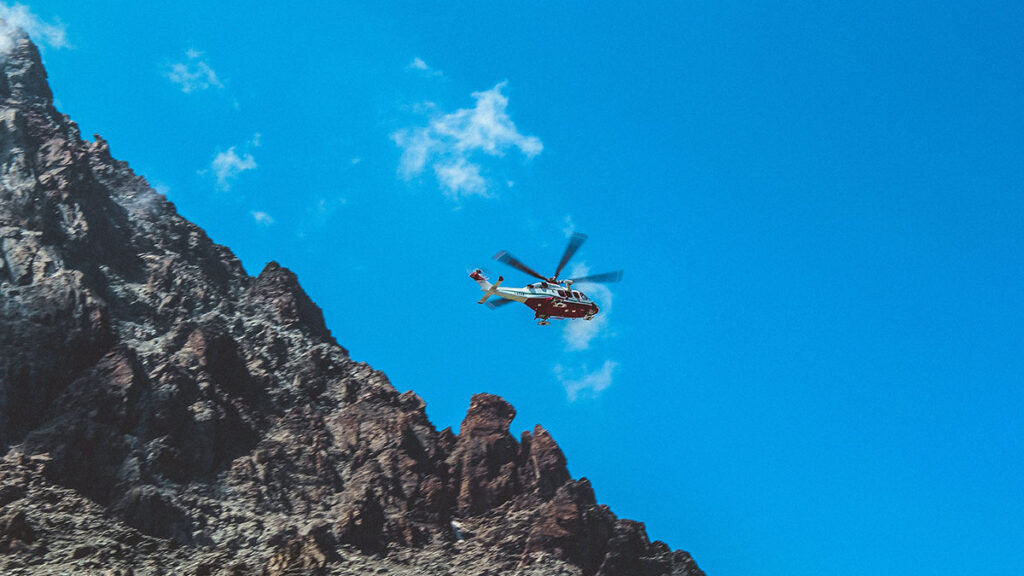
Helicopter flying over Mount Kilimanjaro during an emergency evacuation
Your safety is our top priority—evacuation support available if needed.

Extra Hotel Nights

  • Additional nights outside the included two

Does the Package Change by Route?

  • Longer routes usually cost more because of extra park fees, staff days, and supplies
  • Routes like Lemosho and Northern Circuit often include more acclimatization time
  • Shorter routes may be cheaper but can reduce summit success
Compare routes before booking:Kilimanjaro Routes Guide  

How to Choose the Right Kilimanjaro Package

Not all climbing packages are the same. A cheaper option may seem attractive, but it can affect your safety, comfort, and summit success.
Things to consider:
  • Number of acclimatization days
  • Guide experience
  • Group size
  • Equipment quality
  • Safety protocols
Compare routes before booking:Kilimanjaro Routes Guide 

Why Booking With a Local Kilimanjaro Operator Matters

  • Local, experienced mountain team
  • Strong focus on safety and acclimatization
  • Ethical porter treatment
  • better on-ground support
  • Transparent pricing (no hidden costs)
  • Personalized support before, during, and after your climb
We don’t just guide climbs  we create well-planned, safe, and successful summit experiences.

Frequently Asked Questions

What is included in a Kilimanjaro climbing package?

Most Kilimanjaro climbing packages include airport transfers, park permits, professional guides and porters, accommodation before and after the trek, mountain camping equipment, meals during the climb, and transportation to and from the park gate. These services ensure climbers are fully supported throughout the journey.

Are park fees included in Kilimanjaro climbing packages?

Yes. Most tour operators include all required park fees set by Tanzania National Parks Authority (TANAPA). These fees cover park entry, camping permits, rescue fees, and conservation charges required to climb Mount Kilimanjaro.

Do Kilimanjaro packages include guides and porters?

Yes. A professional support team is included in most packages. This usually consists of certified mountain guides, assistant guides, cooks, and porters who carry gear, prepare meals, and help set up camp during the trek.

Are meals provided during the Kilimanjaro climb?

Yes. Trekkers usually receive three freshly prepared meals per day on the mountain, including breakfast, lunch, and dinner. Drinking water is also provided daily, and many companies can accommodate dietary needs such as vegetarian or vegan meals.

What personal items are not included in a Kilimanjaro climbing package?

Personal trekking gear such as sleeping bags, hiking boots, trekking poles, thermal clothing, gloves, and backpacks are usually not included. However, these items can often be rented locally in Moshi or Arusha before the trek begins.

Do Kilimanjaro packages include flights and travel insurance?

No. International flights, visas, and travel insurance are typically not included in climbing packages. Climbers are responsible for arranging their own flights to Kilimanjaro International Airport (JRO) and purchasing travel insurance that covers trekking at high altitude.

 Ready to Climb?

A Kilimanjaro climbing package is not just transport and tents. It is the full support system behind your safety, comfort, acclimatization, and summit success. Understanding what is included helps you compare operators properly and choose a team that gives you the best chance of a safe and rewarding climb.
Let us handle the logistics so you can focus on the experience.
 
Contact Kili Quests today to start planning your Kilimanjaro adventure.

Related Articles