How to Charge Devices on Mount Kilimanjaro (Power & Solar Tips)

Table of Contents

How to Charge Your Devices on Mount Kilimanjaro: Power Tips for Trekkers | Kili Quests

 If you’re heading to Mount Kilimanjaro, one of the most common questions is:
How will I charge my phone or camera on the mountain?”

Since there’s no standard electricity on Kilimanjaro, staying powered up requires preparation. Whether it’s capturing summit moments, navigating offline maps, or staying in touch, here’s how to keep your devices charged during your trek with Kili Quests.
 
Internet Access – Staying online depends on both your power supply and coverage — learn how to manage both.
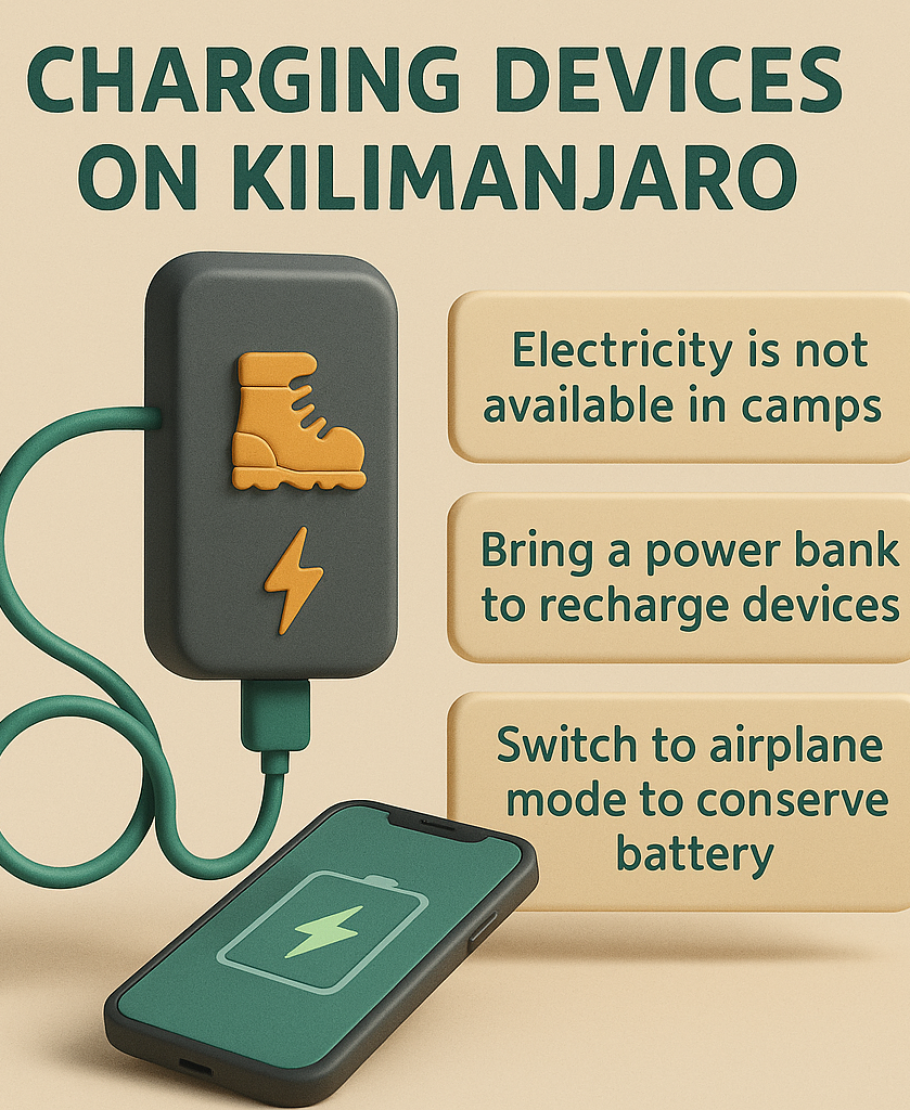
3D-style infographic showing power bank, smartphone, and battery-saving tips for Kilimanjaro.
No charging stations on the mountain — bring a power bank and use airplane mode.

Is There Electricity on Mount Kilimanjaro?

There is no public electricity or grid on the mountain. Camps are remote and lack outlets — but that doesn’t mean you’ll be without power completely.
Here’s what’s available:
 
Charging Services at Camps (Limited)
  • Some high camps (e.g., Barafu Camp) may offer charging via solar or generator
  • Usually available for a fee
  • Devices may need to be left for a few hours
Solar-Powered Lights
  • A few camps have solar lighting
  • Charging small items may be possible (not guaranteed)
  • Ask Kili Quests about your specific route for updated info

Best Ways to Charge Your Devices on the Mountain

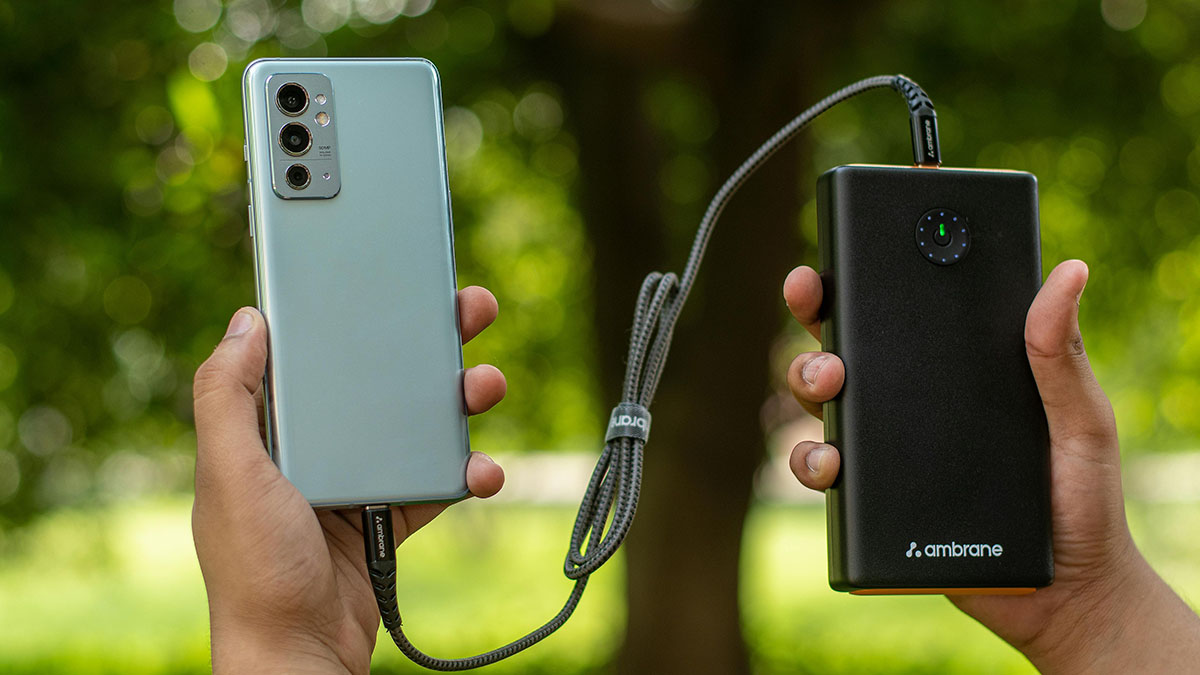
 1. Power Banks (Portable Chargers)
The most reliable option.
  • Recommended Capacity: At least 20,000mAh (more for multi-device use)
  • How Many? Bring 1–2 depending on device usage
  • Tip: Charge fully before departure; store in warm layers to protect battery life
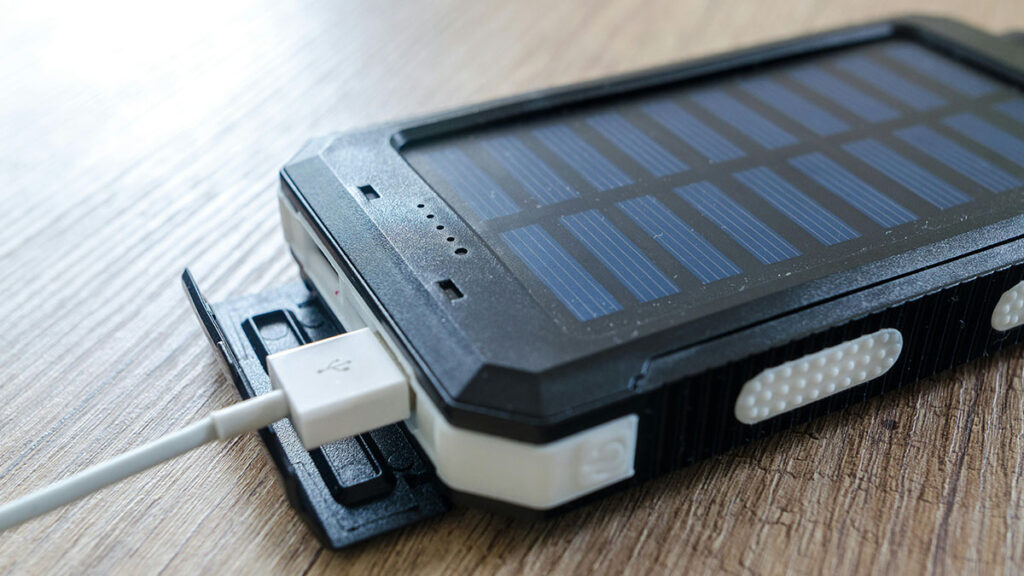
2. Solar Chargers
Optional backup if you prefer to recharge on the go.
  • Works Best: During clear sunny days while hiking
  • Limitations: Less effective at high altitude or in cloudy weather
  • Tip:Mount panels on your backpack to collect sunlight while walking
3. Charge During Rest Stops (If Available)
Some camps have shared solar systems or small generators.
  • You may be able to charge during meals or long stops
  • Charging speed is slow
  • Availability is not guaranteed on all routes
Recharged Solar Power Bank
Power Bank

Smart Battery Management Tips

 Even with backup power, conserving energy is critical. Use these tips to extend your battery life:
  •  Turn off: Wi-Fi, Bluetooth, GPS, and background apps
  •  Lower brightness: Especially during summit night
  •  Use Airplane Mode: Your signal won’t work anyway at high altitudes
  •  Limit usage: Use only when needed to preserve charge
  •  Keep warm: Cold reduces battery performance — store devices inside warm clothing at night
Gear Rentals Guide – Need a power bank or solar charger? See what you can rent locally.

Alternative Power-Free Solutions

Don’t want to worry about charging at all? Here are a few reliable offline solutions:
  • Digital Camera + Extra Batteries: Great for photography without draining phone power
  • Offline Maps: Use apps like Maps.me or download Google Maps offline
  • Pen & Journal: Record your adventure the old-school way
  • Spare Phone: Carry a basic feature phone as a backup communication device
Summit Day Gear Checklist – Know what gear is essential for the coldest and longest day of your trek.

Stay Connected the Smart Way

While Mount Kilimanjaro doesn’t offer traditional charging stations, it is still possible to keep your devices powered up with smart planning. Bring power banks, use solar as backup, and manage battery life wisely.
 
Night Temperatures Guide – Extreme cold affects battery life — be prepared with the right setup.

Frequently Asked Questions

Can you charge your phone on Mount Kilimanjaro?

Charging options on Mount Kilimanjaro are limited because there is no regular electricity on the mountain. Some camps may offer solar or generator charging for a small fee, but the most reliable way to keep devices powered is by bringing a fully charged power bank.

What is the best way to charge devices during a Kilimanjaro trek?

The best solution is to bring high-capacity power banks (around 20,000mAh or more). Many trekkers carry one or two power banks to charge phones, cameras, and headlamps throughout the trek.

Do Kilimanjaro camps have charging stations?

Most camps on Kilimanjaro do not have public charging stations. Occasionally, some high camps may provide limited charging through solar panels or generators, but availability is not guaranteed and charging can take several hours.

Can solar chargers work on Mount Kilimanjaro?

Solar chargers can work on clear sunny days and are sometimes attached to backpacks while hiking. However, they should be used as a backup option because weather conditions and altitude can reduce charging efficiency.

How can cold temperatures affect phone batteries on Kilimanjaro?

Cold temperatures at high altitude can drain batteries quickly. To protect battery life, keep your devices and power banks inside warm clothing or sleeping bags at night.

How can trekkers save battery power during the climb?

Trekkers can extend battery life by using airplane mode, lowering screen brightness, turning off Wi-Fi and Bluetooth, and limiting phone use. Downloading maps, documents, and music before the trek also helps reduce power consumption.

Ready to Climb with Power?

 Book your Kilimanjaro trek with Kili Quests today and get expert advice on gear, packing, and device charging.
 Contact us for personalized route guidance and power tips for your adventure.

Related Articles

Mount Kilimanjaro Weather Guide: Climate & Trekking Tips

Table of Contents

What You Need to Know About Tanzania: Mountain Weather and Climate | Kili Quests

Tanzania is a land of contrasts — from lush lowland rainforests to the frozen summit of Mount Kilimanjaro. If you’re planning a trek with Kili Quests, understanding mountain weather is essential to prepare properly for your adventure.

Whether you’re climbing Kilimanjaro, exploring Mount Meru, or trekking through national parks, this guide explains how Tanzania’s weather changes with elevation and season, so you’re never caught off guard.
 
Best Time to Climb Kilimanjaro – Match your climb to the driest and most scenic season for a safer summit.
Happiness is found between a smile and the next adventure

Tanzania’s Mountain Weather: Seasonal Overview

Tanzania has two primary weather seasons:
  •  Wet Season: March to May (long rains)
  •  Dry Season: June to October (ideal for trekking)
  • Short Rains: November to early December — lighter, less frequent rain
However, mountain weather also depends heavily on altitude, not just the season. Temperatures can drop quickly as you ascend, and sudden changes in wind, cloud cover, or rain are common.
 
Safari Timing Article – Weather affects both trekking and safari plans — combine them wisely.

Weather by Altitude: What to Expect on Kilimanjaro and Beyond

1.Tropical Zone (1,000m – 2,000m)
  • Temperature: 20°C – 30°C (68°F – 86°F)
  • Weather: Warm and humid; lush rainforest and grasslands
  • Expect: Rain showers during wet season, clear skies in dry months
2. Temperate Zone (2,000m – 4,000m)
  • Temperature: 10°C – 20°C (50°F – 68°F), colder at night
  • Weather: Cooler, with alpine vegetation
  • Expect: Clearer views, moderate temperatures — especially on the Machame Route

3. Alpine Zone (4,000m – 5,500m)
  • Temperature: -5°C to 10°C (23°F – 50°F)
  • Weather: Thin air, strong sun during the day, freezing nights
  • Expect: Harsh winds and snow above 4,500m — prepare for summit day
4. Arctic Zone (Above 5,500m)
  • Temperature: -10°C or lower (14°F and below)
  • Weather: Ice, snow, and biting wind at the summit
  • Expect: Extreme cold and low oxygen — layering and acclimatization are key
Night Temperatures – Prepare for freezing nights above 3,000 meters with the right gear.

How Seasons Affect Climbing Conditions

 Dry Season (June – October)
  • Best time to climb Mount Kilimanjaro
  • Trails are dry, views are spectacular
  • High season: expect more climbers

Short Rains (November – December)
  • Trekking is still possible with lighter rain
  • Quieter trails, but occasional showers at lower levels
 Long Rains (March – May)
  • Not ideal for trekking
  • Trails can be slippery or muddy
  • Routes like Machame may close due to poor conditions
Ecological Zones – Each zone has its own weather patterns — see how the climate shifts as you ascend.
Long strides, cool air, and endless views — moorland magic on the trail.

How to Prepare for Mountain Weather in Tanzania

 No matter the route or season, weather on Kilimanjaro and other Tanzanian peaks requires serious preparation:
Dress in Layers:
  • Moisture-wicking base layers
  • Insulating mid-layers
  • Waterproof outer layers
Thermal Gear for Summit:
  • Gloves, thermal socks, balaclava, and down jacket for arctic zone
Footwear:
  • Waterproof, broken-in hiking boots with good grip
Sun Protection:
  • Sunglasses, sunscreen, and sun hat for alpine exposure
 Emergency Preparedness:
  • First aid kit, rain cover, and extra thermal gear

What Kili Quests Offers

At Kili Quests, your safety and success are our top priorities. We ensure you’re fully prepared for all mountain weather conditions with:
  • Wilderness First Responder-trained guides
  • Pre-trek briefings based on seasonal weather updates
  • Flexible itineraries in case of shifting weather patterns

Frequently Asked Questions

How does weather affect trekking in Tanzania?

Weather in Tanzania can change quickly, especially in mountainous areas. Trekkers may experience warm temperatures at lower elevations and freezing conditions near the summit. Understanding seasonal weather and altitude changes helps climbers prepare properly for their adventure.

How cold does it get on Mount Kilimanjaro?

Temperatures near the summit can drop to −10°C (14°F) or lower, especially during summit night. While lower slopes may feel warm and humid, the upper zones are extremely cold due to high altitude and strong winds.

What is the best season for mountain trekking in Tanzania?

The dry season from June to October is generally considered the best time for trekking because trails are drier and visibility is clearer. Another good period is January to March, when conditions are relatively stable and the skies are often clear.

Why does temperature change so much on Kilimanjaro?

Temperature changes mainly because of altitude differences. As climbers ascend higher on the mountain, the air becomes thinner and colder, causing temperatures to drop significantly between the rainforest base and the arctic summit zone.

What clothing should you bring for mountain weather in Tanzania?

Trekkers should pack layered clothing, including moisture-wicking base layers, warm insulating jackets, and waterproof outer shells. Gloves, thermal socks, and a down jacket are especially important for colder high-altitude conditions.

Can weather change quickly on Mount Kilimanjaro?

Yes. Weather conditions on Kilimanjaro can shift rapidly within a single day. Climbers may experience sunshine, rain, wind, or even snow at higher elevations, which is why proper gear and preparation are essential for a safe trek.

Be Weather-Ready, Be Adventure-Ready

Tanzania’s mountains offer spectacular views, rich ecosystems, and unforgettable summit moments — but only if you’re prepared for the weather.

Book your adventure today with Kili Quests Contact us for route advice, weather planning, and expert guidance Come prepared, and summit with confidence

Related Articles

Contact Kili Quests | Tanzania Tours, Safaris & Kilimanjaro Treks

Contact Kili Quests for Your Tanzania Tour & More | Kili Quests

Planning a trip to Tanzania? Whether you’re dreaming of climbing Mount Kilimanjaro, embarking on a thrilling safari, or relaxing in Zanzibar, Kili Quests is here to guide you every step of the way.

We make it easy to get in touch — whether you prefer quick chats, personalized meetings, or detailed emails. Here’s how to reach out and start planning your unforgettable journey.
 
Climb with Experts – “Our experienced local team is here to guide you every step of the way.”
From the Roof of Africa to a well-earned rest — welcome to Millennium Camp

WhatsApp: Quick & Easy Messaging

WhatsApp is the fastest way to reach our team for instant answers and updates.
When to use WhatsApp:
  • Ask quick questions (availability, routes, payments)
  •  Send travel documents (passport, flight info)
  •  Communicate while on the move
How to contact via WhatsApp:
Tap the WhatsApp button on our website or message us directly at:
+255 762 187 967   OR +255 654 639 963
 
What’s in Our Safari Package – “Learn more about what’s included before you reach out to book.”

Zoom: Personalized Virtual Meetings

Prefer a face-to-face discussion? Zoom lets us walk you through everything in detail — from Kilimanjaro climbs to group safaris.


Best for:
  •  Deep itinerary discussions
  •  Custom tour planning
  • Group bookings


How to schedule:
  • Contact us via WhatsApp or email to set a Zoom meeting at your convenience.
  • Visit our website
 

Email: Best for Formal or Detailed Inquiries

Need to send documents or make a formal booking request? Email is ideal when you need more space or a written record.
Use email for:
  •  Requesting quotes & custom itineraries
  •  Booking confirmations & attachments
  •  Formal communications
Email us at:
  • info@kiliquests.com
  • We usually reply within 24 hours.
 
Visa Guide – “Not sure what paperwork you need? We can assist with the visa process too.”
contact us for your Next adventure

Contact Form: Simple and Direct

 Not sure which method to use? The contact form on our website is an easy way to send us your info and get a quick response.
Use it for:
  •  General inquiries
  •  Special accommodation requests
  •  Feedback or concerns
Where to find it:

Top Safari Adventures – Get inspired by our most popular safari routes and experiences.

Phone Call: Speak to a Real Person

 Need to talk directly with a human? We get it. Our lines are open for urgent or personal assistance.
Call us when:
  •  You need urgent answers
  •  You have last-minute changes
  •  You want real-time, personal guidance
Call Kili Quests at:
  • +255 654 639 963 or +255 762 187 967 
Learn more about our routes and success rates: Climb Kilimanjaro with Experts.
At 5,756 meters, the world looks different.

Start Your Tanzanian Adventure Today

From Kilimanjaro’s snowy summit to the plains of Serengeti, your journey starts with a simple message.
Contact us today via:
  • WhatsApp for quick support
  • Zoom for in-depth planning
  • Email for formal requests
  • Phone for personal attention
We’re here to make your experience smooth, safe, and unforgettable.

Frequently Asked Questions

How can I contact Kili Quests to plan my Tanzania adventure?

You can contact Kili Quests through several convenient methods including WhatsApp, email, phone calls, Zoom meetings, or the contact form on the website. These options make it easy to ask questions, request quotes, or start planning your trip.

What is the fastest way to reach the Kili Quests team?

The fastest way to get a response is usually through WhatsApp, where you can quickly ask questions about climbing Mount Kilimanjaro, safari availability, payments, or travel dates.

Can I schedule a virtual meeting to plan my trip?

Yes. Kili Quests offers Zoom meetings for travelers who want a detailed discussion about their itinerary. These meetings are useful for planning Kilimanjaro climbs, customized safari packages, or group travel arrangements.

What information should I include when contacting Kili Quests?

When reaching out, it helps to include details such as your travel dates, number of travelers, preferred activities (Kilimanjaro trekking, safari, or Zanzibar beach holiday), and any special requests. This helps the team prepare the best itinerary for your trip.

How long does it take to receive a response from Kili Quests?

Most email inquiries receive a response within 24 hours, while WhatsApp messages often receive faster replies depending on the time of day and availability.

Can Kili Quests help me plan both a Kilimanjaro trek and a safari?

Yes. Kili Quests can organize complete Tanzania travel experiences including Kilimanjaro climbs, wildlife safaris in parks such as Serengeti National Park, and relaxing beach holidays in Zanzibar.

Ready to Plan?

Message us now on WhatsApp, send an email, or schedule a Zoom call to get started with Kili Quests!
 

Related Articles

Mount Kilimanjaro Guide: Facts, Location & Overview

Mount Kilimanjaro, Africa’s highest peak, stands tall at 5,895 meters (19,341 feet) above sea level. Located in northern Tanzania, this iconic free-standing volcano draws thousands of trekkers each year. Whether you’re planning your first summit or comparing routes, this comprehensive guide covers everything you need to know—from choosing the best route to preparing for altitude and understanding what to expect on the mountain.

Read More »

WhatsApp: Quick & Easy Messaging

WhatsApp is the fastest way to reach our team for instant answers and updates.
When to use WhatsApp:
  • Ask quick questions (availability, routes, payments)
  •  Send travel documents (passport, flight info)
  •  Communicate while on the move
How to contact via WhatsApp:
Tap the WhatsApp button on our website or message us directly at:
+255 762 187 967   OR +255 654 639 963
 
What’s in Our Safari Package – “Learn more about what’s included before you reach out to book.”

Zoom: Personalized Virtual Meetings

Prefer a face-to-face discussion? Zoom lets us walk you through everything in detail — from Kilimanjaro climbs to group safaris.


Best for:
  •  Deep itinerary discussions
  •  Custom tour planning
  • Group bookings


How to schedule:
  • Contact us via WhatsApp or email to set a Zoom meeting at your convenience.
  • Visit our website
 

Email: Best for Formal or Detailed Inquiries

Need to send documents or make a formal booking request? Email is ideal when you need more space or a written record.
Use email for:
  •  Requesting quotes & custom itineraries
  •  Booking confirmations & attachments
  •  Formal communications
Email us at:
  • info@kiliquests.com
  • We usually reply within 24 hours.
 
Visa Guide – “Not sure what paperwork you need? We can assist with the visa process too.”
contact us for your Next adventure

Contact Form: Simple and Direct

 Not sure which method to use? The contact form on our website is an easy way to send us your info and get a quick response.
Use it for:
  •  General inquiries
  •  Special accommodation requests
  •  Feedback or concerns
Where to find it:

Top Safari Adventures – Get inspired by our most popular safari routes and experiences.

Phone Call: Speak to a Real Person

 Need to talk directly with a human? We get it. Our lines are open for urgent or personal assistance.
Call us when:
  •  You need urgent answers
  •  You have last-minute changes
  •  You want real-time, personal guidance
Call Kili Quests at:
  • +255 654 639 963 or +255 762 187 967 
Learn more about our routes and success rates: Climb Kilimanjaro with Experts.
At 5,756 meters, the world looks different.

Start Your Tanzanian Adventure Today

From Kilimanjaro’s snowy summit to the plains of Serengeti, your journey starts with a simple message.
Contact us today via:
  • WhatsApp for quick support
  • Zoom for in-depth planning
  • Email for formal requests
  • Phone for personal attention
We’re here to make your experience smooth, safe, and unforgettable.

Frequently Asked Questions

How can I contact Kili Quests to plan my Tanzania adventure?

You can contact Kili Quests through several convenient methods including WhatsApp, email, phone calls, Zoom meetings, or the contact form on the website. These options make it easy to ask questions, request quotes, or start planning your trip.

What is the fastest way to reach the Kili Quests team?

The fastest way to get a response is usually through WhatsApp, where you can quickly ask questions about climbing Mount Kilimanjaro, safari availability, payments, or travel dates.

Can I schedule a virtual meeting to plan my trip?

Can I schedule a virtual meeting to plan my trip?

Yes. Kili Quests offers Zoom meetings for travelers who want a detailed discussion about their itinerary. These meetings are useful for planning Kilimanjaro climbs, customized safari packages, or group travel arrangements.

Ready to Plan?

Message us now on WhatsApp, send an email, or schedule a Zoom call to get started with Kili Quests!
 

Related Articles