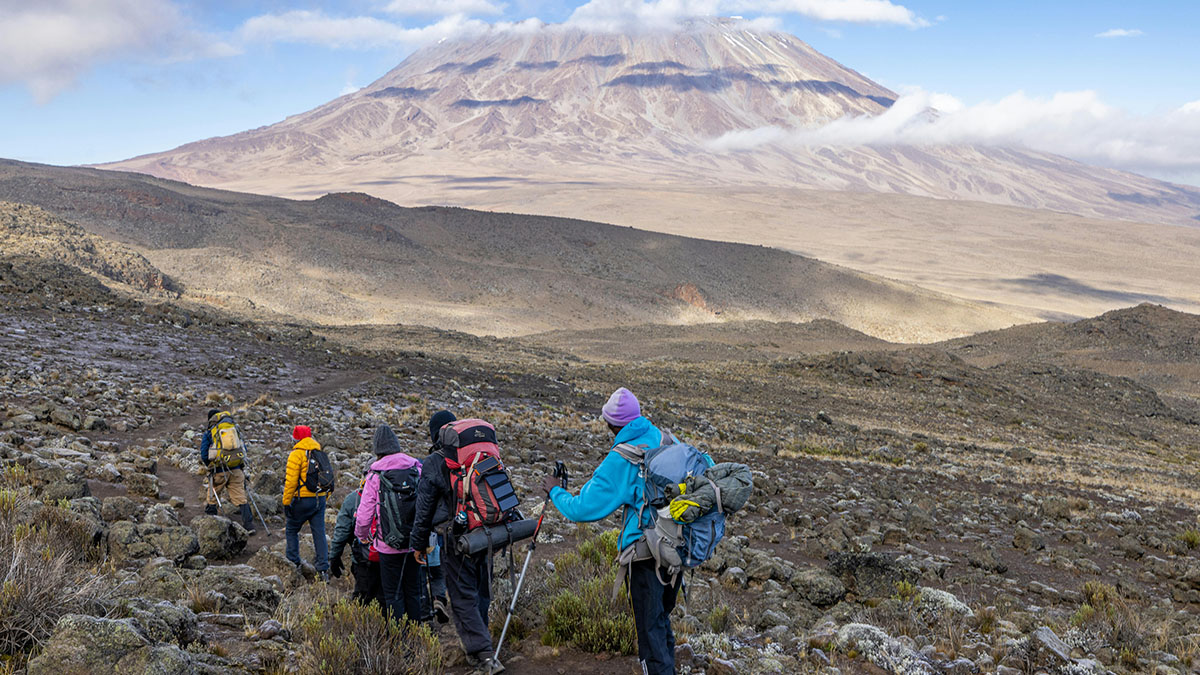
Best Time to Climb Kilimanjaro in 2026: Seasons & Weather

Choose the Best Time to Climb Kilimanjaro

The right season can make the difference between reaching the summit or turning back early.
At Kili Quests, we help you plan your climb based on:

Explore More Kilimanjaro Guides

Planning your Kilimanjaro climb takes more than timing. Explore these essential guides:

OUR CATEGORIES

Best Time to Climb Kilimanjaro: Seasons Explained | Kili Quests

Understanding the Best Time to Climb Mount Kilimanjaro
Wondering when to climb Mount Kilimanjaro?
Timing is one of the most important decisions you’ll make when planning your trek. The season you choose does not just affect the weather — it also affects your summit success, trail conditions, visibility, and overall experience on the mountain.At 5,895 meters (19,341 ft), Kilimanjaro creates its own weather systems. You can begin your trek in warm rainforest and end in freezing alpine desert within a few days. Because of this, choosing the right season  and pairing it with the right route  matters a lot.
 
At Kili Quests, we guide climbers throughout the year and help match each trekker with the best conditions for their goals. In this guide, we break down Kilimanjaro’s seasons, what to expect, and how to choose the best time for your climb.
 
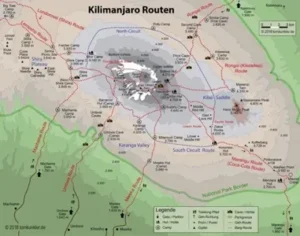
Different routes perform differently depending on weather conditions — see our full Kilimanjaro Routes Comparison Guide.
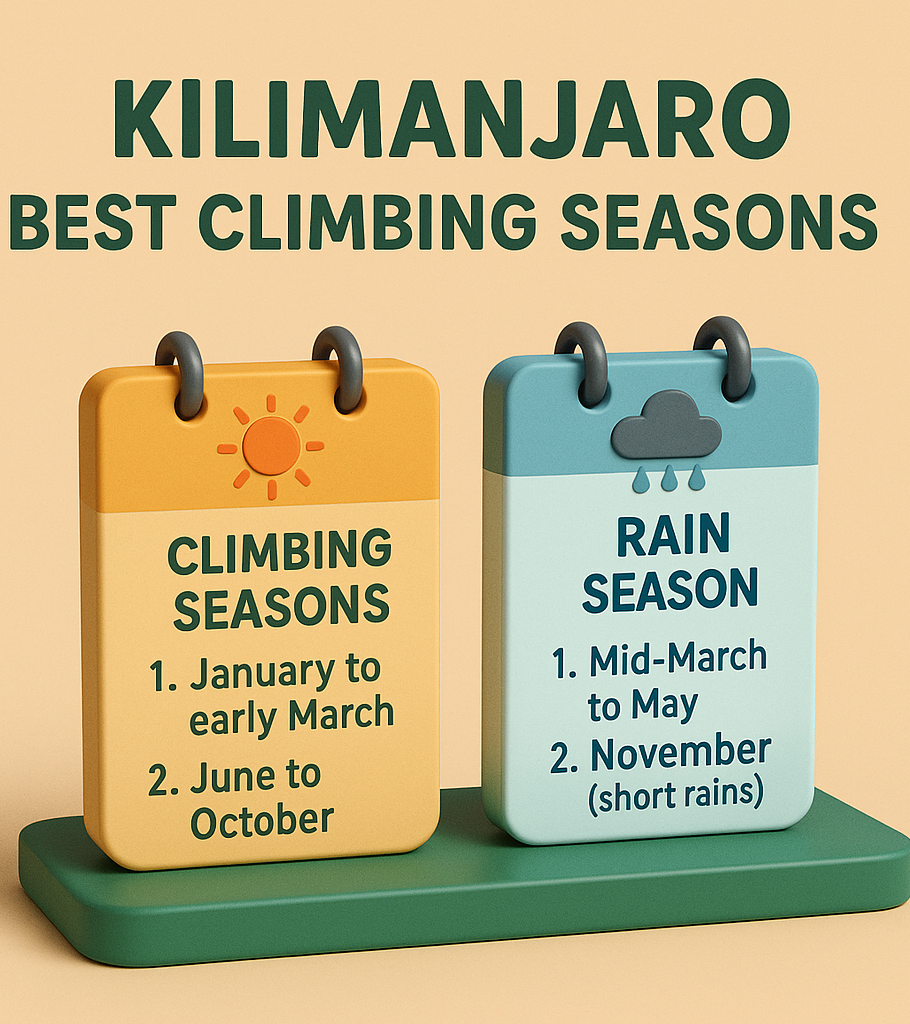
infographic showing the best climbing seasons and rain periods for Mount Kilimanjaro, including January to March and June to October.
Kilimanjaro’s dry seasons are ideal for trekking: January to early March and June to October.

Table of Contents

Kilimanjaro’s Best Seasons for Trekking

Mount Kilimanjaro can be climbed all year, but two main dry seasons usually offer the best conditions for most trekkers.

January to Early March

This is one of the most underrated times to climb Kilimanjaro.
  • Mild temperatures compared to mid-year
  • Moderate traffic, with fewer crowds than peak months
  • A better chance of seeing snow near the summit
  • A good balance between stable weather and a quieter experience

While the lower slopes may still see some clouds or light rain, conditions are generally favorable. This period suits climbers who want good trekking weather without the busiest trails.

June to October

This is the most popular and reliable climbing season.
  • Clear skies and excellent visibility
  • Dry trails with less mud
  • Cooler air at higher altitude
  • More predictable conditions for summit night
Because of its stability, this season is especially good for first-time climbers.
 
To understand how conditions change from rainforest to summit, read our full Kilimanjaro Weather and Climate Guide.
 
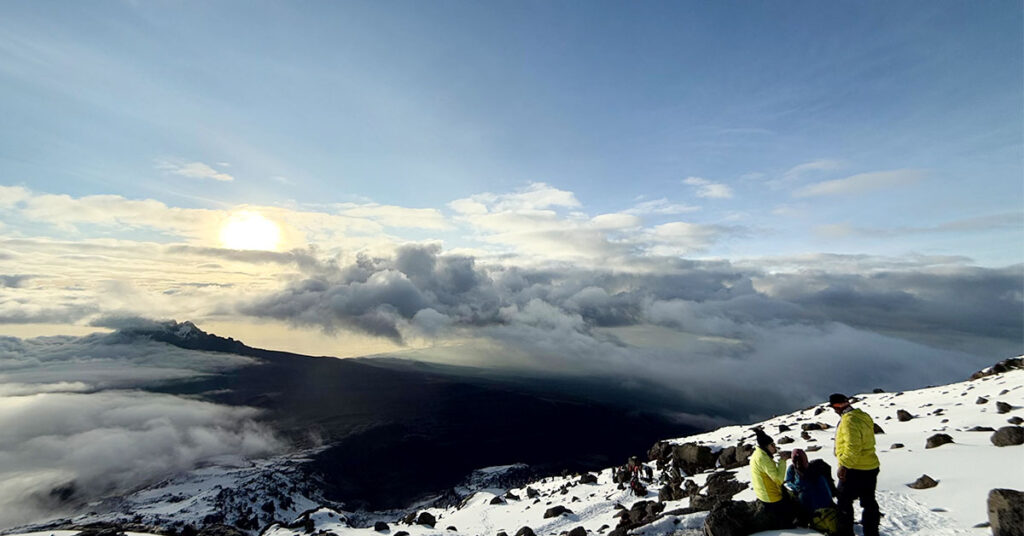
Resting along the trail to Uhuru — one step at a time to the summit.

Why Dry Season Is Usually the Best Time to Climb Kilimanjaro

Dry-season climbs are popular for a reason. Better weather makes the mountain easier to manage physically and mentally.When trails are dry, trekkers can walk more steadily, avoid constant wet gear, and deal with fewer weather-related problems.Visibility is also better, which improves both the trekking experience and the quality of summit views.
 
This does not mean rainy-season climbs are impossible. It simply means that dry months usually offer the easiest and most comfortable overall experience, especially for beginners.

High Season on Kilimanjaro

When Is High Season?

High season usually falls between June and October and again during December to February.

Why High Season Is Popular

These months attract the most climbers because they often provide:
  • Stable weather with lower rainfall
  • Safer, firmer trail conditions
  • Better panoramic views
  • Excellent photography conditions
  • A more predictable summit push
For many climbers, especially first-timers, this is the safest and most enjoyable time to be on the mountain.
 
If you are also thinking about the risks of trekking at altitude, read Is Climbing Kilimanjaro Dangerous?

Rainy Season on Kilimanjaro

When Is the Rainy Season?

The main rainy periods are usually:
  • March to May for the long rains
  • November for the short rains

Can You Climb During the Rainy Season?

Yes, Kilimanjaro can still be climbed during the rainy season. However, conditions become more demanding.Some climbers choose this time because there are fewer people on the mountain and the scenery becomes greener and more dramatic. But the trade-off is a more difficult trekking experience.

Challenges of the Rainy Season

Climbers should expect:
  • Muddy and slippery trails
  • Reduced visibility from cloud cover
  • Wet clothing and gear
  • Colder conditions when rain combines with altitude
  • Greater physical and mental fatigue
This period is more suitable for trekkers who are flexible, well-prepared, and less concerned about perfect views.
 
Make sure you are fully equipped by using our Kilimanjaro Packing List.
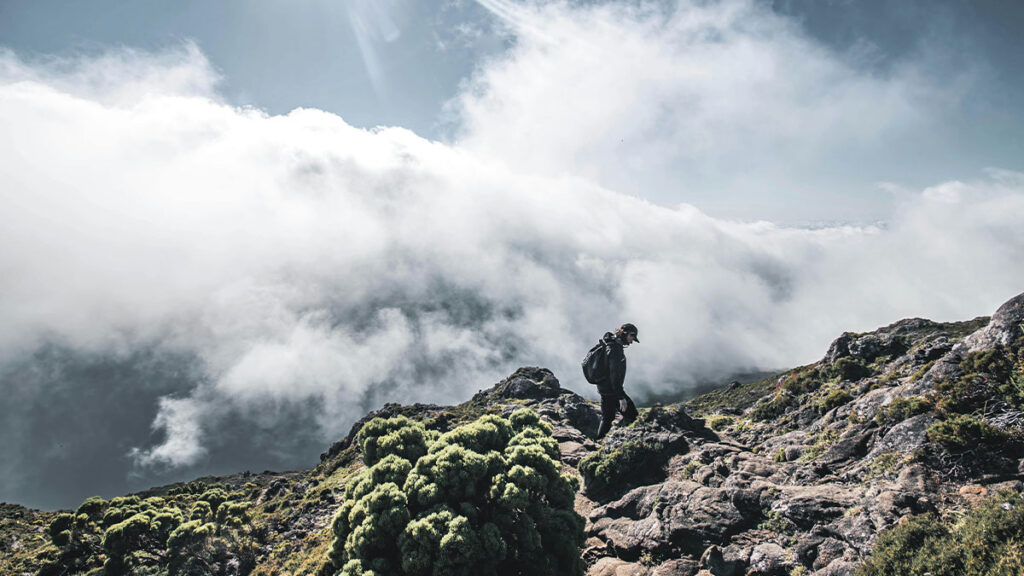
One of those moments where the mountain says it all

How to Choose the Best Time for Your Kilimanjaro Climb

Choosing the best time is not only about finding the driest month. The right timing depends on your experience level, expectations, budget, and preferred trekking style.

Your Fitness and Experience Level

If this is your first high-altitude trek, dry season conditions are usually the better choice. Dry trails are easier to walk on, gear stays more comfortable, and it is easier to maintain a steady pace over several days.Rainy-season climbs can feel much harder because the mountain becomes wetter, colder, and more physically demanding.
 
If you are still preparing, follow our Kilimanjaro Training Guide before your trip.

Your Preference for Crowds or Quiet Trails

Kilimanjaro feels very different depending on when you climb.During peak months, popular routes such as Machame and Lemosho can feel busy. Campsites are more active, and you are likely to meet many other trekkers.Some climbers enjoy this atmosphere because it feels motivating and social. Others prefer a more peaceful and remote experience.If you want more solitude, consider less crowded times or quieter routes like Rongai.

Your Budget and Flexibility

Peak season often brings higher demand and less availability, especially on popular routes. Low season may offer better flexibility and, in some cases, lower prices.
However, lower prices come with more difficult conditions. Saving money only makes sense if you are comfortable trekking in rainier weather.
 
For more on pricing, read our full Kilimanjaro Cost Guide.

The Experience You Want

Ask yourself what matters most on the mountain.
  • If you want classic summit views and clearer skies, dry season is best
  • If you want greener scenery and fewer people, rainy season may suit you
  • If you hope to see snow near the summit, January to March is often a great choice
There is no single perfect answer. The best time depends on the type of journey you want.

The Route You Choose

The route matters just as much as the season.
Some routes handle weather better than others:
  • Rongai is often drier during wetter months
  • Marangu offers hut accommodation
  • Lemosho and Northern Circuit give more time for acclimatization
Before choosing your dates, compare all options in our Kilimanjaro Routes Guide.

Pro Tip: Match Route to Season

Choosing the right combination of route and season can significantly improve your experience.

Best Routes in Rainy Season

Best Routes in Dry Season

This is why route choice should never be separated from season choice.

Every Season Has Its Beauty

There is no single perfect time to climb Kilimanjaro  only the right time for your goals.

  • Want comfort and stronger summit conditions? Aim for June to October
  • Want fewer climbers and greener scenery? Consider March to May
  • Want snow near the summit? Look at January to March

Whatever season you choose, preparation is key. Weather matters, but so do pacing, acclimatization, route choice, and fitness.


Before your trip, make sure you also understand the risks of altitude in our Altitude Sickness Guide.

Frequently Asked Questions About the Best Time to Climb Kilimanjaro

What is the best time of year to climb Mount Kilimanjaro?

The best time to climb Mount Kilimanjaro is during the two main dry seasons: January to early March and June to October.
During these months, the mountain typically offers:
  • More stable weather patterns
  • Lower rainfall
  • Better visibility for summit views
  • Safer and easier trail conditions

For most climbers  especially first-timers  these conditions make a significant difference. You’ll spend less energy dealing with mud, wet gear, or constant cloud cover, allowing you to focus on pacing and acclimatization.However, “best” doesn’t mean the same for everyone. Some climbers intentionally choose quieter months outside peak season for a more personal experience on the mountain.

Can you climb Mount Kilimanjaro during the rainy season?

Yes, Kilimanjaro can be climbed year-round, including during the rainy seasons (March–May and November). But it’s important to understand what that really means.
Climbing during the rainy season is not just about “a bit of rain.” It often involves:
  • Prolonged wet conditions
  • Muddy and slippery trails
  • Limited views due to cloud cover
  • Damp gear over multiple days
That said, there are also advantages. The mountain becomes quieter, the landscape is greener, and some climbers prefer the solitude.If you choose to climb during this period, preparation becomes even more important  especially proper gear and route selection.

Which month has the best weather for climbing Kilimanjaro?

Months like July, August, and September are often considered the most reliable in terms of weather.
During this period, you can generally expect:
  • Clear skies for most of the trek
  • Minimal rainfall
  • Excellent visibility from the summit
  • Cooler but stable temperatures
These conditions make the climb more predictable and enjoyable, particularly for climbers who want classic Kilimanjaro views and a smoother trekking experience.However, these months are also the busiest, so you should expect more people on the trails and at camps.

Is Kilimanjaro crowded during peak climbing season?

Yes  during peak months, especially July to October, Kilimanjaro can feel busy, particularly on popular routes like Machame and Lemosho.
This usually means:
  • Busier campsites
  • More climbers on the same trail sections
  • A more social and shared experience
For some climbers, this creates a motivating atmosphere  especially on summit night. For others, it may reduce the sense of isolation and adventure.
If avoiding crowds is important to you, consider:
  • Traveling during shoulder months
  • Choosing quieter routes like Rongai
  • Or avoiding the most popular itineraries

Is it harder to climb Kilimanjaro during the rainy season?

Yes, climbing during the rainy season is generally more challenging  not because the mountain itself changes, but because the conditions make everything more difficult.
You’ll likely deal with:
  • Slippery and muddy trails that slow your pace
  • Wet gear that affects comfort and morale
  • Reduced visibility, which can make the trek feel longer
  • Increased fatigue due to constant damp conditions
  • These factors can make the climb feel significantly harder, especially for less experienced trekkers.
This is why many first-time climbers are advised to choose dry-season windows, where conditions are more manageable.

Does the season affect Kilimanjaro summit success rates?

Yes  the season can have a noticeable impact on summit success rates.
During dry seasons, climbers often benefit from:
  • More consistent trekking conditions
  • Better rest and recovery (due to less moisture and discomfort)
  • Easier pacing on stable trails
  • Fewer weather-related disruptions

In contrast, rainy conditions can increase fatigue and slow progress, making it harder to maintain the steady pace needed for proper acclimatizationThat said, success is not determined by season alone. Factors like:

  • Route choice
  • Acclimatization strategy
  • Physical preparation
  • Guide experience
often play an even bigger role in whether you reach the summit.

Plan Your Trek With Kili Quests

The best time to climb Kilimanjaro is not just about the calendar  it is about choosing the right conditions for you.
At Kili Quests, we help you:
  • Choose the best season and route
  • Prepare for altitude and weather
  • Improve your chances of reaching the summit
Start planning your Kilimanjaro climb today.

Related Articles

Mount Kilimanjaro Weather Guide: Climate & Trekking Tips

Table of Contents

What You Need to Know About Tanzania: Mountain Weather and Climate | Kili Quests

Tanzania is a land of contrasts — from lush lowland rainforests to the frozen summit of Mount Kilimanjaro. If you’re planning a trek with Kili Quests, understanding mountain weather is essential to prepare properly for your adventure.

Whether you’re climbing Kilimanjaro, exploring Mount Meru, or trekking through national parks, this guide explains how Tanzania’s weather changes with elevation and season, so you’re never caught off guard.
 
Best Time to Climb Kilimanjaro – Match your climb to the driest and most scenic season for a safer summit.
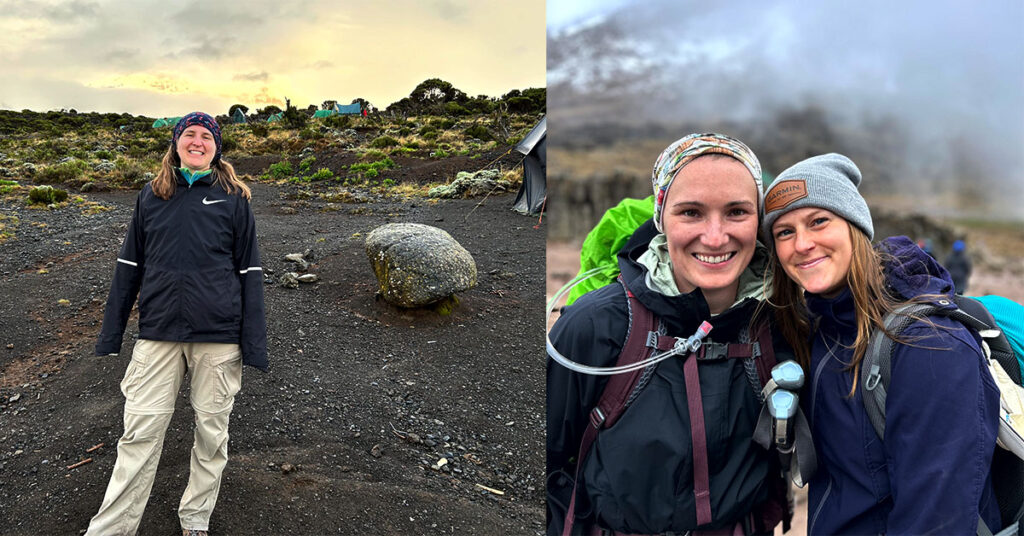
Happiness is found between a smile and the next adventure

Tanzania’s Mountain Weather: Seasonal Overview

Tanzania has two primary weather seasons:
  •  Wet Season: March to May (long rains)
  •  Dry Season: June to October (ideal for trekking)
  • Short Rains: November to early December — lighter, less frequent rain
However, mountain weather also depends heavily on altitude, not just the season. Temperatures can drop quickly as you ascend, and sudden changes in wind, cloud cover, or rain are common.
 
Safari Timing Article – Weather affects both trekking and safari plans — combine them wisely.

Weather by Altitude: What to Expect on Kilimanjaro and Beyond

1.Tropical Zone (1,000m – 2,000m)
  • Temperature: 20°C – 30°C (68°F – 86°F)
  • Weather: Warm and humid; lush rainforest and grasslands
  • Expect: Rain showers during wet season, clear skies in dry months
2. Temperate Zone (2,000m – 4,000m)
  • Temperature: 10°C – 20°C (50°F – 68°F), colder at night
  • Weather: Cooler, with alpine vegetation
  • Expect: Clearer views, moderate temperatures — especially on the Machame Route

3. Alpine Zone (4,000m – 5,500m)
  • Temperature: -5°C to 10°C (23°F – 50°F)
  • Weather: Thin air, strong sun during the day, freezing nights
  • Expect: Harsh winds and snow above 4,500m — prepare for summit day
4. Arctic Zone (Above 5,500m)
  • Temperature: -10°C or lower (14°F and below)
  • Weather: Ice, snow, and biting wind at the summit
  • Expect: Extreme cold and low oxygen — layering and acclimatization are key
Night Temperatures – Prepare for freezing nights above 3,000 meters with the right gear.

How Seasons Affect Climbing Conditions

 Dry Season (June – October)
  • Best time to climb Mount Kilimanjaro
  • Trails are dry, views are spectacular
  • High season: expect more climbers

Short Rains (November – December)
  • Trekking is still possible with lighter rain
  • Quieter trails, but occasional showers at lower levels
 Long Rains (March – May)
  • Not ideal for trekking
  • Trails can be slippery or muddy
  • Routes like Machame may close due to poor conditions
Ecological Zones – Each zone has its own weather patterns — see how the climate shifts as you ascend.
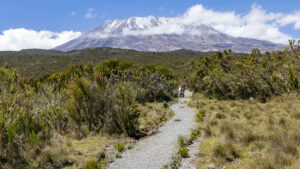
Long strides, cool air, and endless views — moorland magic on the trail.

How to Prepare for Mountain Weather in Tanzania

 No matter the route or season, weather on Kilimanjaro and other Tanzanian peaks requires serious preparation:
Dress in Layers:
  • Moisture-wicking base layers
  • Insulating mid-layers
  • Waterproof outer layers
Thermal Gear for Summit:
  • Gloves, thermal socks, balaclava, and down jacket for arctic zone
Footwear:
  • Waterproof, broken-in hiking boots with good grip
Sun Protection:
  • Sunglasses, sunscreen, and sun hat for alpine exposure
 Emergency Preparedness:
  • First aid kit, rain cover, and extra thermal gear

What Kili Quests Offers

At Kili Quests, your safety and success are our top priorities. We ensure you’re fully prepared for all mountain weather conditions with:
  • Wilderness First Responder-trained guides
  • Pre-trek briefings based on seasonal weather updates
  • Flexible itineraries in case of shifting weather patterns

Frequently Asked Questions

How does weather affect trekking in Tanzania?

Weather in Tanzania can change quickly, especially in mountainous areas. Trekkers may experience warm temperatures at lower elevations and freezing conditions near the summit. Understanding seasonal weather and altitude changes helps climbers prepare properly for their adventure.

How cold does it get on Mount Kilimanjaro?

Temperatures near the summit can drop to −10°C (14°F) or lower, especially during summit night. While lower slopes may feel warm and humid, the upper zones are extremely cold due to high altitude and strong winds.

What is the best season for mountain trekking in Tanzania?

The dry season from June to October is generally considered the best time for trekking because trails are drier and visibility is clearer. Another good period is January to March, when conditions are relatively stable and the skies are often clear.

Why does temperature change so much on Kilimanjaro?

Temperature changes mainly because of altitude differences. As climbers ascend higher on the mountain, the air becomes thinner and colder, causing temperatures to drop significantly between the rainforest base and the arctic summit zone.

What clothing should you bring for mountain weather in Tanzania?

Trekkers should pack layered clothing, including moisture-wicking base layers, warm insulating jackets, and waterproof outer shells. Gloves, thermal socks, and a down jacket are especially important for colder high-altitude conditions.

Can weather change quickly on Mount Kilimanjaro?

Yes. Weather conditions on Kilimanjaro can shift rapidly within a single day. Climbers may experience sunshine, rain, wind, or even snow at higher elevations, which is why proper gear and preparation are essential for a safe trek.

Be Weather-Ready, Be Adventure-Ready

Tanzania’s mountains offer spectacular views, rich ecosystems, and unforgettable summit moments — but only if you’re prepared for the weather.

Book your adventure today with Kili Quests Contact us for route advice, weather planning, and expert guidance Come prepared, and summit with confidence

Related Articles