Plan Your Kilimanjaro Climb

Climbing Kilimanjaro is a once-in-a-lifetime adventure choosing the right route and preparation makes all the difference.

Kilimanjaro Guides

OUR CATEGORIES

Kilimanjaro Routes Comparison: Which Route Is Best?

Choosing the right route is one of the most important decisions you will make when planning to climb Mount Kilimanjaro. Every route leads to Uhuru Peak, but the journey to the summit can feel completely different depending on the trail you choose. Some routes are longer and give your body more time to adjust to altitude. Others are shorter, steeper, and more physically demanding. Some are known for dramatic scenery, while others are chosen for comfort, quiet trails, or the highest chance of summit success.
 
Because of this, there is no single route that is perfect for everyone. The best route depends on your fitness level, trekking experience, available time, comfort preference, and how important summit success is to you. A first-time climber with enough time will usually benefit from a longer route with better acclimatization, while an experienced trekker may be comfortable with a steeper and faster option.This guide compares all seven official Kilimanjaro routes in detail so you can understand how each one works and decide which route is the best fit for your climb.
 
Before choosing your route, it helps to understand how to acclimatize on Kilimanjaro, compare the full Kilimanjaro  climb Cost , and review how many days you need to climb Kilimanjaro so your decision is based on safety, budget, and realistic summit preparation.

Quick Answer: What Is the Best Kilimanjaro Route?

For most climbers, the Lemosho Route is the best overall Kilimanjaro route because it offers a strong balance of scenery, acclimatization, route experience, and summit preparation time. It is especially good for first-time climbers who want a safer, more gradual approach without choosing the longest itinerary.
 
The Northern Circuit Route is best for climbers who want the strongest acclimatization profile and a quieter trail. The Machame Route is best for climbers who want a scenic, popular, and more affordable route when done over 7 days. The Marangu Route is best for hut accommodation, but it is not automatically the easiest because shorter itineraries can make altitude harder.
 
The smartest choice is not always the shortest or cheapest route. Choose based on acclimatization first, then fitness, scenery, budget, and comfort.
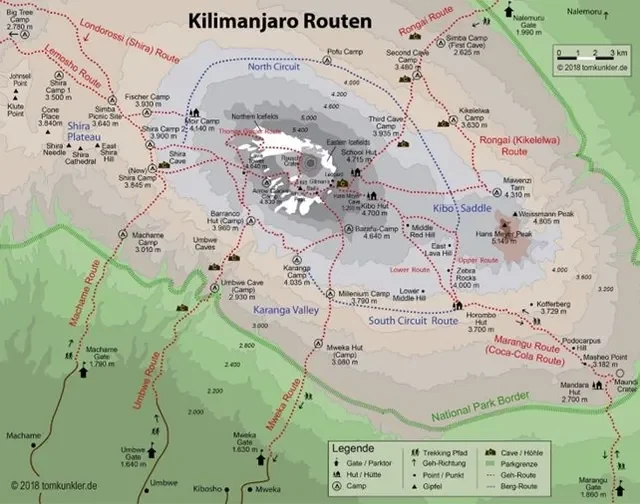
Topographic map showing all major climbing routes on Mount Kilimanjaro, including Machame, Lemosho, Marangu, Rongai, Umbwe, Shira, and Northern Circuit.
This detailed map shows all main Kilimanjaro climbing routes, including Machame, Marangu, Lemosho, Rongai, Umbwe, Shira, and the Northern Circuit, with campsites, elevation points, and park boundaries.

Table of Contents

Best Kilimanjaro Route Overall

For most climbers, the Lemosho Route is the best overall Kilimanjaro route because it gives a strong balance of scenery, acclimatization, summit success, and route experience. It is not the cheapest route, but it gives most climbers a better chance to enjoy the mountain and reach Uhuru Peak safely.
 
The Northern Circuit Route is the best choice for acclimatization and a quieter experience, while the Machame Route is best for climbers who want a scenic and popular route with a slightly shorter itinerary. The Marangu Route is best for hut accommodation, but it is not always the easiest route because the shorter itinerary can make acclimatization harder.
 
From our guiding experience on Kilimanjaro, most climbers make a better decision when they choose a route based on acclimatization first, then scenery, then budget. Choosing only the cheapest or shortest route is one of the most common mistakes.
Route Recommended Days Distance Difficulty Acclimatization Scenery Crowds Best For
Lemosho Route 7–8 days About 70 km Moderate Excellent Excellent Moderate Best overall route for most climbers
Machame Route 6–7 days About 62 km Moderate to challenging Good Excellent High Scenic route with strong popularity
Marangu Route 5–6 days About 72 km Moderate, but often rushed Fair Good Moderate Climbers who prefer hut accommodation
Rongai Route 6–7 days About 73 km Moderate Good Good Low Quiet northern approach and rainy-season climbs
Northern Circuit Route 8–9+ days About 88–90 km Moderate Excellent Excellent Low Best acclimatization and quieter experience
Umbwe Route 5–6 days About 53 km Very challenging Poor to fair Good Low Experienced trekkers only
Shira Route 7–8 days About 56–60 km Challenging start Fair to good Excellent Low Climbers with prior altitude experience

Best Kilimanjaro Route by Climber Type

Climber Goal Best Route Why It Works
Best overall route Lemosho Route Best balance of scenery, acclimatization, route experience, and summit preparation time.
Best for beginners Lemosho Route or 7-day Machame Route Both work well for first-time climbers when paced properly and not rushed.
Best acclimatization Northern Circuit Route The longer itinerary gives the body more time to adjust before summit night.
Best scenery Lemosho, Shira, or Northern Circuit These routes offer wide views, varied landscapes, and a stronger wilderness feel.
Best for fewer crowds Rongai Route or Northern Circuit These routes are quieter than Machame and Marangu, especially in the early sections.
Best budget option Machame Route or Marangu Route Shorter itineraries usually cost less, but you should not sacrifice acclimatization just to save money.
Best hut route Marangu Route Marangu is the only main Kilimanjaro route with hut accommodation instead of tents.
Toughest route Umbwe Route Umbwe is steep, direct, physically demanding, and gives less time for altitude adjustment.
Best rainy-season route Rongai Route Rongai approaches from the drier northern side of Kilimanjaro.
The best route is not the same for every climber. If you want the strongest all-around choice, Lemosho is usually the safest recommendation. If you want maximum acclimatization and have more time, Northern Circuit is stronger. If you want a popular scenic route with good value, Machame is a solid choice when done over 7 days. If you want hut accommodation, Marangu is the clear option, but it should not be chosen only because it looks easier.

Why Choosing the Right Kilimanjaro Route Matters

On Kilimanjaro, route choice is not just about scenery or duration. It directly affects how well your body adapts to altitude and how likely you are to reach the summit. The mountain is not technical, but altitude makes it serious. That means the route you choose can either support your success or make the climb much harder than it needs to be.
 
Longer routes usually give climbers a better chance of reaching Uhuru Peak because they allow more time for acclimatization. That extra time can make a major difference, especially for first-time climbers. Shorter routes may look attractive because they cost less and require fewer days, but they often come with a lower summit success rate because the body has less time to adapt.Route choice also shapes the overall experience. Some trails feel busy and social, while others feel remote and peaceful. Some begin in dense rainforest and open gradually into moorland and alpine desert, while others start high and immediately expose you to altitude. That is why comparing routes carefully before booking is one of the smartest things a climber can do.
 
Understanding altitude sickness on Kilimanjaro is key to improving your chances of reaching the summit.

How Many Routes Are There on Kilimanjaro?

Route Main Strength Best For Main Drawback
Lemosho Route Beautiful scenery, strong acclimatization, and high summit success rate. First-time climbers who want a safer, scenic, and less rushed route. Usually costs more because it takes 7 to 8 days.
Machame Route Classic Kilimanjaro scenery, good acclimatization, and strong overall value. Reasonably fit climbers who want a popular and proven route. Can be busy during peak climbing seasons.
Marangu Route Only Kilimanjaro route with hut accommodation. Climbers who strongly prefer sleeping in huts instead of tents. Shorter ascent gives less time for acclimatization.
Rongai Route Quiet northern approach with drier conditions and fewer crowds. Climbers who want a peaceful route or are trekking during wetter months. Early scenery is less dramatic than Lemosho or Machame.
Northern Circuit Route Best acclimatization profile and one of the highest success rates. Climbers who want maximum summit success and a quieter trail. Requires more time and a higher budget.
Umbwe Route Steep, direct, quiet, and physically demanding. Experienced climbers who want a tougher and more aggressive climb. Not recommended for most first-time climbers because of rapid altitude gain.
Shira Route High-altitude start with wide views across the Shira Plateau. Trekkers with previous altitude experience or prior acclimatization. Starts high, which can make the first days harder for unacclimatized climbers.
There are seven official trekking routes on Mount Kilimanjaro: Lemosho, Machame, Marangu, Rongai, Northern Circuit, Umbwe, and Shira. Each has its own style, pace, scenery, and acclimatization profile.Some routes share sections of trail higher up on the mountain, but their starting points, first days, and overall experience are still different. For example, Lemosho and Shira eventually join parts of the same path, but their starts are not the same. Likewise, Machame and Lemosho share later sections, yet they attract climbers for different reasons.Understanding these differences makes it easier to match the route to the kind of experience you want rather than just choosing the most popular name.
 
Your budget also plays a role, so it’s important to understand the cost to climb Kilimanjaro before making a decision.

How to Choose the Right Kilimanjaro Route

Choosing the best Kilimanjaro route is not only about popularity. The right route depends on your fitness, available days, budget, comfort level, scenery preference, and how well your body adjusts to altitude.

Choose by acclimatization first

Acclimatization should be your first priority. A longer route usually gives your body more time to adjust as you climb higher. This is why routes such as Lemosho and Northern Circuit are often better choices for climbers who want a safer, more gradual ascent.
Choose by number of days

Shorter routes may look cheaper, but they can be harder on the body. A 5-day climb gives less time to adjust to altitude, while a 7-day or 8-day route usually gives a better chance of reaching the summit comfortably.
 
You can also read How Many Days Does It Take to Climb Kilimanjaro? before choosing your route.

Choose by scenery and crowd level

If scenery matters most, Lemosho, Machame, Shira, and Northern Circuit are strong choices. If you want fewer crowds, Rongai and Northern Circuit are better options. If you want hut accommodation, Marangu is the main choice.

Choose by budget, but do not let price decide everything

Budget matters, but the cheapest Kilimanjaro route is not always the smartest choice. A shorter route may cost less because it uses fewer days, but it can also give your body less time to acclimatize.

Longer routes such as Lemosho or the Northern Circuit usually cost more because they include more park-fee days, crew support, meals, and mountain logistics. But for many climbers, the extra time can be better value because it supports better acclimatization and a more realistic summit plan.

Before choosing a route only by price, read Kilimanjaro Climb Cost so you understand how route length, park fees, tips, gear, insurance, and package inclusions affect your full budget.

Lemosho Route – The Best All-Around Choice

The Lemosho Route is widely considered the best overall route on Kilimanjaro because it combines beautiful scenery, strong acclimatization, and a high summit success rate. It starts on the western side of the mountain and gives climbers a gradual approach, which is one of the main reasons it is so highly recommended.
 
Physical preparation matters, which is why many climbers follow a structured training plan for Kilimanjaro before their trip.

What the Lemosho Route Is Like

The route begins in rainforest and then opens into the wide scenery of the Shira Plateau. From there, climbers continue through moorland, alpine desert, and higher camps before making the final summit push. It is one of the most visually rewarding routes because it offers variety almost from the beginning to the end.Another advantage is that Lemosho starts with fewer crowds than some of the more popular routes. That gives the first few days a quieter and more remote feel, which many trekkers enjoy.

Who the Lemosho Route Is Best For

Lemosho is ideal for first-time climbers who want a strong chance of reaching the summit without choosing an overly aggressive itinerary. It is also excellent for trekkers who care a lot about scenery and want a route that feels more complete and less rushed.
Because it is usually done over 7 to 8 days, it gives the body more time to adjust to altitude. That makes it one of the safest and smartest choices for many climbers.
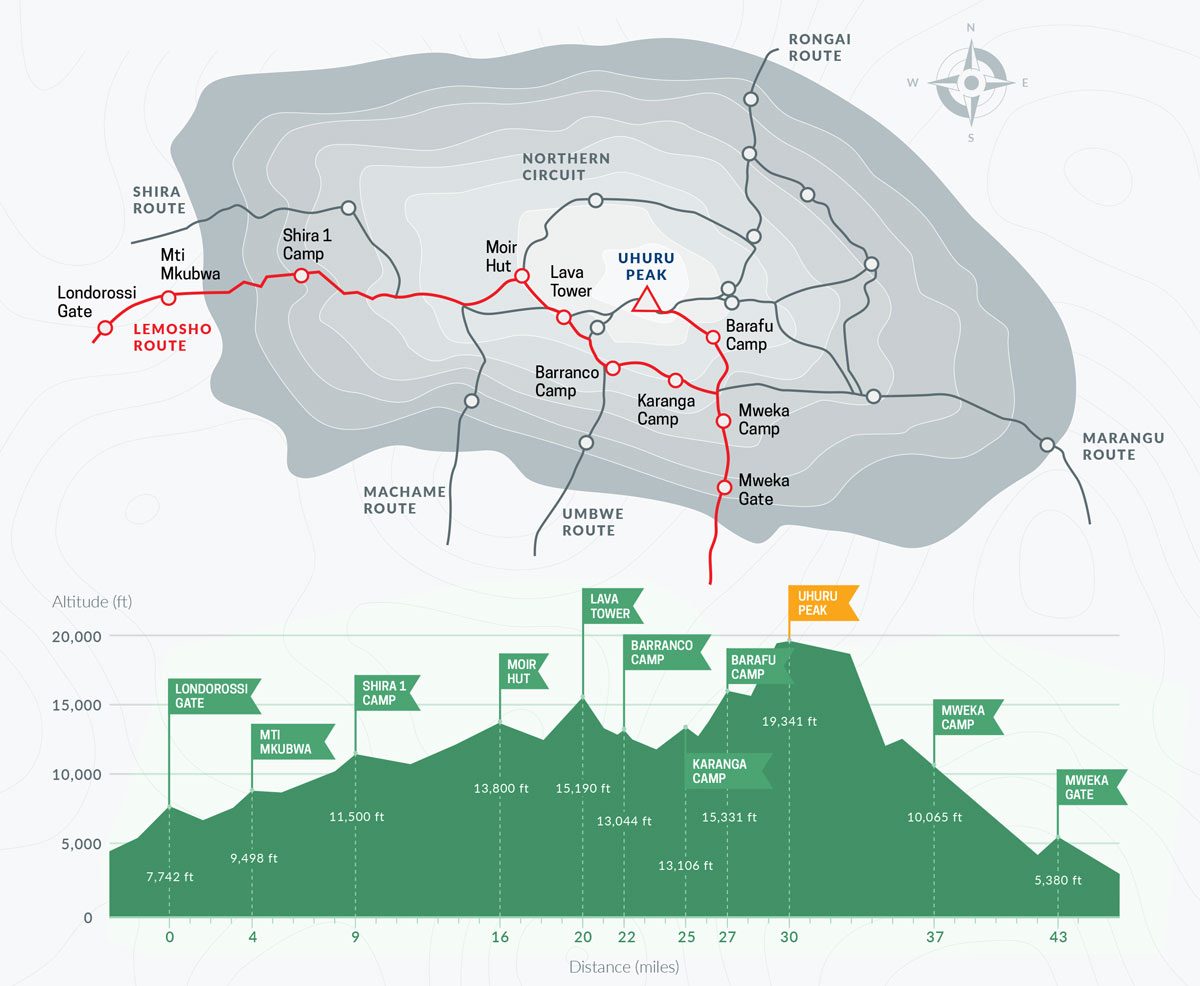
Lemosho Route map on Mount Kilimanjaro with full trail, elevation profile, and camp locations to Uhuru Peak
A scenic and well-acclimatized trail starting from Londorossi Gate and joining the Machame Route via Lava Tower.

Machame Route – The Most Popular Route

The Machame Route is often called the “Whiskey Route” and is the most popular climbing route on Kilimanjaro. It is known for its dramatic scenery, active trekking days, and strong acclimatization profile when done over enough days.

What the Machame Route Is Like

Machame takes climbers through rainforest, moorland, alpine desert, and the high summit zone, offering a varied and classic Kilimanjaro experience. It includes famous landmarks such as Lava Tower and the Barranco Wall, both of which are highlights for many trekkers.Compared with Marangu, Machame provides a better acclimatization profile because the route allows for more gradual altitude gain. The trail itself is a bit steeper and more physically active, but many climbers see that as part of its appeal.

Who the Machame Route Is Best For

Machame is best for climbers who want a balance between challenge, scenery, and summit success. It suits first-time trekkers who are reasonably fit and want a popular, proven route with strong overall value.
The main downside is that it can be busy, especially during peak climbing seasons. Still, for many people, the scenery and route design make it worth it.
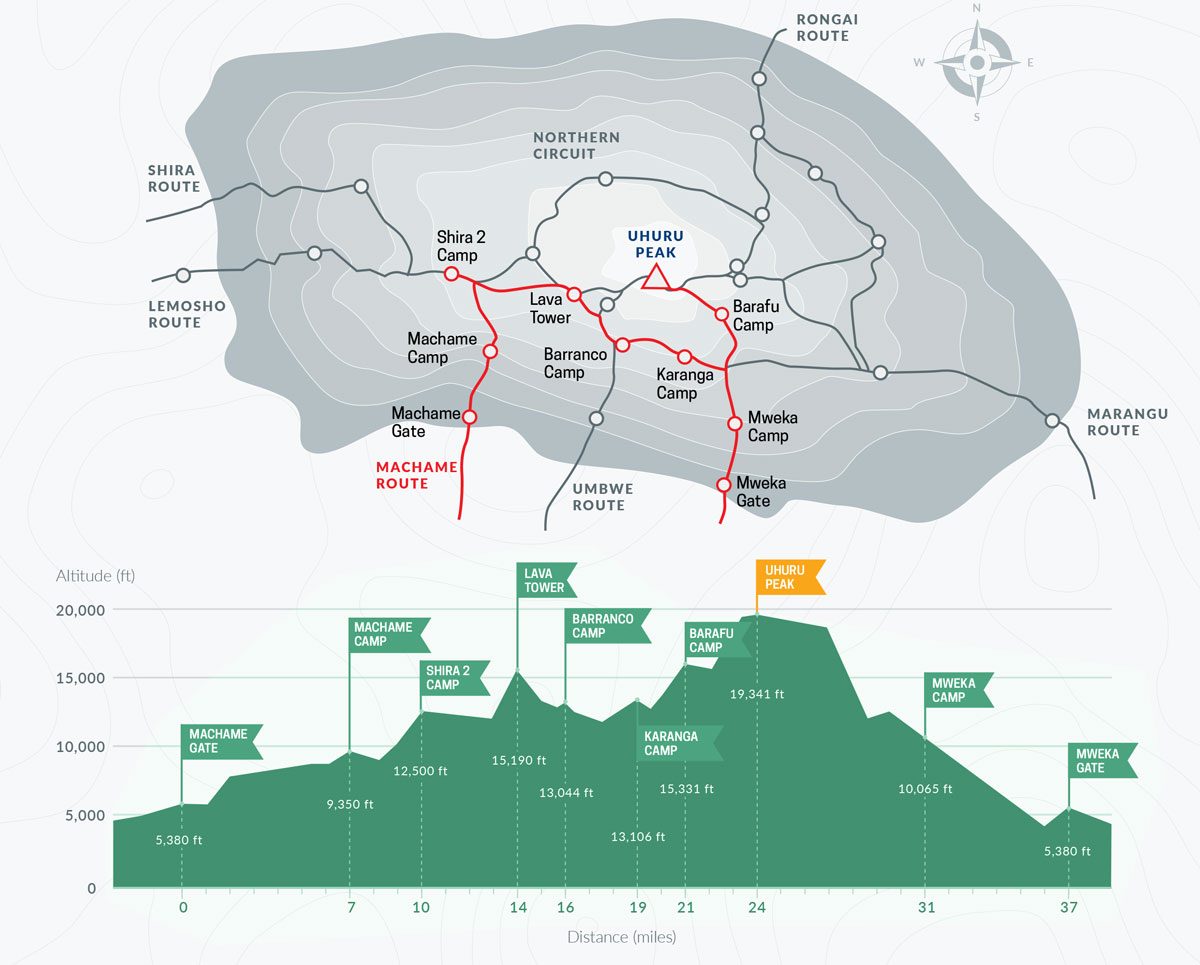
Machame Route map on Mount Kilimanjaro showing trail path, elevation profile, and major camps to Uhuru Peak
A scenic Kilimanjaro trail via Lava Tower and Barafu Camp, descending through Mweka Gate.

Marangu Route – The Hut Route

The Marangu Route is the only Kilimanjaro route with hut accommodation. For some climbers, that makes it immediately attractive, especially if they prefer not to sleep in tents for several nights.

What the Marangu Route Is Like

Marangu follows the same path up and down the mountain, which makes it different from most other routes. The huts provide a more sheltered sleeping arrangement, and the trail is often seen as more straightforward in terms of logistics.However, the shorter itinerary is its biggest weakness. Because many Marangu climbs are done in 5 to 6 days, climbers often do not get enough time to acclimatize properly. That is one reason why its summit success rate is usually lower than longer routes.

Who the Marangu Route Is Best For

Marangu is best for climbers who strongly prefer hut accommodation and want a simpler, shorter itinerary. It can work well for some trekkers, but it is not automatically the best route for beginners just because it has huts. In fact, the shorter profile can make it a harder climb from an altitude perspective.
For climbers who care most about summit success, longer routes are generally a better choice.
Marangu Route map on Mount Kilimanjaro showing elevation, trail path, and major camps to Uhuru Peak
Marangu Route Map – The only Kilimanjaro route with huts, following the same trail up and down via Horombo and Kibo Huts.

Rongai Route – The Quiet Northern Trail

The Rongai Route approaches Kilimanjaro from the north, near the Kenyan side of the mountain. This gives it a quieter and often drier character than the southern routes.

What the Rongai Route Is Like

Rongai is known for its peaceful feel. It usually has fewer climbers, which makes it a good option for people who want a less crowded experience. The northern side of Kilimanjaro also tends to be drier, so this route can be especially appealing during wetter months.The scenery is different from the western and southern routes. While some people find it less dramatic at the beginning, the route offers a unique perspective of the mountain and beautiful views near Mawenzi.

Who the Rongai Route Is Best For

Rongai is a good choice for climbers who want a quieter trail, a gradual ascent, and a different side of Kilimanjaro. It is also a smart option for people climbing during the rainy season when drier conditions can make a big difference.It may not have the same reputation for scenery as Lemosho, but it offers peace, space, and a solid acclimatization profile.
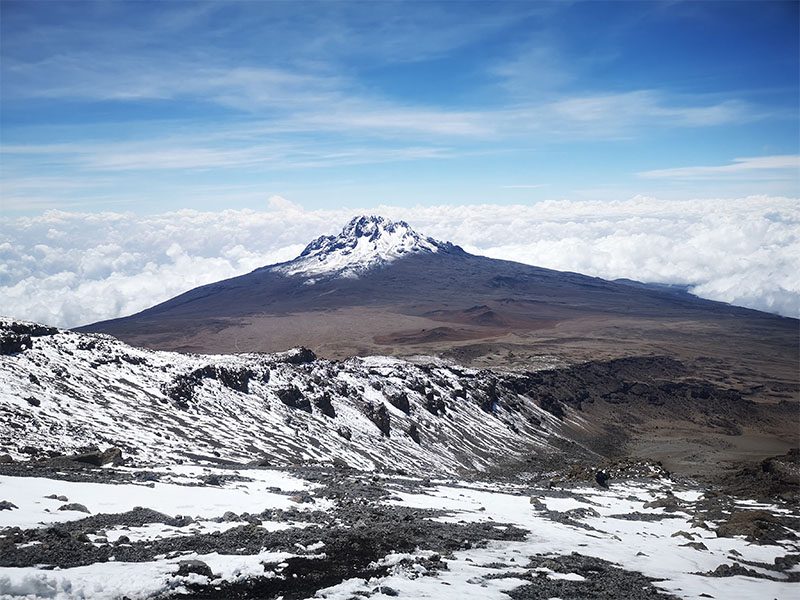
View of Mawenzi Peak from Stella Point on Mount Kilimanjaro, with snow-covered terrain and clouds below — typical scenery on the Rongai Route | Kili Quests
The Rongai Route’s final summit approach offers this dramatic view of Mawenzi Peak from Stella Point. A snowy, unforgettable moment near the crater rim.
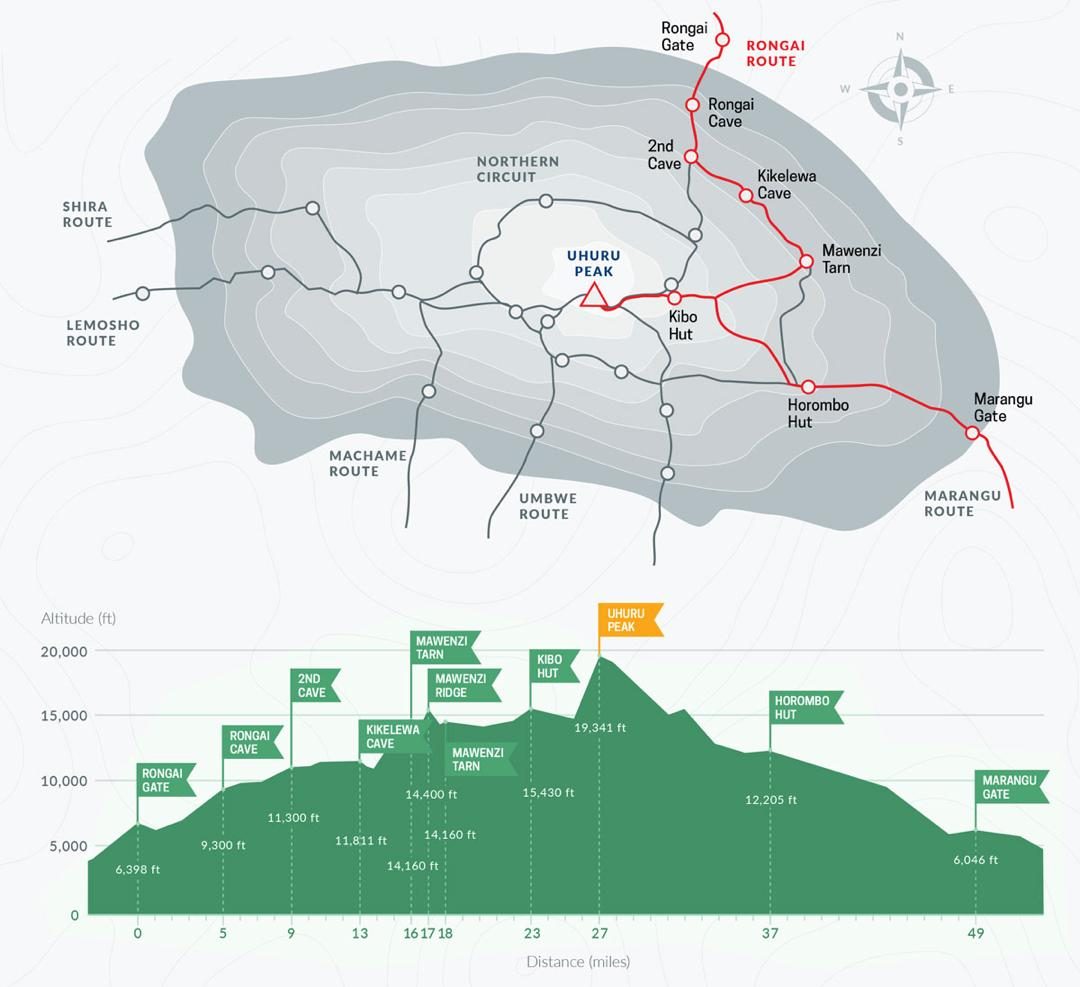
Rongai Route map on Mount Kilimanjaro showing ascent path, camps, and elevation profile to Uhuru Peak
A remote trail from the north side of Kilimanjaro, passing Mawenzi Tarn and Kibo Hut before summiting.

Northern Circuit – The Best Route for Acclimatization

The Northern Circuit is the longest route on Kilimanjaro and is often considered the best route for acclimatization. It circles around the mountain’s northern slopes, creating a longer and more gradual approach to the summit.

What the Northern Circuit Is Like

This route offers one of the most complete mountain experiences because it covers more ground and gives trekkers long, scenic days with fewer crowds. It provides broad views from multiple angles and avoids the busier traffic found on some other routes.Its greatest strength is time. Because the route is usually done over 9 or more days, climbers have an excellent chance to adjust to altitude before summit night.

Who the Northern Circuit Is Best For

The Northern Circuit is best for climbers whose main goal is to maximize summit success. It is also ideal for those who want a quieter route and are willing to spend more time on the mountain.For travelers with enough days and budget, it is one of the strongest choices available. The extra time often turns into extra safety, better recovery, and a more enjoyable climb.
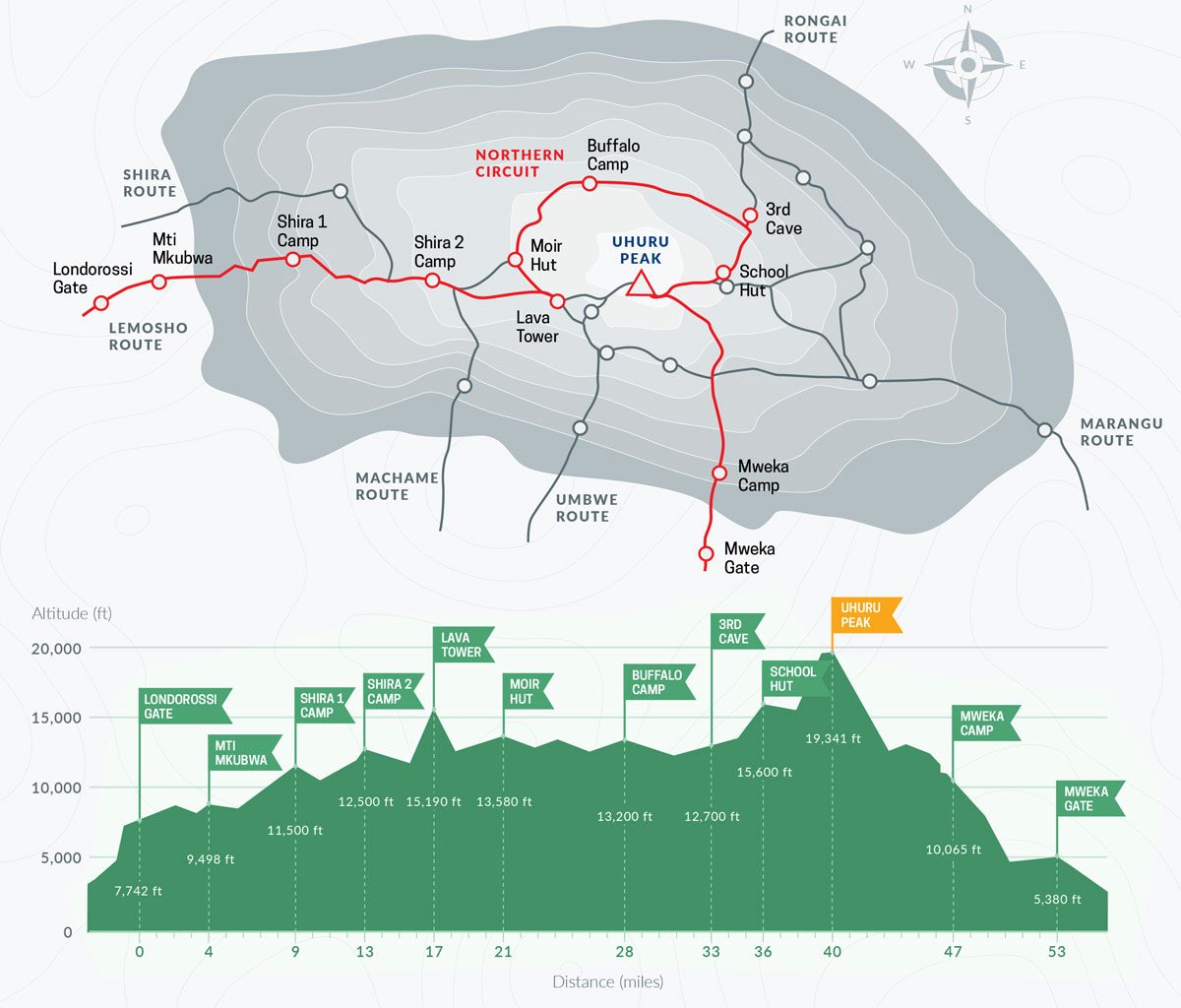
Northern Circuit Route map on Mount Kilimanjaro showing full circuit trail, elevation profile, and key camps to Uhuru Peak
The longest Kilimanjaro route, offering excellent acclimatization and 360° views around the mountain.

Umbwe Route – The Steepest and Toughest Option

Umbwe is known as the steepest and most direct route on Kilimanjaro. It is intense, demanding, and not usually recommended for beginners.

What the Umbwe Route Is Like

The route climbs quickly and gives the body less time to adapt to altitude. It is physically demanding from early on and is often chosen by trekkers who want a more aggressive and remote climb.Because it is less popular, Umbwe can feel quiet and wild. That gives it a certain appeal for experienced trekkers who do not mind a tougher route.

Who the Umbwe Route Is Best For

Umbwe is best for experienced climbers who are confident in their fitness and understand the challenge of rapid altitude gain. It is not a route chosen for comfort or ease. It is chosen for intensity.For most first-time Kilimanjaro trekkers, other routes are a safer and smarter choice.
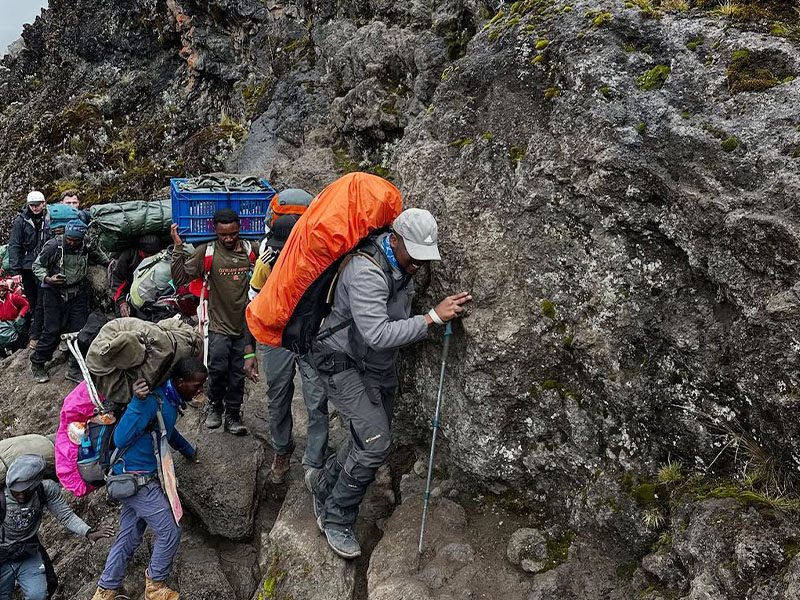
Trekkers and porters ascending the Kissing Rock section on Barranco Wall along the Machame Route, Kilimanjaro
The Kissing Rock – Barranco Wall – Climbers squeeze through one of the most iconic and narrow points on the Umbwe Route: the "Kissing Rock" on Barranco Wall.
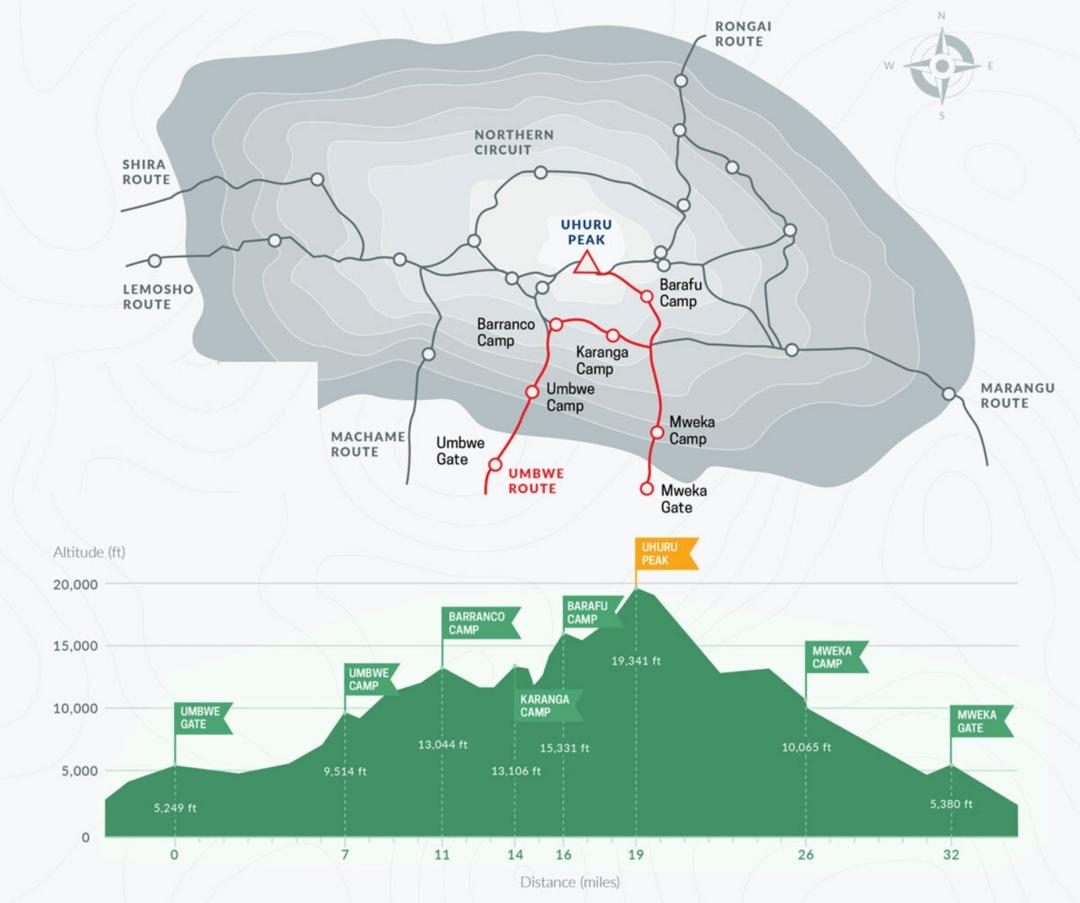
Umbwe Route map on Mount Kilimanjaro showing trail path, elevation chart, and key camps to Uhuru Peak
Kilimanjaro’s steepest and most direct route, ascending via Barranco and Karanga Camps.

Shira Route – A High-Altitude Start

The Shira Route begins at a higher elevation than most other routes, which makes it unique but also more demanding at the beginning.

What the Shira Route Is Like

Because the route starts high on the Shira Plateau, climbers skip much of the rainforest zone and enter a higher-altitude environment very early. That can make the first days harder for people who have not acclimatized already.After the opening section, Shira joins the Lemosho path, so much of the later scenery and route experience becomes similar. The landscapes are dramatic and open, with wide views that many climbers love.

Who the Shira Route Is Best For

Shira is best for trekkers who already have some altitude experience or have acclimatized before starting the climb. It is not usually the first recommendation for people completely new to high-altitude trekking.For the right climber, it offers striking scenery and a less typical start, but it requires more care than routes with a lower beginning.
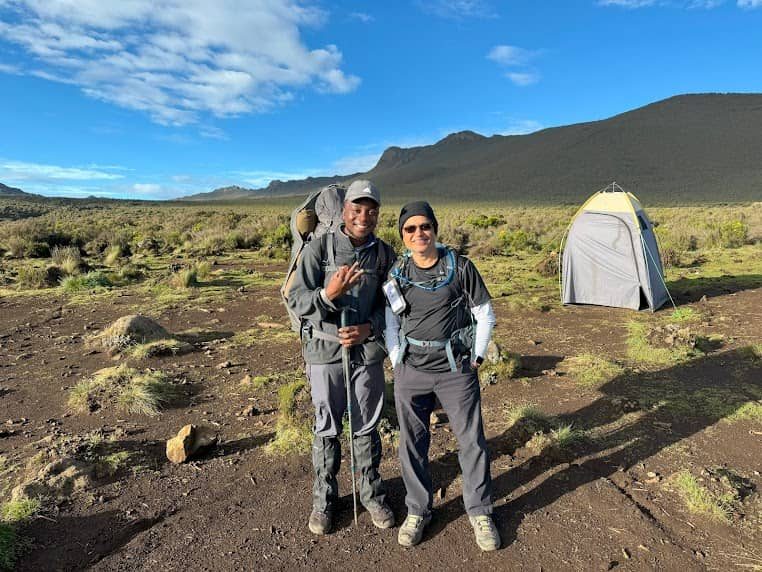
Two trekkers standing at Shira One Camp on the Lemosho Route, Kilimanjaro, with scenic moorland and tent in the background | Kili Quests
Shira One Camp (3,610m) – Trekkers enjoying a clear morning at Shira Plateau, the first high-altitude campsite on the Lemosho Route.
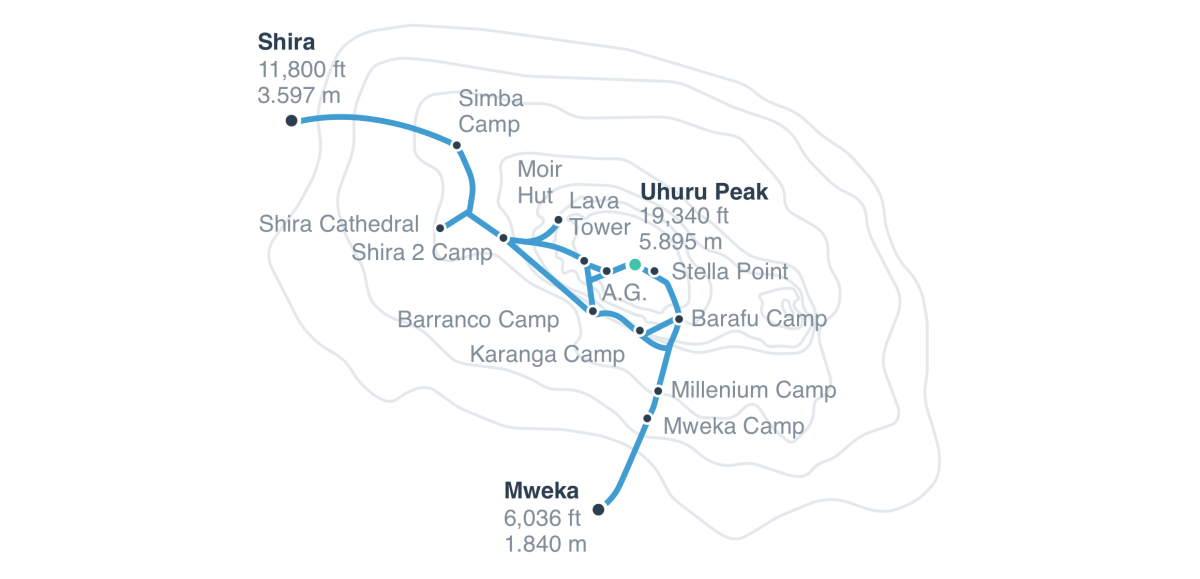
Shira Route map on Mount Kilimanjaro showing trail path from Shira Plateau to Uhuru Peak via Barranco and Barafu Camps
Begins at high altitude on the Shira Plateau and joins the Lemosho-Machame trail to the summit.

Kilimanjaro Route Mistakes to Avoid

Many climbers choose the wrong route because they focus on the wrong thing. Here are the most common mistakes to avoid.

Choosing the shortest route only because it is cheaper

A shorter route can reduce cost, but it also reduces acclimatization time. That can make the climb harder, especially for first-time high-altitude trekkers.

Thinking Marangu is always the easiest route

Marangu is often called the “Coca-Cola Route,” but that does not mean it is always the easiest. The hut accommodation is more comfortable for some climbers, but the shorter itinerary can make altitude more difficult.

Ignoring acclimatization profile

The route profile matters more than the name of the route. A route that climbs gradually and allows your body to adjust is usually better than a route that gains altitude too quickly.

Choosing a route only because it is popular

Machame is popular for good reason, but popularity does not automatically make it the best route for every climber. Some people are better suited to Lemosho, Rongai, or Northern Circuit depending on their goals.

Not matching the route to your fitness level

Umbwe and Shira are not ideal for most beginners. They can be rewarding routes, but they require stronger fitness, altitude awareness, and realistic expectations.

Popular Kilimanjaro Route Comparisons

Many climbers narrow their choice down to two or three routes after reading the full Kilimanjaro routes comparison. The most common decisions are usually between Lemosho, Machame, and Marangu because these routes are popular, well-known, and often recommended for first-time climbers.
 
If you are comparing Lemosho vs Machame, the main difference is usually acclimatization, scenery, crowd level, and itinerary length. Lemosho gives a quieter and more gradual start, while Machame is a scenic and popular route with strong value for many climbers. For a full breakdown, read Lemosho vs Machame Route: Which Kilimanjaro Route Is Better?
 
If you are comparing Machame vs Marangu, the biggest difference is camping versus hut accommodation, scenery, and acclimatization profile. Marangu has huts, but that does not automatically make it easier. Machame usually gives better scenery and a stronger climb-high, sleep-low profile. For the full comparison, read Machame vs Marangu Route: Which Kilimanjaro Route Should You Choose?
 
For most climbers, this main Kilimanjaro routes comparison should help you narrow the decision. The route-to-route comparison guides are useful when you already have two options in mind and need a final decision.
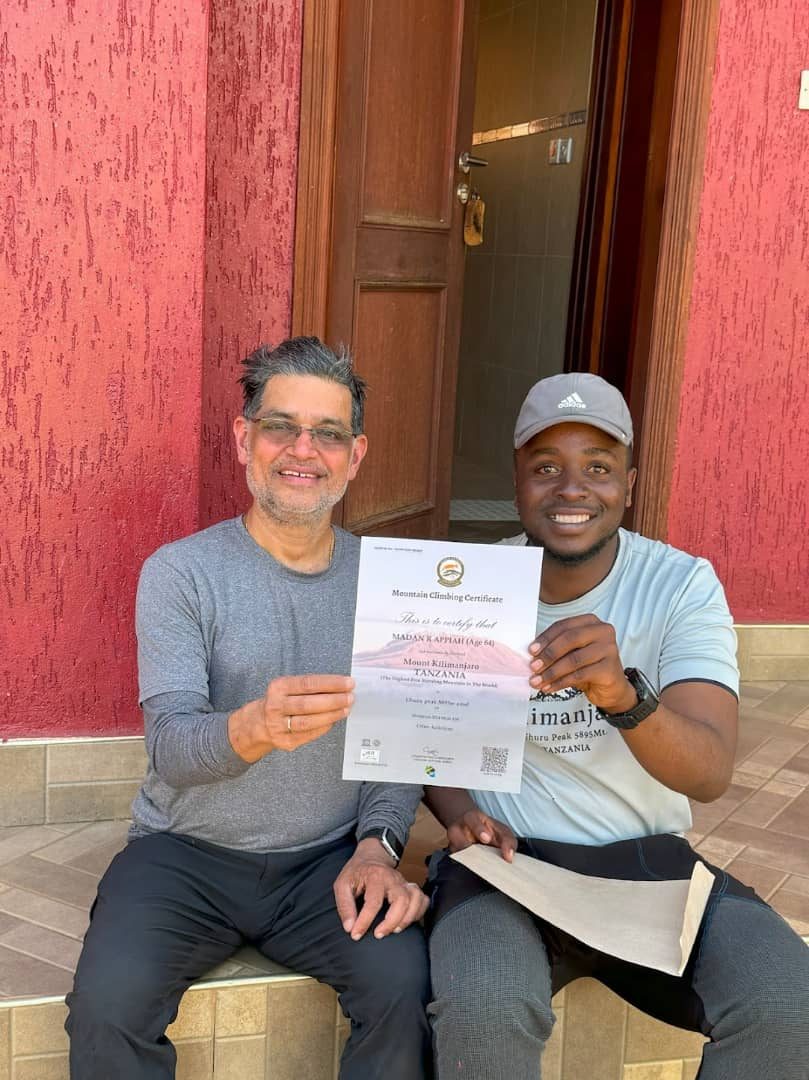
A climber proudly holding a Mount Kilimanjaro summit certificate with their Kili Quests guide after completing the trek to Uhuru Peak | Kili Quests
Every route leads to this moment — celebrating your Kilimanjaro summit with a certificate in hand and memories for a lifetime.

Final Advice: Which Kilimanjaro Route Should You Choose?

If you are still unsure, start with your main priority. For most climbers, the best route is the one that gives enough time for acclimatization while still matching your budget, fitness, and travel schedule.
 
Choose the Lemosho Route if you want the best all-around balance of scenery, acclimatization, and route experience. Choose the Northern Circuit Route if you have more time and want the strongest acclimatization profile with fewer crowds. Choose the Machame Route if you want a scenic, popular, and proven route with good value, especially on a 7-day itinerary.
 
Choose the Marangu Route if hut accommodation matters more to you than scenery or route variety. Choose the Rongai Route if you want a quieter trail or are climbing during wetter months. Choose Umbwe only if you are experienced, fit, and comfortable with a steeper, more demanding route.


The route should match your body, not your ego. Choosing a route because it is cheap, short, or famous is a weak decision. Choosing a route based on acclimatization, fitness, time, and safety is the smart decision.
 
For most first-time climbers, start by comparing Lemosho Route vs Machame Route, and Northern Circuit Route before looking at the shorter or steeper options.

Frequently Asked Questions About Kilimanjaro Routes

What is the best route to climb Kilimanjaro?

The best route for most climbers is the Lemosho Route because it offers excellent scenery, good acclimatization, and a high summit success rate. However, the best route still depends on your priorities. If you want maximum acclimatization time, the Northern Circuit may be an even better fit.

Which Kilimanjaro route is easiest?

The Northern Circuit is often considered the easiest in terms of altitude adaptation because it gives the body the most time to acclimatize. It is longer, but that extra time usually makes the climb feel more manageable than shorter and steeper routes.

Which route is best for first-time climbers?

Lemosho and Machame are usually the best choices for first-time climbers. Both offer strong acclimatization and a well-rounded mountain experience. The Northern Circuit is also excellent for beginners who have enough time for a longer trek.

Which Kilimanjaro route has the highest success rate?

The Northern Circuit and Lemosho routes are often considered among the strongest choices for summit success because they allow more time for acclimatization. A longer route does not guarantee the summit, but it usually gives the body a better chance to adjust to altitude.

Which route has huts?

Marangu is the only Kilimanjaro route with hut accommodation. All other main routes involve camping in tents.

Which Kilimanjaro route has the best scenery?

Many climbers say the Lemosho Route, Shira Route, and Northern Circuit Route offer the most scenic landscapes on Mount Kilimanjaro.

Plan the Right Kilimanjaro Route With Kili Quests

Choosing the right route is one of the most important decisions you will make before climbing Kilimanjaro. The best route is not always the cheapest, shortest, or most famous. It is the route that matches your fitness, time, budget, acclimatization needs, and summit goal.
 
At Kili Quests, we help climbers choose a route based on realistic mountain experience, not guesswork. Whether you are deciding between Lemosho, Machame, Marangu, Rongai, Northern Circuit, Umbwe, or Shira, our team can help you plan a safer and better-supported climb.
 
Request a custom Kilimanjaro climb plan and we will help you choose the route that fits your goals.

Related Articles