
Prepare for Kilimanjaro’s Night Temperatures
We help you plan your climb with:
- The best route for success
- Proper acclimatization
- Complete gear preparation
Plan Your Climb
Good preparation starts with understanding the key parts of your trek:
OUR CATEGORIES
Mount Kilimanjaro Night Temperature: What to Expect from Rainforest to Summit
Climbing Mount Kilimanjaro is a unique journey through dramatically changing climates but one of the most underestimated challenges is how cold it gets at night.While daytime conditions can feel warm and sunny, temperatures drop quickly after sunset, especially as you gain altitude. By the time you reach the upper mountain, nights become freezing, and summit night brings the coldest conditions of the entire trek.
In this guide, Kili Quests explains how nighttime temperatures change across Kilimanjaro’s different altitude zones and what you should expect from your first night on the mountain to your final push to Uhuru Peak.
Before you pack, make sure you’re fully prepared:Kilimanjaro Packing List
Table of Contents
Kilimanjaro Night Temperatures by Altitude
Kilimanjaro is not one single climate. As you climb, you move through different ecological zones, and each one brings a noticeable drop in temperature especially at night.
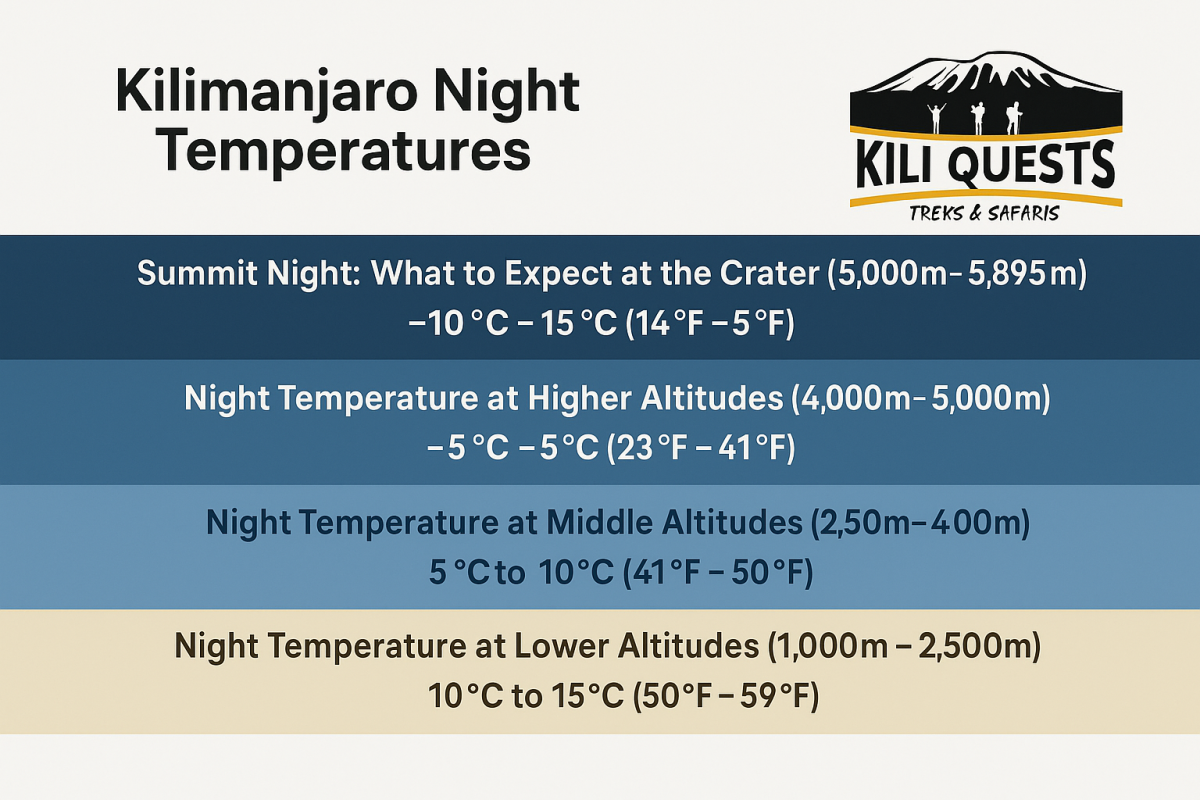
Lower Altitudes (1,000m – 2,500m)
Temperature Range: 10°C to 15°C
Example Camps: Machame Gate, Rongai Start Point
At the beginning of your trek, conditions are relatively warm and humid. Nights are cool but comfortable, and most trekkers do not experience significant cold at this stage.
The main challenge here is not temperature, but moisture from rain and humidity.
What to wear:
Light layers, a fleece or light jacket, and basic warmth for early mornings.
Middle Altitudes (2,500m – 4,000m)
Temperature Range: 5°C to 10°C
Example Camps: Shira Camp, Barranco Camp, Karanga Camp
As you climb higher, the air becomes cooler and drier. Nights begin to feel noticeably colder, especially after sunset.
This is where many trekkers first realize that Kilimanjaro is not just a warm African mountain , temperatures begin to drop quickly once the sun disappears.
What to wear:
An insulating layer such as fleece or light down, along with thermal clothing for the evening and night.
High Altitudes (4,000m – 5,000m)
Temperature Range: -5°C to 5°C
Example Camps: Barafu Camp, Kibo Hut
At high altitude, conditions become much colder and more exposed. Nights often drop below freezing, and staying warm becomes essential for both comfort and recovery.Sleep can become more difficult here, not only because of the cold, but also due to altitude.
What to wear:
A proper insulated jacket, thermal base layers, warm socks, and a cold-rated sleeping bag (–10°C or lower).
Summit Night (5,000m – 5,895m)
Temperature Range: -10°C to -15°C (or lower with wind chill)
Start Time: Around midnight from Barafu Camp or Kibo Hut
Summit night is the coldest and most demanding part of the entire Kilimanjaro climb.You begin your ascent in total darkness, often in freezing temperatures, with wind making the cold feel even more intense. At this altitude, your body is already fatigued, and the combination of cold, altitude, and long hours of trekking makes this stage especially challenging.
Unlike lower camps, the cold here is not just uncomfortable it directly affects your performance, energy levels, and mental strength.
What to expect:
- Continuous exposure to freezing temperatures
- Reduced body heat due to slow pace and altitude
- Strong wind, especially near Stella Point
- 6–8 hours of climbing before sunrise
What to wear on summit night:
- Heavy insulated down jacket
- Thermal base layers and mid-layer insulation
- Waterproof outer shell
- Warm gloves, hat, and face covering
- Insulated boots and thick socks
Optional items like hand and toe warmers can provide additional comfort.
Proper preparation for this stage is critical:Kilimanjaro Summit Day Gear Guide
Why Kilimanjaro Nights Feel Colder Than Expected
Many climbers are surprised that Kilimanjaro feels colder than the actual temperature suggests.
- This is because several factors combine at high altitude:
- Thin air loses heat quickly after sunset
- Wind increases heat loss from the body
- Fatigue reduces your ability to stay warm
- Lower oxygen levels affect circulation
As a result, even a temperature of –10°C can feel significantly colder during summit night.
Read our article about .How Hard Is Kilimanjaro ?
Tips to Stay Warm on Kilimanjaro
Staying warm on Kilimanjaro is essential for maintaining energy, sleeping well, and recovering properly between trekking days.
Dress in Layers
Layering allows you to adjust to temperature changes throughout the day and night. A combination of base layer, insulating mid-layer, and outer shell helps regulate heat and prevent moisture buildup.
Stay Hydrated and Eat Well
Drink 3–4 liters of water daily to support circulation and body heat. Eating high-energy meals helps your body generate warmth, especially during cold nights.
Avoid alcohol and limit caffeine, as both can affect sleep and temperature regulation.
Use the Right Sleeping Gear
A sleeping bag rated for –10°C to –15°C is essential for higher camps. Adding a liner increases insulation, while dry thermal clothing helps retain body heat during sleep.
Move When You Feel Cold
If you wake up cold, light movement such as stretching or walking can help restore circulation. Warm drinks like tea also help increase body temperature.
Understand Cold and Altitude Together
Cold conditions can increase fatigue and make altitude symptoms feel worse. Managing warmth properly helps your body adapt and perform better.
Final Packing Advice for Cold Nights
Kilimanjaro requires preparation for a wide range of temperatures from warm lower slopes to freezing summit conditions.
Make sure you pack:
- Thermal base layers
- Insulated down jacket
- Warm hat, gloves, and neck covering
- Cold-rated sleeping bag (–10°C or lower)
- Hand and foot warmers
- Dry socks and spare thermals
Check our Kilimanjaro Packing List to make sure you don’t miss important gear
Frequently Asked Questions About Kilimanjaro Night Temperatures
How cold does it get at night on Mount Kilimanjaro?
Night temperatures on Mount Kilimanjaro vary depending on altitude. Lower camps may stay around 10°C to 15°C (50°F to 59°F), while higher camps can drop to -5°C to 5°C (23°F to 41°F). Near the summit during the midnight ascent, temperatures can fall to -10°C to -15°C (14°F to 5°F) or colder with windchill.
Why are nights so cold on Kilimanjaro?
Kilimanjaro’s high altitude and thin atmosphere cause temperatures to drop sharply after sunset. The mountain also passes through multiple climate zones, from tropical forest to arctic summit conditions, which leads to significant nighttime cooling.
What is the coldest part of the Kilimanjaro climb?
The coldest part of the trek is summit night, when climbers usually start their ascent from high camps such as Barafu or Kibo Hut around midnight. Temperatures are well below freezing and strong winds can make it feel even colder.
What sleeping bag rating is recommended for Kilimanjaro?
Trekkers should bring a sleeping bag rated for at least -10°C to -15°C (14°F to 5°F). This rating ensures enough insulation to stay warm during cold nights at higher camps on Kilimanjaro.
How can you stay warm at night on Kilimanjaro?
Staying warm requires proper layering, warm sleeping gear, and dry clothing. Wearing thermal base layers, using a quality down jacket, and sleeping in a cold-rated sleeping bag can help maintain body heat during the cold nights on the mountain.
Does the temperature change between Kilimanjaro camps?
Yes. Temperatures generally decrease as climbers gain altitude. Lower camps in forest zones remain relatively mild, while camps in alpine and summit zones experience freezing conditions, especially overnight.
Prepare for Kilimanjaro’s Night Temperatures with Confidence
Kilimanjaro’s beauty comes with extremes especially at night. But with the right preparation, you’ll stay warm, sleep well, and climb strong.At Kili Quests, we guide you through every detail, from recommended gear to how to dress for summit night. You can rent high-quality gear locally if you need extra layers.
Contact us today to plan your trek and stay safe from base to summit.
Related Articles

Altitude Sickness on Kilimanjaro: Symptoms & Causes
April 15, 2025
No Comments
Climb Kilimanjaro Safely Altitude is the biggest challenge on Kilimanjaro — but with the right preparation and expert guidance, you can reach the summit safely
Kilimanjaro Packing List 2026: What to Bring for Your Climb
April 12, 2025
No Comments
Pack Smart for Kilimanjaro Packing the wrong gear can make your climb harder than it needs to be especially on summit night.At Kili Quests, we
Kilimanjaro Routes Comparison: Which Route Is Best?
April 15, 2025
No Comments
Plan Your Kilimanjaro Climb Climbing Kilimanjaro is a once-in-a-lifetime adventure choosing the right route and preparation makes all the difference. Choose the best route for