

Is Climbing Kilimanjaro Dangerous? Safety Guide
Plan Your Kilimanjaro Climb Climb safely with the right preparation and expert support. Choose the safest route Prepare for altitude properly Climb with experienced local
Your route, preparation, and strategy will shape your entire climb. Explore these essential guides:
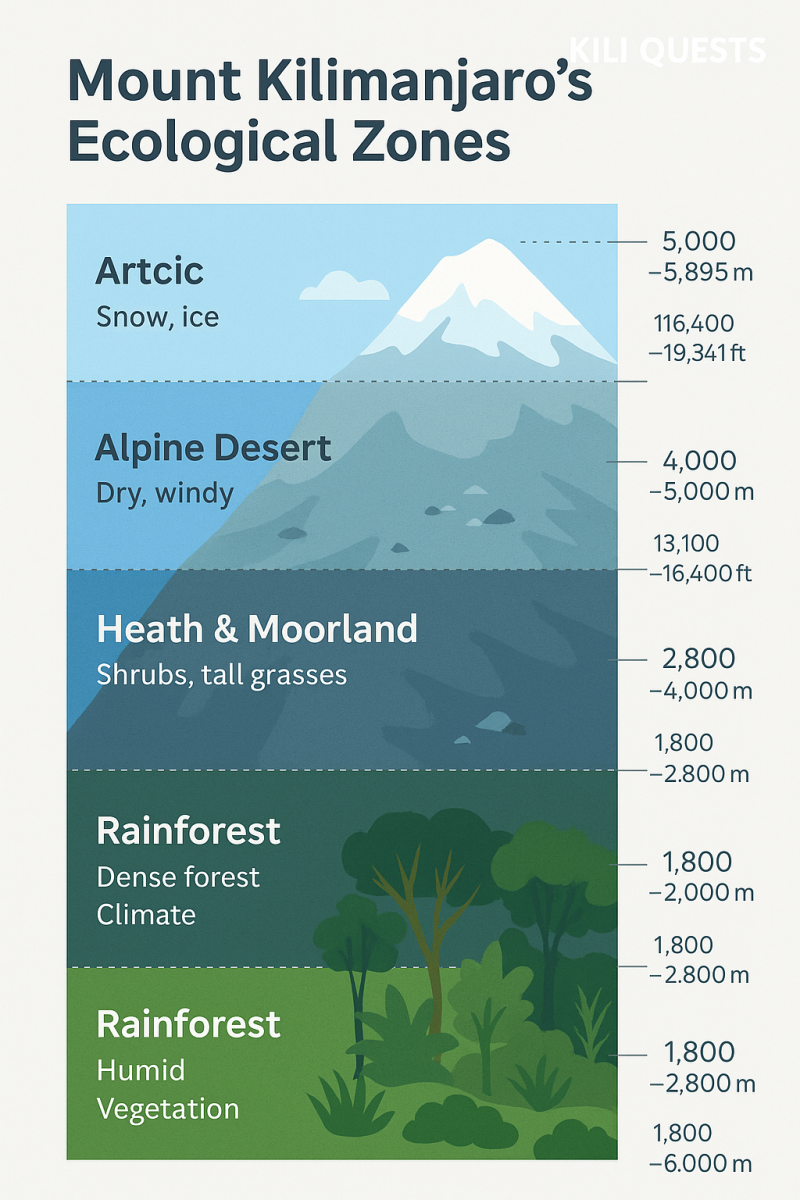
| Ecological Zone | Altitude Range | Landscape & Vegetation | What Climbers Experience |
|---|---|---|---|
| Cultivation Zone | 800–1,800 m 2,600–6,000 ft |
Farms, coffee plantations, banana trees, villages, and fertile volcanic soil. | Warm lower slopes and cultural scenery before reaching the main trailheads. |
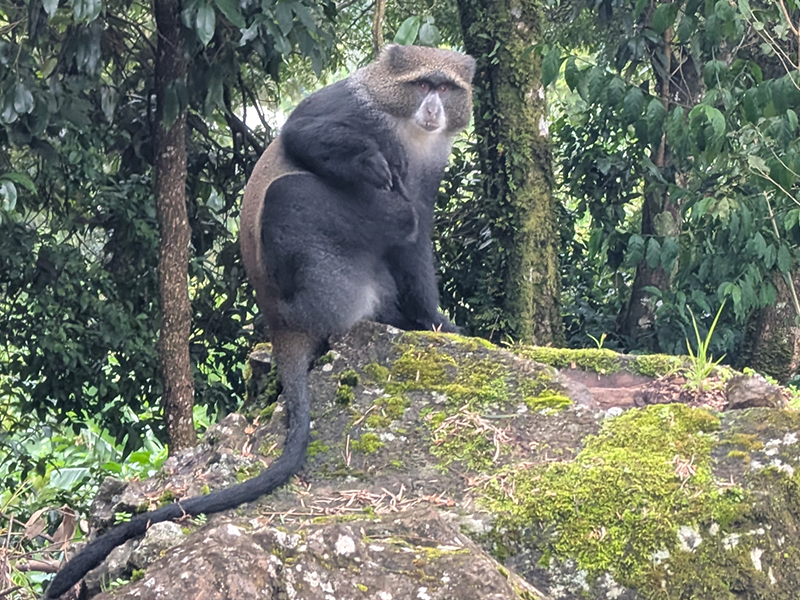
| Montane Forest Zone | 1,800–2,800 m 6,000–9,200 ft |
Dense rainforest, moss-covered trees, ferns, vines, monkeys, and forest birds. | Humid air, muddy trails, frequent mist, and rich biodiversity. |
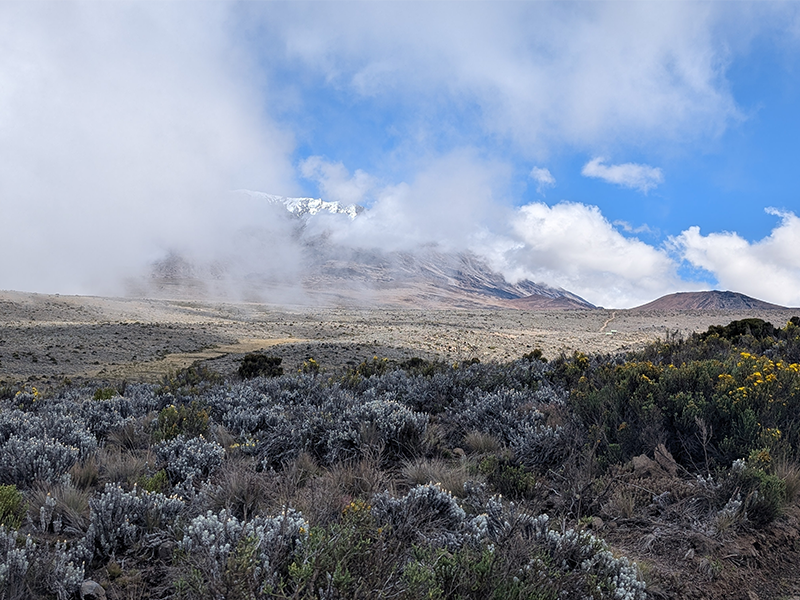
| Heath & Moorland Zone | 2,800–4,000 m 9,200–13,100 ft |
Open hills, giant groundsels, lobelias, heathers, volcanic rock, and wide views. | Cooler air, stronger sun, colder nights, and the first noticeable altitude effects. |
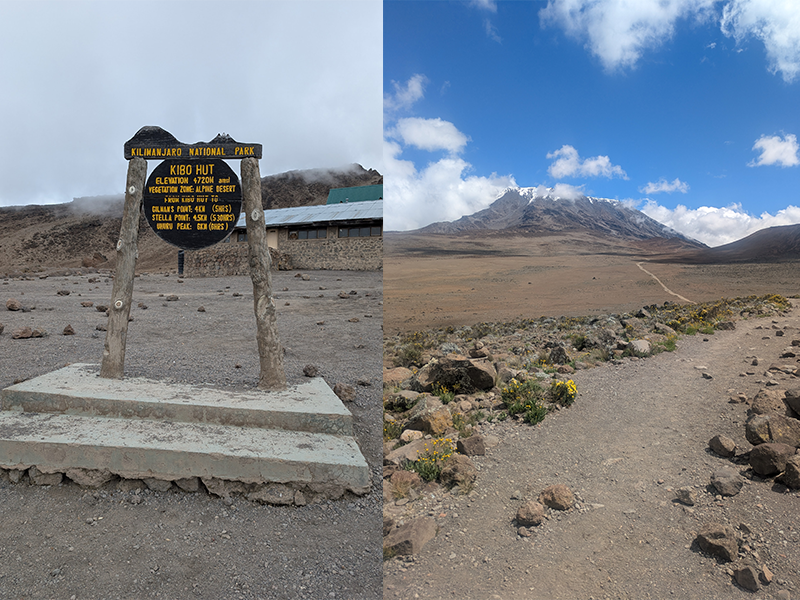
| Alpine Desert Zone | 4,000–5,000 m 13,100–16,400 ft |
Dry volcanic terrain, gravel, ash, sparse plants, open ridges, and exposed slopes. | Stronger wind, colder nights, dry air, slower walking, and more serious altitude pressure. |
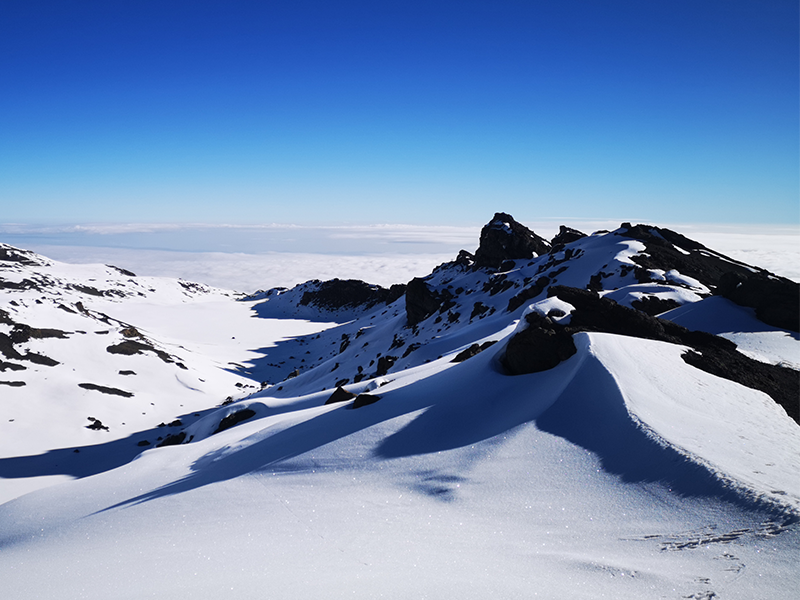
| Arctic Summit Zone | 5,000–5,895 m 16,400–19,341 ft |
Ice, glaciers, scree, volcanic rock, snowfields, and almost no vegetation. | Freezing temperatures, thin air, strong winds, and the final push to Uhuru Peak. |
Plan Your Kilimanjaro Climb Climb safely with the right preparation and expert support. Choose the safest route Prepare for altitude properly Climb with experienced local
Plan Your Kilimanjaro Climb Climb with the right preparation, support, and safety strategy. Choose the safest route Prepare for altitude properly Climb with expert local
Plan Your Kilimanjaro Climb The right route, timing, and preparation make all the difference.At Kili Quests, we help you plan based on: Best routes for