
Plan Your Kilimanjaro Climb

The right route, timing, and preparation make all the difference.
At Kili Quests, we help you plan based on:

You Can Reach the Summit

 Preparation is what gets you there.

OUR CATEGORIES

How Difficult Is Mount Kilimanjaro Compared to Other Treks Like Everest Base Camp

Climbing Mount Kilimanjaro, Africa’s highest mountain at 5,895 meters (19,341 feet), is one of the most achievable high-altitude adventures in the world. You don’t need ropes, technical climbing skills, or prior mountaineering experience to reach the summit  but that doesn’t mean the climb is easy.
Many travelers compare Kilimanjaro with popular treks like Everest Base Camp and wonder which one is harder. The truth is, these treks are difficult in different ways. Kilimanjaro challenges your body with altitude and long summit hours, while Everest Base Camp tests endurance over a longer distance.
 
Before choosing your trek, it’s important to understand how each route affects difficulty and success  explore our complete  Kilimanjaro Routes Guide.
Trekking
Climbing Kilimanjaro is physically and mentally challenging — especially on summit night — but with the right pace and preparation, reaching Uhuru Peak is achievable for most trekkers.

Kilimanjaro vs Everest Base Camp – Which Is Harder?

At first glance, Everest Base Camp may seem harder because it takes longer and covers more distance. But Kilimanjaro presents a different kind of challenge.
Kilimanjaro:
  • Higher altitude (5,895m summit)
  • Faster ascent → less time to acclimatize
  • Intense summit night (10–14 hours in extreme cold)
  • Shorter duration (5–9 days)
Everest Base Camp:
  • Lower altitude (5,364m at base camp)
  • Longer trek (12–14 days)
  • More gradual acclimatization
  • No single summit push
On Everest Base Camp, your body has more time to adjust. The challenge is consistency over many days.On Kilimanjaro, the challenge is more concentrated  especially during summit night.

What Makes Climbing Kilimanjaro Difficult?

Kilimanjaro is often called a “walkable mountain,” but the difficulty comes from how your body reacts to altitude, fatigue, and environment.

High Altitude – The Real Challenge

Above 3,000 meters, your body begins to feel the effects of reduced oxygen. By the time you approach the summit, oxygen levels are nearly half of what they are at sea level.
You may experience:
  • Headaches
  • Nausea
  • Fatigue
  • Slower pace
This is why proper acclimatization is critical ,learn how to acclimatize on Kilimanjaro and avoid altitude sickness.
 
You can also read more about symptoms and safety in our guide to altitude sickness on Kilimanjaro.
 

Long Hiking Days That Build Fatigue

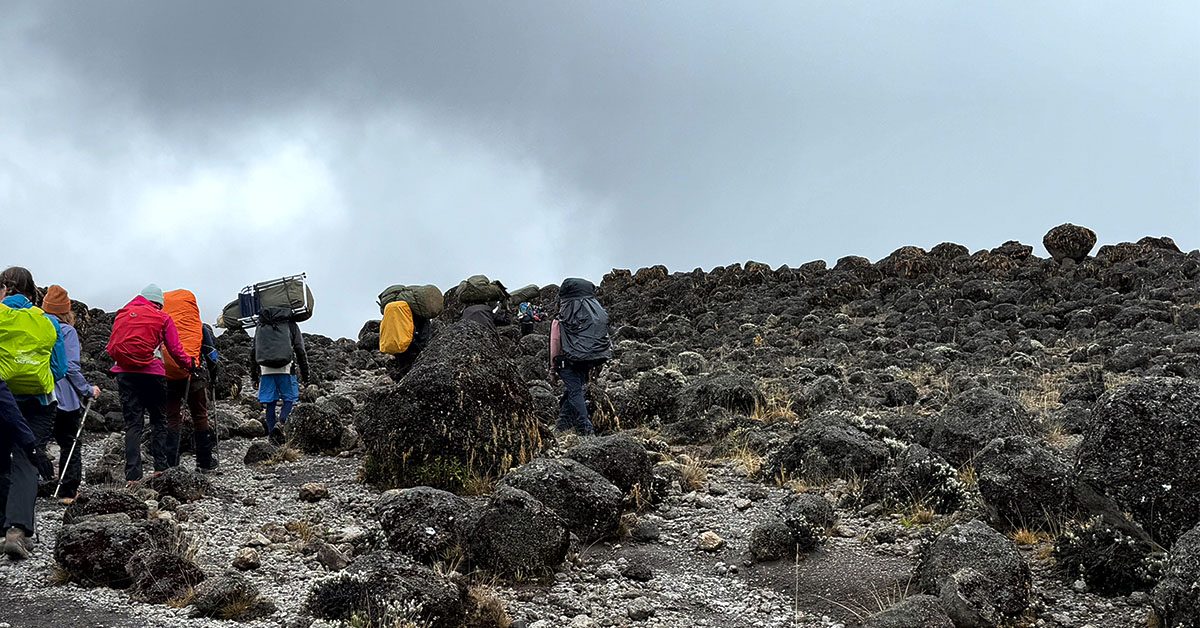
Most days involve 5–7 hours of hiking, but the real challenge is doing this for multiple days in a row while sleeping at altitude.
 
Understanding how many days you should spend on the mountain can make a big difference — see how long it takes to climb Kilimanjaro.

Summit Night -The Toughest Part

Summit night is the hardest part of the climb.You start around midnight and hike for 10–14 hours in cold, thin air.
 
Proper preparation is key — see what to expect and how to prepare in our Kilimanjaro summit day guide.

Cold Temperatures and Changing Climate Zones

Kilimanjaro takes you through five climate zones , from rainforest to arctic conditions.
Summit temperatures can drop to -10°C to -20°C.
 
 Make sure you’re prepared for extreme cold by checking our Kilimanjaro night temperature guide. And don’t forget essential gear — see the full Kilimanjaro packing list.
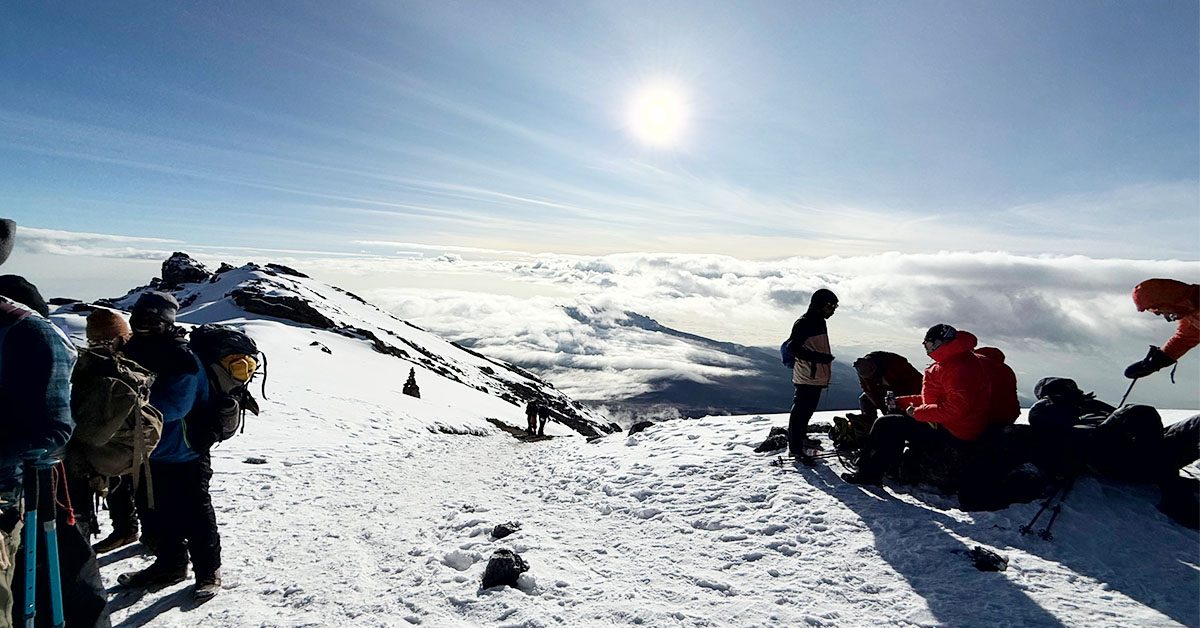
Stella point -1
The biggest challenge on Kilimanjaro isn’t the terrain — it’s the altitude. As you climb higher, oxygen levels drop, making every step feel harder.

Do You Need Climbing Experience for Kilimanjaro?

No technical experience is required.However, preparation is key.
 
 If you’re new to trekking, start with our beginner’s guide to climbing Kilimanjaro.

How Fit Do You Need to Be to Climb Kilimanjaro?

You don’t need to be an athlete, but you need endurance.You should be comfortable:
  • Walking 6–8 hours per day
  • Hiking uphill
  • Carrying a daypack
Follow our step-by-step Kilimanjaro training plan to prepare your body before the climb.

Kilimanjaro Success Rates by Route

See a full breakdown of success rates by route to choose the best option.
 
 You can also compare the most popular routes in detail here: Machame vs Lemosho)

How to Make Kilimanjaro Easier (From a Guide’s Perspective)

Climbing Kilimanjaro doesn’t get easier because the mountain changes  it gets easier when you approach it the right way. The decisions you make before and during your climb will have a direct impact on how your body handles altitude, fatigue, and summit day.

Choose a Longer Route

One of the most important decisions you will make is how many days you spend on the mountain. Many climbers are tempted to choose shorter routes to save time or money, but this often makes the climb much harder.
Longer routes allow your body to adjust gradually to altitude. This reduces the risk of altitude sickness and gives you a better chance of reaching the summit feeling strong instead of exhausted.
 
If you’re unsure which route fits your level, compare all Kilimanjaro routes to understand the differences in duration, difficulty, and success rate.

Walk Slowly (“Pole Pole”)

On Kilimanjaro, speed is not an advantage  it’s a mistake.You will hear guides repeat “pole pole” (slowly, slowly) from the very first day. This is because walking too fast early in the climb puts stress on your body and makes it harder to adapt to altitude later.The climbers who succeed are not the fastest  they are the most consistent. A steady, controlled pace helps conserve energy, reduces fatigue, and allows your body to adjust naturally as you gain elevation.

Stay Hydrated and Eat Properly

At high altitude, your body works harder even when the pace feels slow. Breathing rate increases, energy use goes up, and dehydration can happen quickly without you noticing.
Drinking enough water and eating regularly is essential for maintaining strength and helping your body adapt to altitude. Many climbers lose appetite as they go higher, but continuing to eat is key to keeping your energy levels stable  especially before summit night.

Follow Your Guide’s Advice

Your guide is one of the most important factors in your success.Experienced Kilimanjaro guides are trained to monitor your pace, check your condition, and recognize early signs of altitude sickness. Small adjustments  like slowing down, resting, or changing your routine  can make a big difference over several days on the mountain.
 
If you want to understand how safety is managed on the mountain, read our full guide on whether Kilimanjaro is dangerous.
 

Is Climbing Kilimanjaro Worth the Challenge?

There are moments on Kilimanjaro when the climb feels tough  when the air is thin, your legs are heavy, and the summit still feels far away. But those moments are part of what makes the experience meaningful.As you move higher, the mountain changes around you. You pass through rainforest, open moorland, and dry alpine desert before reaching the cold, arctic summit zone. Each day feels different, and each step brings you closer to something bigger than just a destination.
 
Then comes summit morning. After hours of climbing in the dark, the first light appears over the horizon. Standing on Uhuru Peak, the highest point in Africa, you realize that the challenge was not just about reaching the top  it was about everything it took to get there.

Frequently Asked Questions

Can beginners climb Mount Kilimanjaro?

Yes, beginners can successfully climb Mount Kilimanjaro. Unlike many high mountains, Kilimanjaro does not require technical climbing skills, ropes, or prior mountaineering experience.However, being a beginner does not mean it will be easy. The biggest challenge is altitude, not terrain. With proper preparation, a good level of fitness, and the support of experienced guides, many first-time climbers reach the summit every year.

Choosing a longer route and following a proper acclimatization schedule will greatly improve your chances of success.

What is the hardest part of climbing Kilimanjaro?

Most climbers agree that summit night is the hardest part of the climb.This final ascent begins around midnight and can last 10 to 14 hours. You are hiking in darkness, in freezing temperatures, and at the highest altitude of the entire trek.By this point, your body is already tired from previous days, and the low oxygen levels make every step feel slower and more demanding.

Mental strength becomes just as important as physical fitness during this stage.

How long does it take to climb Kilimanjaro?

Most Kilimanjaro climbs take between 5 and 9 days, depending on the route you choose.Shorter routes (5–6 days) are more challenging because they allow less time for acclimatization. Longer routes (7–9 days) are generally recommended, as they give your body more time to adjust to altitude and significantly increase your chances of reaching the summit.Choosing the right number of days is one of the most important decisions when planning your climb.

Do you need oxygen to climb Kilimanjaro?

No, climbers do not need supplemental oxygen to climb Kilimanjaro.Unlike extremely high-altitude peaks such as Everest, Kilimanjaro can be climbed safely using proper acclimatization. This means ascending slowly, allowing your body time to adapt to lower oxygen levels.Professional guides also monitor climbers closely and carry emergency oxygen for safety purposes, but it is not used as part of a normal climb.

What is the best age to climb Mount Kilimanjaro?

Mount Kilimanjaro can be climbed by people of many different ages, as long as they are in good health and prepared for the trek. The minimum age allowed by Kilimanjaro National Park is 10 years old, while many climbers successfully reach the summit in their 50s, 60s, and even 70s.
The most important factors are fitness, proper acclimatization, and choosing the right route length. Slower routes with more days on the mountain give climbers of all ages a better chance to adjust to the altitude and reach the summit safely.With experienced guides and good preparation, climbers of many ages can successfully stand on Uhuru Peak, the highest point in Africa.

Ready to Climb Mount Kilimanjaro?

Climbing Mount Kilimanjaro is a life-changing adventure, but reaching the summit safely requires proper preparation, experienced guides, and the right climbing itinerary.At Kili Quests, our professional local guides have extensive experience leading climbers to the summit of Africa’s highest mountain. We carefully plan each expedition with the best routes, proper acclimatization schedules, and a dedicated support team of guides, cooks, and porters.Whether you are a beginner or an experienced trekker, we help you prepare and climb Kilimanjaro with confidence.
 
Contact us today to start planning your adventure

Related Articles