Get Ready for Kilimanjaro

The right preparation makes the climb safer, easier, and more achievable.

Prepare the Right Way

Build a smarter climb plan before you book.
Links:

OUR CATEGORIES

How Fit Do You Need to Be to Climb Mount Kilimanjaro?

For many people dreaming of climbing Mount Kilimanjaro, one question comes up again and again:Am I fit enough to do this?”
 
You don’t need to be an athlete. You don’t need to run marathons. And you don’t need years of hiking experience.But you do need a certain level of fitness , not extreme strength, but consistent endurance.Kilimanjaro is not a technical climb. It’s a long, demanding trek at high altitude.And that means your success depends less on how strong you are, and more on how well your body handles long days of walking and thin air.That is also why route choice and acclimatization strategy matter so much on Kilimanjaro. Before booking, it helps to compare the different Kilimanjaro routes and understand how acclimatization affects summit success.Understanding what “fit enough” really means is the first step toward reaching the summit.Many first-time climbers assume Kilimanjaro is only for highly athletic people, but in reality, most successful trekkers are ordinary travelers who prepare well, choose the right route, and give their bodies time to acclimatize.
Climbing Kilimanjaro requires steady endurance more than extreme athletic ability.

Table of Contents

What Type of Fitness Does Kilimanjaro Require?

Kilimanjaro tests a very specific kind of fitness.

Endurance (Most Important)

You will be walking for 5–8 hours per day, sometimes longer.
This is not about speed — it’s about:
  • Keeping a steady pace
  • Moving consistently every day
  • Managing fatigue over time
This is one reason longer itineraries often give climbers a better experience, because they reduce the physical stress of rushing the mountain and give more time to adapt. If you are still choosing an itinerary, our guide to the best Kilimanjaro routes explains which routes are better for endurance and acclimatization.

Cardiovascular Fitness

Your heart and lungs play a major role, especially at altitude.
Good cardio helps you:
  • Breathe more efficiently
  • Maintain energy levels
  • Recover faster

Leg Strength

You’ll be walking uphill, downhill, and on uneven terrain.
Strong legs help reduce fatigue and prevent injuries.

Mental Strength

Kilimanjaro is as much mental as it is physical.There will be moments when you feel tired or uncomfortable , especially during summit night. Your mindset will determine whether you continue or stop.This becomes especially important on summit night, when cold temperatures, fatigue, and altitude combine. You can also read our guide to Kilimanjaro summit tips to understand what that final push really feels like.

The Reality — You Don’t Need to Be Extremely Fit

This is one of the biggest misconceptions.You do NOT need:
  • Elite fitness
  • Gym-level strength
  • Advanced hiking experience

Many people assume Kilimanjaro is only possible for experienced hikers or highly trained athletes. In reality, the mountain is far more about consistency, pacing, and altitude management than raw physical power.

Who Actually Succeeds?

Many very fit people fail because they go too fast.Many average-fit people succeed because they:
  •  go slowly (pole pole)
  •  listen to their guides
  •  manage their energy
They also tend to do better when they choose longer routes that allow better acclimatization. That is one reason routes like Lemosho and the Northern Circuit are often recommended for first-time climbers.

Fitness Levels Explained

Fitness Level………………….Beginner 
Can You Climb?…………….. Yes
Reality…………………………… With preparation
 
 
Fitness Level………………..Moderate

Can You Climb? …………………Yes 

Reality……………………………….Ideal
 
 
Fitness Level……………….Very Fit  
Can You Climb?…………..Yes 
Reality……………………More comfortable
 
No matter your starting fitness level, your route, pace, and acclimatization plan still play a major role in whether you reach Uhuru Peak.

How to Train for Kilimanjaro

You don’t need a complicated program. Keep it simple and consistent.

Walking & Hiking

 The best training is walking.Start with:
  • 30–60 minutes walks
  • Gradually increase distance
  • Include hills if possible
If you want a more detailed week-by-week plan, read our full guide on how to train for Kilimanjaro.

Cardio Training

Add activities like:
  • Running
  • Cycling
  • Swimming
2–3 times per week is enough.

Strength Training

Focus on:
  • Legs (squats, lunges)
  • Core (planks)
This helps stability and endurance.

Practice with a Backpack

Train with the same type of daypack you’ll use on the mountain.It also helps to know what you will actually carry each day. Our Kilimanjaro packing list explains which essentials belong in your daypack and which items stay with the support crew.

Train for Consistency

The goal is not intensity — it’s repetition.
 Being active regularly is more important than pushing too hard.

How Long Should You Train?

A 4 to 6 week preparation period is enough for most people.If you already have a good fitness base, even less may be needed.The exact amount of training you need depends on your starting fitness level, age, hiking experience, and the route you choose. Someone taking a longer route such as Lemosho or Northern Circuit may cope better with the climb than someone choosing a shorter itinerary with less acclimatization time.
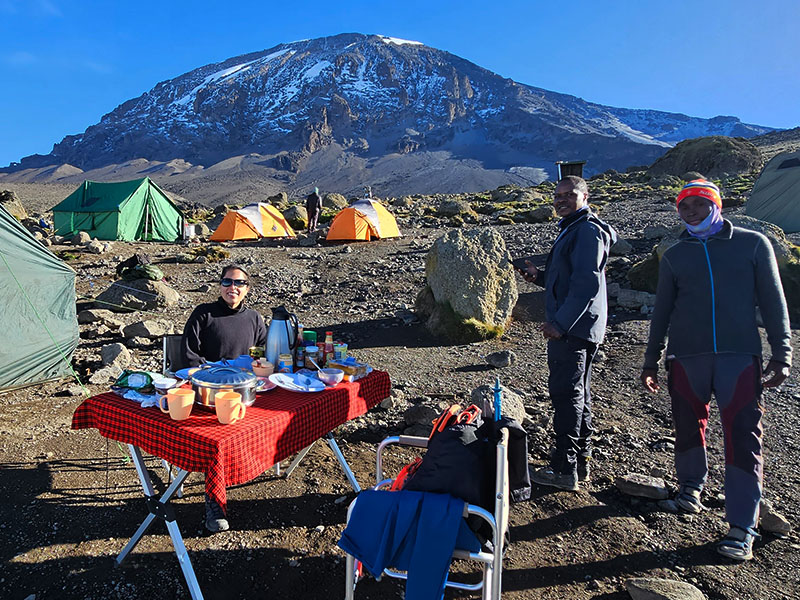
Trekkers enjoying breakfast at Karanga Camp on the Shira Route of Mount Kilimanjaro, with colorful tents and Kibo Peak in the background | Kili Quests
Regular pacing, short breaks, and proper guidance help climbers manage Kilimanjaro’s physical demands.

The Biggest Fitness Mistakes Climbers Make

Many climbers focus on the wrong things when preparing for Kilimanjaro. It’s not about training harder ,it’s about training smarter.This is especially important because Kilimanjaro includes long uphill sections, steep descents, and difficult summit terrain. If you are still deciding whether the challenge is right for you, our guide on how hard Kilimanjaro is breaks down what makes the climb demanding.

Focusing on Strength Instead of Endurance

A common mistake is spending too much time in the gym building strength, while ignoring long-distance walking.Kilimanjaro is not a strength challenge — it’s an endurance challenge.You won’t be lifting heavy weights on the mountain. You’ll be walking for hours, day after day. If your body is not used to sustained movement, fatigue will build quickly.The better approach is to prioritize long walks and hikes over gym sessions.

Training Too Intensely, Too Quickly

Some climbers try to “crash train” a few weeks before the climb by pushing their limits every day.This often leads to:
  • Fatigue
  • Muscle soreness
  • Increased risk of injury
Consistency is far more effective than intensity. Training regularly at a moderate level prepares your body better than short bursts of extreme effort.

Ignoring Real Hiking Conditions

Training on flat ground or only using treadmills does not fully prepare you for Kilimanjaro.The mountain includes:
If possible, include outdoor hikes with elevation gain in your training. This will make a significant difference in how your body performs on the mountain.

Not Training with a Backpack

Many people forget that they will carry a daypack during the climb.Even a light pack adds extra strain over long distances. Training with a backpack helps your body adapt and improves your balance and posture.

Underestimating Recovery

Kilimanjaro is not just about walking — it’s about recovering overnight and doing it again the next day.If your training doesn’t prepare you for consecutive days of activity, the accumulated fatigue can affect your performance during the climb.

Fitness vs Altitude — What Really Determines Success?

One of the biggest misconceptions about Kilimanjaro is that being very fit guarantees success.It doesn’t.The biggest reason is altitude. Kilimanjaro takes trekkers to 5,895 meters, where the reduced oxygen level affects everyone differently, including strong runners, gym-goers, and experienced hikers.

Why Fitness Alone Is Not Enough

You can be extremely fit and still struggle on Kilimanjaro.
At high altitude, the body reacts differently:
  • Oxygen levels decrease
  • Breathing becomes harder
  • Energy levels drop
This is not something you can fully train for at sea level.
 

Altitude Affects Everyone Differently

There is no “perfect fitness level” that protects you from altitude sickness.
Even experienced athletes can experience:
  • Headaches
  • Nausea
  • Fatigue
Meanwhile, less fit climbers sometimes perform better simply because they move slowly and allow their bodies to adjust.These are some of the early signs associated with altitude sickness on Kilimanjaro, which is why physical fitness alone is never enough.
 

The Real Key: Acclimatization

The most important factor for success is not fitness , it’s how well your body adapts to altitude.
This is why:
  • Longer routes have higher success rates
  • Slow pacing (“pole pole”) is critical
  • Rest days matter
If you want to understand this in more detail, read our guide to Kilimanjaro acclimatization and our route success rate comparison.

The Balance Between Fitness and Strategy

The best approach is combining:
  • Moderate fitness
  • Proper acclimatization
  • Smart pacing
When these three work together, your chances of reaching the summit increase significantly.

Signs You Are Ready to Climb Kilimanjaro

You are ready if you can:
  • Walk 5–6 hours comfortably
  • Handle uphill terrain
  • Stay active for multiple days
  • Recover overnight

Final Answer

You don’t need to be extremely fit to climb Kilimanjaro.You need:
  • Endurance over strength
  • Consistency over intensity
  • Patience over speed
Kilimanjaro is not about being the strongest person , it’s about being prepared and pacing yourself correctly.

Common Questions About Kilimanjaro Fitness

Can an unfit person climb Kilimanjaro?

Yes, an unfit person can still climb Kilimanjaro, but preparation is absolutely essential. Kilimanjaro is not a technical mountain, which means you don’t need climbing skills, but it does require endurance and the ability to walk for several hours over multiple days.Someone starting with low fitness can improve significantly with consistent training in the weeks leading up to the climb. The goal is not to become extremely fit in a short time, but to build steady endurance. Regular walking, hiking, and light cardio can make a noticeable difference.It’s also important to understand that success on Kilimanjaro is not determined by fitness alone. Many climbers who are not highly athletic still reach the summit because they pace themselves properly, stay consistent, and follow their guide’s instructions. With the right preparation and mindset, even beginners can successfully complete the climb.

Do I need to go to the gym to prepare for Kilimanjaro?

No, going to the gym is not required to prepare for Kilimanjaro. While gym workouts can be helpful for building strength and cardiovascular fitness, they are not the most important form of preparation.Outdoor activities such as walking, hiking, and climbing hills are far more effective because they closely resemble the actual conditions you will experience on the mountain.Training on uneven terrain, carrying a light backpack, and spending time on your feet for several hours will prepare your body more realistically than most gym routines.If you prefer the gym, you can still use it to support your training by focusing on exercises like stair climbing, treadmill walking on an incline, and leg strengthening workouts. However, combining gym training with outdoor practice will give you the best results.

Is running necessary for Kilimanjaro training?

Running is not necessary for Kilimanjaro training, and many successful climbers do not run at all.While running can improve your cardiovascular fitness, it does not directly prepare your body for the type of movement required on the mountain.Kilimanjaro is about slow, steady walking over long periods rather than speed.The most important preparation is getting your body used to spending several hours on your feet, often on uneven or uphill terrain.Activities like long-distance walking, hiking, and hill training are much more relevant. These help build endurance, strengthen your legs, and prepare your joints for the demands of the climb. If you enjoy running, it can be a useful addition, but it should not replace hiking-based training.

What is more important for Kilimanjaro — fitness or acclimatization?

Acclimatization is more important than fitness when it comes to reaching the summit of Kilimanjaro. While fitness helps you manage the physical effort of walking each day, altitude is the biggest challenge on the mountain.As you climb higher, oxygen levels decrease, and your body needs time to adjust. If you ascend too quickly without proper acclimatization, you may experience altitude sickness, which can prevent you from continuing regardless of how fit you are.This is why choosing a longer route with more days is so important. It allows your body to adapt gradually, improving your chances of success. The ideal combination is moderate fitness combined with proper acclimatization and a slow, steady pace.

How can I improve my chances of reaching the summit?

Improving your chances of reaching Uhuru Peak comes down to a combination of preparation, smart planning, and the right approach on the mountain.Consistent training before your trip helps build the endurance needed for multi-day trekking. Choosing a longer route allows better acclimatization, which is the most important factor for success. Once on the mountain, walking slowly and maintaining a steady pace helps conserve energy and supports your body’s adjustment to altitude.Staying hydrated and eating regularly are also critical, even when you don’t feel hungry. Finally, listening to your guide is essential. Experienced guides understand the mountain conditions and can recognize early signs of altitude sickness, helping you make the right decisions at the right time.When all these elements come together, your chances of reaching the summit increase significantly.

Climb Kilimanjaro with Kili Quests

Climbing Kilimanjaro is achievable , with the right preparation and support.
At Kili Quests, we help you:
  • Prepare before your climb
  • Choose the right route
  • Climb safely with experienced guides
  • Maximize your chances of reaching the summit
 Start your Kilimanjaro journey with a team that understands what it takes to succeed.

Related Articles