Climb with Experts Who Understand Every Zone

We guide you through every zone with expert pacing and safety.We help you:

Explore More Kilimanjaro Planning Guides

Your route, preparation, and strategy will shape your entire climb. Explore these essential guides:

OUR CATEGORIES

Mount Kilimanjaro’s Ecological Zones Explained

Mount Kilimanjaro is not just the highest mountain in Africa , it is a vertical journey through completely different environments. As you climb from the base to Uhuru Peak (5,895 m), you pass through five distinct ecological zones, each with its own climate, vegetation, and challenges.
This is what makes Kilimanjaro unique. In less than a week, you move from tropical farmland to an arctic summit.Understanding these zones is essential for preparing your gear, managing altitude, and choosing the right route. If you’re still deciding,
 
it helps to first explore the best options in this detailed guide on Kilimanjaro routes comparison: which route is best.

The Five Ecological Zones of Mount Kilimanjaro

Kilimanjaro is divided into five main ecological zones:
  • Cultivation Zone
  • Montane Forest Zone
  • Heather & Moorland Zone
  • Alpine Desert Zone
  • Arctic Summit Zone
Each zone represents a major environmental shift , and you will feel that change physically as you climb.
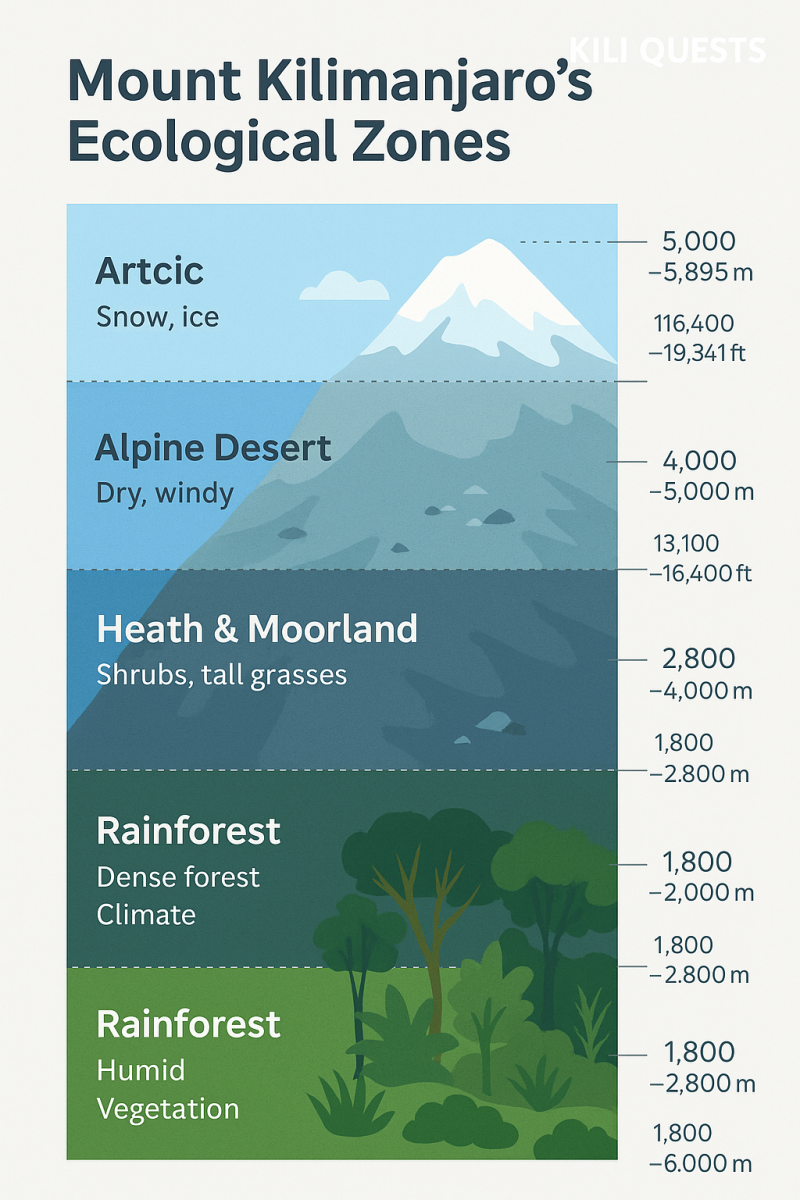
Infographic of Mount Kilimanjaro’s ecological zones showing rainforest, heath, moorland, alpine desert, and arctic summit with altitude labels in meters and feet.
Explore the five ecological zones of Mount Kilimanjaro — from lush rainforest to the icy arctic summit — each with unique climate, vegetation, and wildlife.

Cultivation Zone (800–1,800 m / 2,600–6,000 ft)

Landscape and Human Activity

This is the lowest part of Kilimanjaro, where local life thrives. The fertile volcanic soil supports farming by the Chagga people.
You’ll find coffee plantations, banana farms, and small-scale agriculture across the slopes.

Climate Conditions

  • Warm and humid
  • Regular rainfall
  • Dense green vegetation

Your Experience

Most climbs begin above this zone, but you pass through it on the way to the trailhead in Moshi or nearby villages.

Montane Forest Zone (1,800–2,800 m / 6,000–9,200 ft)

Climate and Atmosphere

This zone is humid and often covered in mist:
  • Frequent rainfall
  • Muddy, slippery trails
  • Thick cloud cover

Vegetation and Biodiversity

This is the most biologically rich zone on Kilimanjaro, filled with towering trees, moss, and dense canopy.

Wildlife

You may encounter blue monkeys, colobus monkeys, and forest birds along the trail.
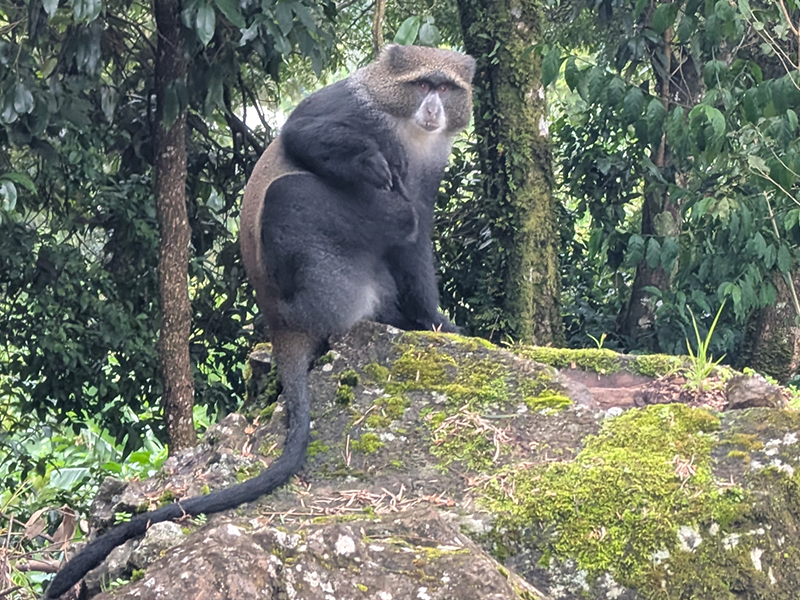
Blue monkey sitting on a moss-covered rock in the rainforest of Mount Kilimanjaro
A blue monkey (Cercopithecus mitis) rests on a mossy rock in Kilimanjaro’s montane rainforest — a common sight in the lower forest zone of the mountain.

Trekking Conditions

Because of constant moisture, this section requires proper waterproof gear.Before starting your climb, it’s important to prepare properly , this Kilimanjaro packing list guide explains exactly what you need for every zone.

Heather & Moorland Zone (2,800–4,000 m / 9,200–13,100 ft)

Transition Landscape

The dense forest disappears and opens into wide landscapes with rolling hills and volcanic rock formations.

Unique Vegetation

You’ll see giant groundsels and lobelias , plants that only grow in high-altitude environments.

Climate Conditions

  • Cooler temperatures
  • Strong UV exposure
  • Cold nights

Altitude Effects Begin

This is where altitude starts affecting most climbers. You may notice slower breathing, fatigue, or mild headaches.At this stage, understanding proper acclimatization becomes critical.
 
This is explained in detail in our guide on how to acclimatize on Mount Kilimanjaro and avoid altitude sickness.
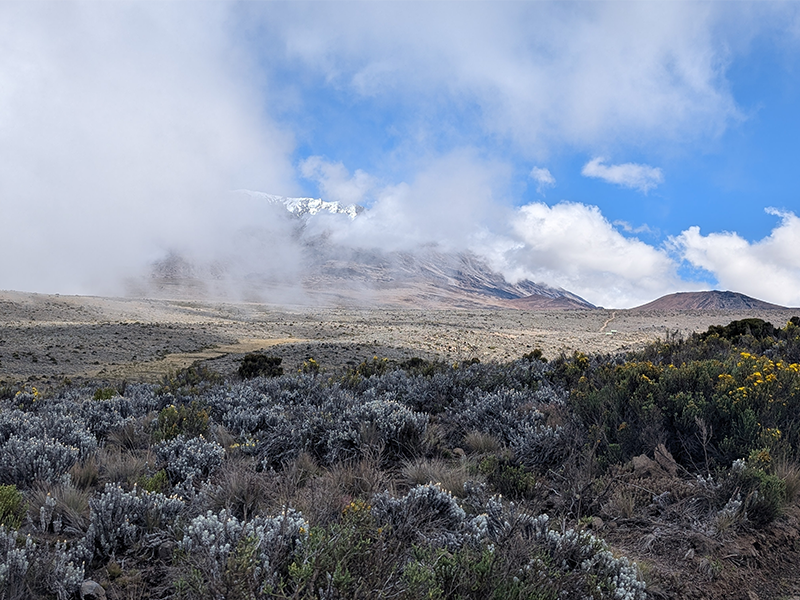
Moorland vegetation on Mount Kilimanjaro with cloud-covered summit and scattered alpine shrubs under a blue sky.
The heath and moorland zone on Mount Kilimanjaro, located between 2,800 and 4,000 meters, is known for its scattered shrubs, giant heathers, and surreal alpine landscape.

Alpine Desert Zone (4,000–5,000 m / 13,100–16,400 ft)

Environmental Conditions

This zone is dry, exposed, and extreme:
  • Strong winds
  • Very low humidity
  • Large temperature differences between day and night

Landscape

You’ll walk across volcanic rock, ash, and gravel in a landscape that feels almost lifeless.

Physical Impact

At this altitude:
  • Oxygen levels drop significantly
  • Your body tires faster
  • Hydration becomes critical
Temperature changes become more noticeable here. To understand what conditions you’ll face overnight, read the Kilimanjaro night temperature guide by altitude.
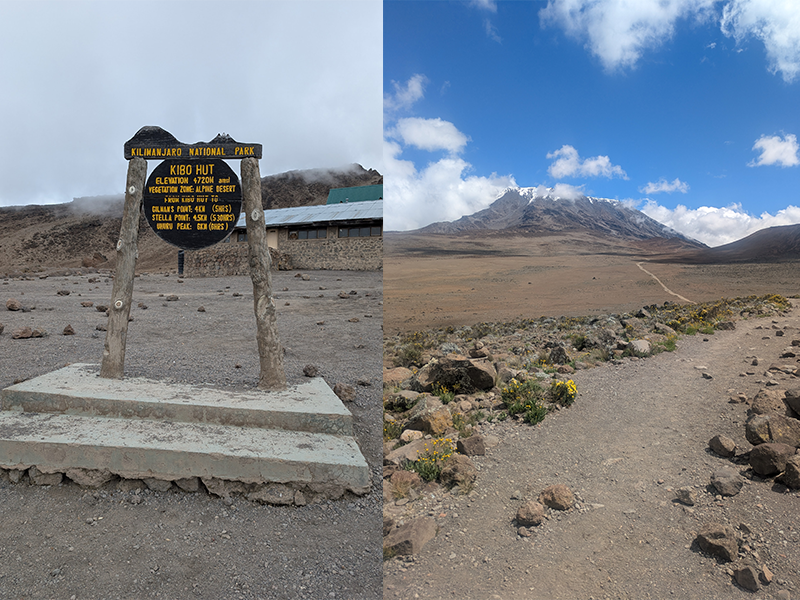
Kibo Hut signpost and view of Mount Kilimanjaro’s alpine desert zone with rocky terrain and sparse vegetation.
Kibo Hut, located at 4,720 meters, marks the start of the alpine desert zone on Mount Kilimanjaro — a dry, wind-swept region just below the summit.

Arctic Zone / Summit (5,000–5,895 m / 16,400–19,341 ft)

Climate Reality

  • Freezing temperatures
  • Strong winds
  • Extremely low oxygen levels

Landscape

This is a polar-like environment with glaciers, snowfields, and loose volcanic scree.

Summit Experience

This is the most physically and mentally demanding part of the climb. Reaching this zone means you are approaching Uhuru Peak.
 
If you’re curious about the meaning and history behind the summit, you can explore it in why it is called Uhuru Peak on Kilimanjaro.
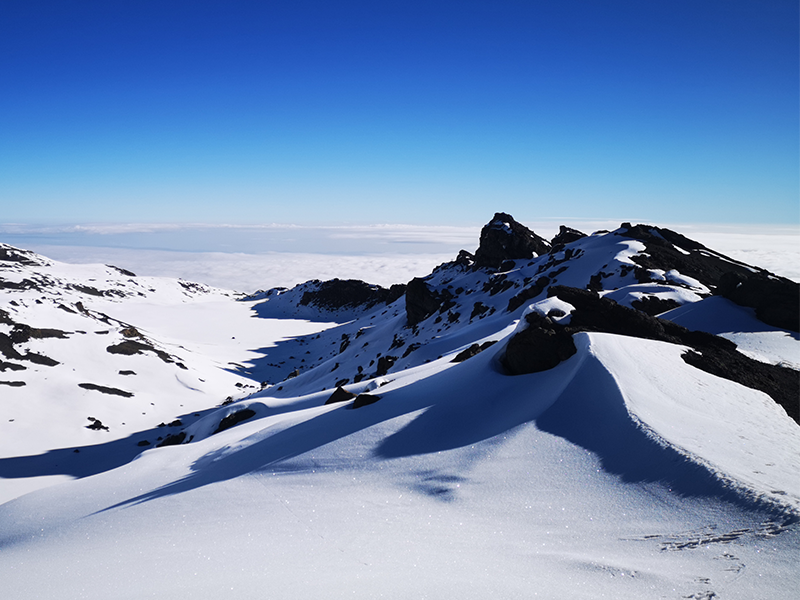
Snow-covered ridges near Stella Point on Mount Kilimanjaro with a clear blue sky above the clouds.
The arctic summit zone of Kilimanjaro near Stella Point is often blanketed in snow, offering breathtaking views above the cloud layer.

Why Understanding the Zones Matters

Gear Preparation

You are not climbing one climate , you are climbing five.
From rain in the forest to freezing temperatures at the summit, preparation is key. Make sure you’re fully equipped using this Kilimanjaro packing list.

Acclimatization Strategy

Each zone increases altitude stress on your body. Moving too fast increases the risk of altitude sickness.
 
To understand the risks and prevention, read altitude sickness on Kilimanjaro: what you need to know.

Mental Preparation

Each zone feels completely different , from vibrant rainforest to silent alpine desert. Knowing this helps you stay mentally strong during the climb.

Understanding Kilimanjaro as a Complete Journey

 Climbing Kilimanjaro is not just about reaching the summit  it’s about experiencing a full environmental transition in just a few days.From farmland to rainforest, from moorland to alpine desert, and finally to an arctic summit, the journey is what makes Kilimanjaro one of the most unique treks in the world.
 
If you’re wondering how challenging this journey really is, read our full guide on how hard it is to climb Mount Kilimanjaro.

Frequently Asked Questions About Mount Kilimanjaro’s Ecological Zones

How many ecological zones are on Mount Kilimanjaro?

 Mount Kilimanjaro has five distinct ecological zones: the cultivation zone, montane forest zone, heath and moorland zone, alpine desert zone, and the arctic summit zone. As climbers ascend the mountain, they pass through these zones, each with unique climate conditions, vegetation, and landscapes.
 

What is the rainforest zone on Mount Kilimanjaro?

The rainforest zone, also called the montane forest zone, lies between about 1,800 and 2,800 meters. It is characterized by dense vegetation, frequent rainfall, and rich biodiversity including monkeys, birds, and lush plant life.
 

At what altitude does the alpine desert zone begin on Kilimanjaro?

The alpine desert zone on Mount Kilimanjaro begins at around 4,000 meters (13,100 feet). This zone is dry and windy, with sparse vegetation and dramatic temperature changes between day and night.
 

What is the coldest ecological zone on Mount Kilimanjaro?

The coldest zone is the arctic summit zone, located above 5,000 meters. Temperatures often drop well below freezing, oxygen levels are low, and the terrain is dominated by glaciers, ice fields, and volcanic rock.
 

Why does Mount Kilimanjaro have different ecological zones?

Mount Kilimanjaro’s ecological zones are created by changes in altitude. As elevation increases, temperature drops and environmental conditions change, creating different ecosystems from tropical farmland to arctic summit conditions.

Climb with Experts Who Know the Zones

At Kili Quests, our guides are trained to navigate every zone , from dense forests to glacial ridges. We help you adjust to each stage of the mountain with expert pacing, acclimatization, and gear advice.Make sure to check our [Essential Kilimanjaro Packing List 2025] to avoid missing anything important.
 
If you’re new to high-altitude trekking, our [Altitude Sickness Tips & Risks] guide can help you stay safe.

Contact us today to start your Kilimanjaro climb 

Related Articles