Table of Contents

What Food Can You Expect on Mount Kilimanjaro? A Guide to Your Trek Menu | Kili Quests

Climbing Mount Kilimanjaro is a rewarding challenge — and the food you eat along the way plays a critical role in your energy, morale, and success. At Kili Quests, we make sure every meal on the mountain is nutritious, safe, and satisfying, even in high-altitude conditions.


This guide walks you through what to expect from breakfast to dinner, how we prepare meals on the mountain, and how you can stay energized during your Kilimanjaro adventure.


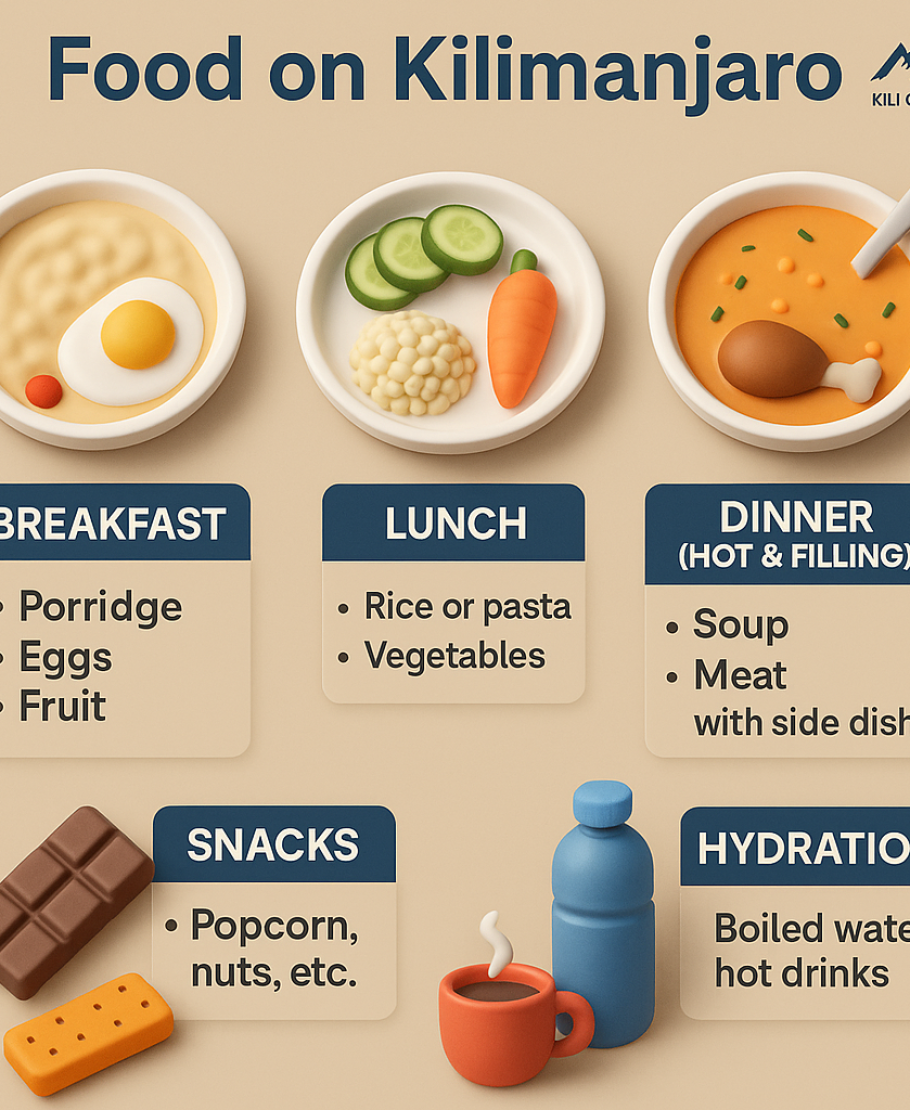
3D infographic showing breakfast, lunch, dinner, and snacks available during Kilimanjaro treks.
Nutritious and filling meals help you stay strong during the climb.

What Kind of Food Is Served on Kilimanjaro?

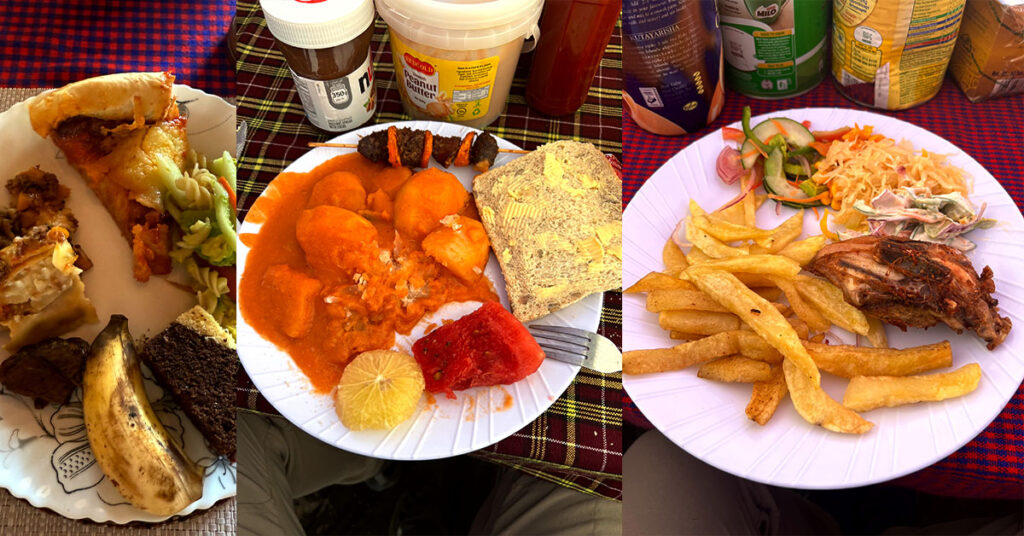
Meals are prepared fresh by a trained cook team in portable kitchens. Here’s a breakdown:
 Breakfast:
  • Start your day with a warm, energy-boosting meal:
  • Porridge (oats, millet, or semolina)
  • Eggs (boiled, scrambled, or fried)
  • Pancakes or French toast
  • Sausages
  • Bread with butter, jam, or honey
  • Fresh fruit (bananas, apples, oranges)
  • Tea, coffee, or hot chocolate
 Lunch:
  • Usually lighter, served mid-day on the trail:
  • Sandwiches (cheese, tuna, chicken, or peanut butter)
  • Rice or pasta with vegetables or protein
  • Fruits and juice
  • Trail snacks (nuts or bars)

 Dinner:

  • Hearty and warm to aid muscle recovery:
  • Soup (carrot, pumpkin, or vegetable)
  • Stews or curry with rice or pasta
  • Grilled chicken or beef
  • Cooked vegetables
  • Occasionally fresh salad
  • Warm drinks (tea, hot cocoa)
Snacks Throughout the Trek
We provide trail snacks to keep your energy levels stable:
  • Energy bars
  • Biscuits and cookies
  • Fresh fruit
 Need a summit checklist? See Summit Day Gear & Nutrition Guide.

How We Prepare Food on the Mountain

Even without modern kitchens, your meals are carefully cooked in a hygienic setup:
  • Mess tent: Your dining area for warm meals and group discussions
  • Cook team: Includes a chef and assistant trained in high-altitude meal prep
  • Fuel source: Cooking is done using gas cylinders (not open fire)
  • Food storage: Ingredients stored in insulated cool bags for freshness
  • Clean water: All water is filtered or treated with purification tablets
Even at high altitude, good food lifts the spirit.

What About Drinking Water?

You’ll be provided with safe, clean drinking water throughout the trek:
  • Collected from mountain streams
  • Purified using filters or tablets
  • Available at all camps for refilling bottles

 Food Tips for High Altitude

At high elevations, your appetite may drop — but eating regularly is vital. That’s why we:
  • Provide high-calorie meals rich in carbs and protein
  • Serve warm comfort food to boost morale
  • Encourage you to eat even if you don’t feel hungry
See Trek Health & Medication Tips to support your digestion and energy levels.

Frequently Asked Questions About Food on Mount Kilimanjaro

What kind of food is served during a Kilimanjaro trek?

During a trek on Mount Kilimanjaro, meals are freshly prepared by mountain cooks and designed to provide energy at high altitude. Typical menus include porridge, eggs, pancakes, rice, pasta, vegetables, soups, chicken or beef dishes, and fresh fruit. Snacks such as energy bars, biscuits, and nuts are also provided during the day.

Is the food safe to eat on Mount Kilimanjaro?

Yes. Reputable trekking companies follow strict hygiene standards when preparing meals on Mount Kilimanjaro. Food is cooked fresh in portable kitchens, and water used for cooking or drinking is filtered or treated with purification tablets.

Can Kilimanjaro trekkers request special dietary meals?

Yes. Most operators can accommodate dietary requirements such as vegetarian, vegan, gluten-free, or allergy-friendly meals. It’s important to inform your trekking company before your trip so the kitchen team can prepare the appropriate ingredients.

How many meals do you eat per day on Kilimanjaro?

Trekkers usually receive three main meals per day — breakfast, lunch, and dinner — plus snacks. Breakfast provides energy for the hike, lunch is lighter during the trek, and dinner is a warm, hearty meal served at camp after a long day on the trail.

What do climbers eat before the Kilimanjaro summit attempt?

Before the midnight summit push toward Uhuru Peak, climbers usually eat a light meal such as porridge, biscuits, or toast with tea or coffee. Energy snacks like chocolate or trail mix are also carried for the ascent.

Is drinking water provided during a Kilimanjaro climb?

Yes. Crew collect water from mountain streams inside Kilimanjaro National Park and purify it using filters or tablets. Trekkers are encouraged to drink 3–4 liters of water per day to stay hydrated and help their bodies adjust to the altitude

 Good Food, Great Adventure

Climbing Kilimanjaro demands energy — and the food we provide at Kili Quests ensures you’re well-nourished, hydrated, and fueled every step of the way. Whether you’re sipping hot soup at base camp or munching trail mix before a summit push, your meals are prepared with care.
 
 Contact Us to start planning your climb — and leave the food logistics to us.

Related Articles