Table of Contents

How Much Weight Does a Kilimanjaro Porter Carry? | Kili Quests

When trekking Mount Kilimanjaro, porters play a crucial role in your success. They carry essential gear, set up camps, and help make your journey smoother. But how much do these hardworking individuals carry — and how are they protected?

Let’s explore the weight limits, regulations, and ethical guidelines that ensure porters are treated fairly — and how you, as a trekker, can help.
 
 What Porters Do Behind the Scenes – Explore the daily efforts and responsibilities of your support crew.
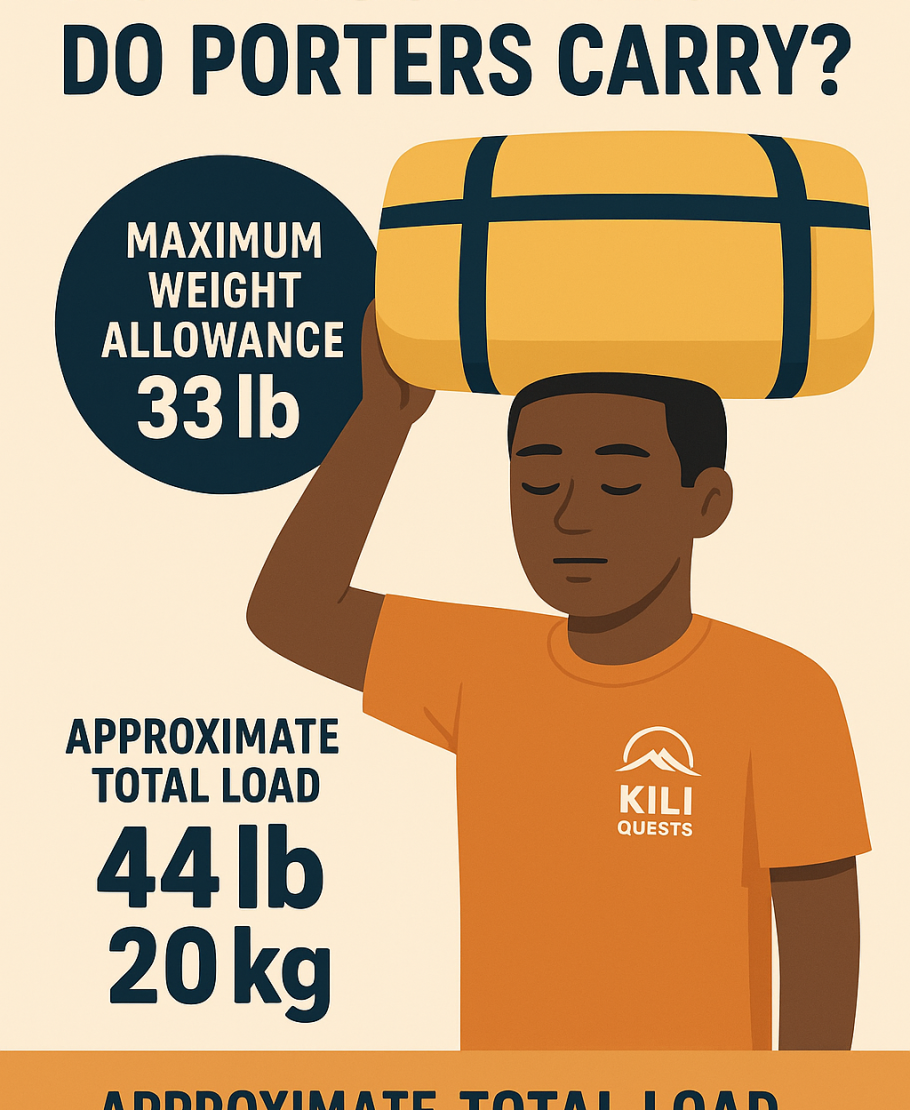
3D infographic of a porter carrying 20 kg client gear and 5–7 kg personal gear on Kilimanjaro.
Each porter carries up to 20 kg of client gear — plus their own essentials.

Kilimanjaro Porter Weight Limit: 15–20 kg

Each Kilimanjaro porter is allowed to carry up to 20 kg (44 lbs) of client gear, as per Kilimanjaro National Park Authority (KINAPA) regulations.
This weight often includes:
  • Trekker’s duffel bag (clothing, sleeping bag)
  • Food supplies
  • Camping equipment
 On average, porters carry 15–20 kg of client gear, plus 5–7 kg of their own belongings.

How the Load Is Divided

Your load is carefully distributed to ensure safety and fairness:
  • You carry: a small daypack (5–7 kg) with water, snacks, jacket, etc.
  • Porters carry: the rest of your gear, shared across the team
  • Group gear (tents, cooking items) is divided among several porters
 

Ethical Porter Guidelines: What KINAPA Requires

Ethical trekking companies like Kili Quests follow strict rules to protect porter welfare:
  • Max weight: 20 kg (client load only)
  • Fair wages: Paid based on load, route, and trek days
  • Proper clothing: Warm jackets, boots, rain protection
  • Meal provisions: Porters are fed daily and sleep in provided tents
  • Breaks and rest: Scheduled rest periods to prevent exhaustion

 Why Weight Limits Matter

Respecting porter weight limits supports:
  •  Porter safety – Reduces risk of injury and strain
  •  Sustainable tourism – Helps maintain fair labor standards
  • Ethical climbing – Ensures your trek aligns with responsible travel practices
 Understand fair compensation with our Kilimanjaro Tipping Guide.
 your climb.

Trekker Tips: Supporting Your Porters

Here’s how you can make the climb easier and more ethical:
  • Pack light: Only bring essentials – extra weight means more load for porters
  • Tip well: Tips make up a large part of a porter’s income
  • Be kind: A simple “thank you” or smile means a lot
  • Report abuse: Only trek with companies that treat their crew with respect
 Kilimanjaro Trekking Rules – Discover the weight regulations and porter welfare policies enforced by the park.
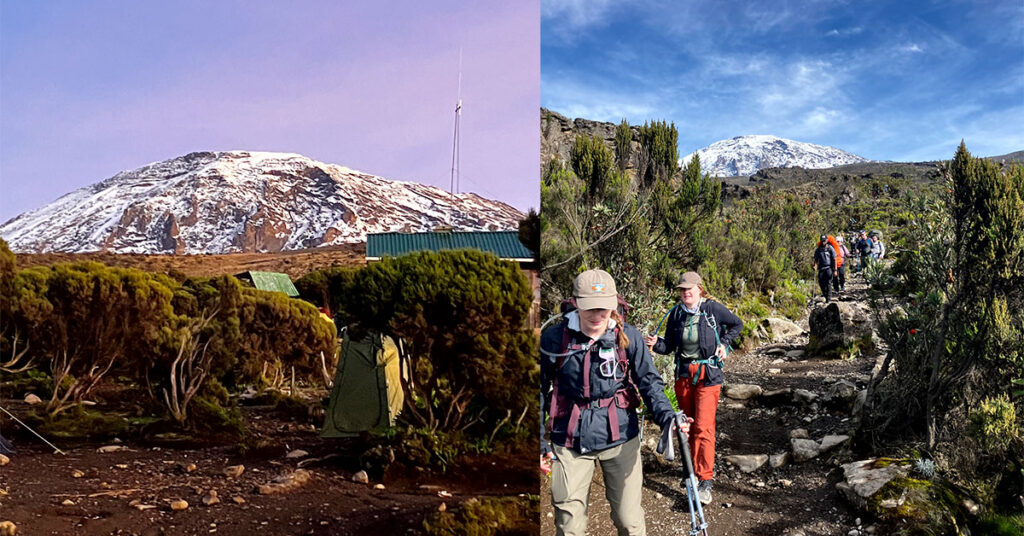
The beauty of walking through land untouched by time.

Frequently Asked Questions

How much weight can a Kilimanjaro porter carry?

According to regulations set by the Kilimanjaro National Park Authority (KINAPA), a porter can carry a maximum of 20 kg (44 lbs) of client gear. In addition to this, porters usually carry 5–7 kg of their own personal items, including clothing and sleeping equipment.

What items do Kilimanjaro porters usually carry?

Kilimanjaro porters typically carry trekkers’ duffel bags, camping equipment, food supplies, cooking gear, and tents. These items are distributed among the porter team to ensure that no individual carries more than the allowed weight.

Do climbers carry any gear themselves on Kilimanjaro?

Yes. Climbers are expected to carry a small daypack weighing about 5–7 kg. This usually contains essentials such as water, snacks, rain gear, sunscreen, camera equipment, and extra clothing needed during the day’s hike.

How many porters are usually assigned to each climber?

The number of porters per climber depends on the route, group size, and amount of equipment. On average, 2 to 3 porters are assigned per trekker to carry personal gear and share group equipment like tents and cooking supplies.

Why are weight limits important for Kilimanjaro porters?

Weight limits help protect porter health and safety by reducing the risk of injury and exhaustion. These rules also support ethical trekking practices and ensure fair working conditions for the support crews on Mount Kilimanjaro.

How can trekkers support porters during a Kilimanjaro climb?

Trekkers can support porters by packing light, choosing ethical tour operators, tipping fairly, and treating the crew with respect. Responsible trekking helps maintain fair labor standards and ensures porters are treated with dignity.

Choose Ethical Trekking with Kili Quests

At Kili Quests, we:
  •  Follow all porter weight limits
  •  Equip our crew with proper gear
  •  Pay fair wages and offer good working conditions
  • Educate our clients about responsible trekking

 Contact Us to plan your Kilimanjaro trek with a company that respects the mountain and its people.Ready for the climb? Let’s reach the summit together—ethically and safely.

Related Articles