Table of Contents

How Many Porters Do You Need for a Kilimanjaro Trek? | Kili Quests

 Why Porters Matter

Climbing Kilimanjaro isn’t just about you and your guide — it’s about the incredible team of porters who carry equipment, pitch tents, fetch water, and support your journey every step of the way.At Kili Quests, we believe every trekker should understand how many porters are needed — not only for planning, but for respecting the people who make the trek possible.
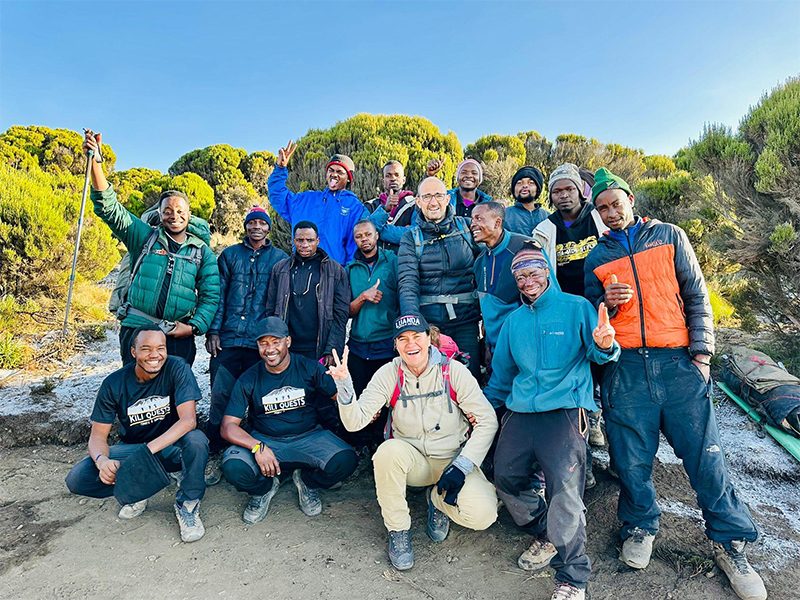
Kilimanjaro trekkers and porters smiling together at the end of a successful hike
Each climber on Kilimanjaro requires several porters to carry gear, food, and tents — a full support crew ensures safety and comfort

 Typical Porter-to-Climber Ratio

What Porters Carry & Estimated Weight:
  • Your duffel bag (max 18 kg) 
  • Tent, mattress, and camping gear – ~5–7 kg
  • Food, water, and cooking equipment – ~5–10 kg
  • Staff equipment (fuel, stove, etc.) – ~5–8 kg
  • Personal porter gear – ~5–7 kg
  • Emergency supplies and extras – ~3–5 kg

Kilimanjaro park rules cap porter loads at 20 kg Only.

How Many Porters for Your Group?

The average Kilimanjaro trek requires 3 to 5 porters per climber, depending on the route,Services and length of the itinerary. Here’s a typical breakdown:

Standard Climber-to-Porter Ratios

 For 1 Climber:
  • 4 to 5 porters
  • 1 guide
  • 1 cook
 Team size: 6–7 crew members
 For 2 Climbers:
  • 8 to 9 porters
  • 1–2 guides
  • 1 cook

 Team size: 10–12 crew members

 For 4 Climbers:

  • 14 to 17 porters
  • 2 guides
  • 1–2 cooks

Team size: 17–21 crew members

 For 6 Climbers:

  • 21 to 25 porters
  • 3 guides
  • 2 cooks

 Team size: 26–30 crew members

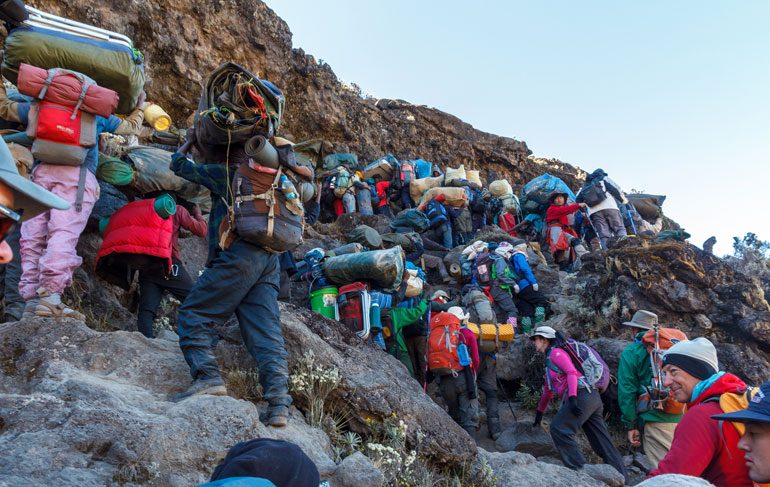
Kilimanjaro porter walking along the mountain trail with gear balanced on head
Porters walk long distances each day through tough terrain — carrying essential supplies that make your trek possible

The Kili Quests Difference

At Kili Quests, porter welfare isn’t a checklist — it’s a core value built into every expedition we run.
Here’s how we ensure our team is treated with dignity and care:
  •  We calculate porter needs before every trek to ensure the right number of staff
  •  Each porter is paid fairly and directly — no delays, no complications
  •  Every team member receives  3-hot meals, quality Tents  gear, and proper rest
  •  Loads are always distributed responsibly to protect health and morale
 We don’t just climb mountains — we uplift the people who make it possible.Learn how tipping is structured based on the number of porters and your group size.

Tipping & Respect: Part of the Trek

Kilimanjaro trekker handing a thank-you tip to a smiling mountain guide at the end of the climb
Tipping your Kilimanjaro crew is a meaningful way to show appreciation for their hard work throughout the trek
Beyond logistics, remember your porters are human. Greet them, thank them, and tip generously.

Frequently Asked Questions About Kilimanjaro Porter Numbers

How many porters are needed for a Kilimanjaro trek?

 Most Kilimanjaro expeditions require about 3 to 5 porters per climber. The exact number depends on the group size, route, and trek length. Porters carry camping gear, food supplies, and equipment while also helping set up camps and support the trekking team on Mount Kilimanjaro.

Why are so many porters required on Kilimanjaro?

Kilimanjaro treks last several days and involve moving camps between different ecological zones. Porters transport tents, cooking equipment, food, water, and personal gear while also helping prepare camps before trekkers arrive. This support system allows climbers to focus on hiking and acclimatization.

What is the weight limit for Kilimanjaro porters?

According to park regulations and ethical trekking standards, porters should carry no more than 20 kilograms (44 pounds) of client gear. Organizations such as the Kilimanjaro Porters Assistance Project work with operators to ensure fair load limits and safe working conditions.

Does the number of porters change depending on the route?

Yes. Longer routes like the Lemosho Route or Northern Circuit Route usually require more porters because they involve more camping days and additional food and equipment. Shorter routes may need slightly fewer porters.

Do porters carry climbers’ personal gear?

Yes. Porters typically carry trekkers’ duffel bags, tents, and shared equipment between camps. Climbers usually carry only a small daypack with essentials such as water, snacks, rain gear, and personal items while hiking.

Why is hiring enough porters important for ethical trekking?

Having the correct number of porters ensures loads are distributed fairly and safely among the crew. Responsible tour operators plan porter numbers carefully so that no one is overloaded and every team member receives fair treatment during the expedition.

 Trek Responsibly. Trek with Kili Quests.

 When you book with us, you’re not just joining a trek — you’re joining a tradition of fair treatment, local ownership, and deep respect for Kilimanjaro’s workforce.See if porter services are included in your chosen Kilimanjaro trek package
 
Start Your Climb the Right Way – Contact Us Today »

Related Articles