Table of Contents

Final Descent of Kilimanjaro: Tips & What to Expect | Kili Quests

After reaching the summit of Mount Kilimanjaro, many trekkers feel a wave of joy and relief — but the journey isn’t over yet. The final descent presents its own challenges, often testing your stamina, knees, and focus just as much as the climb up.

In this guide, Kili Quests shares what to expect, how to manage fatigue, and tips for a safe and successful descent from the Roof of Africa.

Just summited? The descent begins immediately. Make sure your boots and trekking poles are ready — check the Summit Day Gear Guide.

What to Expect on the Way Down

1. Slippery & Rocky Terrain
Descending routes often involve:
  • Loose gravel and scree, especially after Stella or Gilman’s Point
  • Rocky paths with uneven footing

You’ll need to stay focused to avoid slips and strain.

2. Fatigue and Altitude
Even while going down, altitude can affect your:
  • Breathing — still shallow until you reach lower camps
  • Energy — you’re physically and emotionally drained from the summit push
3. Cold Temperatures
Expect:
  • Freezing winds near the crater rim
  • Chilly mornings/late evenings, even on descent
Layer up! Keep your shell jacket and warm fleece handy to adapt to changing conditions.
 
4. Emotional Exhaustion
You’ve reached the top — now comes the mental dip. It’s common to feel:
  • Relief mixed with fatigue
  • Less motivation, especially during the long walk down
Stay present, take breaks, and celebrate the journey.

Tips for a Safe Descent

  1. Take It Slow
  • Use short, stable steps
  • Avoid rushing to protect your knees and ankles
  • Watch out for scree and gravel slopes
 2. Use Trekking Poles
  • Reduce joint impact on your knees
  • Improve balance on unstable terrain
Adjust your poles for downhill support — you’ll thank yourself later.
 
3. Stay Hydrated & Eat Snacks
  • Continue drinking water regularly
  • Fuel your body with nuts, chocolate, or energy bars
Hydration is just as important on descent as during the climb up.
4. Listen to Your Body
  • If your knees ache, slow down or stretch
  • Take frequent breaks to catch your breath and prevent injury
5. Dress in Layers
  • The temperature rises as you descend
  • Remove layers gradually — but keep your rain jacket close
Descent weather can shift quickly — be ready for cold, wind, or even light rain.
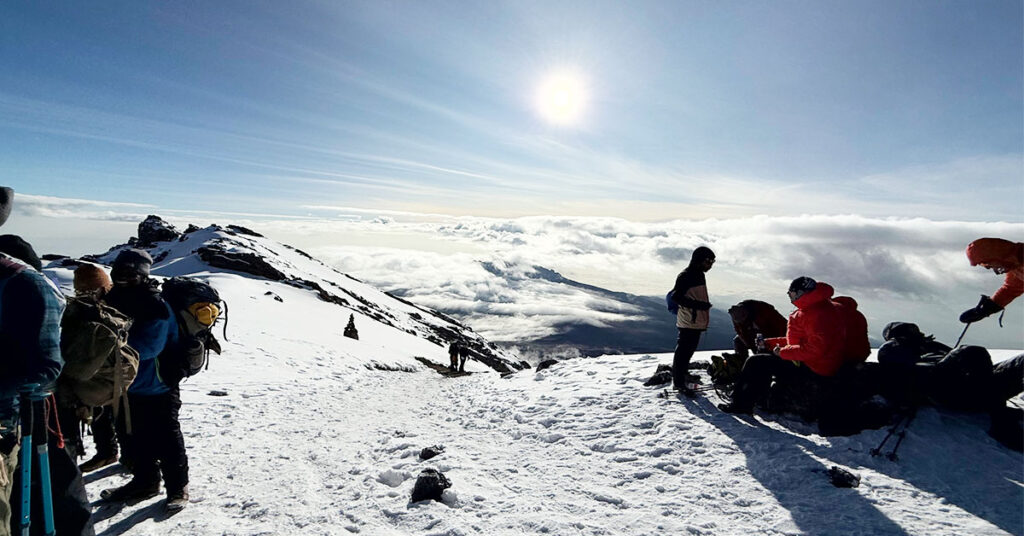
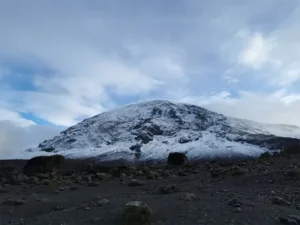
On the way down, with memories made at the top.

After the Descent: What Happens Next?

 Rest & Recovery
  • Your body will need 1–2 days to recover from the summit effort
  • Sleep, stretch, and hydrate to promote muscle recovery
 Speed up recovery with our Post-Kilimanjaro Stretching Tips.
 
Celebration & Reflection
  • Completing the trek is a huge milestone — emotionally and physically
  • Take time to reflect on your accomplishment with your team
 
Final Camp or Exit Gate
  • Most climbers descend to Mweka Camp or Horombo Hut, then hike out the next day
  • You’ll receive a summit certificate and enjoy a final lunch before departure
 See What’s Included in Our Climb Package — we support you all the way, from trailhead to celebration.
 

Frequently Asked Questions About the Descent from Kilimanjaro

How long does it take to descend Mount Kilimanjaro?

Descending Mount Kilimanjaro usually takes 1 to 2 days, depending on the route and itinerary. After summit night, most climbers descend from high camps like Barafu or Kibo Hut to a lower camp such as Mweka Camp or Horombo Hut before exiting the park the following day.

Is descending Kilimanjaro harder than climbing up?

For many trekkers, the descent can feel harder on the body than the ascent. Long downhill sections place extra strain on the knees, ankles, and leg muscles, especially after the physical effort of summit night.

Why is the descent from Kilimanjaro dangerous?

The descent can be challenging because of loose gravel, rocky trails, and tired legs after reaching the summit. Areas near Stella Point and Gilman’s Point often include scree slopes where careful footing is important to avoid slips or falls.

How can trekking poles help during the Kilimanjaro descent?

Trekking poles help reduce the impact on your knees and improve balance on steep or unstable terrain. They are especially useful when descending loose volcanic scree or rocky trails on Kilimanjaro.

What should you do after descending Kilimanjaro?

After finishing the trek, climbers should focus on recovery by resting, hydrating, stretching, and eating nutritious meals. Most trekkers spend a night in nearby towns such as Moshi or Arusha before continuing their travels.

Do climbers receive a certificate after climbing Kilimanjaro?

Yes. Climbers who reach the summit of Kilimanjaro receive an official summit certificate issued by park authorities when exiting Kilimanjaro National Park. Different certificates are given depending on the highest point reached during the climb.

 Final Word from Kili Quests

At Kili Quests, we guide you through the entire journey — not just the summit. From pacing to packing to proper descent planning, our experienced team ensures that every part of your trek is safe, ethical, and rewarding. Ready to plan your Kilimanjaro climb with experts who care?
 
 Contact Kili Quests now and let us guide you from base to summit — and safely back again.
 

Related Articles