Table of Contents

Best Time to Climb Kilimanjaro: Seasons Explained | Kili Quests

Understanding the Best Time to Climb Mount Kilimanjaro

Wondering when to climb Mount Kilimanjaro?
Timing matters. Choosing the right season can dramatically affect your summit success, trekking conditions, and overall enjoyment.
At Kili Quests, we help you plan the perfect adventure by breaking down the best — and worst — times to trek. Let’s explore Kilimanjaro’s seasons, route recommendations, and key factors so you can decide when to climb with confidence.
 Different routes suit different seasons — see why in our Kilimanjaro Routes Compared Guide.
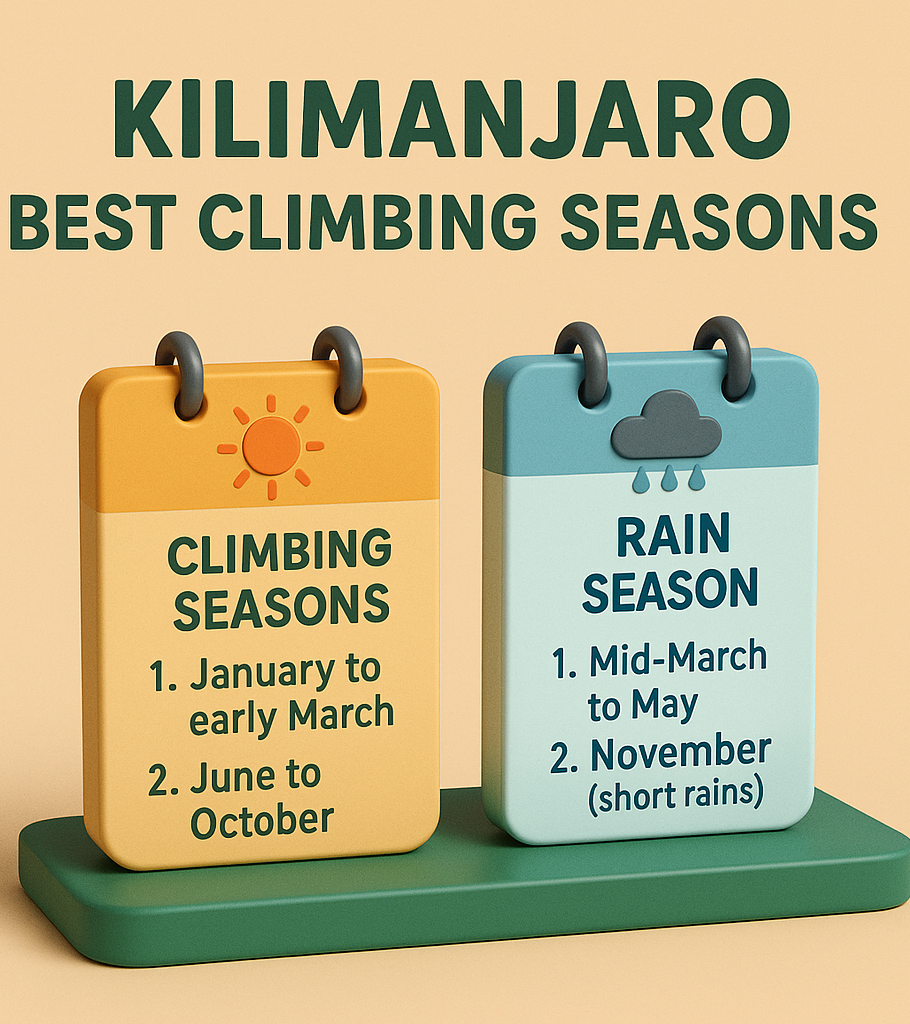
infographic showing the best climbing seasons and rain periods for Mount Kilimanjaro, including January to March and June to October.
Kilimanjaro’s dry seasons are ideal for trekking: January to early March and June to October.

Kilimanjaro’s Best Seasons for Trekking

Mount Kilimanjaro is climbable year-round, but two main dry seasons offer the most favorable conditions:
 
January to Early March
  • Mild weather and moderate traffic
  • Excellent for photography with occasional snow near the summit
June to October
  • Peak trekking season with clear skies
  • Great views, low rainfall, and cooler air
 Want to prepare for weather challenges? Read our Tanzania Mountain Weather & Climate Tips.
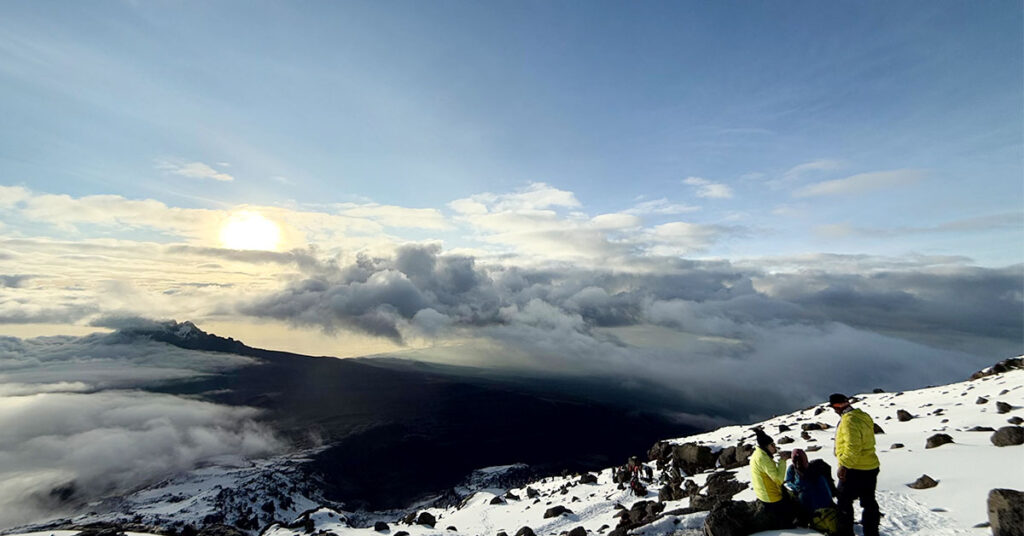
Resting along the trail to Uhuru — one step at a time to the summit.

High Season: Best Time to Climb Kilimanjaro

When? June–October & December–February
Why It’s Popular:
  • Dry, stable weather with clear skies
  • Safe, solid trails with minimal mud
  • Stunning visibility for landscapes and summit photos
  • Best for first-timers and groups due to predictable conditions
Bring your camera — this is prime time for breathtaking Kilimanjaro shots.

 Rainy Season: Should You Climb in Low Season?

When? March–May (long rains) & sometimes November (short rains)
Consider This:
  • Fewer crowds: Peaceful trails and more solitude
  • Lush scenery: Rain brings green landscapes, wildflowers, and forest life
  • Lower costs: Some operators offer discounts during rainy months
But…
Challenges:
  • Slippery trails: Expect mud, wet rocks, and greater risk of slipping
  • Low visibility: Cloud cover reduces panoramic views
  • Cold + wet: A tough combo at higher altitudes
  • Gear matters: Waterproof layers and gaiters are essential
 Train for tough weather with our Kilimanjaro 6-Week Training Plan.

How to Choose the Best Time for You

  Your Fitness Level
  • Some routes require more stamina — pairing them with dry seasons makes it easier.
 Your Comfort with Crowds
  • Prefer solitude? Try the Rongai Route during shoulder months.
  • Enjoy meeting trekkers? Go for Machame or Lemosho in peak season.

Budget & Flexibility

  • Willing to face rain for fewer climbers or discounts? The low season might suit you.

Photography Goals

  • Clear skies and snow-capped peaks are more common in high season.
Be ready for every season with our Essential Kilimanjaro Packing List.
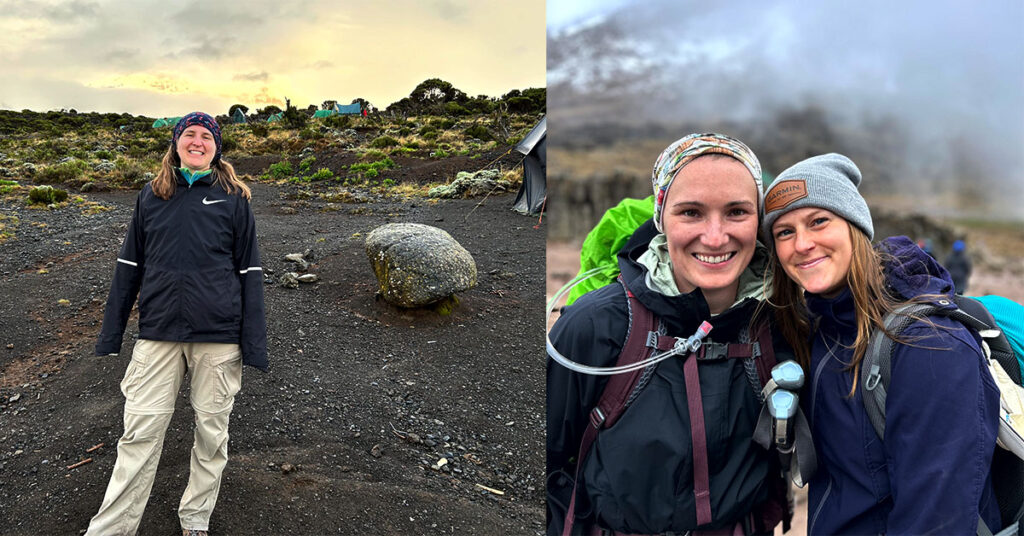
One of those moments where the mountain says it all

Pro Tip: Match Route to Season

  • Rainy Season Best Bets: Marangu or Rongai (less muddy terrain)
  • Dry Season Favorites: Lemosho and Machame (scenic and rewarding)
 Not sure which route to pick? Compare All 7 Kilimanjaro Routes Here

Every Season Has Its Beauty

There is no single “perfect” time — only the right time for you.
Whether you’re looking for:
  • Peak comfort and safety (June–Oct)
  • Fewer people and green scenery (March–May)
  • Or a snowy summit adventure (Jan–Feb)
We’ve guided climbers in every season. We’ll help you plan, train, and gear up.

Frequently Asked Questions About the Best Time to Climb Kilimanjaro

What is the best time of year to climb Mount Kilimanjaro?

The best time to climb Mount Kilimanjaro is during the two main dry seasons: January to early March and June to October. These months usually offer clearer skies, less rainfall, and better trail conditions, making the trek more comfortable and improving summit success rates.

Can you climb Mount Kilimanjaro during the rainy season?

Yes, Kilimanjaro can be climbed year-round, including during the rainy months of March to May and sometimes November. However, trekkers should expect wetter trails, reduced visibility, and more challenging hiking conditions during these periods.

Which month has the best weather for climbing Kilimanjaro?

Many climbers consider July, August, and September some of the best months to climb because they typically offer stable weather, minimal rain, and excellent visibility from the summit.

Is Kilimanjaro crowded during peak climbing season?

 Yes, the mountain tends to be busier during the main dry season, especially on popular routes like the Machame Route and the Lemosho Route. Choosing less crowded routes or traveling during shoulder months can offer a quieter trekking experience.

Is it harder to climb Kilimanjaro during the rainy season?

Climbing during the rainy season can be more challenging due to muddy trails, slippery rocks, and increased humidity. Proper waterproof gear and careful route selection become especially important for comfort and safety.

Does the season affect Kilimanjaro summit success rates?

Yes. Climbers often experience higher success rates during the dry seasons because the weather is more stable, trails are easier to navigate, and trekkers can maintain a more consistent pace during the ascent.

 Plan Your Trek With Kili Quests

 Climb when the mountain fits your schedule, not just the calendar.
 
  • Get personalized trekking advice
  • Match your route to the right season
  • Prepare confidently for your dream summit

Let’s plan your Kilimanjaro journey — together.

Related Articles