Table of Contents

Mount Kilimanjaro Night Temperature: What to Expect During Your Trek and Summit Day | Kili Quests

Climbing Mount Kilimanjaro is a thrilling challenge — but many trekkers underestimate the nighttime cold at high altitudes. While days can be sunny and warm, nights on the mountain bring drastically lower temperatures, especially near the summit.

In this guide, Kili Quests explains what night temperatures to expect at each stage of your trek and how to stay warm, safe, and prepared from base camp to summit.

Understand how temperature changes across Kilimanjaro’s five climate zones.
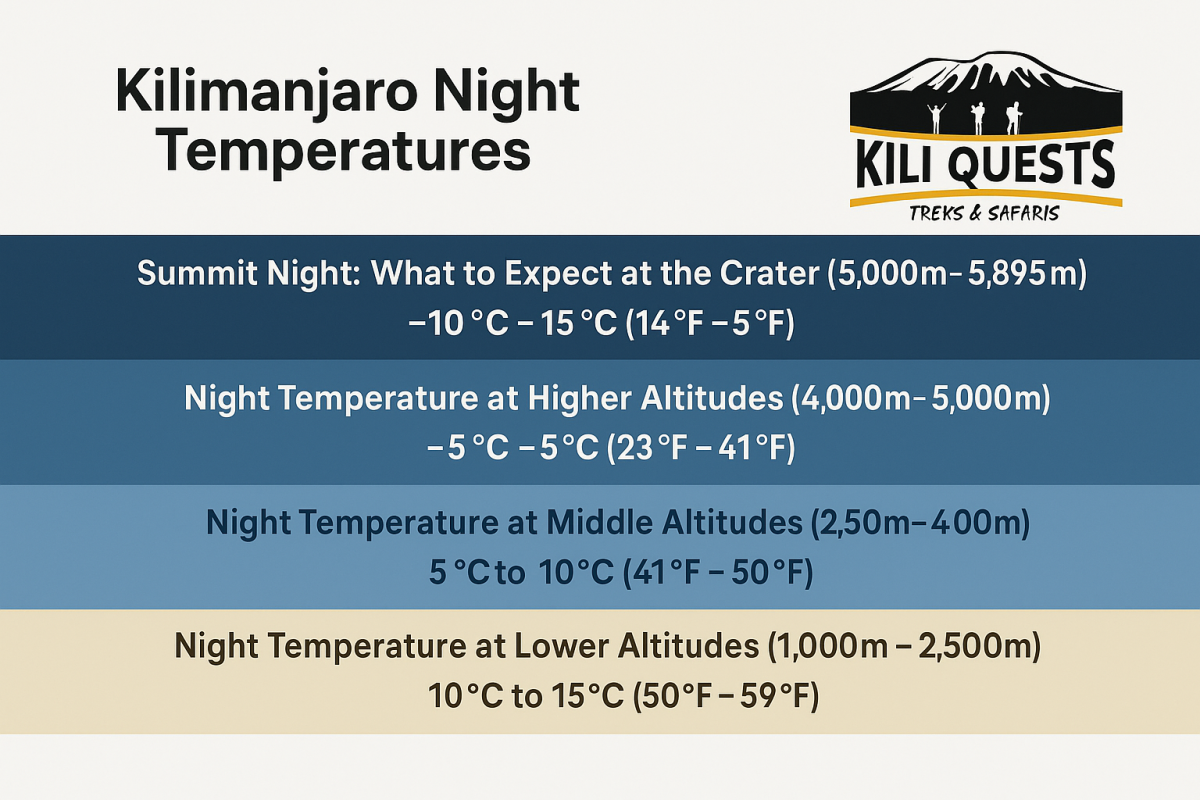
Infographic showing Kilimanjaro night temperatures at different altitudes, from 15°C at 1,000m to -15°C at the summit.
Kilimanjaro Night Temperatures by Altitude – From mild lower camps to extreme summit cold, here’s what to expect during your climb

Night Temperatures by Altitude on Kilimanjaro

1. Lower Altitudes (1,000m – 2,500m)

  • Temperature Range: 10°C to 15°C (50°F to 59°F)
  • Example Camps: Machame Gate, Rongai Start Point

What to Expect

These zones are relatively warm. Nights are cool but manageable.
What to Wear:
  • Lightweight fleece or jacket
  • Long-sleeved base layer
  • Warm socks and light gloves if needed

2. Middle Altitudes (2,500m – 4,000m)

  • Temperature Range: 5°C to 10°C (41°F to 50°F)
  • Example Camps: Shira Camp, Barranco Camp, Karanga Camp
What to Expect
Temperatures drop significantly after sunset. You’ll feel the chill.
What to Wear:
  • Insulating fleece or down jacket
  • Thermal sleeping pants
  • Beanie and gloves for warmth

Ecological Zones of Kilimanjaro: A Climber’s Guide – Learn how each zone affects your comfort and gear.

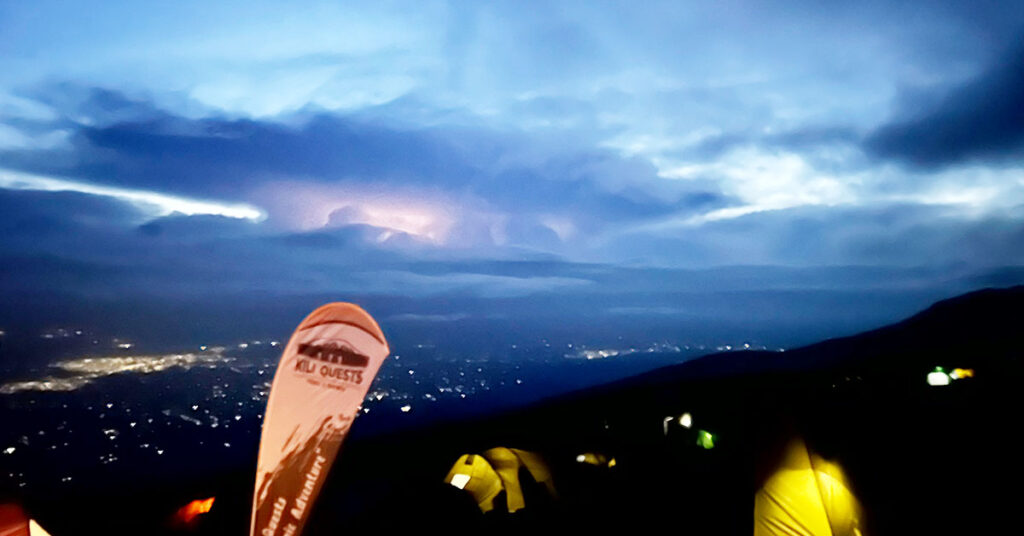
The Kili Quests flag waves under the stars — with Moshi city glowing far below.

3. High Altitudes (4,000m – 5,000m)

  • Temperature Range: -5°C to 5°C (23°F to 41°F)
  • Example Camps: Barafu Camp, Kibo Hut
What to Expect
Cold nights become extreme at this level. Warmth becomes essential for sleep and safety.
What to Wear:
  • Down or insulated jacket
  • Thermal underwear
  • Wool socks and hat
  • Cold-rated sleeping bag (-10°C or below)

4. Summit Night (5,000m – 5,895m)

  • Temperature Range: -10°C to -15°C (14°F to 5°F)
  • Trek Timing: Midnight start from Barafu to Uhuru Peak
What to Expect
This is the coldest part of the entire climb. Windchill makes it feel even colder. You’ll climb in total darkness for 6–8 hours before sunrise.
What to Wear on Summit Night:
  • Heavy-duty down jacket
  • Thermal gloves, balaclava, and face covering
  • Base layer + fleece + insulated outer layer
  • Waterproof boots + thick socks
  • Hand warmers or toe warmers (optional but helpful)

Kilimanjaro Summit Day Gear Checklist – Don’t underestimate what you need for summit night.

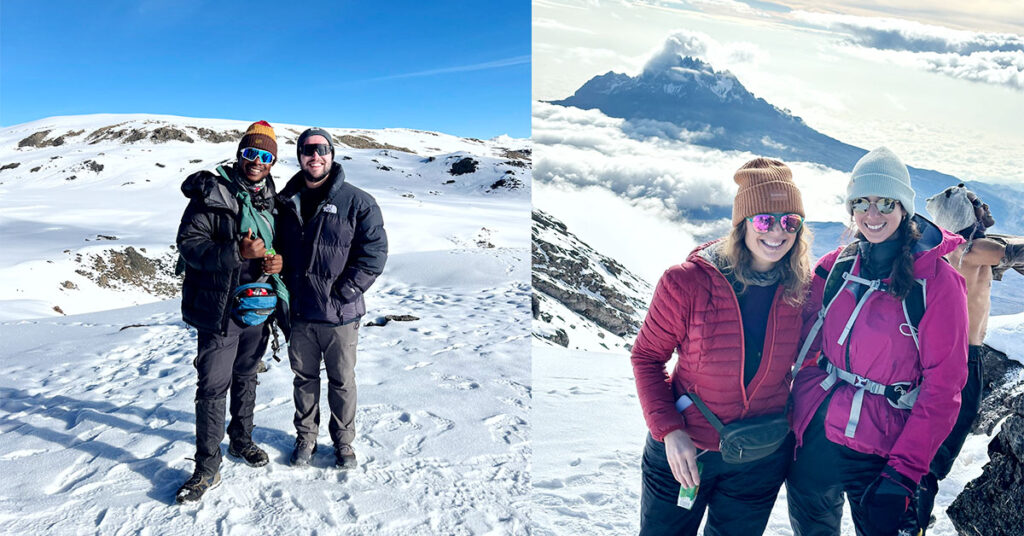
The journey tests you, the view rewards you. Stella Point, with Mawenzi Peak looking on.

Tips to Stay Warm on Kilimanjaro

Dress in Layers
Layering helps regulate body temperature as you move through different zones:
  • Base layer (moisture-wicking)
  • Insulating mid-layer (fleece or down)
  • Outer layer (windproof and waterproof)
Use our updated checklist to pack the right layers for chilly nights.

 Stay Hydrated & Eat Well

  • Drink 3–4 liters daily to improve circulation and prevent cold stress
  • Eat high-energy meals before bed for warmth
  • Avoid caffeine and alcohol, which can interfere with sleep and body heat
 

Use the Right Sleeping Gear

  • Bring a sleeping bag rated for -10°C to -15°C or colder
  • Add a sleeping bag liner for extra insulation
  • Sleep in clean, dry thermals to avoid heat loss

 Move When Cold

If you wake up freezing or can’t sleep:
  • Do light stretches inside your tent
  • Walk gently around camp
  • Sip warm water or tea

Final Packing Advice for Cold Nights

Before your trek, use this checklist for nighttime warmth:
  • Thermal base layers (top and bottom)
  •  Insulated down jacket
  •  Warm hat, gloves, and neck covering
  •  High-quality sleeping bag (-10°C or lower)
  •  Hand and foot warmers
  •  Dry socks and spare thermals

Frequently Asked Questions About Kilimanjaro Night Temperatures

How cold does it get at night on Mount Kilimanjaro?

Night temperatures on Mount Kilimanjaro vary depending on altitude. Lower camps may stay around 10°C to 15°C (50°F to 59°F), while higher camps can drop to -5°C to 5°C (23°F to 41°F). Near the summit during the midnight ascent, temperatures can fall to -10°C to -15°C (14°F to 5°F) or colder with windchill.

Why are nights so cold on Kilimanjaro?

Kilimanjaro’s high altitude and thin atmosphere cause temperatures to drop sharply after sunset. The mountain also passes through multiple climate zones, from tropical forest to arctic summit conditions, which leads to significant nighttime cooling.

What is the coldest part of the Kilimanjaro climb?

The coldest part of the trek is summit night, when climbers usually start their ascent from high camps such as Barafu or Kibo Hut around midnight. Temperatures are well below freezing and strong winds can make it feel even colder.

What sleeping bag rating is recommended for Kilimanjaro?

Trekkers should bring a sleeping bag rated for at least -10°C to -15°C (14°F to 5°F). This rating ensures enough insulation to stay warm during cold nights at higher camps on Kilimanjaro.

How can you stay warm at night on Kilimanjaro?

Staying warm requires proper layering, warm sleeping gear, and dry clothing. Wearing thermal base layers, using a quality down jacket, and sleeping in a cold-rated sleeping bag can help maintain body heat during the cold nights on the mountain.

Does the temperature change between Kilimanjaro camps?

Yes. Temperatures generally decrease as climbers gain altitude. Lower camps in forest zones remain relatively mild, while camps in alpine and summit zones experience freezing conditions, especially overnight.

Prepare for Kilimanjaro’s Night  Temperatures with Confidence

Kilimanjaro’s beauty comes with extremes — especially at night. But with the right preparation, you’ll stay warm, sleep well, and climb strong.
 
At Kili Quests, we guide you through every detail, from recommended gear to how to dress for summit night. You can rent high-quality gear locally if you need extra layers.


Related Articles